Editör
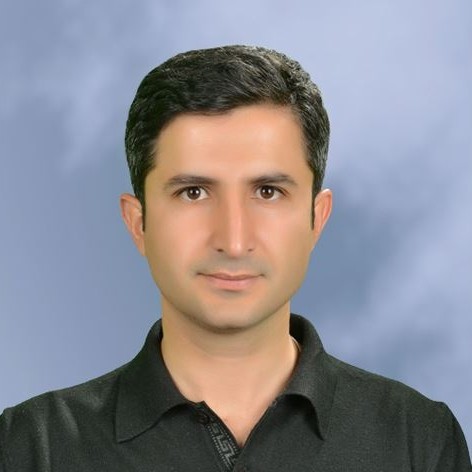

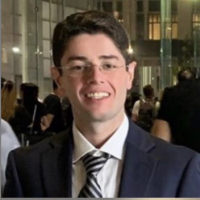
Dr. Mehmet Rıda Tür is an academic specializing in electrical and electronics engineering. He completed his undergraduate and graduate studies in relevant engineering fields and focuses primarily on energy systems, renewable energy technologies, and smart grid applications. Throughout his academic career, he has served at various universities and contributed to his field through scientific research, projects, and publications. His work continues to center on energy efficiency, sustainable energy policies, and advanced engineering applications.
Editör Yardımcıları - Assistant Editors
Yayın Danışma Kurulu / Editorial Advisory Board
Prof. Ramazan Bayındır, who graduated from Gazi University, Department of Electrical Education in 1992, received his master's degree in 1998 and his PhD in 2002 from the Graduate School of Science of the same university. In 2013, he conducted postdoctoral research in Electrical and Computer Engineering at the University of Wisconsin-Milwaukee, USA. Prof. Bayındır continues his academic career at Gazi University, Faculty of Technology, Department of Electrical and Electronics Engineering and has research in renewable energy, microgrids, and smart grids. He has over 350 publications and 6 books in these fields. He has been a member of the Editorial Board of TÜBITAK Turkish Journal of Electrical Engineering & Computer Sciences and has been involved in scientific/organisational roles in international conferences, such as ICRERA, icSmartGrid, PEMC and POWERENG for many years. He is an IEEE senior member and PEMC Executive Committee member. Prof. Bayındır served as vice dean, director of vocational school and head of department at Gazi University. Between 2020 and 2024, he worked as Vice-Rector, specifically responsible for quality assurance systems. In this process, he took an active role in corporate data management, process improvement, ISO 9001:2015 certification studies and quality-oriented corporate coordination processes. He has produced academic studies on quality assurance in higher education, institutional accreditation and continuous improvement, and took part in external evaluations as Team Leader within the scope of THEQC's Institutional Accreditation Program. In January 2026, he was elected by the Inter-university Council as a THEQC Council Member.
RAMI AL HAJJ received the BS degree in applied mathematics and the DEA (Diplome d’Etude Approfondie) degree in mathematical modeling and intensive computation from the Lebanese University, Beirut, in 1999 and 2001, respectively, and the PhD degree in signal and image processing from Télécom ParisTech, France, in 2007. He joined Business Machines Corporation in Beirut from 2000 till 2004, then Lebanese International University from 2007 till 2012. Currently he is an associate professor in the Department of Applied Mathematics at the American University of Middle East – Kuwait. His research interests include Machine Learning, Data Mining and pattern recognition, Optimization and Evolutionary Computation. He was one of the team whose won the Competition on Arabic handwritten word recognition in ICDAR 2005 Seoul-Korea. He is currently a Senior Member of IEEE, and an IEEE - Intelligent Computation Community member.
Dr. Mohammed Wadi is a distinguished electrical engineer with an extensive background in both academia and industry. He earned his Bachelor’s and Master's degrees in Electrical Engineering from The Islamic University of Gaza, Palestine, in 2006 and 2012, respectively, followed by a Ph.D. in Power Systems from Yıldız Technical University, Istanbul, Turkey, in 2017. Since 2017, he has been affiliated with Istanbul Sabahattin Zaim University, initially serving as an Assistant Professor, and currently holding the position of Associate Professor in the Department of Electrical and Electronics Engineering.
Dr. Mohammed Wadi has earned global recognition for his contributions to the field, having been ranked among the top 100,000 scientists worldwide, with a percentile rank in the top 2% in Electrical and Electronics Engineering according to the 2024 Elsevier Data Repository. In his academic role, he teaches a wide range of courses, including Electric Circuits I & II, Logic Design, Microcontrollers, Embedded Systems, Power Systems Analysis, Energy Transmission Systems, High Voltage Techniques, Protection in Power Systems, Renewable Energy, and Power Systems Reliability.
His research interests are focused on cutting-edge topics such as the Reliability Assessment of Power Systems, Smart Grids, Renewable Energy Integration, Fault Detection in Power Systems, Machine Learning Applications, and Fuzzy Control.
Editörler Kurulu / Alan Editörleri - Editorial Board / Field Editors
Uluslararası Danışma Kurulu / International Advisory Board

Yazım, Düzen ve Dil Editörleri - Writing, layout and Language Editor
