Editorial Board

Advisory Board
Dr Charlotte Beyer is Senior Lecturer in English Studies at the University of Gloucestershire, UK. She is a prize-winning academic author and has published widely on crime fiction and contemporary literature. Dr Beyer is the author of three single-author scholarly monographs to date, Murder in a Few Words: Gender, Genre and Location in the Crime Short Story (McFarland, 2020), Contemporary Children's and Young Adult Literature: Writing Back to History and Oppression (Cambridge Scholars Publishing, 2021), and Intersectionality and Decolonisation in Contemporary British Crime Fiction (Cambridge Scholars Publishing, 2023). Her fourth monograph, Crime Fiction in the Age of #MeToo, was published by Anthem Press in November 2024. Her fifth monograph, currently in progress and under contract with McFarland, is on the subject of true crime.
Dr Beyer has edited six books to date. These include Contemporary Crime Fiction: Crossing Boundaries, Merging Genres (ed., Cambridge Scholars Publishing, 2021), and Teaching Crime Fiction (Palgrave, 2018). The latter book was shortlisted for the 2019 Teaching Literature Book Award. Her book Mothers Who Kill, co-edited with Josephine Savarese, was published by Demeter Press in February 2022. Decolonising the Literature Curriculum, her edited book on pedagogical scholarship, was published by Palgrave in March 2022, and was awarded the BACLS Edited Collection Prize.

Prof. Dr. Mehmet Ali Çelikel graduated from Hacettepe University, Department of English Linguistics in 1993. He completed his MA in English Language and Literature at the University of Hertfordshire in England in 1997. He got his PhD with a thesis entitled “The Post-Colonial Condition: The Fiction of Rushdie, Kureishi and Roy” at Liverpool University in England in 2001. He has published two academic books in Turkish on post-colonial novel, entitled as Sömürgecilik Sonrası İngiliz Romanında Kültür ve Kimlik [Culture and Identity in Postcolonial English Novel] in 2011 and Çağdaş İngiliz Romanında Küreselleşme, Göç ve Kültür [Globalisation, Migration and Culture in Contemporary British Novel]. He currently works as a Professor at the Department of English Language and Literature, Marmara University, Turkey. mehmet.celikel@marmara.edu.tr
https://orcid.org/0000-0003-0402-9858
Dr. Christoph Haase, M.A., Ph.D.
English Department
UJEP
__________________________________________________________
Academic qualification
M.A. 1998, summa cum laude, Ernst-Moritz-Arndt University Greifswald
Ph.D. 2003, summa cum laude, Chemnitz University of Technology
Teaching
Linguistics of the English language 1998 – 2020: at the universities Greifswald, Chemnitz, Bielefeld (all Germany)
2009 – current: UJEP, Czech Republic
numerous international guest teaching assignments within ERASMUS (Spain, Italy, Poland, Slovakia)
Research interests
Cognitive linguistics; language acquisition, especially SLA, Morphosyntax from a cognitive-functional perspective; causation and causativity; e-learning, language and computers/language and corpora; English for Academic Purposes (EAP), natural science English
Publications (list upon request)
ca. 90 international publications (research papers, monographs, edited volumes), two papers with 15 Web of Science citations, h=1; four papers with 21 SCOPUS citations, h=2
Reviews
board of reviewers for Discourse & Interaction (MUNI Press);
invited reviewer for Journal of English Linguistics (SAGE), International Journal of Corpus Linguistics (Benjamins), Corpus Pragmatics (Springer), Routledge (Semantics series), De Gruyter Open, Cognitive Science Society, AussigerBeiträge, Journal of Pragmatics(Elsevier), Brno Studies in English (MUNI Press), Ostrava Journal of English Philology, Ege Journal of English Studies, Journal of Social Epistemology (Routledge)
Conferences (list upon request)
ca. 100 international conferences (as speaker, organizer, panelist, keynote speaker, or attendee), most notably organizer of the CHALLENGES series of conferences at KAJ/UJEP
Teresa Gibert currently works as a Professor Emerita in the Department of Foreign Languages (Departamento de Filologías Extranjeras), at the Spanish National Distance Education University (UNED). Prof. Gibert does research in English, American and Canadian Literatures.
Professor Emeritus of American Literature and American Studies. Author of Urban Verbs: Arts and Discourses of American Literature; editor and contributor, Cambridge Companion to the Literature of Los Angeles, Cambridge Companion to the City in Literature, The City in American Literature and Culture, as well as many essays.
Curriculum Vitae
Dr. János Nagyillés PhD
Associate Professor
Department of Classical Philology and Neo-Latin Studies
Head of the Doctoral Programme of Ancient Literatures and Cultures
University of Szeged, Faculty of Humanities and Social Sciences
nagyillesjanos@gmail.com
+36306512233
1978-1986 Mindszent, Primary School
1986-1990 Bethlen Gábor High School, Hódmezővásárhely
1991-1996 József Attila University of Sciences, 1991-1992 History and Latin Language and Literature Studies; 1992-1996: Ancient Greek and Latin Language and Literature Studies
1995 participation in a Hungarian Linguistics Department project: the Hungarian-Latin dictionary of the Munich Codex (Gospel of Luke)
1995-1996 Secondary school teacher: Móra Ferenc Gymnasium, Kiskunfélegyháza
1996 Diploma: Secondary School Teacher of Latin Language and Literature; Ancient Greek Lecturer
1996-1997 Invited lecturer at the Department of Classics and Philology, JATE
1996-1999 ELTE Doctoral School of Ancient Studies, specialisation in Linguistics
1996-2006 Lectures on the History of Rhetoric at the Media Institute of the University of Szeged and at the Department of Media Studies, Szeged
1997-1998 Research Assistant at the Department of Classics and Philology, JATE
1998-2004 Assistant Professor at the Department of Classics and Philology, SZTE
1999 Günter Findel Stiftung three-month scholarship, Herzog August Bibliothek, Wolfenbüttel
2000 Günter Findel Stiftung, three months scholarship, Herzog August Bibliothek, Wolfenbüttel
2002 Two-week research fellowship of the Society for Ancient Studies to the Fondation Hardt (Vandœvre-Genève), Switzerland
2004 PhD thesis defence (Allusion technique in Lucan's Pharsalia "Commentary on Lucan. Phars. 9, lines 1-108". Thesis supervisor: Dr. Ibolya Tar), ELTE Doctoral School of Ancient Studies, Department of Linguistics
2004- Senior Lecturer at the Department of Classics and Philology, University of Szeged, ELTE
2005 Visiting lecturer: Sapientia University of Cluj-Napoca: Latin Paleography and Text Reading.
2007-2010 recipient of the Kerényi-Gracia Prize for Literary Translators of the Ancient Studies Society
2007 Mellon Foundation Fellowship 2001: 3-month research fellowship (Madrid, Consejo Superior de Investigaciones Científicas, Instituto de Filología)
Bolyai János Research Fellowship of the Hungarian Academy of Sciences (2007-2010)
2008- Associate Professor at the Department of Classics, Philology and Neolatin Studies, Faculty of Humanities, University of Szeged
2008-2010 Vice-President and President of the Szeged Branch of the Hungarian Society of Classical Studies
2008- Head of the Doctoral Programme in Ancient Literatures and Cultures
2008-2013 Vice Head of Department at the Department of Classical Philology and Neolatin Studies (SZTE BTK)
2008- Collegium Hungaricum Societatis Europaeae Studiosorum Philologiae Classicae (CHSEC) and co-director of the organisation's workshop Officina Försteriana in Szeged (with Dr. Iván Tóth [Department of Ancient History, SZTE])
2008- ERASMUS coordinator of the Department
2009 DAAD Research Fellowship, University of Tübingen
2010- Head of the Quadrivium Workshop of the Eötvös Loránd College of Humanities, SZTE
2010- Patron of the Eötvös Loránd College for Talented Stutendts at the SZTE
2010-2012 Vice-President of the Hungarian Society for Ancient Studies and President of the Szeged Branch of the Hungarian Society for Ancient Studies
2011 Award of the Bolyai Scholarship of Hungarian Academy of Sciences
2012-2015 Member of the Classical Philology Committee of the Department of Linguistics and Literature of the Hungarian Academy of Sciences
2012-2015 Secretary of the Classics and Philology Committee of the Department of Language and Literature of the Hungarian Academy of Sciences
2012-2015 Member of the Neolatin Subcommittee of the Classics and Philology Committee of the Department of Linguistics and Literature of the Hungarian Academy of Sciences
2012-2015 Vice-President of the Hungarian Society of Classical Studies and President of the Szeged Branch of the Hungarian Society of Classical Studies
2013-2016 Head of the Department of Classical Philology and Neolatin Studies, Faculty of Humanities, University of Szeged
2013- Patron of the Eötvös Loránd College for Talented Students at the University of Szeged
2014- Member of the editorial board of the journal "Antiquarian Studies" of the Akadémiai Publishers
2014- Member of the editorial board of the journal Acta Antiqua Academiae Scientiarum Hungaricae of the Akadémiai Kiadó
2014-2023 Deputy Head of the Doctoral School of Literature at the Faculty of Humanities, University of Szeged
2014- Tutor of the János Bollók Classics and Philology Workshop at the Eötvös József Collegium, Eötvös Loránd University
2015- Member of the Classics and Philology Committee of the Department of Linguistics and Literature of the Hungarian Academy of Sciences, second term
2015- Secretary of the Classical Philology Committee of the Department of Linguistics and Literary Studies of the Hungarian Academy of Sciences, second term
2015-2021 Lecturer in Latin (Sekundärschule, Latein) at the Mercedes-Benz Schule, Kecskemét
2016-2021 Head of the Department of Classics, Philology and Neolatin, Faculty of Humanities, University of Szeged, second term
2017- Member of the Classics and Philology Committee of the Department of Language and Literature of the Hungarian Academy of Sciences, third term
2017- Senior Researcher of the Research Group on Antiquity and Renaissance, grant period: 2017-2022
2018-2021 Head of the Institute of Hungarian Language and Literature at the Faculty of Letters, SZTE
2018- Medical Latin courses in Hungarian and English, curriculum development: Faculty of Medicine and Faculty of Health Sciences and Social Training, SZTE
2020- Audi Schule, Győr: teaching Latin in German
2023- Guest lectures at the English Department of the Ege University on the life's work of Elisabetha Iohanna Westonia
2024- guest lectures at the History Department of Istanbul University, on the theme: the idea of translatio imperii in ancient and late ancient thought until the conquest of Byzantium
2024- Jók.ai lab, Artificial Intelligence Workshop of the Hungarian Culture Foundation: staff member: language expert
2024- Project "RRF 2.1.2 Complex Digital Model Change - Intelligent Grade Change" digital curriculum development, successful application and development of digital curriculum for the medical Latin subject
Teaching:
Text interpretation:
Roman authors Lucretius, Caesar, Tibullus, Propertius, Ovid: Fasti and Metamorphoses, Amores, Ars amatoria; Virgil: Eclogae, Georgica, Aeneid; Publilius Syrus, Dicta Catonis, Carmina Priapea, Ennius, Lucilius, fragments of the Neoteric Poets, Lucanus, Valerius Flaccus, Statius, classical epic (especially fragmentary authors); ancient rhetorical treatises: theoretical works of Cicero and Quintilian
Greek authors: Homer, Callimachus, Pindar, Theocritus, Plato, Xenophon, epigram literature
Phd thesis supervising
Gergő Gellérfi: Allusion Technique and Genre Influences in the Satires of Iuvenalis. Thesis defended at the Doctoral Program in Ancient Literature of the Doctoral School of Literature of the Faculty of Humanities of the University of Szeged. Date of the public defence: 24 November 2015. Opponents of the thesis: László Takács (PPKE), Péter Mayer (SZTE). Result of the thesis: 100%.
Language courses:
Classical Latin and Ancient Greek, Latin stylistic exercises, Ancient Greek for beginners and advanced learners, Latin for beginners and advanced learners in Hungarian, English and German
Medical Latin in Hungarian and English
Lectures and seminars:
History of Roman Literature I-IV (4 semester series of lectures in the MA in Disciplinary Classics and Latin Studies) with related seminar series in Literary History, Ancient (Greek and Roman) Rhetoric, Ancient Literary Stylistics, Metrics in Poetry
Language Knowledge:
documented knowledge of the language
German upper "C" level
Spanish upper "C" level
Latin: Diploma
Ancient Greek: Diploma
Language knowledge not documented by a language examination (reading of literature, teaching):
English and Turkish: active user level
Publications
https://m2.mtmt.hu/api/publication?cond=published%3Beq%3Btrue&cond=core%3Beq%3Btrue&cond=authors.mtid%3Beq%3B10000674&ty_on=1&ty_on_check=1&st_on=1&st_on_check=1&url_on=1&url_on_check=1&cite_type=2&sort=publishedYear%2Cdesc&sort=firstAuthor%2Casc&size=1000&page=1&labelLang=eng
Szeged, 28.03.2025.
Camila Oliveira Querino is research fellow at the University of Lisbon. She holds a PhD in English literature from the Federal University of Rio de Janeiro and King’s College London on the translation of Blake’s Jerusalem into Portuguese and biblical intertextuality. She is currently working on Romanticism and music reception and writing a monograph on William Blake and contemporary music.

Mette Rudvin completed her studies in Norway and the UK, and holds a PhD in Translation Studies. She taught English, translation and public service interpreting at the University of Bologna from 1996-2019, and is currently Associate Professor at the University of Palermo. She has taught a variety of subjects related to English language/literature, translation and dialogue interpreting, and has published widely nationally and internationally. In 2015 she set up the first multilingual continuous education course in interpreting in the legal sector at the University of Bologna; she works occasionally as a community- and legal interpreter and translator between Italian, English and Urdu. Her most recent publications include articles and books on interpreting in the workplace, legal and public-service interpreting in Italy, interpreting in the refugee setting, interpreting ethics, the interface between interpreting and philosophy, and English as a lingua franca. Her research/teaching interests also include oral narrative, Pakistan studies and more recently Food Writing.
Antonio Sanna’s main research areas are: English literature, Gothic literature, horror films and TV series, epic and historical films, superhero films and cinematic adaptations. He completed his Ph.D. at the University of Westminster in London in 2008. In the past sixteen years he has published over one hundred articles and reviews in international journals and attended over thirty conferences. Antonio is the co-editor of the Lexington Books’ series Critical Companions to Contemporary Directors, which includes his volumes focused on Tim Burton (2017), James Cameron (2018), Steven Spielberg (2019), Robert Zemeckis (2020), Julie Taymor (2013) and Mel Gibson (2024). He has also edited the volumes Pirates in History and Popular Culture (McFarland, 2018), Critical Essays on Twin Peaks: The Return (Palgrave, 2019), Arthur Machen: Critical Essays (Lexington, 2021) and Alice in Wonderland in Film and Popular Culture (Palgrave, 2022). Antonio is currently a Teaching Assistant at the Università degli Studi di Sassari. His new series for Lexington Books, Villains and Creatures, has been launched recently.

English, Portuguese, French, Hungarian
I have been researching language variation and change, from a historical sociolinguistics perspective, since 1988. I have published books and articles on this subject and also on a number of literary topics (with relation to language and the making of meanings). Since 2014 I have been researching, running and curating a digital museum of languages based at University of Rome, and have published and continue to research and publish papers on Intangible (linguistic and digital) cultural heritage.


I am a professor of American literature and American Studies.

Zbigniew Białas is Professor of English in the Institute of Literary Studies at the University of Silesia in Katowice, Poland and author of five novels. He was a Humboldt Research Fellow in Germany, a Fulbright Senior Fellow in the USA and a Rockefeller Research Fellow in Italy. His academic books include Post-Tribal Ethos in African Literature (1993), Mapping Wild Gardens: The Symbolic Conquest of South Africa (1997) and The Body Wall: Somatics of Travelling and Discursive Practices (2006). His first novel, Korzeniec (2011) was awarded Silesian Literary Laurels and was turned into a successful theatrical play. Zbigniew Białas edited/co-edited twelve academic volumes (e.g. Critical Perspectives on Damon Galgut (Routledge, 2026)), published over sixty academic essays, and translated English, American and Nigerian literature into Polish.
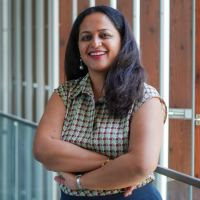
Dr Pallavi Narayan has authored the monograph Pamuk's Istanbul: The Self and the City (2022) and co-edited the anthology of short stories Singapore at Home: Life Across Lines (2021). She has been Associate Professor and Director of the Writing Programme at Ahmedabad University, India, which focused on creative writing, translation, and publishing. Her work experience includes positions in academia and book publishing in Singapore and India, including at Nanyang Technological University and National University of Singapore. She was awarded her PhD from Indian Institute of Technology Delhi. She has held international writing and scholarly fellowships in Chile, Singapore, Taiwan, Germany, Turkey, Qatar, and South Asia, and presented her research at over sixty conferences and literary festivals globally.

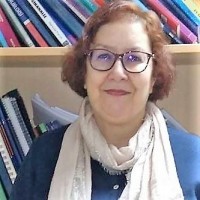

Marek Pawlicki is an assistant professor at the Institute of Literary Studies at the University of Silesia in Katowice. He is the author of the book Between Illusionism and Anti-Illusionism: Self-Reflexivity in the Chosen Novels of JM Coetzee and articles on the works of J.M. Coetzee, Nadine Gordimer, and Damon Galgut. His study “Enactments of Life”: The Short Stories of Nadine Gordimer was published by the University of Silesia Press in 2023. He has published articles about South African literature in a number of journals, including English Studies in Africa, English in Africa, Current Writing, and Journal of Postcolonial Writing.
Robert W. Rix (PhD, Dr Phil.) is Professor of English at the University of Copenhagen, Denmark. He has published widely on the political, religious, linguistic, and cultural landscapes of the eighteenth and nineteenth centuries. Rix’s research spans various topics, including nationalism, Nordic antiquarianism, and print culture/book history. A key focus of his work is Romanticism. He has made significant contributions to the study of William Blake and the radical subcultures that influenced his writings. In recent years, Rix has published on history and life in the Arctic, exemplified by his monograph The Vanished Settlers of Greenland: In Search of a Legend and Its Legacy (Cambridge University Press, 2023). His latest book, Nordic Terrors: Scandinavian Superstition in British Gothic Literature (Anthem Press, 2024), explores the rich interplay of Nordic myth and folklore within Gothic narratives of the eighteenth and nineteenth centuries. He is currently PI in DFF-funded project ‘Nordic Exceptionalism: Perspectives on a European Periphery (NEPEP)’.

Annessa Ann Babic is a freelance writer, adjunct professor, and lecturer in New York. She specializes in women's studies, American social and cultural history, public health narratives, and transnational studies, with an emphasis on the modern Middle East and US-Turkish relations. She is the author or co-editor of several books and has produced numerous book chapters, reference entries, book reviews, and journal articles. Her publications address nationalism, women's rights, women's liberation, Turkish-US relations, transnational feminism, and travel literature. Her most recent book is America's Changing Icons (FDU Press, 2018). She has also guest-edited a special edition of the Journal of American Studies in Turkey focusing on travel narratives; previously, she co-edited an issue of Food and Foodways (with Tanfer Emin Tunc). Recent book chapters on Chinese American takeaway dinners, one concerning travel narratives, war, and literary icons (i.e., Anne of Green Gables), and co-written pieces on food narratives and activism (with Tunc) have populated her publishing landscape.
She has also taught courses ranging from American History to Environmental History. Her passions lie in cultural products and conflicts over consumption, geopolitics, and gender issues. She has won teaching fellowships as well as writing and research awards.
Aside from discursive teaching and examining popular culture venues of food and food products, Dr. Babic has also published extensively on the manifestation, evolution, and incorporation of modern cultural artifacts into our daily lives. Additionally, she has an active publishing career outside academia, writing travel and lifestyle pieces alongside fiction, and she works as an activist for women's and social causes. Currently, she is finishing a discursive project on travel literature and perceptions of place and space (focusing on Greece and Turkey) and working on a travel narrative book for the popular press.
Daniela ROGOBETE is a translator and an Associate Professor at the Department of British, American and German Studies, University of Craiova, Romania, where she teaches English literature. She holds a PhD in Postcolonial Studies and this continues to be her major field of study, with a particular focus on Contemporary Indian Literature written in English. Her most important publications include Scotland and Scottishness – From Tradition to Modernity, (2020), Deconstructing Silence—Ambiguity and Censored Metaphors in Salman Rushdie’s Fiction (2010), Metaphor—Between Language and Thought (2008), When Texts Come into Play–Intertexts and Intertextuality (2003), edited and co-edited collections of essays The Partition of India: Beyond Improbable Lines, (with Elisabetta Marino) (2018) The Silent Life of Things: Reading and Representing Commodified Objecthood (2015), Centres and (Ex-) Eccentricities - Language, Literature and Cultural Policies (2011), Cultural Identity between Acceptance and Denial, (2009) and articles published in national and international journals. Her literary translations into Romanian include more than 20 titles of British and American novels. Her research interests also include intertextuality, aesthetics and visual culture.
Dr. Raquel Serrano González is a lecturer in the Department of English, French, and German Philology at the University of Oviedo, Spain. Her research focuses on Anglo-Spanish literary and cultural relations, particularly the transposition of Don Quixote and other Cervantine texts into seventeenth-century English drama, as well as Jacobean and Restoration drama, with special emphasis on the discursive construction of identity, gender, and sexuality.. She is a member of the research group “Grupo de Estudios Cervantinos” (GREC) at the University of Oviedo
Benjamin Mangrum specializes in twentieth- and twenty-first-century literature in English. He is the author of two books: The Comedy of Computation: Or, How I Learned to Stop Worrying and Love Obsolescence (Stanford University Press, 2025) and Land of Tomorrow: Postwar Fiction and the Crisis of American Liberalism (Oxford University Press, 2019). Mangrum has published articles in PMLA, Diacritics, New Literary History, Modern Fiction Studies, American Literature, ELH, American Literary History, Contemporary Literature, Genre, and elsewhere.

Aikaterini Delikonstantinidou is Assistant Professor in the Department of English at the University of Athens (UoA), Greece, where she specializes in contemporary Anglophone theatre. She earned her PhD from Aristotle University of Thessaloniki with a dissertation on the reception of ancient Greek tragic myth in Latinx-American theatre. She subsequently conducted postdoctoral research at UoA’s Department of Theatre Studies, focusing on the applications of myth-based digital theatre in adult education. Her publications include articles in academic journals and edited volumes, as well as co-edited special issues. Her first monograph Latinx Reception of Greek Tragic Myth was published by Peter Lang in 2020, and her second monograph, Staging Play, is forthcoming with Intellect. Her research interests span theatre and reception studies, performance pedagogy, digital humanities, and ecocriticism.

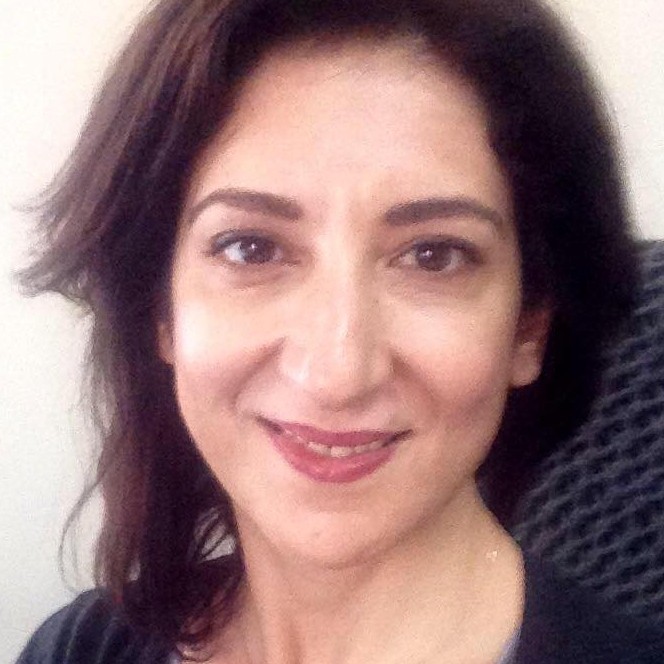
Erika Mihálycsa is Associate Professor at Babeş-Bolyai University, where she teaches modern and contemporary British and Irish literature. Author of “A wretchedness to defend”: Reading
Beckett’s Letters (2022), she co-edited Retranslating Joyce for the 21 st Century (European Joyce Studies 2020) and Flann O’Brien: Palimpsests, Intertexts, Translations (Cork UP, 2026); she has edited Rareș Moldovan’s new, annotated Romanian translation of Joyce’s Ulysses. Her essays in the field of Joyce and Beckett studies, literary and visual modernism, and translation studies have come out in Word and Image, European Joyce Studies, Joyce Studies Annual and in numerous edited volumes. She has translated works by Beckett, Flann O’Brien, Patrick McCabe among others into Hungarian and a handful of modernist and contemporary Hungarian writers into English.
Curriculum Vitae
ELENI BOLIAKI
Professor
Hellenic Open University
Faculty Member, Hellenic Open University (HOU) 2019-currently
Faculty Member, Democritus University of Thrace (DUTH) 2005-2019
ACADEMIC FIELDS
Ancient Greek Culture
Ancient Greek Drama, Religion and Mythology
Religion and Culture
STUDIES:
* Ph.D. Religion Department, Syracuse University, Syracuse, New York, May 2000. Dissertation: Ancient Greek Drama, Postmodern Psychoanalysis and Fundamental Ambiguity: Euripides and Jacques Lacan (supervisor: David L. Miller)
* Master of Philosophy, Religion Department, Syracuse University, New York. December 1997
* Master of Arts, Religion Department, Syracuse University, New York. December 1990
* Bachelor in Theology. Divinity School, Aristotle University, Thessaloniki, Greece. June 1987
TEACHING EXPERIENCE:
1. Introduction to Greek Civilization. Undergraduate Program, Hellenic Open University, 2013-currently
2. Studies in Orthodox Theology. Master’s Program, Hellenic Open University,
2020-2021, 2024-currently.
3. Dionysus and the Dionysian. Master’s Program. Democritus University of Thrace, 2006-2014.
4. Islam, Democritus University of Thrace, 2005-2019.
5. Religions and Cultures in the Black Sea Region. Democritus University of Thrace, 2002-2019.
6. Mythologies of the Black Sea Region. Democritus University of Thrace, 2002-2018.
7. Dionysus and Orpheus. Democritus University of Thrace, 2002-2017.
8. Pedagogical texts, Democritus University of Thrace, 2002-2003.
9. Religion. Greek Public Secondary Schools. 2001-2003.
10. Western Civilization Ι & ΙΙ. State University of New York (SUNY), Morrisville, New York. 2001.
11. Greek Mythology. Continuing Education Program and Independent Study Degree Program, Syracuse University, N.Y. 1998-1999.
12. Ancient Greek Religion: Dionysus
Department of Religion, Syracuse University, N.Y. 1997-1998.
13. Western Civilization Ι & ΙΙ. School of Business Administration & Liberal Arts, American College, Anatolia, Thessaloniki. 1991-1995.
14. World Religions. School of Business Administration & Liberal Arts
American College, Anatolia, Thessaloniki. 1992-1995.
15. Teaching Assistant, Department of Religion, Syracuse University, N.Y.
1. World Religions, 1997.
2. World Mythologies, 1995, 1996.
3. Greek-Roman Religions, 1996.
4. Religion and Psychology, 1991, 1995.
PUBLICATIONS:
1. «Greek Tragedy and Cinema as tools for the cultivation of social welfare ideas: Star Wars and Martha Nussbaum’s reading of Aeschylus’ Oresteia», Communicating Algorithms, Prose and Thought. An Essays’ Collection, Edited by G. N. Vlahakis, K. Mantzaridou-Mantetzioglou and I. Vogiatzis, Hellenic Open University, 2025, 64-75.
2. «Euripides’ Bacchae and how to ‘tell a good lie’», in the Collective Volume A Dialogue across Centuries: Greek Theatre Then and Now, Edited by A. Markantonatos, Mihaela Betiu and Despina Kosmopoulou. 2025, 84-100.
3. «Manipulation techniques in the Bacchae and the movie Stone, and sound-thinking», in the Collective Volume Communications in Science, Literature and Philosophy, Vol II. 2025.
4. Lamprinos Platipodis, Eleni Boliaki, «The Sufferings of the Trojan Women in Euripides' Hecuba», in the Collective Volume Paths of Evil: Facets, Metamorphoses, and Transformations in Ancient Greek Poetry. Grigori Publications, 2025, 111-119.
5. «The Myth of Orpheus and Eurydice in the Performing Arts», in the collective volume Ancient Myths in the Performing Arts. Herodotus Publications, 2025, 99-118.
6. Pentheus the Victim: another reading of the Bacchae. Gutenberg, Athens, 2024.
7. Eleni Boliaki, Vasiliki Anagnostopoulou, «The Allegory of the Line in Proclus’ Ontotheology.» Philosophein. June 2024. ΙSSN: 2241-4401
8. «Pentheus is torn apart over and over again: from victim to offender», in the Collective Volume Euripides’ Bacchae: Interpretations. Introduction and Edition by E. Boliaki and Agis Marinis. THEATROLOGICA ΧVΙ. Publisher: Herodotus, 2023, pp. 69-85.
9. «Political Manipulation and Deception in Euripides’ Bacchae», in the Collective Volume The Divine and the City in Euripides. Edited by A. Markantonatos, B. Georgopoulou, D. Kosmopoulou. Hellenic Foundation for Culture. Athens, 2023, pp. 168-179.
10. «The Three Hierarchs and the concerns of their times», Philological Journal Parnassos 59, Athens 2023, pp. 49-63.
11. «North Thrace-Eastern Romilia was left outside the Greek borders.» SingiLogos Vol. 2 (2022) No. 1, Singidunum University, Belgrade, 2022, pp. 216–232.
12. «Religions: God or a value system? ‘It is the power of faith’», Newspaper Peloponnesus, April 27th, 2020.
13. «The Argonauts and Star Wars: Ships in Quest of the Impossible», in Mythmaking Across Boundaries. Edited by Züleyha Çetiner-Öktem. Cambridge Scholars Press, 2016, pp. 314-333.
14. «Brief History of Northern Thrace», in the Collective Volume Perspectives of the History and Culture of Thrace. Democritus University of Thrace, Komotini, Greece, 2015, pp. 139-170.
15. «The Exotic as Erotic: Firewalking in the Folklorist Papachristodoulou.» Proceedings of the International Conference Folklore and Literature, Vol 2. Hellenic Folklore Research Center, Academy of Athens. Greece, 2013, pp. 183-198.
16. «Jnana Yoga, Bhakti and Karma Yoga. Sankara and Ramanuja on the Bhagavad Gita.» Journal Theology 83:1, 2012, pp. 323-332.
17. The Dionysian (?) Anastenari [Firewalking]: Interpretations and Misinterpretations. Patakis Publisher, Athens, 2011.
18. « ‘Who is Dionysus?’ and the Study of Religion.» Journal of Intercultural Communications, Vol. 16, Tbilisi, Georgia, November 2011, pp. 107-11.
19. «Orphism and the Reconciliation of Reality and Dream: Apollo and Dionysos», Journal of Intercultural Communications, Vol. 14, Tbilisi, Georgia, February 2011, pp. 3-9.
20. «Socrates, the great Teacher of Freedom», Paedagogical Voice, Vol. 15: 2, 2009, pp. 25-56.
21. «The Creative Power of the Soul and Salvation: Orpheus, the poet and the musician.» Journal Theologia, Vol. 80: 1, January-March 2009, pp. 173-190.
22. «Orpheus: source of Culture. Thrace, a Place of Inspiration.» Booklet for the 1st Panhellenic Conference organized by the Prefectural Government Rodopi-Evros. Alexandroupolis, 2-3 of October, 2008.
23. «Orpheus and Eurydice: a Story of Love or of a Betrayal?» Proceedings of the International Conference Womens’ Voices, Democritus University of Thrace and the Greek Archive of Literature and History. Athens, 2008, pp. 557-569.
24. «Nietzsche and the Reversal of Reversals.» Paedagogical Voice, Vol. 14:1, November 2008, pp. 77-88.
25. «Individualism, the Tragic, and Amor Fati: Three Greek Attitudes.» Ardin, 2007, pp. 76-79.
26. Jacques Lacan: An Introduction to his Psychoanalysis. Paschalidis Medical Publications, Athens, 2007.
27. «Orphism and the fate of the Soul after Death.» Thrakika, Thracian Studies, Vol 62, Athens, 2007, pp. 216-236.
28. «Jacques Lacan, Religion and Ethics.» Theologia Journal, Vol. 76:1, Athens, January-June 2004, pp. 179-201.
29. «Bhagavad-Gita and Politics: Gandhi, Tilak, and Aurobindo.» Religious Studies-Sacred and Profane, Vol 6-7, October 2005, pp. 67-72.
30. «World Religions in Schools in Greece--Recognizing the Globalized World», in the Collective Volume Challenges of Globalization for World Religions and Education in Europe, EAWRE Publication, 2005, pp. 36-47.
31. «The Movie ‘Jesus’ Passion’ by Mel Gibson.» Eleutheri Thraki Newspaper, May 2005.
32. «Euripides’ Bacchae: Nomos or Physis?» Philologos, January-February 2004, pp. 21-24.
33. «The Aging Penelope or the Immortal Calypso? Homer and Life after Death.» Thrakika, Thracian Studies Vol 61, Athens, 2004, pp. 129-148.
34. «Orphism, Ancient Greek Religion and Christianity.» Journal Theologia, Vol. 74:2, July-December 2003, pp. 741-760.
Book Reviews:
35. Ancient Greek Democracy and American Republicanism: Prometheus in Political Theory, Michail Theodosiadis. Edinburgh: Edinburgh University Press, 2025. Dia-Noesis: A Journal of Philosophy, Vol 20, 545–552, 2026. https://doi.org/10.12681/dia.46960, 2026
36. «Marcus Aurelius: Meditations», V. Anagnostopoulou. Zitros Publications, 2025. Parnassos, 2026.
37. Chrysostom Stamoulis, What does a Wolf have to do in the Market place? Journal Theology 95, Vol. 4, 2024.
38. Adrienne Mayor, The Amazons: Lives and Legends of Warrior Women across the Ancient World. Princeton; Oxford: Princeton University Press, 2014. Bryn Mawr Classical Review 2015.12.05.
39. Walter Burkert, Homο Necans. Athens Review of Books, April 2012, pp. 38-40.
40. Wim M. J. van Binsbergen and Eric Venbrux (Editors), New Perspectives on Myth. Proceedings of the Second Annual Conference of the International Association for Comparative Mythology. Ravenstein (The Netherlands), 19-21 August, 2008. PIP-TraCS - Papers in intercultural philosophy and transcontinental comparative studies, 5. Haarlem: Shikanda, 2010.
Bryn Mawr Classical Review 2012.11.56
Book Editing:
41. Ian C. Storey & Arlene Allan, Guide to Ancient Greek Drama. Publisher: Gutenberg, 2024. Edited by A. Markantonatos, G. Tsomis, E. Boliaki, Α. Kavoulaki, A. Antonopoulos.
42. Euripides’ Bacchae: Interpretations. Collective Volume, THEATROLOGICA ΧVΙ. Publisher: Herodotus, 2023.
Guides for Open and Distant Learning:
43. Brian A. Sparkes, Greek Civilization: an Introduction. Translated by M. Leventopoulou. 1st edition. Published by Kardamitsa. Athens 2022.
44. Massimo Recalcati, The Night of Gethsemane, Keleuthos Publications, Athens 2021.
45. Françoise Dolto, Gérard Séverin, The Gospels and Faith. The Danger of a Psychoanalytic Perspective, Transl. Elisavet Kouki, Estia Publications, Athens, 2022.
&&&
PRESENTATIONS at CONFERENCES and other ACADEMIC ACTIVITIES:
1. «Victim Blaming in Greek Mythology”, IX International Conference on Myth Criticism: “Myth and Woman”. Complutense University of Madrid, 26–30 October 2026.
2. Book presentation. Marcus Aurelius: Meditations by V. Anagnostopoulou. Zitros Publications, 2025. Megaron. The Athens Concert Hall. 9th of February 2025.
3. «The Myth of Orpheus and Eurydice in the Performing Arts», 2nd International Conference Ancient Myths in Performing Arts. Hellenic Foundation for Cuture. 26th of April 2024.
4. Lamprinos Platipodis and Eleni Boliaki, «The Dire Sufferings of the Trojan Women in Euripides’ Hecuba.» Conference Evil’s Paths- Perspectives, Changes and Transformations in Ancient Greek Poetry. Athens, 4-5 November 2023.
5. «Aeschylus’ and Socrates’ Enlightenment: the end of vigilantism in Oresteia and the rationalization of knowledge and ethics.» 1ο International Conference and Summer School of Humanities, Culture and History of Sciences ‘Vincent Damodos’ Updating Enlightenment in the 21st century. Kefallinia, 24 September- 30 October 2023.
6. «Manipulation techniques in the Bacchae and the movie Stone, and sound-thinking.» 7th International Conference & 1st International Workshop Giannis Pountos on Communication of Science and Literature in the Multiverse. Aegina, 3- 5 July 2023.
7. «Christian thinking and Greek Philosophy in the Hellenistic times: Justine and the theology of the spermatic logos.» Institute for Development, Administrative Region of Western Greece, Patra, 7 June 2023.
8. «Euripides’ Bacchae and how to «Tell a good lie.» 45th Annual Comparative Drama Conference, Orlando, Florida, 30 March-1April 2023.
9. «The Three Hierarchs.» Guest speaker. Hellenic Open University, Patra, 30 January 2023.
10. «Political Manipulation and Deception in Euripides’ Bacchae.» 2nd International Conference on Ancient Drama The Divine and the City in Euripides. Hellenic Foundation for Culture. Salamina, 30 September 2023.
11. «Greek tragedy and Cinema as tools for the cultivation of social welfare ideas: Star Wars and Martha Nussbaum’s reading of Aeschylus’ Oresteia.» 6th International Workshop Communicating Science, Philosophy and Literature. Syros, Greece, 16-20 July 2022.
12. «Pentheus is torn apart over and over again: from victim to offender.» Colloquium Euripides’ Bacchae. Hellenic Open University, Athens, 24 June 2022.
13. «North Thrace-Eastern Romilia was left outside the Greek borders.» International Conference 200 years after the Liberation: Greece-Morias-Orthodoxy (1821-2021). Institution of National and Religious Reflection and University of Singidunum, Belgrade. 7 Νοεμβρίου 2021.
14. Book presentation. Chrysostom Stamoulis, What does a Wolf have to do in the Market place? Alexandroupolis, 3 December 2016.
15. «Modern Cinema and Euripides’ Bacchae: sharing a Common Pattern.» International Conference Classical Reception and the Human. Jocasta and Classical Reception, University of Patras, 10-12 July 2016.
16. «The Banality of Evil: Star Wars in the classroom.» Series of Lectures Myth & Education. School of Humanities and Classical Studies. Democritus University of Thrace and the Foundation for Education. Komotini, 16 March 2016.
17. «Myth, Truth, and Orpheus’ Fault.» Conference Myths and Mythical Heroes of Thrace. Democritus University of Thrace. Komotini, 13-14 April 2016.
18. «Anastenari (Greek Religious Firewalking): a Space for an Act of Memory.» 15th International Cultural Studies Symposium Culture & Space, Ege University. Izmir, Turkey, 6-8 May 2015.
19. «The Mythology of Star Wars and Martha Nussbaum’s Ethics: towards a Revolutionary Justice.» Annual National Conference, Popular Culture Association/American Culture Association, 2-5 April 2015, New Orleans, USA.
20. «Argo and Star Wars: Ships in Quest of the Heroic.» Myth-Making Across Boundaries Conference. Ege University. Izmir, Turkey, 22-24 of October 2014.
21. «‘Still nothing to do with Dionysus?’ Mythic Themes and Figures in Cinema.» Annual National Conference, Popular Culture Association/American Culture Association, 16-19 April 2014, Chicago, USA.
22. «Orpheus and Eurydice in Art.» Rotary Club, Komotini, 18 February 2014.
23. «Euripides’ Bacchae and its Reception in contemporary cinema.» Seminars. Erasmus: European Faculty Exchange. The Faculty of Languages, History and Geography, Department of Ancient Languages and Cultures, Sub Department of Classical Greek Language and Literature. University of Ankara. Ankara, Turkey, 21- 26 of March, 2013.
24. «Lacan in times of Crises.» 14th Panhellenic Conference Psychology in Times of Crises. Alexandroupoli, 15-19 May 2013.
25. «Humanities and the Greek Economic Crisis. From the ancient agora to the financial markets.» Guest speaker. Student body of SYRIZA political party. Democritus University of Thrace, Komotini, 11 April 2013.
26. «New and Creative methods for teaching Greek Culture.» Seminars. European program for internships. Democritus University of Thrace. Komotini, 2012-2013.
27. «Orpheus in the Arts from antiquity to the modern day.» Guest speaker. 32ο Greek Annual Dentistry Conference. Alexandroupoli, 9 November 2012.

28. «Psychoanalysis and Religion in J. Lacan.» Post-graduate Program in Systematic Theology. Divinity School of the University of Athens. Athens, 4 and 27 June 2011.
29. «The Exotic as Erotic: In the Orphic Forests of the Folklorist Papachristodoulou.» International Conference Folklore and Literature. Hellenic Folklore Research Center, Academy of Athens. Greece, 8-12 December 2010.
30. «Collaboration of Greek and Turkish Universities: the goals of the Democritus University of Thrace.» Conference Cultural and Tourist Collaboration of Greece and Turkey. NGO Aegean Politeia and Commercial & Industrial Chamber of Athens. Athens, 18 December 2010.
31. «Greek History, Language and Culture.» Guest speaker. Conference of the Student Body of the Department of Languages, Philologies and Cultures of the Black Sea Region, Democritus University of Thrace. November 23rd 2010.
32. «Sanity and Madness in Euripides and Jacques Lacan.» 8th University of South Africa Classics Colloquium: Madness and Mental Composure. Johannesburg, South Africa, 25-27 October 2007.
33. «Three Greek-ecumenical attitudes: Individualism, the Tragic, and Amor Fati.» Colloquium Being Greek and Globalization, Athens, October 22nd 2006.
34. «Religion and Society.» TV Program. Delta TV. Alexandroupolis, 6 November 2006.
35. «The silent Eurydice.» World Conference Women’s Voice. Democritus University of Thrace. 26-28 May 2006.
36. «Citizenship Education in Greek Schools.» Conference Citizenship Education and World Religions in Europe, European Association for World Religions in Education (EAWRE), Amsterdam, April 2005.
37. «Orpheus: Art counter to Barbarism and Death.» Democritus University of Thrace and NGO Politeia. Alexandroupolis, 29 May 2004.
38. «The Minorities in Western Thrace: Educational Challenges.» From Private to Public, European Association for World Religions in Education. Strasbourg, March 2003.
39. «Religion in Thrace in Antiquity and the first Christian centuries.» 6th World Conference of Thracians. Alexandroupolis, August 2003.
40. Member of the Delegation of the Ecumenical Patriarchate. Conference of European Churches. Norway, June 2003.
41. «Religious Education in the Greek Schools. Judaism and Islam in
Greek Textbooks.» Conference Openness and Reconciliation: Experiences and Perspectives in Dealing with Religions, European Association for World Religions in Education (EAWRE). Orthodox Academy of Crete, February 2002.
42. «Women in Greek Mythology.» State University of New York, Morrisville, New York, March 2001.
&&&
Christopher GoGwilt is the author of The K-Effect: Romanization, Modernism, and the Spacing and Timing of Print Culture (Fordham UP, 2024); The Passage of Literature: Genealogies of Modernism in Conrad, Rhys, and Pramoedya (Oxford, 2011) which won the Modernist Studies Association book prize for 2012; The Fiction of Geopolitics: Afterimages of Culture from Wilkie Collins to Alfred Hitchcock (Stanford, 2000) and The Invention of the West: Joseph Conrad and the Double-Mapping of Europe and Empire (Stanford, 1995). He has published numerous essays in the areas of Victorian studies, modernism, colonialism, and post-colonialism as book-chapters and in such journals as Comparative Literature Studies, Cultural Critique, Modernism/Modernity, Mosaic, New German Critique, Victorian Studies, and The Yale Journal of Criticism. Recent publications include “Jean Rhys and Indonesia: A Lineage and Alienage” (in Transnational Jean Rhys, Bloomsbury, 2021) “Indonesian Dissidence and Modern Narrative Form: Pramoedya Ananta Toer” (in A Companion to World Literature, Wiley and Sons, 2019), and "The Novel and the Nation" (in A Companion to the English Novel. Wiley-Blackwell, 2015). He is the co-editor of Westernness: Critical Reflections on the Spatio-Temporal Construction of the West (de Gruyter, 2022) and Mocking Bird Technologies: The Poetics of Parroting, Mimicry, and Other Starling Tropes (Fordham University Press, 2018). His website is chris.gogwilt.com.