Research Article

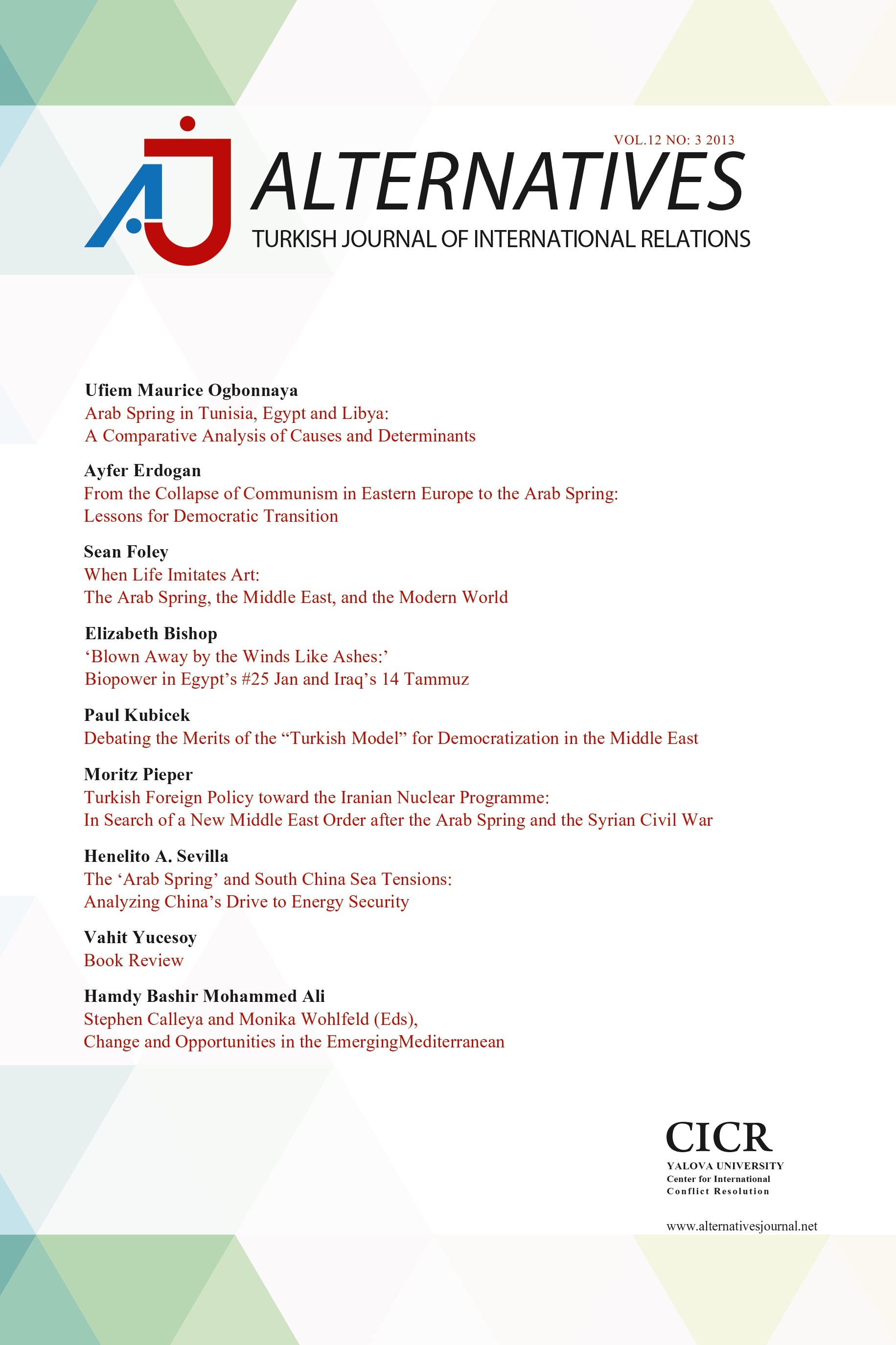
When Life Imitates Art: The Arab Spring, the Middle East, and the Modern World

Volume: 12 Number: 3 June 1, 2013
  • Sean Foley
EN

When Life Imitates Art: The Arab Spring, the Middle East, and the Modern World

Abstract

What was the intellectual vision that led to the Arab Spring and what are its roots This article investigates how that vision took shape in the years immediately before the Arab Spring through the work of poets and popular Arab singers like Hamza Namira and Maher Zain. It argues that the vision in art and politics mirrored the desire of many Arabs and Muslims to find new ways to solve the challenges plaguing their societies. The vision also reflected a) how the downturn in the global economy after 2008 combined with major environmental changes to galvanize millions to act in the Arab World b) how social media and new communications tools helped to mobilize dissent and to limit the ability of governments to effectively repress their populations. More than two years after the Arab Spring began in late 2010 the movements it spawned are radically reconstructing societies in the Middle East. They are also undermining some of the basic assumptions of the international system, many of which have been in place since the Peace of Westphalia in 1648

Keywords

Details

Primary Language

English

Subjects

-

Journal Section

Research Article

Authors

Sean Foley This is me

Publication Date

June 1, 2013

Submission Date

November 7, 2015

Acceptance Date

-

Published in Issue

Year 2013 Volume: 12 Number: 3

APA
Foley, S. (2013). When Life Imitates Art: The Arab Spring, the Middle East, and the Modern World. Alternatives: Turkish Journal of International Relations, 12(3), 32-46. https://izlik.org/JA35MH63UY
AMA
1.Foley S. When Life Imitates Art: The Arab Spring, the Middle East, and the Modern World. Alternatives: Turkish Journal of International Relations. 2013;12(3):32-46. https://izlik.org/JA35MH63UY
Chicago
Foley, Sean. 2013. “When Life Imitates Art: The Arab Spring, the Middle East, and the Modern World”. Alternatives: Turkish Journal of International Relations 12 (3): 32-46. https://izlik.org/JA35MH63UY.
EndNote
Foley S (June 1, 2013) When Life Imitates Art: The Arab Spring, the Middle East, and the Modern World. Alternatives: Turkish Journal of International Relations 12 3 32–46.
IEEE
[1]S. Foley, “When Life Imitates Art: The Arab Spring, the Middle East, and the Modern World”, Alternatives: Turkish Journal of International Relations, vol. 12, no. 3, pp. 32–46, June 2013, [Online]. Available: https://izlik.org/JA35MH63UY
ISNAD
Foley, Sean. “When Life Imitates Art: The Arab Spring, the Middle East, and the Modern World”. Alternatives: Turkish Journal of International Relations 12/3 (June 1, 2013): 32-46. https://izlik.org/JA35MH63UY.
JAMA
1.Foley S. When Life Imitates Art: The Arab Spring, the Middle East, and the Modern World. Alternatives: Turkish Journal of International Relations. 2013;12:32–46.
MLA
Foley, Sean. “When Life Imitates Art: The Arab Spring, the Middle East, and the Modern World”. Alternatives: Turkish Journal of International Relations, vol. 12, no. 3, June 2013, pp. 32-46, https://izlik.org/JA35MH63UY.
Vancouver
1.Sean Foley. When Life Imitates Art: The Arab Spring, the Middle East, and the Modern World. Alternatives: Turkish Journal of International Relations [Internet]. 2013 Jun. 1;12(3):32-46. Available from: https://izlik.org/JA35MH63UY