Editor’s View
Abstract
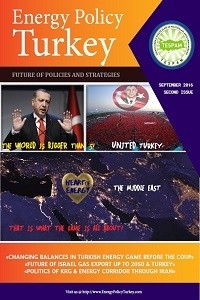
In the wake of Unity, Turkey decides to take responsibility over the Middle East and lead the Muslims through a better future with pleasant living conditions in a peaceful world, where Muslims have equal rights once more just like on Ottoman times. In fact, it should be over-expressed that Ottoman Empire ruled the world by the Unity of different cultures, religions and races. In contrast, today’s powerful states’ unity is based on just religion.
Perhaps, every other person has an idea or is aware that, in today’s world, the term “Unity” equals to “Christianity”. The rest of the world is prone to be dismantled. This is the logic that belongs to “Crusaders”, who started their duty in 1091. They have been actively doing their best to dig the Middle East and Africa since the World War I, when the Ottomans, successor of the mainly Muslim unity lost the control and Republic of Turkey was born from its ashes. The new Turkish state, after it finally got its freedom from the invaders in 1923, started from the scratch by building a democratic republic over the last remnants of the Ottoman Empire. It has never been easy for Turkey to walk the democracy line in harmony because of either the financial problems or political unrests procreated by the servants of the invaders. The young state struggled through coups, some of which successfully completed and some of them were only left as unsuccessful attempts.
Unfortunately, Turks had to live through a
well-written-scenario on 15 July 2016, namely “Attempted Terrorist Coup in
Turkey”. The so called master-mind, Fetullah Gulen, is just one of the servants
of the crusaders. The country residing such servants is the United States,
which basically is the base and a safe-ground, where the crusaders can legally
clean up their international mess.
Keywords
References
- Not available
Details
Primary Language
English
Subjects
Economics
Journal Section
Research Article
Authors
Necdet Karakurt
Türkiye
Publication Date
September 1, 2016
Submission Date
September 28, 2017
Acceptance Date
-
Published in Issue
Year 2016 Number: 2