Volume: 10 Issue: 2 , 8/31/24

Year: 2024

Research Article

Review

Default avatar
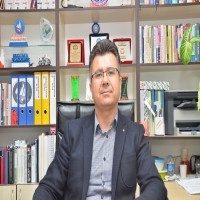
Assoc. Prof. Dr. Ahmet Emre DİNÇER ankara yıldırım beyazıt üniversitesi

Ahmet Emre Dinçer, 2005 yılında İTÜ Mimarlık Bölümü'nden mezun olmuştur. İTÜ Fen Bilimleri Enstitüsü'nden 2008 ve 2014 yıllarında yüksek lisans ve doktora derecelerini almıştır. 2014'te yardımcı doçent (dr öğretim üyesi), 2023'te doçent unvanlarını almıştir. 2005-2009 yılları arasında özel sektörde iken, 2009-2023 yılları arasında Karabük Üniversitesinde araştırma görevlisi ve dr öğretim üyesi olarak çalışmıştır. Şubat 2023'ten beri AYBÜ'de görev yapmaktadır. Başlıca araştırma alanları mimari tasarım hesaplama, mimari tasarım ve bina tasarımıdır.

Built Environment and Design, Urban Morphology, Architectural Design, Architectural History, Theory and Criticism
Machining, Additive Manufacturing, Material Production Technologies, Mechanical Engineering, Microtechnology, Material Characterization, CAD/CAM Systems
Burçin Atılgan Türkmen
Assoc. Prof. Dr. Burçin ATILGAN TÜRKMEN BİLECİK ŞEYH EDEBALİ ÜNİVERSİTESİ Web

Assoc. Prof. Dr. Burçin Atılgan Türkmen is an academic who is affiliated with Bilecik Şeyh Edebali University. After graduating from Eskişehir Osmangazi University Department of Chemical Engineering in 2008, she completed both her master and doctoral studies at the University of Manchester in 2016.
During her doctoral studies, she delved into a critical area of research, focusing on the assessment of the sustainability of current and future electricity options for Türkiye. This research is particularly significant given the global concern for sustainable energy solutions and the pressing need for a greener and more sustainable approach.
Ms. Atılgan Türkmen actively teaches at the university and her areas of expertise are reflected in the courses she imparts at the university, which encompass Sustainable Development and Industry, Renewable Energy Sources, Energy Systems, Quality, Environment and Safety, Sustainable Production Systems, as well as Sustainability and Engineering.
Furthermore, Ms. Atılgan Türkmen's influence in academia extends beyond the classroom. She has made significant contributions to the academic literature with her book chapters, articles, and research papers. Her research output covers a wide array of crucial topics, including environmental sustainability, life cycle assessment, climate change, and the environmental sustainability of glass production. This body of work underscores her commitment to advancing our understanding of environmental issues and underscores the importance of sustainable practices in various industries. Assoc. Prof. Dr. Burçin Atılgan Türkmen's academic journey and research efforts make her a notable figure in the field of sustainable development and environmental science.

Industrial Product Design, Food Sustainability, Chemical and Thermal Processes in Energy and Combustion, Environmental and Sustainable Processes, Energy, Life Cycle Assessment and Industrial Ecology, Clean Production Technologies, Environmentally Sustainable Engineering, Chemical Thermodynamics and Energetics
Cem Gök
Prof. Dr. Cem GÖK IZMIR BAKIRCAY UNIVERSITY, FACULTY OF ENGINEERING-ARCHITECTURE
Nuclear Chemistry, Biomaterials in Biomedical Engineering, Tissue Engineering, Biomaterial , Nanotechnology
Default avatar
Prof. Dr. Efendi NASİBOĞLU DOKUZ EYLÜL ÜNİVERSİTESİ, FEN FAKÜLTESİ Web
Machine Learning Algorithms, Data Engineering and Data Science, Decision Support and Group Support Systems, Fuzzy Computation, Evolutionary Computation
Default avatar
Assoc. Prof. Emine UÇAR İZMİR BAKIRÇAY ÜNİVERSİTESİ
Artificial Intelligence, Information Security Management, Data Mining and Knowledge Discovery
Default avatar
Asst. Prof. Dr. Emrah YILMAZ Department of Civil Enigineering, Düzce University, Düzce, Turkey
Life Cycle Assessment and Industrial Ecology, Construction Materials
Default avatar
Prof. Dr. Fatih Emre BORAN GAZİ ÜNİVERSİTESİ
Fuzzy Computation
Default avatar
Asst. Prof. Dr. Gökhan KAPLAN ATATÜRK ÜNİVERSİTESİ
Construction Materials
Default avatar
Dr. Instructor Gözde ALTUNTAŞ GAZİ ÜNİVERSİTESİ, TEKNOLOJİ FAKÜLTESİ
Computational Material Sciences, Physical Metallurgy, Materials Science and Technologies, Material Characterization, Metals and Alloy Materials
Default avatar
Gürcan ÇETİN MUĞLA SITKI KOÇMAN ÜNİVERSİTESİ
Information and Computing Sciences
Hacer Akhan
Asst. Prof. Dr. Hacer AKHAN TRAKYA ÜNİVERSİTESİ, MÜHENDİSLİK FAKÜLTESİ
Renewable Energy Resources , Energy Generation, Conversion and Storage (Excl. Chemical and Electrical)
Kamil Şirin
Prof. Dr. Kamil ŞİRİN MANİSA CELÂL BAYAR ÜNİVERSİTESİ
Physical Chemistry, Polymerisation Mechanisms
Default avatar
Dr. Instructor Kemal AYDIN KARADENİZ TEKNİK ÜNİVERSİTESİ
Manufacturing Metallurgy , Metals and Alloy Materials, Material Characterization, Resource Technologies, Engineering
Kemal Adem
Assoc. Prof. Dr. Kemal ADEM SİVAS CUMHURİYET ÜNİVERSİTESİ, MÜHENDİSLİK FAKÜLTESİ, BİLGİSAYAR MÜHENDİSLİĞİ BÖLÜMÜ
Artificial Intelligence, Natural Language Processing, Human-Computer Interaction, Information and Computing Sciences, Deep Learning, Image Processing, Data Mining and Knowledge Discovery, Decision Support and Group Support Systems
Default avatar
Mehmet Ali BİBERCİ ÇANKIRI KARATEKİN ÜNİVERSİTESİ
Optimization Techniques in Mechanical Engineering
Default avatar
Mehmet Kenan DÖŞOĞLU DUZCE UNIVERSITY
Electrical Machines and Drives, Electrical Engineering, Power Plants
Default avatar
Assoc. Prof. Dr. Muhammed ELİTAŞ BİLECİK ŞEYH EDEBALİ ÜNİVERSİTESİ
Resource Technologies
Signal Processing, Data Communications, Engineering Electromagnetics, Antennas and Propagation, Wireless Communication Systems and Technologies (Incl. Microwave and Millimetrewave)
Default avatar
Asst. Prof. Dr. Murat UÇAR İZMİR BAKIRÇAY ÜNİVERSİTESİ
Data Mining and Knowledge Discovery, Artificial Intelligence, Computer Software, Database Systems
Mustafa BOZDEMİR, Kırıkkale Üniversitesi, Makine ve Metal Teknolojileri Bölümünde Prof. Dr. kadrosuyla Bölüm Başkanı olarak görev yapmaktadır. Gazi Üniversitesi Teknik Eğitim Fakültesi, Makine Bölümünden 1994 yılında mezun olmuştur. Gazi Üniversitesi, Fen Bilimler Enstitüsü, Makine Eğitimi Bölümünde "Robot sistem elemanları ve hareket analizleri" konusunda yüksek lisans ve yine aynı bölümde 2003 yılında "Takım Tezgahlarının Yapay Zeka Tekniklerine Dayalı Sistematik Tasarımı" konusundaki teziyle doktora derecelerini almıştır.1999-2003 yıllarında Gazi Üniversitesinde Araştırma Görevlisi, 2003-2012 yılları arasında Pamukkale Üniversitesinde Teknik Eğitim Fakültesinde Yrd.Doç.Dr. olarak çalışmıştır. Şu anda Kırıkkale Üniversitesi Fen Bilimleri Enstitüsü Savunma Teknolojileri Bölümünde "Silah-Balistik" konularında eğitim-araştırma yapmaktadır. Çalışma alanları: Makine tasarımı, CAD-CAM, Yapay Zeka, Kavramsal tasarım, Silah Sistemleri ve Balistik konularıdır
Engineering, Industrial Product Design
Thermal Power Systems, Solar Energy Systems, Energy Systems Engineering
Default avatar
Asst. Prof. Dr. Mustafa YENİAD ANKARA YILDIRIM BEYAZIT ÜNİVERSİTESİ, REKTÖRLÜK, ENFORMATİK BÖLÜMÜ
Information Security Management
Mustafa Teke
Asst. Prof. Dr. Mustafa TEKE ÇANKIRI KARATEKİN ÜNİVERSİTESİ
Control Theoryand Applications, Embedded Systems, Deep Learning, Mechatronics Engineering
Onur Altuntaş
Assoc. Prof. Dr. Onur ALTUNTAŞ MİLLİ SAVUNMA ÜNİVERSİTESİ
Ballistic Systems, Powder Metallurgy, Material Characterization, Composite and Hybrid Materials
Mechanical Engineering, Materials Science and Technologies
Default avatar
Doctoral Ramazan DALMIŞ DOKUZ EYLÜL ÜNİVERSİTESİ
Materials Science and Technologies
Rukiye Karakış
Asst. Prof. Dr. Rukiye KARAKIŞ Sivas Cumhuriyet Üniversitesi Web
Image Processing, Machine Learning, Information and Computing Sciences, Deep Learning, Artificial Intelligence, Information Security and Cryptology
Semih Özden
Assoc. Prof. Dr. Semih ÖZDEN MİLLİ SAVUNMA ÜNİVERSİTESİ
Electrical Engineering, Autonomous Vehicle Systems, Control Theoryand Applications, Electrical Machines and Drives, Modelling and Simulation
Serkan Subaşı
Prof. Dr. Serkan SUBAŞI DUZCE UNIVERSITY, FACULTY OF ENGINEERING
Materials Science and Technologies, Composite and Hybrid Materials, Civil Engineering, Construction Materials
Food Technology, Energy, Renewable Energy Resources , Energy Generation, Conversion and Storage (Excl. Chemical and Electrical), Thermodynamics and Statistical Physics
1979 yılında Elazığ’da doğan Uğur ÇALIGÜLÜ, İlköğrenimini ve Ortaöğrenimini 1987-1997 yılları arasında Elazığ’da tamamladı. 2002 yılında Fırat Üniversitesi, Teknik Eğitim Fakültesi, Metal Eğitimi Bölümü, Metal Öğretmenliği Programından mezun oldu. 2005 yılında Fırat Üniversitesi, Fen Bilimleri Enstitüsü, Metalurji Eğitimi ABD’de yüksek lisans eğitimini tamamladı. 2009 yılında Fırat Üniversitesi, Fen Bilimleri Enstitüsü, Metalurji Eğitimi ABD’de doktora eğitimini tamamlayarak doktor ünvanını aldı. 2003-2011 yılları arasında Fırat Üniversitesi, Teknik Eğitim Fakültesi, Metal Eğitimi Bölümünde Araştırma Görevlisi, 2011-2013 yılları arasında Fırat Üniversitesi Teknoloji Fakültesi Met. ve Malz. Müh. Bölümünde Yrd. Doç. Dr. olarak görev yaptı. Eylül 2023 tarihinden itibaren aynı bölümde Prof. Dr. olarak görev yapmaktadır. Uğur ÇALIGÜLÜ evli ve üç çocuk babasıdır. Yabancı dili İngilizce’dir.
Materials Engineering, Casting Technologies, Physical Metallurgy, Plating Technology, Composite and Hybrid Materials, Material Characterization, Material Production Technologies, Metals and Alloy Materials, Powder Metallurgy, Manufacturing Metallurgy , Fracture Mechanics, Materials Science and Technologies, Resource Technologies, Tribology
Veysel Alcan
Asst. Prof. Dr. Veysel ALCAN TARSUS UNIVERSİTESİ, MÜHENDİSLİK FAKÜLTESİ, ELEKTRİK VE ELEKTRONİK MÜHENDİSLİĞİ BÖLÜMÜ
Biomechanic, Decision Support and Group Support Systems, Biomedical Engineering, Biomedical Sciences and Technology, Biomedical Diagnosis, Biomedical Therapy, Signal Processing
Default avatar
Res. Assist. Yusuf AYAN KARABÜK ÜNİVERSİTESİ
Engineering, Resource Technologies, Materials Engineering (Other), Metals and Alloy Materials
Default avatar
Res. Assist. Çağrı SUİÇMEZ GAZİ ÜNİVERSİTESİ, TEKNOLOJİ FAKÜLTESİ
Electrical Engineering, Power Plants, Signal Processing, Artificial Intelligence, Machine Learning
Default avatar
Prof. Dr. İsmail Serkan ÜNCÜ ISPARTA UYGULAMALI BİLİMLER ÜNİVERSİTESİ Web

Prof. Dr. İsmail Serkan ÜNCÜ. İlk, orta ve lise öğrenimini Isparta'da tamamladı. 1996 lisans derecesi aldı. 1999'da Gazi Ü. Fen Bilimleri Enstitüsü Elektrik Eğitimi Anabilim Dalı’nda yüksek lisansını tamamladı. 2004 'de Gazi Ü. Fen Bilimleri Enstitüsü Elektrik Eğitimi Ana Bilim Dalı’nda doktorasını tamamlayarak "doktor" unvanını aldı. 1997-2004 yılları arasında Gazi Üniversitesi Teknik Eğitim Fakültesi Elektrik Eğitimi bölümde araştırma görevlisi, 2004-2007 yılları arasında öğretim görevlisi olarak çalıştı. 2007-2013 yılları arasında Süleyman Demirel Üniversitesi, Teknik Eğitim Fakültesi Elektrik Eğitimi bölümünde Yardımcı doçent ünvanı olarak görev yaptı. 2013- 2018 yılları arasında SDÜ Teknoloji Fakültesi, Elektrik Elektronik Mühendisliği bölümde Yardımcı doçent ünvanı ile çalıştı. 2018 yılında "Doçent" ünvanı alarak Isparta Uygulamalı Bilimler Üniversitesi, Elektrik Elektronik Mühendisliği bölümünde göreve başladı.
2008 yılında International Commission on Illumination (CIE) Uluslararası aydınlatma komisyonuna seçildi. Bu komisyonun Görüntü Teknolojileri alt alanında Türkiye temsilcisi olarak çalışmaktadır. 1999 yılından beri Aydınlatma Türk Milli Komitesi üyesidir.
Evli, bir erkek ve bir kız, 2 çocuk babasıdır. SCI, Engineering Index, Alan indeksleri vb. indekslerde, çeşitli uluslararası ve ulusal hakemli dergilerde yayınlanmış birçok makalesi; uluslararası ve ulusal toplantılarda sunulmuş bildirileri, geliştirdiği faydalı modelleri ve çok sayıda proje çalışmaları mevcuttur. Çeşitli mesleki ve bilimsel kuruluşlarda üyelikleri bulunmaktadır.
Halen Isparta Uygulamalı Bilimler Üniversitesi, Elektrik Elektronik Mühendisliği bölümünde öğretim üyesi olarak çalışmaktadır. 

Renewable Energy Resources , Optical Fibre Communication Systems and Technologies, Image Processing, Electrical Energy Transmission, Networks and Systems, Power Plants, Solar Energy Systems

Gazi Journal of Engineering Sciences (GJES) is an International Refereed Journal published in the field of Engineering (Machinery, Construction, Industry, Computer etc.) and Technology. The objective of GJES is to be able to hear scientific studies both at national and international academic and industrial organizations.

Nowadays, academic publications play an important role in the delivery of technological products and scientific studies to the world of science and industry as a result of interdisciplinary studies.

With this journal, it is aimed to reach the targets of many scientific studies under the concept of engineering. Each original scientific work done in the engineering field is evaluated in our journal. 

Before being sent a manuscript to reviewers, it is checked in terms of similarity by iThenticate and similar applications to explore the plagiarism. If the similarity rate is over 20%, the article is directly rejected and returned.

GJES has a well -established and international advisory board and serves as Open Access to provide a rapid spread of scientific studies. 

Gazi Journal of Engineering Sciences publishes open access articles under a Creative Commons Attribution 4.0 International License (CC BY)

 1366_2000-copia-2.jpg

The academic publications sent to GJES are published as open access on the internet three times a year, in April, August and December, after passing through the referee examination.

The publication language of Gazi Journal of Engineering Sciences is Turkish and English

DOI: 10.30855/gmbd

*** Names of all authors and ORCID ID's should be entered into the system in the first submission phase.  

Similarity Report must be uploaded at the first submission stage of the article. (iThenticate / Turnitin - the maximum similarity ratio must be below 20%)

Mechanical Engineering
Metallurgical and Materials Engineering
Civil Engineering
Computer Engineering
Electrical and Electronics Engineering
Industrial Design Engineering
Manufacturing Engineering
Aerospace Engineering 
Automotive Engineering
Chemical Engineering
Environmental Engineering
Mining Engineering
Mathematical Applications in Engineering
Other Engineering Fields

Gazi Journal of Engineering Sciences, in order to establish scientific communication between scientists working in engineering fields, scientific original articles are accepted in Turkish or English.

Research Article: Studies that reflect original research with findings and results,

Review Article: Compilation an adequate number of scientific articles, summarizing the present knowledge and technology level, evaluating, and comparing these findings by comparing,

Technical Note: Writing a new method or technique describing important findings of a research done.

The Copyright Transfer Form of all manuscripts must be completed by all authors of the manuscript and forwarded to the editor. Publications of authors who do not submit a Copyright Transfer Form are not processed. No additions can be made later by the authors on the articles decided to be published.

Each article is reviewed in form and content by sending at least to two reviewer. The articles determined to be published in the magazine are made ready for publication by making a string of the determined articles.

FIRST PRESENTATION FORMAT

*** Similarity Report must be uploaded during the initial submission of the article.
(iThenticate / Turnitin - maximum similarity rate should be below 20%.)
Articles without similarity report will be returned.

TEXT: It should be written in Times New Roman font, in 12 pt, and should not exceed 20 pages, excluding references and illustrations. Authors should indicate what type of their article is.

TITLE: The title of the work should be written in capital letters, the title should be suitable for the text, short and clear.

The first letters of the first-degree titles in the text should be capitalized and bold. For the second-degree and lower titles, only the first letter of the title should be capitalized and the font thickness should be normal.

ABSTRACT: It should be written in Turkish and English, with a minimum of 150 and a maximum of 200. The title of the work should be written in English at the beginning of the English abstract.

KEYWORDS: Minimum 3 maximum 5 pieces should be given in Turkish/ English.

TEXT: In general, it covers parts related to introduction, method, findings, conclusion and discussion.


REFERENCES
In the brackets [1], [2], etc. Should be numbered with numbers and written at the end of the text according to the order in which they are given in the work.
The IEEE format should be used

Conference Paper in proceedings:
[#] A. Author of Paper and B. Author of Paper, "Title of paper," in Title of Published Proceedings: Proceedings of the Title of Conf.: Subtitle of the conference, Month Date, Year, Location, A. Editor and B. Editor, Eds. Place of publication: Publisher, Year. pp. inclusive page numbers.

[1] L. Liu and H. Miao, "A specification-based approach to testing polymorphic attributes," in Formal Methods and Software Engineering: Proc. of the 6th Int. Conf. on Formal Engineering Methods, ICFEM 2004, Seattle, WA, USA, November 8-12, 2004, J. Davies, W. Schulte, M. Barnett, Eds. Berlin: Springer, 2004. pp. 306-19.

Conference Paper from the internet:
[#] A. Author of Paper and B. Author of Paper, "Title of paper," in Proceedings of the Title of Conf.: Subtitle of the conference, Month Date, Year, Location [Format]. Place of publication: Publisher, Year. Available: Database Name (if appropriate), internet address. [Accessed: date of access].
[2] J. Lach, "SBFS: Steganography based file system," in Proc. of the 2008 1st Int. Conf. on Information Technology, IT 2008, 19-21 May 2008, Gdansk, Poland [Online]. Available: IEEE Xplore, http://www.ieee.org. [Accessed: 10 Sept. 2010].

Journal:
[#] A. A. Author of the article. "Title of article," Title of Journal, vol. #, no. #, pp. page number/s, Month year. Doi: xxx.xxxx
[3] J. R. Beveridge and E. M. Riseman, "How easy is matching 2D line models using a local search?" IEEE Transactions on Pattern Analysis and Machine Intelligence, vol. 19, pp. 564-579, June 1997. Doi: xxx.xxxx

Theses:
[#] A. A. Author, "Title of thesis: Subtitle," Unpublished thesis type, Abbrev, Dept., Abbrev. Univ., Location of University, Abbrev. State, Country, Year.
[4] M. W. Dixon, "Application of neural networks to solve the routing problem in communication networks," Ph.D. dissertation, Murdoch Univ., Murdoch, WA, Australia, 1999.

Book:
Authored; [#] A. Author, Title: Subtitle (in italics), Edition (if not the first), Vol. (if multivolume work). Place of publication: Publisher, Year, page number(s) (if appropriate).
[5] R. Hayes, G. Pisano, D. Upton, and S. Wheelwright, Operations, Strategy, and Technology: Pursuing the competitive edge. Hoboken, NJ: Wiley, 2005.
Edited; [#] A. A. Editor, Title: Subtitle (in italics), Edition (if not the first), Vol. (if multivolume work). Place of publication: Publisher, Year, page number(s) (if appropriate).
[6] D. Sarunyagate, Ed., Lasers. New York: McGraw-Hill, 1996. (Editor)

Internet documents:
[#] A. Author, "Document title," Webpage name, Source/production information, Date of internet publication. [Format]. Available: internet address. [Accessed: Date of access].
[7] J. Geralds, "Sega Ends Production of Dreamcast," vnunet.com, para. 2, Jan. 31, 2001. [Online]. Available: http://nl1.vnunet.com/news/1116995. [Accessed: Sept. 12, 2004].

Charts and figures:
All images without drawings (photographs, drawings, diagrams, graphics, maps, etc.) should be named as shapes. Each chart and figure should be placed where it will be inserted in the text. All forms must be numbered consecutively in the text. Shapes should be no more than 15 cm wide and high resolution.

Formulas and Units:
All formulas in the text should be written in equation format. Formulas should be numbered as (1), (2). All units must be in the SI unit system.

Symbols and Abbreviations:
Text can be given at the end of the source.

Acknowledgement:
If a person or organization is to be acknowledged, it should be written in this section and given before the sources.

Conflict of Interest Statements:
Author / Authors conflict of interest statement should be given in this section before the references.

IF THE ARTICLE IS ACCEPTED AFTER THE REVIEW PROCESS, SHOULD BE LOADED TO THE SYSTEM TO THE LAST PRESENTATION FORMAT. 

CLICK FOR THE ARTICLE LAST PRESENTATION FORMAT 

Copyright and Licensing Policy
Gazi Journal of Engineering Sciences (GJES) publishes open access articles under a Creative Commons Attribution 4.0 International License (CC BY). This license permits user to freely share (copy, distribute and transmit) and adapt the contribution including for commercial purposes, as long as the author is properly attributed.

88x31.png

For all licenses mentioned above, authors can retain copyright and all publication rights without restriction. 


Self-Archiving:

Gazi Journal of Engineering Sciences actively supports the author(s) self-archiving process. Journal encourages author(s) to self-archive any version of their manuscript to personal or institutional websites, in repositories and similar, prior to and after the publication of their manuscripts, provided that the author(s) must acknowledge the published source with citation and link the final published article via its Digital Object Identifier (DOI)


PUBLICATION ETHICS & MALPRACTICE STATEMENT

Publication ethics are kept in the course of publication processes in Gazi Journal of Engineering Sciences (e-ISSN 2149-9373) to assure the best practice guidelines and hence it is crucial for the journal’s editors, authors, and peer reviewers to abide by the ethical policies. Gazi Journal of Engineering Sciences conforms to the principles below that are described by COPE’s Code of Conduct and Best Practice Guidelines for Journal Editors (https://publicationethics.org/resources/code-conduct) and not only transparency principles, but also best practice in scholarly publishing pointed out by the Committee on Publication Ethics (COPE). 


DUTIES OF EDITOR-IN-CHIEF & SECTION EDITORS

Objectivity:
Editor-in-chief & section editors of the journal are account for deciding which of the manuscripts submitted to the journal ought to be published. In this process, the authors of the manuscript are not distinguished based on his/her race, ethnicity, gender, religion and citizenship by the editors. Editors´ decision to accept, revise or reject a manuscript for publication should be based merely on the importance, originality and clarity of the manuscript, and also convenience of the study performed in manuscript to the coverage of the journal.

Confidentiality:
Editor-in-chief and section editors staff must not reveal any information about a submitted manuscript to anyone but the corresponding author, reviewers/potential reviewers and the publishing personnel. Editors will assure that all material submitted by authors remains confidential during the review process.

Conflicts of interest & Disclosure:
Unpublished materials disclosed in a submitted manuscript must not be utilized in any reviewers’ own studies without express written permission of the author. Exclusive information or opinions attained from peer review process must be maintained confidential and not used for personal benefit. Reviewers ought not to take into account manuscripts in which they have conflicts of interest deriving from competitive, collaborative or other relationships/connections with any of the authors, companies or institutions linked to the articles.

Peer review process:
The editor-in-chief/section editors must assure that a double-blind peer review process is effectively performed for each manuscript submitted to the journal system.
Management of unethical behaviour(s)
Before being sent a manuscript to reviewers, it is checked in terms of similarity by iThenticate and similar applications to explore the plagiarism. If the similarity rate is over 20%, the article is directly rejected and returned.
The editors, together with the publisher(s), should take rationally responsive measures when ethical complaints have been presented regarding a submitted manuscript or published article.


DUTIES OF AUTHOR(S)

Authorship of the paper:
Authorship should be narrowed to those who have made a vital contribution to the reported study including conception, execution, design and interpretation. All authors made significant contributions to the submitted manuscript should be listed as co-authors.

Originality and plagiarism:
The authors are responsible for the content, language and originality of the manuscript they submitted. The authors should assure that they have composed their original works entirely, and if the authors have used the study and/or words of other authors, that this has been conveniently cited or quoted. Plagiarism takes many forms varying from “passing off” someone´s paper as the authors’ own paper to copying or paraphrasing important parts of someone´s paper (without attribution), to claiming results from research performed by others. Plagiarism in all its forms comprises unethical publishing behaviour and is inadmissible. Before being sent a manuscript to reviewers, it is checked in terms of similarity by iThenticate to explore the plagiarism.

Acknowledgement of funding sources:
All funding sources for the research reported in the manuscript should be acknowledged thoroughly at the end of the manuscript before references.

Disclosure and conflicts of interest:
All authors should reveal in their manuscript any financial or other substantive conflicts of interest which may be construed to affect the findings or interpretation of their manuscript. All financial support sources for the project should be disclosed as well. Disclosed examples of potential conflicts of interest include employment, consultancies, stock ownership, honoraria, paid expert testimony, patent applications/registrations, and grants or other funding. Potential conflicts of interest should be declared at the earliest stage possible.

Reporting standards:
Authors of the manuscript should present an accurate explanation of the study conducted and an objective discussion of its importance. Underlying data should be accurately given in the manuscript. A paper should include sufficient detail and references to allow other researchers to repeat the study. Tricky or knowingly imprecise statements form unethical behaviour and are unacceptable. Review and professional publication articles should also be precise, original and objective, and editorial opinion works should be described overtly as such.

Data access & retention:
Authors might be asked to ensure the raw data in connection with a paper for the editorial review process, and should, in any event, be prepared to keep in such data for a moderate time after publication.

Multiple, redundant or concurrent publication:
Submitted manuscripts must not be under consideration of any other journal. Submitting the same manuscript to more than one journal concurrently comprises unethical publishing behaviour. The authors must also assure that the article has not been published elsewhere before.

Principal errors in published studies:
When an author corresponds to a significant error or inaccuracy in his/her own published work, it is the author´s obligation to notify swiftly the journal editor or publisher and cooperate with the editor to withdraw or correct the paper.


DUTIES OF REVIEWERS
Reviewers should review and send the review comments in the due time period. If the manuscript is not in the reviewer’s field of interest, then the manuscript must be sent back to the editor so that the other reviewers can be assigned without losing time.

Contribution:
Reviewers are the main members contributing to the quality of the journal being a peer-reviewed one. The reviewers who feel unqualified to review the received manuscript must swiftly notify the editor and reject to review that manuscript.

Confidentiality:
Any manuscripts received for review must be treated as confidential documents. They must not be shown to or discussed with others except as authorized by the editor.

Objectivity standards:
Reviews should be objectively performed. Personal criticism of the author is unsuitable. Referees should frankly express their aspects with supporting arguments.

Acknowledgement of sources:
Reviewers should describe relating published study which has not been cited by the authors. Any statement that an observation, derivation, or argument had been previously reported should be accompanied by the relevant citation. A reviewer should also point out to the editor’s attention any vital resemblance or coincide between the manuscript under consideration and any other published paper of which they have personal information.

Disclosure & conflict of interest
Reviewers should not take into account the manuscripts in which they have conflicts of interest derived from competitive, collaborative, or other relationships/connections with any of the authors, companies or institutions linked to the manuscripts.


PUBLICATION POLICY 

Gazi Journal of Engineering Sciences (GJES) operates the process of publishing scientific articles as an international refereed journal and continues its publishing life in line with the following principles.

1. GJES is published three (3) times a year (April, August and December).
2. GJES is published only electronically.
3. GJES includes articles produced in the fields of Engineering (Machinery, Construction, Industry, Computers etc.) and Technology.
4. Articles submitted to the journal are accepted in Turkish or English.
5. The review and evaluation process of the submitted articles is carried out by “Blind Peer Review” method (by preventing the reviewers and authors from seeing each other's information).
6. GJES adopts Open Source Publishing Policy.
7. In our journal, there is no charge for publishing articles and accessing published articles. Authors and referees are not paid for articles accepted for publication.
8. In our journal, the article evaluation process is expected to take a maximum of 6 months for each article depending on the reviewer evaluations. 
9.  Before being sent a manuscript to reviewers, it is checked in terms of similarity by iThenticate and similar applications to explore the plagiarism. If the similarity rate is over 20%, the article is directly rejected and returned.
10. When the “Correction” decision is taken for the submitted articles, the authors should make the necessary corrections within 15 days and upload the final version of the article to the system. Editors have the right to reject the article if the corrections are made within the specified time.
11. Articles submitted to the journal should not be published elsewhere or submitted for publication
12. For the studies that were used as theses, presentations or papers and sent to our journal as an article, the information regarding the previous use should be given as footnotes on the first page according to the following conditions:


If the study was published as a summary report; the title of the report, name of the event, date and place information should be written.
If the study was produced from postgraduate theses; The name of the thesis, the name of the consultant, the university and institute at which it was made, and the date of completion and location information should be written.

If the study was supported by the research institution or fund; The name of the organization providing the support, project number and date of completion should be written.
Activity information should be written in a distinctive way for articles produced from published and partly published works outside the specified conditions.


13. Before the submitted articles are submitted to the referees, the following points are examined and the articles found suitable for the evaluation process are sent to the reviewers:
      Compliance with spelling rules,
      Formally fit the template,
      Compliance with its aim and scope,
      Compliance with publication principles,
      Compliance with publication ethics,
      Scientific quality and originality.


14. An article is evaluated by at least 2 reviewers and it should be deemed suitable to be published by at least 2 reviewers a prerequisite for being accepted for publication. After the approval of the reviewers, the Editor-in-Chief and Editorial Board have the power to decide whether the article will be published or not.
15. All authors who submit articles to our journal have equal rights. No privileges are given to the author or the author during the evaluation, acceptance and publishing processes of the articles. The publishing order of the accepted articles is adjusted according to the acceptance time. However, the Editorial Board reserves the right to make changes when it deems necessary.
16. After an article is accepted for publication, “Copyright Transfer Form” must be filled in and signed by all authors and uploaded to the journal system.
17. Articles accepted for publication are published by Gazi Journal of Engineering Sciences (GJES) with full publication rights.
18. Articles submitted to our journal are subject to plagiarism control processes (iThenticate etc.). If the plagiarism detected before the publication exceeds 20%, the article is rejected before the referee evaluation process is started. Unpublished is applied for plagiarism detected after publication and an editorial note is published in the journal for readers.


Gazi Journal of Engineering Sciences (GJES) does not charge any fee from authors for publishing and accessing published articles.

Publication Coordinator

Editor in Chief

Mechanical Engineering

Associate Editors

Information and Computing Sciences, Cloud Computing, Natural Language Processing

Section Editors

Default avatar
Assoc. Prof. Dr. Ümit ATİLA GAZİ ÜNİVERSİTESİ
Computer Vision, Deep Learning, Machine Learning Algorithms, Artificial Intelligence, Evolutionary Computation
M. Hanefi Calp
Prof. Dr. M. Hanefi CALP ANKARA HACI BAYRAM VELİ ÜNİVERSİTESİ
Information Systems Organisation and Management, Decision Support and Group Support Systems, Management Information Systems, Human-Computer Interaction, Data Management and Data Science, Recommender Systems, Data Management and Data Science (Other), Knowledge Representation and Reasoning, Technology Management and Business Models, Business Information Systems, Business Information Management, Technology Management
Default avatar
Prof. Dr. Mustafa GÜNAY KARABUK UNIVERSITY
Finite Element Analysis , Mechanical Engineering, Optimization Techniques in Mechanical Engineering, Material Design and Behaviors, Composite and Hybrid Materials, CAD/CAM Systems, Manufacturing Processes and Technologies (Excl. Textiles), Additive Manufacturing
Engin Nas
Assoc. Prof. Dr. Engin NAS DÜZCE ÜNİVERSİTESİ
Numerical Methods in Mechanical Engineering, Composite and Hybrid Materials, CAD/CAM Systems
Burçin Atılgan Türkmen
Assoc. Prof. Dr. Burçin ATILGAN TÜRKMEN BİLECİK ŞEYH EDEBALİ ÜNİVERSİTESİ
Industrial Product Design, Food Sustainability, Chemical and Thermal Processes in Energy and Combustion, Environmental and Sustainable Processes, Energy, Life Cycle Assessment and Industrial Ecology, Clean Production Technologies, Environmentally Sustainable Engineering, Chemical Thermodynamics and Energetics
Information and Computing Sciences, Information Systems, Big Data
Deep Learning, Artificial Intelligence, Industrial Product Design, Design Management, Engineering, Composite and Hybrid Materials
Mehmet Fatih Işık
Prof. Dr. Mehmet Fatih IŞIK HİTİT ÜNİVERSİTESİ
Electrical Engineering, Electrical Machines and Drives, Control Theoryand Applications
Adem Tekerek
Assoc. Prof. Dr. Adem TEKEREK GAZİ ÜNİVERSİTESİ, TEKNOLOJİ FAKÜLTESİ
Machine Learning Algorithms
Default avatar
Assoc. Prof. Dr. Halil KARAKOÇ HACETTEPE ÜNİVERSİTESİ
Engineering, Materials Science and Technologies, Material Characterization, Powder Metallurgy
Default avatar
Prof. Dr. Abdullah AKDOĞAN PAMUKKALE ÜNİVERSİTESİ
Environmental Biogeochemistry, Analytical Chemistry, Instrumental Methods, Engineering, Separation Processes, Food Chemistry and Food Sensory Science
Reinforced Concrete Buildings, Earthquake Engineering, Numerical Modelization in Civil Engineering, Civil Construction Engineering
Karolos Kontoleon
Dr. Karolos KONTOLEON Aristotle University of Thessaloniki
Building Technology, Building Physics, Civil Engineering
Hüseyin Gökçe
Assoc. Prof. Dr. Hüseyin GÖKÇE ÇANKIRI KARATEKİN ÜNİVERSİTESİ
Finite Element Analysis , Industrial Product Design, Material Production Technologies, Metals and Alloy Materials, CAD/CAM Systems, Manufacturing Processes and Technologies (Excl. Textiles)
Fatih Şahin
Prof. Dr. Fatih ŞAHİN Gazi University,Ankara,Turkey
Information and Computing Sciences, Engineering, Electrical Engineering, Embedded Systems, Automotive Engineering, Hybrid and Electric Vehicles and Powertrains, Automotive Mechatronics and Autonomous Systems, Automotive Engineering (Other)
Control Engineering, Mechatronics Engineering, Autonomous Vehicle Systems, Control Engineering, Mechatronics and Robotics (Other), Machine Theory and Dynamics, Mechanical Engineering (Other)
Mehmet Serkan Yıldırım
Asst. Prof. Dr. Mehmet Serkan YILDIRIM GAZİ ÜNİVERSİTESİ, TEKNİK BİLİMLER MESLEK YÜKSEKOKULU
Materials Science and Technologies, Resource Technologies, Composite and Hybrid Materials
Energy Systems Engineering, Energy, Solar Energy Systems
Erdem Cüce
Assoc. Prof. Erdem CÜCE Recep Tayyip Erdogan University
Photovoltaic Power Systems, Thermal Power Systems, Construction Materials, Energy Generation, Conversion and Storage (Excl. Chemical and Electrical)
Fecir Duran
Assoc. Prof. Dr. Fecir DURAN GAZİ ÜNİVERSİTESİ
Information and Computing Sciences, Machine Learning (Other), Electrical Engineering, Embedded Systems

Publication Ethics Committee

Erdem Cüce
Assoc. Prof. Erdem CÜCE Recep Tayyip Erdogan University
Photovoltaic Power Systems, Thermal Power Systems, Construction Materials, Energy Generation, Conversion and Storage (Excl. Chemical and Electrical)
Default avatar
Assoc. Prof. Dr. Ümit ATİLA GAZİ ÜNİVERSİTESİ Web
Computer Vision, Deep Learning, Machine Learning Algorithms, Artificial Intelligence, Evolutionary Computation
Default avatar
Prof. Dr. Mustafa GÜNAY KARABUK UNIVERSITY
Finite Element Analysis , Mechanical Engineering, Optimization Techniques in Mechanical Engineering, Material Design and Behaviors, Composite and Hybrid Materials, CAD/CAM Systems, Manufacturing Processes and Technologies (Excl. Textiles), Additive Manufacturing

Technical Editors

Default avatar
Mert Efe CEYLAN GAZİ ÜNİVERSİTESİ, TEKNOLOJİ FAKÜLTESİ, ENDÜSTRİYEL TASARIM MÜHENDİSLİĞİ BÖLÜMÜ

1,5 yıldır AB projelerinde personel ve eğitmen olarak çalışıyorum. Projelerde yüksek lisans tezim olan 3D baskı ve VR ortamında tasarım dersleri veriyorum. Aynı zamanda 4 yıllık bir süreçte üretim yapan fabrikalarda tasarımcı olarak çalıştım ve üretim süreçleri hakkında iyi bir bilgiye sahibim. Ekip olarak çalışmayı tercih ediyorum. Aktif olarak spor yapıyorum, yamaç paraşütü branşında milli sporcu ve eğitmenim.

Industrial Product Design, Design, Plan, Project and Application in Architecture, Habitation and Industrial Products, Machine Design and Machine Equipment, Agricultural Machines

GJES is indexed and archived by:

3311333114331153311633117

Gazi Journal of Engineering Sciences (GJES) publishes open access articles under a Creative Commons Attribution 4.0 International License (CC BY) 1366_2000-copia-2.jpg