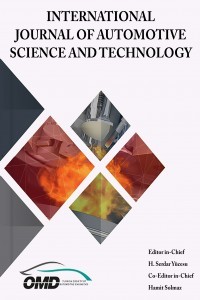
The International Journal of Automotive Science and Technology (IJASTECH) is committed to maintaining the highest standards of integrity, transparency, and ethical conduct in scholarly publishing. This statement outlines the ethical responsibilities of all parties involved in the publication process, including authors, reviewers, editors, editorial board members, and the publisher.
IJASTECH is an international, open access, peer-reviewed journal published by the Society of Automotive Engineers Turkey (Otomotiv Mühendisleri Derneği). The journal publishes articles in English and applies a single-blind peer review process. The journal follows a continuous publication model with issue-based structure. This ethics statement is prepared in line with internationally accepted principles of publication ethics and is informed by the guidance and core practices of the Committee on Publication Ethics (COPE).
1. Ethical Framework
IJASTECH expects all participants in the publication process to act in accordance with the principles of:
- academic honesty,
- originality,
- transparency,
- accountability,
- fairness,
- confidentiality,
- responsible research reporting,
- and respect for research participants, animals, institutions, and the scholarly record.
The journal does not tolerate plagiarism, data fabrication, data falsification, citation manipulation, duplicate publication, peer-review manipulation, undisclosed conflicts of interest, or any other form of publication misconduct.
2. Duties and Responsibilities of Editors
2.1 Editorial Independence and Fair Decision-Making
Editors evaluate submitted manuscripts exclusively on the basis of their academic merit, originality, methodological rigor, clarity, relevance to the journal’s scope, and contribution to automotive science and technology. Editorial decisions are made without discrimination based on race, ethnicity, nationality, gender, religious belief, political opinion, institutional affiliation, or personal characteristics of the authors.
2.2 Confidentiality
Editors and editorial staff must treat all submitted manuscripts as confidential documents. Information regarding a submission may only be shared with the corresponding author, reviewers, editorial advisers, and the publisher when necessary for editorial processing.
2.3 Conflict of Interest
Editors must not be involved in decisions regarding manuscripts in which they have a personal, institutional, academic, collaborative, or financial conflict of interest. In such cases, editorial responsibility must be transferred to another qualified editor.
2.4 Peer Review Oversight
Editors are responsible for ensuring that each manuscript undergoes a fair, unbiased, and timely single-blind peer review process. Editors should select reviewers with relevant expertise and should avoid reviewers with conflicts of interest.
2.5 Handling Misconduct
Editors will take appropriate action when ethical concerns are raised regarding a submitted or published work. Such action may include requesting clarification, seeking evidence, contacting authors’ institutions, rejecting the manuscript, publishing a correction, issuing an expression of concern, retracting the article, or applying other appropriate measures.
2.6 Corrections and Retractions
When serious errors or misconduct are identified, editors are responsible for protecting the integrity of the scholarly record. Depending on the nature of the issue, the journal may publish a correction, retraction, editorial note, or expression of concern.
3. Duties and Responsibilities of Authors
3.1 Originality and Plagiarism
Authors must submit only original work. Manuscripts must not contain plagiarism, self-plagiarism, copied data, manipulated images, or improperly reused material. All sources must be properly cited. Quotations, ideas, methods, data, figures, and tables taken from other works must be clearly acknowledged.
All submitted manuscripts may be screened with similarity-detection software before peer review and/or before final acceptance.
3.2 Authorship and Contributorship
Authorship must be limited to those who have made a substantial scholarly contribution to the conception, design, execution, analysis, interpretation, or writing of the study. All persons who made significant contributions must be listed as authors, and all listed authors must approve the submitted and final versions of the manuscript.
The corresponding author is responsible for ensuring that:
- all eligible contributors are listed as authors,
- no ineligible persons are listed as authors,
- all authors have seen and approved the manuscript,
- and author contribution statements are provided where required.
3.3 Accurate Reporting
Authors must present their work honestly, clearly, and accurately. The manuscript should contain sufficient methodological detail and appropriate references so that the work can be understood, assessed, and, where applicable, reproduced by others. Fraudulent or knowingly inaccurate statements are unethical and unacceptable.
3.4 Data Integrity and Data Availability
Authors are responsible for the accuracy, integrity, and preservation of the data underlying their study. When requested by the editors, authors should be prepared to provide raw data, processed data, codes, or supporting documentation for editorial evaluation. Authors should retain research data for a reasonable period after publication.
3.5 Multiple, Redundant, or Concurrent Submission
A manuscript submitted to IJASTECH must not be simultaneously under consideration by another journal or publication venue. Authors must not submit previously published work unless the journal explicitly permits justified secondary publication with full transparency and appropriate permission.
Redundant publication, salami slicing, and unjustified overlap with the authors’ own previously published work are considered unethical.
3.6 Acknowledgment of Sources
Authors must acknowledge the work of others appropriately. Relevant prior studies should be cited fairly and accurately. Citation manipulation, excessive self-citation, coercive citation, or citation of irrelevant sources solely to influence metrics is unethical.
3.7 Funding and Conflict of Interest Disclosure
Authors must clearly disclose all sources of funding, financial support, project sponsorship, and any relationships or interests that could influence, or appear to influence, the interpretation of the results. Examples include employment, consultancy, stock ownership, patents, paid expert testimony, grants, and institutional affiliations.
If no conflict of interest exists, authors should explicitly state that there is no conflict of interest.
3.8 Ethical Approval for Research Involving Humans or Animals
If the study involves human participants, human data, human samples, surveys, driver behavior experiments, ergonomic assessments, medical information, or any research requiring ethical oversight, the manuscript must include the name of the ethics committee/institutional review board, approval number, and approval date where applicable.
If the study involves animals, authors must confirm that all applicable institutional, national, and international guidelines for the care and use of animals were followed and that necessary approvals were obtained.
Where informed consent is required, authors must confirm that informed consent was obtained.
3.9 Use of Artificial Intelligence Tools
If generative AI or AI-assisted tools are used in the preparation of the manuscript, authors must disclose this use transparently and explain how the tools were used. AI tools cannot be listed as authors because they cannot take responsibility for the work. Authors remain fully responsible for the accuracy, originality, validity, and ethical integrity of all submitted content.
3.10 Copyright, Permissions, and Reuse
Authors are responsible for obtaining written permission for any copyrighted material reused in the manuscript, including figures, tables, photographs, or substantial text passages, where permission is required. Appropriate acknowledgments must be included in the manuscript.
3.11 Corrections After Publication
If authors discover a significant error or inaccuracy in their submitted, accepted, or published work, they must promptly notify the editorial office and cooperate fully in correcting or retracting the article where necessary.
4. Duties and Responsibilities of Reviewers
4.1 Contribution to Editorial Decisions
Reviewers assist editors in making editorial decisions and help authors improve the quality of their manuscripts through constructive, scholarly, and objective feedback.
4.2 Competence and Timeliness
Reviewers should accept review assignments only if the manuscript falls within their area of expertise and they can complete the review within the requested time. If a reviewer feels unqualified or unavailable, the editor should be informed immediately.
4.3 Confidentiality
Manuscripts received for review must be treated as confidential documents. Reviewers must not share, discuss, copy, use, or distribute the manuscript or its contents for personal, academic, or commercial advantage.
4.4 Objectivity and Professionalism
Reviews must be objective, respectful, evidence-based, and constructive. Personal criticism of authors is inappropriate. Reviewers should clearly explain their evaluations and support their recommendations with reasoned arguments.
4.5 Identification of Relevant Sources
Reviewers should identify important published work relevant to the manuscript that has not been cited by the authors. Reviewers should also alert the editor to any substantial similarity or overlap between the manuscript under review and any other work of which they are aware.
4.6 Conflict of Interest
Reviewers must decline to review manuscripts in which they have conflicts of interest arising from personal relationships, institutional connections, direct competition, collaboration, or financial interests.
5. Duties and Responsibilities of the Publisher
The publisher supports the editorial process but does not interfere with editorial decisions. The publisher is committed to safeguarding editorial independence, supporting ethical publishing practices, and ensuring that suspected misconduct is handled appropriately and transparently.
6. Complaints, Appeals, and Allegations of Misconduct
IJASTECH takes all complaints and allegations of misconduct seriously, whether they arise before or after publication. Complaints may relate to editorial decisions, peer review, plagiarism, data integrity, authorship, conflicts of interest, citation manipulation, ethical approval, or any other ethical concern.
Such cases will be evaluated by the editorial office and, where necessary, by the Editor-in-Chief and publisher in accordance with journal policies and recognized ethical guidance. Additional documents, explanations, or institutional clarification may be requested.
Authors may appeal editorial decisions when they believe a serious procedural or scientific misunderstanding has occurred. Appeals must be reasoned, evidence-based, and submitted in writing.
7. Actions in Cases of Ethical Violations
If misconduct or serious ethical violations are identified, IJASTECH reserves the right to take one or more of the following actions:
- reject the manuscript,
- return the manuscript for clarification,
- suspend editorial evaluation,
- inform the authors’ institution(s) or funding body,
- publish a correction,
- publish an expression of concern,
- retract the article,
- restrict future submissions from the responsible party for a defined period,
- or take any other measure deemed necessary to protect the integrity of the scholarly record.
8. Post-Publication Responsibility
Publication does not end ethical responsibility. Authors, reviewers, editors, and readers are encouraged to notify the journal if they identify significant errors, ethical concerns, or misconduct in published work. IJASTECH is committed to evaluating such notifications fairly and transparently.
9. Final Statement
All parties involved in the publication process of IJASTECH are expected to comply with this policy. Submission of a manuscript to the journal implies that the authors agree to these ethical standards and accept the journal’s procedures for editorial assessment, peer review, and the handling of potential misconduct.