Editor in Chief
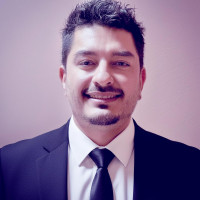







İzmir Katip Çelebi Üniversitesi, Tıp Fakültesi, Radyoloji AD
Assistant Editor

Editors
Prof. Dr.Esra Meltem Koç, 2008 yılında Selçuk Üniversitesi Tıp Fakültesi’nden mezun oldu; 2013 yılında Ankara Numune Eğitim ve Araştırma Hastanesi’nde Aile Hekimliği uzmanlık eğitimini tamamladı ve 2008 yılında Anadolu Üniversitesi Sağlık Kurumları İşletmeciliği ön lisansını; 2016 yılında Adalet ön lisansını ve 2013 yılında İşletme lisansını aldı. 2018 yılında Hacettepe Üniversitesi’nde Sağlık Ekonomisi ve Farmakoekonomi alanında yüksek lisansını; 2023 yılında İzmir Kâtip Çelebi Üniversitesi’nde Yazılım Mühendisliği ve 2024 yılında Medya ve İletişim alanlarında lisans eğitimlerini tamamladı. Halen Biyomedikal Teknolojiler alanında doktora eğitimine devam etmektedir. Dr. Koç, 2019 yılında Doçent ve 2025 yılında İzmir Katip Çelebi Üniversitesi’nde Profesör unvanı almıştır.
Dr. Koç, Kanıta Dayalı Tıp Derneği Başkanı ve Avrasya Sağlık Teknolojisi Değerlendirme İnisiyatifi’nin sekreteridir. ANEAH’ta görev yaptığı dönemde Türkiye’nin ilk hastane tabanlı Sağlık Teknolojisi Değerlendirme (HTA) birimi olan ANHTA tarafından yürütülen STD faaliyetlerine katılmıştır. Ayrıca 2015-2016 yılları arasında Sağlık Bakanlığı Sağlık Araştırmaları Genel Müdürlüğü Sağlık Teknolojisi Değerlendirme Dairesi’nde çalışmıştır. 2016 yılından bu yana İzmir Kâtip Çelebi Üniversitesi Tıp Fakültesi Aile Hekimliği Anabilim Dalı’nda öğretim üyesi olarak görev yapan Dr. Koç Temmuz 2025’ten beri Anabilim Dalı Başkanlığı; Mayıs 2017’den itibaren İzmir Kâtip Çelebi Üniversitesi Sağlık Uygulama ve Araştırma Merkezi Müdürlüğü’nü yürütmektedir. Ayrıca 2019-2021 yılları arasında Tıp Fakültesi Dekan Yardımcılığı yapmış ve Kasım 2024’te tekrar Tıp Fakültesi Dekan Yardımcısı olarak atanmıştır. Dr. Koç, İngilizce bilmektedir ve bir kız çocuğu annesidir. Çalışmaları kılavuz geliştirme, kılavuzların uygulanması ve STD raporlarının adaptasyonu üzerine yoğunlaşmaktadır. 2017 yılında DUODECIM (Finlandiya)’de (kanıta dayalı tıp, klinik uygulama kılavuzları ve karar destek sistemi) ve 2018 yılında NICE (National Institute for Health and Care Excellence,İngiltere)’ta (klinik uygulama kılavuzları) ziyaretçi araştırmacı olarak bulunmuştur.

Aydın Akan, Ocak 1967'de Bursa, Türkiye'de doğdu. 1988 yılında Uludağ Üniversitesi, Bursa'dan Elektronik Mühendisliği alanında lisans derecesi, 1991 yılında İstanbul Teknik Üniversitesi, Elektronik ve Telekomünikasyon Programı'ndan yüksek lisans derecesi ve 1996 yılında ABD, Pittsburgh, Pennsylvania, Pittsburgh Üniversitesi'nden Elektrik Mühendisliği alanında doktora derecesi aldı. 1996-2017 yılları arasında İstanbul Üniversitesi, Elektrik-Elektronik Mühendisliği Bölümü'nde görev yaptı ve 2001 yılında Doçent, 2006 yılında Profesör kadrosuna atandı. Mart 2017 ile Ocak 2020 arasında İzmir Katip Çelebi Üniversitesi, İzmir'de Mühendislik ve Mimarlık Fakültesi Dekanı, BAP Koordinatörü ve Biyomedikal Test ve Kalibrasyon Ar-Ge Merkezi Müdürü olarak görev yaptı. Halen İzmir Ekonomi Üniversitesi Elektrik-Elektronik Mühendisliği Bölümü'nde Bölüm Başkanı olarak görev yaptığı Profesörlük görevini yürütmektedir. Güncel araştırma ilgi alanları arasında durağan olmayan sinyal işleme, zaman-frekans sinyal analizi ve makine öğrenmesi yöntemleri ile bunların kablosuz iletişim ve biyomedikal mühendislik problemlerine uygulamaları yer almaktadır. IEEE Sinyal İşleme (SP) ve Tıp ve Biyoloji Mühendisliği (EMB) Derneklerinin kıdemli üyesi ve Avrupa Sinyal İşleme Derneği (EURASIP), Biyomedikal Görüntü ve Sinyal Analitiği (BISA) Teknik Alan Komitesi üyesidir. Elsevier Dijital Sinyal İşleme, Frankin Open ve Elektronik ve Sinyal İşleme Dergilerinin Yardımcı Editörü olarak görev yapmaktadır.
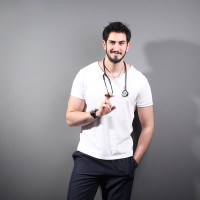
Efe Kanter, MD, is an Associate Professor in the Department of Emergency Medicine at İzmir Katip Çelebi University Faculty of Medicine. His research interests include emergency ultrasonography (POCUS), regional nerve blocks, critical care management, and clinical research in emergency medicine.
Statistical Editor
Language Editor
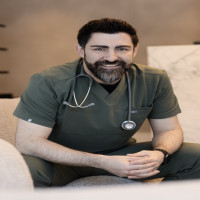
Dr. Cemal Kavasogullari is a UK-based medical doctor and clinician-educator in aesthetic medicine, longevity, and digital health. He directs Esteem Life Medical Group and leads training at Urban Training Academy. Qualifications include MD (Hacettepe), MRCGP (UK), PGCert Aesthetic Medicine (QMUL), PGCert Digital Health Systems (Strathclyde), and an Executive Leadership Certificate (Babson). A global trainer/KOL for Alma Lasers, VIVACY® Stylage, BeautyEurope (Lenisna/Juvelook) and Skinceuticals–L’Oréal, his work spans AI-assisted skin imaging, multi-modal laser parameterisation, and data-driven longevity pathways. He is a regular speaker at IMCAS, ACE and CCR with publications on skin health, lasers and regenerative aesthetics; recent honours include Best Clinic Scotland and Rising Star (Aesthetic Medicine Awards 2025).
Law Editor
Marmara Üniversitesi Hukuk Fakültesi mezunu olan Başak Ozan Özparlak, yüksek lisansını AB Hukuku
alanında, doktorasını Marmara Üniversitesi Hukuk Fakültesi’nde Özel Hukuk Bölümünde tamamlamıştır. 2016 yılından bu yana endüstri ve akademi kesişiminde; başta yapay zeka ve otonom sistemlerinin hukuki etkileri, siber güvenlik hukuku ve 6G kablosuz sistemlerinde mahremiyet ve güvenlik olmak üzere bilişim ve teknoloji hukuku üzerine ulusal ve uluslararası alanda eğitim, danışmanlık, Tübitak ve AB Horizon projelerinde araştırma ve danışmanlık faaliyetlerini yürütmektedir. Bu alanda pek çok ulusal ve uluslararası konferansta sunum yapmış ve çalışmalar yayınlamış olup, “İşyerinde Yapay Zeka Sistemlerinin Kullanılması: Hukuki Bir Değerlendirme” başlıklı bir kitabı bulunmaktadır. 2023 yılına dek avukatlık mesleği ile akademik faaliyetlerini eş zamanlı olarak yürütmüştür. Özyeğin Üniversitesi Hukuk Fakültesi’nde Bilişim Hukuku Ana bilim Dalı’nın kurulması ile birlikte, başkanlığını yürüttüğü bu bölümde tam zamanlı öğretim üyesi ve araştırmacı olarak çalışmalarını sürdürmektedir.
Advisory Board
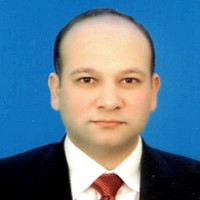

Dr. Akdoğan was born in 1976 in Fatih, Istanbul. He graduated from Pertevniyal High School in 1993. He graduated from Yıldız Technical University, Faculty of Electrical and Electronics, Department of Electronics and Communication Engineering in 1999. He completed his Master's and Doctorate degrees at Marmara University, where he worked as a Research Assistant. During his doctorate studies, he worked on the Design, Production and Artificial Intelligence-based Control of Rehabilitation Robots. Between 2008-2009, he spent postdoctoral research at the Biological Systems Engineering Research Laboratory at Hiroshima University, Japan. In 2010, he started working as a faculty member at the Department of Mechatronics Engineering, Faculty of Mechanical Engineering, Yıldız Technical University. He received the title of Associate Professor in 2015, and Professor in 2020. Under the roof of the Biomechatronics Research Laboratory he founded, he worked on many research projects, scientific publications, undergraduate and graduate thesis advisory in the field of medical mechatronics, and also received many patents, utility models and industrial design registrations. Since he started his academic career in 1999, he has held many administrative positions in the units he has worked. In July 2020, he assumed the Founding Directorship of the Biomechatronics and Robotic Systems Application and Research Center, which was established at Yıldız Technical University to operate with a focus on medical technologies, robotics and artificial intelligence. He provided consultancy for the studies carried out in the Health Technologies vertical at YTÜ Teknopark A.Ş., and ensured the implementation of many initiatives. Between 2020 and 2024, he assumed the Presidency of the Presidency of the Health Institutes of Turkey (TÜSEB), the relevant institution of the Ministry of Health. During this period, he managed the transition process of many medical products, especially TURKOVAC, from idea to product. During his presidency of TÜSEB, he was the executive of the Turkish National Genome and Bioinformatics Project, which was included in the 2021 investment program of the Presidency. He also served as the executive of the establishment project of the Biotechnological Drug and Vaccine Education R&D Center, which made significant contributions to our country's biotechnology ecosystem during the COVID-19 pandemic with the support of the Presidency Strategy Budget Directorate. Married and a father of one child, Dr. Akdoğan currently serves as a faculty member at Yıldız Technical University, Department of Mechatronic Engineering.

• Cardiologist, faculty member at Marmara University School of Medicine
• Founder and the director of the Marmara University Hypertension and Atherosclerosis Research Center.
• Founder and the co-ordinator of the multidisciplinary “Digital Medicine Elective Course” for the undergraduate students in Marmara University School of Medicine.
• Vice Editor on AI in Health and Digital Health at Anatolian Journal of Cardiology (2023- current)
Graduated from İstanbul University, Istanbul Medical Faculty in 1987.
He had his fellowships both in Internal Medicine and Cardiology in Marmara University School of Medicine; Istanbul. He worked in the Department of Cardiology in Marmara University School of Medicine between 1995 and 2011.
He was awarded with a training fellowship grant from the European Society of Cardiology in 1999 and he worked in the Division of Cardiology, Centre Hôpital Universitaire Vaudois (CHUV) in Switzerland in 1999-2000, as a fellow in cardiac electrophysiology, cardiac pacemakers and ICDs under the supervision of Prof. Dr. Lukas Kappenberger.
He is the co-founder and currently the director of the Marmara University Hypertension and Atherosclerosis Research Center. This is a multidisciplinary research center on hypertension and related CV diseases where mostly public awareness and preventive projects are run together with other universities and the NGOs. The center has dedicated cardiologists, neurologists, geriatrics, endocrinologists, and research nurses as well. Data scientists and software engineers collaborate in AI based studies in the Centre since 2011.
He is a member of Turkish Medical Association, Turkish Society of Cardiology, European Society of Cardiology, Acute Cardiovascular Care Association. He is among the founders of the “Digital Health Project Group” in the Turkish Society of Cardiology. He is also a member of e-health Working Group of the ESC.
He is amongst the reviewers of the peer reviewed journals like International Journal of Cardiology, ESC Heart Failure, The Anatolian Journal of Cardiology and Archives of Turkish Society of Cardiology. His main interests are hypertension, digital health, artificial intelligence in health, preventive cardiology and clinical cardiac arrhythmias.
He worked as the coordinator of the Internal Medicine Clerkship Program in Marmara University School of Medicine between 2012-2022.
He is also the founder and director of the multidisciplinary “Digital Medicine Elective Course” for the undergraduate students in Marmara University School of Medicine which was launched in 2017, that is the first and only digital medicine program initiative in medical schools in Turkey. He is also amongst the faculty of Digital Health Course in Marmara University Faculty of Engineering.
Dr. Ali Serdar Fak is leading several digital medicine and AI based medial projects focused on diagnosis, prevention and management of cardiovascular diseases and as well patient empowerment and digital health literacy in Marmara University Hypertension and Atherosclerosis Research Center. Turkish Heart Foundation also acts as a partner in some of these projects.
Dr. Ali Serdar Fak also runs tele-medicine supervision for hypertensive and arrhythmia patients with smart devices in his private office since 2014.
PATENT: AI algorithm to predict the presence of heart failure (TR 2022 022035 A2, 2025/04/21, A61B 5/021, A61B 5/256, A61B 5/25, A61B 5/00).
Recently coordinated and accomplished projects are as follows:
• M.U. Students’ Healthy Hearts Project: Partners: Volunteer Students Clubs in Marmara University, Turkish Heart Foundation, Istanbul Kadıköy Municipality and Cyclists Society. Partly sponsored by Marmara University, Istanbul Kadıköy Municipality.
• Prediction of non-dipper blood pressure response by data mining in patients with DM. Partners: M.U. Technology Faculty. Postgraduate thesis, published.
• Web Based Monitoring and Pulse Self-Palpation in Detection of Silent Atrial Fibrillation Episodes in High Risk Patients in Istanbul Nursing Homes (WebsAFIs). Partners: Turkish Heart Foundation and Istanbul Kadıköy Municipality. Unconditionally sponsoredby Pfizer Global, as an investigator-initiated project. Published
• Prediction of atrial fibrillation by AI using Holter ECG and echocardiographic data. Together with Osmangazi University Medical School, Department of Cardiology, manuscript sent for publication.
• Prediction of heart failure by AI using ECG and impedance data. Together with M.U. School of Medicine, Department of Cardiology and Marmara University Faculty of Engineering, postgraduate thesis, published.
• Investigation of theeffects of CV disease on Covid-19 disease severity using data mining. Multidisciplinary study, postgraduate thesis, published.
• Fall detectionandfallpreventionbysmartdevicesand AI in elderlycarecenters. Partners: M.U. School of Medicine, Division of Geriatrics, published.
• Prediction of worsening in heartfailureby AI using data from wearables. Multicenter prospective clinical study, Unconditionally and partly sponsored by Astra Zeneca TR and MEA 2023, patient enrollement completed, data anaylsis being done.
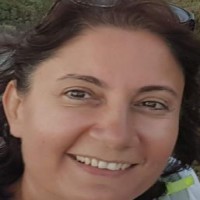
Dr. Varlı started her academic career in 1990 as a Research Assistant in the Department of Computer Engineering at Yıldız Technical University. She was appointed Assistant Professor in 2002 and Associate Professor in 2014. In 2012, she worked as a visiting researcher at the School of Engineering and Design and the School of Physics at Brunel University in the United Kingdom. She became a Full Professor in 2020 and has served in various administrative roles such as Deputy Director of the Institute, Vice Chair of the Department, and Head of Departmental Divisions. Between 2021 and 2024, she served as Vice President of the Health Institutes of Türkiye (TÜSEB) and as the Director of the Türkiye Health Data Research and Artificial Intelligence Applications Institute.
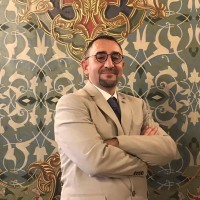
Öğretim Görevlisi Önder Öztürk, Kütahya Sağlık Bilimleri Üniversitesi'nde, yapay zekânın ruh sağlığı hizmetlerindeki uygulamaları üzerine odaklanan öncü bir akademisyendir. Kendisi, Türkiye'nin demografik ve kültürel verisine göre optimize edilmiş; depresyon, anksiyete, kendine zarar verme ve intihar riski taramalarını bütünleştiren yapay zekâ destekli, yerli bir dijital triyaj platformu geliştirme projesine liderlik etmektedir. Bu yenilikçi proje kapsamında, doğal dil işleme ve makine öğrenmesi yetkinliklerini kullanarak, tarama sonuçlarını dinamik olarak analiz eden "Kompozit Psikolojik Risk İndeksi (KPRI)" gibi özgün karar destek modülleri tasarlamaktadır. Çalışmaları, geliştirdiği sistemlerin ulusal sağlık standartlarına (HL7 FHIR) tam uyumlu olması ve yerel kriz yönlendirme mekanizmalarıyla entegre çalışabilmesi sayesinde, teknolojinin koruyucu ruh sağlığı hizmetlerine entegrasyonu konusunda Türkiye'deki önemli bir boşluğu doldurmayı hedeflemektedir.
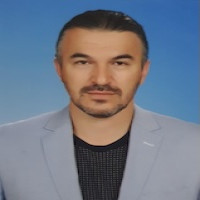
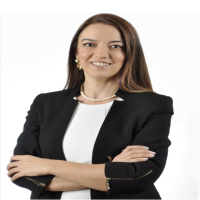
Doç.Dr.Leyla TURKER, İstanbul Tıp Fakültesi Öğretim üyesi, Türkiye Yazılımcılar Federasyonu Yapay Zeka Komite Başkanıdır. “Uygulamalı girişimcilik” eğitimini TUSSİDE’den, sağlık işletmeleri yöneticiliği sertifikasını İTÜ’den, “Stratejik teknolojiler ve ürün yönetimi mentorluk” eğitimini TUBİTAK tan, “İnovasyon liderliği” eğitimini Royal Academy of Engineering ten almıştır. İstanbul Üniversitesi İstanbul Tıp Fakültesinde öğretim üyesi, Mentor Derneği başkan yardımcısı, TETFİT Giyilebilir Teknolojiler ve ROTAMETA markalarının CEO’sudur.
Giyilebilir teknolojiler, robotik sistemler ve sanal gerçeklik ile ilgili çalışmaları bulunmaktadır. 2015 yılında Türkiye’de bir ilk olan İstanbul Üniversitesi “3 Boyutlu Tıbbi ve Endüstriyel Tasarım Laboratuvarı”nın ve “TETLAB Fikir Fabrikası”nın kurucusu ve yöneticisidir. 300’ün üzerinde patent başvurusuna, 50nin üzerinde şirket kuruluşuna destek olmuş Dr.Türker’in 24 patent 2 faydalı model başvurusu, 22 uluslararası-ulusal ödülü mevcuttur.
Başlıca Ödülleri
1- Global Intellectual Property Convention “Innovation Leadership Turkiye” 2024,
2024,
3- USİMP Patent Ödülü 2020
4- Bilime Katkı Özel Ödülü Future Healthcare 2019World Intellectual Property Office WIPO Akademik altın madalya 2018
5- Lübnan patent kurumu “creative and excellent invention” ödülü 2018
6- 2018 Yılın Bilim insanı,
7- 2018 yılı girişimci işadamları vakfı proje/fikir ikincilik ödülü 2018,
8- Yılın kadın mucidi ödülü, Türk Patent ve Marka Kurumu 2018,
9- World Intellectual Property Office (WIPO), altın madalya, 2017,
10- Korea Womens Inventors Association, altın madalya, 2017,
11- Iran FIRI The 1th Instute Inventors and researchers “best invention ödülü”, 2017,
12- Taiwan Invention and Innovation Industry Association, “excellent invention” ödülü, 2017,
13- Bilim ve sanat ödülü, İstanbul Üniversitesi, 2017,
11- Güney Kore Kadın Buluşçular Fuarında Türkiye temsiliyeti, Türk Patent ve Marka Kurumu, 2017,
12- Başarı belgesi TC Bilim Sanayi ve Teknoloji Bakanlığı, 2016,
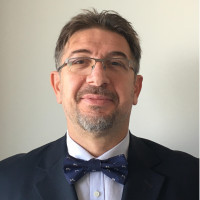
Prof. Dr. Esin Öztürk Işık graduated in 1999 with a bachelor’s degree in Computer Engineering from Middle East Technical University. In 2002, she completed her M.S. in Biomedical Engineering at the University of Alabama at Birmingham. She then finished the joint Ph.D. program in Bioengineering conducted by the University of California, Berkeley and the University of California, San Francisco. She pursued her postdoctoral research at the University of California, San Francisco, in the Department of Radiology and Biomedical Imaging.
Since 2014, she has been a faculty member at the Institute of Biomedical Engineering at Boğaziçi University and the director of the Computational Imaging Laboratory. Her research focuses on developing innovative magnetic resonance imaging techniques for the diagnosis, treatment planning, and follow-up of brain tumors and neurological diseases, as well as deep learning–based data analysis. She leads several projects supported by TÜBİTAK, the European Union, the U.S. Department of Defense, and the NIH.
Copy Editors
