
Editor-in-Chief

Editor







Co-Editors
Section Editor
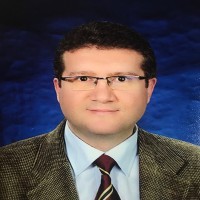

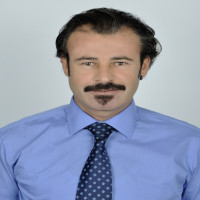
Caner Ozdemir received the B.S.E.E. degree in 1992 from the Middle East Technical University, Ankara, Turkey, and the M.S.E. and Ph. D. degrees in Electrical & Computer Engineering from the University of Texas at Austin in 1995 and 1998, respectively.
From 1992 to 1993, he worked as a project engineer at the Electronic Warfare Programs Directorate of ASELSAN Electronic Industries Inc., Ankara, Turkey. From 1998 to 2000, he worked as a research scientist at Electronic & Avionics Systems (ASTG) group of AlliedSignal Inc., Columbia, Maryland. He joined the faculty of Mersin University in 2000 and is currently a professor in the department of Electrical-Electronics Engineering, Mersin, Turkey. He has been serving as a consultant to the Marmara Research Center of the Scientific and Research Council (TUBITAK) of Turkey and many defense industry firms. Dr. Ozdemir’s research interests are radar cross section, radar image/signal processing, inverse synthetic aperture radar (ISAR), radar cross section, ground penetrating radar, through-the-wall imaging radar and antenna design. He has published more than 180 journal articles and conference/symposium papers on these subjects.
Dr. Ozdemir is a recipient of URSI EMT-S Young Scientist Award in the 2004 International Symposium on Electromagnetic Theory in Pisa, Italy and also recipient of a JARS best paper award for photo-optical instrumentation published in the Journal of Applied Remote Sensing in 2016. He is the author of the book titled “Inverse Synthetic Aperture Radar Imaging with Matlab Algorithms”.
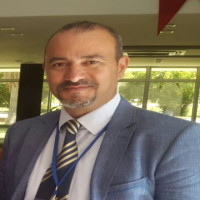
Active research areas include: assessment of the vulnerability of groundwater to pollution and groundwater potential, site selection, determination the morphometric characteristics of various geographic features, determining temporal changes in land use, surface temperature, and vegetation cover using Geographic Information System (GIS) and Remote Sensing (RS) techniques.


nanometarial, silica aerogel, carbon nanotube, graphene, high entropy alloy

Editorial Board
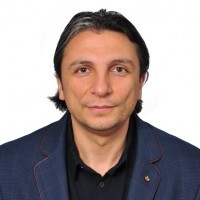
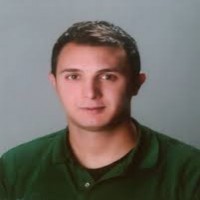
Dr. Selim Doğan is an Associate Professor in the Department of Environmental Engineering at Konya Technical University. His research interests focus on environmental issues such as drought analysis, climate change, sustainable environmental management, and the reuse of wastewater. His work particularly addresses the management of water resources and environmental sustainability. Dr. Doğan investigates the impacts of climate change on the environment and water resources, contributing to the development of sustainable solutions. He also conducts research on promoting environmentally friendly technologies, such as wastewater recycling and reuse. Throughout his academic career, Dr. Doğan has participated in various national and international projects and has published numerous scientific papers in leading journals on topics related to environmental engineering.
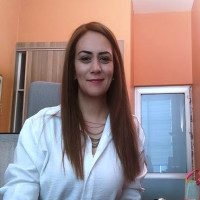
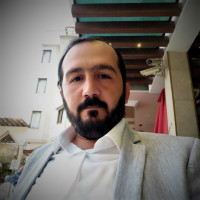
Professor Dimitrios Kalderis obtained his B.Sc. in Chemistry (1997) and Ph.D. in Environmental Chemistry (2001) from the University of Leeds, UK. During his Ph.D. studies he developed a method for the remediation of explosives-contaminated soil using subcritical water. After working for one year at the Energy and Environmental Research Center (EERC) in the United States, he became a research associate at the Technical University of Crete (Greece) working in EU and nationally-funded projects, preparing, characterizing and applying biomass-based carbons to wastewater treatment and soil remediation cases. Since 2010, he has been a permanent member of academic staff of the Hellenic Mediterranean University, teaching solid waste management courses at undergraduate and postgraduate level. His research interests include the development of soil remediation methods, the production of biochars and hydrochars from residual biomass and their environmental applications. He has published 106 papers, has an h-index of 38 and has received >5800 citations of his work. He has been listed at the top 2% of scientists in the world according to the Stanford/Elsevier list, for the consecutive years 2021, 2022, 2023.
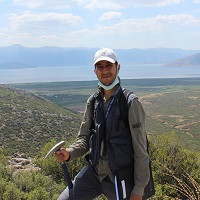
Layout Editor
