Review
Dissertation
Aim & Scope
Akdeniz University Journal of Science and Engineering, aims to publish original scientific research studies based on theoretical/experimental and/or numerical methods, which have international originality, make significant contributions to the literature on their subject, and have analytical and concrete results. The journal publishes only research papers reflecting the findings and results of original research.
Akdeniz University Journal of Science and Engineering publishes original scientific papers based on theoretical/experimental and/or numerical methods, which have international originality in the fields of science and engineering, make significant contributions to the literature on their subject, and have analytical and concrete results. Akdeniz University Journal of Science and Engineering evaluates the articles in Science and Engineering and all fields where they find application.
Author Guidelines
Articles submitted to the Journal should not have been published before and should not have been evaluated for publication elsewhere. In addition, the submitted articles should primarily cover the Sciences and Engineering and the fields where they find application and should include full text and abstract in ENGLISH.
Articles submitted for publication in our journal should be prepared and sent in following MS Office Word format. Articles except of these formats will not be considered.
• MS Office Template (download)
The information that must be included on the first page of the article is as follows:
• The title of the article should be written in a short, descriptive, and informative manner, and only the first letters should be written in capital letters and the other letters should be written in lowercase and placed on the first page.
• Authors and addresses of the article: The full names and surnames of all authors (without any abbreviations) should be written separately. Institution, postal address, and e-mail addresses of each author must be indicated on the first page. In addition, ORCID numbers of all authors should be given on the first page. Corresponding author is the person who takes primary responsibility for communication with the journal during article submission, peer review and publication process and should be indicated on the first page.
• The abstract of the article should be on the first page and should be written as follows:
o Abstract: It should be written in a way to include the main purpose, results, motivation, and method of the article and should be placed on the first page. In addition, the abstract should not exceed 300 words.
• Keywords: These are the words that accurately represent your article and best reflect the essence of your article. These keywords should make your article easier to find. It can consist of at least 4 (four) and at most 6 (six) words/word groups.
Other rules to be followed throughout the article are as follows:
• Introduction, Material and Method, Results and Discussion, Conclusion, Acknowledgments, Conflict of Interest (if any) and References should be given.
• In the References section, each reference should be listed alphabetically according to the surnames of the authors and numbered as [1], [2],..
• Figures and graphics, if any, should be prepared in accordance with photographic reproduction, and electronically produced graphics compiled in EPS format should be preferred.
Ethical Principles and Publication Policy
Ethical Principles
The Journal has accepted that all parties (publisher, editor, author, referee, reader) should apply internationally accepted ethical rules and publication policies.
Our journal observes the publication ethics principles, standards and recommendations set by COPE (Committee on Publication Ethics). Ethical issues will be evaluated in accordance with COPE rules and journal guidelines.
In this context, our journal has approved the production, development and sharing of peer-reviewed articles. All articles to be published or published that do not comply with the publication ethics policy of the journal are removed from the publication.
Our journal reserves the right to request output files related to the study subjects and analysis results from the authors according to the evaluations made by the editorial board and/or the referees. If the requested document is not submitted, the article will be rejected.
The prerequisite for the acceptance of the article for publication is that it is deemed suitable for publication by at least 2 (two) referees. The order of publication of accepted articles is adjusted depending on both the acceptance date and the date of the response to the galley proof. However, the Editorial Board reserves the right to make changes when deemed necessary. After an article is accepted for publication, the "Copyright Transfer Form" must be filled and signed by all authors and sent to the journal.
If there is a behavior that does not comply with the ethical principles of the parties, an unethical situation of a work sent or published for publication, the journal e-mail address should be informed.
Ethical Responsibilities of Authors
Related articles cannot be accepted when the following situations are detected.
• Author names are presented incompletely,
• Non-contributory people are included as authors,
• Articles which are out of the scope of the journal,
• Articles including plagiarism and unethical publishing behavior,
• In case of non-recognition of funding sources, if any,
• In matters of copyright infringement belonging to others,
• Disclosure of a place/person/institution/organization etc.,
• Having conflicts of interest,
• Lack of reporting standards,
• The data used cannot be submitted when requested,
• Multiple, unnecessary or simultaneous publications on the same study,
• Appropriate citations and references are not used within the scope of the study,
• In case of main and obvious errors in the article,
• Similarity detected before publication is above 20% (iThenticate).
• Authors should check the "iThenticate" output and rate in order to maintain the plagiarism control processes of the relevant article. The relevant report should be sent to the journal. The same procedure should be followed after the revision of the article.
• In case the work is accepted, the "Copyright Transfer Form" should be sent to the journal. All authors involved in the study must sign this document.
Ethical Responsibilities of Reviewers
• The article should be checked in accordance with the journal's guidelines.
• The academic quality and originality of the article should be examined.
• Should not share information about the study with authors or others.
• Evaluations should be concrete, measured and objective.
• During the evaluation process, attention should be paid to the time allocated to it. If necessary, additional time should be requested.
• In case of copyright infringement and plagiarism in the work, the editor should be informed immediately.
Ethical Responsibilities of Editor, Co-Editors and Field Editors
• Striving to increase the quality of publication in the journal.
• In the journal, the public interest is considered in the decisions made.
• Protecting the copyright of the authors of the articles published in the journal.
• Keeping the records of each article and correspondence about the journal in electronic or printed form.
• Editors complete their work with impartiality, confidentiality, conflict of interest, peer review processes,
• Making unethical behavior managements in accordance with rational ethical rules,
• The articles submitted to the journal are checked for compliance with the journal before they are submitted to the referees (at least 2 copies) by the relevant editor.
During the control of the article;
- Compliance with spelling rules
- Compliance with the template in shape
- Compliance with its purpose and scope
- Compliance with publication principles
- Compliance with publication ethics
- Scientific quality and originality,
should be examined.
Publication Policy of the Journal
• The Journal is published in English, at least one issue per year (June, December).
• It is a national and international blind, peer-reviewed and open access journal.
• No evaluation and application fee is charged from the articles.
• The article evaluation process takes an average of 8 (eight) weeks.
• The article in the evaluation process can be withdrawn, provided that all authors send the retraction request letter with wet signature to the journal's e-mail address. However, the article cannot be sent to another journal before this process is completed. An article cannot be withdrawn after evaluation process is completed.
Price Policy
Hiçbir ad altında yazar veya kurumundan ücret alınmaz.
Journal Boards
Sahibi | Owner

Baş Editör | Editor in Chief
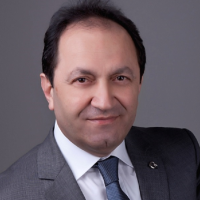
Editorial Board
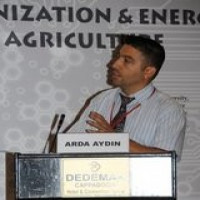




Prof. Gungor received his Ph. D in mechanical engineering (Istanbul Technical University) in 2006. He is presently professor of mechanical engineering at Akdeniz University, Antalya TURKEY. Prof Gungor has edited 15 books, and has published more than 260 proceedings, and has published more than 120 papers in peer-reviewed international journals, in addition to more than 30 book chapters. In the last 2 years Prof. Gungor has applied to patent for 3 innovative projects. Prof Gungor was the founder Dean of Bucak Technology Faculty, Burdur Mehmet Akif Ersoy University, Burdur, TURKEY, his research interests include New and Renewable Energy Sources, Nanotechnology, Energy Conversion and Management, Simulation and Modeling of Energy Systems, Combustion and Gasification of Coal and Biomass in Fluidised Beds, Hydrogen Production and Purification in Gasification of Coal and Biomass, Solar Thermal Applications.


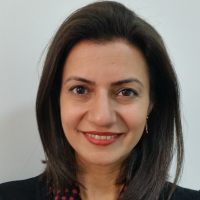
Dilek KOÇ SAN 2000 yılında Gazi Üniversitesi, Mühendislik-Mimarlık Fakültesi, Şehir ve Bölge Planlama Bölümünden mezun olmuştur. 2009 yılında Orta Doğu Teknik Üniversitesi, Jeodezi ve Coğrafi Bilgi Teknolojileri Anabilim Dalından Doktora (Bütünleşik Doktora) derecesini almıştır. Doktora eğitimi sırasında 2006 yılında 6 ay süreyle İsviçre Federal Teknoloji Enstitüsü (ETH), Fotogrametri ve Uzaktan Algılama Bölümünde araştırmalarda bulunmuştur. Orta Doğu Teknik Üniversitesi, Fen Bilimleri Enstitüsü, Jeodezi ve Coğrafi Bilgi Teknolojileri Ana Bilim Dalında 2002-2009 yılları arasında Araştırma Görevlisi; Selçuk Üniversitesi, Fen Bilimleri Enstitüsü, Şehir ve Bölge Planlama Anabilim Dalında 2009-2011 yılları arasında Araştırma Görevlisi Dr. olarak görev yapmıştır. 2011 yılında Akdeniz Üniversitesi, Fen Fakültesi, Uzay Bilimleri ve Teknolojileri Bölümünde Yardımcı Doçent kadrosuna atanmıştır. 2014 yılında Şehir ve Bölge Planlama bilim alanında Doçent unvanı ve yetkisi almıştır. 2017 yılından itibaren Akdeniz Üniversitesi, Mimarlık Fakültesi, Şehir ve Bölge Planlama Bölümünde, Planlama Teknolojileri Anabilim Dalında öğretim üyesi olarak görev yapmaktadır. 2020 yılında Profesör kadrosuna atanmıştır.
Dr.Irfan Turhan received his Ph.D. degree in Food Engineering. His teaching and research focus on Bioprocess Engineering; focus on fermentation of fruit and vegetables or its waste, fermentor design, enzyme technology, bioprocess separations: rational scaleup of analytical separation methods; conversion of batch processes to continuous processes; integrated fermentation/recovery systems; novel techniques fermentation of food.
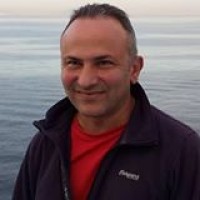
Akdeniz Üniversitesi, Ziraat Fakültesi, Tarım Ekonomisi Bölümü, Antalya, Türkiye
Orhan ÖZÇATALBAŞ, Akdeniz Üniversitesi Ziraat Fakültesi Tarım Ekonomisi Bölümü Öğretim Üyesidir. Çukurova Üniversitesi Ziraat Fakültesi'nden mezun olduktan sonra , Fen Bilimleri Enstitüsü'nde Yüksek Lisans ve doktorasını tamamladı. 1995-1998 döneminde aynı üniversitede Tarım Ekonomisi Bölümünde Yardımcı Doçent olarak görev yaptı. 1998 yılında Antalya Akdeniz Üniversitesi'ne yardımcı doçent olarak geçti ve 2011 yılında profesörlüğe atandı.
Dr. Özçatalbaş, yüksek lisans ve doktora sürecinde tarım ekonomisi, tarım politikası ve yayım alanında çalışmalarını yoğunlaştırmıştır. Araştırma alanları olarak; tarım ekonomisi, kırsal kalkınma ve yayım, tarım politikası, bilgi sistemleri ve Bilişim, kırsal turizm ve kırsal enerji ve politikaları sıralanabilir.
Postdoc çalışması için 1999-2000'döneminde Hannover Leibniz Üniversitesi Bahçe Bitkileri Ekonomisi Enstitüsü (Institut für Gartenbau ökonomie)’nde "Horticultural Information System" üzerine çalışma yapmıştır. Aynı enstitüde 2000-2004 yılları arasında çeşitli defalar araştırma çalışmaları için misafir bilim adamı olarak görev yapmıştır.
Ulusal ve uluslararası dergilerde 90'dan fazla makalesi ve 7 den fazla kitap bölümü 2 yayınlanmış kitabı (Tarımsal Yayım ve Haberleşme / Öğrenciler için Bilgisayar) ve editörlüğünü yaptığı ve 2023 yılında basılan "Sustainable Rural Development Perspective and Global Challenges" ( https://www.intechopen.com/books/11253 ) gibi yayınları bulunmaktadır.
Dr. Özçatalbaş, Türkiye Tarım Ekonomisi Derneği, Ziraat Mühendisleri Odası, Türkiye Erozyonla Mücadele, Ağaçlandırma ve Doğal Varlıkları Koruma Vakfı Bilim Kurulu Üyesi ve diger bazı mesleki alanlarda çalışan sivil toplum kuruluşları üyesidir. Dr Özçatalbaş ayrıca I"nternational Journal of Rural Tourism and Development (IRTAD) 'ın editörlüğünü yapmaktadır( http://www.turizmvekalkinma.org/).
2021 yılında Türkiye Nobel Bilim ve Araştırma Merkezi Derneği tarafından Tarım Ekonomisi alanında, kırsal kalkınma ve turizm alanında "Yılın Bilim İnsanı" ödülüne layık görülen Dr. Özçatalbaş Halen halen Akdeniz Üniversitesi Fen Bilimleri Enstitüsü müdürü olarak görev yapmaktadır.
Dergi Danışma Kurulu | Publishing Board
*Dergimiz Danışma Kurulunda ve diğer kurularda yer alarak katkı veren Sayın Öğretim Üyelerine içtenlikle teşekkür ediyoruz.
Teknik Editörler | Technical Editors
Alan Editörleri | Editorial Board
Prof. Dr. Rıza ERDEM, Akdeniz University, Faculty of Science, Dept. of Physics
Prof. Dr. Naim SAĞLAM, Firat University, Faculty of Aquaculture, Department of Aquaculture
Assoc. Prof. Dr. Mehmet ARSLAN, Akdeniz University, Faculty of Agriculture, Dept. of Field Crops
*Dergimiz Editörler Kurulunda yer alarak katkı veren Sayın Öğretim Üyelerine içtenlikle teşekkür ediyoruz.
