Research Article
Aim & Scope
The publication language of the journal: English and Turkish
Cultural Heritage and Science (CUHES) is an interdisciplinary academic, international journal for scholars and practitioners with a common interest in heritage.
Cultural Heritage and Science (CUHES) provide a multidisciplinary scientific overview of existing resources and modern technologies useful for the study and repair of cultural heritage and other structures. The journal will include information on history, methodology, materials, survey, inspection, non-destructive testing, analysis, diagnosis, remedial measures, and strengthening techniques.
Preservation of the architectural heritage is considered a fundamental issue in the life of modern societies. In addition to their historical interest, cultural heritage buildings are valuable because they contribute significantly to the economy by providing key attractions in a context where tourism and leisure are major industries in the 3rd millennium. The need for preserving historical constructions is thus not only a cultural requirement, but also an economic and developmental demand.
Cultural Heritage and Science (CUHES) cover the main aspects related to the study and repair of an existing historical artifact, including:
Cultural heritage prevention and restoration
Issues on the history of construction and architectural technology
General criteria and methodology for study and intervention
Historical and traditional building techniques
Survey techniques
Non-destructive testing, inspection, and monitoring
Experimental results and laboratory testing
Analytical and numerical approaches
Innovative and traditional materials for repair and restoration
Innovative strategies and techniques for repair and restoration
General remedial measures
Repair and strengthening of structures
Seismic behavior and retrofitting
Detailed and state-of-the-art case studies, including truly novel developments
Cultural Heritage and Tourism
Close-range photogrammetry applications for cultural heritage,
Laser scanning applications for cultural heritage,
3D modeling applications for cultural heritage,
UAV photogrammetry applications for cultural heritage
Underwater photogrammetry applications for cultural heritage
Virtual Reality and Augmented Reality applications for cultural heritage
Remote Sensing applications for cultural heritage
Archeologic studies
Architecture studies
History of Art studies
Description of novel technologies that can assist in the understanding of cultural heritage.
Development and application of statistical methods and algorithms for data analysis to further understanding of culturally significant objects.
Computer sciences in cultural heritage
Author Guidelines
Title 12 font size cambria left aligned and bold
Full Name*1 , Full Name 2 , Full Name 3
Abstract
Cambria, 9 font size. Abstract should be at most 300 words. Key words that will consist of at least 3 and maximum 5 words should be written on the left side. Mathematical expressions should not be included in essence. Cambria, 9 font size Abstract should be at most 200 words. Key words that will consist of at least 3 and maximum 5 words should be written on the left side. Mathematical expressions should not be included in essence. Cambria, 9 font size Abstract should be at most 300 words. Key words that will consist of at least 3 and maximum 5 words should be written on the left side. Mathematical expressions should not be included in essence. Cambria, 9 font size Abstract should be at most 300 words. Key words that will consist of at least 3 and maximum 5 words should be written on the left side. Mathematical expressions should not be included in essence. Cambria, 9 font size Abstract should be at most 300 words. Key words that will consist of at least 3 and maximum 5 words should be written on the left side. Mathematical expressions should not be included in essence. Cambria, 9 font size Abstract should be at most 300 words. Key words that will consist of at least 3 and maximum 5 words should be written on the left side. Mathematical expressions should not be included in essence. Cambria, 9 font size Abstract should be at most 300 words. Key words that will consist of at least 3 and maximum 5 words should be written on the left side. Mathematical expressions should not be included in essence. Cambria, 9 font size Abstract should be at most 300 words.
INTRODUCTION (CAMBRIA, CAPITAL, BOLD 10 FONT SIZE)
Content should be written in 2 columns with Cambria 10 font size. The first line of each paragraph should be written by 0.5 cm indentation.
The article should begin with an introduction section, which includes the ideas and the basic objectives and approaches of the article, combining scientific knowledge, evidence-based information and logical discussions in different disciplines. This section should be written considering all readers. Technical terms, symbols and abbreviations should be defined when first used in the article.
The main sections of the manuscript are “introduction”, “method” “results” “discussion” and “conclusion” and they should be written in 10 font size, justify, bold and capital letters.
All of the empty lines should have 8 font size.
This template explains how to design the manuscript. If the author (s) uses this template file, no settings change will be required since settings such as font and size, line spacing, spaces before paragraphs, indents, etc. are made in styles. If you want to avoid problems when copy and paste texts or with the text format, you can use “Applying styles to the article” section which is at the end of template.
2. METHOD (CAMBRIA, CAPITAL, BOLD 10 FONT SIZE)
Content should be written in 2 columns with Cambria 10 font size.
“Introduction” part should be followed by “Method”, “Results”, “Discussion” and “Conclusion” parts.
The article should be saved in MS Office Word as either .doc or docx. Text should be written as A4 size with 2 cm spacing at top, bottom, left and right side. Text should be written with single line spacing. Page numbers should not be added.
Articles prepared in accordance with the principles of writing and approved by the review board are published.
2.1. The Second Level Headings (Cambria, First Character Capital, Bold 10 Font Size)
Content should be written in 2 columns with Cambria 10 font size.
The second level headings should be written with left aligned, 10 font size, first character capital, bold. Each paragraph should seperate with one line from former paragraph. You can delete this section and write the article text without disturbing the formatting.
No spaces should be left between paragraphs in the text.
2.2. The second Level Headings (Cambria, First Character Capital, Bold, 10 Font Size)
The second level headings should be written with left aligned, 10 font size, first character capital, bold. Each paragraph should seperate with one line from former paragraph. You can delete this section and write the article text without disturbing the formatting.
No spaces should be left between paragraphs in the text.
Figures should be left and right aligned and numbered. Figure caption should be written 10 font size, cambria, first letter of first word capital. It should not be written as bold or italic. A dot should be placed after the figure number.
Text in the figure should be 9 font size. A line should not be exist between figure and figure caption. A line should exist between text and figure. Figure caption should be located under the figure. Figures should be cited in the text as “Fig. 1”.
2.2.1. Third level heading (Cambria, only first letter capital, bold 10 font size)
Only first letter of first word is capital, justified, 10 font size. It should be separated from the former paragraph with single line.
3. RESULTS (CAMBRIA, CAPITAL, BOLD,10 FONT SIZE)
References, tables, figures to be used must be prepared in accordance with APA 6. Articles that do not comply with the rules of writing and APA are eliminated in the first stage by the editor. You should review your references and check their compliance with APA 6. Tables must be cited in the text together with the table number as “Table 1”.
Tables should be numbered and the title of the table should be written in 10 pt. Table title should not be bold or italic. The table number should be followed by a dot and the table name should be written. No dot should be placed after the table name is written. Please do not use vertical lines in Tables.
In-table values / inscriptions should be 9 pt. No spaces should be left between the table title and the table. Tables should be specified in the text with the number of tables. Tables should be used in the text or on the following page. Related notes and references should be indicated at the bottom of the table after “Note:” or “Source:”. The space between the text and the table before and after the table must be 1 row.
4. CONCLUSION (CAMBRIA, CAPITAL, BOLD 10 FONT SIZE)
Citation in text should be as;
Single author
...(Yakar 2011)
Two authors
...(Yakar and Yılmaz 2016)
Three or more authors
...(Yakar et al. 2014)
Two references
...(Yılmaz et al. 2016; Yakar 2011)
More than one references in the same parenthesis should be made with the alphabetical order.
Bibliography should be prepared in accordance with the APA 6 Publication Manual publication guidelines. For more information; See http://www.apa.org. References should be written in alphabetical order with 10 pt including title. The paragraph indent is 0.7 cm hanging from the right.
The second and subsequent lines of each bibliography should be indented 0.7 cm inward as shown in this text. There will be a gap between the sources.
Thesis should be written as Master’s Thesis or Doctoral Thesis in the reference list.
ACKNOWLEDMENT
Acknowledgements of support for the project/paper/author are welcome.
REFERENCES
References should be written like this. All of the references should be written in alphabetical order.
Articles
Alptekin A & Taga H (2019). Prediction of compression and swelling index parameters of Quaternary sediments from index tests at Mersin District. Open Geosciences, 11(1), 482-491.
Iban M C (2020). Geospatial Data Science Response to COVID-19 Crisis and Pandemic Isolation Tracking. Turkish Journal of Geosciences, 1(1), 1-7.
Yakar M, Yılmaz H M & Mutluoglu O (2014). Performance of Photogrammetric and Terrestrial Laser Scanning Methods in Volume Computing of Excavation and Filling Areas. Arabian Journal for Science and Engineering, 39, 387-394.
Books
Maune D F (2001) Digital elevation model technologies and applications: The DEM User manual. The American Society for Photogrammetry and Remote Sensing. ISBN:1-57083-064-9
Conference
Varol F & Yiğit A Y (2019). 3D modeling of cultural heritage: the example of Muyi Mubarek Mosque in Uzbekistan (Hz. Osman’s Mushafi). International Congress on Cultural Heritage and Tourism (ICCHT), 115-123, Bishkek, Kyrgzstan.
Ethical Principles and Publication Policy
PUBLICATION ETHICS AND MALPRACTICE STATEMENT
CUHES follows certain ethical standards for publication, existing to ensure high-quality scientific publications, public trust in scientific findings, and due credit for original ideas. CUHES is connected to the Committee on Publication Ethics (COPE), abides by its Code of Conduct, and aims to adhere to its Best Practice Guidelines.
Committee on Publication Ethics (COPE). (2011, March 7). Code of Conduct and Best-Practice Guidelines for Journal Editors. Retrieved from https://publicationethics.org/files/Code_of_conduct_for_journal_editors_Mar11.pdf
Authors who submit papers to CUHES certify that his or her work is original and is not published or under publication consideration elsewhere. In addition, authors confirm that submitted papers have not been copied or plagiarized, in whole or in part, from other papers or studies. Authors certify that he or she does not have potential conflicts of interest or partial benefits associated with his or her papers.
CUHES will check for plagiarism in all submitted articles prior to publication. If plagiarism is detected at any stage of the publication process, the author will be instructed to rewrite the manuscript. Every submission will be scanned by iThenticate® to prevent plagiarism. If any manuscript is 30% plagiarized the article will be rejected and the author will be notified. We strongly recommend that authors check paper content before submitting for publication. Plagiarism can be checked by using free online software, like (FREE PLAGARISM CHECKER at http://www.quetext.com/.)
CUHES is committed to objective and fair blind peer reviews of submitted papers and the prevention of any actual or potential conflicts of interest between writers and reviewers.
Authors must confirm the following:
1. Manuscripts must be the original work of the submitting author.
2. Submitted manuscripts must be unpublished.
3. There should be no conflict of interest. If it exists, it must be clearly stated.
4. Authors should cite all data sources used in the preparation of the manuscript.
Please note: It is unethical to submit a manuscript to more than one journal concurrently.
Reviewers must confirm the following:
1. Manuscripts are reviewed fairly based on the intellectual content of the paper regardless of gender, race, ethnicity, religion, citizenship or political view of the author(s).
2. Any observed conflict of interest during the review process must be sent to the editor.
3. Information pertaining to the manuscript is kept confidential.
4. Information that may be a cause for rejection of publication must be sent to the editor.
Editors must confirm the following:
1. Manuscripts are reviewed fairly based on the intellectual content of the paper regardless of gender, race, ethnicity, religion, citizenship or political view of the author(s.)
2. Information pertaining to manuscripts is kept confidential.
3. Any observed conflict of interest pertaining manuscripts must be disclosed.
Please note: The Editorial Board takes responsibility for making publication decisions on submitted manuscripts based on the reviewer’s evaluation of the manuscript, policies of the journal editorial board, and legal efforts to prevent plagiarism, libel, and copyright infringement
Note: Author should make corrections in 2 months, otherwise paper will rejected.
Policies
Peer Review Policy
The author(s) of the present study and the journal accept(s) the ethical responsibilities that fit the PUBLICATION ETHICS. Each author is responsible for the content of his or her article. Articles submitted for publication are checked by the Turnitin (Professional Plagiarism Prevention) program. If an article contains plagiarism or self-plagiarism in more than 30% of the manuscript, it will be returned to the author for appropriate citation and correction.
• Submission of the same manuscript to different journals will not be accepted.
• Submissions with contents outside the scope of CUHES will not be considered for review.
• Submissions will have a double blind peer review.
• All papers are expected to have original content. They should not have been previously published or under review.
• The journal requires a minimum of three independent reviewers. All submissions are subject to a double blind peer review.
• Publication decisions are made by the journal's Editor-in-Chief on the basis of the reviewer' reports.
• Submitted papers and reviewer reports are archived whether they are published or not and are not returned.
• Authors who want to discontinue the publication process after submission to CUHES have to apply to the editorial board in a written correspondence.
• Authors are responsible for the writing quality of his or her papers.
• The CUHES journal is free of charge and will not pay any copyright fee to authors.
Open Access Copyright Policy
Open access (OA) journals are scholarly journals that are available online "without financial, legal, or technical barriers other than those inseparable from gaining access to the internet itself.” Open Access (OA) provides unlimited access and reuseability of research publications online for free. Therefore, the open access creates the network for reaching the widest possible audience, sharing the entire papers and building upon them.
The Cultural Heritage and Science (CUHES) has signed the Budapest Open Access Initiative and shows its “openness” clearly in a standardized form.
CUHES also supports the Budapest Open Access Initiative definition of ''Open Access,'' which is defined as:
“It has free availability on the public internet, permitting any users to read, download, copy, distribute, print, search, or link to the full texts of these articles, crawl them for indexing, pass them as data to software, or use them for any other lawful purpose, without financial, legal, or technical barriers other than those inseparable from gaining access to the internet itself. The only constraint on reproduction and distribution, and the only role for copyright in this domain, should be to give authors control over the integrity of their work and the right to be properly acknowledged and cited.”
Articles published in CUHES will be Open-Access articles distributed under the terms and conditions of the Creative Commons Attribution License
CUHES is licenced by Creative Commons Attribution-ShareAlike 4.0 International License.
You can find information about CC-BY-SA please click https://creativecommons.org/licenses/by-sa/4.0/legalcode
The auhtor(s) retain all copyrights of their articles. However, authors grant the publisher non-exclusive publishing rights to publish the articles.
Archieving Policy (LOCKSS)
The LOCKSS system has permission to collect, preserve, and serve this Archival Unit.
The International Journal of Engineering and Geosciences is using the LOCKKS archiving system.
The LOCKSS Program, based on the program used at Stanford University Libraries, provides libraries and publishers with award-winning, low-cost, open source digital preservation tools to preserve and provide access to persistent and authoritative digital content.
The LOCKSS Program (https://www.lockss.org/) is an open-source, library-led digital preservation system built on the principle that “lots of copies keep stuff safe.” The LOCKSS Program develops and supports libraries using an open source peer-to-peer digital preservation software.
The LOCKSS system allows librarians to access to the e-content to which they subscribe, restoring the print purchase model with which librarians are familiar.
The Global LOCKSS Network preserves today's e-journals and e-books for tomorrow's readers. The Global LOCKSS Network is a proven preservation approach that uniquely empowers both libraries and publishers. It enhances a library's value by restoring library collections via a locally installed "LOCKSS box", which is essentially a digital bookshelf. The Global LOCKSS Network enhances a publisher's value by preserving the original published artifact, including branding, historical context, and underlying files. It protects the publisher's interest by driving all reader traffic to their web site. The Global LOCKSS Network is administered and managed by the Stanford University Libraries LOCKSS Program. See the LOCKSS Program website for additional information, http://www.lockss.org/lockss/Home.
A detailed explanation of what sets the LOCKSS software apart and how preservation works in the LOCKSS network (e.g. technical infrastructure, security) can be found in the following link: https://www.lockss.org/about/how-it-works/.
CUHES LOCKSS data can be found in the following link: https://dergipark.org.tr/ijeg/lockss-manifest.
Deposit
The articles published in MEPHOJ are stored in Sherpa Romeo.
https://v2.sherpa.ac.uk/id/publication/41939
Complaint Policy
Complaints are welcome as they provide an opportunity for improvement. Responses to complaints should be quick, helpful, and constructive. Please address complaints with a volume number, issue number, paper ID, paper title, and page number.
The Culturaal Heritage and Science (CUHES) accepts the following complaints:
• Authorship complaints
• Plagiarism complaints
• Multiple, duplicate, and concurrent publications or simultaneous submissions
• Allegations of research errors and fraud
• Research standards violations
• Undisclosed conflicts of interest
• Reviewer bias or competitive/harmful acts by reviewers
Policy for Handling Complaints
If the Journal receives a complaint that any contribution to the Journal infringes intellectual property rights or contains material inaccuracies, libelous materials, or otherwise unlawful materials, the Journal will investigate the complaint. An investigation may include a request that the parties involved substantiate their claims (the Journal will make a good faith determination whether to remove the allegedly wrongful material). A decision not to remove material should represent the Journal's belief that the complaint is without sufficient foundation, or if well‐founded, that a legal defense or exemption may apply. The Journal will document its investigation and decision. We strive to ensure that CUHES is of the highest quality and is free from errors. However, we accept that occasionally mistakes might happen.
Editorial Complaints Policy
The Managing Editor and staff of CUHES will make every endeavor to resolve issues as soon as possible in the most appropriate way, offering a right of reply when necessary. We will investigate complaints in a blame-free manner, looking to see how systems can be improved to prevent mistakes occurring.
Guiding Principles
Our general approach to complaints is that they are a rare but inevitable part of a process that involves putting together complex material at great speed. Despite rare mistakes, we will spend effort to treat complaints with urgency. Timely solutions can prevent the escalation of problems. All substantial errors and complaints are referred to senior executives within the editorial staff.
The procedure outlined below aims to be fair to the submitting authors who have complaints as well as the things they complain about. All complaints will be acknowledged within three working days if by email. If possible, a definitive response will be made within two weeks. If impossible, an interim response will be given within two weeks. Interim responses will be provided until the complaint is resolved. Escalated complaints are sent to the editor.
How to Make a Complaint
Complaints about editorial content should be made as soon as possible after publication, preferably by email to: myakar@mersin.edu.tr
Article Correction Policy
The online, published version of an article is considered the final and complete version. Even though it is possible to correct this version, our policy (in common with other publishers) is not to do so, except in very rare circumstances.
The only typographical errors that can be corrected are: author names, affiliations, article titles, abstracts, and keywords. In such cases, an erratum or corrigendum would be necessary as well (see below) so that there is a record of the difference between the online and print versions.
We can publish a correction to your article if there is a serious error, for example with regard to scientific accuracy, or if your reputation or that of the journal would be affected. We do not publish corrections that do not affect the contribution in a material way or significantly impair the reader’s understanding of the contribution (such as a spelling mistake or a grammatical error).
Please send an email to myakar@mersin.edu.tr in the event a correction is needed.
Errata
An erratum will be used if an important error has been found during the publication process of the journal article. Errors requiring an erratum include: an error that affects the publication record, the scientific integrity of the paper, the reputation of the authors or of the journal, and errors of omission (e.g. failure to make factual proof corrections requested by authors within the deadline provided by the journal and within journal policy).
Erratas are not published for typing errors except where an error is significant (for example, an incorrect unit.) A significant error in a figure or table is corrected by the publication of a newly- corrected figure or table as an erratum. The figure or table is republished only if the editor considers it necessary.
Corrigenda
A corrigendum is a notification of a significant error made by the authors of the article. All authors must sign a corrigenda that is submitted for publication.
In cases where co-authors disagree, the editors will take advice from independent peer-reviewers and impose the appropriate amendment; noting the dissenting author(s) in the text of the published version.
Addenda
An addendum is a notification of a peer-reviewed addition of information to a paper. An example is a response to a reader’s request for clarification. Addenda do not contradict the original publication. If the author inadvertently omits significant information, the information can be published as an addendum after peer review.
Addenda are published only rarely and only when the editors decide that the addendum is crucial to the reader’s understanding of a significant part of the published contribution.
Price Policy
CUHES does not charge for any article submissions or for processing. It is Free
Indexes


Journal Boards
Chief in Editor

ŞENER YILDIRIM
DOÇENT
E-Posta Adresi seneryildirim@mersin.edu.tr
Telefon (İş) 3243610001-
Adres Mersin Üniversitesi Fen-Edebiyat Fakültesi Sanat Tarihi BölümüÇiftlikköy KampüsüYenişehir Mersin
Öğrenim Bilgisi
Doktora ANADOLU ÜNİVERSİTESİ/SOSYAL BİLİMLER ENSTİTÜSÜ/SANAT TARİHİ (DR)/
2007
7/Haziran/2013 Tez adı: Side Antik Kentinin Bizans Dönemi dini mimarisi (2013) Tez Danışmanı:(BEDİA YELDA UÇKAN)
Yüksek Lisans HACETTEPE ÜNİVERSİTESİ/SOSYAL BİLİMLER ENSTİTÜSÜ/SANAT TARİHİ (YL) (TEZLİ)/
2002
7/Kasım/2006 Tez adı: Philomelion`daki (Akşehir) Bizans dönemi taş eserleri (2006) Tez Danışmanı:(DOÇ.DR. SEMA DOĞAN)
Lisans HACETTEPE ÜNİVERSİTESİ/EDEBİYAT FAKÜLTESİ/SANAT TARİHİ BÖLÜMÜ/SANAT TARİHİ PR./
1997
10/Haziran/2002
Akademik Görevler
DOÇENT MERSİN ÜNİVERSİTESİ/FEN-EDEBİYAT FAKÜLTESİ/SANAT TARİHİ BÖLÜMÜ/SANAT TARİHİ ANABİLİM DALI
22.09.2022
Yönetilen Tezler:
Yüksek Lisans
2024
1. BİLGİN ALPER, (2024). Tarsus-Sıraköy Kümbet mevkii geç antik dönem zeytinyağı ve şarap işlikleri, Mersin Üniversitesi->Sosyal Bilimler Enstitüsü->Sanat Tarihi Ana Bilim Dalı (Tamamlandı)
2023
2. SEMİRAMİS EMRE, (2023). Myra-Demre Aziz Nikolaos Kilisesi kazılarında ortaya çıkarılmış Episkopeion'da (Piskoposluk ikametgahı) malzeme ve yapım teknikleri, Mersin Üniversitesi->Sosyal Bilimler Enstitüsü->Sanat Tarihi Ana Bilim Dalı (Tamamlandı)
3. KÜNEŞ İBRAHİM HALİL, (2023). Bizans Döneminde Urfa ve çevresi, Mersin Üniversitesi->Sosyal Bilimler Enstitüsü->Sanat Tarihi Ana Bilim Dalı (Tamamlandı)
2022
4. AKAR TANER, (2022). Arykanda Arif Kale Piskoposluk Kilisesi ve Vaftizhanesi, Mersin Üniversitesi->Sosyal Bilimler Enstitüsü->Sanat Tarihi Ana Bilim Dalı (Tamamlandı)
5. KÜNEŞ İBRAHİM HALİL, (2022). Bizans Döneminde Urfa ve Çevresi, Mersin Üniversitesi->Sosyal Bilimler Enstitüsü->Sanat Tarihi Ana Bilim Dalı (Devam Ediyor)
2021
6. DOĞAN ÖZLEM, (2021). Kilikia Bölgesi'nde bulunan Bizans Dönemi kaya kiliseleri, Mersin Üniversitesi->Sosyal Bilimler Enstitüsü->Sanat Tarihi Ana Bilim Dalı (Tamamlandı)
2019
7. KIPRAMAZ ALİ, (2019). Herakleia pontike (Karadeniz Ereğli) Bizans Dönemi taş eserleri, Mersin Üniversitesi->Sosyal Bilimler Enstitüsü->Sanat Tarihi Ana Bilim Dalı (Tamamlandı)
Doktora
2025
8. AKAR TANER, (2025). Alahan Manastırı Mimari Süsleme Elemanları, Mersin Üniversitesi->Sosyal Bilimler Enstitüsü->Sanat Tarihi Ana Bilim Dalı (Devam Ediyor)
Projelerde Yaptığı Görevler:
Arykanda Antik Kenti Kazısı, Diğer kamu kuruluşları (Yükseköğretim Kurumları hariç), Araştırmacı:FULYA SEVİÇ, , 01/07/2018 - 24/10/2018 (ULUSAL)
1.
Amorium Antik Kenti Kazısı, Diğer kamu kuruluşları (Yükseköğretim Kurumları hariç), Araştırmacı:ŞENER YILDIRIM, Yürütücü:ZELİHA DEMİREL GÖKALP, , 01/07/2017 - 30/08/2017 (ULUSAL)
2.
TARSUS HİNTERLANDI ARKEOLOJİK YÜZEY ARAŞTIRMASI, Diğer kamu kuruluşları (Yükseköğretim Kurumları hariç), Araştırmacı:ŞENER YILDIRIM, Yürütücü:DENİZ KAPLAN, , 07/06/2021 - 26/06/2021 (ULUSAL)
3.
Arykanda Antik Kenti Kazısı, Diğer kamu kuruluşları (Yükseköğretim Kurumları hariç), Araştırmacı:FULYA SEVİÇ, , 01/07/2019 - 01/09/2019 (ULUSAL)
4.
Arykanda Antik Kenti Kazısı, Diğer kamu kuruluşları (Yükseköğretim Kurumları hariç), Araştırmacı:FULYA SEVİÇ, , 19/07/2015 - 13/09/2015 (ULUSAL)
5.
Side Antik Kenti Kazısı, Diğer kamu kuruluşları (Yükseköğretim Kurumları hariç), Araştırmacı:ŞENER YILDIRIM, Yürütücü:HÜSEYİN SABRİ ALANYALI, , 01/07/2016 - 30/08/2016 (ULUSAL)
6.
Korykos Kalesi Kazısı, Diğer kamu kuruluşları (Yükseköğretim Kurumları hariç), Yürütücü:ŞENER YILDIRIM, Araştırmacı:ULUS TEPEBAŞ, Araştırmacı:DENİZ KAPLAN, , 24/08/2022 - 07/10/2022 (ULUSAL)
7.
TARSUS HİNTERLANDI ARKEOLOJİK YÜZEY ARAŞTIRMASI, Diğer kamu kuruluşları (Yükseköğretim Kurumları hariç), Araştırmacı:ŞENER YILDIRIM, Yürütücü:DENİZ KAPLAN, Araştırmacı:ERKAN ALKAÇ, , 08/06/2020 - 29/06/2020 (ULUSAL)
8.
Korykos Kalesi Kazısı, Diğer kamu kuruluşları (Yükseköğretim Kurumları hariç), Yürütücü:ŞENER YILDIRIM, Araştırmacı:ULUS TEPEBAŞ, Araştırmacı:DENİZ KAPLAN, , 15/08/2023 - 24/12/2023 (ULUSAL)
9.
Arykanda Antik Kenti Kazısı, Diğer kamu kuruluşları (Yükseköğretim Kurumları hariç), Araştırmacı:FULYA SEVİÇ, , 15/07/2020 - 30/07/2020 (ULUSAL)
10.
Korykos Kalesi Kazısı, Diğer kamu kuruluşları (Yükseköğretim Kurumları hariç), Araştırmacı:ULUS TEPEBAŞ, Araştırmacı:DENİZ KAPLAN, , 01/01/2024 - 15/12/2024 (ULUSAL)
11.
TARSUS HİNTERLANDI ARKEOLOJİK YÜZEY ARAŞTIRMASI, Diğer kamu kuruluşları (Yükseköğretim Kurumları hariç), Araştırmacı:ŞENER YILDIRIM, Yürütücü:DENİZ KAPLAN, Araştırmacı:ERKAN ALKAÇ, , 02/09/2019 - 21/09/2019 (ULUSAL)
12.
Amorium Antik Kenti Kazısı, Diğer kamu kuruluşları (Yükseköğretim Kurumları hariç), Araştırmacı:ŞENER YILDIRIM, Yürütücü:ZELİHA DEMİREL GÖKALP, , 10/07/2018 - 16/08/2018 (ULUSAL)
13.
İdari Görevler
MERSİN ÜNİVERSİTESİ/FEN-EDEBİYAT FAKÜLTESİ/SANAT TARİHİ BÖLÜMÜ
Bölüm Başkan Yardımcısı
2014
Eserler
Uluslararası hakemli dergilerde yayımlanan makaleler:
YILDIRIM ŞENER,UYGUN YAZICI SELDA,AKAR TANER (2024). The Problem of Function of the Spaces East of the Apse in Cilician Churches. OLBA, 32(32), 89-111. (Yayın No: 9427761)
1.
YILDIRIM ŞENER,UYGUN YAZICI SELDA,AKAR TANER (2024). The Problem of Function of the Spaces East of the Apse in Cilician Churches. OLBA(31), 89-111. (Yayın No: 9102777)
2.
YILDIRIM ŞENER (2021). Geç Antik Dönem Kentlerinde Pagan Mekanların Dönüşümü ve Korunması Üzerine Görüşler. Turkish Studies, 16(7), 379-394. (Yayın No: 7393720)
3.
Uluslararası hakemli dergilerde yayımlanan makaleler:
YILDIRIM ŞENER (2021). Tarsus Sakızçukuru Kilisesi. Anadolu Üniversitesi Sosyal Bilimler Dergisi, 21(4), 893-912. (Yayın No: 7332134)
4.
YILDIRIM ŞENER (2020). Side Müzesi’xxnden Champleve Tekniğinde Bezenmiş Erken Bizans Dönemi Levhaları. OLBA, 1(XXVIII), 439-462. (Yayın No: 6710145)
5.
YILDIRIM ŞENER (2017). DATING DISPUTE OVER THE CROSS-IN-SQUARECHURCH IN THE EPISCOPAL PALACE IN SIDE. OLBA, 1, 421-438. (Yayın No: 3809359)
6.
YILDIRIM ŞENER (2015). Side Müzesi nden Bir Geç Antik Çağ Çeşmesi. OLBA, 515-534. (Yayın No: 1868477)
7.
DEMİREL GÖKALP ZELİHA, YILDIRIM ŞENER (2010). Lykia Olympos’unda Bir Restitüsyon Denemesi. Adalya(13), 367-387. (Yayın No: 7633470)
8.
B. Uluslararası bilimsel toplantılarda sunulan ve bildiri kitaplarında (proceedings) basılan bildiriler :
DEMİREL GÖKALP ZELİHA, YILDIRIM ŞENER (2008). Preliminary Report on the Harbour Basilica or the Great Basilica in the Ancient City of Olympos. SOMA 2008: Proceedings of the XII Symposium on Mediterranean Archaeology, Famagusta, North Cyprus, 5-8 March 2008 (Tam Metin Bildiri/Sözlü Sunum) (Yayın No: 7626423)
1.
TEKİNALP VAHİT MACİT, SANCAKTAR HACER, SEVİÇ FULYA, YILDIRIM ŞENER (2019). Arykanda 2018 Yılı Çalışmalar. 41. KAZI SONUÇLARI TOPLANTISI, 3, 87-108. (Tam Metin Bildiri/Sözlü Sunum) (Yayın No: 7402707)
2.
KAPLAN DENİZ,YILDIRIM ŞENER (2022). A Rural Settlement in Tarsus Hinterland: Kümbet. Eski Çağ'da Ege ve Akdeniz'de Zeytinyağı ve Şarap Üretimi: Kırsal Yerleşimler, Kentsel Merkezler ve Ticaret, 1(1), 253-257. (Tam Metin Bildiri/Sözlü Sunum) (Yayın No: 9102787)
3.
KAPLAN DENİZ,YILDIRIM ŞENER (2019). Tarsus Hinterlandı Arkeolojik Yüzey Araştırmaları. 41. Uluslararası Kazı, Araştırma ve Arkeometri Sempozyumu(37), 393-399. (Tam Metin Bildiri/Sözlü Sunum) (Yayın No: 6716653)
4.
YILDIRIM ŞENER (2018). 2016-2018 Tarsus Hinterlandı Arkeolojik Yüzey Araştırması ve Geç Antik Yerleşimleri. 22. Uluslararası Orta Çağ ve Türk Dönemi Kazıları ve Sanat Tarihi Araştırmaları Sempozyumu, 207-207. (Özet Bildiri/Sözlü Sunum) (Yayın No: 4491282)
5.
KAPLAN DENİZ,ALKAÇ ERKAN,YILDIRIM ŞENER (2018). Tarsus Hinterlandı Arkeolojik Yüzey Araştırması “2016 2017. 40. Uuslararası Kazı, Araştırma ve Arkeometri Sempozyumu, 36(1), 429-437. (Tam Metin Bildiri/Sözlü Sunum) (Yayın No: 5585296)
6.
YILDIRIM ŞENER (2015). Side nin Bizans Dönemi Mimari Plastik ve Liturjik Taş Eserleri. Uluslararası XIX. Ortaçağ ve Türk Dönemi Kazıları ve Sanat Tarihi Araştırmaları Sempozyumu (Özet Bildiri/) (Yayın No: 1869340)
7.
YILDIRIM ŞENER (2011). The Usage of Golden Ratio in the East Mediterranean Early Byzantine Churches. SOMA 2011 BAR International Series, 2, 871-880. (Tam Metin Bildiri/) (Yayın No: 1151003)
8.
C. Yazılan ulusal/uluslararası kitaplar veya kitaplardaki bölümler:
C2. Yazılan ulusal/uluslararası kitaplardaki bölümler:
Kilikia Arkeolojisi Yeni Buluntular ve Yorumlar, Bölüm adı:(Tarsus Hinterlandı Geç Antik Dönem Yerleşimleri ve Hıristiyanlık Dönemi Dini Yapıları) (2024)., YILDIRIM ŞENER, Bilgin Kültür Sanat Yayınları, Basım sayısı:1, Sayfa Sayısı 395, ISBN:978-625-6925-41-0, Türkçe(Bilimsel Kitap) (Yayın No: 9427732)
1.
2019-2020 Yüzey Araştırmaları, Bölüm adı:(Tarsus Hinterlandı Arkeolojik Yüzey Araştırması-2020) (2023)., KAPLAN DENİZ, YILDIRIM ŞENER, Kültür ve Turizm Bakanlığı Yayınları, Editör:Candaş Keskin, Basım sayısı:1, Sayfa Sayısı 478, ISBN:978-975-17-5054-9, Türkçe(Bilimsel Kitap) (Yayın No: 8059965)
2.
Anadolu'da Bir Çınar, Bölüm adı:(Side AA Kilisesi'nin Tasarım İlkelerine Dair Öneriler) (2023)., YILDIRIM ŞENER, Anadolu Üniversitesi Yayınları, Editör:B. Yelda Olcay Uçkan, Basım sayısı:1, Sayfa Sayısı 608, ISBN:978-975-06-4290-6, Türkçe(Bilimsel Kitap) (Yayın No: 8055502)
3.
TARSUS I, Bölüm adı:(Tarsus Hinterlandı Erken Bizans Dönemi Dini Mimarisi) (2020)., YILDIRIM ŞENER, Bilgin Kültür Sanat Yayınları, Editör:Kaplan, Deniz, Basım sayısı:1, Sayfa Sayısı 163, ISBN:978-605-9636-99-5, Türkçe(Bilimsel Kitap) (Yayın No: 6710252)
4.
Canan Parla Armağanı, Bölüm adı:(Dağpazarı Kubbeli Kilisesine Dair Bir Değerlendirme) (2020)., YILDIRIM ŞENER, Doğu Kütüphanesi, Editör:M. Erol Altınsapan, B. Yelda Olcay Uçkan, Basım sayısı:1, Sayfa Sayısı 384, ISBN:978-605-2127-65-0, Türkçe(Bilimsel Kitap) (Yayın No: 6710278)
5.
Mersin Arkeolojik Kazıları ve Araştırmaları, Bölüm adı:(Tarsus Hinterlandı Yüzey Araştırmaları) (2020)., YILDIRIM ŞENER,KAPLAN DENİZ, Mersin valiliği, Editör:Ümit Aydınoğlu, Basım sayısı:2, Sayfa Sayısı 285, ISBN:978-605-149-696-2, Türkçe(Bilimsel Kitap) (Yayın No: 6710354)
6.
Anadolu Kültürlerinde Süreklilik ve Değişim Mine Kadiroğlu na Armağan, Bölüm adı:(Philomelion’daki Erken Bizans Dönemi Sütun Başlıkları) (2011)., YILDIRIM ŞENER, Rekmay Ltd. Şti., Editör:Erel, Ceren- İşler, Bülent- Peker, Nilüfer- Sağır, Güner, Basım sayısı:1, Sayfa Sayısı 632, ISBN:9786056223709, Türkçe(Bilimsel Kitap) (Yayın No: 1150978)
7.
I. Uluslararası Selçuklu'dan Günümüze Akşehir Kongresi ve Sanat Etkinlikleri, Bölüm adı:(Selçuklu Dönemi Öncesinde Akşehir (Philomelion)) (2010)., YILDIRIM ŞENER, Damla Ofset, Editör:Küçükdağ, Yusuf - Çıpan, Mustafa, Basım sayısı:1, Sayfa Sayısı 315, ISBN:9786053781264, Türkçe(Bilimsel Kitap) (Yayın No: 7626324)
8.
Bizans ve Çevre Kültürler, Bölüm adı:(Philomelion’daki Orta Bizans Dönemi Sütun Başlıkları”,) (2010)., YILDIRIM ŞENER, Hacettepe Üniversitesi, Editör:Doğan, Sema-Kadiroğlu, Mine, Basım sayısı:1, Sayfa Sayısı 398, ISBN:9789756959404, Türkçe(Bilimsel Kitap) (Yayın No: 1150871)
9.
D. Ulusal hakemli dergilerde yayımlanan makaleler :
KAPLAN DENİZ, YILDIRIM ŞENER (2021). Tarsus and Hinterland: Roads and Cultural Heritage Effects. Cultural Heritage and Science, 2(1), 7-9. (Kontrol No: 7332165)
1.
YILDIRIM ŞENER,DOĞAN ÖZLEM (2020). Kilikia Bölgesi’nde Bulunan Kızılgeçit Kaya Kilisesi Resim Programı. Arkhaia Anatolika(3), 161-177. (Kontrol No: 6710205)
2.
YILDIRIM ŞENER (2017). Mimari Plastik Veriler Işığında Erken Bizans DönemindeSide’de Sütunlu Caddelerin Onarımı. Seleucia, 1(VII), 187-206. (Kontrol No: 3809508)
3.
E. Ulusal bilimsel toplantılarda sunulan ve bildiri kitaplarında
YILDIRIM ŞENER (2017). Pagan Mekânlarının Geç Antik Çağda Kullanım ve Korunması Üzerine Görüşler. Kültürel Bellek 2017 Sempozyumu, 94-95. (Özet Bildiri/Sözlü Sunum) (Yayın No: 3809864)
1.
YILDIRIM ŞENER (2017). Side’nin Bizans Dönemi Mimari Plastik ve Litürjik Taş Eserleri – II. 21.ULUSLARARASI ORTAÇAĞ VE TÜRK DÖNEMİ KAZILARI VE SANAT TARİHİARAŞTIRMALARI SEMPOZYUMU, 216-218. (Özet Bildiri/Sözlü Sunum) (Yayın No: 3809697)
2.
YILDIRIM ŞENER (2016). Mimari Plastik Veriler Işğında Side de Erken Bizans Döneminde Sütunlu Cadde Restrasyonu. ASTAM 5. KAZI VE ARAŞTIRMALAR SEMPOZTYUMU (/) (Yayın No: 3187489)
3.
Araştırma
530957 Korykos Kalesi Kazısı, Arkeolojik Kazı, Mersin İli, Erdemli İlçesi, Kızkalesi Mahallesi, Araştırma, 24.08.2022 -07.10.2022 (Ulusal)
Editor


Section Editor


Editorial Board
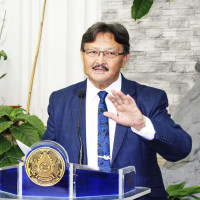
KAJIBEK Erden Zadaoğlu 9 Şubat 1955 tarihinde Jezkazgan şehrinde doğdu.
1972-1977 yılları arasında Karaganda Devlet Üniversitesi Filoloji Fakültesi'nde eğitim gördü. Okuduğu üniversite rektörü, akademisyen, Prof. Dr. Evney Arıstanoğlu Böketov'un danışmanlığında Türkoloji’den lisans tezini savundu.
1977-1980 yılları arasında "Türkolog" ana bilim dalı bünyesinde Kazak SSC Bilimler Akademisi Dil Bilimi Enstitüsü'nde “aspirantura” – doktora öğrencisi oldu. 1981 yılında Doktora eşdeğeri “Türkoloji Filoloji Bilimleri Kandidat’ı” Türkoloji Yüksek Lisans tezini («Candidate of Philological Sciences in Turcology» Post Graduate Studies in Turcology – equivalent to PhD) “Türk dillerindeki tek heceli gomojen köklerin fiil-isim korelasyonu: Sinkretik kuramı” konusunda savundu.
1981-1982 yıllarında Kazak SSC Bilimler Akademisi Dil Bilimi Enstitüsü'nde araştırma görevlisi, 1982-1989 yılları arasında Kurum İҫi Bilimsel Çalışmaları Değerlendirme Komisyonu Sekreteri.
1982 yılında, Kazak SSC’de Türkoloji çalışmalarına yasak getirilmesine rağmen Kazak, Azeri, Kırgız, Türkmen ve Özbek Bilimler akademilerindeki genç bilim insanlarını bir araya getirerek Almatı'da "Cumhuriyetler arası genç türkologlar’ın ilk konferansı"nı düzenledi.
1986-1988 yıllarında Moskova'da SSCB Bilimler Akademisi Türkoloji Komitesi'nde PhD Doktora Eğitimi Dairesi’nde «Doctor Habilitatus, Full Professor» eşdeğeri «Türkiyat Araştırmaları Filoloji Bilimleri Doktoru» tezini savunmuştur. Konusu: “Türkҫe Kelimelerin Semantiği: Ön Türkҫe Köklerin Sevyelerarası Uyumlaşmasının Problematik Yönleri” (1989 yılında SSCB Yüksek Sertifikasyon Kurulu tarafından onaylandı).
1988-1989 yılları arasında Kazak Dili Kurumu'nun ilk iki Kurultayının düzenleme kurulu grubunun üyesi olarak kurul tüzüğünü yazdı ve Kazak Sovyet Sosyalist Cumhuriyeti Hükümeti'ne Kazak Dili Kurumu'nun kurucu belgelerinin temelinde resmi kaydetmesini sağladı.
1989-1992 yılları arasında Kazakistan Bilimler Akademisi Dil Bilimi Enstitüsü'nde "Türkoloji ve Kazak Dili Tarihi" Ana bilim dalı’nın yönetmenliğini yaptı.
1989 yılından beri hükümet dışı, kâr amacı gütmeyen bilimsel kuruluş Uluslararası Türkoloji Merkezi'nin başkanıdır.
1990 yılından itibaren Kazak Dili Kurulu'nun Kazakistan Ulusal Bilimler Akademisi Şübesi’nin başkanı olarak seçildi.
1990 yılında, devletten (o zamanki SSCB'den) bağımsız özel “Uluslararası Türkoloji Merkezi” aracılığıyla Türkoloji araştırmaları yasaklanmış olmasına rağmen, Almatı'da Gök-Türk anıtlarının incelenmesi konusunda bütçe dışı kaynaklarla “Sovyet-Türk Kolokyumu” düzenledi.
1990 yılında "Uluslararası Türkoloji Merkezi" Türkistan şehrinde "Hoca Ahmet Yesevi Dünyası" adlı uluslararası bilimsel konferans düzenledi. O sıralarda benzeri toplantıya SSCB merkez yönetimi tarafından izin verilmezdi. Ama Kazak SSC Komünist Partisi Merkez Komitesi Sekreteri, Kazakların değerli hocası Özbekali Janibekov, sorumluluğu üstlenerek bu önemli toplantının başarılı geçmesine büyük katkı sağladı. Fransa, Polonya, İtalya, Almanya, Türkiye, Kırgızistan, Özbekistan, Türkmenistan, Azerbaycan, Çin ve Rusya’dan gelen Türkologlar, Yesevi kadar dâhi ve Büyük Babamızın eşsiz ҫalışmaları hakkında bilgi edindiler. Bu bilgiler onlarca seneye uzayan sansürden sonraki ilk ve şaşırtıcı malzemelerdi. Orta Asya ve tüm Türk milletiyle ilgili önemli şaheserler kapalı ve dağınık halde yığılmış, sıradan bir eşya gibi depolanmış haldeydi. Konferans sonrası kararla kapalı ve dağınık halde olan Hoca Ahmet Yesevi türbesi ve bütün eserleri kütüphane ve akademik ortama kazandırılmıştır.
Konferansta seҫkin Türkologların bir araya gelmesi de kayda değer kararların alınmasına vesile olmuş, toplantıyı takiben Türkologlar’ın ortak önerisi ile Türkiye Cumhurbaşkanı Turgut Özal’a ata yurda ziyarete gelmesi için davet mektubu yazılarak bilim camiası adına gönderilmiştir. Fazla gecikmeden iki-üç ay içerisinde, 1991 yılı Mart ayında, SSCB hâlâ dağılmamışken, Türkiye Cumhurbaşkanı ilk kez Orta Asya’ya resmi ziyaretle bulunur, ziyaretini de Kazakistan topraklarından başlar. Bu ziyareti esnasında az ilerki zamanda faaliyete geҫecek Kazak-Türk Üniversitesi'nin sembolik temelini atma törenine katılır.
1992-1998 yıllarında, Kazakistan Milli Bilimler Akademisi'nde Ramazan Süleymenov adına Doğu Bilimleri Enstitüsü’nü kurar ve kurucu müdürü, birinci başkanı olarak direktörlüğüne başlar.
1998-2000 yılları arasında "Oljas Süleymen’in Hayırseverlik Akademisi" ve "Avrasya Fonu" başkanı, Kazakistan Cumhurbaşkanlığı İdaresi’nin uzman danışmanı statüsündeki ulusal «Kazakistan bilgi-analitik merkezi» müdürü görevini üstlenir.
2000 yılından itibaren – “Amerika Eğitim Konsorsiyumu” Orta Asya Temsilciliği başkanı ve "Avrupa Kıpçakları" Derneği'nin eş Başkanıdır.
2000-2005 yılları arasında, Erden Zadaoğlu, Kazakistan'da Kanış Satbayev Ulusal Teknik Üniversitesi bünyesinde "Amerika Üniversitesi Kazakistan'da" başlığı altında Çift Diploma Uluslararası Eğitim Programını ilk olarak başarılı oluşturan ve yöneten kişidir.
2006-2009 yılları arasında Kazakistan Cumhuriyeti Kültür ve Enformasyon Bakanlığı Dil Komitesi Başkanı görevindedir.
Erden Kajıbek, 2007 yılından itibaren, Lev Gumiliev adına Eurasya Ulusal Üniversitesi'nde "Kazak Dili", "Türk Dilleri", "Rus Dili" ve "Karşılaştırmalı-tarihi, tipolojik ve karşılaştırmalı dil bilimi" üzerine uzmanlaşmış doktora tez kurulu üyesidir.
2012-2019 yılları arasında Kazak Dili Kurumu Başkan Yardımcısı, 2019-2021 yılları arasında da Kazak Dili Kurumu Başkanı olarak görev yapar ve 2015-2016 yılları arasında Al-Farabi Kazak Ulusal Üniversitesi'nin "Türkoloji" Anabilim Dalı Bölüm Başkanı, İstanbul Üniversitesi Kazak-Türk “el-Farabi Merkezi” Yetkili Temsilcisi ve uluslararası kurul üyesiydir.
2016-2020 yılları arasında Kazakistan Cumhuriyeti Eğitim ve Bilim Bakanlığı Ahmet Baytursunoğlu Dil Bilimi Enstitüsü Müdürüdür.
2021'den itibaren Amerika Eğitim Konsorsiyumu, Cambridge, Oxford Üniversiteleri ve Uluslararası Türkoloji Merkezi'nin "Alashya Çalışmaları" adlı bilimsel programın başkanı (Kazakistan – ABD – Birleşik Krallık – Kıbrıs) ve Uluslararası Kazak Dili Akademisi'nin başkanı olarak görev yapmaktadır.
Bilim insanı, 2021'den itibaren UNESCO tarafından oluşturulan ve Birleşmiş Milletler Genel Kurulu tarafından ilan edilen "Uluslararası Yöresel Diller On Yılı" Programı için hazırlanan uzmanlar listesinde yer almaktadır.
Erden Kajibek, beş yüzden fazla Kazak, Rus, İngilizce ve Türk Dillerinde yayımlanmış bilimsel çalışmaların yazarıdır. Elliden fazla Uluslararası Bilimsel Faaliyetleri (konferans, seminer, kurultay, yuvarlak masa, kolokvyumlar) organize etmiştir.
Bilim adamının karşılaştırmalı dil bilimi alanındaki keşifleri dünya çapında kabul edilmiştir. Örneğin, ilk Ön Türk (Proto-Türk) tek heceli kök sözlüğü (1500 monosyllab) ve uzun süredir çözülmemiş olan leksikal ve gramatikal senkretizm olgusunun sistemleştirilmesi, diachronic fonetik-morfolojik-leksikal ve gramatikal stratigrafisi ile Türk dillerinin tarihi gelişim aşamalarının belirlenmesi, ayrıca ülkemizde uygulanan dil reformları; Latin alfabesine geçiş ve yazım, milli terminolojinin oluşturulması, dil kültürü ve Kazak dilinin tarihi ile ilgili araştırmaları dikkat çekmektedir. Devlet dilini geliştirmeye yönelik çalışmaları, bilimsel ve bilimsel-organizasyon çalışmaları, kamu ve devlet hizmetleri başarılı bir şekilde devam etmektedir. Özellikle, Uluslararası Türkoloji Merkezi'nin Cambridge Üniversitesi ile doğrudan Türkoloji anlaşması yapmasını önemli bir katkı olarak vurgulamak gerekir.
Erden Zadaoğlu’nun inisyatifiyle geliştirilen yada devreye giren ҫalışmalarının arasında mevcut olanlar: “Orfografik Kurallar”, “Eş Anlamlı Kelimeler”, “Orfoepik Kurallar”, “Deyimler”, “Eşleştirmeler”, “Rusҫa-Kazakҫa Sözlük”, “Kazakҫa-Rusҫa Sözlük”, “Tekciltli İzahlı Sözlük” gibi eserleri Kazakistan’da ilkdefa 100 000 tirajla yayım görmüş, yazarlarla bilim adamlarına, okullara, üniversitelere ve liselere, ҫeşitli gazete ve dergilerin yayım kurullarına, internet dijital ortama, bilimsel-araştırma enstitülerine bedava dağıtılmıştır.
Erden Zadaoğlu bilimsel araştırmaların sonuçlarının pratik uygulamasına büyük önem vermektedir. Bilim adamı, Sovyet döneminden itibaren dünya Türkologlarının başlıca bilimsel yayını olarak kabul edilen Azerbaycan Bilimler Akademisi tarafından yayımlanan "Türkoloji" (Sovyet döneminde – "Sovyet Türkolojisi") dergisinin sürekli editör kurulu üyesidir. Ayrıca, bilim adamı Scopus veritabanına dahil edilmiş olan "Türk Dili Araştırmaları Yıllığı" ve "Atatürk Araştırma Merkezi Dergisi", Uluslararası Türkçe Edebiyat Kültür Eğitim «TEKE» Dergisi, İstanbul Üniversitesi Türkiyat Araştırmaları Enstitüsü «Türkiyat Mecmuası» («Journal of Turkology») adlı uluslararası bilimsel dergilerin editör kurulu üyesidir.
Kazakistan'da Erden Kajıbek “Dil ve Toplum” dergisinin baş editörü (2007-2009), ülke çapında «Kazaktanu» (“Kazak Araştırmaları”) dergisinin editör kurul başkanı (2020'den itibaren), ülke çapında “Tugan Til” dergisinin (2022'den itibaren) editör kurul başkanıdır.
Hollanda Doğubilimciler Derneği’nin, Rusya Bilimler Akademisi Doğubilimciler ve Türkologlar Komitesi’nin, 1995’ten beri Türkiye Cumhuriyeti “Türk Dil Kurumu” Şeref Üyesidir. 1996 itibaren Kazakistan Sosyal Bilimler Akademisi’nin, 2002’den beri Çin Eğitim Akademisi’nin, Orta Avrasya Araştırmaları Amerikan Derneğinin, 2017 itibaren Kazakistan Milli Bilimler Akademisi Üyesi ve Kazakistan Cumhurbaşkanı Kararıyla «Kazakistan’ın tanınmış Devlet Figürü» unvanının sahibi ilan edilmiştir. Öte yandan Macaristan, İran, Azerbaycan, Kıbrıs gibi yabancı ülkelerdeki Bilimler Akademisi ve Bilimsel araştırma enstitülerinin üyesidir.
Erden KAJIBEK’in ödül ve madalyalarının arasından “Kazakistan’ın tanınmış Devlet Figürü» Unvanı ve Madalyası sahibi, “Avrupa Kıpҫaklarının Şövalyeleri Madalyası” (Budapeşte, Macaristan), ABD “Strateg East Westernization Award” Ödülü (Washington, ABD), Türk Dil Kurumu’nun ödülleri, Uluslararası TÜRKSOY’un «Gyula Nemeth Madalyası» ve diğer ödülleri belirtilebilir. “Kazak Dili” Kurumu, “Kırgız Dili” komisyonu’ndan yüksek dereceli ödüllere sahip olması, “Amerikan Eğitim Konsorsyumu”, “Uluslararası Türk Akademisi”, “Kazak Dili Destekҫisi”, “Vatan, Gayret, Bahadürlük”, “Tileu Batur Aytoğlu”, «Kazak Halkları Asamblesi», Kazakistan’ın bağımsızlığı, Anayasası, başkenti ile ilgili, seҫkin ve önemli tarihsel olaylarla ilgili faaliyetlerin ve çeşitli bilim ve eğitim kuruluşlarının ödüller sahibidir.
Kazakistan’daki Abay, Gumilyev, Al-Farabi, Hoca Ahmet Yesevi, Abılay Han, Böketov üniversiteleriyle, Türkiye, ABD, AB, Rusya (Tataristan, Başkortostan, Çuvaş, Saka-Yakut, Altay v.d.), Orta Asya Devletlerinden (Kırgızistan, Özbekistan, Türkmenistan), Azerbaycan, İran, Kıbrıs’taki eğitim kurumlarıyla, ülkeiҫi değişik ödüller, teşekkür mektuplarıyla ödüllenmiştir.
Erden Kajibek'in babası, Kajibek(ov) Zada Akimbekoğlu, 1927 doğumlu, Kazakistan'ın şerefli hukukçusu, 2000 yılında vefat etti. Annesi, Kajibek(ova) Kaynel Mubarakkızı, 1928 doğumlu, üniversitede matematik öğretmeniydi, emekli, Karaganda şehrinde yaşıyor. Eşi, Kajıbek Galiya Oljabaykızı, 1960 doğumlu, "Parfumes International" şirketinin genel müdürü, Almatı'da oturuyor. İki kızı, Aynel ve Madina, üniversite eğitimli olup meslekleri üzerinde saygın hizmet vermektedirler.

 Cultural Heritage and Science (CUHES) journal is licenced under Creative Commons Attribution-ShareAlike 4.0 International License.