 April 30, 2026
Page
1-6
April 30, 2026
Page
1-6
Volume
4
,
Number
1
Apr 30, 2026
4
Article
Publication Type
Articles
Research Article
Research Article
Accuracy and Same-Day Response Consistency of AI Chatbots on Complete Denture Multiple-Choice Questions
April 30, 2026
Page
7-12
April 30, 2026
Page
7-12
The aim of the Eurasian Dental Research journal is to contribute to the field of dentistry at national and international level and also to create a scientific platform where scientists can share their knowledge, ideas, findings and research.
Eurasian Dental Research is the international and open access scientific journal of Biruni University Faculty of Dentistry, published within the framework of independent, impartial and double-blind refereeing principles. The journal is published quarterly in April, August and December, and a volume is completed at the end of three issues. Publication language is English. Eurasian Dental Research accepts articles on clinical/experimental original research and rare case reports in all areas of dentistry.
Pre-examined articles are scanned for plagiarism using software such as iThenticate, Turnitin and İntihal.net. If plagiarism/self-plagiarism is detected, the authors are informed. If necessary, the editors can subject the article to plagiarism control at various stages of the evaluation or production process. High similarity rates can cause an article to be rejected before or even after it is accepted. Depending on the type of article, this rate is expected to be less than 20%. Articles with 20% or more similarity will be returned to the authors.
Manuscripts should be prepared in accordance with ICMJE-Recommendations for the Conduct, Reporting, Editing and Publication of Scholarly Work in Medical Journals (updated in December 2015 - http://www.icmje.org/icmje-recommendations.pdf). Randomized studies should follow CONSORT, observational studies STROBE, diagnostic value studies STARD, animal-based studies ARRIVE, and nonrandomized behavioral and public health studies TREND guidelines.
Articles can only be sent through the Dergipark online article uploading and evaluation system. Articles sent from different channels will not be evaluated.
Submitted articles will be checked for compliance with journal writing rules. Manuscripts that are not prepared in accordance with the writing rules of the journal will be sent back to their authors for correction.
The author(s) must submit the following:
- Copyright Form
- Conflict of Interest Form
- Title Page
- Article file with the names of the authors removed
Copyright Form: It can be downloaded from the system during article submission.
Conflict of Interest Form: It can be downloaded from the system during article submission.
Title Page: A separate cover page must be submitted with all submitted articles.
On this page;
• The title of the article not exceeding 50 characters,
• Authors’ names, institutions, degrees and ORCID numbers
• Detailed information about financial support information and other support resources,
• Corresponding author’s name, address, telephone (including mobile phone), fax number and e-mail address,
• Information about individuals who contributed to the manuscript preparation process but did not meet the authorship criteria.
• Acknowledgements. All individuals who did not meet the criteria for authorship but contributed to the study should be listed in the “acknowledgments/information” section. Examples of these are people who only provide technical support, help with writing, or just provide general support, and financial and material support.
Manuscript File with Names of Authors Removed: The article file in Word format, which does not contain the names of the authors, should be uploaded to the system.
ABSTRACT
All articles must have English abstracts. Abstracts of Original Research articles should be prepared in such a way as to include the subheadings of “Aim”, “Material and Method”, “Results” and “Conclusion”. Abstracts of case reports should be prepared in a way that includes the sub-headings of “Aim”, “Case Report”, “Discussion" and "Conclusion”. Abstracts should not exceed 250 words.
Keywords: All articles should be submitted with 5 keywords. Key words should be written just below the abstract. Abbreviations should not be used as keywords. Keywords should be selected from the Medical Subject Headings (MeSH) database prepared by the National Library of Medicine (NLM). You can use (www.bilimterimleri.com) for keywords.
Article Types
Original Article: Main text; It should consist of “Introduction”, “Materials and Methods”, “Results” and “Discussion” subheadings. Statistical analysis is often required to support the result. Information about statistical analysis should be written as a separate subtitle in the Material and Method section and the software used should be defined strictly. Units should be prepared in accordance with the International System of Units (SI), which is the international unit system.
Case Report: A limited number of places are reserved for case reports, and only cases with interesting and instructive features, which describe a new method, reflect information that are not included in the books, related to rare diseases that are difficult to diagnose and treat, are accepted for publication. Main text should contain sub-titles of “Introduction”, “Case Report”, “Discussion” and Conclusion”.
Tables
Tables should be added as a separate Word file and numbered in accordance with the order of passage in the main text. There should be a descriptive title on the tables and the expansions of the abbreviations in the table should be written under the table. Tables should be prepared in a Microsoft Office Word file using the “Insert Table” command and should be arranged in an easy-to-read manner. The data presented in the tables should not be a repetition of the data presented in the main text. The data must be of a supporting nature.
Picture and Picture Legends
Pictures, graphics and photographs should be uploaded to the system as separate files in JPEG format. Images should not be presented in a Word document or in the main text. When there are images divided into subunits, the subunits should be given in a single image. Pictures should be labeled to identify subunits (a, b, c, etc.). Bold and thin arrows, arrowheads, stars, asterisks, and similar signs can be used to support captions on images. As with the rest of the article, the pictures should be blind. For this reason, the person and institution information in the pictures should not be included. Images must have a minimum resolution of 300 DPI. In order to avoid disruptions in the evaluation process, the resolution of all submitted images should be clear and large (minimum dimensions 100x100 mm). Image captions should be placed at the end of the main text. All abbreviations in the article should be explained separately in the main text and abstract if they are used for the first time, and the abbreviation should be given in parentheses after the explanation.
In the main text, device software, medicine, etc. when products are mentioned, all information including the name of the product, the manufacturer, city and country information should be given in parentheses; “Ex: Diagnostic Ultrasonography Device (Siemens Healthcare Germany)”.
Limitations, barriers and deficiencies of original research should be included in the “Discussion” section before the conclusion paragraph.
References
All references, tables and pictures should be cited in the main text by numbering in the appropriate places in the main text. The most recent and most up-to-date publications should be preferred when citing. The author(s) are responsible for the accuracy of the references.
Journal names should be abbreviated in accordance with the journal abbreviations in Index Medicus/Medline/PubMed. All author names should be listed when there are six or fewer authors.
If there are 6 or more authors, after the first 6 authors are listed, “et al.” should be written. When citing sources in the main text, Arabic numerals should be used in parentheses before the period in the “Vancouver” format.
Ex: ……..in the head and neck region (1-3).
Revisions
When submitting the revision files of the articles, the author(s) should mark the changes they have made on the main text, in addition, they should send their notes on the suggestions put forward by the reviewers in the “Reply to the Reviewers” file. In the Reply to Reviewers file, the author’s reply should follow each referee’s comment and the line numbers where the changes were made should also be indicated. Revised articles should be sent to the journal within 30 days of the decision letter. If the revised version of the article cannot be uploaded within the specified time, the revision option may be revoked. If the author(s) needs additional time for revision, they must submit their extension requests to the journal before the first 30 days expire.
Publication Process
Articles accepted for publication are sent to the language editor for checking in terms of grammar, punctuation and format. After the grammar control is done, the article is submitted to the author’s approval. After the approval of the author, the article is placed in the layout. The typed article is sent back to the author for final approval. Print-ready PDF files of accepted articles are sent to the responsible authors and publication approvals are requested to be sent to the journal within 2 days.
Publication Ethics Statement
Eurasian Dental Research strictly adheres to the highest standards in publication ethics and adopts the "Recommendations for the Conduct, Reporting, Editing, and Publication of Scholarly Work in Medical Journals" published by the International Committee of Medical Journal Editors (ICMJE). The journal also follows the guidelines developed by the Committee on Publication Ethics (COPE), Directory of Open Access Journals (DOAJ), Open Access Scholarly Publishers Association (OASPA), and World Association of Medical Editors (WAME).
All submitted articles must be original, unpublished, and not under evaluation elsewhere. Each manuscript undergoes a double-blind peer-review process by at least two independent reviewers and an editor. Unethical behaviors—including plagiarism, duplication, fabrication, falsification, guest/ghost authorship, "salami slicing," and concealment of conflicts of interest—are strictly prohibited. Articles found to violate these standards will be rejected or retracted, even after publication.
Research Ethics
The journal follows international research ethics principles. Authors are responsible for ensuring compliance with ethical rules. For all studies involving human or animal subjects, approval from relevant ethics committees is mandatory.
Human Studies: Authors must state in the "Methods" section that they obtained informed consent from participants and received approval from the institutional ethics committee.
Animal Studies: Approval from the Local Ethics Committee for Animal Experiments is required. Treatment of animals must comply with the Guide for the Care and Use of Laboratory Animals.
Clinical Trials: In accordance with ICMJE policies, clinical trials must be registered in a public trials registry (e.g., ClinicalTrials) before the first participant is enrolled.
Authorship Criteria (ICMJE Standards)
Eurasian Dental Research requires that all listed authors meet the following four criteria established by the ICMJE:
Substantial contributions to the conception or design of the work; or the acquisition, analysis, or interpretation of data for the work; AND
Drafting the work or revising it critically for important intellectual content; AND
Final approval of the version to be published; AND
Agreement to be accountable for all aspects of the work in ensuring that questions related to the accuracy or integrity of any part of the work are appropriately investigated and resolved.
Individuals who provide funding, data collection, or general supervision but do not meet all four criteria should be acknowledged in the "Acknowledgements" section rather than being listed as authors.
Policy on the Use of Generative AI and AI-Assisted Technologies
Eurasian Dental Research recognizes the potential of Generative Artificial Intelligence (GenAI) in scientific writing. To ensure transparency and integrity, the following rules apply:
Authorship: AI and AI-assisted technologies (such as ChatGPT, Claude, etc.) cannot be listed as an author or co-author. These tools lack the legal and ethical capacity to take responsibility for the submitted work or to manage copyright and conflict of interest requirements.
Disclosure Requirement: Authors who use GenAI tools in the writing process, image generation, or data collection/analysis must formally disclose this in the "Materials and Methods" section or as a separate "AI Statement" at the end of the manuscript. This disclosure must specify which tool was used and for what purpose.
Responsibility: Authors are ultimately responsible for the accuracy, integrity, and originality of the content generated by AI. They must ensure that the output is free from plagiarism and does not contain biased or fabricated information.
Reviewer Policy: Reviewers are encouraged to exercise caution regarding the use of Generative AI tools. To protect the confidentiality and intellectual property rights of the authors, submitted manuscripts should not be uploaded into public AI tools for evaluation or review generation. If an AI tool is used to assist in language editing or structural checking of the review report, this should be done in a manner that ensures the manuscript’s data remains secure and private.
Editor and Reviewer Responsibilities
The editor-in-chief evaluates articles regardless of the authors’ ethnicity, gender, sexual orientation, nationality, religious beliefs, and political philosophy. He or she ensures that the articles submitted for publication undergo a fair double-blind peer-review. He or she guarantees that all information regarding the submitted articles will remain confidential until the article is published. The editor-in-chief is responsible for the content and the overall quality of the publication. If necessary, he or she should publish an error page or make corrections. The editor-in-chief does not allow any conflict of interest between authors, editors and reviewers. He or she has full authority to appoint a referee and is responsible for making the final decision on the articles to be published in the Journal.
Reviewers should not have conflicts of interest with the research, with the authors and/or with the financial supporters of the research. They should reach an impartial judgment as a result of their assessment. During the evaluation process, the editor clearly states that the articles submitted for review to the reviewers are the exclusive property of the authors and this is a privileged communication. Reviewers and editorial board members cannot discuss articles with other people. Care should be taken to keep the identities of the reviewers confidential. In some cases, with the decision of the editor, the comments of the relevant reviewers regarding the article can be sent to other reviewers who have commented on the same article, and the reviewers can be enlightened in this process.
Publishing Policy
Submitted articles must be in accordance with the purpose and scope of the journal. Manuscripts that are original, unpublished and not in the process of evaluation in another journal, whose content and submission have been approved by each author, are accepted for evaluation. After the article is sent to the journal for publication, the name of any of the authors cannot be deleted from the list of authors without the written consent of all authors, a new name cannot be added as an author, and the order of authors cannot be changed.
Open Access Policy
Eurasian Dental Research is an open-access journal. All articles are made freely available immediately upon publication. Users are permitted to read, download, copy, distribute, and link to the full texts of these articles for any lawful purpose without prior permission from the publisher or the author. The journal adopts the principle of providing immediate open access to its content, based on the belief that making research freely available to the public enhances global knowledge exchange.
Plagiarism and Copyright
Manuscripts are screened for plagiarism using software (iThenticate, Turnitin, etc.). A similarity rate of less than 25% is generally expected. Authors retain copyright and license their work under Creative Commons Attribution-NonCommercial 4.0 International (CC BY-NC 4.0).
Procedures for Addressing Ethical Misconduct
Eurasian Dental Research takes all allegations of research misconduct seriously. In accordance with the guidelines established by COPE (Committee on Publication Ethics), the journal and its editors take reasonable steps to identify and prevent the publication of papers where research misconduct has occurred, including plagiarism, citation manipulation, and data falsification/fabrication.
- Identification of Misconduct: If the Editorial Board or reviewers identify potential misconduct during the pre-check or peer-review process, the evaluation is suspended, and the authors are asked for a formal explanation.
- Post-Publication Allegations: If an allegation of misconduct is brought to the journal's attention regarding a published article, the Editor-in-Chief will initiate an investigation following COPE flowcharts.
- Investigation Process: The journal or its editors shall not encourage such misconduct or knowingly allow such misconduct to take place. Upon notification of a potential violation, the journal will contact the authors and, if necessary, their respective institutions.
- Corrective Actions: If misconduct is proven, the journal will take appropriate action, which may include:
- Publishing a formal Correction (Erratum) for minor honest errors.
- Issuing an Expression of Concern if the investigation is ongoing or inconclusive.
- Retraction of the article if serious ethical violations (e.g., plagiarism, data fabrication) are confirmed.
- Reporting: All proven cases of ethical breach will be reported to the relevant indexing databases and institutional authorities.
Double-Blind Reviewing
After plagiarism control, eligible articles are evaluated by the editor-in-chief for originality, methodology, importance of the topic covered, and compatibility with the journal scope. The editor ensures that the articles go through a fair double-blind review and, if the article complies with the formal principles, they submit the incoming article to at least two reviewers from the country and / or abroad, and if the reviewers deem it necessary, the editors approve the publication after the requested changes are made by the authors.
Reviewing Process
Articles that have not been published before or that are not yet under evaluation in another journal for publication and that are approved by each author are accepted for evaluation. Articles are sent to at least two national/international reviewers for evaluation. The publication decision is made by the editor-in-chief after the arrangements made by the authors in line with the requests of the reviewers and the review process.
The evaluations of the reviewers should be objective. During the review process, the reviewers are expected to make their evaluations by considering the following points.
- Does the article contain new and important information?
- Does the abstract clearly and properly describe the content of the article?
- Is the method coherent and clearly defined?
- Are the comments made and conclusions proven by the findings?
- Are adequate references given to other studies in the field?
- Is the language’s quality adequate?
Reviewers should ensure that all information regarding the submitted articles remain confidential until the article is published, and should report any copyright infringement and plagiarism on the part of the author to the editor. If the reviewer does not feel qualified about the subject of the article or if it does not seem possible to provide a timely response, he should notify the editor of this situation and ask him not to involve himself in the review process. During the evaluation process, the editor clearly states that the articles submitted for review to the reviewers are the exclusive property of the authors and this is a privileged communication. Reviewers and editorial board members cannot discuss articles with other people. Care should be taken to keep the identities of the reviewers confidential.
The publication of articles in the journal and the execution of article processes are free of charge. No processing fee or submission fee is charged for articles submitted to the journal or accepted for publication.





Editors
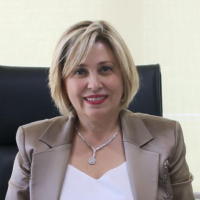
Prof. Dr.
İlknur ÖZCAN
BİRUNİ ÜNİVERSİTESİ, DİŞ HEKİMLİĞİ FAKÜLTESİ, KLİNİK BİLİMLER BÖLÜMÜ, AĞIZ DİŞ VE ÇENE RADYOLOJİSİ ANABİLİM DALI

Oral and Maxillofacial Radiology

Asst. Prof. Dr.
Ahmet Faruk ERTURK
BİRUNİ ÜNİVERSİTESİ, DİŞ HEKİMLİĞİ FAKÜLTESİ, KLİNİK BİLİMLER BÖLÜMÜ, AĞIZ DİŞ VE ÇENE RADYOLOJİSİ ANABİLİM DALI





Dentistry, Oral and Maxillofacial Radiology
Language Editor
OS
English As A Second Language, British and Irish Language, Literature and Culture
MS
Lecturer
Mert SAHINBAS
BİRUNİ ÜNİVERSİTESİ, REKTÖRLÜK, YABANCI DİLLER BÖLÜMÜ
English As A Second Language
Section Editors
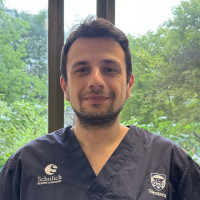
Assoc. Prof. Dr.
Gürkan ÜNSAL
Western University
Oral and Maxillofacial Radiology, Oral Medicine and Pathology
AD
Assoc. Prof. Dr.
Almira Ada DIKEN TÜRKSAYAR
BİRUNİ ÜNİVERSİTESİ, DİŞ HEKİMLİĞİ FAKÜLTESİ
Prosthodontics
MY
Asst. Prof. Dr.
Mustafa YILMAZ
BİRUNİ ÜNİVERSİTESİ, DİŞ HEKİMLİĞİ FAKÜLTESİ, KLİNİK BİLİMLER BÖLÜMÜ, PERİODONTOLOJİ ANABİLİM DALI
Oral Implantology, Periodontics

Assoc. Prof.
Sevde GÖKSEL
Ankara Tepebaşı Ağız ve Diş Sağlığı Hastanesi
Oral and Maxillofacial Radiology

Prof. Dr.
Burcu KARADUMAN
BIRUNI UNIVERSITY, FACULTY OF DENTISTRY, DEPARTMENT OF CLINICAL SCIENCES, DEPARTMENT OF PERIODONTOLOGY
Periodontics
BG
Prof. Dr.
Bilge GÖKÇEN ROHLIG
İSTANBUL ÜNİVERSİTESİ, DİŞ HEKİMLİĞİ FAKÜLTESİ
Oral Implantology, Prosthodontics
MY
Asst. Prof. Dr.
Merve YELKEN KENDIRCI
BIRUNI UNIVERSITY, FACULTY OF DENTISTRY
Oral and Maxillofacial Radiology
GS
SS
RK
Assoc. Prof. Dr.
Revan Birke KOCA ÜNSAL
Schulich School of Medicine & Dentistry - Western University
Oral Implantology, Periodontics, Immunology (Other)
Editorial Advisory Board

Assoc. Prof. Dr.
Gaye KESER
MARMARA ÜNİVERSİTESİ, DİŞ HEKİMLİĞİ FAKÜLTESİ, KLİNİK BİLİMLER BÖLÜMÜ
Deep Learning, Dentistry, Oral and Maxillofacial Radiology
ES
Prof. Dr.
Enver Alper SINANOĞLU
KOCAELİ ÜNİVERSİTESİ DİŞ HEKİMLİĞİ FAKÜLTESİ
Oral and Maxillofacial Radiology

Prof. Dr.
Filiz Mediha NAMDAR PEKINER
MARMARA UNIVERSITY, FACULTY OF DENTISTRY, DEPARTMENT OF CLINICAL SCIENCES, DEPARTMENT OF ORAL DIAGNOSIS AND RADIOLOGY
Deep Learning, Oral and Maxillofacial Radiology

PÇ
Prof. Dr.
Peruze ÇELENK
ONDOKUZ MAYIS ÜNİVERSİTESİ, DİŞ HEKİMLİĞİ FAKÜLTESİ
Oral and Maxillofacial Radiology, Oral Medicine and Pathology, Health Sciences
BB
ZM