
Editor In-Chief
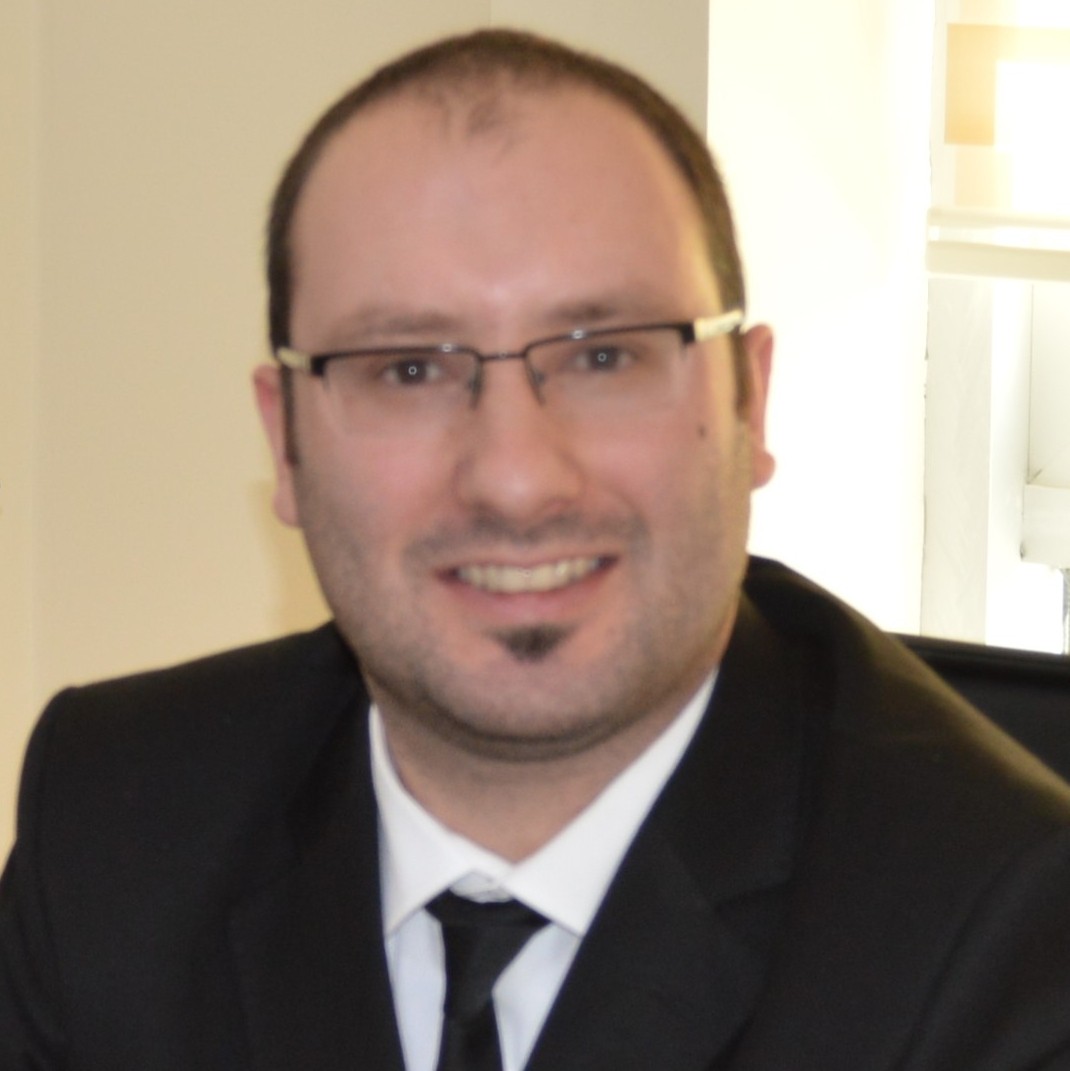
Alper Calam is a Full Professor at Gazi University, Ankara, Turkey. He received his MSc and PhD in 2011 and 2018 respectively at Gazi University. He has published many papers at various international journals. His research areas include SI and CI engines, low temperature combustion modes (PCCI, PPCI, HCCI, RCCI etc.), emission reduction, biofuels and fuel additives.
Subject Editors
Prof. Dr. Orhan OZDEMIR has been serving as a researcher and lecturer at the Mineral Processing Engineering Department of Istanbul Technical University (ITU), Türkiye, since 2023. He obtained his BSc degree in Mining Engineering (1998) and MSc degree in Mineral and Coal Processing (2001) from Istanbul Technical University. He earned his PhD from the University of Utah, USA, in 2008. Following his doctoral studies, he worked as a postdoctoral research fellow in the Department of Chemical Engineering at the University of Queensland, Australia, from 2008 to 2010. His research interests include mineral processing, flotation, surface and colloid chemistry, flocculation-coagulation, and adsorption.

Mamdouh El Haj Assad is a Professor in the Department Sustainable and Renewable Energy Engineering Department at University of Sharjah. He has worked at Aalto University as research scientist and docent in the Department of Energy Technology for 21 years, and as Associate Professor and Head of the Mechanical Engineering Department at the Australian College of Kuwait. His research expertise ranges through energy system optimization, geothermal, solar energy systems, absorption chillers and heat exchangers design. Dr. Assad was awarded the best teacher award in 2011, Aalto University, Finland and Sharjah Sustainability Award in 2020.

Dr. Gang Li is an Assistant Professor in Michael W. Hall School of Mechanical Engineering and Assistant Director of DOE Industrial Training and Assessment Center (ITAC) at Mississippi State University. Dr. Li is a recipient of the NSF EPSCoR Research Fellow Award, NAS GRP Early Career Award, and DOE EnergyTech UP Faculty Explorer Award. His research interests include the fields of renewable energy technologies, applied artificial intelligence, dynamics and vibration, control theory, condition monitoring algorithms, structural health monitoring, and life cycle assessment, and involve AI for engineering, numerical simulation, experimental validation, and industrial application. Dr. Li's research has been funded by NSF, DOE, the Maryland Energy Innovation Institute's Energy Innovation Seed Grant, the Maryland Technology Development Corporation’s Maryland Innovation Initiative (MII) Grant, the Maryland Offshore Wind Energy Research (MOWER) Challenge Grant Program, General Electric (GE), and Baltimore Gas and Electric (BGE). Dr. Li is a member of ASME, IEEE, and SAE International.
Prof. Ali Çalhan received his M.Sc. and Ph.D. on Wireless Communications from Kocaeli University, Türkiye in 2006 and 2011, respectively. Currently, he works at Düzce University as a professor. His research interests include wireless communications & networks, Internet of Things, EHealth Systems, and Artificial intelligence. He has published over 100 research papers in refereed international conferences and journals. His work has been cited more than 1600 times on Google Scholar.




Obie Farobie currently serves as Head of the Mechanical Engineering Study Program and Deputy Director of Research and Innovation at IPB University. He earned his bachelor’s degree in Chemistry in 2007 as the best graduate of the Faculty of Mathematics and Natural Sciences, IPB University. In 2015, he completed his doctorate in the Department of Mechanical Science and Engineering at Hiroshima University, Japan, specializing in biodiesel production technology. From 2015 to 2017, he continued his academic career as an Assistant Professor in the Division of Energy and Environmental Engineering, Department of Mechanical Science and Engineering, Hiroshima University. His research focuses on bioenergy through chemical, biochemical, and thermochemical conversion processes, including pyrolysis, hydrothermal treatment, and supercritical water gasification for sustainable biofuels and chemicals. Since 2018, he has been an active member of the International Society for Biomass and Bioenergy (ISBB). In recent years, he has led multiple research projects funded by the Ministry of Education, Culture, Research, and Technology, the Indonesian Toray Science Foundation (ITSF), Collaborative Research programs, and the LPDP (Indonesia Endowment Fund for Education). He currently holds a Scopus H-index of 24. He actively collaborates with universities and research institutions both in Indonesia and abroad, including those in Japan, Malaysia, Australia, the United States, China, Turkiye, Pakistan, Oman, and India. In addition, he contributes as an editor and reviewer for several prestigious SCIe-indexed journals.


My research interests lie in the field of wastewater treatment and solid waste management, with a focus on developing efficient, sustainable, and cost-effective methods for contaminant removal. I am particularly interested in the treatment of industrial and municipal wastewater using advanced and natural treatment technologies, as well as the stabilization and management of solid waste to minimize environmental impact.

Xing Zheng Wu obtained his BSc and MSc degrees from Shandong University, China, in 1994 and 1997, respectively. He received his PhD from Dalian University of Technology, China, in 2001. He is currently an associate professor in the Department of Civil Engineering at Hebei University in Baoding, China. He worked in the UK for seven years (University of Dundee, University of Newcastle). His research interests focus on stability analysis of geostructures, numerical modelling of soil-structure interaction, coastal cliff-beach erosion and hydraulic structures, flood risk mitigation measures, as well as uncertainty quantification and reliability analysis in geotechnical and coastal engineering. Dr. Wu has published more than 30 papers as first author in international journals. He has served as an active reviewer for over 50 international journals and is a member of the editorial board for over 10 journals.
Born in Trabzon in 1982, Gültekin UZUN completed his undergraduate studies at Gazi University, Faculty of Technical Education in 2005, his master's degree at Karabük University, Institute of Science, Department of Mechanical Engineering Education in 2008, and his doctorate at Gazi University, Institute of Science, Department of Mechanical Engineering Education in 2013. He has worked at Gazi University as a Research Assistant since 2009, as a Research Assistant with a PhD since 2013, and as an Associate Professor with a PhD since 2020. Since 2025, he has been working as a Professor with a PhD in the Department of Manufacturing Engineering at Gazi University, Faculty of Technology.
She holds a PhD summa cum laude in Industrial Engineering, a Master's in Business
Administration (MBA) from the UPV, and an Executive Master's in Digital Marketing, Analytics
and UX from the Catholic University of Ávila. Previously, she obtained a Masters Degree in
Energy Engineering and a Bachelors Degree in Mechanical engineering both summa cum
laude from the University Federico II of Naples (Italy). She is a plurilingual professional
(she speaks English, Italian, Spanish, French and Valencian) with diverse cultural competences
and variated cultural understanding acquired by working in USA, Italy and Spain and leading
international projects worldwide.
She is currently a Permanent Professor in the Department of Applied Thermodynamics at the
UPV and she is part of such distinguished institution since 2017 where she started as Adjunct
Lecturer in the same department, combining her academic activity with her professional career.
Similarly, she joined the Institute for Energy Engineering at UPV in 2012, where she has
been research member of the Energy Systems and Markets (eSYM) Research team from
2017. She worked as Guest Researcher at the State University of New York at Buffalo
(United States). She has taught seminars and training courses at international universities.
Furthermore, she has more than 12 years of professional experience in the private sector,
working for multinational companies in the distribution of Natural gas, Biogas, Renewable
energy, and Artificial intelligence. Specifically, she held the role of Director of the Metrological
and Thermal laboratory at 2i Rete Gas (former ENEL), Development Manager at Grupo Solaer
and in the latest 5 years of her industrial carrier, she was a Key Account Manager at Toshiba-
Mitsubishi Electric Industrial Corporation, headquartered in Roanoke, Virginia (USA).
Moreover, she has been member of the Organization and Steering Committee and Chair of
prestigious scientific conferences, Academic Editor of multiple books and multiples Special Issues.
She is currently working on various research lines with main topics: biomass, natural gas,
renewables integration in energy systems, thermal energy and storage, energy management,
ML and AI algorithms for energy forecast with a focus on decarbonization and sustainable
strategies.
Faruk Emre Aysal received his B.Sc. degree in Mechanical Engineering from Pamukkale University in 2011 and his M.Sc. degree in Mechanical Engineering from Afyon Kocatepe University in 2014, where he focused on vehicle dynamics and the simulation and modeling of vehicle transmissions. He received his Ph.D. in Mechanical Engineering from Afyon Kocatepe University in 2020, where he developed algorithms for solving nonlinear engineering problems using the Differential Quadrature Method (DQM). He worked as a Research Assistant in the Department of Automotive Engineering at Afyon Kocatepe University between 2012 and 2021, and served as an Assistant Professor in the Department of Mechatronics Engineering at the same university from 2021 to 2024. Since 2024, he has been working as an Assistant Professor in the Department of Mechanical Engineering at Giresun University. His research interests include vehicle technologies, computational methods, optimization techniques, dynamic system modelling, suspension systems, machine learning applications in engineering, and advanced simulation techniques.

Prof. Dr. S. Sivasankaran is an eminent Fluid Dynamicist whose areas of interest are CFD, convective heat and mass transfer, numerical simulations, MHD, nanofluids, micro-channel heat sinks and porous media. After completing his Ph.D. in 2006, he has received four Post-Doctoral Fellowships in Taiwan and South Korea. He has successfully supervised 12 PhD students and 7 Master's students. He has contributed more than 175 papers in international journals and 44 papers in conference proceedings. He has been featured in the top 2% of scientists in the world for the past 4 years. He is an Editor-in-Chief in two journals, an Associate Editor in two international journals, an Editor in 2 journals, an Assistant Chief Editor in 1 journal and he is a member of the editorial board in 12 international journals. He is acting as a reviewer for more than 50 international journals. He has received some awards for his research (Best Paper Award, Best Researcher Award, etc.) and teaching works (Best Teacher Award). He has served on several national and international committees.
Assoc. Prof. Dr. Gülşen Taşkın Çakıcı received her bachelor's degree from Kırıkkale University in 2003, and her master's and doctoral degrees from the Department of Chemistry at Gazi University in 2003 and 2014, respectively. She worked as an Assistant Professor at Sivas Cumhuriyet University's Yıldızeli Vocational School between 2017 and 2023, and has been serving at Gazi University since 2023. Her research focuses on areas such as polymeric membranes, fuel cells, and drug delivery.
Murat Akın (IEEE Member) received his B.Sc. degree in Computer Engineering from Kocaeli University in 2005, and his M.Sc. and Ph.D. degrees in Computer Engineering from Gazi University in 2013 and 2021, respectively. From 2010 to 2025, he worked as a Lecturer at Gazi University, where he taught courses in computer programming, database management systems, and big data. From 2021 to 2024, he served as Deputy Director of the Artificial Intelligence and Big Data Analytics Security Research and Development Center (Gazi AICENTER) at Gazi University. In 2025, he joined the Department of Software Engineering at Ankara Yıldırım Beyazıt University, where he currently serves as an Assistant Professor. He is also conducting postdoctoral research at Delft University of Technology (TU Delft). His research interests include machine learning, deep learning, artificial intelligence, big data analytics, and optimization.
Aniefiok Livinus is an Associate Professor of Petroleum Engineering, lecturing courses such as multiphase flow in pipes, formation valuation and petroleum production engineering, at the University of Uyo, Akwa Ibom State, Nigeria. Livinus holds a PhD degree in Oil and Gas Engineering from Cranfield University, UK. He obtained both his B-Eng and M-Eng in Petroleum Engineering from the Federal University of Technology, Owerri – Imo State, Nigeria.
Livinus’ current interests include reservoir and production simulation of hydrocarbon and non-hydrocarbon fluids, multiphase flow modelling in both pipe and porous media, and application of machine learning in petroleum engineering. Livinus has authored or co-authored more than twenty (20) technical papers. He is a registered engineer (COREN), member of the Society of Petroleum Engineer (SPE) International, member of Nigeria Society of Engineers.
Seyfettin Vadi, sırasıyla 2009 ve 2014 yıllarında Türkiye, Ankara'daki Gazi Üniversitesi'nden elektrik ve elektronik mühendisliği alanında lisans ve yüksek lisans derecelerini aldı. 2023 yılında, Gazi Üniversitesi Fen Bilimleri Enstitüsü'nde doktora eğitimini tamamladı. 2012 ile 2023 yılları arasında Gazi Üniversitesi Elektronik ve Otomasyon Bölümü'ne katıldı. Aralık 2023'te Gazi Üniversitesi Teknoloji Fakültesi Elektrik ve Elektronik Mühendisliği bölümünde yardımcı doçent olarak göreve başladı ve devam etmektedir. Mevcut araştırma ilgi alanları arasında güç elektroniği dönüştürücülerinin kontrolü ve uygulamaları, enerji dönüşümü ve yenilenebilir kaynakların enerji yönetimi bulunmaktadır. Ayrıca, programlanabilir kontrol kullanarak otomasyon uygulamaları üzerinde çalışmaktadır. 2020 yılından beri "IEEE Öğrenci Üyesi" olan Vadi, çalışma alanlarında 20'den fazla makale ve bildiriye sahiptir. Ayrıca, 1 ulusal kitap ve 1 uluslararası kitapta yazar olarak yer almıştır. 3 tamamlanmış bilimsel araştırma projesi bulunmaktadır.
Editorial Board

Prof. Dr. J. Sadhik Basha earned his Ph.D. in Mechanical Engineering from NIT Trichy, India, in 2011, and currently serves as Professor and Head at NU-IMCO, Sohar. With over two decades of academic and research experience, his expertise spans water–diesel/biodiesel emulsions, thermal desalination, carbon capture, and renewable energy. He has secured research funding exceeding $100,000 and holds over ten patents. Author of more than eighty publications and cited over 2800 times, Dr. Basha is a recognized reviewer and editorial board member for numerous international journals. His accolades include the Best Supervisor, Best Researcher, and multiple Best Teaching awards. He is one of the top 2% academically cited researchers as per the global Stanford University Ranking consecutively for the past five years.

Zeidan research interest is related to: Seismic Modeling of Dams and Reservoirs Groundwater Deterioration and Mitigation Natural Water Quality and Ecosystem Restoration Trans-Boundary Nile Water Management Nile Water Governance and Sustainability Nile Water Scarcity and Food Security Nile Water Security and Hydro-politics Risk Analysis and Safe Design of Hydraulic Structures Email address b.zeidan@f-eng.tanta.edu.eg ORCID http://orcid.org/0000-0002-8115-8509 h-index https://scholar.google.co
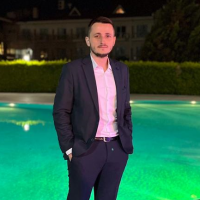
Dr. Hüseyin BAKIR received the Associate Professor degree in 2025. His core research interests include Energy, AI-Driven Optimization for Hybrid Energy Systems, Artificial Intelligence, Metaheuristic Algorithm Design, Combustion Optimization, Machine Learning, Renewable Energy, Fossil-based Fuels, Greenhouse Gases, Carbon Footprint, and Exhaust Pollutants. He is an Associate Editor of Scientific Reports, Journal of Franklin Open, Journal of Petroleum, Journal of Asian Scientific Research, Duzce University Journal of Science Technology, and Duzce University Journal of Technical Sciences. Dr. Bakır has been listed among the World’s Top 2% researchers in a list announced by Stanford University, USA, in 2025.

Prof. Dr. Samet Uslu is a faculty member in the Department of Mechanical Engineering at Karabük University's Faculty of Engineering and Natural Science. His main research areas focus on automotive combustion and fuel technologies and internal combustion engines. Specializing particularly in sustainable energy solutions and biofuels, Dr. Uslu conducts advanced research on the application of optimization techniques to energy systems in mechanical engineering. Throughout his academic career, he has authored numerous international publications on fuel modification, emission reduction, and engine performance, and continues to contribute to engineering sciences.

Tuğba Tabanlıgil Calam is a professor at Gazi University, Ankara, Turkey. She received his MSc and PhD in 2010 and 2016, respectively, at Gazi University. She has published many papers in various international journals. Her research areas include surface modification, electrochemical sensors, electropolymerization, and fuel cells.

Aykut Fatih Güven, Ph.D., received his B.Sc. and M.Sc. degrees in Electrical Engineering from Karadeniz Technical University, Trabzon, Türkiye, in 2004, and his Ph.D. degree in Electrical Engineering from Kocaeli University in 2022. His research interests include renewable energy systems, hybrid energy system management, electric vehicles, control systems, power system analysis, artificial intelligence, and meta-heuristic optimization. He served as an Assistant Professor in the Department of Electrical and Electronics Engineering until June 2025 and has been working as an Associate Professor since then. He has been included in the list of the world’s top 2% scientists.
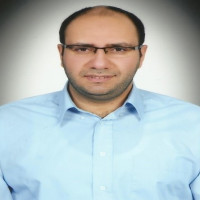

Dr. Ennetta is currently a Full Professor of Mechanical Engineering at The Higher Institute of Industrial Systems (ISSIG), University of Gabes, Tunisia.
He received his PhD, in 2010, in Applied Physics from Monastir University, his Master’s degree, in 2003 and Engineer Diploma, in 2000, in Mechanical Engineering from Sfax University, Tunisia.
He is the co-founder of the Laboratory of Mechanical Modelling, Energy and Materials (LM2EM) at the National Engineering School of Gabes (ENIG).
His research activities concern essentially combustion science and technologies, ranging from numerical modeling of turbulent combustion (flame propagation, turbulence effects) to experimental studies of ICE and burners using alternative fuels (LPG, biodiesel, alcohol, Hydrogen). Recently, he is interested in sustainable and renewable energy systems such as wind turbines optimization, green hydrogen production using RE, solar-powered water desalination.
He was the supervisor of 05 and co-supervisor of 02 defended PhDs and 60+ master degrees. He is the co-author of 45+ scientific publications.

Omar Bait (Engineer degree in Mechanical Engineering in 2009 and Doctor of Engineering in 2019, both from the University of Batna, Algeria) has five years of experience working at the same university and most recently (more than 2 years) as an Associate Professor at the University of Frères Mentouri, Constantine 1, Algeria. Omar’s current research interests include Renewable Energies (Solar Energy) and Desalination. He is an author and co-author of many papers published in highly reputed and indexed research journals and an organizing committee member for a series of international conferences. He has been on the list of World’s Top 2% Scientists, according to the Stanford University annual assessment of author citations. His ORCID ID is: https://orcid.org/0000-0002-7614-3513.

Dr. Praveen Kumar Dadheech is an accomplished academician and researcher in Mathematics, currently serving as an Assistant Professor at the Indian Institute of Information Technology (IIIT) Kota. He holds a Ph.D. in Fluid Dynamics from the University of Rajasthan, specializing in viscous incompressible fluid flow with heat and mass transfer. With rich teaching experience across institutions like RTU Kota and Government Engineering College Bikaner, he has contributed extensively to mathematical modeling, nanofluid dynamics, MHD flows, and heat transfer in porous media. Dr. Dadheech has authored numerous research papers in the field of applied mathematics, with his work widely cited and recognized for its relevance to thermal sciences and engineering applications. A GATE and NET-qualified scholar, he also serves on the editorial boards of various academic journals and actively participates in organizing workshops and faculty development programs, making him a key contributor to both education and research.

Dr. Shivakumar Nagareddy, Asociate Professor received his graduation degree B.E. in Automobile Engineering from Visveswaraiah Technological University, post graduation degree M.E. in Thermal Engineering from Government College of Technology, and Ph.D. from Anna University, Chennai - CEG Campus, India. He published more than 50 research articles in International Journals. His research areas include Thermal Science, Automotive Technology, Hybrid and Electric Vehicles, Fuel Technology, Renewable Energy Resources etc. He developed research GDI Engine from base diesel engine by modifying combustion chamber, Fuel supply system, ignition system and electronic control unit.
Malakonda Reddy Lekkala is a researcher at the University of Massachusetts Amherst, specializing in offshore energy systems. He holds a Ph.D. in offshore technology from University Teknologi PETRONAS and an M.Sc. in Offshore Engineering from the University of Stavanger. His research focuses on the design and optimization of subsea pipelines and risers, mooring configurations, dynamic power cables for offshore renewable energy systems, and Cold-water pipes for OTEC. Dr. Lekkala has published extensively on offshore structural dynamics and brings expertise in advanced engineering software, including OpenFAST, OrcaFlex, and ANSYS.

Assoc. Prof. Dr. Vahdettin Demir is an academic and researcher specializing in hydraulic modeling, hydrology, climate resilience, and artificial intelligence applications in water and environmental systems. Based at KTO Karatay University, his work focuses on flood modeling, drought analysis, digital twin technologies, nature-based solutions, and AI-driven decision support systems for sustainable water management. He actively serves as principal investigator and researcher in numerous national and international projects, particularly in climate adaptation and resilient water and urban systems projects funded by TÜBİTAK and Horizon Europe. He holds editorial roles in international peer-reviewed journals as editor, special issue editor, editorial board member, and reviewer. In 2025, he was recognized among the world's top 2% most-cited scientists in the Stanford University global ranking.

Dr. Hassan Raza is a Postdoctoral Research Associate (RA) at The Hong Kong University of Science and Technology (HKUST, QS world Rank #44) with over 10 years of academic experience. His research focuses on high-performance next-generation batteries, high-entropy materials, and nanocomposites. His work has resulted in over 35 publications, accumulating more than 2,600 citations with an h-index of 21. His research excellence has been recognized by being ranked among the World's Top 5% of Scientists by SciRank (2025), a Gold Medal at the Geneva Inventions (2024), and multiple "Excellent Paper" and "Top Cited Paper" awards. Dr. Raza is dedicated to translating fundamental research into sustainable, real-world energy applications.

Hijaz Ahmad is an Associate Professor at Near East University, Nicosia, Cyprus. His research focuses on nonlinear systems, mathematical analysis, numerical methods, and PDEs. His current project involves developing innovative computational techniques for solving PDEs and fractional PDEs from applied sciences and engineering. Dr. Ahmad is ranked among the World's Top 2% Scientists in 2022, 2023, 2024 and 2025 by Stanford University and Elsevier.
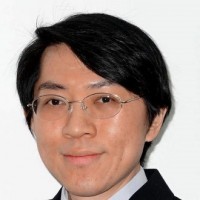
Ir Prof Pak Kin Wong received the Ph.D. degree in Mechanical Engineering from The Hong Kong Polytechnic University, Hong Kong, in 1997. He is currently a Professor in the Department of Electromechanical Engineering and Dean of Graduate School, University of Macau. He is also the Fellow of the Hong Kong Institution of Engineers and Chartered Fellow of Chartered Association of Building Engineers, U.K. His research interests include automotive engineering, intelligent medical energy, fluid power engineering and mechanical vibration. He has published over 435 scientific papers. 308 out of 435 are refereed journal papers.
Letícia Pekk is a researcher at Széchenyi István University in Zalaegerszeg, working within the wider innovation ecosystem of the ZalaZONE Innovation Park. She holds degrees in mechatronic engineering and engineering management and has completed postgraduate training in research and innovation management. She earned her PhD for research examining the organizational and managerial implications of emerging technologies, with particular attention to technology forecasting, technology management, and innovation within technology-oriented companies. Her current research interests also extend to the automotive sector, including emerging vehicle technologies, future mobility, vehicle communication systems, and the strategic challenges associated with technological transformation.
Language Editors
Burtay Hatice İnce (PhD) is an English instructor at Gazi University since 1999. She finished her BA at Hacettepe University, English Language Teaching Department. She completed her MA at Gazi University, English Language Teaching Department. She holds her PhD from Middle East Technical University, in the department of Curriculum and Instruction. Her research interests include pre/in-service teacher training, sustainable teacher development, role of feedback in teacher education, use of technology in language teaching, sustainable development and education for sustainable development.
