



Analysis of Passenger Complaints Regarding Airline Tickets Purchased Through the Trip.com Platform: The Sikayetvar.com Example
Abstract
In recent years, there has been an increase in the number of online travel agencies. Online travel agencies generally provide services through websites and applications. China-based Trip.com is an online travel agency that has been operating in many countries in recent years. As with many online travel agencies, there may be customer complaints about the services offered by Trip.com from time to time. The purpose of this study is to determine what types of complaints Trip.com has received regarding the airline tickets it has sold. To this end, comments made on sikayetvar.com between 2022, and 2025, regarding Trip.com were examined. The complaints identified were analysed using content analysis. The data obtained was grouped under themes and presented in tabular form. The research found that 109 different complaints were made about Trip.com, 3.67% of which were resolved, while 96.33% are still awaiting resolution. Within the scope of the research, 8 themes were created: complaints related to tickets, complaints related to information, complaints related to credit cards, complaints related to baggage, complaints related to ticket reservations, complaints related to flight changes, complaints related to customer service, and other complaints. It was found that the most complaints were about the non-refund of ticket cancellation fees and the rejection of cancellation requests. These research results are important in that they reveal the problems experienced by passengers who purchase airline tickets from Trip.com. The research results are expected to contribute to the efforts of Trip.com and other representatives of the industry to resolve these issues.
Ethical Statement
Not applicable.
Supporting Institution
-
Project Number
-
Thanks
-
References
- About Us (2025). About us. Access Date: 05.07.2025, https://tr.trip.com/pages/about-us/?locale=tr- TR&curr=TRY.
- Akay, B., & Turkay, O. (2014). Analysis of the customer complaints against car rental companies. Electronic Journal of Vocational Colleges, 4(4), 138-146.
- Akmaz, A. (2024). Evaluation of complaints and satisfaction of customers preferring halal concept hotel businesses: halalbooking.com customer reviews (2019-2023). Igdir University Journal of Social Sciences, (35), 411-434.
- Alrawadieh, Z., & Demirkol, S. (2015). E-complaint management in the hotel industry: a study of five-star hotels in Istanbul. Nisantasi University Journal of Social Sciences, 3(1), 130-148.
- Angelovska, N. (2021). Understanding customers' complaint behavior for effective resolution. UTMS Journal of Economics, 12(1), 57–69.
- Argan, M.T., & Dursun, M.T. (2020). Complain with you reward me: event ticket delivery and biletix complaints. Journal of Turkish Tourism Research, 4(2), 1199-1215
- Arikan, E. (2023). Analysis of complaints regarding recreation and animation services in hotel businesses. Journal of Tourism Theory and Research, 9(1), 24-29.
- Arpaci, O. (2022). Analysis of customer complaints who purchased a black sea region tour. Balkan and Near Eastern Journal of Social Sciences, 8 (Special Issue), 25-32.
- Arpaci, O., & Kutanis, R.O. (2022). Analysis of customer e-complaints about service quality in accommodation businesses. International Journal of Social Sciences, 6(27), 442-463.
- Arpaci, O., Ugurlu, K., & Batman, O. (2015). A study on customer complaints made against halal concept hotels. Bartin University Journal of Faculty of Economics & Administrative Sciences, 6(11), 181-198.
- Arslan, A., & Simsek, G. (2022). The effect of memorable tourism experiences on behavioral intentions through social media sharing behavior and overall satisfaction. MANAS Journal of Social Studies, 11(2), 744-762.
- Avci, E., & Dogan, S. (2018). What do e-complaints tell about tourist guides? Journal of Travel and Hospitality Management, 15(1), 133-148.
- Aydin, S., & Ogel Aydin, S. (2025). Digital Reflections of the balkan tour experience: analysis of complaints. R&S - Research Studies Anatolia Journal, 8(2). 283-310.
- Aylan, S., Arpaci, O., & Celiloglu, F.K. (2016). A research on e-complaints towards thermal hotels from an internet complaint forum. Cankiri Karatekin University Journal of Institute of Social Sciences, 7(1), 49-68.
- Balaji, M.S., Jha, S., & Royne, M.B. (2015). Customer e-complaining behaviors using social media. The Service Industries Journal, 35 (11–12), 633–654.
- Bikmaz-Bilgen, O., & Dogan, N. (2017). The Comparison of Interrater Reliability Estimating Techniques. Journal of Measurement and Evaluation in Education and Psychology, 8(1), 63-78.
- Braun, V., & Clarke, V. (2006). Using thematic analysis in psychology. Qualitative Research in Psychology, 3(2), 77-101.
- Buluk, B., & Boz, M. (2016). Tourist satisfaction in purchasing trips through online travel agencies: the case of Istanbul. Karabuk University the Journal of Selcuk University Social Sciences Institute, 6(2), 504-529.
- Burns, A.C., & Bush, R.F. (2015). Marketing research. 7th Edition, (F. Demirci Orel Trans.), Ankara: Nobel Academic Publishing.
- Ceylan, U., & Gencer, K. (2022). Investigation of online complaints against hotel businesses in the timeshare system. Journal of Turkish Tourism Research, 6(2), 540-552.
- Ceylan, U., & Karaman, S. (2017). The effect of customer complaint management, innovation, and learning on creating corporate reputation: a research on travel agents. International Journal of Global Tourism Research, 1(2), 85-106.
- Ceylan, U., & Uzun, A.H. (2024). Analysis of online complaints against hotel businesses: Ankara case. Journal of Sinop-e: Tourism Research, 1(2), 74-94.
- Corporate profile (2025). Corporate profile. Access Date: 05.07.2025, https://investors.trip.com/about-the- company/corporate-profile/.
- Cunningham, P., Smyth, B., Wu, G., & Greene, D. (2010). Does tripadvisor make hotels better? (technical report Ucd-Csı-2010-06). Access Date: 06.07.2025, https: //researchrepository.ucd.ie/server/api/core/bitstreams/ e67597ec-2efd-4b e0-a6ab-ee40664e39cb/content.
- Daradinanti, S.C., & Kuswati, R. (2025). Is the trustworthiness of celebrity endorsements truly effective on online purchase intention: a study on online travel agency customers. Indonesian Interdisciplinary Journal of Sharia Economics (IIJSE), 8(2), 2697-2717.
- Ercan, F., Sayın, K., Dalgın, T., & Gençer, K. (2025). A bibliometric and systematic review of publications on augmented reality in sustainable tourism. Sustainability, 17(4), 1-28, 1508.
- Einwiller, S.A., & Steilen, S. (2015). Handling complaints on social network sites-an analysis of complaints and complaint responses on facebook and twitter pages of large US companies. Public Relations Review, 41(2), 195-204.
- Ergin Cagatay, H. H. (2025). Communication and social media use in tourism. Rahva Journal of Technical and Social Studies, 5(1), 1-10.
- Gokdeniz, I., Bozaci, I., & Karakaya, E. (2011). An empirical research on factors affecting satisfaction after complaint management process. The Journal of Selcuk University Social Sciences Institute, 26, 173-185.
- Gong, J.H., Xie, L.S., Peng, J.M., & Guan, X.H. (2015). Customer responses to integrity issues for travel services in China a content analysis based on online complaints. International Journal of Contemporary Hospitality Management, 27(2), 199-213.
- Gretzel, U., Yoo, K.H., & Purifoy, M. (2007). Online travel review study: the role and impact of online travel reviews. Access Date: 07.07.2025, https://www.Trip advisor.com/pdfs/OnlineTravelReviewReport.pdf.
- Gurbuz, Z. (2024). Evaluation of customer e-complaints: oz has and cesur bingol tourism. International Social Mentality and Researcher Thinkers Journal, 10(4), 551-559.
- Gures, N., Arslan, S., & Bakar, Z.K. (2013). Customer complaint behaviors in Turkish airline industry. Cukurova University Journal of the Faculty of Economics and Administrative Sciences, 17(2), 129-148.
- Gures, N., Arslan, S., Yuksel, C., & Yilmaz, H. (2023). Analysing e-complaints of tourists about airline companies via tripadvisor. Journal of Tourism & Gastronomy Studies, 8(1), 211–230.
- Hackman, J.R., & Wageman, R. (1995). Total quality management: empirical, conceptual, and practical issues. Administrative Science Quarterly, 40(2), 309-342.
- Ibis, S., & Batman, O. (2016). Analysis of customer complaints against airlines. In: 3rd International Congress of Tourism & Management Research–May 2016. Adra Publishing, Antalya, pp. 317-333.
- Kabakci, D., & Koker, N.E. (2017). The importance of online complaints in terms of the role of corporate communication process. Journal of Akdeniz Communication, 27, 46–77.
- Kaleozu, S., & Deniz, S. (2025). The relationship between ewom and customer experience: an analysis of boutique hotel reviews through the servqual model. Journal of Business Research, 17(2), 1677-1697.
- Kanli, K. (2019). Examination of e-complaints with content analysis for tourist guides. Journal of Tour Guiding, 2(1), 10–17.
- Karaman, A., & Sayin, K. (2017). The importance of internet usage in hotel businesses: A study on small hotels. Journal of Internet Applications and Management, 8(1), 65-74
- Keles, A., Kilinc, C.C., & Ates, A. (2016). Tour operators directing customers with the content analysis of e- complaint issues made to foreign tourism operators about tourism in Turkey. Journal of Academic Researches and Studies, 8(15), 211-228.
- Kesim, M.M., & Yilmaz, I. (2024). Problems experienced by disabled local tourists in tourism: an evaluation based on complaints on online platforms. Journal of Hospitality and Tourism, 6(2), 233-250.
- Kizilcan, S., Hosgor, H., & Gungordu, H. (2023). Analyzing e-complaints directed towards a specific airline company: the case of corendon airlines. Social Sciences Research Journal, 12(06), 787-794.
- Kim, D.J., Kim, W.G., & Han, J.S. (2007). Perceptual mapping of online travel agencies and preference attributes. Tourism Management, 28, 591-603
- Kurt, Y (2017). Social media interaction of low-cost airline users: pegasus airlines twitter analysis. International Journal of Social Science, 60 (Autumn II), 465-491.
- Kutluk, A., & Arpaci, O. (2016). Investigation of e-complaints with grounded theory and content analysis towards travel agencies in the context of e-wom. Balikesir University the Journal of Social Sciences Institute, 19(35), 367-386.
- Kutuk, A. (2021). E-customer satisfaction in digital travel intermediaries and a content analysis intended for e-complaints. Journal of Turkish Tourism Research, 5(1), 407-421.
- Limon, S., & Arpaci, O. (2016). Evaluation of customer complaints from the perspective of corporate image: research on complaints towards travel agencies. Karadeniz Technical University E-Journal of Faculty of Communication, 6(1), 86-99.
- Mesci, Z., & Bicer, G. (2024). Digitalization in travel agencies: the case of Istanbul. Sivas Interdisciplinary Tourism Research Journal, 7(2), 229-242.
- Nazli, M. (2020). Tourists' e-complaints about online travel agencies. Saffron Journal of Culture and Tourism Researches, 3(1), 99-111.
- Nurhaliza, S., Handaka, S.A.A., Junirahma, N.S., Hermanto, B., & Komaladewi, R. (2025). Complaint management system analysis to improve visitor satisfaction: case study: Puncak darajat highland. Tourism Scientific Journal, 10(2), 259–275.
- Ooi, K.B., Lin, B., Tan, B.I., & Yee‐Loong Chong, A. (2011). Are TQM practices supporting customer satisfaction and service quality? Journal of Services Marketing, 25(6), 410-419.
- Sahin Percin, N., & Cay, G. (2025). Evaluation of e-complaints against local restaurants in Konya province using content analysis method. Tourism and Recreation, 7(1), 11-24.
- Sahin, Y. (2024). New approaches in aviation management: sustainable aviation fuels studies. International Journal of Artvin Coruh University Social Sciences, 10(2), 261-276.
- Sarac, O., & Turkay, O. (2019). A study on infrastructural, structural, and environmental issues based on tourist complaints and potential solutions for local governments: Antalya sample. Journal of Gumushane University Social Sciences, 10, 98-110.
- Sarica, V., & Ozbay, G. (2022). A study on customer complaints during the pandemic period in food and beverage delivery services. Journal of Management and Economics, 29(3), 583-602.
- Selvi, M. S., Sacilik, M.Y., Cevik, S., & Cavlak, N. (2012). A content analysis regarding consumer complaints about timeshare systems. Turar Journal of Tourism and Research, 1(2), 15-35.
- Sikayetvar (2025). Sikayetvar. Access Date: 10.11.2025, https://www.sikayetvar.com/aboutus.
- Soylu, I., & Kitapci, O. (2020). Do anger dimensions differ in terms of complaint behavior? an application in the airline industry. Studies on Marketing Insights, 4(1), 27-43.
- Su, Z., & Ha, H.Z. (2025). Longitudinal impact of perceived fairness after service failures: evidence from online travel agencies. International Journal of Hospitality Management, 128, 104177.
- Tanrisever, C. (2018). Analysis of complaint customers who purchased package tours. Tourism Academic Journal, 5(1), 114-123
- Temizkan, R., & Ar, H. (2017). Analysis of e-complaints against tourist guides. Academic Perspective International Journal of Refereed Social Sciences, 64, 273-285.
- Merriam, S. B. (2013). Qualitative research: A guide to design and implementation (S. Turan, Trans.). Ankara: Nobel.
- Turban, E., Outland, J., King D., Lee, J.K., Liang, T.P., & Turban, D. C. (2018). Electronic commerce 2018: a managerial and social networks perspective (9th Edition). Switzerland: Springer International Publishing AG.
- Unal, A. (2019). A study on the classification of e-complaints of hotel customers. International Journal of Management Economics and Business, 15(2), 561-581.
- Unal, A., Cakir, G., Bayar, S.B., & Celen, O. (2020). Investigation of tourists' complaints about hospitality businesses: research on Marmara region hotels. Journal of Gumushane University Social Sciences, 11(3), 744- 755.
- Unur, Y.D.D.K., Cakici, P.D.C., & Tastan, A.G.H. (2010). Customer complaints on package tours and research on the frequency of the complaints faced by the travel agents. Cukurova University Social Sciences Institute Journal, 19(3), 391-408.
- Whang, J. (2024). The effects of service recovery actions on customers' post-recovery responses to online travel agencies (OTAs): the moderating role of price. International Journal of Tourism Research. 26(4), 1-13.
- Wicaksono, A., & Maharani, A. (2020). The effect of perceived usefulness and perceived ease of use on the technology acceptance model to use online travel agency. Journal of Business and Management Review JBMR, 1(5), 313-328.
- Winarko H.B., & Husna, A. (2020). Consumer behavior toward online travel agencies (OTA): evidence from Indonesia. International Journal of Tourism & Hospitality Reviews, 7(1), 20-29.
- Wreden, N. (2005). Profit brand: how to increase profitability, accountability & sustainability of brand. London: Kogan Page Publishers.
- Xu, W., Yao, Z., Ma, Y., & Li, Z. (2025). Understanding customer complaints from negative online hotel reviews: a bert-based deep learning approach. International Journal of Hospitality Management, 126, 104057, 1-11.
- Ye, H., & Tripathi, A. (2016). Using social media to manage customer complaints: a preliminary study. In: 49th International Conference on system sciences (HICSS). IEEE computer security, Hawaii, USA, pp. 3839-3846.
- Yilmaz, E.S., & Bal, F. (2022). Investigation of airline companies’ corporate reputation with the RQ model through the "sikayetvar" website. Journal of Gumushane University Social Sciences, 13(1), 436-449.
- Yoo, K.H., Y., & Gretzel, U. (2009). Comparison of deceptive and truthful travel reviews. In W. Hopken, U. Gretzel, and R. Law (Eds.), Information and communication technologies in tourism (pp. 37–47). Wien: Springer- Verlag.
- Zengin, B., & Haliloglu, S. (2020). Investigation of e-complaints for accommodation companies: the case of Sakarya. Saffron Journal of Culture and Tourism Researches, 3(1), 68-84.
Details
| Primary Language | English |
|---|---|
| Subjects | Air Transportation and Freight Services, Passenger Needs |
| Journal Section | Research Article |
| Authors | |
| Project Number | - |
| Submission Date | August 31, 2025 |
| Acceptance Date | December 4, 2025 |
| Early Pub Date | February 26, 2026 |
| Publication Date | February 26, 2026 |
| DOI | https://doi.org/10.30518/jav.1774811 |
| IZ | https://izlik.org/JA83AH85RS |
| Published in Issue | Year 2026 Volume: 10 Issue: 1 |
Aim & Scope
Journal of Aviation (JAV) established in 2017. It is a peer–reviewed international journal to be of interest and use to all those concerned with research in various fields of, or closely related to, Aviation science. Journal of Aviation (JAV) aims to provide a highly readable and valuable addition to the literature which will serve as an indispensable reference tool for years to come. The coverage of the journal includes all new theoretical and experimental findings in the fields of Aviation Science or any closely related fields. The journal also encourages the submission of critical review articles covering advances in recent research of such fields as well as technical notes.
The scopes include:
|
|
Author Guidelines
Yazım Kuralları
Journal of Aviation dergisinin yazım kuralları aşağıda detaylı bir şekilde açıklanmıştır. Ayrıca yazarlarımız istedikleri takdirde dergimizin makale yazım şablonunu kullanarak makalelerini hızlı bir şekilde düzenleyebilirler.
Ethical Principles and Publication Policy
Journal of Aviation (JAV) is committed to following the Code of Conduct and Best Practice Guidelines of COPE (Committee on Publication Ethics) . It is a duty of our editors to follow Cope Guidance for Editors and our peer-reviewers must follow COPE Ethical Guidelines for Peer Reviewers We expect all prospective authors to read and understand our Ethics Policy before submitting any manuscripts to our journals.
Please note that submitted manuscripts may be subject to checks using the iThenticate service, in conjunction with CrossCheck, in order to detect instances of overlapping and similar text.
The iThenticate software checks submissions against millions of published research papers, documents on the web, and other relevant sources. If plagiarism or misconduct is found, consequences are detailed in the policy.
The chief goal of our policy is threefold: to provide advice for our authors, to maintain the scholarly integrity of our journals and their content, and to detail the ethical responsibilities of JAV, our editors and authors.
We expect all authors to read and understand our ethics policy before submitting to any of our journals. This is in accordance with our commitment to the prevention of ethical misconduct, which we recognise to be a growing problem in academic and professional publications. It is important to note that most incidents of plagiarism, redundant publication, copyright infringement or similar occur because of a lack of understanding, and not through fraudulent intent. Our policy is one of prevention and not persecution.
If you have any questions, please contact the relevant editorial office, or Journal of Aviation (JAV)' ethics representative: journalofaviation@gmail.com
Download a PDF version of the Ethics and Policies [PDF,392KB].
Authors’ Responsibilities
Authors should:
Ensure that all researched work submitted is original, fully referenced and that all authors are represented accurately. The submission must be exclusive and not under consideration elsewhere.
Provide accurate contact details for a designated corresponding author, who shall be deemed by the publisher and editor as fully responsible for the authorship of the paper and all communications concerning the ethical status and originality of the paper. This includes any queries or investigations that may arise, pre- or post publication.
Openly disclose the source of all data and third party material, including previously unpublished work by the authors themselves. Anything that could compromise the originality of the submission should be expressly avoided and/or discussed with the editorial office in the first instance.
Identify any third party material that they intend to include in their article, and obtain written permission for re-use in each instance from the relevant copyright holders. Such permissions should be submitted once the manuscript is accepted, or requires small changes to be accepted. For further guidance on seeking permission to use 3rd party material please see the Rights and Permissions section.
Openly disclose any conflict of interest - for example, if publication were to benefit a company or services in which the author(s) has a vested interest.
Expect to formally agree publication terms which defines the author and the publishers rights for the work. Visit our website for further information.
Expect the editor to scan submissions using plagiarism detection software at iThenticate to check a paper's originality before sending out for review.
Fully correspond and comply with the editor and publisher in any requests for source data, proof of authorship or originality in a timely manner, providing reasonable explanation for discrepancies or failures to disclose vital information.
Fully co-operate with any consequent investigations if the editor and/or publisher are dissatisfied with the evidence available or the explanations provided.
Expect transparency, efficiency and respect from the publisher and the editor during the submissions process.
Remain in good communication with both the publisher and the editor.
When necessary, submit corrigenda in a timely and responsible fashion.
Co-operate fully with the publication of errata and with the retraction of articles found to be unethical, misleading or damaging.
Remain in good communication with the editor(s), the publisher and any co-authors.
Editors’ Responsibilities
Editors should:
Read and understand COPE guidelines as well as JAV's ethics policy, and follow them during all editorial processes.
Protect the reputation of their journal(s) and published work by only publishing content of the highest quality and relevance in a timely and responsible manner.
Carry out thorough, objective and confidential peer review for original article submissions that pass the initial quality check and editorial assessment, in adherence with COPE guidelines and JAV' ethics policy.
Detail and justify any article types which will not be peer reviewed (e.g. editorials, opinion pieces etc.).
Provide a transparent review and publication process as far as is possible, with full respect and care paid to the author(s).
Provide advice and give reasonable explanation and updates to authors during the submissions process and once a decision has been made.
Allow authors the right to appeal any editorial decision.
Only accept papers based on the original merit, quality and relevance of their content.
Support authors in queries concerning the originality of their submissions and request the support of JAV if necessary.
Advise the publisher of any third party material which has been included for which they do not believe sufficient permission has been cleared.
Be ready and prepared to publish corrections, corrigenda, errata when necessary, as well as retract articles that (the editor and JAV) deem unethical, misleading or damaging.
Remain in good communication with both the publisher and the author(s).
Reviewers’ Responsibilities
Reviewers should:
Adhere to JAV’s policy of confidential peer review of their journals. This includes, but is not restricted to, keeping their identity hidden from authors and not externally distributing any work that is passed to them for their eyes only.
Only accept invitations to review work that is relevant to their own expertise and speciality.
Review submitted work in a responsible, impartial and timely manner.
Report any suspected ethical misconduct as part of a thorough and honest review of the work.
Avoid the use of unnecessarily inflammatory or offensive language in their appraisal of the work.
Accept the commitment to review future versions of the work and provide 'follow up’ advice to the editor(s), if requested.
Seek advice from the editor if anything is unclear at the time of invitation.
Remain in good communication with both the publisher and the editor.
JAV’s Responsibilities
JAV will:
Protect the reputation of our journals and published work by only publishing content of the highest quality and relevance in a timely and responsible manner.
Provide detailed information concerning both our understanding of publication ethics and our implementation of the same. Emphasise a desire for prevention, not eventual detection, of ethical misconduct.
Uphold our COPE membership (or of such similar organisations) and keep our editorial offices, publishing staff and society partners up-to-date with their guidelines and policies, adapting our own where appropriate (and publicising any update).
When necessary, request proof of originality/accuracy from the corresponding author of any work submitted to any of our journals.
Use plagiarism detection software when necessary for any submission to any journal at any stage of the submissions and publication process.
Provide a transparent submissions and publication process, with full respect and care paid to the author. This includes detailed and dedicated instructions to authors for each journal, outlining referencing style, accepted article types and submission processes.
Investigate thoroughly any suggestion of ethical misconduct detected during any stage of the submissions process. This can include, but is not restricted to, the following: plagiarism, redundant publication, fabrication or misuse of data and authorial disputes.
When necessary, retract articles that we deem to be unethical, misleading or damaging.
When necessary, publish errata, corrigenda and retractions in a timely and responsible fashion, detailing the decision online in an open access format and publishing in print as soon as possible.
Remain in good communication with editors, authors, reviewers and society partners (where applicable).
Further reading
Authorship of the paper: Authorship should be limited to those who have made a significant contribution to the conception, design, execution, or interpretation of the reported study.
Originality and plagiarism: The authors should ensure that they have written entirely original works, and if the authors have used the work and/or words of others that this has been appropriately cited or quoted.
Data access and retention: Authors may be asked to provide the raw data in connection with a paper for editorial review, and should be prepared to provide public access to such data.
Multiple, redundant or concurrent publication: An author should not in general publish manuscripts describing essentially the same research in more than one journal or primary publication. JAV do not view the following uses of a work as prior publication: publication in the form of an abstract; publication as an academic thesis; publication as an electronic preprint. Information on prior publication is included within each JAV and its journal Guideline for Authors.
Acknowledgement of sources: Proper acknowledgment.
Disclosure and conflicts of interest: All submissions must include disclosure of all relationships that could be viewed as presenting a potential conflict of interest.
Fundamental errors in published works: When an author discovers a significant error or inaccuracy in his/her own published work, it is the author’s obligation to promptly notify the journal editor or publisher and cooperate with the editor to retract or correct the paper.
Reporting standards: Authors of reports of original research should present an accurate account of the work performed as well as an objective discussion of its significance.
Hazards and human or animal subjects: Statements of compliance are required if the work involves chemicals, procedures or equipment that have any unusual hazards inherent in their use, or if it involves the use of animal or human subjects.
Use of patient images or case details: Studies on patients or volunteers require ethics committee approval and informed consent, which should be documented in the paper.
JAV has also accessed and learned from the existing policies of other publishers and leading experts as well as open access articles that detail and define ethical misconduct.
'Plagiarism and the law', Joss Saunders, Learned Publishing, 23:279-202: http://www.ingentaconnect.com/content/alpsp/lp/2010/00000023/00000004/art00002
iThenticate Plagiarism Resources: http://www.ithenticate.com/resources/6-consequences-of-plagiarism
Price Policy
All articles in the "Journal of Aviation" (e-ISSN: 2587-1676) are published in the full open access model.
In order to start the evaluation process of the articles sent to the Journal of Aviation, an Editorial Processing Charges (EPCs) will be requested. -This fee is 100 USD for foreign authors-
This fee will be requested regardless of the acceptance/rejection condition of the article.
Authors pay a one-time Editorial Processing Charges (EPCs) to cover the costs of peer review administration and management, professional production of articles in PDF and other formats, and dissemination of published papers in various venues, in addition to other publishing functions. Please note that the option to process an advance payment remains but does not guarantee acceptance of manuscripts.
Information regarding the payment of the Editorial Processing Fee (EPCs) is sent to the responsible author by e-mail after the article is uploaded to the system.
Indexes
Citation Indexes









Other Indexes

Journal Boards
Baş Editör
Dil Editörü

Editör Kurulu


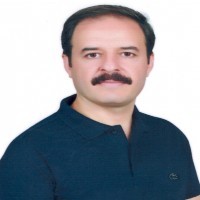
Doktorasını Sivil Havacılık Yönetimi, Doçentliğini Yönetim ve Organizasyon dalında almış olup halen Eskişehir Teknik Üniversitesi, Havacılık ve Uzay Bilimleri Fakültesi Havacılık Yönetimi Bölümünde öğretim üyeliğini ve bölüm başkanlığını sürdürmektedir.

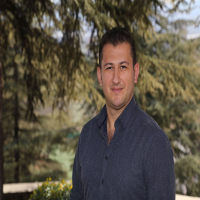








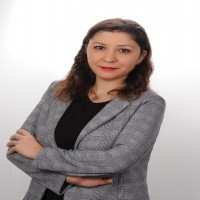
2008 yılından itibaren profesyonel iş dünyasında yer alan Gülaçtı ŞEN, 2007-2012 yılları arasında Anadolu Üniversitesi İktisadi ve İdari Bilimler Fakültesi İşletme Bölümü’nü tamamladı. 2015 yılında Beykent Üniversitesi Lisansüstü Eğitim Enstitüsü İşletme Yönetimi Yüksek Lisans eğitimini tamamladı. 2020 yılında Beykent Üniversitesi Lisansüstü Eğitim Enstitüsü İşletme Yönetimi doktora eğitimini tamamladı. Yüksek lisans ve doktora tezi girişimcilik alanı ve havacılık endüstrisi ile ilgilidir. 2010-2016 yılları arasında havacılık sektöründe Turkish Ground Service A.Ş.’de Yolcu Hizmetleri Memuru olarak Türk Hava Yollarına hizmet verdi. 2016 yılından itibaren üniversitelerde farklı havacılık programlarında havacılık dersleri veren ŞEN, 2022 yılından itibaren Balıkesir Üniversitesi Edremit Sivil Havacılık Yüksekokulu Havacılık Bölümü’nde Dr. Öğr. Üyesi olarak görevini sürdürmektedir. Araştırmaları, yönetim alanında (özellikle havacılık endüstrisine yönelik) yeni ampirik kanıtlar sağlamayı amaçlayan nitel ve nitel araştırma tekniklerini kapsamaktadır.
Havacılıkla ilgili verdiği bazı dersler; Havacılık Kuralları, Havacılıkta İletişim, Hava Trafik Kuralları, Havaalanı Faaliyetleri ve Donanımları, Meteoroloji, Emniyet Yönetim Sistemi, Yer Hizmetleri, Yolcu Hizmetleri, Tehlikeli Maddeler, Havayolu Pazarlamasıdır. 2019 yılında Sivil Havacılıkta Kariyer ve 2021 yılında Terminalde Bir Gün-Farklı Havacılık Meslekleri Çalışanlarıyla Söyleşiler, 2022 yılında Havacılıkta Stratejik Yönetim: Yolcu Hizmetleri Yönetimi adlı kitapları çıktı.


2009-2015 yılları arasında Türk Hava Yolları ve Pegasus Hava Yolları dahil olmak üzere sivil havacılık sektöründe çalışan Dr. Tüzün Tolga İnan, Eskişehir Anadolu Üniversitesi'nden 2017 yılında sivil havacılık yönetimi doktora derecesi ile mezun oldu. Halen Bahçeşehir Üniversitesi Uygulamalı Bilimler Yüksekokulu Pilotaj Bölümü'nde Bölüm Başkanı ve Havacılık Yönetimi Yüksek Lisans Koordinatörü olarak görev yapan Dr. Tüzün Tolga İnan, sivil havacılığın yönetim perspektifi ile ilgili ulusal ve uluslararası kitap, makale ve bildiriler yayınlayarak akademik literatürü sektörel deneyimi çerçevesinde geliştirmeye devam etmektedir. Araştırmalarında makine öğrenmesi, zaman serileri, çok boyutlu ölçekleme, veri zarflama analizi gibi istatistiksel modelleri kullanmaktadır. İlgili kitapta yolcu ve kargo stratejileri altında sınıflandırılan havayolları, tarifeli seferler, havacılıkta olay ve kaza incelemesi, makine öğrenmesi yaklaşımı ve talep tahminine yönelik analiz yöntemleri incelenmektedir.





Türkçe, İngilizce



I completed my Bachelor's Degree in Law from the Faculty of Law at Aligarh Muslim University (AMU) in 2009. Following this, I embarked on my professional journey as a Junior Advocate in a Law Office in New Delhi, where I served from June 2009 to August 2010. During this time, I had the privilege of participating in the preparation of various contracts and legal briefs and gaining valuable hands-on experience in the legal field.
Eager to further my legal education, I enrolled in the LL.M. program at the Faculty of Law, AMU, Aligarh, from 2010 to 2012. During my postgraduate studies, I focused my coursework on Comparative Constitutional Law, deepening my knowledge in this specialized area of law.
Subsequently, I embarked on a research endeavor at the Center of Air & Space Law, NALSAR University of Law, Hyderabad. As a Ph.D. candidate, I delved into the emerging field of Aerospace Law, specifically addressing the Regulatory Challenges of Civil Unmanned Aircraft Systems (Drones). This research allowed me to contribute to the growing understanding of this nascent area within the legal domain.
During my doctoral studies, I was honored to receive the prestigious Assad Kotaite Graduate and Postdoctoral Fellowship Fund in 2017, awarded by the International Civil Aviation Organization (ICAO) in Canada. This fellowship supported and recognized my commitment to pursuing advanced studies in aviation law.
My academic journey continued as I took on the role of an Assistant Professor of Law at the Faculty of Law, Jamia Millia Islamia, a Central University located in New Delhi. During my tenure there, I dedicated over two years to teaching and guiding the next generation of legal professionals.
Building on this experience, I extended my academic career by accepting the position of Assistant Professor at the School of Law, Jamia Hamdard University in New Delhi, India.
Currently, I have the privilege of being associated with the College of Law at the University of Sharjah in Sharjah, United Arab Emirates, where I serve as an Assistant Professor. In this role, I continue to impart knowledge and contribute to the legal community through research and education, drawing on the diverse experiences and expertise I have gained throughout my professional journey.
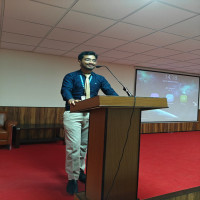
Divij Arora is an Assistant Professor in the Department of Aerospace Engineering at Uttaranchal University, India. He holds a Master’s degree in Aerospace Engineering from Lovely Professional University and is currently pursuing his Ph.D. in the same field. His research interests encompass aerodynamics, computational fluid dynamics (CFD), propulsion systems, and aerospace structures.I have contributed to several projects, including the design and testing of a hybrid rocket engine test bench setup and the fabrication and simulation of NACA airfoil profiles. His work emphasizes experimental propulsion and aerodynamic analysis, integrating advanced CAD modeling, simulation, and experimental validation. He has authored multiple publications in reputed journals and has been actively involved in innovative aerospace design projects such as VTOL UAV concepts and hypersonic flow analysis over spiked re-entry bodies. His ongoing research focuses on advancing aerodynamic efficiency and thermal management in aerospace vehicles through CFD-based analysis and design optimization.

1998 yılında Anadolu Üniversitesi Sivil Havacılık Yüksekokulu Sivil Hava Ulaştırma İşletmeciliği Bölümü’nün (yeni adı ile Havacılık ve Uzay Bilimleri Fakültesi Havacılık Yönetimi Bölümü) Bölüm ve Okul Birincisi derecesi ile mezun oldu. Yüksek Lisans eğitimini Sivil Havacılık Yönetimi alanında 2000 yılında, yine aynı alanda Doktora eğitimini ise 2007 yılında Anadolu Üniversitesi’nde tamamladı. 2013 yılında girmiş olduğu Doçentlik sınavında başarılı olarak Yönetim ve Strateji alanında Doçent, 2019 yılında Profesör unvanını aldı.
1998 yılında mezun olduğu bölümde Araştırma Görevlisi olarak göreve başladı. 2007 yılından itibaren Öğretim Üyesi olarak görevine devam etti. 2010-2011 yıllarında YÖK Doktora Sonrası Araştırma Bursu ile 1 yıl süre ile ABD’de Embry-Riddle Aeronautical University’de Misafir Öğretim Üyesi olarak Doktora sonrası araştırmalarda bulundu. 2014 yılında aynı bölümde Doçent kadrosuna yükseltildi. Halen, kuruluşunu takiben Eskişehir Teknik Üniversitesi’ne bağlanan Havacılık ve Uzay Bilimleri Fakültesi Havacılık Yönetimi Bölümü’nde Profesör olarak görevine devam etmektedir. Aynı zamanda Eskişehir Teknik Üniversitesi Bilim ve Teknolojide Kadın Araştırma ve Uygulama Birimi Kurucu Müdürü olup halen bu görevine devam etmektedir.
Havacılık Yönetimi alanında yazılmış çok sayıda uluslararası ve ulusal makale, kitap ve bildirileri bulunmaktadır. Aynı zamanda Avrupa Birliği Projelerinde araştırmacı ve ulusal projelerde proje yürütücüsü ve araştırmacı olarak yer almakta olup; Sivil Havacılık Genel Müdürlüğü Toplumsal Cinsiyet Dengesi Geliştirme Komisyonu üyesidir.



Journal of Aviation - JAV |
This journal is licenced under a Creative Commons Attiribution-NonCommerical 4.0 İnternational Licence