
The aim of Turkish Journal of Mathematics and Computer Science (TJMCS) is to bring together research papers in different areas of applied and pure mathematics as well as applications of computer science and various areas of science and technology. The journal will also publish a limited number of proceedings of conferences. These proceedings will be fully refereed and adhere to the normal standards of the journal.
The Turkish Journal of Mathematics and Computer Science is a peer-reviewed, open-access journal that publishes original research and review articles in all areas of mathematics and computer sciences. Subject matters cover pure and applied mathematics, fuzzy theory, theoretical computer science, algorithms, scientific computing, artificial intelligence, use and application of mathematics and mathematical knowledge in natural science, engineering, medicine and the social sciences.
|
Coverage includes (Mathematics) |
Coverage includes (Computer Science) |
|
|
|
|
|
|
|
|
|
|
|
|
|
|
|
|
|
|
|
|
|
|
|
|
|
|
|
|
|
|
|
|
|
|
|
|
|
|
|
|
|
|
|
Instructions for Authors
The style of the article should be concise. The first page of the manuscript should contain the title of the article, author’s name, current postal and e-mail addresses, and an informative abstract which should not exceed 100 characters. The main body of the manuscript should include the abstract which should be a summary of the entire paper. The abstract should be followed by a list of not more than six keywords, two to six classification codes from the Mathematics Subject Classification Scheme. Furthermore, the text should be divided into numbered sections with appropriate subheadings. Figures and tables should be incorporated into the text. References should be listed in alphabetical order according to the (first) author’s surname, be numbered and referred in the text by the same number in square brackets.
Manuscript submitted to this journal should:
It is necessary to submit a pdf file of the manuscript. The manuscript will be written in LaTeX typesetting system. The TJMCS (Turk. J. Math. Comput. Sci.) style file can be downloaded from the following link.
Publication Ethics and Publication Malpractice Statement
For all parties involved in the act of publishing (the author, the journal editor(s), the peer reviewer and the publisher), it is necessary to agree upon standards of expected ethical behavior. Any kind of unethical behavior is unacceptable, and TJMCS will not tolerate plagiarism in any form. Authors submitting articles to TJMCS affirm that manuscript contents are original. Authors must ensure that they have entirely written original work. By submitting a manuscript, the authors agree that the copyright for their article is transferred to the publisher when the article is accepted for publication. Furthermore, they warrant that their article has neither been published elsewhere nor it is under review for publication anywhere.
Authors' Ethical Responsibilities can be summarized as below:
1. The work submitted for publication must have not been published in another magazine or submitted at the same time.
2. Author (s) are required to make use of and/or quote in a complete and accurate way in order to benefit from other studies or to use other studies. The author (s) must have evidence that they have the necessary permissions for the use rights of the data used, research/measurement tools/analyzes.
3. The author (s) has an obligation to communicate with the editor in informing, correcting or withdrawing the journal editor or publisher if he/she finds a mistake or error related to his / her early published or evaluation work.
Review of Manuscripts
The editor must ensure that each manuscript is initially evaluated by the editor for originality. After passing this check, the manuscript is forwarded to two reviewers for single-blind peer review, each of whom will make a recommendation to accept, reject, or modify the manuscript. If both reviewers accept/(reject) the manuscript, it is “accept/(reject)”. In case, the editor received different recommendations from the reviewers, the manuscript is sent to a third reviewer.
Referees' Ethical Responsibilities are given below:
1. Admit only to evaluate the work related to the field of expertise.
2. Assessment should be done objectively only with respect to the content of the work.
3. The evaluation should be carried out on time and on the above ethical responsibility.
Publishing articles in the journal of TJMCS, downloading and reading of articles is free of charge, and also no article processing and publishing charges.
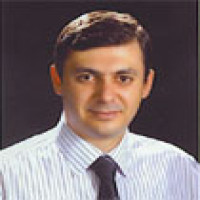
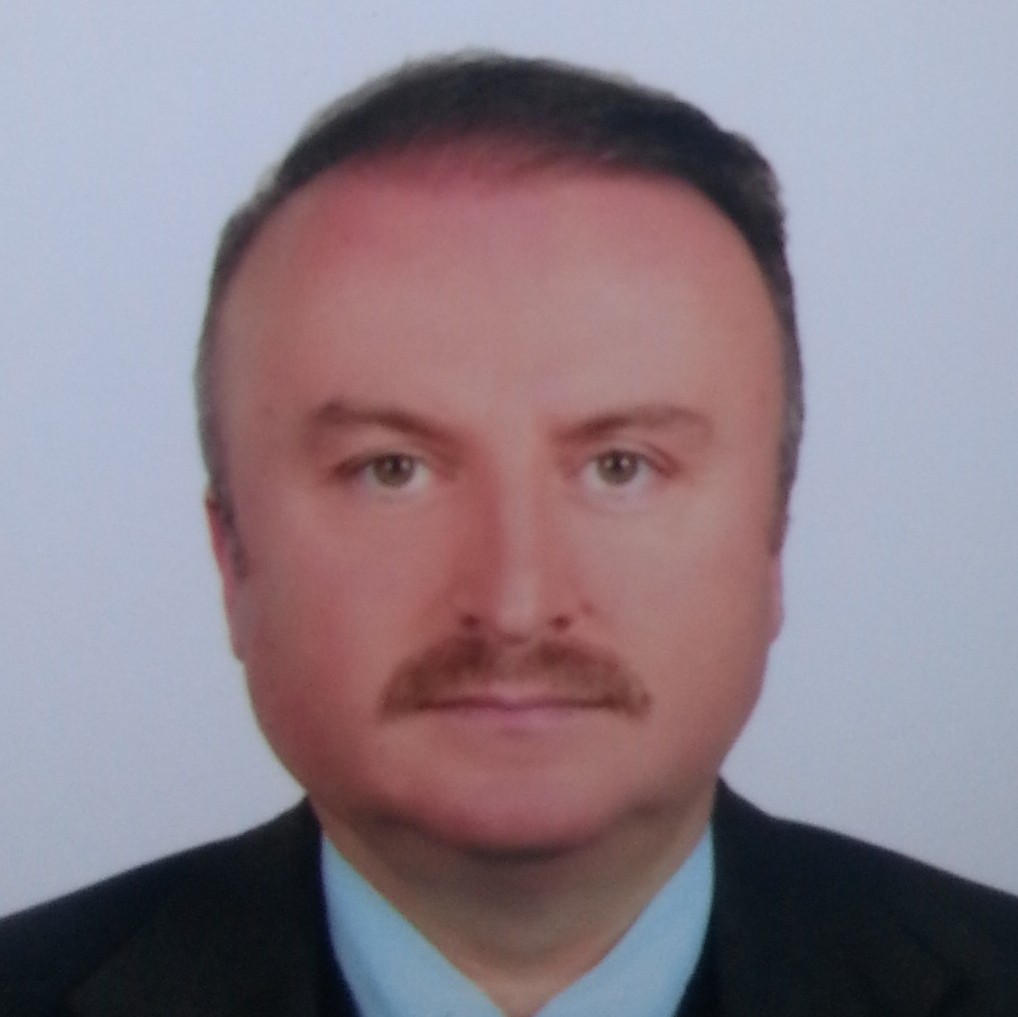
Bayram Şahin was born in Malatya, Turkey. He received his Bachelor’s degree from Ege University, İzmir, Turkey, in 1993 and his Ph.D from Inonu University in 2000. After graduating, Dr. Şahin worked as a post-doctoral fellow at University of Windsor from March 2003 to September 2003 and a research scholar from June 2007 to September 2007. He has led several TUBITAK funded projects at the interface of manifold theory and maps and he has written (or co-authored) eighty-one academic papers. He is the author of the monograph “Differential Geometry of Lightlike Submanifolds” (2010) , Riemannian Submersions, Riemannian Maps in Hermitian Geometry and Their Applications (2017),and the editors of Turkish Journal of Mathematics, Turkic World Mathematical Society (TWMS) Journal of Pure and Applied Mathematics and Mediterranean Journal of Mathematics. He is the recipient of Masatoshi Gunduz Ikeda research award at 2006. He is now a professor of Mathematics at Ege University, Turkey.
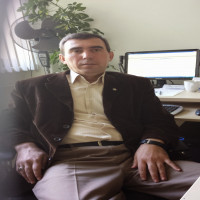
Professor Abdon Atangana is a distinguished scholar at the University of the Free State, South Africa. He is a Fellow of the World Academy of Sciences (TWAS) and one of the most highly cited mathematicians, recognized globally for his groundbreaking contributions to the field.
In recognition of his exceptional achievements, Professor Atangana has received numerous prestigious awards, including the Black Star Award (2024), the African Genius Award (2024), the UNESCO Al-Fozan International Prize for the Promotion of Young Scientists in Science, Technology, Engineering, and Mathematics (2023), and the TWAS Award in Mathematics (2022).
He serves as the President of the African Society for Industrial and Applied Mathematics (ASIAM) and as the Chairman of the African Mathematical Union Commission on Research and Innovation, where he continues to inspire and advance the role of mathematics in addressing Africa’s challenges.
Academic qualifications:
BSc/MSc: Applied Mathematics, Azerbaijan State University (now Baku State University), Baku, Azerbaijan, 1983.
PhD: Mathematics (Differential Equation), Institute of Mathematics and Mechanics of Azerbaijan National Academy of Sciences (ANAS), Baku, Azerbaijan, 2002.
DSc: Information Technology (System Analysis, Control and Information Processing), Institute of Cybernetics (now Institute of Control Systems) of ANAS, Baku, Azerbaijan, 2010.
Recognition/Awards:
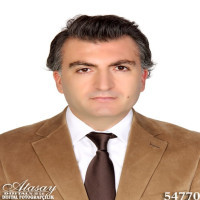
In 2020-2024 Ramiz Aliguliyev has been recognized among the world’s top 2% scientists in the field of artificial intelligence identified by Stanford University.
In 2017 he was elected corresponding member of ANAS in Informatics.
In 2014 he was awarded with “Taraggi” medal by the order of the President of the Republic of Azerbaijan.
In 2013 under the framework of the “ICT year” in the “3rd ICT Contest Competition” held by the Science Development Foundation under the President of the Republic of Azerbaijan jointly with the Ministry of Communications and Information Technologies, his article was awarded the 1st place for the best scientific work published in ICT field.
Professional qualifications:
From 1983 to 1987 he worked as an engineer at the Institute of Cybernetics (now Institute of Control Systems) of Azerbaijan Academy of Sciences (AAS), Baku, Azerbaijan.
From 1988 to 2002 he worked as a leading engineer and a researcher at the Institute of Mathematics and Mechanics of AAS, Baku, Azerbaijan.
Since 2003 he is a head of department at the Institute of Information Technology of ANAS, Baku, Azerbaijan.
Since 2023 he is a director of the Institute of Data Science and Artificial Intelligence at Azerbaijan Technical University, Baku, Azerbaijan
He has supervised 4 PhDs and 5 Masters, currently supervising 10 PhD students.
Research interests:
Data Mining
Text Mining
Big Data Analytics
Machine Learning
Deep Learning
Scientometrics
Social Network Synthesis and Analysis
E-government Analysis
Artificial Intelligence
Evolutionary and Swarm Intelligence Algorithms
Editorial, review and expertise activity:
Editorial Board Member of the journals:
- CAAI Transactions on Intelligence Technology
- TWMS Journal of Pure and Applied Mathematics
- International Journal of Decision Support System Technology
- Problems of Information Technology
- Problems of Information Society
- Informatics and Control Problems
- International Journal of Sensors, Wireless Communications and Control
- Turkish Journal of Mathematics & Computer Science
- Communication's
- Artificial Intelligence Evolution
- Ukrainian Journal of Information Systems and Data Science.
Grants:
He was project manager/participant of the
6 grants supported by Azerbaijan Science Foundation
and
5 grants supported by Science Fund of the State Oil Company of the Azerbaijan Republic.
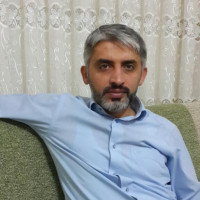
Prof. Dr. Nurettin DOĞAN, İlk ve Orta öğrenimini Ankara' da tamamladıktan sonra Ankara Üniversitesi Matematik bölümünden mezun oldu. Yüksek Lisans ve Doktora öğrenimini Ankara Üniversitesinde tamamladı. Gazi Üniversitesi Teknik Eğitim Fakültesi Elektronik ve Bilgisayar Eğitimi bölümü ve Gazi Üniversitesi Teknoloji Fakültesi Bilgisayar Mühendisliği bölümünde çalıştı. Halen Selçuk Üniversitesi Teknoloji Fakültesi Bilgisayar Mühendisliği Bölümünde çalışmakatadır. Dinamik sistemlerin yaklaşık analitik serisel çözüm yöntemleri hakkında çalışmaları vardır. Güncel çalışma konuları ise görüntü şifreleme uygulamaları ile ilgilidir.
2004 yılında Doğu Akdeniz Üniversitesi'nden bilgisayar mühendisliği alanında lisans derecesi ve 2007 ve 2013 yıllarında sırasıyla Gazi Üniversitesi, Ankara, Türkiye'den bilgisayar mühendisliği alanında yüksek lisans derecesi ve elektrik-elektronik eğitimi alanında doktora derecesi aldı. 2021 yılında doçentlik ünvanı aldı. Araştırma ilgi alanları arasında kablosuz sensör ağları, enerji optimizasyonu, Nesnelerin İnterneti, derin öğrenme, doğal dil işleme ve akıllı şehir yer almaktadır.