Research Article
Conference Paper
Issue Editorial Board



Lisans eğitimini 2005 yılında Çanakkale Onsekiz Mart Üniversitesi, Ziraat Fakültesi, Toprak Bilimi ve Bitki Besleme Bölümünde üniversite birinciliği ile bitirmiş, Yüksek Lisans eğitimini yine aynı üniversitede Araştırma görevlisi olarak toprak fiziği alanında 2008 yılında tamamlamıştır. Daha sonra İrlanda’nın University College Dublin üniversitesinde 2,5 yıl Araştırma ve Öğretim Asistanı olarak görev yapmıştır. 2011 yılında, Öğretim Üyesi Yetiştirme (ÖYP) Programı ile Türkiyede doktoraya başladıktan sonra, Italya Ulusal Araştırma Merkezi (CNR) da yürütülmekte olan Marie Curie Projesinde altı ay boyunca görev almıştır. 2013 yılında Italya’nın University of Florence üniversitesi, Tarım ve Çevre Bilimleri Fakültesinden doktora bursu kazanarak Doktora eğitimine başlamış, ‘’Yüksek karbondioksit, sıcaklık ve kuraklığın tarımsal ürünler üzerine etkileri’’ konusunda 2017 yılında doktora çalışmalarını tamamlamıştır. Yüksek lisans ve doktora sürecinde ulusal ve uluslararası bir çok projede araştırmacı olarak görev almıştır. Doktora sonrası, Almanya’nın Julius Kuhn Enstitüsü, Federal Kültür Bitkileri Araştırma Merkezinde misafir araştırmacı olarak çalışmıştır. 2021 yılında, Konya Gıda ve Tarım Üniversitesi, Bitkisel Üretim Bölümünde Öğretim üyesi olarak göreve başlamış, bu süreçte, ingilizce lisans ve yüksek lisans programlarında dersler vermiştir. 2024-2025 yılında Italyan Ulusal Araştırma Merkezi (CNR)’ın ‘’Next Generation EU’’ kapsamındaki Avrupa Birliği destekli projesinde doktora sonrası araştırmacı olarak post-doktora çalışmalarını yürütmektedir. 2025 Şubat ayından itibaren Yaşar Üniveristesi, Toprak Bilimi ve Bitki Besleme Bölümünde Öğretim üyesi kadrosuna atanmıştır.


 Web
Web
Halil Yasin DİLEK, lisans eğitimini 2014–2018 yılları arasında Selçuk Üniversitesi Güzel Sanatlar Fakültesi İç Mimarlık ve Çevre Tasarımı Bölümü’nde tamamlamıştır. Yüksek lisans derecesini ise 2019 yılında kaydolduğu Çukurova Üniversitesi Sosyal Bilimler Enstitüsü İç Mimarlık Anabilim Dalı’nda yürüttüğü çalışmalar sonucunda 2021 yılında elde etmiştir. Aynı yıl, Selçuk Üniversitesi Sosyal Bilimler Enstitüsü Tasarım Anabilim Dalı’nda doktora programına kabul edilmiş ve bu program kapsamında akademik çalışmalarına devam etmektedir. 2021 yılından bu yana Konya Gıda ve Tarım Üniversitesi İç Mimarlık Bölümü’nde araştırma görevlisi olarak görev yapmakta olup, iç mimarlık eğitimi, yapay zekâ ve eğitim teknolojileri gibi alanlarda bilimsel araştırmalar yürütmektedir.


Recep Benzer, İstanbul Üniversitesi Mühendislik Fakültesi Bilgisayar Mühendisliği Bölümü mezunudur. Yüksek lisans derecesini Sakarya Üniversitesi Fen Enstitüsü'nde, doktorasını ise Gazi Üniversitesi Fen Enstitüsü'nde Endüstri Mühendisliği alanında yapmıştır. Üniversitelerarası Kurul Başkanlığından 2020 yılında Yönetim Bilişim Sistemleri alanında Doçent ünvanını almıştır. Araştırmaları temel olarak siber güvenlik, matematiksel modelleme, bilgi sistemleri, yapay sinir ağları, uzman sistemler, bilgisayar ağları, adli bilişim, yazılım mühendisliği ve tahminsel modelleme konularına odaklanmaktadır. Kariyeri boyunca çeşitli görevler üstlenmiştir. Türk Silahlı Kuvvetleri Genelkurmay Başkanlığı'ndaki TAFICS Projesinde yönetici olarak görev almış ve TÜBİTAK Projesi'nde proje yöneticisi olarak çalışmıştır. Ankara Medipol Üniversitesi Yönetim Bilişim Sistemleri bölümünde akademik personel olarak çalışmaktadır. Avusturya merkezli ETCOP Çokdisiplinli Araştırma Enstitüsü'nde Siber Güvenlik Temsilcisi olarak görev yapmaktadır. Türk Bilişim Derneği, Yapay Zeka ve Dijital Dönüşüm Derneği üyesidir. Gazi Üniversitesi Bilişim Enstitüsü ve Başkent Üniversitesi Mühendislik Fakültesinde Part Time Öğretim üyesi olarak derslere girmektedir.
Issue Reviewers

 Web
Web
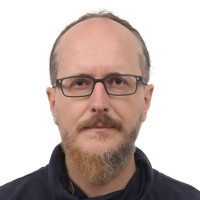
Cihan BAYRAKTAR received his bachelor's degree from Marmara University Computer and Instructional Technologies Teaching Department in 2006. His master's degree from Karabuk University Social Sciences Institute Business Administration Department in 2016. His Ph.D. from Gazi University, Informatics Institute, Management Information Systems Department in 2022. After her bachelor's degree, she worked as an Information Technologies Teacher. He started to work as an Instructor in Karabuk University Eskipazar Vocational School, Information Security Technology Program in February 2011 and continued until January 2023. Afterwards, he started to work as an Assistant Professor in the same unit and program and continues. His research interests include Windows Form Applications, Web Applications, Python applications, Database, Information Security, Data Mining, cyber security, artificial intelligence, data management, anomaly detection and industry 4.0 applications.

Elif Şen has been working as a research assistant at Necmettin Erbakan University since 2014. Having completed her PhD in 2025, she has been working on architectural design education and creativity in design, as well as urban identity and urban change, and continues her research on interdisciplinary design, artificial intelligence assisted design.
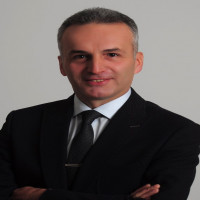
Dr.Öğr.Üye. Harun Türker KARA
Marmara Üniversitesi 2006 Ankara Yıldırım Beyazıt Üniversitesi
Daha Önce Görev Yaptığı Yerler
TÜBİTAK, 2007-2009 TCMB, 2009-2021 TENMAK, 2021-2023 Ankara Yıldırım Beyazıt Üniversitesi, 2020 - ... ( Misafir Öğretim Elemanı)
Araştırma Alanları
Finansal Ekonomi, Kurumsal Finansman, Finansal Ekonometri, Türk İş Sitemi, Türkiye Ekonomisi
Seçili Yayınları / Tüm Yayınları
(Hakemli Dergi Makaleleri) • Kara, H. T. ve Eren B. (2023), “Finan,ıal Lens To Real Sector Via The Cbrt’s Company Accounts” Finans Politik & Ekonomik Yorumlar (663) Mart 2023: 29-53 • Kara, H. T. ve Kara, S. (2021), “How Healthy is Health Sector?”, Journal of Health Systems and Policies, Sayı: 3(3), s. 170-184. • Kara, H. T. ve Eren B. (2021), “Bankaların ROM Kullanımının Belirleyicileri Maliyet veya Borçlanma Kanalından Hangisi Daha Etkin”, Bankacılar Dergisi, Sayı:118, s. 65-85. • Kara, S. ve Kara, H. T. (2020). “Bireysel Emeklilik Sistemine Analitik Bakış: Yoğunlaşma ve Yapısal Kırılma Analizi”, SGD-Sosyal Güvenlik Dergisi, Cilt 10 (Sayı 2), s. 333-352. • Kara, H. T. ve Kara, S. (2020), “Türk Bankacılık Sektöründe Belirsizliğin Etkileri Üzerine Bir Uygulama: Küresel Kriz Sonrasında Örgüt Yapısındaki Değişiklikler”, Bankacılar Dergisi, Sayı:114, s. 69-91. • Öztürk, A. O., Kara, S. ve Kara, H. T. (2019), “Belirsizliklerin Örgütlere Etkisi: Yeni Kurumsal Kuram Ekseninde Bir Değerlendirme”, Sayıştay Dergisi, Sayı:114, s. 33-51. Kitap Bölümleri • Kara, H. T. (2022). “Finansal Piyasalarda Blockchain Uygulamalarının Metaverse ile İlişkisi”, Ed. Esen, F.S., Metaverse - Geleceğin Dünyalarını İnşa Edecek Teknolojiler, s.365-390, Nobel Akademik Yayıncılık: ANKARA • Kara, H. T. (2022). “Yeşil Ekonomide Liderlik”, Ed. Esen, Ü.B., Liderliğin Dönüşümü- Postmodern Liderlik Teorileri, s.159-184, Nobel Akademik Yayıncılık: ANKARA • Kara, S. ve Kara, H. T. (2021). “Yeşil Bankacılık Uygulamaları ve Türkiye’deki Durum”, Ed. Yılmaz. N., Covid-19 Pandemi Gölgesinde Uluslararası İşletmecilik, Finans, Ticaret Ve Sigortacılık, s.329-358, Efe Akademi Yayınevi: İstanbul • Kara, S. ve Kara, H. T. (2021). “Entegre Raporlarda Yeşil Bankacılık: Türkiye Örneği”, Ed. Aktar, A., Kırpık G., Çağdaş Bir Raporlama Yaklaşımı: Entegre Raporlama, s.225-253, Efe Akademi Yayınevi: İstanbul • Kara, H. T., Ceylan, N. B., & Kapusuzoğlu, A. (2020). Global Economic Policy Uncertainty as a Main Driver of Financial Impacts and Performances in the Financial Markets: Evidence from Emerging Market Economies. In Strategic Outlook for Innovative Work Behaviours (pp. 43-68). Springer, Cham. Kitap Editörlüğü • Kara, H. T. (2022). “Döngüsel Ekonomi: Teori ve Pratik” Efe Akademi Yayınevi: İstanbul

Aim & Scope
The Journal of Applied Engineering and Agriculture (UMTD) is published by Konya Food and Agriculture University. "Journal of Applied Engineering and Agriculture (UMTD)" covers articles related to basic science, engineering, agriculture, and technology in all aspects. Original research articles, reviews, short articles, and scientific technical notes are published in our journal.
The publication language of UMTD is English.
Publication, download, and reading of articles in UMTD are free of charge.
UMTD is published twice a year in July and December.
Articles previously published partially or completely are not accepted in UMTD. More detailed information on this topic can be obtained from the "explanations and ethics" section. Short articles should be concise and should include preliminary results of ongoing research. Short articles and technical notes should contain a maximum of 3 figures and/or tables. Reviews should comprehensively present an existing topic and should contain sufficient references.
All articles submitted to the journal are read by the editor and assistant editors, and only articles that comply with the editorial criteria of the journal are considered for evaluation. For more detailed information, please refer to the "explanations and ethics" section.
The Journal of Applied Engineering and Agriculture covers the following main disciplines and their branches in the fields of basic science, engineering, agriculture, and technology:
Main Disciplines:
• Science (Physics, Chemistry, Biology, Molecular Biology, and Genetics)
• Engineering (General)
• Agriculture (General)
• Management Information Systems (General)
The following types of articles are accepted for publication in our journal:
• Original research articles
• Scientific reviews
• Short articles and technical notes
Author Guidelines
Dear Author,
You can use the following link, https://dergipark.org.tr/en/pub/umtd, to submit your work to our journal. Please prepare your manuscript according to the pre-upload format available in the article submission menu (Pre-upload template).
Along with your work, please also send a SIGNED cover letter to our journal. In the letter, confirm that your publication is original, has not been submitted elsewhere, and has not been published partially or entirely elsewhere (For more detailed information, refer to the "Explanations and Ethics" section).
After the evaluation process, if your article is accepted for publication, all authors must approve the Copyright Transfer Form.
Descriptive ID information will be provided. In order to ensure standardization and for joint work with the Council of Higher Education (YÖK), ORCID will be used. Therefore, authors are required to obtain their individual ORCID numbers for free from http://orcid.org. You must enter the ORCID number you obtained into the registration information field in the system.
Ethical Principles and Publication Policy
The Journal of Applied Engineering and Agriculture (UMTD) operates the process of publishing scientific articles as an international peer-reviewed journal and continues its publication life in accordance with the following principles:
It is published twice a year (July, December).
UMTD is only published electronically.
Our journal covers articles produced in the following areas (Please refer to our Aim and Scope section for subheadings).
• Science (Physics, Chemistry, Biology, Molecular Biology, and Genetics)
• Engineering (General)
• Agriculture (General)
• Management Information Systems (General)
Articles submitted to the journal are accepted in English.
The review and evaluation process of submitted articles is conducted using the "Double-Blind Peer Review" method (preventing reviewers and authors from seeing each other's information).
Our journal adopts an Open Access Publishing Policy.
All authors confirm that, if the article is editorially accepted for publication, it will be licensed under the CC-BY Attribution 4.0 license. Furthermore, all authors agree that any data included in the article will also be made available under the CC-BY Attribution 4.0 license, unless explicitly stated otherwise.
No fees are charged for the publication and access to published articles in our journal. Authors and reviewers are not paid for accepted articles.
The article review process is expected to last up to 6 months for each article, depending on the peer reviews.
When a "Revision" decision is made for submitted articles, authors must make the necessary revisions and upload the final version of the article to the system within 15 days. If revisions are not made and submitted within the specified period, the editors reserve the right to reject the article.
Articles submitted to the journal must not have been published elsewhere or submitted for publication elsewhere.
For studies that have been previously used as theses, presentations, or papers and submitted to our journal as articles, information about their previous use should be provided as a footnote on the first page according to the following conditions:
If the study has been published as an abstract paper; the title of the paper, the name of the event, date, and location information should be written.
If the study has been produced from postgraduate theses; the title of the thesis, the name of the advisor, university and institute information, along with the completion date and location information should be written.
If the study has been supported by a research institution or fund; the name of the supporting organization, project number, and completion date information should be written.
For studies produced from previously submitted and partially published works, event information should be written in a distinctive way.
Submitted articles are examined considering the following points before being presented to reviewers, and articles that comply with the evaluation process are sent to reviewers:
Compliance with writing rules
Compliance with the template structurally
Compliance with the aim and scope
Compliance with publication principles
Compliance with publication ethics
Scientific quality and originality
An article is evaluated by at least 3 reviewers, and as a prerequisite for publication, it must be deemed suitable for publication by at least 2 reviewers. After reviewer approvals, the Chief Editor and Editorial Board have the authority to decide whether the article will be published.
All authors submitting articles to our journal have equal rights. No privileges are granted to the work or the author during the evaluation, acceptance, and publication processes of the articles. The order of publication of accepted articles is adjusted according to the acceptance time. However, the Editorial Board reserves the right to make changes when necessary.
After an article is accepted for publication, the "Copyright Transfer Form" must be completed and signed by all authors and uploaded to the journal system.
Articles accepted for publication are published with all rights by the Journal of Applied Engineering and Agriculture (UMTD).
Articles submitted to our journal undergo plagiarism detection processes (iThenticate, etc.). If plagiarism exceeding 20% is detected before publication, the article is rejected without undergoing the peer review process. For plagiarism detected after publication, removal from publication is applied, and an editor's note is published in the journal for readers.
Price Policy
"No fee is charged from the author or institution under any name."