Research Article
Aim & Scope
Aims
The primary aim of the International Journal of Sports, Exercise, and Training Science (IJSETS) is to serve as a reputable, interdisciplinary platform for the dissemination of high-quality research in Sports, Exercise, and Education Sciences. IJSETS is dedicated to facilitating the rapid exchange of knowledge within the global scientific community. To achieve this, the journal has adopted a continuous publication model, ensuring that scientifically valid and technically sound research is published online immediately upon acceptance, without the delays associated with traditional issue-based periodicity.
As an open-access peer-reviewed journal, IJSETS does not make editorial decisions based solely on the perceived potential impact of a study but rather prioritizes scientific validity, methodological rigor, and adherence to ethical standards. Our goal is to make significant contributions to the literature by publishing theoretical and experimental research that adheres to community-agreed standards.
Scope
IJSETS welcomes submissions that contribute new data, theoretical insights, or practical applications to the field of sports sciences. The journal publishes editorials, reviews, research articles, and original studies.
The scope of the journal encompasses a broad range of topics, including but not limited to:
Movement and Exercise Science: Biomechanics, motor control, and performance analysis.
Exercise Physiology: Acute and chronic adaptations to training, bioenergetics, and environmental physiology.
Sport Health and Nutrition: Sports medicine, rehabilitation, traumatology, and athlete nutrition.
Physical Education and Sport Education: Pedagogy, curriculum development, and coaching science.
Exercise and Sports Psychology: Mental health in sports, behavioral strategies, and motivation.
Sports Management: Sports marketing, organizational behavior, and sports economics.
Sports Information Technology: Data analytics, wearable technology, and virtual reality in sports.
Leisure and Recreation: Active living, community sport, and recreational management.
Author Guidelines
Important Notes
Submitting articles that follow the journal's writing templates is a prerequisite. Articles uploaded to the system without following the template will be REJECTED during the preliminary review stage before an editor assignment.
Submissions to the journal must be prepared according to these guidelines.
Page Layout: A4, Normal Margins (2.5 cm on all sides)
Font Style: Times New Roman
Language: English, Turkish
Article Title
The Turkish title should be in 14-point font, with the first letter of each word capitalized, except for conjunctions, aligned to the left, and in bold. The line spacing before the title should be 6, and after the title 12nk.
The English title should be in 14-point font, with the first letter of each word capitalized, except for conjunctions, aligned to the left, and in bold. The line spacing before the title should be 6, and after the title 0nk.
The title should be consistent with the content and express it most effectively in bold font.
Avoid location-specific references (e.g., Istanbul).
Article Authors
• Authors' names are written with the first letter capitalized, and their surnames are written with all letters capitalized.
• Authors' names and surnames are written in 11 point size.
• Line spacing before and after 0pt
Abstract
The abstract should include the following headings:
Research Articles | Review Articles
Purpose | Purpose
Method | Method
Findings | Results
Conclusion | Conclusion
It should include the titles.
- Abbreviations should not be included in the abstract unless necessary.
- The abstract should be limited to 150-250 words.
- The abstract content should be written as simply as possible. Unnecessary information should be avoided.
- The content should be prepared in accordance with the titles in the abstract and should not be deviated from.
- Keywords should be written with the first letter capitalized, 9 point, 0nk before and after, in italic font.
- Keywords should be listed A-Z.
Introduction
The introduction should be written in Times New Roman, 11-point font, with single line spacing. No indentation should be used.Subheadings can be created if needed, but numbering should not be used.The study should not exceed 7,000 words, excluding references.The introduction provides a general-to-specific explanation of the study.Necessary information for the creation of conceptual and theoretical frameworks should be provided.The last paragraph of the introduction should clearly state the problem, its importance, and the purpose statement, as outlined in the abstract.The introduction should be adequately supported by references.In-text citations for sources with two authors should be written as "&," and for sources with more than two authors as "et al."Unnecessary information, unrelated data, abrupt transitions, sharp emphasis, and the use of first-person singular should be avoided in the introduction.
Tables and Figures
Tables and figures must have numbers and titles, be aligned to the left, and should not end with a period.
Bold font should be used for table and figure content, but titles should not be in bold. (Example: Table 1: Comparison of gender-based scores / Figure 1: Diagram of Xxxx)
Unless there are proper nouns, the first letter of the first word in a table or figure title should be capitalized, and the rest should be in lowercase.
Vertical lines should not be used in table drawings; only horizontal lines should be applied. The table's footnote should be in a cell with no underline.
Tables and figures should be prepared in 10-point font, with 6nk spacing before, 0nk after, and single line spacing. The indentation should be 1.25 and hanging.
The content inside tables should be in 9-point font, with 0nk before and after. Footnotes inside table cells should be in 8-point font and italicized.
If footnotes in a table need to be referenced, use "*", "a, b, c", etc., and indicate them in the table content. (Example: *p<0.05)
Tables and figures should be formatted appropriately to avoid layout issues.
Images
Images should be sized to be readable and should not cover the entire page.
Image captions should follow the same rules as those for tables and figures.
Images should be formatted properly to avoid issues during layout.
Discussion
The discussion section should relate the findings of the research to the literature. Results should be written in a way that does not merely repeat the findings, and sources supporting the findings should be referenced. Sources that report different results should explain why they arrived at those results.The main research problem and subproblems should be sufficiently supported by the literature.
Conclusion
The conclusion section should present the findings of the research in an original manner. The conclusion should not merely repeat the findings; the researcher should interpret the findings in an original way, expressing general results.RecommendationsBased on the results of the research, recommendations should be offered to researchers, educators, and others involved in the study's domain.Recommendations should not be vague, such as "this research can be repeated in different sample groups."Recommendations should be practical and innovative. If no recommendations are provided, the recommendations section may be omitted.
Acknowledgements
Acknowledgments should briefly thank individuals or institutions that contributed to the research.
Citation Methods
All sources used in the text should be cited in this section as references.
References should be in 10-point font, with 0nk before, 6nk after, and 1.25 hanging indentation.
DOI information should be included for all references that have it; for those that do not, it should be omitted.
In-text citations:
Xxxxx (2010) / (Xxxxx, 2010)
Xxxxx and Yyyy, 2010 / Xxxx et al., 2010
Examples of References:
Article
Xxxx, X. (20XX). Xxxxx xxxxxx xxxxx xxxxxxx xxxxxxxx xxxxxx xxxxx xxxxxxx xxxxxxxx xxxxxx xxxxx xxxxxxx xxxxxxxx. Xxxx Xxxxx Xxxx, X(X), XXX-XXX. https://doi.org/xxx.xxxxxx
Xxxx, X., & Xxxx, X. (20XX). Xxxxx xxxxxx xxxxx xxxxxxx xxxxxxxx xxxxxx xxxxx xxxxxxx xxxxxxxx xxxxxx xxxxx xxxxxxx xxxxxxxx. Xxxx Xxxxx Xxxx, X(X), XXX-XXX. https://doi.org/xxx.xxxxxx
Xxxx, X., Xxxx, X., Xxxx, X., Xxxx, X., Xxxx, X., Xxxx, X., ... Xxxx, X. (20XX). Xxxxx xxxxxx xxxxx xxxxxxx xxxxxxxx xxxxxx xxxxx xxxxxxx xxxxxxxx xxxxxx xxxxx xxxxxxx xxxxxxxx. Xxxx Xxxxx Xxxx, X(X),
XXX-XXX. https://doi.org/xxx.xxxxxx
Conference Paper
Xxxx, X. (20XX). Xxxxx xxxxxx xxxxx xxxxxxx xxxxxxxx xxxxxx xxxxx xxxxxxx xxxxxxxx xxxxxx xxxxx xxxxxxx xxxxxxxx. Name of the conference, date, city.
Book
Yazar, A. A., Yazar, B. B., & Yazar, C. C. (Year). Chapter title in italics (Trans.: Xxxx Xxxx, Edition number). Title of the book. Publisher.
Used when a specific author has written a chapter, and the book has been translated.
If the book is in a specific edition, the edition number should be indicated.
Used for citing the entire book if it has been edited by an editor.
If the book has been translated, the translator's name should be indicated.
If the book is in a specific edition, the edition number should be shown in parentheses.
If citing the entire book, page range should be indicated.
Yazar Soyadı, Adının Baş Harfi. (Year). Book Title in italics (Ed.: Editor Name-Surname/Trans.: Translator Name/Edition: X. Edition/p. Page Range). Publisher.
Yazar Soyadı, Adının Baş Harfi. (Year). Chapter Title (Ed.: Editor Name), Book Title in italics (Trans.: Translator Name, Edition: X. Edition, pp. Page Range). Publisher.
Used when citing a specific chapter.
If the book is edited, the editor's name should be included.
If the book is translated, the translator's name should be included.
If the book is in a specific edition, the edition number should be shown.
Page numbers of the chapter should be included.
Graduate ThesisXxxx, X. (20XX). Xxxxx xxxxxx xxxxx xxxxxxx xxxxxxxx xxxxxx xxxxx xxxxxxx xxxxxxxx xxxxxx xxxxx. Master's Thesis/Doctoral Dissertation. University Name.
Yazar, A. A. (Year). Thesis title in italics. Master's Thesis/Doctoral Dissertation. University Name.
Yazar, A. A. (Year). Thesis title in italics. Master's Thesis/Doctoral Dissertation. Accessed from … (Access or Order No.).
Newspapers, Laws, and Regulations
State of Emergency Decree (2017, January 6). Official Gazette (Issue: 29940 (Supplement)). Accessed from: http://www.resmigazete.gov.tr/eskiler/2017/01/20170106M1-1.htm Accessed on: xx.xx.xxxx
Title. (Year, Day Month). Official Gazette (Issue: xxx). Accessed from: http://xxxxxxx
All rights reserved
Ethical Principles and Publication Policy
Ethical Guidelines and Publication Policy
International Journal of Sports, Exercise, and Training Science (IJSETS) adheres to the highest standards of publication ethics and adopts the guidelines established by the Committee on Publication Ethics (COPE), the World Association of Medical Editors (WAME), and the International Committee of Medical Journal Editors (ICMJE).
1. Publication Ethics and Malpractice Statement
Prevention of publication malpractice is the responsibility of every author, editor, and reviewer.
- Originality and Plagiarism: IJSETS has a zero-tolerance policy for plagiarism. All submitted manuscripts are screened using plagiarism detection software (e.g., iThenticate/Turnitin). Manuscripts with a similarity rate above the acceptable threshold (typically 15-20%, excluding references) are rejected immediately.
- Duplicate Submission: Authors must not submit the same manuscript to more than one journal concurrently.
2. Ethical Responsibilities of Authors
- Authorship: Authorship should be limited to those who have made a significant contribution to the conception, design, execution, or interpretation of the reported study. All authors must approve the final version of the manuscript.
- Data Access and Retention: Authors may be asked to provide the raw data in connection with a paper for editorial review and should be prepared to provide public access to such data.
- Conflict of Interest: All authors must disclose any financial or personal relationships with other people or organizations that could inappropriately influence (bias) their work.
- Human and Animal Rights: For research involving human subjects, authors must state that the study was conducted in accordance with the Declaration of Helsinki. Approval from a relevant Ethics Committee is mandatory and must be clearly stated in the "Methods" section, including the committee name, date, and approval number.
3. Ethical Responsibilities of Editors
- Fair Play: Editors evaluate manuscripts for their intellectual content without regard to race, gender, sexual orientation, religious belief, ethnic origin, citizenship, or political philosophy of the authors.
- Confidentiality: The editor and any editorial staff must not disclose any information about a submitted manuscript to anyone other than the corresponding author, reviewers, potential reviewers, and the publisher.
- Decision on Publication: The Editor-in-Chief is responsible for deciding which of the articles submitted to the journal should be published, based on the validation of the work and its importance to researchers and readers.
4. Ethical Responsibilities of Reviewers
- Contribution to Editorial Decisions: Peer review assists the editor in making editorial decisions and may also assist the author in improving the paper.
- Promptness: Any selected referee who feels unqualified to review the research or knows that its prompt review will be impossible should notify the editor and excuse themselves from the review process.
- Objectivity: Reviews should be conducted objectively. Personal criticism of the author is inappropriate. Referees should express their views clearly with supporting arguments.
5. Continuous Publication Policy
IJSETS publishes articles under a Continuous Publication Model. Articles are published online immediately after final acceptance and production steps are completed, within a single annual volume. This policy ensures rapid dissemination of research findings.
Price Policy
Article Submission & Processing Charges
To maintain the quality of the peer-review process and sustain the open-access publication model, the International Journal of Sport Exercise and Training Sciences (IJSETS) requires an Editorial Processing Charge (EPC) for all submitted manuscripts.
Fee Policy
Submission Fee: A non-refundable fee of 250 USD is charged at the time of submission.
Processing Condition: The editorial assessment and peer-review process will strictly not commence until the payment is confirmed.
Non-Refundable Policy: This fee covers the administrative costs of the editorial process. Therefore, payment of the fee does not guarantee acceptance or publication. The fee is non-refundable regardless of the final editorial decision (acceptance or rejection).
Payment Instructions Please make the payment via bank transfer using the details below. Ensure that international transfers cover all bank charges (OUR mode), so the net amount received is 250 USD.
INTERNATIONAL PAYMENTS
SWIFT CODE : TCZBTR2A
BANK : TURKIYE CUMHURIYETI ZIRAAT BANKASI A.S.
ADDRESS : ATATURK BLV 8 ANAFARTALAR MH, ANKARA
IBAN : TR31 0001 0003 6040 5491 4650 04
Indexes
Citation Indexes



Other Indexes





Journal Boards
Yayıncı

Balıkesir Üniversitesi Spor Bilimleri Fakültesi,
Çağış, Balıkesir Uşak Yolu, 10463 Bigadiç/Balıkesir
Spor Eğitim Dergisi - SEDER
Uluslararası Spor, Egzersiz ve Antrenman Bilimi Dergisi - USEABD
Editörler
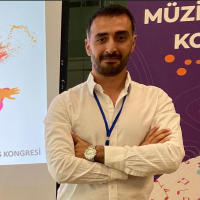






E-mail: iboerdemir@icloud.com
orcid.org/0000-0002-5279-6907
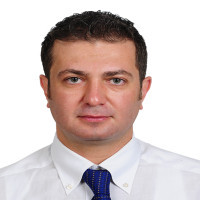
İstatistik Editörü

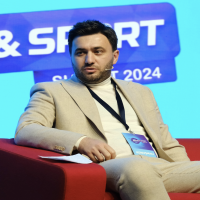
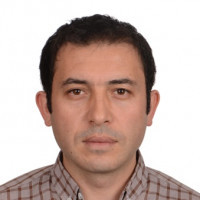
Yayın Kurulu



AFYON KOCATEPE ÜNİVERSİTESİ SPOR BİLİMLERİ FAKÜLTESİ