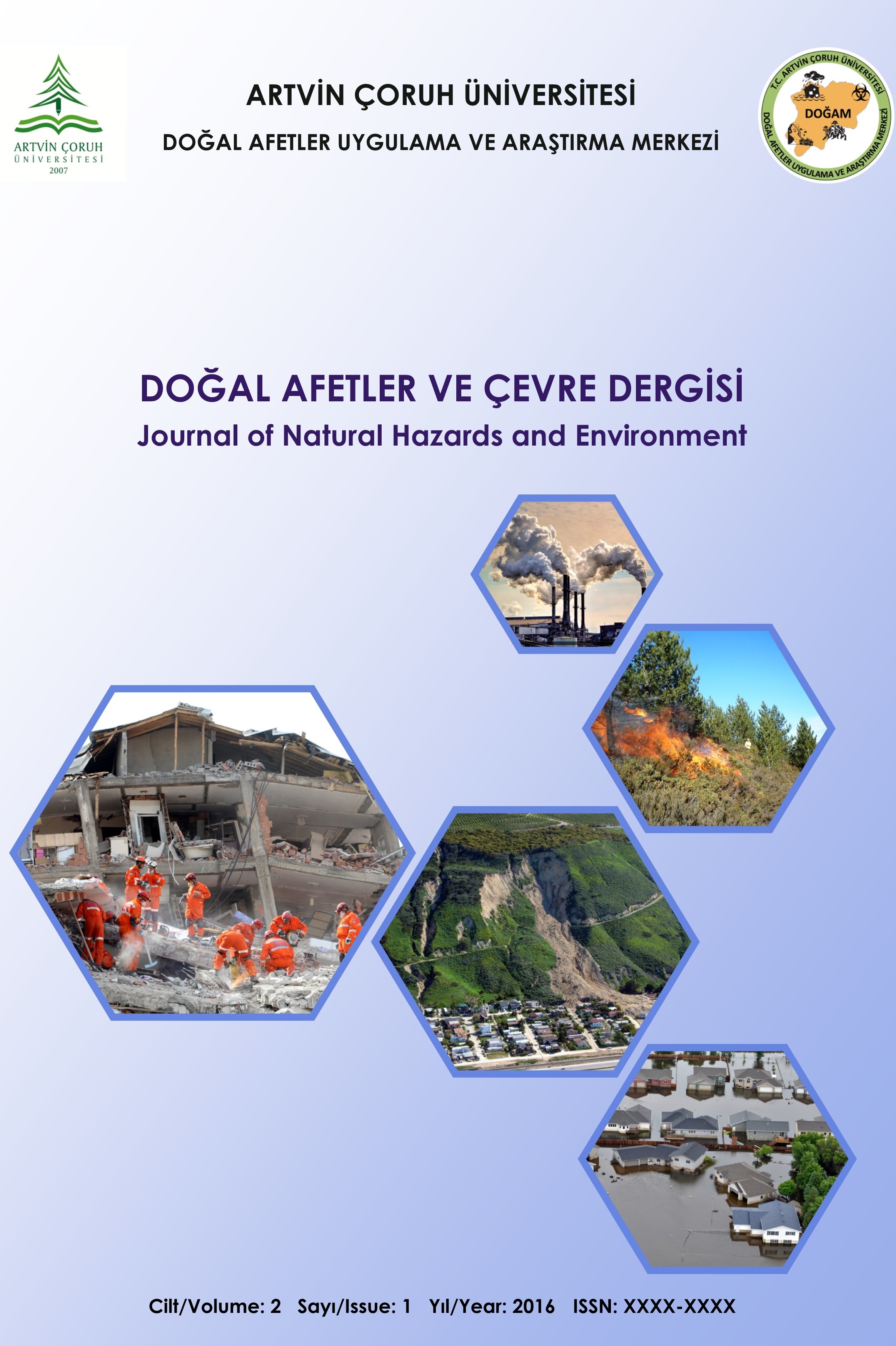
Araştırma Makalesi
BibTex RIS Kaynak Göster

Progressive Collapse Analysis of a Reinforced Concrete Structure Using the Enhanced Local Resistance (ELR) Method: A Comparison of UFC 4-023-03 and the Turkish Earthquake Code (TEC 2018)

Yıl 2025, Cilt: 11 Sayı: 2, 513 - 525, 27.07.2025
https://doi.org/10.21324/dacd.1656403

Öz

Disasters cause significant damage to structural elements in the affected regions throughout the service life of buildings. This damage typically manifests as the loss of structural elements or a reduction in load-bearing capacity. Many countries conduct research and publish regulations and analytical methods to minimize such damage. One of the primary references in this context is the UFC 4-023-03 guide, titled "Design of Buildings to Resist Progressive Collapse," issued by the United States Department of Defense. This guide addresses the phenomenon where a structure experiences element loss due to various disasters, potentially leading to progressive collapse. The guide proposes three methodologies for assessing the progressive collapse resistance of structures: the Alternative Path method (AP), the Tie Force method (TF), and the Enhanced Linear Resistance method (ELR). In developing countries such as Türkiye, there are no specific regulations addressing the progressive collapse phenomenon. As a result, structures of critical importance are constructed without such provisions. In this study, a reinforced concrete building was analysed using the Enhanced Linear Resistance method, following the UFC 4-023-03 guidelines and the Turkish Earthquake Code (TEC). The objective is to identify the differences and commonalities between the UFC and the regulatory framework in Türkiye, where structures are not explicitly designed to resist progressive collapse. At the conclusion of the study, shear demand values of structural elements and other relevant parameters were comparatively presented.

Kaynakça

  • American Society of Civil Engineers. (2017a). Seismic evaluation and retrofit of existing buildings. ASCE 41-17. https://doi.org/10.1061/9780784414859
  • American Society of Civil Engineers. (2017b). Minimum design loads and associated criteria for buildings and other structures. ASCE 7-16. https://doi.org/10.1061/9780784414248
  • Batıçim. (2025, Şubat 11). Çimentonun tarihçesi. https://www.baticim.com.tr/cimento-hakkinda-bilgiler/cimentonun-tarihcesi
  • Demir, A. (2022). Progressive collapse response of reinforced concrete buildings designed according to Turkish Earthquake Code. Bitlis Eren Üniversitesi Fen Bilimleri Dergisi, 11(2), 694–705. https://doi.org/10.17798/bitlisfen.1094003
  • Doğangün, A. (2018). Betonarme yapıların hesap ve tasarımı: TBDY 2018-Deprem Yönetmeliği 2018’e uygun (15. baskı). Birsen Yayınevi.
  • European Committee for Standardization. (2004). Design of structures for earthquake resistance – Part 1: General rules, seismic actions and rules for buildings (EN 1998-1:2004). European Committee for Standardization. https://www.phd.eng.br/wp-content/uploads/2015/02/en.1998.1.2004.pdf
  • General Directorate of Disaster Affairs. (2019). Earthquake hazard map of Türkiye. Ministry of Public Works and Settlement of Türkiye. https://www.afad.gov.tr/turkiye-deprem-tehlike-haritasi
  • General Services Administration. (2016). Alternate path analysis and design guidelines for progressive collapse resistance (GSA-2016). US General Services Administration. https://www.gsa.gov/system/files/Progressive_Collapse_2016.pdf
  • Hamad, K., Lotfy, I., & Naiem, M. (2021, December 17–19). Enhancing progressive collapse resistance in existing buildings [Conference presentation]. Joint International Conference on Design and Construction of Smart City Components, Cairo, Egypt.
  • Hashemi, A. (2013). Review of the UK housing history in relation to system building. Alam Cipta Journal, 6(1), 47–58.
  • Kılıçer, S. (2018). Effects of soil structure interaction on behavior of reinforced concrete structures. Journal of Structural Engineering & Applied Mechanics, 1(1), 28–33. https://doi.org/10.31462/jseam.2018.01028033
  • Kılıçer, S. (2024). Zemin-yapı etkileşimi dikkate alınarak yapıların aşamalı göçme riskinin belirlenmesi [Doktora tezi, Karadeniz Teknik Üniversitesi]. YÖK Ulusal Tez Merkezi. https://tez.yok.gov.tr/UlusalTezMerkezi
  • Kılıçer, S. (2025). The Impact of Weapon Systems on Structural Damage and Progressive Collapse: A Case Study of Belgorod Oblast. Yüzüncü Yıl Üniversitesi Fen Bilimleri Enstitüsü Dergisi, 30(1), 215-234. https://doi.org/10.53433/yyufbed.1511907
  • MATLAB. (2018). (Version R2018a) [Computer software]. The MathWorks, Inc. https://www.mathworks.com/products/matlab.html
  • Ozgan, K., Kılıçer, S., & Daloglu, A. T. (2023). Evaluation of progressive collapse potential of a RC school building considering soil–structure interaction. Asian Journal of Civil Engineering, 24(5), 1199–1213. https://doi.org/10.1007/s42107-022-00562-5
  • SAP2000. (2018). Integrated software for structural analysis and design (Version 21) [Computer software]. Computers and Structures, Inc. https://www.csiamerica.com/products/sap2000
  • Shaheen, M., Atar, M., & Cunningham, L. (2023). Enhancing progressive collapse resistance of steel structures using a new bolt sleeve device. Journal of Constructional Steel Research, 203, Article 107843. https://doi.org/10.1016/j.jcsr.2023.107843
  • T.C. Resmi Gazete. (2018). Turkey building earthquake regulations (Official Gazette of the Republic of Turkey Date: 18.03.2018, Number: 30364). https://www.resmigazete.gov.tr/eskiler/2018/03/20180318M1-2.htm
  • Turkish Standards Institute. (1997). Design loads for buildings (TS 498). TSE. https://intweb.tse.org.tr/standard/standard/Standard.aspx
  • Turkish Standards Institute. (2002). Requirements for design and construction of reinforced concrete structures (TS 500). TSE. https://intweb.tse.org.tr/standard/standard/Standard.aspx
  • U.S. Army Corps of Engineers. (2008). Methodology manual for the single-degree-of-freedom blast effects design spreadsheets (SBEDS). Protective Design Center, U.S. Army Corps of Engineers. https://usace.contentdm.oclc.org/digital/collection/ p16021coll11/id/4213/
  • U.S. Department of Defense. (2016). Design of structures to resist progressive collapse (UFC 4-023-03). U.S. Department of Defense, Unified Facilities Criteria. https://www.wbdg.org/FFC/DOD/UFC/ufc_4_023_03_2009_c4.pdf
  • Yuzbasi, J., & Arslan, H. M. (2025). Applied element method and finite element method for progressive collapse assessment: A comparative study on the influence of slab types, thicknesses, and damping via three incremental column removals. Structures, 73, Article 108358. https://doi.org/10.1016/j.istruc.2025.108358
  • Yuzbasi, J. (2024). Experimental verification of full‐scale silo structure demolition: Investigating successive column removal with finite element method and progressive collapse simulation through blast load. Structural Concrete, 25(6), 4408–4427. https://doi.org/10.1002/suco.202400017
  • Yuzbasi, J. (2025). Controlled demolition: vovel monitoring and experimental validation of blast-induced full-scale existing high-rise building implosion using numerical finite element simulations. Journal of Civil Structural Health Monitoring, 15, 891–914. https://doi.org/10.1007/s13349-024-00849-y
  • Zhang, Y., Cheng, X., Diao, M., Li, Y., Guan, H., & Sun, H. (2023). FRP retrofit for RC frame substructures against progressive collapse: Scheme optimisation and resistance calculation. Engineering Structures, 289, Article 116289. https://doi.org/10.1016/j.engstruct.2023.116289

Geliştirilmiş Yerel Dayanım (GLD) Yöntemi ile Betonarme Bir Yapının Aşamalı Göçme Analizi: UFC 4-023-03 ve Türk Bina Deprem Yönetmeliği (TBDY 2018) Karşılaştırması

Yıl 2025, Cilt: 11 Sayı: 2, 513 - 525, 27.07.2025
https://doi.org/10.21324/dacd.1656403

Öz

Afetler meydana geldikleri bölgede, yapıların hizmet süresi boyunca yapısal elemanlara büyük zarar vermektedirler. Bu zarar genellikle yapısal eleman kaybı ya da taşıma gücünün zayıflaması olarak karşımıza çıkmaktadır. Birçok ülke bu zararları asgari düzeye indirebilmek için çeşitli araştırmalar ve yönetmeliklerinde ifadeler ile analiz metotları yayınlamaktadırlar. Bunlardan ilki çeşitli afetler sonucu yapının eleman kaybıyla başlayan ve aşamalı göçme ile süreci tamamlanan/tamamlanmayan fenomen için Amerika Birleşik Devletleri Savunma Bakanlığının yayınladığı UFC 4-023-03 ‘Design of Buildings to Resist Progressive Collapse’ kılavuzudur. Kılavuz, yapıların aşamalı göçme direncini belirleyebilmek için Alternatif Yol metodu (AP), Bağ Kirişler metodu (BK) ve Geliştirilmiş Lineer Dayanım (GLD) metodudur. Türkiye gibi gelişmekte olan ülkelerde ise aşamalı göçme fenomenine ait bir düzenleme bulunmamaktadır. Bu tür ülkelerde kritik öneme sahip yapılar bu eksiklikle inşa edilmektedir. Bu çalışmada, betonarme bir yapı örneğinin Geliştirilmiş Lineer Dayanım yöntemi kullanılarak UFC 4-023-03 ile Türk Bina Deprem Yönetmeliği (TBDY2018) esas alınarak analiz sonuçları karşılaştırılmıştır. Bu sayede Türkiye gibi yapıları aşamalı göçmeye karşı direnci bulunmayan ülkenin UFC ile arasındaki farklar ve ortak noktalar belirlenmiş olacaktır. Çalışma sonunda, yapı elemanlarının kesme talebi ve diğer parametreler karşılaştırılmalı olarak sunulmuştur.

Kaynakça

  • American Society of Civil Engineers. (2017a). Seismic evaluation and retrofit of existing buildings. ASCE 41-17. https://doi.org/10.1061/9780784414859
  • American Society of Civil Engineers. (2017b). Minimum design loads and associated criteria for buildings and other structures. ASCE 7-16. https://doi.org/10.1061/9780784414248
  • Batıçim. (2025, Şubat 11). Çimentonun tarihçesi. https://www.baticim.com.tr/cimento-hakkinda-bilgiler/cimentonun-tarihcesi
  • Demir, A. (2022). Progressive collapse response of reinforced concrete buildings designed according to Turkish Earthquake Code. Bitlis Eren Üniversitesi Fen Bilimleri Dergisi, 11(2), 694–705. https://doi.org/10.17798/bitlisfen.1094003
  • Doğangün, A. (2018). Betonarme yapıların hesap ve tasarımı: TBDY 2018-Deprem Yönetmeliği 2018’e uygun (15. baskı). Birsen Yayınevi.
  • European Committee for Standardization. (2004). Design of structures for earthquake resistance – Part 1: General rules, seismic actions and rules for buildings (EN 1998-1:2004). European Committee for Standardization. https://www.phd.eng.br/wp-content/uploads/2015/02/en.1998.1.2004.pdf
  • General Directorate of Disaster Affairs. (2019). Earthquake hazard map of Türkiye. Ministry of Public Works and Settlement of Türkiye. https://www.afad.gov.tr/turkiye-deprem-tehlike-haritasi
  • General Services Administration. (2016). Alternate path analysis and design guidelines for progressive collapse resistance (GSA-2016). US General Services Administration. https://www.gsa.gov/system/files/Progressive_Collapse_2016.pdf
  • Hamad, K., Lotfy, I., & Naiem, M. (2021, December 17–19). Enhancing progressive collapse resistance in existing buildings [Conference presentation]. Joint International Conference on Design and Construction of Smart City Components, Cairo, Egypt.
  • Hashemi, A. (2013). Review of the UK housing history in relation to system building. Alam Cipta Journal, 6(1), 47–58.
  • Kılıçer, S. (2018). Effects of soil structure interaction on behavior of reinforced concrete structures. Journal of Structural Engineering & Applied Mechanics, 1(1), 28–33. https://doi.org/10.31462/jseam.2018.01028033
  • Kılıçer, S. (2024). Zemin-yapı etkileşimi dikkate alınarak yapıların aşamalı göçme riskinin belirlenmesi [Doktora tezi, Karadeniz Teknik Üniversitesi]. YÖK Ulusal Tez Merkezi. https://tez.yok.gov.tr/UlusalTezMerkezi
  • Kılıçer, S. (2025). The Impact of Weapon Systems on Structural Damage and Progressive Collapse: A Case Study of Belgorod Oblast. Yüzüncü Yıl Üniversitesi Fen Bilimleri Enstitüsü Dergisi, 30(1), 215-234. https://doi.org/10.53433/yyufbed.1511907
  • MATLAB. (2018). (Version R2018a) [Computer software]. The MathWorks, Inc. https://www.mathworks.com/products/matlab.html
  • Ozgan, K., Kılıçer, S., & Daloglu, A. T. (2023). Evaluation of progressive collapse potential of a RC school building considering soil–structure interaction. Asian Journal of Civil Engineering, 24(5), 1199–1213. https://doi.org/10.1007/s42107-022-00562-5
  • SAP2000. (2018). Integrated software for structural analysis and design (Version 21) [Computer software]. Computers and Structures, Inc. https://www.csiamerica.com/products/sap2000
  • Shaheen, M., Atar, M., & Cunningham, L. (2023). Enhancing progressive collapse resistance of steel structures using a new bolt sleeve device. Journal of Constructional Steel Research, 203, Article 107843. https://doi.org/10.1016/j.jcsr.2023.107843
  • T.C. Resmi Gazete. (2018). Turkey building earthquake regulations (Official Gazette of the Republic of Turkey Date: 18.03.2018, Number: 30364). https://www.resmigazete.gov.tr/eskiler/2018/03/20180318M1-2.htm
  • Turkish Standards Institute. (1997). Design loads for buildings (TS 498). TSE. https://intweb.tse.org.tr/standard/standard/Standard.aspx
  • Turkish Standards Institute. (2002). Requirements for design and construction of reinforced concrete structures (TS 500). TSE. https://intweb.tse.org.tr/standard/standard/Standard.aspx
  • U.S. Army Corps of Engineers. (2008). Methodology manual for the single-degree-of-freedom blast effects design spreadsheets (SBEDS). Protective Design Center, U.S. Army Corps of Engineers. https://usace.contentdm.oclc.org/digital/collection/ p16021coll11/id/4213/
  • U.S. Department of Defense. (2016). Design of structures to resist progressive collapse (UFC 4-023-03). U.S. Department of Defense, Unified Facilities Criteria. https://www.wbdg.org/FFC/DOD/UFC/ufc_4_023_03_2009_c4.pdf
  • Yuzbasi, J., & Arslan, H. M. (2025). Applied element method and finite element method for progressive collapse assessment: A comparative study on the influence of slab types, thicknesses, and damping via three incremental column removals. Structures, 73, Article 108358. https://doi.org/10.1016/j.istruc.2025.108358
  • Yuzbasi, J. (2024). Experimental verification of full‐scale silo structure demolition: Investigating successive column removal with finite element method and progressive collapse simulation through blast load. Structural Concrete, 25(6), 4408–4427. https://doi.org/10.1002/suco.202400017
  • Yuzbasi, J. (2025). Controlled demolition: vovel monitoring and experimental validation of blast-induced full-scale existing high-rise building implosion using numerical finite element simulations. Journal of Civil Structural Health Monitoring, 15, 891–914. https://doi.org/10.1007/s13349-024-00849-y
  • Zhang, Y., Cheng, X., Diao, M., Li, Y., Guan, H., & Sun, H. (2023). FRP retrofit for RC frame substructures against progressive collapse: Scheme optimisation and resistance calculation. Engineering Structures, 289, Article 116289. https://doi.org/10.1016/j.engstruct.2023.116289
Toplam 26 adet kaynakça vardır.

Ayrıntılar

Birincil Dil İngilizce
Konular Deprem Mühendisliği, İnşaat Mühendisliği (Diğer)
Bölüm Araştırma Makalesi
Yazarlar

Saffet Kılıçer 0000-0002-5445-0352

Gönderilme Tarihi 12 Mart 2025
Kabul Tarihi 10 Haziran 2025
Yayımlanma Tarihi 27 Temmuz 2025
Yayımlandığı Sayı Yıl 2025 Cilt: 11 Sayı: 2

Kaynak Göster

APA Kılıçer, S. (2025). Progressive Collapse Analysis of a Reinforced Concrete Structure Using the Enhanced Local Resistance (ELR) Method: A Comparison of UFC 4-023-03 and the Turkish Earthquake Code (TEC 2018). Doğal Afetler ve Çevre Dergisi, 11(2), 513-525. https://doi.org/10.21324/dacd.1656403
AMA Kılıçer S. Progressive Collapse Analysis of a Reinforced Concrete Structure Using the Enhanced Local Resistance (ELR) Method: A Comparison of UFC 4-023-03 and the Turkish Earthquake Code (TEC 2018). Doğ Afet Çev Derg. Temmuz 2025;11(2):513-525. doi:10.21324/dacd.1656403
Chicago Kılıçer, Saffet. “Progressive Collapse Analysis of a Reinforced Concrete Structure Using the Enhanced Local Resistance (ELR) Method: A Comparison of UFC 4-023-03 and the Turkish Earthquake Code (TEC 2018)”. Doğal Afetler ve Çevre Dergisi 11, sy. 2 (Temmuz 2025): 513-25. https://doi.org/10.21324/dacd.1656403.
EndNote Kılıçer S (01 Temmuz 2025) Progressive Collapse Analysis of a Reinforced Concrete Structure Using the Enhanced Local Resistance (ELR) Method: A Comparison of UFC 4-023-03 and the Turkish Earthquake Code (TEC 2018). Doğal Afetler ve Çevre Dergisi 11 2 513–525.
IEEE S. Kılıçer, “Progressive Collapse Analysis of a Reinforced Concrete Structure Using the Enhanced Local Resistance (ELR) Method: A Comparison of UFC 4-023-03 and the Turkish Earthquake Code (TEC 2018)”, Doğ Afet Çev Derg, c. 11, sy. 2, ss. 513–525, 2025, doi: 10.21324/dacd.1656403.
ISNAD Kılıçer, Saffet. “Progressive Collapse Analysis of a Reinforced Concrete Structure Using the Enhanced Local Resistance (ELR) Method: A Comparison of UFC 4-023-03 and the Turkish Earthquake Code (TEC 2018)”. Doğal Afetler ve Çevre Dergisi 11/2 (Temmuz2025), 513-525. https://doi.org/10.21324/dacd.1656403.
JAMA Kılıçer S. Progressive Collapse Analysis of a Reinforced Concrete Structure Using the Enhanced Local Resistance (ELR) Method: A Comparison of UFC 4-023-03 and the Turkish Earthquake Code (TEC 2018). Doğ Afet Çev Derg. 2025;11:513–525.
MLA Kılıçer, Saffet. “Progressive Collapse Analysis of a Reinforced Concrete Structure Using the Enhanced Local Resistance (ELR) Method: A Comparison of UFC 4-023-03 and the Turkish Earthquake Code (TEC 2018)”. Doğal Afetler ve Çevre Dergisi, c. 11, sy. 2, 2025, ss. 513-25, doi:10.21324/dacd.1656403.
Vancouver Kılıçer S. Progressive Collapse Analysis of a Reinforced Concrete Structure Using the Enhanced Local Resistance (ELR) Method: A Comparison of UFC 4-023-03 and the Turkish Earthquake Code (TEC 2018). Doğ Afet Çev Derg. 2025;11(2):513-25.

Creative Commons License
Doğal Afetler ve Çevre Dergisi, Creative Commons Attribution-NonCommercial-NoDerivatives 4.0 International License ile lisanlanmıştır.