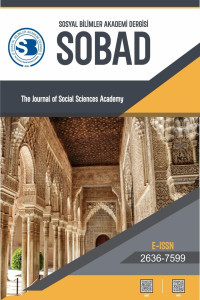
ENDÜLÜS’ÜN İNCİSİ: KURTUBA (711-1236)
Öz
Bu çalışma, Endülüs’ün Akdeniz-Atlas Okyanusu-Kuzey Afrika hattındaki geçiş konumundan hareketle, 711’den sonrası Kurtuba’nın yükselişini ve Ortaçağ İslâm dünyasındaki konumunu tarihî ve kültürel eserler ışığında incelemektedir. İber Yarımadası’nın stratejik konumu; Pireneler ve Cebelitârık ekseninde şekillenen dolaşım ağları (insan, mal, bilgi) sayesinde Kurtuba’nın başkentlik iddiasını besleyen bir çerçeve sunar. Makalede, Müslüman fetihlerinin İfrîkıyye’deki gelişmelerle bağlantısı kurularak 92/711’de başlayan süreç, 714–756 Valiler Dönemi’nden 756’da Emevî Emîrliği’ne ve 929’da Hilâfet’e uzanan siyasal-kronolojik çizgide ele alınır. Şehrin Roma ve Vizigot geçmişi, fetihte izlenen taktikler ve erken dönem idarî istikrarsızlık vurgulanırken; Emevîler döneminde Kurtuba’nın nüfus, ekonomik canlılık ve merkezîleşme bakımından büyümesi; iç karışıklıklar ve parçalanma sürecinin (fitne) şehir üzerindeki etkileri ile birlikte değerlendirilir. Çalışmanın ikinci odağı, Kurtuba’daki mimârî üretimdir: Kurtuba Ulucâmii’nin inşa ve genişletme evreleri, mimârî-tezyinî özellikleri ve etki alanı; Medînetüzzehrâ yönetim külliyesinin siyasal temsil ve saray mimarisi bağlamındaki konumu; Rusâfe Sarayı’nın ise Emevî hafızasıyla kurduğu ilişki tartışılır.
Anahtar Kelimeler
Kurtuba, Kurtuba Ulucâmii, el-Kasr., Endülüs, İslâm Medeniyeti
Kaynakça
- Beksaç, E. (2002). Kurtuba ulucâmii. Türkiye Diyanet Vakfı İslâm Ansiklopedisi (26, 453–454). Ankara: TDV Yayınları.
- Ebü’l-Fidâ. (2017). Takvîmü’l-büldan (Ebü’l-fidâ coğrafyası). (R. Şeşen, Çev.). İstanbul: Yeditepe Yayınları.
- Hattstein, M. (2000). Spain and morocco (spanish umayyads–history) (C. Diefenbacher, A. Ehlert, B. Konrad-Lütt, U. Schmidt-Steinbach, & B. Welmann, Çev.; M. Hattstein & P. Delius, Eds.), In Islam: Kunst and Architektur (Islam: Architecture and Art). Fransa: Könemann Verlagsgesellschaft mbH, 208–227
- İbn Cübeyr. (2020). Tezkire bi’l-ahbâr an ittifakât el-esfâr (seyahatnâme). (R. Şeşen, Çev.; 1. baskı.). İstanbul: Yeditepe Yayınları.
- İbnü’l-Esîr. (2016a). el-Kâmil fi’t-Târîh (A. Ağırakça, B. Eryarsoy, Z. Tüccar, A. Özaydın, Y. Apaydın & A. Köşe, Çev, Cilt 3. İstanbul: Ocak Yayıncılık.
- İbnü’l-Esîr. (2016b). el-Kâmil fi’t-Târîh. (A. Ağırakça, vd., Çev.). Cilt 4. İstanbul: Ocak Yayıncılık.
- İbnü’l-Esîr. (2016c). el-Kâmil fi’t-Târîh. (A. Ağırakça, vd., Çev.). Cilt 5. İstanbul: Ocak Yayıncılık.
- İbn Havkal. (2017). Sûrat el-arz (Yerin Haritası): 10. Asırda İslâm Coğrafyası (R. Şeşen, Çev). (2. baskı). İstanbul: Yeditepe Yayınevi.
- Irving, T. B. (2002). Kurtuba. Türkiye Diyanet Vakfı İslâm Ansiklopedisi (Cilt 26, s. 451–453). Ankara: TDV Yayınları.
- İstahrî. (2019). Kitâbü’l-mesâlik ve’l-memâlik (ülkelerin yolları) (M. Ağarı, Çev.). (2. baskı.). İstanbul: Ay Işığı Kitapları Yayınları.