Post-Disaster Interventions in Beirut's Historic Neighborhoods Adaptive Reuse Strategies
Öz
The August 4, 2020, Port of Beirut explosion physically damaged old neighborhoods including Mar Mikhael, Gemmayzeh and Saifi, exposing cultural, social and institutional fissures that influence the protection and restoration of urban heritage. The research considers the post-disaster heritage recovery process, with a focus on adaptive reuse, and argues that recovery is not just about reconstructing, but a multi-dimensional process reconsidering repairing architecture and recasting collective memory and social resilience. The research has revolved upon reviewing the literature, exhaustive researches on national and international heritage protection and risk-based recovery and investigation of adaptive re-use actions implemented in Beirut's old quarters. The Mar Mikhael Train Station and the Sursock Museum have been used to assess how different types of materials used in interventions affect urban identity. The authors of this paper reviewed how the damage to both sites reflects physical and intangible heritage values, and how these two aspects of heritage compete with rapid emergency stabilization versus the long-term preservation of authenticity. A critical analysis also shows that there are dynamics between systematic approaches taken by top-down institutional frameworks compared to the bottom-up initiatives of local citizens. The authors of this paper note that the involvement of local individuals in preventing social fragmentation and gentrification is an important aspect of preserving community identity. The findings of the research indicate that adaptive reuse is a strong and ethical restoration technique which can cater for modern needs and protect intangible heritage elements. The article extends the debates on post-disaster conservation of urban heritage by suggesting adaptive reuse as more than a technical design solution, but an ontological tool that constructs identity, memory and urban resilience.
Anahtar Kelimeler
Destekleyen Kurum
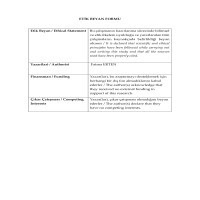
Etik Beyan
Kaynakça
- Bevan, Robert. The Destruction of Memory: Architecture at War. 2. Baskı. London: Reaktion Books, 2016.
- Orbaşlı, Aylin. Architectural Conservation: Principles and Practice. Oxford: Blackwell Publishing, 2008.
- Vale, Lawrence J. – Campanella, Thomas J. The Resilient City: How Modern Cities Recover from Disaster. Oxford: Oxford University Press, 2005.
- Araoz, Gustavo F. “Values-Based Heritage Conservation: A Challenge for Conservation Planning.” Journal of Cultural Heritage Management and Sustainable Development 5/1 (2015): 13–26.
- https://doi.org/10.1108/JCHMSD-06-2014-0020
- Daher, Rami. “Post-Blast Beirut: Heritage, Politics, and Reconstruction Dilemmas.” Built Environment 47/4 (2021): 528–543.
- https://doi.org/10.2148/benv.47.4.528
- Pendlebury, John. “Conservation Values, the Authorised Heritage Discourse and the Conservation-Planning Assemblage.” International Journal of Heritage Studies 19/7 (2013): 709–727.
Ayrıntılar
Birincil Dil
İngilizce
Konular
Spesifik Alanların Tarihi (Diğer)
Bölüm
Araştırma Makalesi
Yazarlar
Yayımlanma Tarihi
26 Şubat 2026
Gönderilme Tarihi
16 Ocak 2026
Kabul Tarihi
23 Şubat 2026
Yayımlandığı Sayı
Yıl 2026 Cilt: 15 Sayı: 1