
Editor-in-chief
Co-Editor
Technical Editor
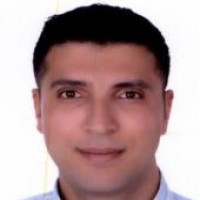





Dr. Şimşek's research and teaching is focused on marine and freshwater biology, fisheries technology and fish behaviors (especially discard fate and behavior impairment). He got his Master degree from the Department of Fisheries at Mustafa Kemal University, and Doctorate degree from the Department of Fisheries at İskenderun Technical University, in Hatay, TÜRKİYE. He has been working as an Associate Professor at İskenderun Technical University since 2023.
Statistical Editor
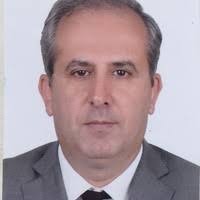
Dr. Mazlum's research and teaching is focused on developing new technological designs and creating alternative feed sources on the production of decapods (especially crayfish). He has more than 23 years of experience in this field to develop crayfish production and management practices. He got his Master and Doctorate degrees from the Department of Fisheries, Fisheries and Wildlife Biology at Clemson University in Clemson, USA. He did a minor in Statistical Sciences at Clemson University
Editorial Board

Hydrobiology and Fisheries: Surface and drinking water, and sediment quality studies, freshwater ecology and biodiversity studies and hydroparasitology

Fish nutrition, biology and aquaculture including nutrient, requirements of fish, utilization of different nutritional additives in fish feeds; evaluation of ingredients for digestibility and formulation of nutritionally balanced, environmentally sustainable and cost-effective diets.
Arnold Rakaj works at the Laboratory of Experimental Ecology and Aquaculture of the University of Rome Tor Vergata. The main purpose of his research is to answer ecological questions and investigate by applied research, both in the field and in controlled conditions, marine ecosystems functioning and response to anthropogenic pressures. His research topics can be summarized as follows:
• Multitrophic Integrated Aquaculture (IMTA)
• Bioremediation in aquaculture
• Biology and ecology of benthic invertebrates and their role in hard, soft -substrates and seagrass meadows
• Benthic invertebrates stock assessment and fishery management
• Epibenthic communities monitoring and conservation
• Epibenthic communities response to human activities and global changes
• Ecotoxicology and embryo-larval bioassays for the assessment of marine pollution
• Benthic invertebrates as a models to test future scenarios in mesocosms (global warming and ocean acidification)