EDITOR
Adnan Oktay, Professor Dr., entered the Department of Turkish Language and Literature, Faculty of Letters, Istanbul University in 1996. He graduated from this department in 2000. He began his master's degree with a thesis in the Department of Turkish Language and Literature, Institute of Social Sciences, Istanbul University, graduating with a thesis titled "Social, Cultural and Historical Texture in the Diwan of İshak Çelebi from Skopje." In 2009, he began working as a research assistant in the Department of Turkish Language and Literature, Faculty of Art, Mardin Artuklu University. In the fall of 2009, he began his doctoral program in the Department of Turkish Language and Literature, Institute of Educational Sciences, Dicle University, graduating with a thesis titled "Nabi's Munshaat: Analysis-Text." He currently serves as a faculty member in the Department of Turkish Language and Literature, Faculty of Art, Mardin Artuklu University. adnanoktay@artuklu.edu.tr
EDITOR ASSISTANT

Asst. Prof. Dr. Mitat Çekici enrolled in the Department of Persian Language and Literature at the Faculty of Letters, Erzurum Atatürk University in 2006 and graduated in 2010. He continued his education in the Master’s program with thesis at the Institute of Social Sciences, Department of Persian Language and Literature at the same university, from which he graduated in 2012. Between 2014 and 2018, as an official scholarship holder of the Ministry of National Education, he pursued his doctoral studies at the University of Tehran (Iran) in the Department of Persian Language and Literature on behalf of Mardin Artuklu University. Since 2019, he has been serving as a faculty member in the Department of Persian Language and Literature at the Faculty of Letters, Mardin Artuklu University.
EDITORYAL BOARD




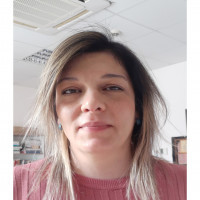
Prof. Dr. Gökben Ayhan is a scholar specialized in Turkish-Islamic art. She completed her undergraduate studies at Ankara University, Faculty of Language, History and Geography, Department of Art History, and received her M.A. and Ph.D. degrees from Ege University, Institute of Social Sciences. Her academic foundation was shaped by her thesis studies on Ottoman tobacco pipes within the field of Turkish-Islamic art. She began her academic career in 2010 at Nevşehir University as a Research Assistant, later continuing as Research Assistant Dr. and Assistant Professor. Since December 2012, she has been a faculty member at Muğla Sıtkı Koçman University, Department of Art History, where she was promoted to Associate Professor in 2017 and to Full Professor in 2024.
Throughout her academic career, Prof. Dr. Gökben Ayhan has focused on Turkish-Islamic architecture, tile and ceramic art, stone decoration, and small finds from the Ottoman period. She has published numerous national and international articles, conference papers, and book chapters. She has also supervised many M.A. theses, contributing to research on Anatolian Turkish architecture, mihrabs, tombstones, and architectural decoration. In addition, she has actively participated in archaeological excavations and surveys across Anatolia, including long-term projects such as the Sinop Balatlar Church, Edirne New Palace, and Thyateira excavations.
In terms of administrative duties, she has served as head of department, head of division, and as a member of faculty boards and quality commissions. She is also involved in editorial work for academic journals. Currently, she continues her academic work at Muğla Sıtkı Koçman University as a professor, leading research projects and contributing to art history education. At the undergraduate level, she teaches courses on Turkish-Islamic art, architecture, tile and ceramic arts, woodwork, and art historical methods; at the graduate level, she offers specialized, research-oriented courses on Turkish-Islamic and Ottoman art, as well as scientific research methods.
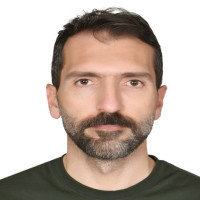
Mardin Artuklu University Faculty of Literature, Department of Sociology

BIOGRAPHY
Masood Imran Mannu, PhD, Professor, Department of Archaeology, Jahangirnagar University, Savar, Dhaka, Bangladesh. He earned PhD from Hiroshima University, Japan, on Safeguarding-Governmentality of Cultural Heritage of Bangladesh. In National and International level, there have been 22 journals, 6 book chapters and 6 books published. He has been performed as an invited paper presenter, keynote speaker and session chair in several international seminar and symposiums. Based on the academic achievement, Dr. Surat Ali Khan and Sharfuddin Gold Medal from Jahangirnagar University, Bangladesh and Excellent Student Scholarship Award from Hiroshima University, Japan. His research interest on critical theories to understand the past, specially, identity and representational politics of the past, spatial pattern of cultural heritage sites, predictive 3D modelling of monuments and generating VR of cultural heritage sites.
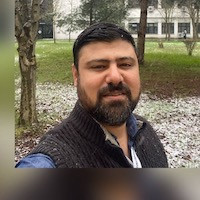
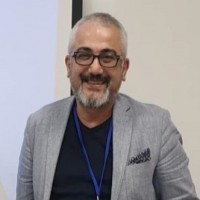
Associate Professor Mustafa Zeki ÇIRAKLI is a critic/narratologist, author and translator. Çıraklı has received his BA from Ondokuz Mayıs University (1998) and MA from Atatürk University (2001). His MA dissertation, lectures and writings on T.S. Eliot's Art drew considerable attention. He holds his PhD from Middle East Technical University (2010). Being a member of ENN, Çıraklı was a guest researcher at the University of Hamburg, Interdisciplinary Center for Narratology, ICN (2009). His doctoral thesis "Narrative Strategies and Meaning in Golding's Fiction" was published in Germany and included in European Narratology Network Publication list (ENN: 2010). He is the author of "Anlatıbilim: Kuramsal Okumalar" (Narratology: Theory and Practice, A Critical Account of Narratives from Western and Turkish Literature : 2015) and Henry Fielding'in Roman Sanatı Üzerine Alçakgönüllü Bir Deneme, a book about the author's opinions raised in the introductory essays of Tom Jones (2015). He is the translator of two remarkable titles as well: Paul de Man's masterpiece "Allegories of Reading: Figural Language in Rousseau, Nietzsche, Rilke, and Proust (2009) and A. N. Wilson's "Dante in Love," an outstanding critical biography of Dante Alighieri (2013). He has been teaching at University since 1998. He was a visiting scholar in Dortmund University, Germany (2014). His BA+MA block-Seminar "Latecomers: Comparing (Post)Modern American and Turkish Fiction" (2014) took place as a subsequent event of a Seminar on "The Place of Turkish Fiction in World Literature" (2012). He directed Waiting for Godot and King Lear, the latter adapted for Turkish audience (2015, 2016 respectively). He has a volume of somewhat-biographical poetry "Eski Defterler" (Ancient Diary : 2014) and preparing another volume "Gemideki Kaçak Yolcu" (Stowaway, publication in progress). He has the starter of Narrative and Language Studies (NALANS), an International Biannual Journal (2013) and T-Notes Project, an online resource on Modern Turkish Literature (2016). He is now the director of Graduate Studies on Literature and Culture, Karadeniz Technical University (KTU), Turkey. CONTACT INFO Office:+904623773549 mobile:+905056559481 mzcirakli@gmail.com mzcirakli@ktu.edu.tr https://twitter.com/mzekicirakli https://www.facebook.com/mzcirakli https://instagram.com/mzcirakli Significant Tags: #Anlatıbilim I: Kuramsal Okumalar #Anlatıbilim II: Postklasik Okumalar #Kitabın Ortası Aforizmalar #TurkishNotes #Türk Anlatıbilim Sözlüğü
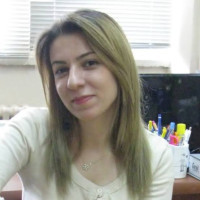
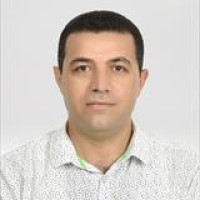



Göksu graduated from the Department of Computer Education at Mersin University, Tarsus Technical Education Faculty, in 2007. Following graduation, Göksu served as an Information Technologies Teacher from 2007 to 2009. Göksu furthered their academic journey by completing a master's degree in Computer and Instructional Technologies Education (BÖTE) at Fırat University in 2012, and subsequently earned a doctoral degree in the same field from Atatürk University in 2016. From 2009 to 2016, Göksu served as a Lecturer in the Computer Technologies department at Midyat Vocational School. In 2016, Göksu joined Mardin Artuklu University as an Assistant Professor in the Department of Educational Sciences, Division of Educational Programs and Instruction. Göksu was awarded the title of Associate Professor in BÖTE in 2021 and continues to serve in the same department. Currently, Göksu teaches "Instructional Technologies" at the undergraduate level, and "Scientific Research Methods," "Academic Writing Techniques," and "Technology Integration in Education" at the graduate level. Göksu's research interests encompass a broad range of topics, including educational technologies, instructional design, distance education, mobile learning, virtual reality, digital games, and digital media.

Murat Kalelioğlu (1971, VAN) completed his undergraduate education in English Language Teaching at Selçuk University, Faculty of Education; his master's degree in English Language and Education at Necmettin Erbakan University, Institute of Educational Sciences; and his doctoral studies in English Language and Literature at İstanbul Aydın University, Institute of Social Sciences. His doctoral dissertation was titled "The Semiotic Analysis of George Orwell's 1984 Narrative." Kalelioğlu is among the founders, administrators, and editors of the Semiotics Circle of Türkiye (TGÇ) (https://tgcevresi.com/) and TAMGA–Turkish Journal of Semiotic Studies (https://e-tamga.com/). Actively engaged in voluntary efforts to promote the development of Turkish semiotics, to help it attain its rightful place on a global scale, and to foster the training of qualified young semioticians in the country, Kalelioğlu is a founding and executive board member of the International Association for Asian Semiotic Studies (https://www.asiansemiotics.com/), a member of the International Association for Semiotic Studies (https://iass-ais.org/) and the International Society for Biosemiotic Studies (https://biosemiotics.org/). Since 2018, Kalelioğlu has been serving as a faculty member in the Department of Translation and Interpreting at the Faculty of Letters of Mardin Artuklu University. His research interests include linguistics, semiotics, semantics, discourse analysis, literary studies and narratology; cultural studies and translation studies, and he is the author of numerous unique academic studies in the related fields.
He was born in 1976 in Herne, Germany. In 2009, he completed his undergraduate studies in Oriental Studies, Islamic Studies, and Religious Studies at Ruhr University Bochum. In 2011, he obtained his master’s degree in Islamic Studies from the same university. In the same year, he began his doctoral studies at Goethe University Frankfurt.
Between 2013 and 2015, he worked as an assistant and lecturer at Justus Liebig University in Gießen. In 2016, he completed his doctoral dissertation entitled “Die theologischen, juristischen und sozialen Dimensionen der Sünde im Koran – The Theological, Legal, and Social Dimensions of Sin in the Qur’an” with the distinction summa cum laude.
Since 2017, he has been working at DITIB-ZSU as the Head of the Translation and Editorial Unit. Among the works he has contributed to as an editor and translator is the seven-volume “Islam Through Hadiths”, published in German by the Presidency of Religious Affairs (Diyanet İşleri Başkanlığı) and Ditibverlag (DITIB-ZSU e.v.).
Including his doctoral thesis, he has published four books. He has also authored numerous articles in both German and Turkish, which have appeared in academic and intellectual journals as well as in contemporary media outlets. He continues his writing and research activities.
He is married and the father of three daughters.

Assistant Professor, Vrije University Amsterdam, Faculty of Religion and Theology, Department of Texts and Tradition, 2025-continue
Assistant Professor: Mardin Artuklu University, Department of Syriac Language and Literature, 2024-2025
Research Assistant: Mardin Artuklu University, Department of Syriac Language and Literature, 2019-2024
PhD: Istanbul Medeniyet University, Institute of Social Sciences, 2018- 2024
MA: Istanbul Medeniyet University, Institute of Social Sciences. 2016-2018
Illa H.MA: La Trobe University, SHSS. 2014-2016
BA: Istanbul University, History Dept., 2010-2014
FIELD EDITORS
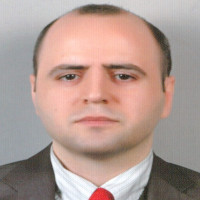
He completed his undergraduate studies in Turkish Language and Literature at Istanbul University in 2000, having started in 1996. In 2011, he began working as a research assistant at Mardin Artuklu University. He completed her doctorate in 2015, becoming an Assistant Professor, and in 2021, an Associate Professor. His research areas include the Translation and Commentary Tradition in Classical Turkish Literature, the Indian style in Classical Turkish Poetry, and comparative studies between Classical Turkish and Persian literatures.

Faysal Özdaş graduated from the Faculty of Education at Dicle University in Siirt. He completed his master’s degree in educational programs and instruction at the same university. He earned his Ph.D. in educational programs and instruction from Fırat University. He served as a teacher and educational inspector at the Ministry of National Education. In 2011, he began working in the Department of Educational Sciences at the Faculty of Letters, Mardin Artuklu University. He is currently a faculty member at the same university. In his academic work, he has focused on values education, the teaching-learning process, undesirable student behavior, and teacher training.
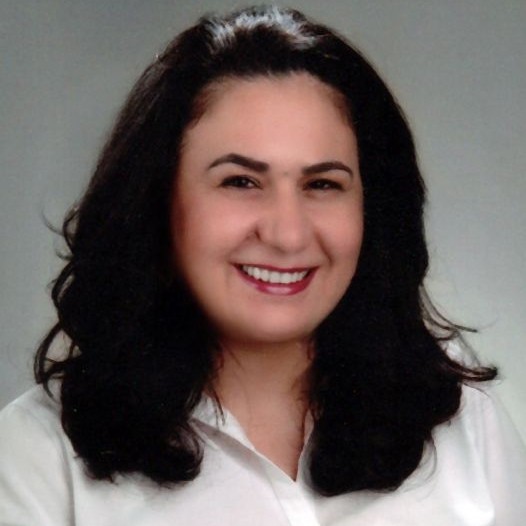
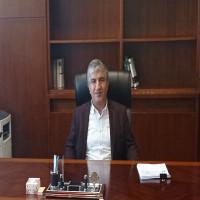
He graduated from the Faculty of Theology at Yüzüncü Yıl University in 1999. He completed his Ph.D. at Ankara University in 2010 with a dissertation entitled “The Theory of Action in Qāḍī ʿAbd al-Jabbār.” He joined the Department of Philosophy at Mardin Artuklu University as an Assistant Professor in 2010, was promoted to Associate Professor in 2017, and became a Full Professor in 2022. He currently serves as a faculty member in the Department of Philosophy, Faculty of Letters, at Mardin Artuklu University.
His research focuses on ethics, philosophy of mind, philosophy of language, and Islamic philosophy. In addition to numerous edited volumes, academic articles, and conference papers, he is the author of the books Theory of Action in the Muʿtazila and Nature and Subjectivity: Al-Jāḥiẓ’s Moral Thought.
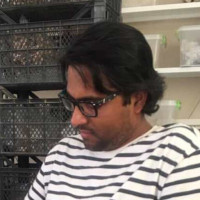
Abu B. Siddiq
Abu B. Siddiq is a Turkish–Bangladeshi prehistoric archaeologist and zooarchaeologist whose work examines long-term human–animal relationships in Anatolia and the Near East. He serves as an associate professor of anthropology at Mardin Artuklu University in southeastern Türkiye and has published extensively on faunal remains from Neolithic through Ottoman contexts. His research helps clarify how early societies’ interactions with animals shaped subsistence, ritual, and domestication.
Key facts
• Field: Prehistoric archaeology / zooarchaeology
• Institution: Mardin Artuklu University (Anthropology Department)
• Doctorate: PhD in Prehistoric Archaeology, Istanbul University
• Publications: ≈ 70 scholarly works; 300+ citations (2024 data)
• Research focus: Human–animal interactions in Anatolia and Upper Mesopotamia
Academic background and roles:
Siddiq trained in prehistoric archaeology at Istanbul University, completing his doctoral work on Neolithic faunal assemblages. At Artuklu he directs field projects and collaborates with regional and European researchers in zooarchaeology and anthrozoology.
Research themes:
His studies explore the ecological and cultural dimensions of animal use—from hunting and herding in the Pre-Pottery Neolithic to symbolic animal representations in Iron Age and Ottoman sites. Major excavation collaborations include Körtiktepe, Çayönü, Çatalhöyük, Sefertepe, Harvetsuvan Tepe, Domuztepe, Kanlıtaş Höyük, Bayraklı Höyük, Doliche, Çine-Tepecik Höyük, İkiztepe Höyük, Kinik Höyük, Alaybeyi Höyük, Ayanis citadel, Mardin fortress, and Hasankeyf fortress. Siddiq integrates morphometric and isotopic analyses to reconstruct domestication processes and environmental adaptation.
Publications:
Among his notable works are Tarihöncesi Toplumlarda İnsan-Hayvan İlişkisi ve Orta Anadolu Çanak Çömleksiz Neolitik Dönem Faunası (2019) and ≈ 70 scholarly works.
Networks:
He co-founded the MED-Zooarch Network, a Mediterranean consortium advancing open science on ancient human–animal dynamics, and frequently presents at international archaeology symposia.
Scholarly impact:
By linking zooarchaeological evidence with ethnographic and ecological data, Siddiq’s work contributes to understanding the emergence of pastoralism, the symbolism of animals in early religion, and the environmental history of Southwest Asia. His interdisciplinary approach positions him among a new generation of researchers redefining how archaeology interprets the shared past of humans and animals.

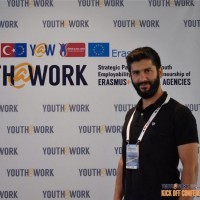
Hakan Gülerce completed his master's degree at Istanbul University, Department of Social Structure-Social Change in 2012 with his thesis titled “The Role of Editing in the Development of Social Sciences and a Sociological Study on Academic Journal Editors”. He graduated from the Department of Sociology of the same university in 2017 with his doctoral thesis titled “The Reproduction of Christianity in the Encounter with Modernity”. In 2018, Gülerce started to work as an Assistant Professor in the Department of Sociology at Harran University and continued her postdoctoral studies in the fields of migration, social cohesion, youth studies, modernity and religion.
Gülerce received the title of associate professor in the fields of Sociology of Migration and Sociology of Religion in 2022. Gülerce, who is the director of Harran University Migration Policies Application and Research Center, has been and continues to be the coordinator of various projects on migration, forced migration, Syrians in Turkey and social cohesion in this center.
Gülerce, who served as the secretary general of the International Federation of Social Science Organizations between 2012-2019, assumed the presidency between 2019-2023. He is currently a board member of the same organization.

After completing his undergraduate studies in English Language Teaching at Eskişehir Anadolu University, Dr. Orhun Büyükkarcı obtained his master's degree in English Language Teaching from the Social Sciences Institute at Konya Selçuk University. He received his doctorate from Istanbul Aydın University, Social Sciences Institute, English Language and Literature program with his thesis titled "Semiotic Analysis of Edgar Allan Poe's Short Stories". Büyükkarcı worked as a teacher at the Ministry of National Education and as a lecturer at the Faculty of Education of Sinop University. Currently, he is a faculty member in the Department of Translation and Interpreting at the Faculty of Letter, Mardin Artuklu University. His research focuses particularly on linguistics, semiotics, and narratology, particularly in relation to literary works.
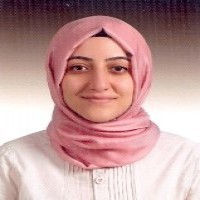
Deniz Işıker Bedir, Mardin Artuklu Üniversitesi Psikoloji Bölümünde Dr. Öğr. Üyesi olarak çalışmaktadır. Lisans eğitimini Yakın Doğu Üniversitesi Psikoloji Bölümünde, Yüksek Lisans eğitimini İstanbul Bilgi Üniversitesi Kültürel İncelemeler alanında, Doktora eğitimini ise İstanbul Üniversitesi-Cerrahpaşa Adli Tıp Enstitüsü Sosyal Bilimler Anabilim Dalında “Yaşlılıkta İstismar, İhmal ve Başa Çıkma Stratejileri” başlıklı teziyle tamamlamıştır. Yaşlılık, yaşlı istismarı, adli psikoloji ve travma gibi alanlarda çalışmalar yapmaktadır.
Deniz Işıker Bedir’in 28 Şubat’ın Psikolojik Etkileri ve Yaşlı İstismarı ve İhmali adlı iki kitabı bulunmaktadır. Ayrıca Psikoloji Tarihi başlıklı kitabın editörlüğünü üstlenmiştir.
Assistant Professor, Vrije University Amsterdam, Faculty of Religion and Theology, Department of Texts and Tradition, 2025-continue
Assistant Professor: Mardin Artuklu University, Department of Syriac Language and Literature, 2024-2025
Research Assistant: Mardin Artuklu University, Department of Syriac Language and Literature, 2019-2024
PhD: Istanbul Medeniyet University, Institute of Social Sciences, 2018- 2024
MA: Istanbul Medeniyet University, Institute of Social Sciences. 2016-2018
Illa H.MA: La Trobe University, SHSS. 2014-2016
BA: Istanbul University, History Dept., 2010-2014
TURKISH SPELLING AND LANGUAGE EDITORS
…
ENGLISH SPELLING AND LANGUAGE EDITORS

KURDISH SPELLING AND LANGUAGE EDITORS

2013 yılında Selçuk Üniversitesi Edebiyat Fakültesi Türk Dili ve Edebiyatı Bölümü'nde lisans eğitimini tamamladı. 2018 yılında Van Yüzüncü Yıl Üniversitesi Yaşayan Diller Enstitüsü Kürt Dili ve Kültürü Anabilim Dalında “Di Çîrokên Hîzanê da Motîfa Dê” başlıklı yüksek lisans tezini savundu. Dicle Üniversitesi Sosyal Bilimler Enstitüsü Kürt Dili ve Kültürü Anabilim Dalında “Rol û Stereotîpên Zayenda Civakî di Destan û Hikayeyên Gelêrî yên Kurdî da” başlıklı doktora tezini 2025 yılında tamamladı. 2019 yılından itibaren Mardin Artuklu Üniversitesi Kürt Dili ve Edebiyatı Bölümü'nde Öğretim Görevlisi olarak çalışmaktadır. Folklor, Toplumsal Cinsiyet gibi alanlarda çalışmaları devam etmektedir.
ARABIC SPELLING AND LANGUAGE EDITORS
PERSIAN SPELLING AND LANGUAGE EDITORS

Dr. Nezahat Başçı, Assistant Professor, graduated with a bachelor’s degree in Persian Language and Literature from Kazvin International Imam Khomeini University in 2007. She pursued her master’s degree in the same field at the University of Tehran, graduating in 2009. She completed her Ph.D. at the Department of Persian Language and Literature at the University of Tehran in 2013 with a thesis titled “Textual Analysis of the Persian Selimname.” Between 2011 and 2013, he worked part-time as a Persian language instructor at the primary school of the Turkish Embassy in Tehran and, during the same years, as a Turkish language instructor at the Yunus Emre Cultural Foundation in Tehran. In addition to his translation and compilation works published by various publishing houses in Turkey, he has also authored scholarly works published in both Iran and Turkey. He has produced works in classical and modern Persian literature, particularly in the field of children’s literature. Since 2013, he has been serving at the Department of Persian Language and Literature at Mardin Artuklu University.
FINAL READING
…
LAYOUT
TECHNICAL EDITOR
SECRETARIAT

Artuklu Humanities is licensed under a Creative Commons Attribution-NonCommercial 4.0 International License (CC BY NC).