Research Article
Aim & Scope
AIM
Journal of Balkanistic Language and Literature aims to bring works such as original research articles, review articles, book reviews and translations that examine scientific issues and problems related to Balkan languages and literatures and make suggestions on these issues to the Turkish and world literature and the world of science. It aims to create a fair medium, for scientists who have studies of the defined quality, to present their studies to the scientific world as quickly as possible.
SCOPE
In the Journal of Balkanistic Language and Literature, include articles that deal with Balkan languages and literatures from a scientific point of view and offer solutions to the problems in these two basic areas. Additionally, two special articles other than the field of language and literature can be included in each issue, provided that they are related with the Balkans. Original theoretical articles, research articles, documents and comments, practices or practice-oriented articles, reviews and book reviews in accordance with the publication principles in terms of content and format can be submitted for publication in our journal. Essays, assignments, news, announcements and similar works are not accepted.
Author Guidelines
Ethical Principles and Publication Policy
Journal of Balkanistic Language and Literature aims to build a bridge between nations, cultures and individuals by bringing together the two most important elements, language and literature, for researchers and literates to get to know each other better in today’s world where borders have disappeared with technological developments. Journal of Balkanistic Language and Literature is published with the principle of announcing international scientific studies prepared with this purpose to the public.
The studies submitted to the Journal of Balkanistic Language and Literature, must contribute to the field, to be original and to reveal new and remarkable views. Articles that present authors and works related to Balkan languages and literatures are published.
The languages of the Journal of Balkanistic Language and Literature are Turkish and English. However, since the journal is for the Balkan geography, articles written in Balkan languages are also published.
Copyright Notice
In order for the articles to be published in the Journal of Balkanistic Language and Literature, they must not have been previously published or accepted for publication elsewhere. Papers presented at a scientific meeting may be accepted as long as it is notified.
All responsibility for the article(s) belongs to the author(s). The Copyright Agreement Form must be signed/approved by all authors. The form can be completed and submitted in separate copies by authors at different institutions. However, all signatures must be original or verifiably certified.
All articles published since the first issue of the journal are open access. Authors consent to the publication of their intellectual work by the Publisher under the Creative Commons Attribution 4.0 International (CC BY 4.0) license.
The Author(s) lets the Publisher to publish this literary or artistic work under Creative Commons Attribution 4.0 International (CC BY 4.0) license. The aforementioned license allows the work to be copied and distributed in any medium or format for any purpose -including for commercial ones- provided that the original work is properly given credit, the license link is referred, and possible updates are noted. At the same time, it is also possible to adapt, transform, and build upon the relevant material for any purpose. Provided that the underlined conditions are followed, the rights permitted by the license cannot be limited by legal terms or technological measures for others.
Plagiarism/Similarity Report
Studies should be prepared in accordance with ethical rules and the sources used in the text should be cited. Authors get similarity (plagiarism) report by making use of auxiliary programs such as intihal.net within the scope of the agreement that Ithenticate, Turnitin and DergiPark has made with intihal.net. The upper limit of acceptable similarity rate is 20%.
Article Acceptance and Review Process
Manuscripts sent to the Journal of Balkanistic Language and Literature are first examined in terms of compliance with the journal's principles. If the spelling rules are not followed, the author is contacted and asked to make the necessary corrections. The Editorial Board has the right to reject the submitted manuscripts directly. Since Journal of Balkanistic Language and Literature is a field journal, articles that do not comply with the aim and scope of the journal will not be evaluated.
Our journal accepts co-authored articles. Authorship contribution rates should be clearly stated in co-authored articles. The author with the highest contribution rate ranks first. Other names are ranked according to the contribution rate.
Research and review articles, book reviews and translations that are deemed suitable for evaluation are sent to two peer-reviewers in the relevant field. The peer-reviewers are given 7 days to accept the invitation and 21 days for the peer-reviewers who accept the invitation to evaluate the article. Double-blind reviewing practice is carried out in our journal. The authors are not informed about the identities of the peer-reviewers and the reviewers are not informed about the identities of the authors. The names of the peer-reviewers are kept confidential and the reports are kept for five years. The Editorial Board reviews the peer-reviewers’ reports and makes the final decision. Articles accepted as a result of peer-review are put in order for publication.
If the reviewers request a correction, the author is informed and requested to revise and resubmit the manuscript, and is given 3 days to accept the revision. The revised work by the author(s) should be uploaded to the system within 14 days. If no correction is made, the article will be rejected.
The article evaluation process (submission of the article to the reviewers, acceptance of the invitation by the reviewers, evaluation of the article by the reviewers, revision period) is approximately 45 days. However, if the reviewers want to re-evaluate the article after the revision, the process is prolonged and may take approximately 70 days/10 weeks.
In case the study receives a final acceptance decision, it is sent to the author for final corrections and the approval of “it can be published in this form” is obtained. The work of the author(s) who does not send approval in due time is published in its final form and all responsibility belongs to the author(s).
Journal of Balkanistic Language and Literature may also include articles by the editor, field editors and editorial board members. However, in such cases, the editor or field editors do not take part in the evaluation process.
Editorial and Peer Review Process
1. Preliminary review of the article by the editorial secretariat,
2. Control of the article by the editorial board,
3. Checking the conformity of the article to the journal format,
4. Plagiarism/Similarity report evaluation,
5. Examining the Copyright Agreement Form,
6. Sending the peer-reviewing invitation to start the review process,
7. Notifying the author in line with the reports of peer-reviewers,
8. Controlling the revised article from the author and directing it to the peer-reviewers,
9. To notify the second review result of the peer-reviewing to the author,
10. The author sends the final version of the article,
11. Receipt of the last plagiarism and similarity report by the editor,
12. Completion of the evaluation process of the article,
13. Obtaining the DOI number of the article,
14. Receiving final approval from the author of the typed and layout article,
15. Publication of the article.
Article Withdrawal Process
In line with the publication policies of the Journal of Balkanistic Language and Literature, the responsibilities of the authors and the Editorial Board regarding the withdrawal of the works in the publication process are as follows:
Writers and the journal editor should be carried out together withdrawal steps for published, peer-reviewed, early-viewed, or under-evaluation works.
In order to withdraw a study that is under evaluation, the authors must fill in the Withdrawal Form and send the signed and scanned version of each author's wet signature to the journal editor via e-mail or via the DergiPark journal management system. Authors cannot submit their work in this situation to another journal for evaluation, unless approved by the Editorial Board. The Editorial Board reviews the withdrawal notification and returns within 15 days at the latest.
The Editorial Board of the Journal of Balkanistic Language and Literature may examine the work in cases when a suspicion of copyright or unethical situation takes place regarding a published, early view or under evaluation article. If, as a result of the review, the Board detects a situation that does not comply with copyright or research ethics in an article under evaluation, it can withdraw the article from evaluation and notify the author of the review result.
If the editorial board detects a copyright infringement or violation of research ethics in a published or early-view work, the following withdrawal and notification procedures are performed.
1. The phrase "Withdrawn:" is added in front of the work title accessed via electronic media.
2. Instead of the Abstract and Full Text links on the electronic media, the reasons for the withdrawal of the study are published together with the notifications of the institutions and organizations to which the authors are affiliated, if any.
3. The phrase “Retracted: Article Title” is ranked among the list of contents of the electronic and hard copy of the first issue to be published as of the date of withdrawal. Starting from the first page of the article, the reasons for the withdrawal and the original quotations related to them are shared with the public and researchers.
4. The withdrawal notices listed above are sent to the institutions and organizations where the journal is indexed and to the National Library of Turkey for registration in index systems and catalogues.
The author is authorized to withdraw the article while it is in new submission status. If the article is in sub-roles or has at least 1 peer review, the author will be able to request withdrawal with the approval of the editor. If the editor does not respond to the request within 15 days, the article will be automatically withdrawn by DergiPark. If the submission is in the publication process, the author will only be able to send a request and the 15-day requirement will not be demanded.
Click here for detailed information.
Open Access Policy
Journal of Balkanistic Language and Literature provides instant open access to its content, adopting the principle that providing scientific research to the public free of charge will increase the global sharing of knowledge.
Archiving
Journal of Balkanistic Language and Literature uses the LOCKSS archiving system.
Privacy Statement
Names and e-mail addresses on this journal site will be used for the stated purposes of the journal. It will not be used for other purposes or for any other part.
No fee is charged from the author or institution under any name.
Journal of Balkanistic Language and Literature is an open access journal and does not request any fee from authors, reviewers and readers.
Publication Ethics and Declaration of Misconduct in Publication
Ethical Principles and Publication Policy
The publication ethics and publication policy statement of the Journal of Balkanistic Language and Literature has been prepared in line with the guidelines and policies published by the Committee on Publication Ethics (Committee on Publication Ethics, 2011) in open access in order to create ethical assurance in scientific periodical publishing, based on the “Code of Conduct and Best-Practice Guidelines for Journal Editors” rules, effective from 2020. In line with this, the following points should be followed:
Responsibilities of the Editors and Editorial Board
Impartiality and Editorial Independence
The editors evaluate submitted manuscripts solely on the basis of their academic merit (importance, originality, validity, clarity) and relevance to the scope of the journal, without taking into account the authors' race, ethnicity, gender, sexual orientation, citizenship, religious beliefs, political philosophy, or institutional affiliation.
Editing and publishing decisions are not dictated by governmental or other institutional policies outside the journal itself. The editor has full authority over all editorial content of the journal and the timing of its publication.
Privacy
Editors and editorial staff may not share any information about a submitted manuscript with anyone other than the corresponding author, peer-reviewers, potential reviewers, other associate editors, and the publisher.
Disclosure and Conflicts of Interest
Editors should not allow any conflict of interest or competition between authors, editors and peer-reviewers.
Editors and editorial board members may not use unpublished information contained in a submitted manuscript for their own research purposes without the written permission of the authors. Privileged information or ideas obtained by the editors as a result of handling the manuscript are kept confidential and may not be used for personal interests. If the editors have conflicts of interest arising from competitive, collaborative, or other relationships/connections with any of the authors, companies, or institutions associated with the submitted manuscripts, they will refrain from reviewing the manuscript. Instead, they will ask another member of the editorial board to handle the article.
Publication Decisions
The editors ensure that all submitted manuscripts are evaluated by at least two reviewers who are experts in their field. The editor is responsible for deciding which of the manuscripts submitted to the journal will be published based on the validity of the work in question, its importance to researchers and readers, the comments of the reviewers, and the legal requirements in force regarding copyright infringement and plagiarism. The editor may consult with other editors or peer-reviewers in making this decision.
Responsibilities of Reviewers
Contribution to Editorial Decisions
Peer review assists editors in making editorial decisions and supports authors' manuscripts through editorial communications with authors. Peer review is an essential component of formal scientific communication and is at the heart of scientific work.
Punctuality
If the person to whom an invitation to review a manuscript has been sent feels incapable of reviewing the manuscript or thinks that it will not be possible for him/her to complete and submit the manuscript within the deadline, he/she should inform the editors immediately and decline the invitation to review the manuscript so that alternative peer-reviewers can be contacted.
Confidentiality
All manuscripts accepted for review are confidential documents and should be treated in this way. Manuscripts should not be shown to or discussed with others unless authorized by the editor (which he/she will do only in exceptional and special circumstances). This also applies to peer-reviewers who decline an invitation to review.
Objectivity Standards
Reviews should be objective and observations should be clearly formulated with supporting arguments that the authors can use to improve the paper. Personal criticism of the authors is not appropriate.
Citation of References
In the manuscripts they are assigned to review, peer-reviewers should indicate any relevant publications that have not been cited by the author. Any observations, derivations or opinions that have appeared in previous publications should be presented with the relevant citation. Peer-reviewers should also inform the editors of any significant similarity or overlap between the manuscript under review and any other manuscript (published or unpublished).
Disclosure and Conflicts of Interest
If the person invited to review has a conflict of interest arising from competitive, collaborative or other relationships/connections with any of the authors, companies or institutions associated with the manuscript, he/she should immediately inform the editors and decline the invitation to review so that alternative peer-reviewers can be contacted.
Unpublished material from a submitted manuscript may not be used in a reviewer’s own research without the written permission of the authors. Privileged information or ideas obtained through reviewing must be kept confidential and must not be used for the reviewer’s personal advantage. This also applies to those who decline an invitation to reviewer.
Authors' Responsibilities
Reporting Standards
The authors of the original research should provide an accurate description of the work done and the results, followed by an objective discussion of the significance of the work. The article should include sufficient detail and references to allow others to quote the work. Review articles should be accurate, objective and comprehensive, with editorial 'opinions' or viewpoints clearly identified as such. Fraudulent or deliberate misrepresentation constitutes unethical behavior and is unacceptable.
Separate ethics committee approval must be obtained for research in all disciplines, including social sciences, and for clinical and experimental human and animal studies that require ethics committee approval, and this approval must be stated and documented in the article.
Articles should include a statement that Research and Publication Ethics are complied with.
In studies requiring ethics committee approval, information about the approval (name of the committee, date and number) should be included in the method section and also on the first/last page of the article. In case presentations, information on the signing of the informed consent form should be included in the article.
Data Access and Storage
Authors may be asked for the raw data of their work along with their manuscript for editorial review, and authors should be prepared to make the data publicly available if possible. In any case, authors should ensure that such data are accessible to other competent professionals for at least 10 years after publication, provided that the confidentiality of participants and legal rights to proprietary data can be protected.
Authenticity and Plagiarism
Authors should ensure that they have written and submitted entirely original work, and if they have used the work and/or words of others, they should be properly cited. Publications that have been influential in determining the quality of the work reported in the article should also be cited. Plagiarism can take many forms, ranging from “transfer” someone else's article as the author's own, to copying and paraphrasing (without attribution) significant parts of someone else's article, or using the results of research conducted by others. All forms of plagiarism constitute unethical publishing behavior and are unacceptable.
Multiple, Repeating, Redundant or Concurrent Submissions/Publications
Articles describing the same research should not be published in more than one journal or primary publication. Therefore, authors should not submit for review an article that has already been published in another journal. Submitting an article to more than one journal at the same time is unethical publishing behavior and is unacceptable. Publication of some types of articles (such as clinical guidelines, translations) in more than one journal may be justified in some cases, provided that certain conditions are met. The authors and editors of the journals in question must accept the secondary publication, which must reflect the same data and interpretation of the primary document. The primary reference text must be cited in the secondary publication.
Authorship
Because they must be able to take public responsibility for the content, only individuals who meet the following authorship criteria should be listed as authors on the manuscript: (i) made significant contributions to the conception, design, execution, data collection, or analysis/interpretation of the study; and (ii) drafted or critically revised the manuscript for important intellectual content; and (iii) saw and approved the final version of the manuscript and accepted its submission for publication. Individuals who have made significant contributions to the work reported in the article (such as technical assistance, writing and editing assistance, general support) but who do not meet the criteria for authorship should not be listed as authors. They should be acknowledged in the acknowledgments section of the manuscript with their written consent. The corresponding author should ensure that all eligible co-authors (as defined above) are included in the list of authors and that ineligible co-authors are not included, and should verify that all co-authors have seen and approved the final version of the manuscript and agree to its submission for publication.
Disclosure and Conflicts of Interest
Authors should disclose at the earliest possible stage (with the application in the disclosure form and in one sentence in the manuscript) any conflicts of interest that may affect the results or their interpretation of the paper. Examples of potential conflicts of interest that should be disclosed include financial ones, such as remuneration for services, educational grants or other funding, membership, employment, consultancy, share ownership or other equity interests, and paid expert testimony or patents, as well as non-financial ones, such as licensing arrangements, personal or professional relationships, connections, information, or non-financial ones related to the topics or materials discussed in the paper. All sources of financial support for the study (grant number or other reference number, if available) should be disclosed.
References
Authors should ensure that they cite other relevant work appropriately and also refer to publications that were influential in determining the nature of the work reported. Privately obtained information (from interviews, correspondence or discussions with third parties) may not be used or reported without express written permission from the relevant source. Authors should not use information obtained in the course of providing confidential services, such as peer review of manuscripts or grant applications, without the written permission of the author(s) of the work involved.
Authors must comply with applicable copyright agreements and laws. Copyright regulations must be observed for the intellectual and artistic works used.
Copyrighted material such as tables, scales, figures or any other quotations are published in our journal only with valid permission and copyright approval and this responsibility belongs to the author(s). The author(s) should cite other authors, contributors or sources appropriately and indicate the relevant sources.
Peer Review Evaluation
Authors are obliged to participate and fully cooperate with the peer review process by responding promptly to the editors' requests for raw data, evidence of disclosure and ethical approval, patient consents, and copyright permissions. In the event of an initial “revision” decision, authors should respond systematically, item by item, and in a timely manner to the peer-reviewers' comments, revise their manuscript by the deadline, and resubmit it to the journal.
Basic Errors in Published Works
When authors discover significant errors or inaccuracies in their own published work, they are obligated to immediately notify the editors or publisher of the journal and to cooperate with them to correct the article for a typographical error or to withdraw the article. If the editors or publisher learns from a third party that a published manuscript contains a significant error or inaccuracy, the authors of the manuscript are obligated to immediately correct or withdraw the manuscript or provide proof of the accuracy of the manuscript to the journal editors.
Disclaimer
The editors and the editorial board are not responsible for the content of the article published in the journal and the opinions and views expressed by the authors. The originality of the manuscripts, proofreading and responsibility for errors are the sole responsibility of the authors. All manuscripts submitted for review and publication in Journal of Balkanistic Language and Literature are subjected to double-blind peer-review for originality, ethical issues and useful contributions. The decisions of the peer reviews are the sole and final means for a manuscript to be published in the journal.
Sources
Committee on Publication Ethics (COPE). (2011, March 7). Code of conduct and best-practice guidelines for journal editors. Retrieved from http://publicationethics.org/files/Code_of_conduct_for_journal_editors_Mar11.pdf
Price Policy
Journal of Balkanistic Language and Literature is an open access journal and does not request any fee from authors, referees and readers.
Indexes
Citation Indexes

Journal Boards
Owner

Editor in Chief
Editor
Assistant Editor
Yabancı Diller: Boşnakça-Hırvatça-Sırpça, İngilizce
Field Editors
Hasan Neriman currently works at the Faculty of Letters, Universitatea Ovidius Constanţa. Hasan does research in Sociolinguistics, Philology and Interlinguistics. Their current project is the dynamics of the discourse of the competent institutions on the curricula of Turkish mother tongue and literature in pre-university classes

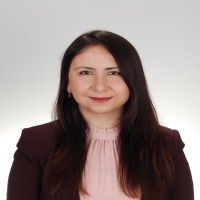
Akademisyen Doç. Dr. Kevser Tetik 9 Ocak 1986 tarihinde Bilecik’in Osmaneli ilçesinde doğdu. İlk ve orta öğrenimini Bilecik’te, lise öğrenimini ise Kocaeli’de tamamladı. Lisans (2005-2010) ve yüksek lisans (2010-2012) eğitimini İstanbul Üniversitesi Rus Dili ve Edebiyatı Bölümü’nde, doktora eğitimini (2013-2017) ise Lomonosov Moskova Devlet Üniversitesi’nde, Yakın Dönem Rus Edebiyatı Tarihi ve Çağdaş Rus Edebiyatı Süreci Bölümü’nde (Кафедра истории новейшей русской литературы и современного литературного процесса) tamamladı. Yüksek lisans tezini “Rus Edebiyatında Sembolizm ve Valeri Yakovleviç Vryusov’un Şiir Sanatı” üzerine, doktora tezini ise K. D. Balmont ve V. Ya. Bryusov’un Kent Şiirleri (Урбанистическая поэзия К. Д. Бальмонта и В. Я. Брюсова) üzerine yazdı. 2012 yılından beri Anadolu Üniversitesi Rus Dili ve Edebiyatı Bölümü’nde öğretim üyesi olarak çalışmaktadır. Ağırlıklı olarak Rus modernizmi ve 20. yüzyıl Rus edebiyatı alanlarında çalışmaları bulunmaktadır. Ayrıca eski Rus edebiyatı, 19. yüzyıl Rus edebiyatı, çağdaş Rus edebiyatı ve kültür dilbilim alanlarında da bilimsel çalışmaları mevcuttur.
Prof. Lindita Xhanari (Latifi) 29 Mart 1969'da Tiran'da doğdu.
Prof. Lindita Xhanari, Tiran Üniversitesi Tarih ve Filoloji Fakültesi Dilbilim Bölümü'nde tam zamanlı öğretim görevlisidir. Yüksek öğrenimini 1991 yılında UT Dil ve Edebiyat Bölümü'nde tamamladı. 1996'dan beri Tiran Üniversitesi Tarih ve Filoloji Fakültesi Dilbilim Bölümü'nde öğretim görevlisi olarak çalışmaktadır.
2004-2006 döneminde lisansüstü eğitime katıldı ve Mart 2009'da Tarih ve Filoloji Fakültesi'nde "Dilbilimde Bilim Doktoru" unvanını aldı. Eylül 2009'da Doçent unvanını kazandı ve Mayıs 2014'te Prof. akademik unvanını aldı. Hem öğretim alanında hem de bilimsel çalışmalar alanında kapsamlı bir mesleki kariyere sahiptir. 2003-2004 yılları arasında İtalya'daki Universita degli Studi di Palermo, Facolta di Lettera e Filosofia'da Arnavutça dili öğretim görevlisi olarak çalıştı, 2007-2010 yılları arasında ise Türkiye'nin Edirne kentindeki Trakya Üniversitesi'nde Arnavutça Dili Bölümü'nün açılmasına katkıda bulunarak oradaki ilk Arnavutça öğretmeni oldu.
AKSHI ve TÜBİTAK'ın birçok ulusal ve uluslararası projesinde yer aldı, Türkiye ve Balkanlar'daki birçok üniversitede davetli konuşmacı olarak bulundu, Priştine Uluslararası Dil, Edebiyat ve Kültür Semineri Müdürlüğü üyesi, Türkiye Türk Dil Kurumu'nun Arnavutluk temsilcisi, FHF'deki Osmanlı Yaz Okulu koordinatörü, yurtiçi ve yurtdışında yaklaşık 40 bilimsel konferansın Bilim Kurulu üyesi ve yaklaşık 25 uluslararası bilimsel dergide Bilim Kurulu üyesi ve bilimsel hakem olarak görev yaptı.
Öğretim ve bilimsel uzmanlık alanları arasında Morfoloji, Karşılaştırmalı Dilbilim, Tarihsel Dilbilgisi ve Arap Alfabesiyle Eski Arnavut Yazıları yer almaktadır. Bir ders kitabı, beş bilimsel monografi, ortak yazarlı bir bibliyografik çalışmanın yanı sıra yabancı dillerde yayınlanmış ve yurtdışındaki yüksek bilimsel kurumlar tarafından bilimsel olarak onaylanmış iki sözlüğün yazarıdır. Uluslararası sempozyumlarda 100'dan fazla katılımı ve bilimsel makale yayınları bulunmaktadır.
Yazdığı kitaplar:
1. Turkish borrowings in Albanian, compared to other Balkan languages/s.544, 2006, ISBN: 99943-33-87-9.
2. Turkisms and their semantics in Albanian dictionaries, s.311, 2012, ISBN: 978-99943-0-285-7.
3. Yüzyıllar boyunca Arnavutluk ve Türkiye arasındaki dil, edebiyat, tarih, kültür, etnografya, mimarlık, din ilişkileri üzerine yazan Arnavut araştırmacılar/TIKA, s. 680, ISBN: 978-9928-203-14-4 ve 978-9928-203-15-1. (Co-author)
4. Balkan Dillerindeki Ortak Türkizmalar Sözlüğü/ Pamukkale Universitesi Yayınları No: 30, Denizli, Turqi, 2015, s. 905, ISBN: 978-975-6992-59-3.
5. Arnavutça’daki Türkçe Alıntılar/ Türk Dil Kurumu, ISBN 978-975-17-4313-8
6. Demir Parmaklıklar Arkasında Hayatını Türkoloji’ye Adamış Bir Arnavut/ Tahir Dizdari- Hayati ve Eserleri. 2021, iki cilt, s. 435, ISBN: 978-9928-342-20-1. (Co-author)
Ayrıca 35'ten fazla çevrilmiş romanla Türk edebiyatının Arnavutçaya çevirmenidir.
Kendisi Türk edebiyatından Arnavutça’ya birçok eser kazandırmıştır:Kültür ve Turizm Bakanlığı TEDA Projesi kapsamında Türkçeden Arnavutçaya 30 eserleri tercüme ettim:
1. Yaprak dökümü (Reşat Nuri Güntekin)
2. Eski hastalık (Reşat Nuri Güntekin)
3. Ateş gecesi (Reşat Nuri Güntekin)
4. Değirmen (Reşat Nuri Güntekin)
5 Bir adam yaratmak (Necip Fazıl Kısakürek)
6 Eskici ve oğulları (Orhan Kemal)
7 Mihmandar, bir Eyüp Sultanın romanı (İskender Pala)
8 Abum Rabum/ Bir (Hz) İbrahim romanı/ (İskender Pala)
9. Akşam yıldızı/ (İskender Pala)
10. Gökdelen (Tahsin Yücel)
11. Sihirli Şemsiye/ (Fatih Erdoğan)
12. Kösem Sultan, Cilt I, (Reşad Ekrem Koçu)
13. Yaşar ne yaşar ne yaşamaz (Aziz Nesin)
14. Günümüz Öyküsü (Necip Tosun)
15. Osman Gazi Oğlu, Orhan Gazi (Cavit Ersen)
16. Fatih`in Kanatları (Yusuf Dursun)
17. Söğüt’ten Viyana`ya kadar Osmanlı sultanları (Ahmet Efe)
18. Patasana (Ahmet Ümit)
19. Dünya Ağrısı/ (Ayfer Tunç)
20. Osmanlıda bir İngiliz Gelin/ (Tülün Yalçın)
21. Kösem Sultan kadınların Saltanatı/ (Ahmet Refik Altınay)
22. Surname/ (Aziz Nesin)
23. Nasipse Adayız/ (Ercan Kesal)
24. Şanzelize düğün salonu/ (Tarık Tufan)
25. Size bir pandispanya yaptım/ (Mario Levi)
26. Hakikat incinmesin/ (Fatma Barbarosoğlu)
27. Kısa çizgiye kısa diyebilenlerin hikayesi (Hüseyin Kural)
28. Oksidentalizm-Orientalizm ve Serif Mardin (Alim Arli)
29. Bir vaizenin okumaları (Fatma Bayram)
30. Kösem Sultan, Cilt II (Reşad Ekrem Koçu)
Language Editors

 Web
Web
Viktor Trajanovski studied Ethnology and Anthropology, at the Institute of Ethnology and Anthropology, Sts. Cyril and Methodius University in Skopje, (Macedonia). He did his doctorate on the topic “Ethnological and Anthropological Study of the Bektashi Dervish Order in Macedonia - Doctrine and Practice”. He works as an assistant professor at the Institute of Ethnology and Anthropology in Skopje where he gives lectures on Visual Anthropology, Ethnography and Field Research, Anthropology of Islam and Christianity, Anthropology of religious communities in Macedonia. His research interests include: Islam and Sufi orders, Anthropology of religion, Anthropology of magic.
Esra Özkaya Marangoz graduated from Istanbul University, English Translation and Interpreting undergraduate program in 2005 and started to study at Istanbul University Translation Studies Master's Program in 2006. Özkaya Marangoz wrote a master's thesis titled "The Process of Institutionalization of Interpreting Activity in Turkey within the Context of the European Union" under the supervision of Prof. Alev Bulut and participated in the Translation Research Summer School 2008 at the University of Manchester in 2008.
In 2009, Özkaya Marangoz started her PhD program at the Department of Translation Studies and participated in the CETRA 2011 Research Summer School at Katholieke Universiteit Leuven in 2011.
Esra Özkaya Marangoz has been working at Istanbul University, Department of Translation and Interpreting, Department of English Translation and Interpreting since 2006. Özkaya earned her PhD degree in Translation Studies in 2015 with her dissertation 'The Concept of Impartiality in the Light of Norms in Conference Interpreting' written under the supervision of Prof. Alev Bulut and has been working as an Assistant Professor since 2017. She received her Associate Professor title in 2024.
Assoc. Prof. Özkaya Marangoz is an actively practicing conference interpreter and a member of the Translation Association and the Conference Interpreters Association of Turkey (TKTD). Her academic interests include interpreting research, conference interpreting, the European Union, ideology, translation norms, interpreting theories and sociology of translation.

Taner GÜÇLÜTÜRK
(Biography)
Taner Güçlütürk was born on April 20, 1980, in Prizren. He completed his primary, secondary, and high school education in this city, and earned his bachelor’s and master’s degrees at the University of Pristina. In 2011, with his doctoral dissertation titled “Contemporary Turkish Literary Creativity in Kosovo Between 1951–2001”, he completed his PhD at the Department of Turkish Language and Literature, Faculty of Philology “Blaže Koneski,” Ss. Cyril and Methodius University in Skopje, obtaining the title of Doctor of Philological Sciences in the field of New Turkish Literature.
He began his career in journalism, program production, and broadcasting in 1999 with Turkish-language broadcasts at Radio Prizren, and later continued this work at the Yeni Dönem newspaper, radio, and television. In 2001, he received journalism training at a journalism school organized by the Vienna Radio and Television Corporation in Austria, and in 2006 he participated in a journalism training program held in the United States by the U.S. Department of State Education Institute. Between 1999 and 2009, he worked as a journalist, presenter, and program producer for numerous local, national, and international media organizations. In 2005, he was awarded Journalist of the Year in Kosovo by the Finnish Human Rights Kosovo Coordination Office and the Network of Human Rights Radios. He served as a member of the Kosovo Press Council between 2005 and 2006.
Between 2012 and 2016, he represented the Kosovo Turkish Community on the Advisory Council for Communities of the Presidency of Kosovo. In 2008, by decision of the Senate of the University of Pristina, he worked for five years as a lecturer in the Department of Turkish Language and Literature at the Faculty of Philology, where he taught courses such as Turkish Literatures, Literary Translation, and Fundamentals of Journalism, and conducted practical course work. After 2013, he served as a Turkish language instructor at the Kosovo Turkish Representation Office and at the Yunus Emre Institutes in Prizren and Pristina. From 2014 onward, he assumed responsibility for and production of Turkish-language broadcasts at Radio İpek.
Güçlütürk is also a research fellow at the Balkan Turkish Studies Research Center (BAL-TAM), headquartered in Prizren. He previously served as a board member of the Kosovo Turkish Journalists Association and the Kosovo Turkish Intellectuals’ Association. Since 2018, he has been the Kosovo representative and a member of İLESAM (Association of Science and Literature Works Owners of Turkey), and is also a member of the Writers Union of Turkey and the Eurasian Writers’ Union. He serves as the Chair of the Jury of the International “Süleyman Brina” Balkan Turkish Culture Service Award of the “Doğru Yol” Turkish Culture and Arts Association, and as Co-Chair of the Kosovo Turkish Writers Association.
His poems, essays, news articles, commentaries, and scholarly papers have been published in numerous journals and newspapers. In the fields of Turkology and related disciplines such as language, literature, folklore, and history, he has published more than 50 successful scholarly articles and research papers in national and international academic journals. In recent years, he has focused primarily on Contemporary Turkish Literature. His principal published works include:
Published Works
Translation: Dr. Taner Güçlütürk; Author: Jeton Kelmendi, How to Love, poetry book, Lulu Press, USA, 2011.
Taner Güçlütürk, Turkish Literary Creativity in Kosovo (1951–2001), scholarly research/doctoral thesis book, BAL-TAM Publications, Prizren, Kosovo, 2014.
Mourning Does Not Suit My Language, poetry book, Değişim Publications, Istanbul, May 2014.
Editor: Dr. Taner Güçlütürk, New Companions on the Road, a selection of young artists and talents in Kosovo’s literature, visual arts, and music, Kosovo Turkish Writers Association Publications, Prizren, 2015.
Editor and Translator: Dr. Taner Güçlütürk, Anthology of Contemporary Poetry in Kosovo, Kosovo Turkish Writers Association Publications, Prizren, 2016.
Editor: Dr. Taner Güçlütürk – Zeynel Beksaç, In the Footsteps of Verses in the Balkans, Kosovo Turkish Writers Association Publications, Prizren, 2016.
Translation: Dr. Taner Güçlütürk; Author: Nesim Ispahiu, The Taste of the Verse, poetry, March 2025, Prizren, Kosovo.
Translation: Dr. Taner Güçlütürk; Author: Nexhat Ibrahimi, Islam in Illyrian-Albanian Lands Through the Centuries, historical scholarly research, in translation, 2025, Prizren, Kosovo.
Translation: Dr. Taner Güçlütürk; Author: Vlora Ademi, Katërdhetë e pak, poetry, in translation, 2025, Prizren, Kosovo.
Translation: Dr. Taner Güçlütürk; Author: Milazim Krasniqi, Russian Roulette for Ali Pasha, drama, awaiting publication.
Translation: Dr. Taner Güçlütürk; Author: Naser Shatrolli, Garden Flowers, drama/comedy, staged at the Samsun Theatre Festival in 2024.
Books Edited and Prepared for Publication
(Here follows a list of 15 poetry, short story, and literary works edited by Güçlütürk between 2016 and 2025, published mainly by the Kosovo Turkish Writers Association in Pristina and Prizren.)
Active in civil society organizations engaged in cultural, artistic, and intellectual activities, Güçlütürk has carried out dynamic work on the current issues of his community and played an active role in preserving culture, art, national identity, and social values in the region. For these efforts, he has received numerous awards and commendations. Among them are the 1998 “Doğru Yol” Poetry Competition Award, the 2005 Journalist of the Year Award by the Finnish Human Rights Kosovo Coordination, second prize in poetry at the 2008 International Literature Competition in Obernai, France, the 2018 International Writers Association Literature Award (Brussels), the 2020 International “Süleyman Brina” Balkan Turkish Culture Service Award, the 2019 “Service to Turkology and Academic Award” by the Institute for the World of Turks (IfWT), the 2022 Prizren Municipality Writer of the Year Award, the 2022 “Best Poetry in Turkish Language” Award, the 2024 Ahmet Kabaklı Literature Medal by the Turkish Literature Foundation, and the 2025 “February 17 Independence Literature Award. In total, he has received ten national and international awards, in addition to hundreds of certificates of appreciation, plaques, and honors.
Güçlütürk has delivered numerous conferences and lectures internationally on topics ranging from Turkish journalism in the Balkans to contemporary Turkish literature, Balkan cultural identity, and Ottoman and modern literary traditions. He serves on the editorial boards of several international peer-reviewed journals in Turkology and literature in Kosovo, North Macedonia, and Turkey, and acts as a specialist in Contemporary Turkish Literature in the Balkans.
Over the past 25 years, he has represented Kosovo and the Kosovo Turkish Community at hundreds of congresses, symposiums, festivals, seminars, workshops, and conferences at local, national, and international levels. As a Turkologist, he has devoted sustained effort to preserving and advancing Turkish literature, culture, and art in the region. He has supported and mentored a new generation of Kosovo Turkish writers and poets, contributing to the preparation, publication, and promotion of their works, notably through the anthology New Companions on the Road.
In addition to literary creation, Güçlütürk has made significant contributions as a literary translator, introducing contemporary Albanian, Bosniak, Roma, and Gora literary creativity in Kosovo to Turkish readers through anthologies and translated works. His Anthology of Contemporary Poetry in Kosovo was purchased by the Kosovo Ministry of Culture in 2019 and distributed to libraries throughout the country.
Between 2014 and 2025, particularly within the framework of the Yunus Emre Institute, he successfully carried out numerous cultural and artistic projects. As Chair (2015–2016) and current Co-Chair of the Kosovo Turkish Writers Association, he has coordinated hundreds of literary and cultural events in cooperation with ministries, municipalities, embassies, cultural institutes, and civil society organizations in Kosovo, Turkey, Albania, and North Macedonia.
Currently, Güçlütürk continues his intensive research in New Turkish Literature, alongside ongoing studies in Turkology and related disciplines. His areas of interest also include Turkish–Albanian and Turkish–Bosnian translation, teaching Turkish to foreigners, history, cultural studies, folklore, history of education, and journalism.
Editorial Board
https://personel.trakya.edu.tr/ikelagaahmet

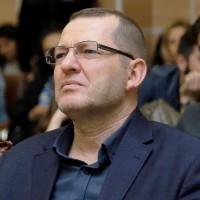
I graduated from the Department of Turkish Philology at Shumen University in 1997. Since 2000, I have been teaching and conducting academic research at the Department of Turkish Language and Literature at Shumen University. I received my PhD in 2018 with my thesis entitled "Contemporary Turkish Legal Terminology". In 2022, I obtained the title of Associate Professor with my monograph entitled "Polite Expressions in Turkish: Words of Address, Greeting, and Farewell". Since 2001, I have authored 11 books related to the teaching of Turkish in schools and universities. I have also contributed to 12 dictionaries in Bulgarian-Turkish and Turkish-Bulgarian languages, covering various fields from commerce to law, gastronomy to the plant kingdom. I have edited books used in elective Turkish language courses in Bulgaria.
Advisory Board
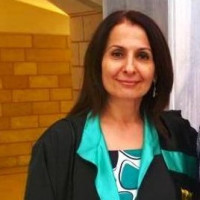
Türkan Olcay is a Doctor of Philological Sciences (2002) and Full Professor (2012) at the Department of Russian Language and Literature at Istanbul University where she delivers courses on 19th-Century Russian Literature since 1994 and mentors master’s and doctoral students. She has also taught as a visiting professor at Anadolu University (Türkiye), L.N. Gumilyov Eurasian National University (Kazakhstan), Sofia University “St. Kliment Ohridski” (Bulgaria), Masaryk University (Czech Republic) and Jagiellonian University (Poland).
Prof. Dr. Olcay’s fields of specialization are 19th-Century Russian literature and Turkish-Russian cultural and literary relations, as well as the life and socio-cultural activities of the Russian immigrants (known as "White Russians") in Istanbul in the 1920’s. She has participated in many conferences, has authored five books and has written numerous publications including over hundred articles and book chapters. She is the editor-in-chief of the collective works “Russkaya belaya emigratsiya v Turtsii vek spustya 1919-2019” [Russian White Immigration in Turkey: a Century Later 1919-2019”], Moscow: A. Solzhenitsyn House of Russia Abroad, 2019 (in Russian) and “Beyaz Rusların Gelibolu Gurbetinin 100. Yıldönümü” [The 100th Anniversary of the White Russians’ Exile in Gallipoli], Chanakkale: COMU, 2020 (in Turkish).
Prof. Dr. Olcay has been carring out institutional and departamental administrative duties, serving on the editorial boards of leading international journals and is a member of the Expert Council of the Center for Turkish-Russian Cooperation in the field of research and practice TURUSIA at Chanakkale 18 March University.

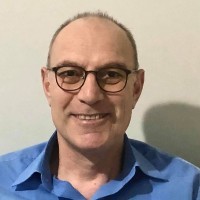

Seda TAŞ İLMEK is an associate professor teaching at the Department of Translation and Interpreting in Trakya University, Edirne, Turkey. She obtained her MA in teaching of English at Trakya University and completed a PhD in Interlingual and Intercultural Translation Studies at Yıldız Technical University, İstanbul, Türkiye. Her research interests include translation theories, literary translation, translation criticism and intercultural communication. She is the editor of the books: From Recent Discussions to Conceptual Reflections in Translation Studies (2018, Hiperlink Publications), Observations on Translation (2019, Hiperlink Publications) and Research in Translation Studies (2019, Hiperlink Publications).
Historian Amir Duranović, Associate Professor (University of Sarajevo), obtained his degree in history at the University of Sarajevo in 2007. Now holding a PhD in Modern Bosnian History, his main focus has been Church – State relations in Former Yugoslavia, especially Islam under Communism. So far Duranović has actively participated in dozens of conferences on modern Balkan history including history of political elites, nation building, religious communities, environmental history, diplomatic history etc. He has been involved as guest speaker at several European universities and in USA. Skilful in education capacity building, networking and research, Duranović is also fluent in English, Spanish and Turkish. Duranović's bibliography includes three books, four edited volumes and dozens of papers. Duranović has actively participated in different research and networking projects related to historiography, nationalism and history education. His papers have been published in Bosnian, English, German and Turkish.
Page Layout
Web
Director of Publication