Concessionaire

Editor in Chief

Assistant Editors
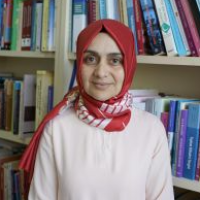

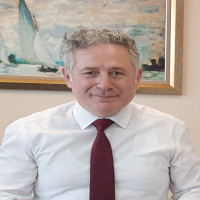
Editorial Board


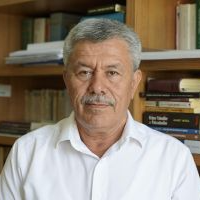


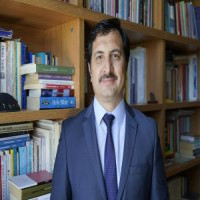











Publication Editor
Ethics Editor
Area Editors







Registrar
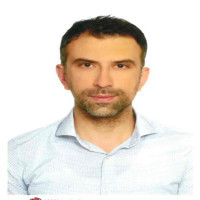
Social Media and Web Editor
Internationalisation Editor

Recep ERKMEN graduated from the Faculty of Theology at Ankara University in 2009. In the same year, he began his MA studies in the Department of Kalām at Marmara University Faculty of Theology. During the first year of his graduate studies, he was awarded a research fellowship by the Center for Islamic Studies (İSAM). In the second year of his MA studies at Marmara University, he was awarded a scholarship under the overseas graduate education program established pursuant to Law No. 1416 to pursue graduate studies abroad.
In 2012, he began a second MA program at New York University’s Hagop Kevorkian Center for Near Eastern Studies. In this study, he examined the concept of ribā from a theological and kalām perspective within the context of the transformation of the muḥkam into the mutashābih,he social and cultural impact of revivalist movements, as opposed to modernist movements, in their attempts to transform Muslim societies. He completed his second MA degree with this research.
In 2015, he began his doctoral studies at Indiana University Bloomington, majoring in Middle Eastern Studies and minoring in Philosophy. Under the supervision of Prof. John Walbridge, he completed his dissertation, “Fakhr al-Dīn al-Rāzī: The Problem of Knowledge and Metaphysical Skepticism,” in 2022.
Erkmen currently serves as an Assistant Professor in the Department of Kalām at the Faculty of Theology, Erzincan Binali Yıldırım University. His research primarily focuses on epistemology and the problem of knowledge in Islamic thought, as well as the thought of Fakhr al-Dīn al-Rāzī, the relationship between kalām and philosophy, metaphysics, and epistemic skepticism. He is also interested in contemporary issues such as the theological and metaphysical dimensions of transhumanism and emerging technologies, the nature and limits of human beings, artificial intelligence and human–machine relations, and the reconsideration of concepts such as consciousness, reason, will, and cognition from the perspective of classical kalām.
His broader academic interests include the reconsideration of classical kalām concepts in light of contemporary philosophical and scientific developments, human nature and personal identity, the mind–body relationship, free will and moral responsibility, death and immortality, the ontological and theological implications of technologically transforming the human condition, and the theological implications of debates surrounding artificial intelligence, digital beings, and posthumanism. In this regard, Erkmen seeks to bring the conceptual heritage of classical Islamic thought into dialogue with contemporary analytic philosophy, philosophy of religion, philosophy of mind, and philosophy of technology, exploring the explanatory and argumentative resources of classical kalām for addressing contemporary philosophical, scientific, and technological questions.
Manuscript Editors