
Editor






Assoc. Prof. Dr. Soner Akın is an academic specializing in topics such as political life and institutions, international relations, political sociology, history, environment, health, urban and cultural policies, and comparative political movements. He has completed doctoral dissertations on environmental policies, health politics, and the political economy of archaeological research. Throughout his academic career, he has conducted innovative research with interdisciplinary approaches, gaining recognition in both national and international academic circles. Currently, Assoc. Prof. Dr. Akın serves at the Department of Political Science and Public Administration, Faculty of Economics and Administrative Sciences, Hatay Mustafa Kemal University.
ASSISTANT EDITORS
Dr. Semanur Sivritepe is an Assistant Professor in the Department of Journalism at the Faculty of Communication, Hatay Mustafa Kemal University. She completed her undergraduate education in Journalism at Selçuk University and also pursued a double major in Public Relations and Publicity. She earned her master’s degree with a thesis focusing on students’ perspectives on media literacy education. She received her PhD in Journalism with a dissertation analyzing the representation practices of elderly people in media texts within the context of poverty, social exclusion, and social inclusion. Her academic interests include journalism studies, media research, digital journalism, political communication, social media analysis, and representations of aging. She has authored book chapters and peer-reviewed articles on social media usage, theoretical dimensions of political advertising, news as a form of literacy, and the transformation of journalism in the digital era. In her research, she critically examines the intersections of media discourse, representation, digital culture, and social change.

Dr. Ahmet Yurtsal is an Assistant Professor in the Department of Management Information Systems at the Faculty of Economics and Administrative Sciences, Hatay Mustafa Kemal University. He received his bachelor’s degree in Management Information Systems from Cumhuriyet University and completed his master’s degree with a thesis on course scheduling optimization using heuristic algorithms. He earned his PhD from Osmaniye Korkut Ata University with a dissertation focusing on cryptocurrency optimization based on blockchain infrastructure using artificial intelligence algorithms. His research interests include artificial intelligence, decision support systems, optimization algorithms, blockchain technologies, cryptocurrency portfolio optimization, data management, and digital transformation. In his studies, he applies computational techniques such as genetic algorithms, swarm intelligence, and metaheuristic methods to solve complex scheduling and planning problems. He has authored book chapters on Society 5.0, corporate digitalization, and AI integration, and has published articles in peer-reviewed national and international journals. His research adopts an interdisciplinary perspective, examining the strategic interaction between emerging technologies and managerial processes.
ALAN EDİTÖRLERİ

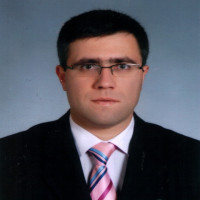



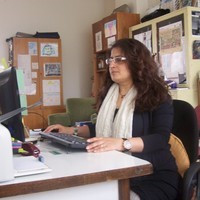
Dr & Dr Tülây ATAY currently teaches at Hatay Mustafa Kemal University (HMKU), Antakya, Hatay, Faculty of Communication, Department of Journalism as a faculty member (Assistant Professor) and a researcher. She is a Turkish Citizen. She was born and bred in Istanbul, Turkey and graduated from Istanbul University. She holds a BA degree in Mass-Media Communication & Journalism & PR. She has a Master’s degree in Cultural Anthropology and Gender & Women’s Studies. She is a co-author of the book called “Gender & Sex and Taboo in the Contemporary Primitive & Traditional Societies” in the Turkish Language based on her MA thesis. The book is written from the perspective of women’s and gender studies. She was one of the co-founders of the Centre for Women’s Studies of Mustafa Kemal University. She served and was in charge as one of the deputy directors of the Centre for Women’s Studies of Mustafa Kemal University, Antakya, Hatay, Turkey. She previously worked as a “business developer” for many SMEs in the various fields such as automotive, textile etc. She worked as an Assistant Producer for Turkish Radio Television State Company (TRT) between 1995-1996. She earned her PhD from the Department of Agriculture Economics and Extensions at Çukurova University, Adana, Turkey in October 2013. She produced her Ph.D. thesis on the division of labour amongst ethnically different two villages near Hatay province in the context of changing social life and Women’s & Gender Studies. Tülay’s areas of interests are women empowerment and women’s studies using other disciplines. She is holding a sociology BA degree obtained from Open Faculty, Anadolu University, Eskişehir, Turkey. She is a PhD candidate at Journalism, İstanbul University, İstanbul, Turkey. She was a temporary National Gender Consultant for Food and Agriculture Organization of the United Nations (FAO). She lived in the UK and USA for a while. She has been in Portugal, Slovenia, Ukraine, Scotland, Romania, Holland, Italy, Spain, Estonia, UAE, Malaysia, Poland, Czeck Republic and France for academic purposes. She is a single mom and, has an adorable daughter, Dafne (Daphne, the nymph) who has been an exchange student and 11th grader at Halifax West High School, Halifax, Nova Scotia, Canada. They have been living happily in Antakya, Hatay, Turkey since 1998. She was a scientist-in-residence at Paris Lodron University of Salzburg financially supported by GendUp and Salzburg Stadt (Municipality), Salzburg, Austria. She is also currently engaging with the FoTRRIS-H2020 project (women and immigration) run by Complutense University of Madrid. She recently chaired the MEDCOM 2017, KL, Malaysia.
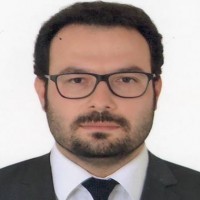

I am Litu Sethi, a PhD candidate in Economics dedicated to working in the area of energy economics and environmental economics. My research focuses on balancing the energy trilemma by examining how socio-economic factors and public policies influence outcomes. Using advanced applied econometrics, I aim to develop strategies that drive effective energy transitions toward a balanced, reliable, and sustainable future.
YAYIN KURULU
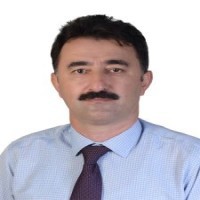
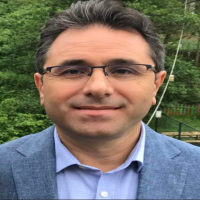
Dr. Gizem Uzuner is an Associate Professor of Economics at New Uzbekistan University. She holds an MSc and a Ph.D. in Economics from Eastern Mediterranean University. Her research focuses on economic growth, macroeconomic policy, housing markets, tourism economics, energy economics, and applied econometrics. She has published over 40 papers in leading indexed journals, applying advanced econometric methods to explore the connections between sustainability, energy policy, and economic development. Her interests also include renewable energy, environmental economics, and emerging topics in applied economics. Dr. Uzuner actively collaborates on international research projects and provides policy-relevant insights to support sustainable economic transitions.
DİL EDİTÖRÜ
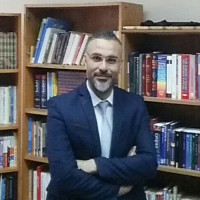
Hatay Mustafa Kemal Üniversitesi, Yabancı Diller Yüksekokulu Müdürü(2016 -...)
Hatay Mustafa Kemal Üniversitesi
Batı Dilleri ve Edebiyatları Bölüm Başkanı (2012-2021)

MİZANPAJ EDİTÖRÜ

Research Assistant Başak Ergenç serves at Hatay Mustafa Kemal University, Faculty of Economics and Administrative Sciences, Department of Economics, Division of Economic Development and International Economics. Her academic interests include macroeconomics, development economics, economic growth, and economic policy. She completed her undergraduate studies in Economics at Dokuz Eylül University and obtained her master’s degree in General Economics from Dokuz Eylül University, Institute of Social Sciences. Her research primarily focuses on political economy, voter behavior, and the impact of economic performance on government change. She has contributed to internationally indexed academic journals with studies examining how economic indicators influence political outcomes, particularly within the context of the European Union. Using quantitative and empirical methods, she analyzes the relationship between macroeconomic performance and democratic accountability. Her work evaluates the broader political implications of economic policies and investigates how economic fluctuations shape electoral outcomes and government stability from a comparative perspective.