Volume: 10 Issue: 1 , 3/29/25

Year: 2025

Research Article

Review

Polymer Science and Technologies, Mechanical Engineering, Composite and Hybrid Materials, Polymers and Plastics, Nanotechnology, Nanomaterials, Nanoscale Characterisation, Fiber Technology

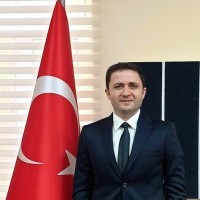
Dr. Halil İbrahim Şenol is an Assistant Professor at Harran University, specializing in Geomatics Engineering and Cartography. With B.Sc., M.Sc., and Ph.D. degrees from Yıldız Technical University, his research focuses on GIS and DEM integration, smart cities, remote sensing, earth observation, and map education for children.

City and Regional Planning, Engineering, Geographic Information Systems
Reinforced Concrete Buildings, Civil Construction Engineering, Construction Materials, Structural Engineering, Production Technologies
Default avatar
Prof. Dr. Mustafa ÖZEN HARRAN ÜNİVERSİTESİ, MÜHENDİSLİK FAKÜLTESİ
Finite Element Analysis , Solid Mechanics, Composite and Hybrid Materials
Oğuz Şimşek
Assoc. Prof. Dr. Oğuz ŞİMŞEK HARRAN ÜNİVERSİTESİ, MÜHENDİSLİK FAKÜLTESİ
Engineering, Fluid Mechanics and Thermal Engineering, Turbulent Flows, Hydromechanics, Water Resources Engineering, Numerical Modelling and Mechanical Characterisation, Hydrology
Multiple Criteria Decision Making, Industrial Engineering, Manufacturing and Service Systems
Image Processing, Data Analysis, Artificial Intelligence, Evolutionary Computation
Veysel Gümüş
Prof. Dr. Veysel GÜMÜŞ HARRAN ÜNİVERSİTESİ, MÜHENDİSLİK FAKÜLTESİ
Fluid Mechanics and Thermal Engineering, Civil Engineering, Hydromechanics, Hydrology
Default avatar
Asst. Prof. Dr. Ahmet Sabri ÖĞÜTLÜ HARRAN ÜNİVERSİTESİ, MÜHENDİSLİK FAKÜLTESİ, ENDÜSTRİ MÜHENDİSLİĞİ BÖLÜMÜ, ENDÜSTRİ MÜHENDİSLİĞİ ANABİLİM DALI
Statistics, Industrial Engineering
Akar Doğan
Assoc. Prof. Akar DOĞAN MUNZUR ÜNİVERSİTESİ
Solid Mechanics, Composite and Hybrid Materials, Finite Element Analysis , Mechanical Engineering
Emir Hüseyin Özder
Asst. Prof. Dr. Emir Hüseyin ÖZDER AKSARAY ÜNİVERSİTESİ, MÜHENDİSLİK FAKÜLTESİ
Dr.
Optimization in Manufacturing, Industrial Engineering, Stochastic (Probability ) Process, Manufacturing and Service Systems, Multiple Criteria Decision Making, Decision Support and Group Support Systems, Engineering, Operations Research İn Mathematics, Operations Research, Planning and Decision Making
Emre Yazıcı
Asst. Prof. Dr. Emre YAZICI OSTİM TEKNİK ÜNİVERSİTESİ
Ergonomi and Human Factors Management, Multiple Criteria Decision Making, Industrial Engineering, Manufacturing and Industrial Engineering in System Engineering, Manufacturing and Service Systems, Optimization in Manufacturing
Default avatar
Prof. Dr. Mehmet Cihan AYDIN BITLIS EREN UNIVERSITY
Civil Engineering, Hydrology, Fluid Mechanics and Thermal Engineering, Hydromechanics
Engineering
Default avatar
Sena AYDOĞAN Gazı University
Fuzzy Computation, Industrial Engineering
Default avatar
Assoc. Prof. Dr. Veysi KARTAL SİİRT ÜNİVERSİTESİ
Water Resources Engineering
Volkan Arıkan
Asst. Prof. Dr. Volkan ARIKAN OSMANİYE KORKUT ATA ÜNİVERSİTESİ
Composite and Hybrid Materials, Finite Element Analysis , Solid Mechanics
Surface Water Hydrology, Hydrology, Civil Engineering, Hydrodynamics and Hydraulic Engineering, Modelling and Simulation

Harran University Journal of Engineering, The journal accepts studies at national and international level as follows;

1- Research articles reflecting results and findings of original research papers in science,technology and engineering fields. 


Harran University Journal of EngineeringDesign and Technology’ journal is about basic engineering issues. The target audience are researchers, engineers and related masses and the journal aims at informing people with the latest scientific and technological developments. The journal accepts papers reflecting the results of original results in science, technology and engineering fields at the national and international level and research papers that contribute to scientific field or papers that summarizes the latest developments on an issue are accepted.

GENERAL OVERVIEW

1- All articles/ article files must be submitted electronically  in accordance with the forms on page https://dergipark.org.tr/journal/1675/submission/start

2- The uploaded article cannot be sent for publication/ be published elsewhere. Similarly, scientific articles sent to our journal cannot be simultaneously considered by other journals for presentation in a conference/have a poster/publication.

3- After the acceptance of a paper, the author or the authors must upload the copyright form to DERGİPARK system with Author(s)’s name(s) and signature(s) on during the editing process.

4- None of the contributing author(s)’ name(s) or address (es) are written in the “Ön Yükleme Formatı_HRU_Muh_Dergi” form. Therefore, the referees do not know who the author(s) are during the evaluation process. ( Blind review evaluation process)

5- At least two referee editing and the approval of the related editor is necessary for the acceptance of the uploaded article.

6- The originality of the papers and the similarities to other studies are checked by academic plagiarism detector and papers with lower than 20% originality rate are accepted for evaluation.

7-  Only author(s) with articles accepted for publication organize their articles in compliance with ‘Accepted Article Format’, which can be found on: https://dergipark.org.tr/journal/1675/submission/start

8- Article name abbreviations must be done using ‘Web of Science Abbreviations’

9- Word limit for uploaded articles must be between 18.000- 20.000 words and 10-12 pages in total.

10- Summary and Abstract texts  cannot be more than 400 words/ 2800 characters( spaces included)


PREPERATION OF ARTICLES

Obligatory headings in articles:

1- Abstract (in Turkish)This part briefly includes the outline, the purpose, used method/procedure and the findings of the study. The final sentence(s) must include the outcomes and the results of the study. Abstract texts cannot be more than 400 words/ 2800 characters (spaces included).

2- Abstract (in English): It is the exact translation of the abstract of the Turkish text into English. Abstract texts cannot be more than 400 words/ 2800 characters (spaces included).

3- Keywords: It is the Turkish and English words that will enable the article to be searched and found easily. Word/word groups may be between minimum 3 (three) and maximum 6(six) words.

4- Introduction: This part includes the definition of an issue or a problem, the researcher’s purpose, the importance of the study and the limitations of the study. This part includes literature review.

5- Material and Method: All the experiment(s)/ observation(s) and other efforts to conduct and result the study are defined in this section.

6- Results and Discussion: The similarities and differences with previous studies are discussed here.

7- Conclusion: The contributions of the study for scientific/daily life are in this section. The area the study introduces to the literature and the opinions on both in theory and practice are discussed.

8- Acknowledgment: Persons/institutions contributing to the study are mentioned in this section

9- Conflict of Interest (If there are any): Any persons/institutions that might me conflict of interest are mentioned in this part.

10- References:  Scientific books/journals/web pages/visual or written materials used are indicated in this part.


ARTICLE TEXT WRITING

1. Article text writing format for pre loading of articles is typeface Times New Roman/Arial and type size is 11.

2- Tables must be aligned left and the explanations must be type size 11 and italics.

3. Figures/maps must be aligned center and the explanations must be type size 11 and italics.

4. Line spacing must be single 8 nk for before and 12 nk for after must be chosen for spacing.

5. Although there are not very strict rules, in the reference section author(s)’ full name(s), section heading(s)/article heading(s),volume/issue/page number, the section of the book and DOI number(if there are any) must be included. Sample reference list can be seen on pre upload page. Below are some samples for reference:

 -  Kahraman HT,Bayindir r., Sagıroglu S. A new approach to predict the excitation current parameter weightings of synchronous machines based on genetic algorithm-based k-NN estimator. Energy Conversion and Management, 64 (129-138), (2012). (Article)

-  Mitchell, T.R. and Larson, J.R. (1987). People in organizations (Third edition). New York:McGraw-Hill, 87,92.( Book)

-  Kirazoğlu,F. (2010). Metal-Yalıtkan-Yarıiletken Yapıların Elektrik Özellkilerinin Frekans ve Sıcaklığa Bağlı İncelenmesi, Yüksek Lisans Tezi, Gazi Üniversitesi Fen Bilimleri Enstütüsü, Ankara, 118-120. (Thesis)

The author(s) of the article(s) are responsible for the accuracy and providing the full details of their references. 
 

In scientific papers sent to Harran University Engineering Journal, the Higher Education Institutions Scientific Research and Publication Ethics directive and the principles set by COPE (Committee on Publication Ethics) for Editors and Authors should be taken into consideration.

Authors' duties

Authors of the original research paper should present the significance of the work performed. The underlying data must be shown correctly in the article. The article must contain sufficient detail and references to allow others to reproduce the work. Fraud or intentional misrepresentation is considered unethical behavior and is unacceptable.

Authors may be asked to provide the raw data of their study with the manuscript for editorial review and, if applicable, should be prepared to make the data publicly available.

Authors will present only completely original works and will appropriately cite other works. Publications that are effective in determining the quality of the article should also be mentioned.

In general, articles describing the same research should not be published in more than one journal. Submitting the same article to more than one journal constitutes unethical publishing behavior and is unacceptable. Articles published elsewhere as copyrighted material cannot be submitted.

Anyone who has made significant contributions should be listed as a co-author. The corresponding author ensures that all contributing co-authors are found and that people who have never participated are not added to the author list. The corresponding author also confirms that all co-authors have approved the final version of the manuscript and agreed to submit it for publication.
When the author discovers a material error or inaccuracy in her published work, he/she has the obligation to immediately notify the journal editor or publisher and cooperate with the editor to retract or correct the article.
Responsibilities of Authors

Author(s) before and/or during the submission process;

Please ensure that all submitted research is original, fully referenced, and that all authors are accurately represented. Submission must be private and not considered elsewhere.

Provide accurate contact information for a designated author, where the publisher and the editor are deemed to be solely responsible for the authorship of the article and for all communications regarding the morality and originality of the article.

Give the source of all data and third-party materials, including previously unpublished work by the authors. Any element that could compromise the originality of the presentation should be expressly avoided and/or discussed with the editorial office in the first instance.

Identify the contributions to the article of any third parties they intend to include in their article, and in each case obtain written permission from the relevant copyright holders for reuse. These permissions should be submitted when the manuscript is accepted or requires acceptance of minor changes.

Expect transparency, efficiency, and respect from the publisher and editor in the submission process. Stay in good communication with both the publisher and the editor.

Cooperate with the retraction of articles that are found to be unethical, misleading or harmful, as well as in case of inaccurate publication. Stay in good communication with the editor(s), publisher and other authors. Also take into consideration the principles stated below.

1. The journal scans research articles that reflect an original research in the fields of science, technology and engineering at national and international level with its findings and results and contributes to science, scientific articles in sufficient number (at least 50 sources and 10,000 words) and summarizes the subject at today's level of knowledge and technology, It accepts review articles, case reports and technical notes (maximum 2000 words and maximum 4 images/tables) that evaluate and compare findings.

2. Letters to the editor and discussion type publications are not included in our journal.

3. Articles that are suitable for evaluation in terms of writing and publication principles are directed to the reviewers. At least two reviewers are assigned to evaluate each article that passes editor's approval.

4. Blind peer review is used in article evaluations in our journal. The names of the reviewers who evaluate the articles are not notified to the authors. Reviewers are also enabled to evaluate the articles without seeing the names of the authors.

5. Articles sent to reviewers are expected to be evaluated within 15 days. If this period is exceeded, the editor reminds the reviewer and gives an additional period of 15 days. If this period is exceeded, the editor appoints a new reviewer and withdraws the request from him/her.

6. An article that receives at least two positive evaluation reports is eligible to be published. The article that receives one positive and one negative reviewer report is sent to two more reviewers. The final decision about the article is made by the editors.

7. The decision to accept or reject the article is made by the editors. In line with the recommendations of the reviewers, a major (re-submit for evaluation) or minor (correction required) revision decision is made for the articles that are not deemed sufficient. Articles that do not reach the desired level and are not deemed scientifically sufficient are rejected.

8. After the "resubmit for evaluation" or "correction required" decision about the article, the changes requested by the reviewers must be made within 30 days for the "resubmit for evaluation" decision and within 15 days for the "correction required" decision. Otherwise, the article will be rejected.

9. Articles submitted for publication must not have been published anywhere or sent to any journal for publication.

10. All responsibility for the articles belongs to the respective authors. Articles must be prepared in accordance with internationally accepted scientific ethics rules by checking them with plagiarism detection software to check their originality before submission. Where necessary, a copy of the Ethics Committee Report should be attached.

11. Articles submitted for publication in our journal must be prepared according to the journal article writing format. Otherwise, the article will be rejected.

12. Articles sent for evaluation should be prepared according to the journal article writing format and should not exceed 10 pages. The article summary should contain a maximum of 400 words, and the number of keywords should be at least 3 and at most 6.

13. No evaluation or application fee is charged for articles submitted for publication to Harran University Journal of Engineering.

14. During the article submission phase, the authors will first upload the necessary files for blind peer review. Articles that are ACCEPTED after the review process, author names, e-mail, institution information, ORCID, etc. that should be left blank in the first upload. The information left blank will be filled in and re-uploaded to the system by the author in the final edited version accepted by the reviewers in a ready-for-publication format. Once these processes are completed, the articles will be queued for publication.

Editors' responsibilities

The editor is responsible for deciding which articles submitted to the journal will be published. The editor evaluates articles without taking into account the authors' race, gender, sexual orientation, religious beliefs, ethnicity, citizenship, or political philosophies. The decision will be based on the importance, originality and clarity of the article and its relevance to the validity of the work and the scope of the journal. Existing legal requirements regarding defamation, copyright infringement and plagiarism should also be taken into account.

The editor and any editorial staff must not disclose any information about a submitted manuscript to anyone other than the corresponding author, reviewers, potential reviewers, other editorial advisors, and the publisher.

Unpublished materials described in a submitted article will not be used by the editor or members of the editorial board for their own research purposes without the express written permission of the author.

Responsibilities of reviewers

The peer review process assists the editor and editorial board in making editorial decisions and can also serve the author in the development of the article.

Any reviewer who is not qualified to review the research reported in a manuscript or who knows that immediate review will be impossible should notify the editor and withdraw from the review process.

Articles submitted for review should be treated as confidential documents. It should not be shared or discussed with others unless authorized by the editor.

Comments should be made objectively. Reviewers must express their views clearly with supporting arguments.

Reviewers should identify cases where the relevant published work cited in the article is not cited in the reference section. They should indicate whether observations or discussions from other publications accompany relevant sources. Reviewers will notify the editor that there is a significant similarity or overlap between the manuscript under review and other published manuscripts for which they have personal information.

Privileged information or ideas obtained through peer review should be kept confidential and not used for personal advantage. Reviewers should not consider manuscripts for which they have competitive, collaborative, or conflict of interest arising from relationships with other authors, organizations or institutions affiliated with the newspapers.

References

Committee on Publication Ethics (COPE). http://publicationethics.org/files/Code_of_conduct_for_journal_editors_Mar11.pdf

Higher Education Institutions Scientific Research and Publication Ethics Directive:
https://www.yok.gov.tr/Sayfalar/Kurumsal/mevzuat/bilimsel-arastirma-ve-etik-yonetmeligi.aspx

Dergimiz araştırmacılardan ücret talep etmemektedir.

Editor in Chief

Reinforced Concrete Buildings, Civil Construction Engineering, Construction Materials, Structural Engineering, Production Technologies

Responsible Editor

Oğuz Şimşek
Assoc. Prof. Dr. Oğuz ŞİMŞEK HARRAN ÜNİVERSİTESİ, MÜHENDİSLİK FAKÜLTESİ
Engineering, Fluid Mechanics and Thermal Engineering, Turbulent Flows, Hydromechanics, Water Resources Engineering, Numerical Modelling and Mechanical Characterisation, Hydrology

Assistant Editor


Geomatic Engineering, Photogrametry, Remote Sensing
Gökhan Demircan
Assoc. Prof. Gökhan DEMİRCAN HARRAN ÜNİVERSİTESİ
Polymer Science and Technologies, Mechanical Engineering, Composite and Hybrid Materials, Polymers and Plastics, Nanotechnology, Nanomaterials, Nanoscale Characterisation, Fiber Technology

Editorial or Advisory Board

Environmental Biotechnology (Other), Water Quality and Water Pollution, Environmental Engineering
Energy, Renewable Energy Resources , Energy Generation, Conversion and Storage (Excl. Chemical and Electrical), Mechanical Engineering (Other), Heat Transfer in Automotive
Default avatar
Assoc. Prof. Dr. João Pedro Leal Abalada De Matos CARVALHO LASIGE and Dept. of Informatics of the Faculty of Sciences of the University of Lisbon

João Pedro Carvalho received the M.Sc. (Hons.) and Ph.D. degrees in electrical and computer engineering from FCT NOVA, Portugal, in 2017 and 2021, respectively. He is currently Assistant Professor at the Dept. of Informatics of the Faculty of Sciences of the University of Lisbon. Since 2025, he has been an Integrated Member of LASIGE and collaborator of the Center of Technology and Systems (CTS), UNINOVA, and COPELABS. He won the highly competitive Scientific Employment Stimulus (CEEC institutional) FCT grant in 2021. He has published more than 50 papers in international journals and international conferences in the fields of remote sensing, pattern recognition, machine learning, sensor networks, and signal processing, with significant recognition and impact in the research community.

Electrical Engineering (Other), Photogrammetry and Remote Sensing
Füsun Balık Şanlı
Prof. Dr. Füsun BALIK ŞANLI YILDIZ TEKNİK ÜNİVERSİTESİ Web
Image Processing, Engineering, Photogrammetry and Remote Sensing
Default avatar
Dr. Paul CURETON Lancaster University Web

Dr Paul Cureton FRSA is Director of Post-Graduate Research, LICA, Director of PhDs, Design and Senior Lecturer in Design at ImaginationLancaster, and a member of the Data Science Institute (DSI). His work transcends subjects in spatial planning, 3D GIS modelling and design futures. It is at the forefront of exploring the critical interface of new and emerging socio-technological relationships such as Design for Digital Twins, Drone Futures and novel process-based methodologies for Future Environments such as Geodesign and XR interactions. His recent publications include the monographs, Strategies for Landscape Representation: Digital and Analogue Techniques (Routledge, 2016) and Drone Futures: UAS for Landscape & Urban Design (Routledge, 2020). He is a co-author with Nick Dunn of Future Cities: A Visual Guide (Bloomsbury, 2020).

Serious Games and Simulations, Land Use and Environmental Planning, Architecture (Other)
Yunus Eroğlu
Asst. Prof. Dr. Yunus EROĞLU Gaziantep Üniversitesi, Mühendislik Fakültesi, Endüstri Mühendisliği Bölümü,Yöneylem Araştırması Anabilim Dalı Web
Machine Learning, Artificial Intelligence, Operations Research, Operations Research İn Mathematics, Multiple Criteria Decision Making, Industrial Engineering, Ergonomi and Human Factors Management, Manufacturing Management, Stochastic (Probability ) Process, Optimization in Manufacturing
Bülent Haznedar
Assoc. Prof. Dr. Bülent HAZNEDAR GAZİANTEP ÜNİVERSİTESİ, MÜHENDİSLİK FAKÜLTESİ, BİLGİSAYAR MÜHENDİSLİĞİ BÖLÜMÜ
Machine Learning, Deep Learning, Neural Networks, Artificial Intelligence, Fuzzy Computation, Evolutionary Computation
Nadhim Hamah Sor
Dr. Nadhim HAMAH SOR University of Garmian Web
Reinforced Concrete Buildings, Civil Construction Engineering, Fracture Mechanics, Construction Materials, Structural Engineering, Production Technologies, Cement Technology, Composite and Hybrid Materials, Ceramics in Materials Engineering, Material Production Technologies, Polymer Technologies, Nanomaterials
Default avatar
Prof. Dr. Gencay SARIIŞIK HARRAN ÜNİVERSİTESİ
Industrial Engineering
Geographical Information Systems (GIS) in Planning, Remote Sensing
Uttam Pawar
Dr. Uttam PAWAR HPT Arts and RYK Science College

Uttam Pawar is an Assistant Professor in the Department of Geography, HPT Arts and RYK Science College, Nashik, Maharashtra (India). His research focuses mainly on Climate variability, rainfall trend, Flood hazards, climate change, groundwater potential analysis and GIS mapping.

Uttam completed his PhD from the Tilak Maharashtra Vidyapeeth, Pune. His research investigated causes and characteristics of floods in the Mahi River Basin: Western India based on geomorphological, hydrological and meteorological analyses. He has presented research paper in national and international conferences. Besides, he worked on rainfall trends and river basins from India, Sri Lanka and Southeast Asia (Mekong River). He has published research articles on rainfall trends, spatio-temporal rainfall variability and floods, flood modeling. 

Water Resources Engineering, Drainage
Rasoul Daneshfaraz
Prof. Dr. Rasoul DANESHFARAZ It is not affiliated with an institution Web

Prof. Dr. Rasoul Daneshfaraz was born in 1972 in Tabriz, East Azerbaijan Province, Iran. He completed his bachelor's at Urmia University, Iran. Master's and doctoral degrees from Ege University in Türkiye, respectively. He has published more than 300 articles in journals and conferences, and is a reviewer of reputable scientific journals in his field. He has authored various books on hydraulics, fluid mechanics, and mathematical and laboratory models. He is currently a full professor at Maragheh University and has scientific collaboration with Recep Tayyip Erdogan University in Türkiye.

Hydrodynamics and Hydraulic Engineering, Hydromechanics, Water Resources and Water Structures
Photogrametry, Photogrammetry and Remote Sensing, Remote Sensing
Default avatar
Dr. Kerim KARADAĞ HARRAN ÜNİVERSİTESİ
Modelling and Simulation, Electrical Engineering, Electrical Engineering (Other)
Default avatar
Prof. Dr. Mustafa ÖZEN HARRAN ÜNİVERSİTESİ, MÜHENDİSLİK FAKÜLTESİ
Finite Element Analysis , Solid Mechanics, Composite and Hybrid Materials

Dr. Süleyman İpek was born in 1987 in Diyarbakır, Türkiye. He completed his primary, secondary, and high school education in Diyarbakır, Türkiye. In 2010, he graduated from the Civil Engineering Department at Gaziantep University (Gaziantep, Türkiye) and commenced employment as a research assistant at the Engineering and Architecture Department of Bingöl University (Bingöl, Türkiye).

He holds a Master's degree and a doctorate in Civil Engineering from the Institute of Science and Technology at Gaziantep University, respectively, awarded in 2013 and 2019. He was subsequently appointed as an Assistant Professor in the Architecture Department at Bingöl University. In 2023, he was awarded the Associate Professor degree in Civil Engineering by the Presidency of the Interuniversity Board of Türkiye. In 2024, he was appointed to the role of Associate Professor in the Civil Engineering Department at Bingöl University. In September 2024, he relocated from Bingöl University to the Civil Engineering Department at Yasar University (İzmir, Türkiye), where he continues to be employed.

His research interests lie primarily in the areas of modeling and concrete technology. In particular, he is engaged in investigations into the fresh and hardened properties of concrete, the mechanical and fracture performances of concrete, the production and examination of special types of concrete utilizing waste and commercially available materials, and the modeling of the properties of construction materials and the performance of structural members.

Dr. İpek has published extensively in the field, with over 50 articles in an internationally and nationally indexed journal, as well as three book chapters. He has also participated in 15 international and national congresses, conferences, and symposia, where he presented 15 full-text papers/abstracts. Additionally, he has served as a coordinator and scholar on two TUBITAK-funded projects.

Kind regards,

Assoc. Prof. Dr. Süleyman İPEK
Civil Engineering Department
Yaşar University
İzmir/Türkiye
Phone: +90 (542) 313 4421
e-mail: suleyman.ipek@yasar.edu.tr

Construction Materials, Structural Engineering
Plant Physiology, Plant Developmental and Reproductive Biology, Plant Cell and Molecular Biology, Animal Cell and Molecular Biology, Bacteriology, Mycology, Agricultural, Veterinary and Food Sciences, Phytopathology, Herbology , Plant Protection (Other), Plant Bacteriology in Agriculture
Default avatar
Assoc. Prof. Bülent BAŞYİĞİT HARRAN ÜNİVERSİTESİ
Food Engineering
Alias Abdul Rahman
Prof. Dr. Alias ABDUL RAHMAN University Teknologi Malaysia

Professor in 3D GIS at Universiti Teknologi Malaysia. Co-Chair for Land Administration Domain Model at FIG (Federation International of Geomatic) from 2022 to 2026.

Geographical Information Systems (GIS) in Planning, Geoinformatics (Other)
Harun Çiğ
Asst. Prof. Dr. Harun ÇİĞ It is not affiliated with an institution
Information and Computing Sciences, Image Processing, Deep Learning, Bioinformatics, Cloud Computing Security, Software Quality, Processes and Metrics, Software Architecture
Aliihsan Şekertekin
Assoc. Prof. Dr. Aliihsan ŞEKERTEKİN IĞDIR ÜNİVERSİTESİ, IĞDIR TEKNİK BİLİMLER MESLEK YÜKSEKOKULU Web
Geomatic Engineering, Photogrammetry and Remote Sensing

Spelling and Language Editor

Default avatar
Instructor Umut KURAN HARRAN UNIVERSITY
Image Processing, Data Analysis, Artificial Intelligence, Evolutionary Computation

Layout Editor

Dr. Halil İbrahim Şenol is an Assistant Professor at Harran University, specializing in Geomatics Engineering and Cartography. With B.Sc., M.Sc., and Ph.D. degrees from Yıldız Technical University, his research focuses on GIS and DEM integration, smart cities, remote sensing, earth observation, and map education for children.

City and Regional Planning, Engineering, Geographic Information Systems
Powder and Particle Technology, Mechanical Engineering, Machine Design and Machine Equipment, Material Design and Behaviors, Composite and Hybrid Materials