Volume: 6 Issue: 2 , 12/31/25

Year: 2025
Nilüfer Canöz
Prof. Dr. Nilüfer CANÖZ SELÇUK ÜNİVERSİTESİ, SİVİL HAVACILIK YÜKSEKOKULU, HAVACILIK YÖNETİMİ BÖLÜMÜ
Public Relations, Public Relations Methods and Instruments
İlker Örs
Assoc. Prof. Dr. İlker ÖRS SELCUK UNIVERSITY, ACADEMY OF CIVIL AVIATION, DEPARTMENT OF AIRCRAFT BODY - ENGINE MAINTENANCE
Computational Methods in Fluid Flow, Heat and Mass Transfer (Incl. Computational Fluid Dynamics), Chemical and Thermal Processes in Energy and Combustion, Internal Combustion Engines, Automotive Combustion and Fuel Engineering, Aircraft Performance and Flight Control Systems
Harun Karakavuz
Assoc. Prof. Harun KARAKAVUZ SELÇUK ÜNİVERSİTESİ
Occupational Health and Safety, Human Resources Management, Strategy, Management and Organisational Behaviour, Organizasyon, Organisation and Management Theory, Organizational Culture, Organisational Behaviour
Mustafa Taşyürek
Assoc. Prof. Dr. Mustafa TAŞYÜREK Selçuk Üniversitesi Sivil Havacılık Yüksekokulu
Renewable Energy Resources , Material Design and Behaviors, Composite and Hybrid Materials, Nanomaterials, Internal Combustion Engines, Automotive Engineering Materials, Automotive Combustion and Fuel Engineering, Aerospace Engineering, Aerospace Materials, Aerospace Structures, Aircraft Performance and Flight Control Systems, Air Pollution Processes and Air Quality Measurement

He was born in Amasya in 1977. He graduated from Gazi University, Department of Electrical Education in 2002. He started working as a lecturer at Selçuk University in the same year. He completed his master's degree in Electrical and Electronics Engineering at Selçuk University, Institute of Science and Technology in 2009. He received his PhD from Konya Technical University, Graduate Education Institute, Department of Electrical and Electronics Engineering in 2019. He has been working as an Assistant Professor at Selçuk University, School of Civil Aviation, Department of Aviation Electrical and Electronics since 2020. His main areas of interest are Avionic Systems, Embedded Systems, and Measurement Systems.

Electrical Machines and Drives, Evaluation Technique in Electronics, Embedded Systems, Avionics
Default avatar
Prof. Dr. Antonio RODRIGUES ISG - Business & Economics School
Public Administration, Management and Organization Education
Default avatar
Prof. Dr. Rui QUADROS Instituto Superior de Educaçao e Ciencias, Aeronautical Management
Marketing
Electrical Engineering, Avionics

In 2008, Zohre Ahmadi began his bachelor in Materials Science and Engineering at University of Tabriz, Iran. She continued her education in the master program at the University of Tabriz in 2013. She worked as a R&D laboratory manager between 2015-2016 in Aras Sanitary Ware Ind. P.J.S. After that, she began his studies in the doctoral program at the Materials and Energy Research Center, Iran, in 2017. Zohre has been involved in several research projects. She has been recognized among the top 2% of researchers worldwide in the citation ranking for three consecutive years (2020-2022) published by Stanford University and Elsevier. she Currently focuses on the following topics: - Ultra High Temperature Ceramic and Composites - Advanced Sintering Methods -Powder Metallurgy - Materials Characterization. She became a Faculty Member at the Kyrenia University in October 2022 and currently teaching and researching as an Assistant Professor at the University of Kyrenia.

Composite and Hybrid Materials, Material Characterization, Ceramics in Materials Engineering, Material Production Technologies, Powder Metallurgy
Aerospace Materials, Aerospace Structures
Ismail Suardi Wekke
Asst. Prof. Dr. Ismail Suardi WEKKE Institut Agama Islam Negeri (IAIN) Sorong, Indonesia Web
Education, Comparative and Cross-Cultural Education
Control Theoryand Applications, Control Engineering, Mechatronics and Robotics, Mechatronics Engineering, Machine Theory and Dynamics

Prof Raj Das leads the ‘Simulation and Modelling’ team in the Department of Aerospace Engineering at RMIT University in Australia. He has also an adjunct academic in the University of Auckland (New Zealand) and the University of Quebec (Canada). He is a principal investigator of the ‘Sir Lawrence Wackett Aerospace Research Centre’ of RMIT University. He is the Chair of the ‘National Committee on Applied Mechanics’ of Engineers Australia, Vice President of the ‘International Congress on Fracture’ and past President of the ‘International Committee on the Mechanical Behaviour of Materials’.


Prof Das has published more than 350 papers in international journals and conferences. Prof Das has a PhD from Monash University, Australia in Structural Optimisation and Failure Analysis. Prof Das has previously worked in the University of Auckland, the Commonwealth Scientific and Industrial Research Organisation (CSIRO), and the University of Manchester.
Prof Das has research capabilities in advanced materials, such as metamaterials, auxetic materials, architected materials, composite materials, topology and shape optimisation for materials and structural designs, computational modelling, fracture mechanics, dynamic fracture, damage tolerance based optimisation, numerical modelling and multi-scale analysis using finite element and mesh-less methods, impact behaviour and failure analysis of metals, ceramic and composite materials. Prof Das has been extensively promoting applied mechanics, computational mechanics and fracture mechanics research within the Australasian region. He was the chair of four major scientific conferences recently held in Australia and New Zealand. He has served on the scientific committees of more than 100 international conferences. Prof Das is on the editorial board and review panel of several journals and funding agencies.
Prof Das has been granted several national and international awards and fellowships, including the ‘Jim & Hazel D. Lord Emerging Faculty Fellowship’, ‘Research Excellence Award’, and ‘AUEA Emerging Researcher Award’ by the University of Auckland. He has received the ‘CONICYT award’ from the Government of Chile, ‘Certificate of Merit Award’ from the International Association of Engineers, Hong Kong, ‘UQAC Visiting Fellowship’ from the University of Quebec, Canada, and ‘Visiting Researcher Fellowship’ from the University of Cape Town, South Africa.

Computational Methods in Fluid Flow, Heat and Mass Transfer (Incl. Computational Fluid Dynamics), Composite and Hybrid Materials, Aerospace Materials
Mohamed Taieb Kchaou
Asst. Prof. Dr. Mohamed Taieb KCHAOU Faculty of Economics and Management of Sfax

Dr. Mohamed Kchaou holds a Doctorate in Finance and Accounting, following a Master’s degree in Finance and Economic Development. He has extensive professional experience gained through training and collaborations with several national institutions and banking organizations.

He is certified by Erasmus University Rotterdam in Sustainable Finance, by the University of North Carolina in Environmental Law and Policy, by the University of Pennsylvania, by Meta in Social Media Marketing, and by the International Certification of Professional Managers (ICPM) as a Supervisor.

Dr. Kchaou actively participates in national and international conferences and teaches courses in governance, finance, accounting, and management at several universities. His work bridges academic excellence and practical expertise in corporate governance, environmental, social, and financial domains.

Financial Economy

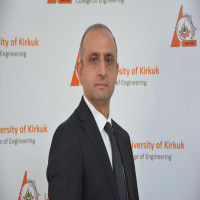
 Currently works at the Department of Mechanical Engineering (Faculty of Engineering), Kirkuk University. 

Ph.D. Professor (Associate) in Mechanical Engineering. (Ph.D. Selcuk University Konya, Turkey);

Msc mechanical Engineering in Gazi University-Ankara Turkey,

Computational Methods in Fluid Flow, Heat and Mass Transfer (Incl. Computational Fluid Dynamics), Gas Dynamics, Optimization Techniques in Mechanical Engineering, Numerical Methods in Mechanical Engineering, Mechanical Engineering (Other)
Default avatar
Prof. Dr. Evan WARD Brigham Young University Web

Dr. Evan R. Ward is Professor of History at Brigham Young University, located in Provo, Utah, in the United States. He is the author of three books, including, Hubbing for Tourists: Airports, Hotels, and Tourism Development in the Indo-Pacific, 1934-2019 (Berlin: Degruyter Brill Publishing, 2023). He teaches courses on tourism, economic development, and world history. 

Design History, Theory and Criticism, Contemporary World History (Other), Tourism History
Default avatar
Prof. Dr. Simon C. M. YU Khalifa University

https://www.ku.ac.ae/college-people/simon-c-m-yu


Aerodynamics (Excl. Hypersonic Aerodynamics)
Fracture Mechanics, Materials Science and Technologies, Materials Engineering, Ceramics in Materials Engineering
Türker Burak Güven
Res. Assist. Türker Burak GÜVEN SELCUK UNIVERSITY, SCHOOL OF CIVIL AVIATION, DEPARTMENT OF AIRFRAME AND POWERPLANT MAINTENANCE
Waste Management, Reduction, Reuse and Recycling, Renewable Energy Resources , Energy Generation, Conversion and Storage (Excl. Chemical and Electrical), Air-Space Transportation, Aerospace Structures, Aircraft Performance and Flight Control Systems

The International Journal of Aeronautics and Astronautics is a double-blind peer-reviewed (reviewed by at least two reviewer), open access and online journal, covering all areas of aviation management and technology. It is an interdisciplinary journal focused on original articles, essays/reviews, letters to the editor, case reports, book reviews and scientific translations, aiming to contribute to the field of aviation management and technology in Türkiye and in the world. Journal publication languages are English and Turkish. The journal accepts manuscript in every publication period.
The articles in the journal are aimed at researchers, practitioners and undergraduate/graduate students who are interested in all the main elements of the aviation industry (airlines, airports, air traffic management, aircraft engineering, mechanical engineering, avionics engineering, etc.).

The journal presents studies on the following topics under the main areas of social and technology:
Social Sciences
Safety Management Systems, Air Traffic Management, Air Transportation Management, Airport Planning and Management, Aviation Management, Aviation Physiology, Aviation Security, Aviation Law, Aviation Meteorology, Aviation Psychology, Aviation Sector Studies, Aviation History, Aviation Safety and Security Management, Financial Management in Aviation, Human Resources Management in Aviation, Aviation Logistics Management, Organizational Behavior in Aviation, Aviation Marketing Management, Risk Management in Aviation, Ground and Cabin Services in Aviation, Airport Design, Airline Industry/Commercial Aviation, Airline Management, Flight Operations Management.


Technology
Aerodynamics, Aeroelastic Analysis and Design, Fluid Mechanics, Avionic Systems, Multidisciplinary Design Optimization, Aircraft Maintenance and Repair, Aircraft Propulsion Systems, Aviation Rules, Aviation Materials, Aviation Training, Aviation and Artificial Intelligence, Aviation Structures, Human Factors in Aviation, Helicopter Design, Computational/Experimental Fluid Dynamics/Mechanics, Heat Transfer and Combustion, Unmanned Aerial Vehicles, Navigation Systems, Measurement and Modeling, Aircraft Airframe Engine and Maintenance, Aircraft Performance, Aircraft Design, Flight Mechanics, Flight Dynamics and Control, Satellite Technologies, Gas Turbine Engine, Aviation Oils and Fuels, Aircraft Engine, Other Aircraft and Technologies.

As of 07.08.2025, changes have been made in our “Author Guidelines”

Online Submission

This instruction gives you guidelines for preparing articles for IJAA. All manuscripts are to be submitted online and in Word. Please, you do not submit with PDF. Carefully follow the journal article submission process. Manuscripts should be written in clear, concise and grammatically correct Turkish or English so that they are intelligible to the professional reader who is not a specialist in any particular field. Manuscripts that do not conform to these requirements and the following manuscript format may be returned to the author prior to review for correction.

General Guidelines

The following section outlines general (non-formatting) guidelines to follow. These guidelines apply to all authors and include information on the policies and practices related to the publication of your manuscript.
Publications that will not be accepted by IJAA
• Works that are not classified or for which permission has not been obtained for public disclosure.
• Works containing copyrighted material.
• Works published or under consideration for publication elsewhere.
• Works with a similarity rate of over 25%.
• Manuscripts that are not prepared according to the writing guide cannot be evaluated.
• Only one article by the same author can be published in an issue.

Manuscript Preparation

Prepare your manuscript according to the template given below.
IJAA Template

Acknowledgment

Collate acknowledgements in a separate section at the end of the article before the references and do not, therefore, include them on the title page, as a footnote to the title or otherwise. List here those individuals who provided help during the research. The responsibility of the information released within this section is completely on the corresponding author.

Conflicts of Interest

The author is responsible for declaring any financial or non-financial interests in this part. If no conflict of interest in there, the author must state that they have no conflicts to disclose. This statement is obligatory. For example:
Conflicts of Interest: The author(s) declare no conflict of interest.

Authorship contribution statement for Contributor Roles Taxonomy

Contributor Roles Taxonomy was introduced with the intention of recognizing individual author contributions, reducing authorship disputes and facilitating collaboration. The corresponding author is responsible for ensuring that the descriptions are accurate and agreed by all authors. For more details, please refer to CRediT taxonomy (Contributor Roles Taxonomy). This statement is obligatory. For example;
Nilüfer Canöz: Writing - original draft, Investigation, Visualization, Supervision, Conceptualization, Methodology, Software, Formal analysis. İlker Örs: Investigation, Supervision, Writing – review & editing. Elif Eren Gültekin: Investigation, Visualization, Supervision. Harun Karakavuz: Conceptualization, Methodology, Software, Formal analysis.

Important Notes 

• For studies requiring ethics committee permission, information about the permission (name of the committee, date and number) should be included in the method section and on the first/last page of the article.
• Turkish publications should include an extended English abstract of at least 15% of the article word count. The Extended English Abstract should be a holistic text that includes the purpose, scope, theoretical framework, methodology, findings and results of the study and should include all relevant parts of the study. The Extended Abstract should be placed at the end of each study, immediately before the References section.

References

Authors should follow APA Style (American Psychological Association) 7th ed for in-text citation and references.

Download for EndNote: APA 7 Edition

Journal
Çiftçi, H., Bayındırlı, C., & Örs, İ. (2023). Experimental investigation of spoiler application in an SUV type vehicle. International Journal of Energy Applications and Technologies, 10(1), 1-5. https://doi.org/https://doi.org/10.31593/ijeat.1223324
Authored Book
Kaufman, K. A., Glass, C. R., & Pineau, T. R. (2018). Mindful sport performance enhancement: Mental training for athletes and coaches. American Psychological Association. https://doi.org/10.1037/0000048-000
Edited Book Chapter
Zeleke, W. A., Hughes, T. L., & Drozda, N. (2020). Home–school collaboration to promote mind– body health. In C. Maykel & M. A. Bray (Eds.), Promoting mind–body health in schools: Interventions for mental health professionals (pp. 11–26). American Psychological Association. https://doi.org/10.1037/0000157-002
Conference Session
Davidson, R. J. (2019, August 8–11). Well-being is a skill [Conference session]. APA 2019 Convention, Chicago, IL, United States. https://irp-cdn.multiscreensite.com/a5ea5d51/files/uploaded/APA2019_ Program_190708.pdf

Editorial Responsibilities
The Editor-in-Chief, Managing Editor and International Editorial Board are responsible for deciding which articles submitted to International Journal of Aeronautics and Astronautics will be published.
The Editor-in-Chief reserves the right to decide not to publish papers that the journal deems insufficient in terms of content and quality.
The all editorial team of journal must hold no conflict of interest with regard to the articles they consider for publication.
The Editor-in-Chief and other editorial members shall evaluate manuscripts for their intellectual content free from any racial, gender, sexual, religious, ethnic, or political bias. Editors treat all submitted manuscripts as confidential documents; this means that they will not disclose information about an article to anyone without the permission of the authors. During the article review process, the following people can access the articles: Editors, Reviewers, Editorial Board Members. The only situation in which details about a manuscript may be passed on to a third party without the consent of the authors is if the editor suspects serious research misconduct. If the editor suspects an ethical violation or if there is an alleged violation, they are obliged to take action. This task covers both published and unpublished articles.

Author's Responsibilities
The authors ensure that the paper is the original study and that it has not been published in another journal and that the same paper has not been sent to another journal in parallel.
The Authors also warrant that the manuscript is not and will not be published elsewhere (after the publication in International Journal of Aeronautics and Astronautics) in any language without the consent of the Editorial Board.
If the submitted paper is the result of a research project, or if it has been presented at a conference before, or if there is any institution or organization that supports the paper, the authors must present this information in the Acknowledgments section.
It is the authors' responsibility to ensure that the submitted paper conforms to ethical standards. Confirming that the information in the manuscript is not unfounded or unlawful and does not violate the rights of third parties, it meets any claims compensation from this situation and the publisher cannot be held legally responsible.

Protection of Participants' Personal Data
International Journal of Aeronautics and Astronautics accepts and applies the Personal Data Protection Principles accepted by Turkish Dergipark.

Plagiarism
Presenting another person's ideas, words, sentences or creative expressions as his own is a clear plagiarism in terms of scientific ethics.
It is considered plagiarism to use a specific statement from another author's study in one's own study without clearly citing the source, not citing the source correctly, or using the source without permission. The article of the author determined to be plagiarized will be rejected directly.

Twin Publishing
Twin publishing is the publication of the same article or substantially similar articles in more than one journal. The editor returns this type of article without review. After that, the editor may impose an embargo on the author attempting to twin publishing for a certain period of time, explain this situation to the public in the journal in which the author has previously published (perhaps as a simultaneous announcement with the editor of the journal that published the previous article), or apply all of these measures together.

Simultaneous submission of the same manuscript to more than one journal
Authors cannot submit the same manuscript to more than one journal at the same time. The editor reserves the right to consult the other editor(s) receiving the manuscript if it learns of possible simultaneous submission. In addition, the editor may return the article without review or reject it without considering the reviews, or take this decision by discussing it with the other relevant editor(s) and may decide not to accept manuscript submissions from the authors for a certain period of time. It can also write to the authors' employers or implement all of these measures together.

Plagiarism Prevention Control
All manuscript submitted for publication are reviewed by the “iThenticate” plagiarism program. As a result of the examination, the plagiarism/similarity rate can be up to 25%. Manuscript with a plagiarism/similarity rate above 25% are directly rejected by the editorial board.

Ethical Violation Notices
When readers notice a major error or inaccuracy in an article published in the International Journal of Aeronautics and Astronautics, or have any complaints about editorial content (plagiarism, duplicate articles, etc.), they can send an e-mail to ijaa@selcuk.edu.tr. can make a notification.

Conflict of interest
Authors must explain the people, institutions and organizations that may have conflict of interest.

Reviewers responsibilities
The Reviewers should submit their unbiased opinions in writing on the scientific value and originality of the paper in a timely manner.
The reviewers evaluate the submitted article according to the scope of the journal, the originality of the subject, the presentation of the article, scientific quality and characteristic.
The reviewers should warn the editor when they detect an ethical violation, significant similarity with a manuscript published elsewhere, and such situations.
The Reviewers should not have a conflict of interest with the authors or the institutions or organizations that support the paper. Such a situation should be reported to the editor.
Reviewers must be impartial when evaluating the paper. It should clearly express its opinions, thoughts and criticisms with supporting arguments.
All documents sent to the reviewers for review should be considered confidential. Subject and materials specified in the papers cannot be used without the permission of the authors. If this information is used for personal gain, all responsibility belongs to the user.

Peer review
The all submitted manuscripts are subject to a peer review process in order to Editorial Board in making editorial decisions. Thus, the author may improve and increase quality of paper. Also, it assist the author in improving the paper.
Reviews are double-blind procedure. The least two positive comments should be obtained for acceptance of the paper. Reviewers may suggest also minor or major revision. If major revision is decided by reviewers, the revised paper can be sent again to the reviewers for their final decisions. There are no fees for reviewers.
Reviewers are determined by editor. Editor can also prefer the reviewer’s choice from suggests of authors. Reviewers must be experts in the subject of paper. There should be no conflict of interest between the authors and the referees. The authors will definitely not know the name of reviewers. The editorial board will provide it. Besides, the reviewers also will not know each other's identity. The reviewers will evaluate independently of each other. In case the reviewers make different decisions (accept/decline), the Editor may submit the article to another reviewer for evaluation.

Disclaimer
The views in published works are belongs to authors. The Editors and Editorial Board cannot be held responsible. The authors take legal and moral responsibility for the ideas expressed in the articles. The authors will be held legally responsible should there be any claims for compensation. There is no liability of Publisher.

Withdraw, Retraction and Publication Malpractice Policy
Before or during the evaluation of the article; The article should be withdrawn by the author because of the important changeable errors detected by the authors, the editorial board or the reviewers. For example; double posting of the article by mistake, typographical errors, incomplete data entry and etc.
The following reasons are the reasons why the article is retracted even if the article is ready for publication.
Multiple submissions
Bogus claims of authorship
Plagiarism
Fraudulent use of data etc.
If the article has been published, the reader will see the retraction note of the article electronically via a link before reaching the original article. He then reaches the original article with a watermark that says "RETRACTED" on each page.
After the article is published, it may be necessary to change the article for reasons other than those that require the article to be retracted. In this case, the new version of the article is published in the last issue of the journal. Necessary explanations for the change are specified in this new version and a link is made to the previous version.


Ethics Committee Permission
The following should be observed under the code of ethics.
An ethics committee approval must be obtained for research conducted in all disciplines including social sciences and for clinical and experimental studies on humans and animals, requiring ethical committee decision, and this approval should be stated and documented in the article.
It should be indicated in the journal and/or web page under a separate heading referring to national and international standards.
Information on the ethical rules under separate headings should be provided under this heading, for the peer-reviewers, authors and editors.
It should be stated that the articles comply with Research and Publication Ethics.
Reference to international standards and institutions should be made. For example, scientific articles sent to journals should take into account the recommendations of the International Journal of Aeronautics and Astronautics Editors (IJAAE) and the International Standards for Editors and Authors of COPE (Committee on Publication Ethics).
In studies requiring ethical committee permission, information about the permission (board name, date and issue number) should be included in the method section and on the first/last page of the article.
For the scales used in data collection, the permission of the scale owner should be obtained and declared in the article.
Copyright regulations must be observed for the ideas and works of art used.

Studies Requiring Ethics Committee Permission
1) All kinds of research conducted with qualitative or quantitative approaches that require data collection from participants using questionnaires, interviews, focus group work, observation, experimentation, interview techniques,
2) Using human and animals (material / including data) experimental or other scientific purposes,
3) Clinical studies on humans,
4) Clinical studies on animals,
5) Retrospective studies in accordance with the law on protection of personal data.

Ethics Committee Permission Form for studies requiring Ethics Committee Permission

Statement Form for studies that do not require Ethics Committee Permission, click to form

Free

Baş Editör

Nilüfer Canöz
Prof. Dr. Nilüfer CANÖZ SELÇUK ÜNİVERSİTESİ, SİVİL HAVACILIK YÜKSEKOKULU, HAVACILIK YÖNETİMİ BÖLÜMÜ
Public Relations, Public Relations Methods and Instruments

Yardımcı Editör

İlker Örs
Assoc. Prof. Dr. İlker ÖRS SELCUK UNIVERSITY, ACADEMY OF CIVIL AVIATION, DEPARTMENT OF AIRCRAFT BODY - ENGINE MAINTENANCE
Computational Methods in Fluid Flow, Heat and Mass Transfer (Incl. Computational Fluid Dynamics), Chemical and Thermal Processes in Energy and Combustion, Internal Combustion Engines, Automotive Combustion and Fuel Engineering, Aircraft Performance and Flight Control Systems

Alan Editörleri

Electrical Machines and Drives, Evaluation Technique in Electronics, Embedded Systems, Avionics
Mustafa Taşyürek
Assoc. Prof. Dr. Mustafa TAŞYÜREK Selçuk Üniversitesi Sivil Havacılık Yüksekokulu
Renewable Energy Resources , Material Design and Behaviors, Composite and Hybrid Materials, Nanomaterials, Internal Combustion Engines, Automotive Engineering Materials, Automotive Combustion and Fuel Engineering, Aerospace Engineering, Aerospace Materials, Aerospace Structures, Aircraft Performance and Flight Control Systems, Air Pollution Processes and Air Quality Measurement
Harun Karakavuz
Assoc. Prof. Harun KARAKAVUZ SELÇUK ÜNİVERSİTESİ
Occupational Health and Safety, Human Resources Management, Strategy, Management and Organisational Behaviour, Organizasyon, Organisation and Management Theory, Organizational Culture, Organisational Behaviour

Yayın Kurulu

Aerospace Materials, Aerospace Structures
Default avatar
Prof. Dr. Antonio RODRIGUES ISG - Business & Economics School
Public Administration, Management and Organization Education
Default avatar
Prof. Dr. Rüştü GÜNTÜRKÜN SELÇUK ÜNİVERSİTESİ
Electrical Engineering, Avionics
Control Theoryand Applications, Control Engineering, Mechatronics and Robotics, Mechatronics Engineering, Machine Theory and Dynamics
Default avatar
Prof. Dr. Rui QUADROS Instituto Superior de Educaçao e Ciencias, Aeronautical Management
Marketing
Composite and Hybrid Materials, Material Characterization, Ceramics in Materials Engineering, Material Production Technologies, Powder Metallurgy
Default avatar
Prof. Dr. Simon C. M. YU Khalifa University
Aerodynamics (Excl. Hypersonic Aerodynamics)
Default avatar
Prof. Dr. Raj DAS RMIT University
Computational Methods in Fluid Flow, Heat and Mass Transfer (Incl. Computational Fluid Dynamics), Composite and Hybrid Materials, Aerospace Materials
Default avatar
Prof. Dr. Evan WARD Brigham Young University
Design History, Theory and Criticism, Contemporary World History (Other), Tourism History
Ismail Suardi Wekke
Asst. Prof. Dr. Ismail Suardi WEKKE Institut Agama Islam Negeri (IAIN) Sorong, Indonesia
Education, Comparative and Cross-Cultural Education
Ali Hussein Abdulkarim
Assoc. Prof. Dr. Ali Hussein ABDULKARİM University of Kirkuk, Kirkuk, Iraq
Computational Methods in Fluid Flow, Heat and Mass Transfer (Incl. Computational Fluid Dynamics), Gas Dynamics, Optimization Techniques in Mechanical Engineering, Numerical Methods in Mechanical Engineering, Mechanical Engineering (Other)
Mohamed Taieb Kchaou
Asst. Prof. Dr. Mohamed Taieb KCHAOU Faculty of Economics and Management of Sfax
Financial Economy

Dil editörleri

Fracture Mechanics, Materials Science and Technologies, Materials Engineering, Ceramics in Materials Engineering

Mizampaj Editörü

Türker Burak Güven
Res. Assist. Türker Burak GÜVEN SELCUK UNIVERSITY, SCHOOL OF CIVIL AVIATION, DEPARTMENT OF AIRFRAME AND POWERPLANT MAINTENANCE
Waste Management, Reduction, Reuse and Recycling, Renewable Energy Resources , Energy Generation, Conversion and Storage (Excl. Chemical and Electrical), Air-Space Transportation, Aerospace Structures, Aircraft Performance and Flight Control Systems

International Journal of Aeronautics and Astronautics is licensed under a Creative Commons Attribution-NonCommercial 4.0 International License (CC BY NC).