Interdisciplinary Media and Communication Studies (IMCS) aims to be a peer-reviewed, electronic, and international journal that publishes theoretical and applied academic studies that contextualize, compare, and interdisciplinarily understand communication, media, cinema, public relations, advertising, visual communication design, and new media products by associating them with the cultural, social, economic, and historical data of the geography in which they are produced.
IMCS Journal Author Guidelines
General Information
Word count: The submitted article, including references and footnotes, should not exceed 8000 words.
Format: Manuscripts should be in Word format, Times New Roman font, 1-line spacing, 12-point text size, 10-point footnotes, and justified. 6 nk space should be left before and after paragraphs.
Author information: The author(s)' information should not be included in the main text of the uploaded article. Author information should be uploaded in a separate file with name, surname, academic title, institution, e-mail address, and Orcid membership number.
Title: English and Turkish titles should be centered, 14-point, and bold above the abstract in the respective language.
Abstract: The abstract should not exceed 200 words in both Turkish and English. 5 keywords should be included under the abstracts in the respective language.
Section Headings and Subheadings: Section and Subheadings should be right-aligned, 12-point, and bold. Headings should follow the format 1., 1.1, .1.1., 2., 2.1, 2.1.1.
Tables and Figures: The number and descriptions of tables, figures, graphs, etc. in the article should be placed above the figures and their explanations below the figures. The text in the tables should be 10-point, single-spaced, and with a paragraph spacing of 0 nk.
References and Bibliography: The IMCS Journal accepts the APA 7 format for citation and bibliography writing rules.
Additional Information
Plagiarism report: The authors are solely responsible for their work, and it should not contain plagiarism. A plagiarism report obtained from Turnitin or iThenticate programs should be uploaded to the system as an "Additional File" from the "Article Files". In order for the studies to be evaluated, the Turnitin or iThenticate plagiarism report must be at most %10 (excluding references, excluding less than 5 words, including quotes). The utilization rate of the same study should be at most %3. Studies with a similarity ratio above these rates or without a Turnitin/iThenticate report will be rejected in the pre-evaluation process. In necessary cases, the journal management can subject the article to a plagiarism check. Articles that do not meet the relevant criteria can be "returned to the author for revision" or "returned to the author".
Responsibility: The author(s) are deemed to have accepted that the work has not been previously published, has not been accepted for publication, and is not currently under evaluation for publication elsewhere when submitting an article. The authors are solely responsible for all articles submitted for publication. The authors are responsible for all legal aspects of the content they prepare. Authors submitting articles to the journal are deemed to have accepted that they comply with universal academic ethical principles, that they have included persons with intellectual property rights in the study or have obtained written permission, and that they have provided the necessary information to the editorial board about their work.
Conflict of interest and contribution rate statement: It is mandatory to upload the form declaring the conflict of interest situation between the authors or, if any, other rights holders, and the contribution rate to the work as an additional file. All financial support sources received for the study should be clearly stated.
Copyright and Permissions: By submitting their work for publication, the author(s) assign the copyright to Yaşar University Faculty of Communication, Interdisciplinary Media and Communication Studies Journal. The copyright of the published articles belongs to the journal and cannot be transferred without reference. If the work is a translation, a document is requested from the author(s) who made the translation stating that the publisher of the original text of the translated work has given permission for its publication. This document is uploaded to the system as an additional file along with the original text of the work. The author(s) are obliged to sign the Copyright Transfer Form and upload it to the system.
Ethics Committee Approval: As of 2020, the Ethics Committee Approval Document has become mandatory with the changes made in the TR Dizin Journal Evaluation Criteria. In the statement made by TR Dizin: "Separate ethics committee approval must be obtained for all research conducted in all scientific fields, including social sciences, and for clinical and experimental studies on humans and animals that require ethics committee approval. This approval must be specified and documented in the article."
In studies requiring ethics committee approval, information about the approval (board name, date, and number) should be included in the methods section and also on the first/last page of the article. In case presentations, it is necessary to include information in the article that the informed consent form has been signed."
Registration:
To submit a manuscript and related items online and track the status of recent submissions, authors must register and log in. They can either sign in to an existing account or register for a new account.
Submission:
As a part of the submission process, authors must ensure that their submission adheres to the guidelines presented below. If the submission does not fulfill these requirements, it will be sent back to the authors.
Originality:
It is mandatory that the submission has not been published previously or submitted to another journal. In case the submission is derived from a doctoral thesis or has been presented at a congress before, the author(s) must indicate it in the "Comments to the editor" section.
About the quality of writing:
To prevent the possibility of rejection, manuscripts submitted to the Journal of Interdisciplinary Media and Communication Studies (IMCS) must be written exceptionally well, devoid of any grammatical errors, and presented in clear and understandable language. Once the articles have been accepted through the peer review process, the editorial team meticulously reviews the style guidelines of the journal. This review process includes examining URLs, citations, and references, and checking for proper grammatical quality, coherence, and overall logic of the writing. If the editorial team identifies an excessive number of errors requiring correction, the manuscript will be rejected early in the process. This rejection will be enforced even if the manuscript has successfully passed the previous peer review stage.
Anonymity of the authors:
Authors are required to anonymize their article, which entails removing any author names from the manuscript. Moreover, no identifying information should be included in the "Options" section of the Word document's "File" menu. However, self-citations do not need to be anonymized.
Co-authors:
If the manuscript has been collaboratively written, it is crucial to confirm that all co-authors are registered correctly with the Journal of Interdisciplinary Media and Communication Studies (IMCS). Furthermore, authors must ensure that the co-authors' order is accurate. It is essential to provide their affiliations, postal addresses, email addresses, and Orcids ID numbers.
Bibliography format:
All the bibliography that you include should be cited in the text in APA 7 format.
Manuscript evaluation process:
After receiving a manuscript, the journal's editorial team will review it. If they find it interesting and it meets the acceptance criteria, it will move on to the next phase of peer review. However, if there are too many errors, the manuscript will be rejected at the beginning. The review process is double-blind, meaning the reviewer and the author remain anonymous to each other. The review is done by experts in the field, either members of the journal's Advisory Board or external to the editorial team. Based on the review reports, the editor of the journal will make the final decision on whether to publish the manuscript or not. Even if a manuscript is accepted in the peer review process, it can still be rejected if it is poorly written, has inconsistencies, repetitions, inaccurate or inappropriate assertions, or faults in the bibliography. To ensure manuscripts stay relevant, the management and reviewers of the journal work to quickly review articles, typically taking only a few weeks to accept or reject them. The Editorial Office will communicate the decision to the authors.
General criteria for the acceptance:
The Journal of Interdisciplinary Media and Communication Studies (IMCS) accepts only manuscripts that are original and have not been published before. By submitting their work, authors assure that their article is original and free from any plagiarism, including self-plagiarism or duplicate publication. If the manuscript is not published but has previously appeared as a pre-print on a website or in a repository, or has been presented at a conference, the authors must inform the journal, which will consider its acceptance.
Ethical rules and principles:
Journal of Interdisciplinary Media and Communication Studies (IMCS) values scientific integrity in publishing and takes a stance against dishonest practices such as distributing false authorship among authors. Therefore, we request that authors complete a form that specifies the detailed contribution of each author to the article. This journal does not tolerate partial publication of results. Any works that demonstrate unjustified fragmentation or the "production of articles in series", either through the manuscript itself or the publication of partial results in other journals, will be rejected.
Research data:
In terms of the timeliness of the information, we expect that the data gathering, operation or field study should not have exceeded two years from the date the manuscript was submitted to Journal of IMCS. Outdated studies are not accepted.
Journal of IMCS is a 100% open access journal that does not charge publication fees from its authors.
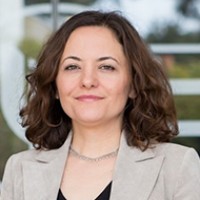
Tulay GORU DOGAN graduated from the department of Computer Education and Instructional Technologies at Faculty of Education at Anadolu University in Turkey in 2007. She holds a MA degree in the field of Visual Communication Design and a PhD degree in the field of Open and Distance Education from the Graduate School of Social Sciences at Anadolu University. Between 2008 - 2009, she has been as an exchange student at Faculty of Communication and Media at Noordelijke Hogeschool Leeuwarden in the Netherlands. She currently works as a lecturer (PhD) in Department of New Media and Communication at Faculty of Communication at Yaşar University. Her researches focuses on digital communication, social media and open and distance learning.
..
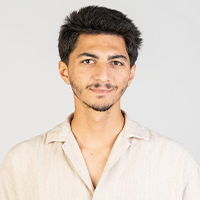
Baha Tan Oral, kariyerine film ve oyun eleştirmeni olarak başlamış, zamanla hikaye anlatımı ve anlatı geliştirme üzerine yoğunlaşmıştır. Yönetmenliğini yaptığı filmlerle çeşitli film festivallerine katılmış olan Oral, tutkusu olan video oyunlarında çalışmaya başlamıştır. Video oyunları endüstrisinde sinematik yönetmen olarak görev alan Oral, oyunların görsel anlatımını güçlendirme hedefiyle çalışmalarını sürdürmekte ve bu doğrultuda oyun tasarımı alanında derinleşmektedir. Sinematik yönetmenlik ve oyun tasarımı alanlarındaki deneyimleri sayesinde çeşitli projelerde yer alma fırsatı bulmuştur. Halen Dokuz Eylül Üniversitesi Film Tasarımı Anasanat Dalı’nda yüksek lisans çalışmalarına devam eden Baha Tan Oral, aynı zamanda Yaşar Üniversitesi’nde araştırma görevlisi olarak görev yapmaktadır. Akademik çalışmaları, oyun çalışmaları alanına odaklanmaktadır.
Tulay GORU DOGAN graduated from the department of Computer Education and Instructional Technologies at Faculty of Education at Anadolu University in Turkey in 2007. She holds a MA degree in the field of Visual Communication Design and a PhD degree in the field of Open and Distance Education from the Graduate School of Social Sciences at Anadolu University. Between 2008 - 2009, she has been as an exchange student at Faculty of Communication and Media at Noordelijke Hogeschool Leeuwarden in the Netherlands. She currently works as a lecturer (PhD) in Department of New Media and Communication at Faculty of Communication at Yaşar University. Her researches focuses on digital communication, social media and open and distance learning.
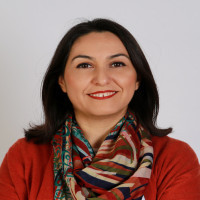
Ürün YILDIRAN ÖNK, Gazi Üniversitesi 2002 mezunudur. Yüksek Lisans (2004) ve Doktora (2011) eğitimini Dokuz Eylül Üniversitesi Güzel Sanatlar Enstitüsü Sinema-TV Bölümü’nde tamamlamıştır. 2022 yılında Doçent ünvanı alan Yıldıran Önk, halen Yaşar Üniversitesi İletişim Fakültesi Radyo Televizyon Sinema Bölümü’nde lisans ve lisansüstü düzeylerde dersler vermekte ve dekan yardımcılığı görevini yürütmektedir. Bölümün Erasmus koordinatörü ve uluslararası değişim danışmanı olarak görev yapmakta ve CONTACT Uluslararası Öğrenci Filmleri Festivali’nin organizasyon ekibinde yer almaktadır. Danışman ve araştırmacı olarak görev aldığı ulusal ve uluslararası projelerin yanı sıra ‘Yeni Ekran Yeni Dizi’ başlıklı bilimsel araştırma projesinin de koordinatörlüğünü üstlenmiştir. Son çalışmaları televizyon program türleri özellikle yerli diziler üzerine odaklanan Yıldıran Önk’ün televizyon, sinema ve medya tarihi alanlarında yayınlanmış makaleleri, bildirileri ve kitap bölümleri bulunmaktadır.
Baha Tan Oral, kariyerine film ve oyun eleştirmeni olarak başlamış, zamanla hikaye anlatımı ve anlatı geliştirme üzerine yoğunlaşmıştır. Yönetmenliğini yaptığı filmlerle çeşitli film festivallerine katılmış olan Oral, tutkusu olan video oyunlarında çalışmaya başlamıştır. Video oyunları endüstrisinde sinematik yönetmen olarak görev alan Oral, oyunların görsel anlatımını güçlendirme hedefiyle çalışmalarını sürdürmekte ve bu doğrultuda oyun tasarımı alanında derinleşmektedir. Sinematik yönetmenlik ve oyun tasarımı alanlarındaki deneyimleri sayesinde çeşitli projelerde yer alma fırsatı bulmuştur. Halen Dokuz Eylül Üniversitesi Film Tasarımı Anasanat Dalı’nda yüksek lisans çalışmalarına devam eden Baha Tan Oral, aynı zamanda Yaşar Üniversitesi’nde araştırma görevlisi olarak görev yapmaktadır. Akademik çalışmaları, oyun çalışmaları alanına odaklanmaktadır.
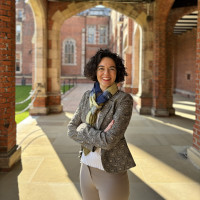
Doç. Dr. Gizem Melek’in akademik araştırma alanları, medya ve siyaset arasındaki etkileşime, özellikle gazetecilik, medya etkileri, siyasal iletişim ve iklim değişikliği iletişimine odaklanmaktadır. İçlerinde Journalism & Mass Communication Quarterly, Communications: The European Journal of Communication Research, Visual Studies ve Visual Communication gibi saygın uluslararası hakemli dergilerin de bulunduğu birçok dergi ve kitapta akademik makaleler yayımlamıştır. Mayıs 2021 ile Aralık 2022 arasında gündem belirleme ve gazeteciliğin kamuoyu üzerinde bilişsel düzeydeki etkilerini araştıran bir TÜBİTAK ARDEB 3501 projesi yürütmüş ve tamamlamıştır. Ocak 2023’te ECREA (European Communication Research and Education Association) Women’s Network başkanlığına seçilmiş ve bir dönem boyunca, Ekim 2024’e kadar bu görevi başarıyla yürütmüştür. Gizem Melek akademik çalışmalarının yanı sıra hem Türkiye’de hem de İngiltere’de 6 yıl çalışmış deneyimli bir gazetecidir. İzmir Life Dergisi’nde 2 yıl, ardından NTV’de ise 3 yılı aşkın bir süre muhabirlik yapan Gizem Melek, İngiltere’de ise ITV kanalında ünlü program yapımcısı ve sunucu Melvyn Bragg ile İngiltere’nin en uzun soluklu ve ödüllü sanat programı “The South Bank Show”da çalışmıştır; ardından British Museum’un yapım ve yayıncılık biriminde çalışarak BBC Radyo ile ortak yürütülen “A History of the World in One Hundred Objects” isimli belgesel serisinin yapım aşamalarında görev almıştır. Ardından, Yaşar Üniversitesi Radyo Televizyon ve Sinema Bölümü’nde 13 yıl tam zamanlı olarak görev yapmıştır.
..
Özgür Gürsoy lisans derecesini felsefe ve ekonomi alanlarında Kanada’da Trent Üniversitesi’nde, yüksek lisans ve doktora derecelerini ABD’de Emory Üniversitesi’nde tamamladı. Araştırma alanları toplum ve siyaset felsefesi, iletişim felsefesi ve eleştirel teoridir. Toplumsal epistemoloji, tarih yazımının epistemolojik ve politik boyutları, bilgi iddialarının medyada üretimi ve yayılımı konularında birçok makalesi bulunmaktadır. Bilim, siyaset ve etiğin kesiştikleri yerde bilgi üretimi ve düzensizlikleri üzerine çalışmaya devam etmektedir.
Skadi Loist is Juniorprofessor in Production Cultures in Audiovisual Media Industries at the Film University Babelsberg Konrad Wolf, in Potsdam, Germany. Their main areas of expertise are film festivals & circulation, queer film culture, and screen industries, diversity and sustainability.
Yeşim Kaptan is an associate professor in the Department of Communication Studies at Kent State University (USA). Dr. Kaptan has been a visiting scholar at Stanford University (USA) and Aarhus University (Denmark), and a visiting professor at the Annenberg School of Communication, University of Pennsylvania (USA). He is the co-editor of the book “Television in Turkey”. His research on culture, global communication, transnational media and advertising has been published in various English and Turkish media and communication journals and books.
Anadolu Üniversitesi İletişim Bilimleri Basın ve Yayın bölümünden 2006 yılında mezun olan Göker Gülay, 2009 yılına kadar kurumsal iletişim ve pazarlama alanında faaliyet gösteren çeşitli kuruluşlarda görev almıştır. Doktor unvanını Ege Üniversitesi Sosyal Bilimler Enstitüsü Reklamcılık Anabilim Dalı’nda, “tüketici davranışlarının sosyal medya ile dönüşümü” konulu teziyle almıştır. 2008 yılından bu yana sosyal medya ve dijital iletişim alanlarında Yaşar Üniversitesi, Celal Bayar Üniversitesi Sürekli Eğitim Merkezi ve İzmir Gazeteciler Cemiyeti başta olmak üzere çeşitli kurumlarda sertifika programlarında uzman öğretici olarak görev yapmıştır. İzmir Yaşar Üniversitesi İletişim Fakültesi, Halkla İlişkiler ve Reklamcılık Bölümü’ndeki 12 yılın ardından Gülay, halen Manisa Celal Bayar Üniversitesi İletişim Fakültesi, Halkla İlişkiler ve Tanıtım Bölümü’nde doçent olarak görevini sürdürmektedir. Akademik çalışma alanları arasında dijital medya araçları ve kullanıcı üretimli içerik ekseninde sosyal medya incelemeleri yer almaktadır.
Süleyman İrvan, lisans eğitimini Gazi Üniversitesi Basın Yayın Yüksek Okulu’nda, yüksek lisansını ABD’de University of West Florida’da, doktorasını da Ankara Üniversitesi Sosyal Bilimler Enstitüsü’nde gazetecilik alanında tamamladı. 1999-2002 yılları arasında Gazi Üniversitesi İletişim Fakültesi’nde yardımcı doçent, 2002-2007 yılları arasında Doğu Akdeniz Üniversitesi İletişim Fakültesi’nde doçent olarak çalışan İrvan, 2007 yılında Akdeniz Üniversitesi İletişim Fakültesi’ne geçti. 2008 yılında profesör unvanını alan Süleyman İrvan, 2010 yılında görevlendirmeyle gittiği Doğu Akdeniz Üniversitesi İletişim Fakültesi’ne dekan olarak atandı ve 5 yıl süreyle görev yaptı.
Prof. Dr. Süleyman İrvan, 2012 yılında Kıbrıs’ın tamamında ilk olan okur temsilciliği kurumunu başlattı, Yenidüzen gazetesinin ilk okur temsilcisi oldu ve gazeteyi Uluslararası Okur Temsilcileri Örgütü’ne (ONO) üye yaptı. Okur temsilciliği görevini 2014 yılında bırakan Süleyman İrvan, 2013 yılında KKTC’de oluşturulan Medya Etik Kurulu’na İletişim Fakültelerinin iki temsilcisinden birisi olarak seçildi ve Medya Etik Kurulu’nun başkanlığını üstlendi. 2015 yılında Medya Etik Kurulu’ndan ayrıldı. İrvan 2017 yılında İletişim Eğitimi Değerlendirme Akreditasyon Kurulu’na (İLEDAK) seçildi ve bu kurulda 2019 yılına kadar görev yaptı.
Prof. Dr. Süleyman İrvan, 2017 yılı şubat ayından itibaren Üsküdar Üniversitesi İletişim Fakültesi’nde çalışmaya başladı. 2017-2023 yılları arasında Gazetecilik Bölümü Başkanlığı; 1 Nisan 2023-10 Ocak 2024 tarihleri arasında İletişim Fakültesi Dekan Vekilliği görevini yürüten Prof. Dr. İrvan, 12 Ocak 2024 tarihinde Rektör Danışmanı olarak atandı.
Prof. Dr. Süleyman İrvan’ın gazetecilik etiği, gazetecilik eğitimi, barış gazeteciliği, araştırmacı gazetecilik, basın tarihi, sözlü tarih ve iletişim kuramları konularında yayımlanmış çalışmaları bulunmaktadır.
Çağrı Sümengen Damen, şu anda Breda Uygulamalı Bilimler Üniversitesi'nde Creative Business Programı'nın 1. sınıf koordinatörü olarak görev yapmaktadır. Aynı zamanda pazarlama, medya planlama, online pazarlama ve veri tabanı pazarlaması gibi dersler vermektedir.
Eğitim hayatına Orta Doğu Teknik Üniversitesi'nde başlayan Çağrı, burada Felsefe ile Kamu Yönetimi ve Siyaset Bilimi alanlarında çift anadal yaparak lisans derecelerini tamamlamıştır. Daha sonra Tilburg Üniversitesi'nde İletişim ve Bilgi Bilimleri alanında yüksek lisans derecesi almıştır.
Profesyonel kariyerine Türkiye İş Bankası'nda ticari ürün geliştirici olarak başlayan Çağrı, ardından Mindshare Turkey A.Ş.'de araştırma ve tüketici içgörüleri uzmanı olarak çalışmıştır. Akademik kariyerine adım atmadan önce, Tilburg Üniversitesi'nde KNAW için sosyal medyada sosyal anlam üretimi üzerine araştırma asistanı olarak görev yapmıştır.
Akademik kariyerinde birçok önemli projede yer alan ve çeşitli konferanslarda sunumlar yapan Çağrı, 2022 yılından bu yana Erasmus Blended Intensive Programı'nda proje yönetimi ve kültürlerarası pazarlama iletişimi üzerine süpervizörlük yapmaktadır. Ayrıca, 2015-2021 yılları arasında Avrupa Yoğun Eğitim Programı'nda entegre iletişim üzerine süpervizörlük yapmıştır.
Öğrencilerine ilham vermek ve onları geleceğin liderleri olarak yetiştirmek için sürekli olarak yeni yöntemler ve stratejiler geliştirmeye çalışan Çağrı, eğitimde yenilikçi yaklaşımlara önem vermektedir. Eğitim, araştırma ve endüstri arasında sürdürülebilir bir bağlantı kurmaya öncelik vermekte ve öğrencilerin araştırma becerilerini ve eleştirel düşünme yeteneklerini geliştirebilecekleri yeni kültürlerarası olanaklar açmaya çalışmaktadır.
Çağrı, Türkçe'yi ana dili olarak konuşmakta ve İngilizce'de ileri düzeyde, Felemenkçe'de ise başlangıç düzeyinde yetkinliğe sahiptir. Microsoft Office, Adobe Creative Cloud ve SPSS gibi çeşitli yazılımlarda uzmanlık sahibidir.
Open Access Policy
The journal operates under the principle of open access. From the date of publication, all articles are freely and fully accessible on the journal’s website without any restrictions or delays.