The Journal will not consider manuscripts any that
have been published elsewhere, or manuscripts that are being considered for
another publication, or are in press. Studies previously announced in the
congresses are accepted if this condition is stated. If any part of a
manuscript by the same author(s) contains any information that was previously
published, a reprint or a copy of the previous article should be submitted to
the Editorial Office with an explanation by the authors
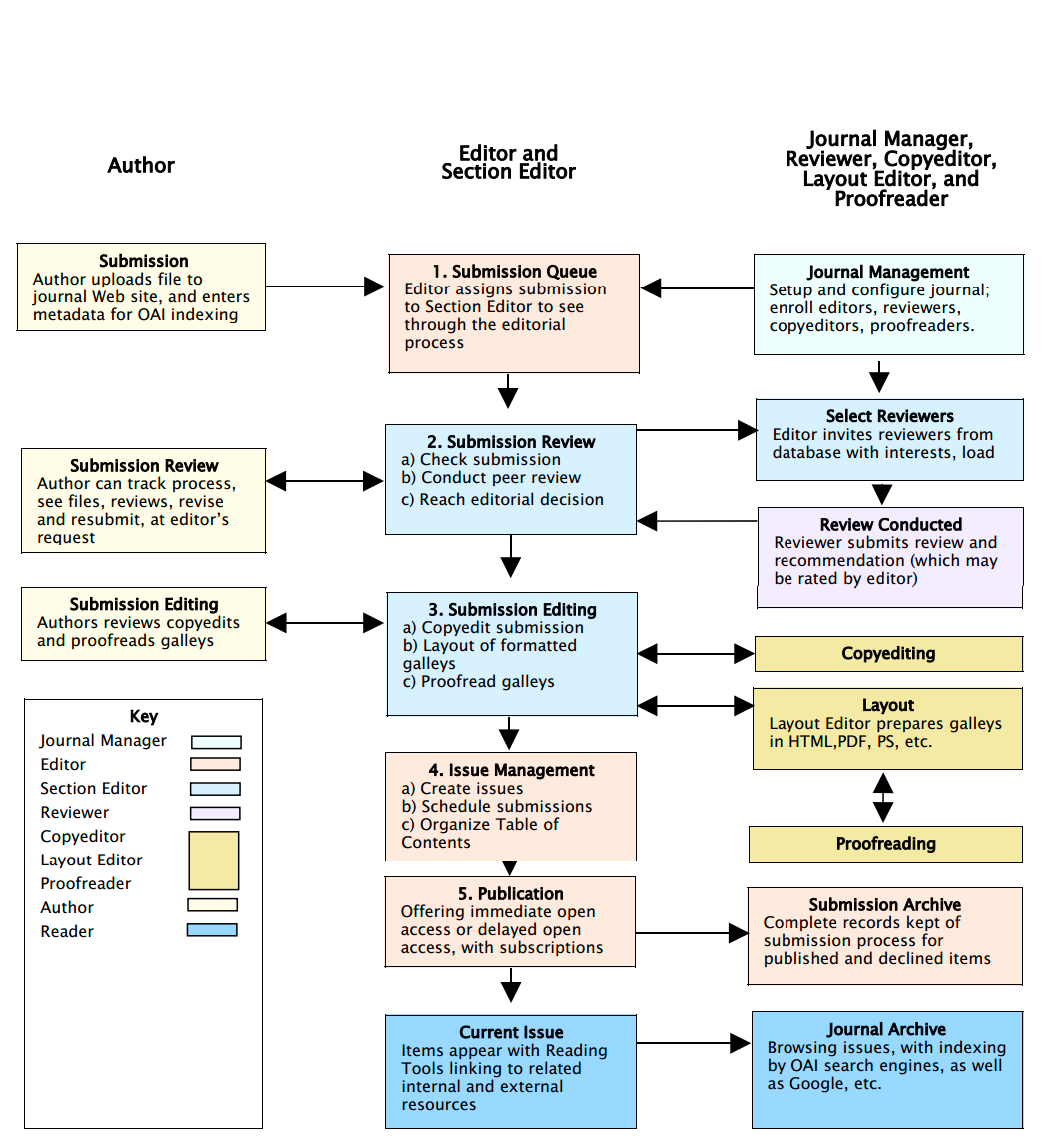
A technical review is performed to confirm that all of the required documentation has been submitted and to conduct a preliminary evaluation of the manuscript and supplementary files to assess suitability for the Journal. The manuscript will be returned to the Author in the event of any deficiency. Journal of Contemporary Medicine operates a blind review process. Contributions deemed suitable are then typically sent to a minimum of two independent expert reviewers in the field of study to assess the scientific quality of the paper. (You can see at the picture below)
The Editor/Editors are responsible for the final decision regarding acceptance or rejection of articles. The Editor's decision is final. If necessary, author(s) may be invited to submit a revised version of the manuscript. This invitation does not imply that the manuscript will be accepted for publication. Revised manuscripts must be sent to the Editorial Office within 4 (four) weeks, otherwise they will be considered as a new application. The corresponding author will be notified of the decision to accept or reject the manuscript for publication.
Statements and suggestions published in manuscripts
are the authors’ responsibility and do not reflect the opinions of the Editor,
Associate Editors and the Editorial Board members.
The manuscript will not be returned to the authors
whether the article is accepted or not. Copyright fee is not paid for the
articles published in the journal. A copy of the journal will be sent to the
corresponding author.
Language of the Journal
The official languages of the Journal are English. ( Before 2021 both Turkish and English) The manuscripts that are written in English have abstracts in Turkish,
which makes the abstracts available to Turkish audience.
Authorship Criteria
After accepted for publication, all the authors will
be asked to sign “CoyrightTransfer Form” which
states the following: “ This work is not under active consideration for
publication, has not been accepted for publication, nor has it been published,
in full or in part (except in abstract form). I confirm that the study has been
approved by the ethics committee. ” All authors should agree to the
conditions outlined in the form.
Journal of Contemporary Medicine has agreed to use the
standards of the International Committee of Medical Journal Editors. The
author(s) should meet the criteria for authorship according to the
"Uniform Requirements for Manuscripts Submitted to Biomedical Journals:
Writing and Editing for Biomedical Publication. It is available at www.icmje.org.
Ethical Responsibility
Ethical Responsibility / Rules:The protocol of clinical research articles must be approved by the Ethics Committee.In all studies conducted on humans, the “Material and Method” section was approved by the relevant committee or the Helsinki Declaration of Principles (https://www.wma.net/what-we-do/medical-ethics/declaration-of-helsinki/).It should be stated in the text that all persons included in the study signed the am Informed Consent Form ”.The articles submitted to the Journal of Contemporary Medicine will be deemed to have been conducted in accordance with the Helsinki Declaration of Principles, and have received ethical and legal permissions and will not be held responsible.If the “Animal” item was used in the study, the authors stated that in the Material and Method section of the article, they protect the animal rights in their studies in accordance with the principles of Guide for the Care and Use of Laboratory Animals (www.nap.edu/catalog/5140.html) and that they have received approval from the ethics committees of their institutions. must specify.In case reports, Informed Consent a should be obtained from patients regardless of the identity of the patient.If the article includes the institution (directly or indirectly) providing financial support for the commercial connection or work, the authors; the commercial product used, the drug, the company has no commercial relationship with, or if there is any relationship (consultant, other agreements, etc.), the editor must inform the presentation page.If Ethics Committee Approval is required in the article; the received document should be sent with the article.The manuscript should be submitted to the Academic Plagiarism Prevention Program by the authors.It is the authors' responsibility to ensure that the article complies with the ethical rules
Policy of Screening for Plagiarism
The manuscripts are scanned by the Journal using the iThenticate program for determination of plagiarism and non-ethical situations. Journal of Contemporary Medicine will immediately reject manuscripts leading to plagiarism
TYPES OF MANUSCRIPT
Manuscripts should be submitted online via
https://dergipark.org.tr/journal/2980/submission/start
Original Articles should not exceed 3000 words and should be arranged
under the headings of Abstract (not more than 250 words), Introduction,
Materials and Methods, Results, Discussion, Conclusion and References.
Case Reports should not exceed 1000 words and 10 references, and
should be arranged as follows: Abstract, Introduction, Case Report, Discussion
and References. It may be accompanied by only one figure or table.
Letter to the Editor should not exceed 500 words. Short relevant comments
on medical and scientific issues, particularly controversies, having no more
than five references and one table or figure are encouraged. Where letters
refer to an earlier published paper, authors will be offered right of reply.
Reviews are not accepted unless written on the invitation of
the Editorial Board.
PREPARATION OF MANUSCRIPTS
All articles submitted to the Journal must comply with
the following instructions:
a) Submissions should be doubled-spaced and typed in
Arial 10 points.
b) All pages should be numbered consecutively in the
top right-hand corner, beginning with the title page.
c) The title page should not include the names and
institutions of the authors.
d) The manuscript should be presented in the following
order: Title page, Abstract (English, Turkish), Keywords (English, Turkish),
Introduction, Materials and Methods, Results, Discussion, Conclusion,
Acknowledgements (if present), References, Figure Legends, Tables (each table,
complete with title and foot-notes, on a separate page) and Appendices (if
present) presented each on a separate page.
Title
The title should be short, easy to understand and must
define the contents of the article.
Abstract
Abstract should be in both English and Turkish and
should consist “Aim, Materials and Methods, Results and Conclusion”. The
purpose of the study, the setting for the study, the subjects, the treatment or
intervention, principal outcomes measured, the type of statistical analysis and
the outcome of the study should be stated in this section (up to 250 words).
Abstract should not include reference. No abstract is required for the letters
to the Editor.
Keywords
Not more than five keywords in order of importance for
indexing purposes should be supplied below the abstract and should be selected
from Index Medicus Medical Subject Headings (MeSH), available at www.nlm.nih.gov/meshhome.html.
Text
Authors should use subheadings to divide sections
regarding the type of the manuscript as described above. Statistical methods
used should be specified in the Materials and Methods section.
References
In the text, references should be cited using Arabic
numerals in parenthesis in the order in which they appear. If cited only in
tables or figure legends, they should be numbered according to the first
identification of the table or figure in the text. Names of the journals should
be abbreviated in the style used in Index Medicus. The names of all authors
should be cited when there are six or fewer; when seven or more, the first
three should be followed by et al. The issue and volume numbers of the
referenced journal should be added.
References should be listed in the following form:
Journal article
Teke Z, Kabay B, Aytekin FO et al. Pyrrolidine
dithiocarbamate prevents 60 minutes of warm mesenteric ischemia/reperfusion
injury in rats. Am J Surg 2007;194(6):255-62.
Supplement
Solca M. Acute pain management: Unmet needs and new advances in pain management.
Eur J Anaesthesiol 2002; 19(Suppl 25): 3-10.
Online article not yet published in an issue
Butterly SJ, Pillans P, Horn B, Miles R, Sturtevant J.
Off-label use of rituximab in a tertiary Queensland hospital. Intern Med J doi:
10.1111/j.1445-5994.2009.01988.x
Book
Sample1: Murray PR, Rosenthal KS, Kobayashi GS, Pfaller MA. Medical
microbiology. 4th ed. St. Louis: Mosby; 2002.
Sample 2: Sümbüloğlu K, Akdağ B. Regresyon Yöntemleri
ve Korelasyon Analizi. Hatiboğlu Yayınevi: Ankara; 2007.
Chapter in a book
Meltzer PS, Kallioniemi A, Trent JM. Chromosome
alterations in human solid tumors. I n: Vogelstein B, Kinzler KW, editors. The
genetic basis of human cancer. New York: McGraw-Hill; 2002. p. 93113.
Journal article on the Internet
Abood S. Quality improvement initiative in nursing
homes: The ANA acts in an advisory role. Am J Nurs [serial on the Internet]
2002 [cited 12 Aug 2002]; 102. Available from:
www.nursingworld.org/AJN/2002/june/wawatch.htm
Website
Cancer-pain.org [homepage on the Internet]. New York: Association of Cancer
Online Resources [updated 16 May 2002; cited 9 Jul 2002]. Available from:
www.cancer-pain.org
An organization as an author
The Intensive Care Society of Australia and New
Zealand. Mechanical ventilation strategy in ARDS: Guidelines. Int Care J Aust
1996;164:282-4.
Acknowledgements
The source of financial grants and the contribution of colleagues or
institutions should be acknowledged.
Tables
Tables should be complementary, but not duplicate information contained in the
text. Tables should be numbered consecutively in Arabic numbers, with a
descriptive, self-explanatory title above the table. All abbreviations should
be explained in a footnote. Footnotes should be designated by symbols in the
following order: *,†, ‡, §, ¶.
Figures
All illustrations (including line drawings and photographs) are classified as
figures. Figures must be added to the system as separate .jpg or .gif
files (approximately 500x400 pixels, 8 cm in width and at least 300 dpi
resolution). Figures should be numbered consecutively in Arabic numbers and
should be cited in parenthesis in consecutive order in the text.
Figure Legends
Legends should be self-explanatory and positioned on a
separate page. The legend should incorporate definitions of any symbols used
and all abbreviations and units of measurements should be explained. A letter
should be provided stating copyright authorization if figures have been
reproduced from another source.
Measurements and
Abbreviations
All measurements must be given in metric system (Système
International d'Unités, SI). Example: mg/kg, µg/kg, mL, mL/kg, mL/kg/h,
mL/kg/min, L/min, mmHg, etc. Statistics and measurements should always be given
in numerals, except where the number begins a sentence. When a number does not
refer to a unit of measurement, it is spelt out, except where the number is
greater than nine.
Abbreviations that are used should be defined in
parenthesis where the full word is first mentioned. Some common abbreviations
can be used, such as iv, im, po, and sc.
Drugs should be referred to by their generic names,
rather than brand names.
Editorial Correspondence
Prof. Dr.
Resul YILMAZ
Selçuk Üniversitesi, Tıp Fakültesi
Çocuk Yoğun Bakım Bilim Dalı
Alaeddin Keykubat Yerleşkesi Selçuklu/Konya 42075 Türkiye
Phone: +90 (332) 241 50 00-44513
Faks: +90 (332) 241 21 84
Journal of Contemporary Medicine
(Çağdaş Tıp Dergisi)
http://www.jcontempmed.com
e-posta:
cagdastipdergisi @gmail.com
 March 28, 2024
Page
55-57
March 28, 2024
Page
55-57


