Research Article

Vaccination Certificates in the Ottoman Empire

Volume: 16 Number: 3 September 28, 2026
TR EN

Vaccination Certificates in the Ottoman Empire

Abstract

Aim: This study examines the vaccination certificates issued to individuals vaccinated against infectious diseases in the Ottoman Empire and the related public health activities of the state. Furthermore, the impact of sanctions and penalties imposed on those who opposed vaccination efforts on vaccination and public health will be discussed. Method: Archival documents from the Ottoman Archives of the Presidency, including bureaucratic correspondence of the Ottoman Empire in the nineteenth century regarding vaccination certificates, constitute the main source group for this study. Primary sources such as treatises, regulations, and periodicals of the period have also been utilized for this study. Findings: Vaccination certificates appear to have functioned as a complement to the state's vaccination policy and, in a certain sense, as a mechanism of supervision. They were frequently mentioned in the regulations that established the legal basis for compulsory vaccination and for the imposition of sanctions on those who failed to comply with this requirement. Thus, vaccination certificates also served as evidence for the legal implementation of the state's mandatory vaccination policy. Conclusion: With vaccination certificates, the state was able to more closely monitor its public health policies, which it prioritized in the nineteenth century, and institutionalized vaccination efforts in a more centralized manner. Through these certificates, which enabled the systematic monitoring of vaccination activities, the state took important steps in combating many infectious diseases, especially smallpox. Furthermore, thanks to the measures it took, it ensured the widespread adoption of this practice throughout the Ottoman Empire.

Keywords

References

  1. 1. Abdülaziz Bey, Osmanlı âdet, merasim ve tabirleri. İstanbul: Tarih Vakfı Yurt Yayınları; 2002. p.354.
  2. 2. Börekçi G. Smallpox in the harem: Communicable diseases and the Ottoman fear of dynastic extinction during the early sultanate of Ahmed I (R. 1603-17). In: Plague and Contagion in the Islamic Mediterranea. Varlık, N, editor. Amsterdam: Amsterdam University Press; 2017. pp. 135-152.
  3. 3. Ünver S. Türkiye’de çiçek aşısı ve tarihi. İstanbul: İstanbul Üni. Tıb Tarihi Enstitüsü; 1948. p.6. Kitta A. Vaccinations and public concern in history: Legend, rumor, and risk perception. London: Routledge; 2012. p:32.
  4. 4. Montagu L. Türkiye mektupları 1717–1718. İstanbul: Tercüman 1001 Temel Eser; 1973. pp:65-67.
  5. 5. Telkih Bakarı Risalesi, I.Ü. Library and Documentation Department of Rare Books Library (İstanbul Üniversitesi Nadir Eserler Kütüphanesi, nekty). No: 07127, gl.12a.
  6. 6. Seth S. Difference and disease: Medicine, race, and the eighteenth-century British Empire. Cambridge: Cambridge University Press; 2018. p:66. Bollet AJ. Plagues and poxes: The impact of human history on epidemic disease. New York: Demos Medical Publishing; 2004. p:81. Rothstein WG. Public health and the risk factor: A history of an uneven medical revolution. Rochester: University of Rochester Press; 2003. p.15. Bynum W. The history of medicine: A very short introduction. Oxford: Oxford University Press; 2008. p.73.
  7. 7. Hammarsten JF, Tattersall W, Hammarsten JE. Who discovered smallpox vaccination? Edward Jenner or Benjamin Jesty? Trans Am Clin Climatol Assoc 1979;90:44-55.
  8. 8. Demirden SF, et. al. Dünden bugüne Türkiye’de aşılama ve aşı üretiminin tarihçesi. Turk Mikrobiyol Cemiy Derg 2022;52(4):247-264.

Details

Primary Language

English

Subjects

Public Health (Other)

Journal Section

Research Article

Publication Date

September 28, 2026

Submission Date

March 15, 2026

Acceptance Date

June 9, 2026

Published in Issue

Year 2026 Volume: 16 Number: 3

APA
Altunsoy, B. (2026). Vaccination Certificates in the Ottoman Empire. Lokman Hekim Dergisi, 16(3), 731-744. https://doi.org/10.31020/mutftd.1910029
AMA
1.Altunsoy B. Vaccination Certificates in the Ottoman Empire. Lokman Hekim Dergisi. 2026;16(3):731-744. doi:10.31020/mutftd.1910029
Chicago
Altunsoy, Burak. 2026. “Vaccination Certificates in the Ottoman Empire”. Lokman Hekim Dergisi 16 (3): 731-44. https://doi.org/10.31020/mutftd.1910029.
EndNote
Altunsoy B (September 1, 2026) Vaccination Certificates in the Ottoman Empire. Lokman Hekim Dergisi 16 3 731–744.
IEEE
[1]B. Altunsoy, “Vaccination Certificates in the Ottoman Empire”, Lokman Hekim Dergisi, vol. 16, no. 3, pp. 731–744, Sept. 2026, doi: 10.31020/mutftd.1910029.
ISNAD
Altunsoy, Burak. “Vaccination Certificates in the Ottoman Empire”. Lokman Hekim Dergisi 16/3 (September 1, 2026): 731-744. https://doi.org/10.31020/mutftd.1910029.
JAMA
1.Altunsoy B. Vaccination Certificates in the Ottoman Empire. Lokman Hekim Dergisi. 2026;16:731–744.
MLA
Altunsoy, Burak. “Vaccination Certificates in the Ottoman Empire”. Lokman Hekim Dergisi, vol. 16, no. 3, Sept. 2026, pp. 731-44, doi:10.31020/mutftd.1910029.
Vancouver
1.Burak Altunsoy. Vaccination Certificates in the Ottoman Empire. Lokman Hekim Dergisi. 2026 Sep. 1;16(3):731-44. doi:10.31020/mutftd.1910029

                                                                                                                                  Creative Commons Lisansı                        
                                                                  This work is licensed under a Creative Commons Attribution-NonCommercial 4.0 International License.


                                    Periodical scientific publication of Mersin University School of Medicine. Can not be cited without reference. Responsibility of the articles belong to the authors

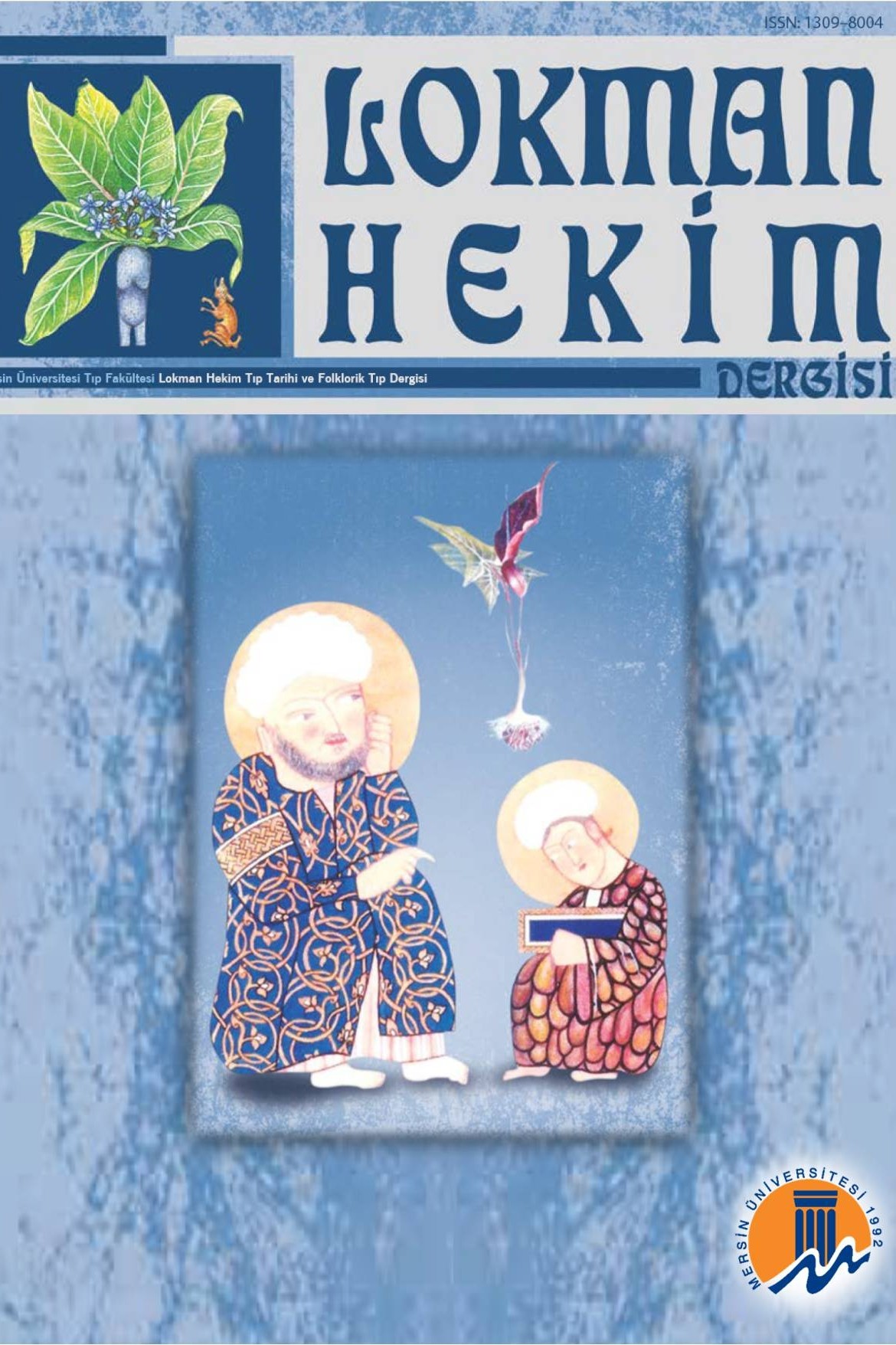
  Cover

Ayşegül Tuğuz

from composition of İlter Uzel named “Dioscorides and his Student

Address

Mersin Üniversitesi Tıp Fakültesi Tıp Tarihi ve Etik Anabilim Dalı Çiftlikköy Kampüsü

Yenişehir / Mersin