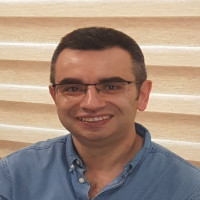
Editor in Chief


Editor
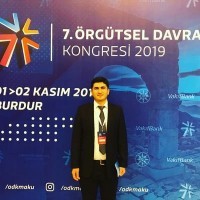




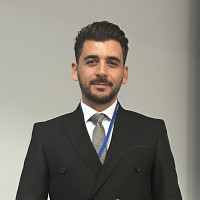
Seyhan ÖZDEMİR, Tarsus’ta doğdu. 2012 yılında Süleyman Demirel Üniversitesi İktisadi ve İdari Bilimler Fakültesi İşletme Bölümünden, 2014 yılında ise Sosyal Bilimler Enstitüsü İşletme Bölümü Yönetim ve Organizasyon anabilim dalından mezun oldu. Yine aynı üniversitede 2018 yılında doktora eğitimini tamamladı. Halen Süleyman Demirel Üniversitesinde İnsan Kaynaklari Yönetimi Bölümünde öğretim üyesi olarak çalışmaktadır.
İlgi alanları; örgütsel davranış, iş yeri duyguları(kıskançlık, intihar, damgalama), kirli işler ve örgütlerde sosyal medya çalıştığı konular arasındadır.
Editorial Board
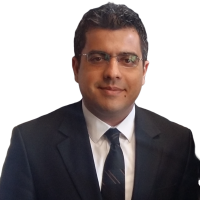


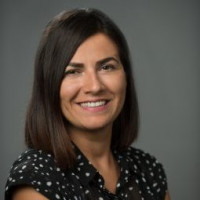
Born in 1978 in Nizip, Gaziantep, Şener completed her undergraduate studies in Health Education at Ankara University, in Sociology at Atatürk University, and Philosophy at Anadolu University. She holds two master’s degrees: one in Health Management from the Institute of Health Sciences at Ankara University, and another in Curriculum and Instruction from the Institute of Educational Sciences at the same university. She earned her Ph.D. in Management and Organization from Süleyman Demirel University. Her academic interests focus on the intersection of management with sociology, history, and philosophy. Between 2002 and 2005, she served as an instructor at the Ankara Gevher Nesibe Health Education Institute, and from 2005 to 2015 at Muğla Sıtkı Koçman University, Faculty of Health Sciences. Since 2015, she has been a faculty member in the Department of Business Administration at Kırşehir Ahi Evran University, specializing in Management and Organization. In 2021, Şener received the title of Associate Professor in “Management and Strategy.” She is the author of the books Organizational Revenge, Virtue from Organizational Theory to Organizational Behavior, and A Trilogy in Pursuit of Civic Virtue: Compliance, Morality, Voice. She has also served as editor of the volumes Knowledge Management in the Digital Age: Concepts, Theories and Applications, Industry 4.0 Paradigm: The Digital Transformation of Business Functions, and Women and Family.
Advisory Board
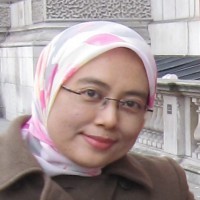
Dr. Asli Cennet Yalim is an assistant professor at the University of Central Florida School of Social Work. She draws on her interdisciplinary background and international experience to study refugees’ psychosocial wellbeing, understand the challenges refugees face upon resettlement in another country, and develop culturally responsive interventions to improve post-resettlement outcomes of refugees. Her areas of research are refugee mental health, trauma-informed services for immigrant populations, refugee women, CBT and mindfulness-based interventions, and wellbeing of healthcare workforce. Her methodological approach includes mixed-methods, grounded theory, and community-based participatory approach. Dr. Yalim has collaborated on funded projects including an interprofessional, evidence-based virtual program to prevent burnout, suicide, and mental health conditions among healthcare workers and the development of a mental health and psychosocial intervention with refugee women and survivors of earthquake in Turkey. She teaches courses on the topics of human behavior, research methods, and social work with immigrants and refugees.
Dr. Narina A. Samah is an associate professor at the Faculty of Educational Sciences and Technology, Universiti Teknologi Malaysia (UTM) Johor Bahru. She obtained her Bachelor of Human Sciences in Psychology (Hons) from the International Islamic University Malaysia (IIUM) in 1997, and her Master of Human Sciences in Psychology from the same university in 2001. Dr. Narina received her Doctor of Philosophy (PhD) from the University of Bristol, United Kingdom in 2011 and was later awarded a Graduate Certificate in Tertiary Education Management from the University of Melbourne, Australia in 2015. She currently teaches cognitive psychology and research methods in education, with a focus on qualitative psychology and narrative inquiry. Her research interests encompass the cognitive aspects of learning and teaching, with a great emphasis on critical reflection, reflexivity, epistemic cognition, metacognition, complex problem solving, and brain functional connectivity during the learning process, in addition to SoTL research exclusively.