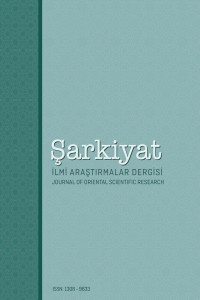
Volume: 17 Issue: 2 , 12/31/25

Year: 2025

Research Article

Research Article

6. AN EVALUATION OF ONLINE KURDISH TEACHING PLATFORMS

Research Article

12. TEVÂFUKLU MUSHAFLAR ÜZERİNE BİR İNCELEME

The Journal of Oriental Scientific Research is an open access journal that aims to contribute to the national and international literature with qualified studies in all areas of social sciences since 2009. In order to contribute to the development of academic knowledge in all fields, the journal publishes original research articles, research notes, interviews, book reviews, translations, biographies and bibliographies. All the publications of the journal are subject to double-blind peer review, as outlined in our Ethical Principles and Publication Policy. The target audience of the journal is primarily academics, postgraduate students engaged in academic activities, and institutions and organisations. The journal is published twice a year, in June and December.

The Journal of Oriental Scientific Research is an open access journal that aims to contribute to the national and international literature with qualified studies in all areas of social sciences since 2009. In order to contribute to the development of academic knowledge in all fields, the journal publishes original research articles, research notes, interviews, book reviews, translations, biographies and bibliographies. All the publications of the journal are subject to double-blind peer review, as outlined in our Ethical Principles and Publication Policy. The target audience of the journal is primarily academics, postgraduate students engaged in academic activities, and institutions and organisations. The journal is published twice a year, in June and December.

The following rules govern the composition of manuscripts submitted for publication in the JOURNAL OF ORIENTAL SCIENTIFIC RESEARCH (JOSR), a reviewed, open access journal published every six months.
The manuscripts are initially evaluated by the editor and the editorial board in terms of scientific expression and adherence to spelling rules. Manuscripts deemed suitable are then sent to three reviewers, selected for their expertise in the relevant scientific field. In accordance with the recommendations of the reviewers, a decision is made as to whether the article should be published or, alternatively, whether it should be published on the condition that corrections be made. Manuscripts that are deemed unsuitable for publication in accordance with the reviewers' recommendations are rejected.
Manuscripts should be submitted via the Dergipark platform. The title of the article should be written in sufficient detail to enable identification of the subject matter.
As of 1 January 2021, authors of articles submitted on or after this date are required to provide an extended abstract in English between 750 and 1,000 words if the reviewer processes are positive.
The name, title, institutional affiliation, and e-mail address of the author should be indicated with a starred footnote. In the event that the article is a translation, the source text from which it was derived must be indicated in the footnote. Furthermore, the original text should be provided with the translation. Furthermore, copyright certificates are required for translated works.
The identity of the author is concealed from the reviewers. The identities of the reviewers and authors are known only to the editorial board and are kept strictly confidential. The reports from the reviewers are retained in the journal archive.
In accordance with the recommendations set forth by the reviewers, authors may be required to implement certain corrections to their manuscripts. The final decision regarding the publication of the article is reserved for the editorial board.
Those articles deemed suitable for publication are then placed in the publication queue. Manuscripts that are rejected or deemed unsuitable for publication, even after correction requests, are not returned to the authors. Instead, the authors are informed of the reasons for rejection.
Those who serve on the editorial, advisory, and reviewer boards are precluded from participating in discussions and reviwer assignments pertaining to their own articles.
The authors are held accountable for the content of the published articles.
All articles submitted to the journal for publication must be original and must not have been previously published. The author is required to upload a plagiarism report to the system.
In the case of articles derived from graduate theses, this circumstance should be explicitly stated in the footnote or in the note to the editor accompanying the initial submission. Furthermore, it is imperative that the article in question is clearly identified as having been produced from the aforementioned thesis.
The journal accepts submissions of original and scientific publications in the field of social sciences.
The e-Journal of Oriental Studies retains all rights of ownership of the articles.
The language of the journal is Turkish, English, Arabic, Persian and Kurdish. Abstracts must be written in one of these languages.
All articles must include a Turkish and English abstract of a minimum of 150 and a maximum of 200 words. It is required that the English title of the article be included before the English abstract in all articles.
The keywords/key phrases should be presented in a concise manner, comprising a minimum of five and a maximum of six words.
The abstract should provide a concise overview of the research, including its scope, purpose, methodology, and key findings.
Spelling Rules
Works that are not submitted in accordance with the prescribed spelling rules will not be considered.
Manuscripts submitted to the journal should be in Word 2013 or a later version. Manuscripts not submitted in this format may present formatting issues, such as words ending each other. Prior to uploading the article to the system, it is imperative to examine the layout guide and utilise the provided template.
The article should be composed in the following manner.
The text should be written in Times New Roman.
The main text should be in 12 pt and single line spacing.
The footnote text should be in 10 font size and single line spacing. The text should be aligned to the left, with a paragraph spacing of 6pt before and 6pt after. Line spacing: 6 pt It is required that Turkish and English article titles be written in bold font.
It is expected that articles will include an abstract, an introduction, a conclusion, and a list of references.
Please submit high-resolution, print-quality scanned images as an attachment to the article. It is imperative that the established nomenclature for figures and charts is adhered to.
Manuscripts should not exceed 30 pages, exclusive of the bibliography. In the case of introductions, evaluations, manuscripts, editions or translations, greater flexibility may be permitted in this regard if the number of citations is high.
Furthermore, bibliographies of articles written in Arabic should be written in the Latin alphabet.
It is required that direct quotations be enclosed in quotation marks. Quotations of less than 2.5 lines should be presented in a separate format; quotations exceeding 2.5 lines should be placed at a distance of 1.5 cm from the right and left margins, in blocks and single-spaced.
The ISNAD citation system is not employed in our journal. It is necessary to edit the article by downloading the manual in Turkish/English from https://www.isnadsistemi.org.
The use of researcher identification numbers is intended to mitigate potential issues arising from similarities in names and institutions among researchers, scientists, and academicians engaged in scientific studies. In the context of the joint research project between TÜBİTAK ULAKBİM and YÖK, it has been resolved to utilise ORCID data. In this context, it was resolved to utilise the internationally acknowledged.

The editors of the Journal of Oriental Scientific Research are responsible for the publication, rejection, or return of manuscripts in accordance with the established academic values and criteria.
The editors may elect to forward a manuscript to a reviewer or alternatively, reject it without referring it to a reviewer.
In addition, editors may seek the advice of the editorial board and other relevant parties in relation to the publication process.
- Authors are subject to evaluation based on academic criteria without discrimination on the grounds of race, religion, language, ethnic origin, gender, political opinion, title, institutional affiliation, and so forth.
In the event of a conflict of interest, the author, reviewer and editor are each responsible to the other. In instances where a conflict of interest exists between the author, editor, and reviewer, the parties involved are required to declare this situation.
It is not permitted for board members other than the editors to have any information regarding the identity of the author. This information is not disclosed to third parties.
It is permitted to share, copy and distribute articles published in the journal, provided that references are given. Nevertheless, it may not be employed for commercial purposes.
In the event that a published article, table, picture, quotation, or other material is used in the article, the author is required to obtain written permission from the owner of the publication right and to indicate this.
- The articles must comply with the relevant scientific and ethical standards, and the authors are responsible for ensuring this is the case.
The Journal of Oriental Scientific Research does not implement any pricing policies with regard to the submission, evaluation and access of articles.
The Journal of Oriental Scientific Research maintains strict adherence to the highest standards of ethical conduct in accordance with international norms.
The articles submitted to the journal are subject to a plagiarism check.
The entire content of the journal is available in open access format. Prior to publication, all submitted articles undergo a preliminary scan using the iThenticate software.
Code of Ethics
- Approval from a separate ethics committee is required for all research activities, including those conducted in the social sciences. This also applies to clinical and experimental studies involving human and animal subjects, for which ethics committee approval is necessary. The approval granted by the ethics committee must be stated and documented in the article.
The following research projects are subject to ethical review by the relevant ethics committee:
All research conducted with qualitative or quantitative approaches that require data collection from participants using survey, interview, focus group study, observation, experiment, or interview techniques must be approved by the relevant ethics committee. This also applies to research that uses humans or animals (including material or data) for experimental or other scientific purposes, clinical research on humans, and research on animals.
Furthermore, retrospective studies must be conducted in accordance with the law on the protection of personal data. Additionally, in the event of presentations, it is necessary to state that the informed consent form has been obtained, to obtain and indicate permission from the owners for the use of scales, questionnaires, and photographs belonging to others, and to state that copyright regulations are complied with for the intellectual and artistic works used.
The Journal of Şarkiyat is committed to fulfilling its ethical duties and responsibilities in accordance with the Scientific Research and Publication Ethics Directive and the Committee on Publication Ethics (COPE) guidelines.
The Reviewing Process
The reviewing process begins with the submission of articles, which are then evaluated by the editors.
The Journal of Oriental Scientific Research employs a two-sided blind review process.
As the copyright of the articles submitted to reviewers for review is retained by the authors, it is not permitted for reviewers or editors to discuss, copy, disseminate or share the articles in any public forum.
At the editorial stage (prior to the reviewing process), manuscripts that do not align with the journal's scope, exhibit deficiencies in language and expression, or contain scientific inaccuracies are rejected. Additionally, manuscripts that do not adhere to the journal's publication policies are also declined.
Manuscripts that are rejected may be resubmitted for consideration if the requisite corrections are made in accordance with the requests made by the editors.
Manuscripts deemed suitable for evaluation are sent to two reviewers, who are experts in the relevant fields. The reviwers submit their evaluations via the online system.
In the event that one of the two reviwers provides a negative evaluation, the manuscript is then sent to a third reviewers.
If two of the three reviewers provide favourable recommendations, the article is published.
The period of time allotted for the reviewers to complete their evaluations is 15 days.
The reviwers are responsible for reviewing the manuscript and may:
The selection of reviewers is based on their expertise and areas of interest.
Author Obligations
It is expected that the manuscripts submitted by the authors will be original and of scientific value.
It is the responsibility of the author to ensure that all citations and quotations are accurately referenced and presented in the correct format.
It is inappropriate to include as an author any individual who has not contributed to the content of the text.
Any potential conflicts of interest should be disclosed at the time of submission.
It is the responsibility of the author to ensure that they possess the requisite rights to utilise the data and that the necessary research permissions have been obtained. It is the responsibility of the author to ensure that the studies have been approved by an ethics committee and that the necessary permissions for experimental research have been obtained. This information should be clearly stated in the text. In the absence of these conditions, the study may be rejected.
It is not permitted for an author to submit their work to more than one journal concurrently.
It is not permissible to submit a previously published study to the Journal.
Once a submission has been evaluated, it cannot be modified in any way, including the addition or removal of authors or the rearrangement of author names.
Papers should not be presented as papers in meetings, symposia or congresses.

No fee is charged on the author or institution under any name.

Baş Editör

Default avatar
Prof. Dr. Mehmet BİLEN DİCLE ÜNİVERSİTESİ İLAHİYATFAKÜLTESİ

1968 Şırnak Silopi'de doğdu. 1990'de Ankara Üniversitesi İlahiyat Fakültesinden mezun oldu. 1996'da Yüksek Lisans eğitimini, 2004'te doktorasını bitirdi. 2014'te doçent ve 2020'de profesör oldu.

Religion, Society and Culture Studies, Islamic Studies, Hadith

Editör Yardımcısı

Default avatar
Asst. Prof. Dr. Faruk EVRENK Dicle Üniversitesi
Sociology of Religion, Religion, Society and Culture Studies

Sekreter

Default avatar
Res. Assist. Nurulhilal ERTEKİN DİCLE ÜNİVERSİTESİ, İLAHİYAT FAKÜLTESİ
Religious Education

Alan Editörleri

Eyüp Aktürk
Prof. Dr. Eyüp AKTÜRK VAN YÜZÜNCÜ YIL ÜNİVERSİTESİ
Philosophy
Default avatar
Assoc. Prof. Adnan ÇETİN Mardin Artuklu Üniversitesi
Adnan Çetin, 1984 Bitlis doğumludur. İlk, orta ve lise eğitimini Bitlis'te tamamlamıştır. 2008 yılında İnönü Üniversitesi Fen-Edebiyat Fakültesi Sosyoloji Bölümünden mezun olmuştur. 2010 yılında aynı üniversitede "Şerif Mardin'in Modernlik Anlayışı" isimli teziyle yüksek lisansını, 2017 yılında da Mersin Üniversitesi Sosyoloji bölümünden "Türk Sinemasında Yoksulluk Temsilleri: 1960-1975 Dönemi" isimli teziyle doktorasını tamamlamıştır. Çetin, Mardin Artuklu Üniversitesi Sosyoloji Bölümünde öğretim üyesi olarak çalışmaktadır. İlgilendiği alanlar, sinema sosyolojisi, iletişim sosyolojisi ve sanat sosyolojisi gibi alanlardır.
Communication Sociology, Cinema Sociology
Tahirhan Aydın
Prof. Dr. Tahirhan AYDIN DİCLE ÜNİVERSİTESİ

Prof. Dr. Tahirhan AYDIN

1977 yılında Bitlis Hizan'da doğdu. İlk ve ortaokulu Hizan’da, liseyi Bitlis İmam Hatip’te mamaladı (1994). 1999 yılında Ankara Üniv. İlahiyat Fakültesinden mezun oldu. Aynı yıl bu fakültede Tefsir Anabilm Dalında Yüksek Lisans eğitimine başladı. 2003 yılında Ankara Üniv. İlahiyat Fakültesi Arap Dili ve Belagati ABD’ında araştırma görevlisi olarak göreve başladı. 2003-2005 yılları arasında Gazi Üniv. Eğitim Bil. Ens. Arap Dili Eğitimi ABD’ında “Çoklu zeka kuramı ve yabancılara Arapça öğretimi” isimli teziyle yüksek lisansını, aynı anabilim dalında 2005-2007 yılları arasında “Arapça ve Türkçede cümle yapısı, yabancılara Arapça cümle öğretimi -karşıtsal çözümleme-” adlı teziyle doktorasını tamamladı. 2007-2009 yılları arasında Ankara Üniversitesi İlahiyat Fakültesi’nde Arapça dersleri verdi.

2009-2011 yılları arasında bir buçuk yıl Mısır Kahire Üniversitesinde misafir öğretim üyesi sıfatıyla Arap dili alanında araştırmalarını sürdürdü. Bu süreçte bir dönem Ezhe Üniversitesi’nde ders verdi. 2011 yılında Ankara Üniversitesine dönüş yaptı ve 2012 yılında Mardin Artuklu Üniversitesi Edebiyat Fakültesi Arap Dili ve Edebiyatı Bölümüne yardımcı doçent olark atandı. 2014 yılında doçent oldu. 2017-2019 yılları arasında iki yıl Amerika İndiana Üniversitesi Yakın Doğu Dilleri ve Kültürleri Bölümünde (NELC) misafir araştırmacı statüsünde yabancı dil öğretimi alanında araştırmalarını sürdürdü ve konferanslar verdi.

2019 yılında Mardin Artuku Üniversitesine döndü. 2020 yılında aynı üniversitede Edebiyat Fakültesi Arap Dili ve Edebiyatı Bölümüne profesör olarak atandı. 2023 yılında Dicle Üniversitesi Edebiyat Fakültesi Doğu Dilleri ve Edebiyatları Bölümünde göreve başladı. 2025 yılında Bitlis Eren Üniversitesi İlahiyat Fakültesine dekan olarak atandı.

2015-2024 yılları arasında Erasmus Değişim Programı çerçevesinde Polonya Jagiellonian Universitesinde, Fransa Rouen Üniversitesinde, Ürdün Al-Zaytoonah Üniversitesinde ve İsveç’te dersler, konferanslar ve semineler verdi.

Prof. AYDIN, Enstitü Müdür Yardımcılığı, Erasmus Koordinatörlüğü, Bölüm ve Anabilim Dalı Başkanlığı, Senato Üyeliği, Fakülte Yönetim Kurulu Üyeliği, Fakülte Kurulu Üyeliği, BAP Kurulu Üyeliği gibi birçok akademik ve idari görevde bulundu.

İlgi ve çalışma alanları: Anadili öğretimi, yabancı dil öğretimi, Arapça öğretimi, Arap dili ve edebiyatı, Arap dilinin günümüz sorunları, dil pedagojisi, karşıtsal dilbilim, dilbilimi, karşılaştırmalı dilbilim, dil öğretim materyali geliştirme ve Kur’an araştırmaları. Türkçenin yanı sıra Arapça ve İngilizce bilmektedir. Bu dillerde çok sayıda makale, sempozyum bildirileri ve kitapları bulunmaktadır.

Language Studies, Linguistics, Kurdish Language, Literature and Culture, Education, Religion, Society and Culture Studies, Arabic Language and Rhetoric
Fuat İstemi
Assoc. Prof. Dr. Fuat İSTEMİ BATMAN ÜNİVERSİTESİ, İSLAMİ İLİMLER FAKÜLTESİ
Hadith
Islamic Sects
Üsame Bozkurt
Asst. Prof. Dr. Üsame BOZKURT DICLE UNIVERSITY, FACULTY OF THEOLOGY
Islamic Studies, Hadith
Default avatar
Asst. Prof. Dr. Hüseyin ZAMUR DİCLE ÜNİVERSİTESİ
Religion, Society and Culture Studies, Tafsir
Sociology of Religion, Religion, Society and Culture Studies

Doç. Dr.

Kurdish Language, Literature and Culture
Arabic Language and Rhetoric

Arapça Dil Editörü

Tahirhan Aydın
Prof. Dr. Tahirhan AYDIN DİCLE ÜNİVERSİTESİ

Prof. Dr. Tahirhan AYDIN

1977 yılında Bitlis Hizan'da doğdu. İlk ve ortaokulu Hizan’da, liseyi Bitlis İmam Hatip’te mamaladı (1994). 1999 yılında Ankara Üniv. İlahiyat Fakültesinden mezun oldu. Aynı yıl bu fakültede Tefsir Anabilm Dalında Yüksek Lisans eğitimine başladı. 2003 yılında Ankara Üniv. İlahiyat Fakültesi Arap Dili ve Belagati ABD’ında araştırma görevlisi olarak göreve başladı. 2003-2005 yılları arasında Gazi Üniv. Eğitim Bil. Ens. Arap Dili Eğitimi ABD’ında “Çoklu zeka kuramı ve yabancılara Arapça öğretimi” isimli teziyle yüksek lisansını, aynı anabilim dalında 2005-2007 yılları arasında “Arapça ve Türkçede cümle yapısı, yabancılara Arapça cümle öğretimi -karşıtsal çözümleme-” adlı teziyle doktorasını tamamladı. 2007-2009 yılları arasında Ankara Üniversitesi İlahiyat Fakültesi’nde Arapça dersleri verdi.

2009-2011 yılları arasında bir buçuk yıl Mısır Kahire Üniversitesinde misafir öğretim üyesi sıfatıyla Arap dili alanında araştırmalarını sürdürdü. Bu süreçte bir dönem Ezhe Üniversitesi’nde ders verdi. 2011 yılında Ankara Üniversitesine dönüş yaptı ve 2012 yılında Mardin Artuklu Üniversitesi Edebiyat Fakültesi Arap Dili ve Edebiyatı Bölümüne yardımcı doçent olark atandı. 2014 yılında doçent oldu. 2017-2019 yılları arasında iki yıl Amerika İndiana Üniversitesi Yakın Doğu Dilleri ve Kültürleri Bölümünde (NELC) misafir araştırmacı statüsünde yabancı dil öğretimi alanında araştırmalarını sürdürdü ve konferanslar verdi.

2019 yılında Mardin Artuku Üniversitesine döndü. 2020 yılında aynı üniversitede Edebiyat Fakültesi Arap Dili ve Edebiyatı Bölümüne profesör olarak atandı. 2023 yılında Dicle Üniversitesi Edebiyat Fakültesi Doğu Dilleri ve Edebiyatları Bölümünde göreve başladı. 2025 yılında Bitlis Eren Üniversitesi İlahiyat Fakültesine dekan olarak atandı.

2015-2024 yılları arasında Erasmus Değişim Programı çerçevesinde Polonya Jagiellonian Universitesinde, Fransa Rouen Üniversitesinde, Ürdün Al-Zaytoonah Üniversitesinde ve İsveç’te dersler, konferanslar ve semineler verdi.

Prof. AYDIN, Enstitü Müdür Yardımcılığı, Erasmus Koordinatörlüğü, Bölüm ve Anabilim Dalı Başkanlığı, Senato Üyeliği, Fakülte Yönetim Kurulu Üyeliği, Fakülte Kurulu Üyeliği, BAP Kurulu Üyeliği gibi birçok akademik ve idari görevde bulundu.

İlgi ve çalışma alanları: Anadili öğretimi, yabancı dil öğretimi, Arapça öğretimi, Arap dili ve edebiyatı, Arap dilinin günümüz sorunları, dil pedagojisi, karşıtsal dilbilim, dilbilimi, karşılaştırmalı dilbilim, dil öğretim materyali geliştirme ve Kur’an araştırmaları. Türkçenin yanı sıra Arapça ve İngilizce bilmektedir. Bu dillerde çok sayıda makale, sempozyum bildirileri ve kitapları bulunmaktadır.

Language Studies, Linguistics, Kurdish Language, Literature and Culture, Education, Religion, Society and Culture Studies, Arabic Language and Rhetoric

İngilizce Dil Editörü

Emrah Işık
Asst. Prof. Dr. Emrah IŞIK BATMAN ÜNİVERSİTESİ
British and Irish Language, Literature and Culture