PUBLICATION ETHICS AND EDITORIAL POLICY
1. General Principles of Publication Ethics
The Journal of History, Culture and Art Studies (TAKSAD) is a peer-reviewed academic journal committed to the principles of academic integrity, impartiality, transparency, originality, and scientific responsibility in scholarly research and publishing.
The journal considers maintaining the scientific reliability of published studies, ensuring compliance with research and publication ethics, and making high-quality contributions to academic knowledge among its fundamental responsibilities.
TAKSAD's ethical principles and editorial policies have been developed in accordance with the guidelines published by the Committee on Publication Ethics (COPE) and internationally recognized standards of scholarly publishing.
These principles apply to all stages of the publication process, from manuscript submission to publication, and are binding upon authors, reviewers, editors, and other stakeholders involved in the editorial process.
All manuscripts submitted to the journal must comply with the principles of research and publication ethics. Plagiarism, data fabrication, data falsification, duplicate publication, inappropriate authorship practices, and other forms of academic misconduct are strictly prohibited.
Allegations of ethical misconduct are evaluated in accordance with the principles of confidentiality, impartiality, and fairness. When necessary, explanations or supporting documents may be requested from the relevant individuals or institutions in accordance with COPE guidelines.
2. Authorship and Ethical Responsibilities of Authors
Authors submitting manuscripts to TAKSAD are required to comply with the following ethical principles.
1. Authors must declare that their manuscripts are original, have not been previously published elsewhere, and are not simultaneously under consideration by another journal.
2. Information, documents, data, images, and other materials used in the research must be obtained and utilized in accordance with research ethics. Ideas, findings, and statements belonging to other researchers must be appropriately acknowledged and cited.
3. Individuals listed as authors must have made substantial contributions to the conception or conduct of the research, the evaluation of data, or the development of the manuscript's scholarly content.
4. The order of authorship and the contributions of individual authors must be determined with the knowledge and approval of all authors before manuscript submission. Including individuals who have made no scholarly contribution or excluding individuals who qualify for authorship is unacceptable.
5. All authors must approve the final version of the manuscript submitted for publication and accept responsibility for its scholarly content.
6. Requests to add or remove authors or change the order of authorship after manuscript submission must be submitted to the editorial team with appropriate justification. Such changes will be considered based on the approval of all relevant authors and the evaluation of the editorial team.
7. Studies derived from postgraduate theses, papers presented at scientific conferences, or previously conducted research projects must clearly disclose their origins.
8. Authors are responsible for presenting their research findings accurately, completely, and without misleading interpretations. Data fabrication, data falsification, and the deliberate misrepresentation of research findings are prohibited.
9. Authors must respect copyright regulations and relevant legal requirements concerning the materials used in their manuscripts. Authors are responsible for obtaining and documenting any necessary permissions.
10. Authors must provide the information and supporting documents requested by the editorial team when necessary to clarify ethical concerns arising during manuscript evaluation.
11. Authors who identify significant errors or ethical concerns in their published or submitted work must promptly inform the editorial team and cooperate in any necessary correction or retraction procedures.
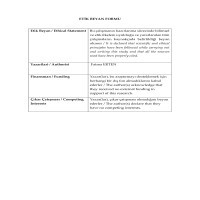
12. For manuscripts with multiple authors, author contribution statements and conflict of interest declarations must be submitted using the forms specified by the journal.
3. Ethical Responsibilities of Reviewers
TAKSAD adopts a double-blind peer review system in its scholarly evaluation process. Reviewers are expected to adhere to the principles of scientific impartiality, confidentiality, and academic integrity.
Reviewers are required to fulfill the following responsibilities.
1. Reviewers must evaluate manuscripts based on their scholarly quality, originality, methodology, academic consistency, and contribution to the relevant field.
2. Reviews must be objective, constructive, and supported by scientific reasoning. Prejudices concerning authors' personal characteristics, institutional affiliations, or academic perspectives must not influence the evaluation process.
3. Reviewers must maintain the confidentiality of manuscripts submitted to them for evaluation. Manuscript content must not be shared with third parties without the permission of the editorial team.
4. Reviewers must not use unpublished information, documents, or research findings obtained during the review process for their own benefit or that of third parties.
5. Reviewers who identify a potential conflict of interest involving the manuscript, its subject matter, or its authors must inform the editorial team and withdraw from the review process when necessary.
6. Reviewers must notify the editorial team if a manuscript falls outside their field of expertise or if they are unable to complete the evaluation within the designated period.
7. Reviewers must report significant scientific errors, deficiencies in citation practices, or suspected ethical violations identified in manuscripts to the editorial team.
8. Reviewers may recommend relevant published studies and additional references when necessary for scholarly evaluation. However, they must not request unnecessary citations for the purpose of increasing their personal citation counts.
9. Reviewer reports must not contain derogatory, personal, or otherwise inappropriate statements that fall outside the boundaries of scholarly evaluation.
10. Any use of generative artificial intelligence tools during peer review must not compromise manuscript confidentiality, data security, or the protection of personal information. Confidential manuscript content must not be uploaded to third-party artificial intelligence systems without permission from the editorial team.
Reviewers must conduct their evaluations independently and remain responsible for the content of their reports.
4. Ethical Responsibilities of Editors
The editors of TAKSAD are responsible for ensuring that all stages of the scholarly publishing process are conducted impartially, transparently, and in accordance with academic ethical principles.
The primary responsibilities of editors are as follows:
1. Editors must evaluate manuscripts based on their relevance to the journal's aims and scope, scholarly originality, academic quality, and compliance with publication ethics.
2. Decisions regarding the acceptance or rejection of manuscripts must not be influenced by discrimination based on authors' personal characteristics, institutional affiliations, academic titles, or scholarly perspectives.
3. Editors must adhere to the principles of double-blind peer review and protect the confidentiality of authors' and reviewers' identities throughout the evaluation process.
4. Reviewers must be selected based on their expertise in the relevant field, scholarly qualifications, and potential conflicts of interest.
5. Editors must take appropriate measures when handling manuscripts that may involve conflicts of interest related to themselves or their institutions. Where necessary, responsibility for the evaluation process must be transferred to another editor without such conflicts.
6. Final decisions regarding manuscript publication must be made by the editorial team based on reviewers' reports, the journal's editorial policies, and scholarly evaluation criteria.
7. Editors must ensure that manuscripts are processed as promptly and transparently as reasonably possible.
8. Editors must not use information or research findings contained in unpublished manuscripts for their own scholarly work without the authors' permission.
9. Editors must investigate complaints and allegations of publication ethics violations impartially and request explanations or supporting documents from the relevant parties when necessary.
10. Where significant errors or ethical violations are identified in published articles, editors must oversee the necessary correction, retraction, or expression of concern procedures.
11. Editors are responsible for maintaining the scientific reliability of the journal and protecting the integrity of the scholarly record.
5. Plagiarism and Similarity Policy
TAKSAD recognizes originality as one of the fundamental principles of scholarly research and publishing.
The use of ideas, statements, data, findings, or other works belonging to researchers without appropriate acknowledgment and citation constitutes plagiarism.
All manuscripts submitted to the journal must be original and prepared in accordance with the principles of proper scholarly citation.
5.1. Similarity Report
Before submitting a manuscript, authors must obtain a similarity report through the intihal.net system.
The similarity report must be uploaded to the designated section of the DergiPark manuscript submission system.
The overall similarity rate, excluding footnotes and references, is expected not to exceed 25%.
However, the similarity percentage alone does not constitute definitive evidence of the presence or absence of plagiarism. The nature of identified matches, citation practices, and scholarly originality of the manuscript are additionally evaluated by the editorial team.
Manuscripts exceeding the specified similarity threshold may be returned to the authors for necessary revisions or rejected during the preliminary screening stage.
Even when the similarity rate falls below the specified threshold, manuscripts involving suspected ethical misconduct may be subject to further investigation.
5.2. Investigation of Suspected Plagiarism
If plagiarism is suspected in a submitted or published manuscript, the editorial team initiates an investigation.
During the investigation, the manuscript's similarity report, citation practices, and other relevant scholarly documents are examined.
Where necessary, authors may be requested to provide explanations or additional documentation.
Depending on the nature and severity of the ethical violation, the following measures may be implemented:
- Returning or rejecting a manuscript undergoing evaluation.
- Initiating correction or retraction procedures for a published article.
- Informing the author's affiliated institution when necessary.
- Contacting relevant ethics committees or authorized institutions where appropriate.
Procedures concerning allegations of ethical misconduct are conducted in accordance with COPE guidelines. Authors are given the opportunity to provide explanations, and decisions are based on documented evidence.
6. Ethics Committee Approval and Research Ethics
All studies submitted to TAKSAD must be conducted in accordance with the principles of research ethics.
For research requiring ethics committee approval, authors must provide documentation demonstrating that the necessary approval has been obtained from the relevant committee.
Examples of research that may require ethics committee approval include:
- Studies involving direct data collection from human participants through surveys, interviews, focus groups, participant observation, or similar methods.
- Experimental or other scientific research involving human participants.
- Research involving the use of personal or sensitive data that requires ethics committee approval under applicable regulations.
- Other studies for which ethics committee approval is mandatory under relevant legislation and research ethics principles.
For studies requiring ethics committee approval, the name of the approving committee, the date of approval, and the approval number must be specified in the methodology section of the manuscript. Relevant information must also be provided in the appropriate section of the manuscript while observing the principles of double-blind peer review.
Where informed consent is required, authors must ensure that it has been obtained from research participants.
Personal information and research data relating to participants must be protected in accordance with confidentiality principles and applicable legal regulations.
For studies that do not require ethics committee approval, the editorial team may request an explanatory statement when necessary.
It should not be assumed that all research based on historical documents, published works, or existing literature requires ethics committee approval. The requirement for such approval is determined by the research methodology, the nature of the data used, and the applicable regulations.
7. Conflict of Interest Policy
TAKSAD considers the disclosure and appropriate management of conflicts of interest to be fundamental ethical responsibilities in scholarly publishing.
A conflict of interest may involve financial, academic, institutional, personal, or other relationships that could influence the conduct, evaluation, or publication of research.
Authors are required to disclose any potential conflicts of interest that may affect the preparation of their manuscripts or the interpretation of their findings.
For multi-authored manuscripts, the Conflict of Interest and Author Contribution Declaration Form must be completed and uploaded in accordance with the journal's requirements.
Reviewers must inform the editorial team of any potential conflicts of interest that may prevent them from conducting an impartial evaluation and withdraw from the review process when necessary.
Editors must not participate in the evaluation or decision-making processes of manuscripts in which they have a conflict of interest. In such cases, the manuscript must be handled by another editor without such conflicts.
Authors and other relevant parties are also required to submit the appropriate declarations when no conflicts of interest exist.
8. Duplicate Publication and Simultaneous Submission Policy
Manuscripts submitted to TAKSAD must not have been previously published in another journal or be simultaneously under consideration elsewhere.
The repeated use of the same research findings in multiple publications without providing an original and substantial scholarly contribution may constitute duplicate publication.
Resubmitting previously published work without substantial modification is not permitted.
Studies derived from postgraduate theses or papers presented at scientific conferences may be considered for publication, provided that their origins are clearly disclosed and they comply with the journal's editorial policies.
The thesis or conference paper from which a manuscript is derived must be appropriately identified.
Where manuscripts share data or content with previously published studies, the relationship between the publications must be disclosed and the relevant sources appropriately cited.
If duplicate publication or simultaneous submission is suspected, the editorial team initiates an investigation and may contact the relevant journals or institutions when necessary.
9. Generative Artificial Intelligence Use Policy
TAKSAD acknowledges that generative artificial intelligence technologies may be used in scholarly research and academic writing. However, their use must comply with the principles of academic integrity, transparency, and author accountability.
Authors using generative artificial intelligence tools are required to observe the following principles.
1. Authors remain fully responsible for the scholarly content, accuracy, originality, and ethical compliance of their manuscripts.
2. Generative artificial intelligence tools cannot be listed as authors, as they cannot assume the responsibilities associated with scholarly authorship.
3. The use of generative artificial intelligence tools that affects the scholarly content, data analysis, interpretation, or research findings must be disclosed appropriately.
4. Authors are responsible for verifying the accuracy of information, references, quotations, and bibliographic records generated by artificial intelligence tools.
5. The fabrication of nonexistent references, research data, or misleading scientific findings through artificial intelligence tools is strictly prohibited.
6. The use of artificial intelligence must not violate personal data confidentiality, copyright regulations, or the rights of third parties.
7. The editorial team may request additional information or clarification regarding the use of artificial intelligence tools when necessary.
A distinction is made between the use of artificial intelligence solely for improving grammar, language, or clarity of expression and its use in ways that influence the scholarly content of a manuscript. Uses affecting scholarly content must be transparently disclosed.
10. Correction, Retraction, and Expression of Concern Policy
TAKSAD implements post-publication correction, retraction, and expression of concern procedures to maintain the accuracy of published research and the reliability of the scholarly record.
These procedures are conducted with reference to the guidelines published by COPE.
10.1. Correction
A correction may be published when errors are identified in a published article that do not invalidate the fundamental findings or conclusions but nevertheless require correction to maintain the accuracy of the scholarly record.
Such errors may include significant typographical mistakes, inaccuracies in tables or figures, citation deficiencies, and other errors affecting the correct interpretation of the scholarly content.
Corrections are linked to the relevant articles and made accessible to readers.
10.2. Retraction
A published article may be retracted when serious errors or ethical violations are identified that render its scholarly findings unreliable.
Grounds for retraction may include data fabrication, data falsification, serious plagiarism, duplicate publication, and other circumstances that undermine the reliability of the research findings.
Retraction decisions are evaluated by the editorial team after considering the relevant evidence and explanations provided by the parties involved.
The publication records of retracted articles are preserved. The retraction is announced through a publicly accessible notice linked to the relevant article.
The retraction notice clearly states the reasons for the retraction and provides the relevant bibliographic information.
Except in exceptional circumstances involving legal obligations, the protection of personal data, or serious violations of rights, the complete removal of published articles from the journal's archive is generally avoided.
10.3. Expression of Concern
The editorial team may publish an expression of concern when serious questions arise regarding the scientific reliability or ethical compliance of a published article, but the relevant investigation has not yet been concluded.
An expression of concern is intended to inform readers of scientific or ethical uncertainties associated with the relevant article.
Following the completion of the investigation, the expression of concern may be updated, or a correction or retraction may be issued where appropriate.
The purpose of correction, retraction, and expression of concern procedures is to protect the accuracy and reliability of the scholarly literature.
11. Preliminary Screening and Double-Blind Peer Review Policy
Manuscripts submitted to TAKSAD undergo editorial preliminary screening before entering the scholarly peer review process.
During preliminary screening, manuscripts are evaluated for compliance with the journal's aims and scope, originality requirements, author guidelines, and document submission requirements.
The similarity report is also evaluated at this stage.
Research articles that successfully complete the preliminary screening process are submitted to at least two reviewers with expertise in the relevant field, in accordance with the principles of double-blind peer review.
Under the double-blind peer review system, the identities of authors and reviewers remain confidential from one another throughout the evaluation process.
Reviewer recommendations may include acceptance, rejection, minor revision, or major revision.
Where reviewers' recommendations differ, the opinion of a third reviewer may be sought in accordance with the journal's peer review procedures.
Book reviews and other publication types are subject to the editorial and scholarly evaluation procedures established by the journal for the relevant publication category.
Final decisions regarding manuscript publication are made by the editorial team, taking into consideration reviewers' reports, the journal's editorial policies, and scholarly evaluation criteria.
Positive recommendations from reviewers do not automatically guarantee publication.
Detailed provisions concerning the peer review process are provided in the journal's Manuscript Submission and Author Guidelines section.
12. Complaints, Allegations, and Appeals Procedure
TAKSAD attaches importance to the fair evaluation of allegations of ethical misconduct, complaints, and appeals concerning editorial decisions that may arise during the scholarly publishing process.
Allegations involving plagiarism, duplicate publication, inappropriate authorship, data falsification, conflicts of interest, and other ethical violations concerning submitted or published manuscripts may be reported to the editorial team.
Authors may also submit reasoned appeals if they believe that procedural errors have occurred during peer review or editorial decision-making.
Contact email: taksadkarabuk@gmail.com
The following principles apply to the evaluation of complaints and appeals:
1. Submissions are examined in accordance with the principles of confidentiality and impartiality.
2. Depending on the nature of the complaint or appeal, explanations and supporting documents may be requested from the relevant parties.
3. Allegations of ethical misconduct are evaluated based on concrete information and documented evidence. Allegations are not treated as established ethical violations before the necessary investigation has been conducted.
4. Where necessary, the opinions of relevant academic institutions or authorized ethics committees may be sought.
5. If a complaint directly concerns an editor or if the editor has a conflict of interest, the investigation is conducted by another authorized editor or editorial board member without such a conflict.
6. Decisions reached following the investigation are communicated to the relevant parties while respecting confidentiality obligations.
7. The relevant COPE guidelines are taken into consideration during the evaluation of complaints and appeals.
The purpose of the complaints and appeals procedure is to ensure fair conditions for scholarly evaluation and protect the academic reliability of the journal.
13. Post-Publication Ethical Responsibilities
TAKSAD's responsibilities concerning publication ethics do not end when an article is published.
Scientific errors, allegations of ethical misconduct, or other circumstances that may affect the accuracy of published research are evaluated by the editorial team.
Authors are required to inform the editorial team if they identify significant errors or concerns that may affect the scientific reliability of their published work.
Readers and other researchers may also report scientific errors or ethical concerns relating to published articles.
Following the necessary investigations, the editorial team may decide to issue a correction, retraction, or expression of concern.
All post-publication procedures are conducted with the aim of preserving the integrity of the scholarly record, ensuring appropriate public disclosure, and maintaining readers' access to accurate information.
14. Final Provisions
The Journal of History, Culture and Art Studies (TAKSAD) is committed to upholding the principles of academic integrity, scholarly originality, impartiality, and transparency throughout all stages of the publication process.
Authors submitting manuscripts to the journal, researchers accepting reviewer assignments, and editors participating in the publication process are required to comply with the relevant ethical principles and editorial policies.
Ethical matters not explicitly addressed in this policy are evaluated in accordance with COPE guidelines, relevant national and international standards of scholarly publishing, and applicable legislation.
TAKSAD remains committed to maintaining the reliability of scholarly knowledge, ensuring that academic research is published in accordance with ethical principles, and supporting high-quality scholarly contributions in the fields of history, culture, art, and literature.
TAKSAD Editorial Board