ODTÜ inşaat Müh Bölümü Emekli
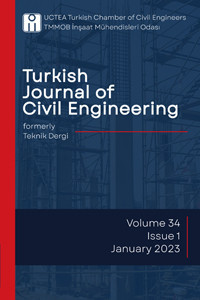
Turkish Journal of Civil Engineering (TJCE), a non-profit, open access scientific and technical periodical of UCTEA Chamber of Civil Engineers, publishes papers reporting original research work and major projects of interest in the area of civil engineering. TJCE annually publishes six issues and is open to papers in English and Turkish. Both printed and electronic versions of the journal are presented to the service of the civil engineering community. It should be noted that TJCE (formerly, Teknik Dergi/Technical Journal of Turkish Chamber of Civil Engineers) is being published regularly for more than 30 years since 1990 and is indexed by Web of Science (Journal Citation Indicator: 0.14 - 2021) and Scopus (CiteScore: 1.2 – 2022), among others.
The main objective of Turkish Journal of Civil Engineering is to inform the Turkish and international civil engineering communities, primarily the members of the Turkish Chamber of Civil Engineers about the recent scientific and technical developments, thus to contribute to the betterment of the civil engineering practice and to the improvement of the profession. In other words, to establish a bridge between the world of research and the world of practice.
Its bi-lingual character enables an easy access to those Turkish civil engineers who prefer to read in Turkish and at the same time to make itself heard internationally and thus to reach the civil engineering community globally.
The scope of Turkish Journal of Civil Engineering is naturally confined with the subjects falling in the area of civil engineering. However, the area of civil engineering has recently been significantly enlarged, even the definition of civil engineering has somewhat changed.
Half a century ago, engineering was simply defined as “the art of using and converting the natural resources for the benefit of the mankind”. Today, the same objective is expected to be realised (i) by complying with the desire and expectations of the people concerned and (ii) without wasting the resources and within the sustainability principles. This change has required an interaction between engineering and social and administrative sciences. Some subjects at the borderline between civil engineering and social and administrative sciences have consequently been included in the area of civil engineering.
Turkish Journal of Civil Engineering defines its scope in line with this understanding. However, it requires the papers falling in the borderline to have a significant component of civil engineering.
TURKISH JOURNAL OF CIVIL ENGINEERING MANUSCRIPT DRAFTING RULES
1. The whole manuscript (text, charts, equations, drawings etc.) should be arranged in Word and submitted in ready to print format. The article should be typed on A4 (210 x 297 mm) size paper using 10 pt (main title 15 pt) Times New Roman font, single spacing. Margins should be 40 mm on the left and right sides and 52.5 mm at the top and bottom of the page.
2. Including drawings and tables, articles should not exceed 25 pages, technical notes 10 pages.
3. Your contributed manuscript must be sent over the DergiPark system. (https://dergipark.org.tr/tekderg)
4. The text must be written in a clear and understandable language, conform to the grammar rules. Third singular person and passive tense must be used, and no inverted sentences should be contained.
5. Title must be short (10 words maximum) and clear, and reflect the content of the paper.
6. Sections should be arranged as: (i) abstract and keywords, (ii) title, abstract and keywords in the other language, (iii) main text, (iv) symbols, (v) acknowledgements (if required) and (vi) references.
7. Both abstracts should briefly describe the object, scope, method and conclusions of the work and should not exceed 100 words. If necessary, abstracts may be re-written without consulting the author. At least three keywords must be given. Titles, abstracts and keywords must be fitted in the first page leaving ten line space at the bottom of the first page and the main text must start in the second page.
8. Section and sub-section titles must be numbered complying with the standard TS1212.
9. Symbols must conform to the international rules; each symbol must be defined where it appears first, additionally, a list of symbols must be given in alphabetic order (first Latin, then Greek alphabets) at the end of the text (before References).
10. Equations must be numbered and these numbers must be shown in brackets at the end of the line.
11. Tables, drawings and photographs must be placed inside the text, each one should have a number and title and titles should be written above the tables and below the drawings and photographs.
12. Only SI units must be used in the manuscripts.
13. Quotes must be given in inverted commas and the source must be indicated with a reference number.
14. Acknowledgement must be short and mention the people/ institutions contributed or assisted the study.
15. References must be numbered (in brackets) in the text referring to the reference list arranged in the order of appearance in the text. References must include the following information:
If the reference is an article: Author’s surname, his/her initials, other authors, full title of the article, name of the journal, volume, issue, starting and ending pages, year of publication.
Example : Naghdi, P. M., Kalnins, A., On Vibrations of Elastic Spherical Shells. J. Appl. Mech., 29, 65-72, 1962.
If the reference is a book: Author’s surname, his/her initials, other authors, title of the book, volume number, editor if available, place of publication, year of publication.
Example : Kraus. H., Thin Elastic Shells, New York. Wiley, 1967.
If the reference is a conference paper: Author’s surname, his/her initials, other authors, title of the paper, title of the conference, location and year.
If the source is a thesis: Author’s surname, his/her initials, thesis title, level, university, year.
If the source is a report: Author’s surname, his/her initials, other authors, title of the report, type, number, institution it is submitted to, publication place, year.
16. Discussions to an article published in Turkish Jornal of Civil Engineering should not exceed two pages, must briefly express the addressed points, must criticize the content, not the author and must be written in a polite language. Authors’ closing remarks must also follow the above rules.
17. A separate note should accompany the manuscript. The note should include, (i) authors’ names, business and home addresses and phone numbers, (ii) brief resumes of the authors and (iii) a statement “I declare in honesty that this article is the product of a genuinely original study and that a similar version of the article has not been previously published anywhere else” signed by all authors.
18. Copyright has to be transferred to UCTEA Turkish Chamber of Civil Engineers. The standard copyright form signed by the authorised author should therefore be submitted together with the manuscript.
TURKISH JOURNAL OF CIVIL ENGINEERING CODE OF ETHICS
The Chamber of Civil Engineers is the publisher and its President is the official owner of Turkish Journal of Civil Engineering. The Editorial Board is appointed by the Executive Board and is responsible to define and implement the publication principles. The Board Chair is the Editor and The Board Members act as Area Editors. The Editorial Board is the sole authority in all matters concerning publication.
Under the current publication principles, the reviewers who evaluate the manuscripts are engaged as consultants. The reviewers are proposed by the area editors and appointed by the Editorial Board. Single blind review process is adopted, reviewers know the authors, authors do not know the reviewers. The area editors oversee the review process and act as rapporteurs to the Editorial Board summarising the review reports. The final accept/decline decisions are taken by the Editorial Board considering the rapporteur proposals.
The principles of ‘publication ethics’ observed in this activity have been inspired by the principles of the “Committee on Publication Ethics (COPE)”. The duties and the ethical responsibilities of each party involved in the publication of Turkish Journal of Civil Engineering are summarised below.
Duties and Ethical Responsibilities of the Authors
Duties and Ethical Responsibilities of the Reviewers
Duties and Ethical Responsibilities of the Area Editors
Duties and Ethical Responsibilities of the Editorial Board
Duties and Ethical Responsibilities of the Chamber of Civil Engineers
No fee is charged from the author or institution under any name.
Specializing in Structural and Earthquake Engineering, Prof. Dr. Alper İlki has been working at Istanbul Technical University, Faculty of Civil Engineering, Department of Civil Engineering since 1993. Alper İlki, who is the author of 95 articles published in Web of Science-indexed journals and 230+ full-text international conference papers, has been involved in many research projects on Structural and Earthquake engineering funded by European Union, NATO, TÜBİTAK, JICA, and others. Alper İlki, who has supervised 20 completed doctoral theses and more than 80 masters theses, has reviewed more than 400 scientific articles in 63 different scientific journals, 48 of which are indexed by Web of Science. Alper İlki, who is the Chairman of the Executive Committee of the Turkish Earthquake Foundation and a member of the Board of the Turkish Catastrophe Insurance Pool, has served for the drafting of Turkish Seismic Design Code (2007), Regulation on Assessment of Risky Buildings (2013) and Turkish Seismic Design Code (2018). Currently, he is working as an editor, assistant editor and subject editor for Turkish Journal of Civil Engineering, ASCE Journal of Structural Engineering, ASCE Journal of Composites for Construction, Arabian Journal for Science and Engineering and some other scientific journals, as well as serving in the AFAD IRAP Evaluation and Monitoring committee, among others. Other than delivering keynote and invited lectures in different parts of the world, he has been the chair (or co-chair) of several highly reputable international conferences, such as SMAR conference series since 2013, CICE 2020 and fib Symposium 2023, among others. Professor Ilki, who is the head of national delegation to fib-International, has been co-editor of three international books published by Springer; Seismic Risk Assessment and Retrofitting, Seismic Evaluation and Rehabilitation of Structures, Advances in Assessment and Modeling of Earthquake Loss with highly reputed researchers such as Michael Fardis, Mustafa Erdik and Sinan Akkar, among others. He has also been involved in design, construction, restoration and seismic retrofitting of a number of invaluable actual structures, such as Hagia Sophia in Istanbul and Nicosia, Sivas Divrigi Ulu Mosque and Hospital, Edirne Selimiye Mosque, among many others.
ODTÜ inşaat Müh Bölümü Emekli
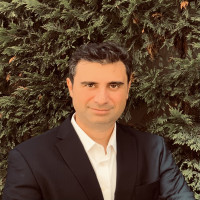
He was born in Istanbul in 1963, completed his primary, secondary, and high school education there. He graduated from the Department of Civil Engineering at Yıldız (Technical) University in 1985. He began his master's degree in Transportation at the Institute of Science at the same institution and completed it in 1987. Meanwhile, he began working as a research assistant in the Transportation Division of the Civil Engineering Department. He then enrolled in the Transportation PhD program at the same institution. Between 1990 and 1994, he conducted research on train scheduling at the Civil Engineering Department of Queen's University in Ontario, Canada, and at the Canadian Institute of Guided Ground Transport (CIGGT). Upon his return to Turkey, he completed his doctoral program in 1996. He began his teaching position in the Transportation Division of the Civil Engineering Department of Yıldız Technical University that same year, and continues to teach undergraduate and graduate courses. He focuses his research on the planning and operation of highway and railway transportation, with an interest in public transportation and sustainable transportation. He publishes his research in national and international journals and presents them at congresses.
Dr. Burcu Güldür Erkal is a faculty member in structural engineering and digital design at the Technical University of Applied Sciences Augsburg. Her doctoral research at Northeastern University focused on laser-based structural sensing and damage detection. Her work centers on structural analysis, seismic risk, and infrastructure condition assessment through the use of artificial intelligence, machine learning, and 3D data processing techniques. She has been involved in numerous interdisciplinary projects incorporating UAV-based sensing, deep learning, and computational modeling. Dr. Güldür Erkal teaches courses in structural mechanics, digital design, and AI-driven engineering methods, aiming to bridge traditional structural engineering with emerging digital technologies.
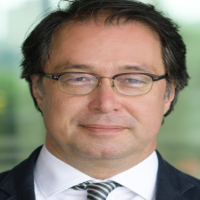
Dr. Mustafa Tokyay is a professor of Civil Engineering, now retired.
He served as Civil Engineering Dept. Chair (1999-2003) and Dean of Engineering Faculty (2003-2006) in Middle East Technical University. He worked as a visiting researcher in Dundee University, Scotland (1988-1989) and as a visiting professor in Eastern Mediterranean University, Cyprus (1993-1994).
He had been the president of Turkish Chamber of Civil Engineers (1994-1996), member of the Executive Board of Turkish Engineering Deans’ Council (2003-2006), member of the Administrative Council of SEFI, European Society of Engineering Education (2004-2007), member of Education and Training Standing Committee of ECCE, European Council of Civil Engineers (2006-2008). Finally, he worked in Atılım University as the chairman of Civil Engineering department (2019-2020).
Dr. Mustafa Tokyay was the Director of Cement and Concrete Research Department of Turkish Cement and Earthenware Industry (1995-1996), Director of Cement and Concrete Research Institute of TÇMB, Turkish Cement Manufacturers’ Association (1996-1999; 2008-2011) and served in several committees and project groups of the European Cement Association (CEMBUREAU) as the representative of TÇMB (1995-2005). He organized many national and international technical congresses and symposia on cement, concrete, and mineral admixtures.
His research interests include cement and concrete technology, use of industrial by-products in cement and concrete. He is the author, co-author, or editor of more than 80 national and international papers, proceedings, and books. He supervised 40 MS and 10 PhD theses, so far.
He was born in Istanbul in 1963, completed his primary, secondary, and high school education there. He graduated from the Department of Civil Engineering at Yıldız (Technical) University in 1985. He began his master's degree in Transportation at the Institute of Science at the same institution and completed it in 1987. Meanwhile, he began working as a research assistant in the Transportation Division of the Civil Engineering Department. He then enrolled in the Transportation PhD program at the same institution. Between 1990 and 1994, he conducted research on train scheduling at the Civil Engineering Department of Queen's University in Ontario, Canada, and at the Canadian Institute of Guided Ground Transport (CIGGT). Upon his return to Turkey, he completed his doctoral program in 1996. He began his teaching position in the Transportation Division of the Civil Engineering Department of Yıldız Technical University that same year, and continues to teach undergraduate and graduate courses. He focuses his research on the planning and operation of highway and railway transportation, with an interest in public transportation and sustainable transportation. He publishes his research in national and international journals and presents them at congresses.