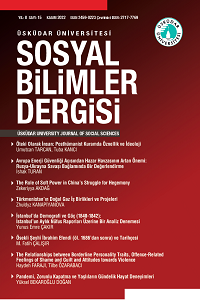
Araştırma Makalesi

Explaining Foreign Fighter Mobilization from the North Caucasus to Syria: Historical Legacy, Existing Networks, and Radicalized Identity

Sayı: 9 30 Aralık 2019
PDF İndir
TR EN

Explaining Foreign Fighter Mobilization from the North Caucasus to Syria: Historical Legacy, Existing Networks, and Radicalized Identity

Öz

This paper focuses on foreign fighter mobilization in the North Caucasus within the context of the similar motivations stemming from the Russian-Chechen wars and the Syrian Civil War. This paper seeks answers to the questions of what the conditions that facilitate the flow of the North Caucasian foreign fighters into Syria are and what the role of Russian-Chechen wars and other historical and social factors in this process is. This study proposes and applies an analytical framework of historical legacy, existing networks, and radicalized identity on the North Caucasian case. The empirical analysis is based on the examination of the expressions made by three North Caucasian fighters in Syria: Abdulhakim Shishani, Muslim Shishani, Salakhuddin Shishani. This study concludes that there is a historical continuity in the codes of radicalization and insurgency in the region from the past to present and same motivations may prompt foreign fighter mobilization in future conflicts.

Anahtar Kelimeler

Destekleyen Kurum

TUBITAK

Teşekkür

This work was supported by TUBITAK Support to Participation in International Scientific Activities [grant number 1919B021801511] and Istanbul University Health, Culture and Sports Department. I would also like to thank Ali Murat Kurşun for his support with his information, suggestions and contributions during the preparation of the article.

Kaynakça

  1. "Foreign Fighters under International Law" (Academic Briefing No.7, Geneva Academy of International Humanitarian Law and Human Rights, 2014), http://www.geneva-academy.ch/docs/publications/Briefings%20and%20In%20breifs/Foreign%20Fighters%20Under%20International%20Law%20Briefing%20no7.pdf (accessed July 8, 2018).
  2. Bakke, Kristin M. "Help Wanted?: The Mixed Record of Foreign Fighters in Domestic Insurgencies". International Security 38, no.4 (2014): 150–87. doi:10.1162/ISEC_a_00156.
  3. Bakker, Edwin, and Peter Grol. "Motives and Considerations of Potential Foreign Fighters from the Netherlands". (Policy Brief No.3, The International Centre for Counter-Terrorism – The Hague, July 2015), https://icct.nl/publication/motives-and-considerations-of-potential-foreign-fighters-from-the-netherlands/ (accessed June 20, 2018).
  4. Bakker, Edwin, and Roel de Bont. "Belgian and Dutch Jihadist Foreign Fighters (2012–2015): Characteristics, Motivations, and Roles in the War in Syria and Iraq". Small Wars & Insurgencies 27, no.5 (2016): 837–57. doi:10.1080/09592318.2016.1209806.
  5. Bie, Jasper L. de, Christianne J. de Poot, and Joanne P. van der Leun. "Shifting Modus Operandi of Jihadist Foreign Fighters From the Netherlands Between 2000 and 2013: A Crime Script Analysis". Terrorism and Political Violence 27, no.3 (2015):416–40. doi:10.1080/09546553.2015.1021038.
  6. Byman, Daniel. "The Homecomings: What Happens When Arab Foreign Fighters in Iraq and Syria Return?".Studies in Conflict & Terrorism 38, no.8 (2015): 581–602. doi:10.1080/1057610X.2015.1031556.
  7. Campana, Aurélie and Jean-François Ratelle. "A Political Sociology Approach to the Diffusion of Conflict from Chechnya to Dagestan and Ingushetia". Studies in Conflict & Terrorism 37, no.2 (2014): 115–34. doi:10.1080/1057610X.2014.862901.
  8. Dawson, Lorne L., and Amarnath Amarasingam. "Talking to Foreign Fighters: Insights into the Motivations for Hijrah to Syria and Iraq". Studies in Conflict & Terrorism 40, no.3 (2017):191–210. doi:10.1080/1057610X.2016.1274216.

Ayrıntılar

Birincil Dil

İngilizce

Konular

Uluslararası İlişkiler

Bölüm

Araştırma Makalesi

Yayımlanma Tarihi

30 Aralık 2019

Gönderilme Tarihi

9 Ağustos 2019

Kabul Tarihi

11 Ekim 2019

Yayımlandığı Sayı

Yıl 2019 Sayı: 9

Kaynak Göster

APA
Güney, B. G. (2019). Explaining Foreign Fighter Mobilization from the North Caucasus to Syria: Historical Legacy, Existing Networks, and Radicalized Identity. Üsküdar Üniversitesi Sosyal Bilimler Dergisi, 9, 241-274. https://doi.org/10.32739/uskudarsbd.5.9.65
AMA
1.Güney BG. Explaining Foreign Fighter Mobilization from the North Caucasus to Syria: Historical Legacy, Existing Networks, and Radicalized Identity. ÜSBİD. 2019;(9):241-274. doi:10.32739/uskudarsbd.5.9.65
Chicago
Güney, Beyza Gülin. 2019. “Explaining Foreign Fighter Mobilization from the North Caucasus to Syria: Historical Legacy, Existing Networks, and Radicalized Identity”. Üsküdar Üniversitesi Sosyal Bilimler Dergisi, sy 9: 241-74. https://doi.org/10.32739/uskudarsbd.5.9.65.
EndNote
Güney BG (01 Aralık 2019) Explaining Foreign Fighter Mobilization from the North Caucasus to Syria: Historical Legacy, Existing Networks, and Radicalized Identity. Üsküdar Üniversitesi Sosyal Bilimler Dergisi 9 241–274.
IEEE
[1]B. G. Güney, “Explaining Foreign Fighter Mobilization from the North Caucasus to Syria: Historical Legacy, Existing Networks, and Radicalized Identity”, ÜSBİD, sy 9, ss. 241–274, Ara. 2019, doi: 10.32739/uskudarsbd.5.9.65.
ISNAD
Güney, Beyza Gülin. “Explaining Foreign Fighter Mobilization from the North Caucasus to Syria: Historical Legacy, Existing Networks, and Radicalized Identity”. Üsküdar Üniversitesi Sosyal Bilimler Dergisi. 9 (01 Aralık 2019): 241-274. https://doi.org/10.32739/uskudarsbd.5.9.65.
JAMA
1.Güney BG. Explaining Foreign Fighter Mobilization from the North Caucasus to Syria: Historical Legacy, Existing Networks, and Radicalized Identity. ÜSBİD. 2019;:241–274.
MLA
Güney, Beyza Gülin. “Explaining Foreign Fighter Mobilization from the North Caucasus to Syria: Historical Legacy, Existing Networks, and Radicalized Identity”. Üsküdar Üniversitesi Sosyal Bilimler Dergisi, sy 9, Aralık 2019, ss. 241-74, doi:10.32739/uskudarsbd.5.9.65.
Vancouver
1.Beyza Gülin Güney. Explaining Foreign Fighter Mobilization from the North Caucasus to Syria: Historical Legacy, Existing Networks, and Radicalized Identity. ÜSBİD. 01 Aralık 2019;(9):241-74. doi:10.32739/uskudarsbd.5.9.65

Üsküdar Üniversitesi Sosyal Bilimler Dergisi’nde yayımlanan makalelerdeki görüşler yazarına aittir. Dergiye, daha önce başka bir dergide, kitapta vb. herhangi bir kaynakta yayımlanan makaleler kabul edilmemektedir. Ulusal veya uluslararası konferans, seminer ve panellerde sunulan bildiriler, dipnotta belirtildikten ve makale formatına dönüştürüldükten sonra yayın sürecine alınabilir.


Dergide yayımlanan akademik makaleler sadece eğitim amaçlı olarak çoğaltılabilir. Eğitim amacı dışında makaleler, makalelerdeki şekil, grafik ve tablolar izin alınmadan kısmen veya tamamen çoğaltılamaz, arşivlenemez. Akademik yayınlarda kaynak gösterilmesi şartı ile makalelerden alıntı yapılabilir. 


Yazarların, Üsküdar Üniversitesi Sosyal Bilimler Dergisi’nde yayınlanmak üzere göndermiş oldukları makaleler için telif ücreti talep etmeyeceklerini taahhüt ettikleri kabul edilir.