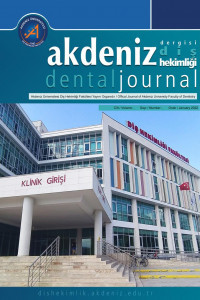
Akdeniz Dental Journal aims to contribute to human and public health by publishing original studies that have scientific and clinical value in the field of nursing all over the world, especially in Mediterranean Countries.
Original research, review, case reports, and letters to the editor with a strong scientific and philosophical basis are published in the Akdeniz Dental Journal. Theory-based, care-oriented studies that can be transferred to dentistry practice are the priority areas of the journal. Thus, the Journal aims to contribute to the development/strengthening of the dentistry discipline by providing the creation of new research areas on the basis of new information and evidence. It also accepts other multidisciplinary studies on topics that have a direct impact on dentistry practice.
The target group of the journal includes dental professionals involved in dentistry education and practice, students in the field of dentistry and other health, health professionals and related professional institutions and organizations.
Recommendations for the Conduct, Reporting, Editing, and Publication of Scholarly Work in Medical Journals (December 2021) prepared by the International Committee of Medical Journal Editors (ICMJE) (www.icmje.org) has been adopted in the preparation of the Akdeniz Journal of Nursing article writing rules.
General Principles
1. Articles sent for publication in the journal should be uploaded to the system as Word documents.
2. The text content should be prepared in 12-point Times New Roman font with double spacing and 1.5 cm margins from the edges.
3. The main and subheadings in the text should be written without numbering.
4. The abbreviations used in the article should be written clearly when first used, and the abbreviated form should be shown in parentheses.
5. Numerical data between 1 and 9 in the text should be indicated in writing, with numbers 10 and above, the sentence should not start with a number.
6. All pages should be numbered sequentially.
Manuscripts sent to the journal should be arranged in the following order.
Title Page
The title page should indicate the type, importance, original value, findings and importance of the article for the researchers/target audience. In addition, it should be stated on this page that the article has not been sent to another journal or published elsewhere, and if the abstract has been presented or published, the information should also be included. The contact information (affiliation, postal address, e-mail address, and telephone number) of the corresponding author should be specified.
Cover Letter
The Turkish and English title of the manuscript, the names, duties (academic titles), and contact information (e-mail, phone number) of all authors, the institution they work in, and their ORCID information should be written. The relationship status with the sponsor or a commercial company, the institution supporting the study, if any, whether there is a conflict of interest in the study, the institution from which the ethics committee approval was obtained, the date and number of approval should be stated. In articles that do not require ethics committee approval, the statement "Ethics committee approval is not required for this study" should be written.
Abstract
Each one should be prepared on a separate page in Turkish and English, and each of them should not exceed 250 words, including the titles. The abstract should be structured with the subtitles "Aim/Method(s)/Results;/Conclusion(s)" for original research, and should be prepared without any sections for reviews and case reports. The abstract should reflect the article, important conclusions should be given and its contribution to the practice should be stated. Abbreviations and references should not be used in the abstract.
Key words
Turkish and English keywords should be listed in alphabetical order, between 3-6, under the abstracts in accordance with “Index Medicus Medical Subject Headings (MeSH) (http://www.nlm.nih.gov/mesh/authors.html) standards.
Sections
1. Original research articles should include "Introduction, Method, Results, Discussion, Conclusion and Suggestions, Conflict of Interest, Author contributions, Acknowledgments and References" sections. The identity of the authors and institution information should be blinded in the manuscript.
2. The introduction should include the general features of the article and its contribution to the literature. A sentence containing the purpose of the article should be added at the end of this section.
3. The method section should contain details of the method of the study. It should be structured with sub-headings as "Type of Research, Research Population and Sample, Data Collection Tools and Application, Data Analysis, Ethical Dimension of Research, Limitations of the Study".
4. In studies with a human element, compliance with the principles of the Declaration of Helsinki, ethics committee approval and “İnformed Consent” from the participants should be included in the “Method” section.
5. In studies using animal elements, compliance with the "Guide for the Care and Use of Laboratory Animals" principles should be stated in the "Method" section.
6. In the Results section, the findings should be presented clearly, briefly and without comment.
7. The Discussion section should describe the findings and relate them to the findings of other authors, and describe the significance of the findings for clinical practice.
8. Review articles should be structured with subheadings of "relevant topics, conflict of interest and author contributions, references ".
9. Case reports should be structured with "introduction, case(s) presentation, discussion, conflict of interest and author contributions, references " sections.
10. Original research (including Turkish and English abstracts, excluding references and tables) and review articles (including Turkish and English abstracts, excluding references) should be 5000 words, and case reports should be limited to 2000 words.
References
1. References should be numbered at the end of the article, under the heading "References", according to the order of occurrence in the text.
2. Vancouver style should be used in the writing of references.
3. There should be no inconsistency between the list of references and the order in which they are included in the text, all references should be indicated in parentheses in the text.
4. If more than one reference is used, a comma should be placed between the references, and in case of using more than two references in a row, the first and last reference numbers should be specified ( e.g. 1-4).
5. All the names must be given for six or less than six authors resources, yet, “ve ark” in Turkish language resources and “et al” in English language resources must be added after first six authors’ names for the resources more than six authors.
6. English translations of Turkish references should be included in parentheses in the article reference whose language of writing is English.
7. References should be limited to publications within the last 5 years as much as possible.
8. The author(s) are responsible for the accuracy of the references.
References should be cited as in the examples below. The names of the journals should be given in abbreviated form in accordance with the Index Medicus, and the names of the journals that are not included in the Index should not be abbreviated. The spelling and punctuation of the references should be in accordance with the examples below.
9. The number of resources used should be a maximum of 50.
Examples for Writing References
For Journals
Albus C, Waller C, Fritzsche K, Gunold H, Haass M, Hamann B. Significance of psychosocial factors in cardiology: update 2018. Clin Res Cardiol. 2019;108(11):1175-96
For Books
Potter P, Perry A, Stockert P, Hall AM, Astle B, Duggleby W. Canadian fundamentals of nursing. 6th ed. Toronto: Elsevier Canada; 2019.
For chapters taken from books
Partridge H, Hallam G. Evidence-based practice and information literacy. In: Lipu S, Williamson K, Lloyd A. (eds.) Exploring methods in information literacy research. Wagga Wagga, Australia: Centre for Information Studies; 2017. p.149–170.
Web address
World Health Organization. Statistical reports from WHO programmes. Available from:
https://www.who.int/data/gho/publications/world-health-statistics [Accessed 15th June 2015].
Tables
1. Tables should not be placed in the text, each table should be on a separate page after the references.
2. Single line spacing should be used in table title writing. Table titles should be short and concise, and this title should be above the table.
3. Table explanations and abbreviations should be placed below the table.
4. If abbreviations are used in the table, the explanation of these abbreviations should be given below the table and in alphabetical order.
5. Each table in the main text should be mentioned and the places where the tables should be placed in the text should be specified.
6. The data presented in the tables should support the main text data and should not be a repetition of the data in the main text.
7. When using previously published tables, copyright permission should be obtained and should be stated in the table description. Writers have full legal, financial and penal responsibilities on these issues.
Figures, Images and Graphics
1. Figures should follow the tables, be placed on a separate page, and numbered according to the order they appear in the text.
2. The places of the figures in the main text should be specified and every figure should be mentioned in the text.
3. Images/photos must be colorful, with enough contrast and clarity to see details (pixel size 500x400 and 300 dpi resolution), and be uploaded to the system as a separate .jpg or .gif file.
4. If abbreviations are included in figures, graphics, and images, the explanation of these abbreviations should be placed below the figure and in alphabetical order.
5. In case of using previously printed figures, images, tables, graphics, or photographs of participants, the written permission of the copyright owner must be obtained and it must be stated as an explanation.
6. Writers have full legal, financial, and penal responsibilities on these issues.
Copyright Form
The authors transfer all their copyrights to Akdeniz Nursing Journal, starting from the evaluation of the articles. For this, the Copyright Form signed by all authors must be uploaded to the system during the entry of the articles into the system. In multi-author articles, ideas generation, study design, experimental applications, statistics, article writing, etc. contributions of the authors to the research should be presented within the scope of the Copyright Form. Authorship contribution information must be reported in the article before the references section.
Conflict of Interest Statement
People and organizations from which all kinds of aid and other support for research are received should be declared to the editorial board and the Conflict of Interest Statement should be filled in and uploaded to the system in order to explain the situations related to conflicts of interest (http://icmje.org/disclosure-of-interest/). If there is no conflict of interest, the phrase “conflict of interest: none” should be written in the conflict of interest section of the text.
You can access the Author Forms at this link: https://dergipark.org.tr/tr/journal/3798/file/5568/download
Article Reporting Guidelines
Accurate and complete reporting enables readers to fully evaluate and benefit from the research. For all manuscript submissions, authors must comply with the relevant EQUATOR (www.equator-network.org/home/) research reporting checklist, and the checklist used in the manuscript summary and method section must be specified. For each item on the checklist, the page number of the article that deals with that aspect of the guideline should be indicated. While drafting the manuscript, the checklist should be attached as an "additional file".
• CONSORT checklist for randomized controlled trials (Consolidated Standards of Reporting Trials)
• TREND checklist for non-randomized controlled studies (Transparent Reporting of Evaluations with Non-randomised Designs)
• PRISMA checklist for systematic reviews and meta-analyses (the Preferred Reporting Items for Systematic Reviews and Meta Analysis)
• STROBE checklist for observational studies
• COREQ checklist for qualitative studies
• SQUIRE checklist for quality improvement studies
• TRIPOD checklist for model development and/or validation
• COSMIN guide to Methodological Studies (Scale Development) (Consensus-based Standards for the Selection of Health Measurement Instruments-Study Design for Patient-reported outcome measurement instruments)
• SPIRIT checklist for study protocols
• AGREE checklist for clinical practice guidelines
• mERA checklist for mobile health evidence reporting and assessments
Open Access Statement
Akdeniz Dental Journal is an open access scientific journal. In the Akdeniz Dental Journal, it is not necessary to subscribe to the articles and the archive of the journal and can be accessed free of charge at https://dergipark.org.tr/en/pub/add
Price Policy
No fee is charged to the author(s) at any stage of the evaluation and publication process of the article. In addition, authors are not paid royalties for their articles. The published issue and the full texts of the articles in its content can be accessed free of charge.
ETHICAL PRINCIPLES
The Akdeniz Dental Journal asks the authors to comply with research and publication ethics. The scientific responsibility of all articles sent to the journal belongs to the authors. The order of names in the submitted articles should be a joint decision. All authors must meet the criteria for authorship listed below in the guideline for "Executing, Reporting, Editing and Publishing Scientific Studies in Medical Journals" by the International Committee of Medical Journal Editors- (ICMJE).
All authors;
• The content/design of the study; or have made a significant contribution to the collection, analysis, and interpretation of data for the study and to take all responsibility for this study,
• Have prepared articles or made critical reviews of important intellectual content,
• Viewing and approving the final version of the articles,
• They must accept and approve of being responsible for all aspects of the work.
People who do not meet these criteria but contributed to the study can be listed in the "Acknowledgements" section.
The corresponding author is deemed to have accepted the order of the authors on behalf of all authors by completing and signing the "Author Responsibility and Copyright Transfer Form". In addition, authors must make a signed statement that the publication is an original article, has not been published anywhere before, and will not attempt to publish it anywhere else during the review process.
Ethical principles in research on humans and animals
Compliance with national and international ethical guidelines and approval from the relevant ethical committees are essential for research in humans or animals.
The journal accepts the principle of compliance with the principles stated in the WMA “Helsinki Declaration”, “Good Clinical Practice Guide” and “Good Laboratory Practice Guide” and the related regulations of the Republic of Turkey Ministry of Health for all studies where a “Human” factor is included. In studies conducted on humans, it is obligatory to obtain permission from the "Clinical Research Ethics Committee" and send the relevant document to the journal. The authors must state that they have obtained the signed "Informed Consent" document from the relevant ethics committee and the participants of the study in the Method section of the article. Regardless of whether the patient's identity is revealed in case reports, and "Informed consent" document should be obtained from the patients or, if necessary, from their legal representative, and should be expressed in writing under the title of the case report of the article.
It is obligatory to obtain permission from the "Experimental Animals Ethics Committee" and to send a copy of the relevant document to the journal in research conducted on animals. In the Method section of the research, it is stated that all animals were subjected to humane treatment in experimental studies in accordance with the "Guide for the Care and Use of Laboratory Animals" (Guide for the Care and Use of Laboratory Animals, www.nap.edu/catalog/5140.html) and the Experimental Animals it should be stated that the Ethics Committee approval report has been received. In animal studies, it should be clearly stated what is done to avoid pain, suffering, and discomfort. If a copy of the Ethics Committee approval is not sent to the journal, the article will not be published.
Permissions
Akdeniz Dental Journal is licensed under the Creative Commons Attribution-NonCommercial-Non-Derivative 4.0 (CC BY-NC-ND) International License. This license permits re-users to copy and distribute the material in any medium or format only in an unadapted form, for non-commercial purposes only, and only as long as attribution is made to the owner.
Conflicts of Interest
Authors should declare any conflict of interest (if any) regarding their article. If the article has an indirect or direct commercial connection (such as employment, direct payments, stock ownership, firm consultancy, patent license adjustments, or service fee) or an institution that provides financial support for the study, the authors; used commercial product, drug, company, etc. and, if any, what kind of a relationship he has with the editor, on the submission page and also before the references section of the article, under the heading "Conflict of Interest" http://icmje.org/conflicts-of-interest/.
Authoring contribution
In multi-author articles, authors' contributions to research (idea creation, study design, experimental applications, statistics, writing of the article, etc.) should be explained and signed, and presented to the editor (within the scope of the copyright transfer form). Authorship contribution information must be reported in the article before the references section.
Financial Support
Financial support, donations, and all other activities (statistical analysis, English/Turkish evaluation) and/or technical help should be clearly stated if present before the references part of the article. The authors should also declare the roles of the sponsors of the study, if any, in the following areas: (1) Design of the study, (2) Data collection, analysis, and the interpretation of the results, (3) Writing of the report, (4) Deciding to send the article for publication.
Plagiarism
All articles sent to the Journal go through the iThenticate or Turnitin software and a similarity report is obtained before being accepted to the evaluation process. Articles with a similarity rate of more than 20% are considered to represent plagiarism and are rejected. The editorial board of the Akdeniz Nursing Journal acts in accordance with COPE's rules in case of allegations and suspicions of theft, citation manipulation, and data forgery related to the studies submitted to the Journal.
ETHICAL RESPONSIBILITIES
The aim is to have all stakeholders (authors, editors, and reviewers) who put forward a scientific study to contribute to the appropriate advancement of science. Compliance with the scientific ethical principles is important in scientific studies prepared in accordance with this goal. These principles have been adopted by us and their adoption has also been proposed by various stakeholders, some of which are presented below.
The editorial and publication processes of the Journal have been developed according to the directives of the International Committee of Medical Journal Editors (ICMJE), World Association of Medical Editors (WAME), Council of Science Editors (CSE), Committee on Publication Ethics (COPE), European Association of Science Editors (EASE) and the National Information Standards Organization (NISO). The Journal has adopted the Principles of Transparency and Best Practice in Scholarly Publishing (doaj.org./bestpractice).
Ethical Responsibilities of the Authors
Authors who submit articles to Akdeniz Dental Journal accept the ethical responsibilities listed below.
• To ensure the accuracy of data related to the study, to keep regular records of the research, and to be able to provide access to this data upon a possible request.
• Make sure that the article submitted is not published or accepted elsewhere.
• If the content presented matches any other content published or submitted elsewhere, to acknowledge this match and provide a reference.
If necessary, to provide to the editor a copy of any other study that may have similar content related to the work.
• To obtain permission to reproduce or use any content from other sources, and to provide references.
• Refer to it in a complete and accurate way and/or quoting
• To accept the changes and corrections to be made by the editor in advance, provided that no changes are made to the scientific content.
• If there are previously published quotations, tables, pictures, etc. in the article, obtain written permission from the responsible author and authors of the article, as well as from the relevant copyright holder, to indicate this in the article.
• In the case of using a scale in research articles, obtaining permissions from the authors who adapted the scale into Turkish (validity and reliability) and stating it in the article
• For all studies involving human or animal subjects, to ensure compliance with national and international laws and guidelines and indicate that the necessary approvals have been obtained, and respect the subject's privacy.
• To specify the relevant ethics committee approvals and research details in the “Methods” section of the study.
• Not being able to contact the section editor and referees directly during the evaluation and after the evaluation is completed, not to request information.
• In case of any conflict of interest, or when an ethical violation related to the article or in case you notice an error or error related to the article is detected, to share this with the editor and publisher and to publish a statement of error, addendum, or notice of compensation, or to withdraw the work if deemed necessary.
Ethical Responsibilities of the Editors
The editors of Akdeniz Dental Journal accept the following ethical responsibilities.
• To apply the policies of blind refereeing and evaluation process in the journal publication policies
• To act in a balanced, objective, and fair manner when performing the duties without discrimination regarding the gender, religious or political beliefs, or the ethnic or geographical origin of the authors.
• To evaluate the work submitted to the Journal according to its content and not act favorably towards any author.
• To take the necessary measures to prevent possible conflicts of interest and evaluate any existing relevant declarations.
• To treat sponsored work or any work on special subjects in the same way as other work.
• To apply the necessary procedures while adhering to the policies and rules of the Journal in case of a complaint related to an ethical violation.
• To provide the authors an opportunity to respond to a received complaint, and not to refrain from enforcing the necessary sanctions no matter who owns the work.
• Strive to meet the information needs of readers and writers
• To refuse received work if it does not meet the purpose and scope of the Journal.
Ethical Responsibilities of Section Editors
Sections editors of Akdeniz Dental Journal accept the following ethical responsibilities.
• Articles sent to the journal in accordance with the blind peer review system, subtracting the names of the authors (institutions) from the text of the article and sending it to the appropriate referees for the subject area of the article
• Ensuring the confidentiality of referee information in the blind refereeing process and not informing the authors about which referees the manuscript was sent to.
• To provide the necessary information and support for the evaluation process to be carried out in an impartial, scientific and objective manner.
• Appointing another referee instead of the referee who does not evaluate the submitted article within the given time.
Ethical Responsibilities of the Referees
Akdeniz Dental Journal referees accept the following ethical responsibilities.
• To objectively review the article in a timely manner to contribute to the editor's decision-making process and to agree to evaluate only the work related to the field of specialization.
• To make the assessment objectively and only in relation to the content of the study.
• To evaluate the work without regard to religious, political, and economic interests.
• To make recommendations that will help improve the quality of the article to be published and to carefully evaluate the work.
• To communicate any comments to the author with a constructive and polite style.
• To protect the confidentiality of the information provided by the editor and the author, to destroy in accordance with the privacy principle after the evaluation process the work that has been evaluated, to notify the editor and not evaluate the work if there is anything preventing blind arbitration.
• To be aware of possible conflicts of interest (financial, corporate, collaborative, or other relationships between the authors) and warn the editor to withdraw assistance for this article if necessary.
Disclaimer
The information, ideas and opinions in the articles published in the journal reflect the views of the author(s), not the views of Akdeniz University Faculty of Dentistry, editors, editorial board and/or publisher; The editors, editorial board and publisher do not accept any responsibility or liability for such materials.
No fee is charged to the author(s) at any stage of the evaluation and publication process of the article. In addition, authors are not paid royalties for their articles. The published issue and the full texts of the articles in its content can be accessed free of charge.
He graduated in Dentistry from Gazi University in 1999. In the same year, he started his PhD in the Department of Endodontics, Faculty of Dentistry at the Cumhuriyet University, Sivas, Turkiye. He received his PhD in 2004 and in 2006 he became Assistant Professor of Endodontics in the Faculty of Dentistry at the Karadeniz Technical University, Trabzon, Turkiye, spending his time teaching, giving lectures and participating in the faculty practice. He was conferred on the title of Associate Professor in 2009. Since 2011 he is working in the Department of Endodontics, Faculty of Dentistry at the Akdeniz University, Antalya, Turkiye as Senior Lecturer and Professor. Dr. ER has authored over 120 scientific articles and serves as a reviewer/board member/editor to many national and international journals. He is an active member of a number of professional organizations including the European Society of Endodontology (ESE), International Association of Dental Research (IADR) and the Turkish Society of Endodontics.
Research Interest
His academic interests include clinical research on endodontic techniques and biocompatibility, regenerative endodontics and dental traumatology.
Prof. Dr. Ömer Kırmalı is a faculty member at Akdeniz University Faculty of Dentistry, Department of Prosthodontics. In 2007, he graduated from Ankara University Faculty of Dentistry and in 2012, he completed his doctorate degree in Prosthodontics at Cumhuriyet University Institute of Health Sciences. He started his academic career as a research assistant in 2008, became an assistant professor in 2012, associate professor in 2016 and professor in 2022.
Focusing especially on zirconium, fiber post systems and surface treatment techniques, Prof. Dr. Kırmalı has published articles in more than 30 international peer-reviewed journals, his studies have been published in more than 20 national peer-reviewed journals and presented at numerous international scientific meetings. In addition, he has been involved as an executive or researcher in more than 20 scientific projects supported by different institutions.
Within the scope of his academic and administrative duties in the field of dentistry, he has assumed various roles such as faculty board member, vice dean and quality committee member at Akdeniz University Faculty of Dentistry. He makes important contributions to the field of prosthodontics with his scientific studies and clinical applications.
Dr. Fusun Ozer is a Professor of Restorative Dentistry at Penn Dental Medicine. Prior to joining Penn Dental Medicine in 2008, Dr. Ozer was at Selcuk University Faculty of Dentistry in Turkey, where she served as Chair of Restorative Dentistry for 10 years. She completed her residency and PhD degree in Operative Dentistry at the Marmara University Faculty of Dentistry in 1991. Dr. Ozer has a broad research background in adhesive dentistry, with specific training and expertise in research areas of material adhesion and developing more biologically stable adhesive/dentin interface. Her recent research interests focus on the effect of zeolite incorporation on the long-term antibacterial and anticariogenic properties of silver reinforced glass ionomer cements. One of her research projects also involves ZIF-8 as a pH-responsive nanoplatform for 5-fluorouracil delivery in the chemotherapy of oral squamous cell carcinoma. Dr. Ozer also conducts various company related clinical research studies. She works on several collaborative research projects with national and international researchers from different institutions and published a large number of peer-reviewed papers in the area of dental materials and particularly in Adhesive Dentistry.
2001-2006 İstanbul Üniversitesi Diş Hekimliği Fakültesi/ Lisans Eğitimi
2012-2016 Akdeniz Üniversitesi/ Uzmanlık eğitimi
2007-2012 Hacettepe Üniversitesi Diş Hekimliği Fakültesi'nden mezun olup 2013-2016 Selçuk Üniversitesi Diş Hekimliği Fakültesi Ağız, Diş ve Çene Radyolojisi'nde uzmanlık eğitimimi tamamladım. 2018'den beri Alanya Alaaddin Keykubat Üniversitesi Diş Hekimliği Fakültesi'nde öğretim üyesi olarak görev yapmaktayım.
I started my undergraduate education at Hacettepe University Faculty of Dentistry in 1997 and graduated in 2002. In 2003, I began my Ph.D. studies at Ondokuz Mayıs University, Faculty of Dentistry, Department of Dental Diseases and Treatment.
In 2009, I completed my doctoral dissertation titled “Comparison of the Effectiveness of Two Types of Lasers and Irrigation Solutions in Removing the Smear Layer from Root Canals” and obtained my Ph.D. degree. In 2011, I was appointed as an Assistant Professor in the Department of Endodontics at Ondokuz Mayıs University, Faculty of Dentistry.
I was awarded the title of Associate Professor in 2017 and Full Professor in 2024. I continue to serve in the same university.
2007 yılında Hacettepe Üniversitesi Diş Hekimliği Fakültesi’nden mezun olmasını takiben, Ankara Üniversitesi Diş Hekimliği Fakültesi Ağız, Diş ve Çene Cerrahisi Ana Bilim Dalı’nda uzmanlık ve doktora eğitim programını tamamlamıştır. 2012 yılında Akdeniz Üniversitesi Diş Hekimliği Fakültesi Ağız, Diş ve Çene Cerrahisi Ana Bilim Dalı’nda uzman doktor olarak görev yapmaya başlamış, 2015-2016 yılları arasında İngiltere’de Poole Hastanesi NHS Kuruluş Vakfı’nda fasiyal plastik cerrahi ve maksillofasiyal cerrahi ile mikrovasküler cerrahi eğitimlerini almıştır. Dr. Sindel 2018 yılında Ağız, Diş ve Çene Cerrahisi Doçenti ünvanını, 2024 yılında ise aynı dalda profesör ünvanını almış olup halen Akdeniz Üniversitesi Diş Hekimliği Fakültesi, Ağız, Diş ve Çene Cerrahisi Anabilim Dalı bünyesinde öğretim üyesi olarak görev yapmaktadır.
Klinik tecrübe ve araştırma alanları arasında dental implantoloji, TME, maksillofasiyal travma, oral hastalıklar, cerrahi anatomi, oral patoloji, ortognatik cerrahi, oral farmakoloji, maksillofasiyal anomaliler ve kraniyomandibular düzensizlikler yer almakta olup, farklı hakemli bilimsel dergilerde ilgili konularda yayımlanmış çok sayıda bilimsel makalesi ve kitap bölümleri mevcuttur.
Web
Professor Mayra Taitoleuovna Kopbayeva, MD, PhD, is a professor at Kazakh National Medical University, with over 170 publications, 2 monographs, 12 textbooks, and 14 patents. Leads 8 PhD defenses, conducts seminars and workshops internationally, and the Chairman of the Kazakhstan Dental Association.
NAZLI AKBAŞ
RESEARCH ASSISTANT
E-mail Address : nazakbas@gmail.com
Telephone (Business) : 3423171831
Telephone
(mobile) : 5372677253
Address : Gaziantep University Faculty of Communication Floor:1 Sahinbey/Gaziantep
Tuition Information
Doctorate2015-2021 ANKARA UNIVERSITY/INSTITUTE OF SOCIAL SCIENCES/PALEOANTHROPOLOGY (PHD)/
Thesis title: Oral and Dental Health of Muslim Skeletons (2021) Thesis Advisor:(İSMAİL ÖZER) (Turkish)
Master 2010-2014 ANKARA UNIVERSITY/FACULTY OF LANGUAGE, HISTORY AND GEOGRAPHY/DEPARTMENT OF ANTHROPOLOGY/DEPARTMENT OF PALEOANTHROPOLOGY/
Thesis title: Paleopathological analysis of Muslimtepe skeletons (2014) Thesis Advisor:(İSMAİL ÖZER) (Turkish)
License-2000-2008 ANKARA UNIVERSITY/FACULTY OF LANGUAGE, HISTORY AND GEOGRAPHY/DEPARTMENT OF ANTHROPOLOGY/DEPARTMENT OF PALEOANTHROPOLOGY/
Academic Duties
RESEARCH ASSISTANT
2017-continues GAZIANTEP UNIVERSITY/FACULTY OF COMMUNICATION/DEPARTMENT OF RADIO, TELEVISION AND CINEMA/DEPARTMENT OF RADIO AND TELEVISION
2012-2017 GAZIANTEP UNIVERSITY/FACULTY OF ARTS AND SCIENCES/DEPARTMENT OF SOCIOLOGY/DEPARTMENT OF GENERAL SOCIOLOGY AND METHODOLOGY
Tasks in Projects:
1. Güleç Village Mıhare Rock Residences, Sere Dike Rock Tombs, Kaniya Siri Rock Tombs, Kaniya Siri (Derya Ağa) fountain, İnkaya Rock Tombs, Cisterns and Quarry Rescue Excavation, Diyarbakir Museum Directorate, Researcher, 2022 - 2024 (NATIONAL)
2. Investigation of the 3rd Millennium BC Centers (Kura-Aras) in Hınıs District of Erzurum Province in Terms of Settlement Archaeology and Interregional Relations, General Directorate of Culture and Museums, Researcher, 2022- 2023 (NATIONAL)
3. Ankara Field Battle Area Determination, Other public institutions, General Directorate of Culture and Museums, Researcher:NAZLI AKBAŞ, 2022 - 2023 (NATIONAL)
4. Intercultural Communication Patterns and Space Experience of Syrian Immigrants and Gaziantep Natives: Problems, Opportunities, Articulations and Strategies of Struggle, -Tübitak 1003, Fellowship, , 2019 - 2022 (NATIONAL)
5. AGRI AND IĞDIR PROVINCES, "MIDDLE-LATE BRONZE AGE ARAS PAINTED CULTURE CASTLE, NECROPOLIS, SETTLEMENTS AND POTTERY", General Directorate of Culture and Museums, Researcher, 2022 - 2022 (NATIONAL)
6. Middle-Late Bronze Age Aras Painted Culture Castles, Necropolises, Settlements and Pottery, General Directorate of Culture and Museums, Researcher, 2020 - 2021 (NATIONAL)
7. Excavation of the Ancient City of Myrina and the Sanctuary of Gryneion in 2021, General Directorate of Culture and Museums, Researcher, 01/07/2021 - 15/12/2021 (NATIONAL)
8. Alanya Castle Excavation in 2020, General Directorate of Culture and Museums, Researcher, 01/07/2020 - 15/11/2020 (NATIONAL)
9. Euromos Ancient City Excavation, General Directorate of Culture and Museums, Researcher, 2019 - 2020 (NATIONAL)
10. Excavation of the Ancient City of Dara, Mardin museum directorate, Researcher, 2017 (NATIONAL)
11. The Relationship between Hand Preference and Dexterity and Intelligence in University Students, TÜBA, Fellowship, 2010 - 2011 (NATIONAL)
12. Ilısu Dam Archaeological Artifacts Recovery Project, General Directorate of Culture and Museums, Expert, 2009 - 2011 (NATIONAL)
Lecture
2023-2024
License Introduction to Social Anthropology
History of Civilization
2022-2023
License Introduction to Social Anthropology
History of Civilization
2021-2022
License Kinanthropometers
History of Civilization
Works
Articles published in international peer-reviewed journals:
1. AKBAS NAZLI, PARLITI UMUT, KARAOĞLAN MURAT (2023). A different view of the cult of Priapos in terms of a multidisciplinary approach. Journal of Complexes, 4(1), 161-172. (Publication No: 8347383)(Turkish)
2. AKBAS NAZLI (2022). Early Iron Age Burial Traditions on the Northern Slopes of Mount Ararat. Amisos, 9-27., Doi: 10.48122/amisos.1048711 (Pub. No: 7669665)(Turkish)
3. ÖZER ISMAIL, AKBAŞ NAZLI (2020). Length of life in the settlement of Muslimtepe (Diyarbakir), a Muslim medieval community. Anthropology(39), 1-17., Doi: 10.33613/anthropologyjournal.709905 (Publication No: 7180883)(Turkish)
4. AKBAS NAZLI (2017). Identification of Graves and Exposing Skeletons. Turkiye Klinikleri Forensic Medicine - Special Topics, 1(3), 9-15. (Publication No: 7180890)(Turkish)
B. Papers presented at international scientific meetings and published in proceedings:
1. AKBAŞ NAZLI, ŞEN REVŞAN (2024). Comparative Analysis of Syrian Arab and Turkmen Immigrants Living in Gaziantep on Traditional Ethnomedicine. International Symposium on Communication, Information and Society (Abstract Paper/Oral Presentation) (Publication No: 8998982)(Turkish)
2. ŞEN REVŞAN, AKBAŞ NAZLI (2023). The Role of Social Media in the Migration of Traditional Medicine Practices: The Case of Arabic Medicine. II. Migration Studies Symposium (GÖÇSEM 2023) (Abstract Paper/Oral Presentation) (Publication No: 8849109) (Turkish)
3. AKBAŞ NAZLI, KARAOĞLAN MURAT (2022). The irony of nature to the male: the biological blow of the female to the male-dominated culture. III.International Symposium on Mythology, 108-109. (Abstract Presentation/Oral Presentation) (Publication No: 8030860) (Turkish)
4. AKBAŞ NAZLI, ÖZER ISMAIL (2022). Oral and dental health in the Muslim Tepe community. 42nd International Symposium on Excavation, Research and Archaeometry (Full Text Paper / Oral Presentation) (Publication No: 7777251) (Turkish)
5. AKBAS NAZLI (2021). The Strategy of Ancient Societies to Use Geography in the Light of Iğdır Kurgans. III. International Aras Basin Symposium (Abstract Paper/Oral Presentation) (Publication No: 7272115) (Turkish)
6. AKBAS NAZLI (2021). Burial Tradition in Barak Turkmens of Gaziantep Region. International Symposium on Baraks from Central Asia to Anatolia, 255-270. (Full Text Paper/Oral Presentation) (Publication No: 7669677) (Turkish)
7. AKBAS NAZLI (2018). Paleopathological Analysis of Muslim Medieval Skeletons. 40th International Symposium on Excavation, Research and Archaeometry (Abstract Presentation/Oral Presentation) (Publication No: 7180906) (Turkish)
8. AKBAS NAZLI (2018). Anthropological Analysis of the Skeletons of the Ancient City of Dara in 2016. 40th International Symposium on Excavation, Research and Archaeometry (Abstract Paper/Oral Presentation) (Publication No: 7180905) (Turkish)
C. Presented at national scientific meetings and in proceedings books
1. AKBAS NAZLI (2021). Nomadic Mobility in the Suluçem Pass in Antiquity. I. National Workshop on Silk Road Routes in the Aras Basin (Abstract / Oral Presentation) (Publication No: 7180903) (Turkish)
2. AKBAS NAZLI (2015). Paleodemographic Comparison of Ancient Bronze Age and Medieval Societies of Muslimtepe. IV. National Demographics Conference (Abstract Paper/Oral Presentation) (Publication No: 7180896)(Turkish)
3. AKBAS NAZLI (2013). Muslim Ancient Bronze Age Burial Traditions. 5th Biological Anthropology Symposium (Abstract / Oral Presentation) (Publication No: 7180893) (Turkish)
D. National/international books or chapters in books: D2. Chapters in national/international books:
1. Root Canal Anatomy and Morphology: A Literature Update, Chapter name:(Human Dental, Root and Canal Anatomy in the Light of Paleoanthropological Studies) (2023)., AKBAŞ NAZLI, ERKAL DAMLA, TEKİNARSLAN DİDE, Turkiye Klinikleri, Editor:Kürşat ER, Number of Editions:1, Number of Pages: 186, ISBN:978-625-395-117-7, (Publication No: 8600468) Turkish(Scientific Book)
2. A REFLECTION OF THE PAST AND A GLIMPSE TO THE FUTURE RELIGION AND RITUAL IN ANATOLIAN ARCHAEOLOGY, (2023)., AKBAŞ NAZLI, PARLITI UMUT, Kabalcı Publishing, Editor:PARLITI, Umut, Number of editions:1, Number of Pages: 247, ISBN:978-625-8214-27-7, (Publication No: 8347422) English(Scientific Book)
Extra Collegiate Experience
Participant
Lifelong Learning Programme, (European Union)
Certificate
1. 360 Degree Communication with the Disabled Training, "360 Degree Communication with the Disabled" seminar training program organized by Gaziantep University, Gaziantep, Certificate, 30.03.2014 -02.04.2014 (National)
2. Let's Build Europe Together, Lifelong Learning Programme Grundtving Partnership by Families de France, Metz, France, Certificate, 07.10.2013 -12.10.2013 (Uluslararası)
3. Computer Usage, Computer Usage (Computer Management-Operator) certificate program organized by the Public Education Center, Gaziantep, Certificate, 22.11.2011 -04.01.2011 (National)
Course
1. Data Analyst Training, The Data analyst course is an intensive training that lasts for 12 months. Within the scope of the training, Excel, SQL, Python and Power BI programs are taught, and thanks to these programs, big data files can be queried, edited, coded, analyzed, and visualized., Online, Course, 2023 (International)
2. EU Project Writing Training with Artificial Intelligence, This course includes project cycle management, logical framework, project training used in Erasmus Plus program trainings and implementation studies., Online, Course, 2024 (International)
3. Diver Training Program, Turkish Underwater Sports Federation one star diver training program, Alanya, Course, 2020 (National)
4. Photography Training, GIFSAD III TERM BASIC PHOTOGRAPHY TRAINING organized by GIFSAD, GAZIANTEP, Course, 2011 (National)
Hobbies
Bike, Tennis, Camping, Traveling, Reading and Cinema
- PhD, Associate Professor, DDS, Master of Medical Science
- Associate Professor of Department of Restorative Dentistry at Uzhhorod National University (Ukraine)
- Head of the Scientific and Research Center of Forensic Odontology
- Laureate of Reward from the National Academy of Medical Sciences of Ukraine
- Member of Association of Forensic Odontology of Ukraine (Ukraine), Osteuropa Verein Rechtsmedizin (Germany), International Organization for Forensic Odonto-Stomatology (Italy)
- Ambassador of Digital Dentistry Society in Ukraine
- Member of Editorial and Advisory Board of Journal of International Dental and Medical Research (Turkey)
- Associate Editor of Pesquisa Brasileira em Odontopediatria e Clínica Integrada (Brazil), Ukrainian Dental Journal (Ukraine), Journal of Medical and Dental Investigations (Turkey)
- Member of Communication & Visual Strategy Committee of Digital Dentistry Society
Prof. Ingrid Różyło-Kalinowska, MD, PhD, DSc.
Born March 16th, 1973 in Lublin, Poland.
Prof. Ingrid Różyło-Kalinowska is the Head of the Department of Dental and Maxillofacial Radiodiagnostics of the Medical University of Lublin. In the years 2020-24 she served as the vice-Dean of the Faculty of Medical Dentistry of this University, and member of the Senate of the University. She is specialist in radiology and diagnostic imaging.
Scientific work of Ingrid Różyło-Kalinowska includes over 350 full papers and over 350 conference contributions. She is supervisor of 16 completed PhD theses, 2 on-going PhD processes as well as of 11 MSc dissertations. She was reviewer of 28 PhD theses, including candidates from Belgium, Brazil and Denmark.
She completed 9 training periods abroad (Chile, Costa Rica, France, Jordan, Spain, Turkey, UK) including Erasmus Plus program.
Her didactic work includes dental radiography and radiology, maxillofacial radiology, medical radiology and diagnostic imaging, she was a lecturer at numerous international courses and workshops on dentomaxillofacial radiology as well as invited speaker (e.g. FDI World Dental Congress Istanbul 2024, San Francisco 2019, FDI Regional Congress, Riyadh, Saudi Arabia 2025, Digital Dental Society/IADMFR Congress in Venice, Italy, 2025, ICDMFR Kaoshiung, Taiwan 2017). She delivers webinars in Polish, in English (eg. FDI Oral Health Campus “Benefits and limitations of Cone-Beam Computed Tomography in Clinical Practice”, Indonesia, Turkey) as well as in Spanish (Chile, South America).
She is the Past President of the European Academy of DentoMaxilloFacial Radiology and member of the Junior Committee of the EADMFR. She hosted the 3rd Junior Meeting of the EADMFR in Lublin, Poland, in 2016 and the 18th European Congress of DentoMaxilloFacial Radiology in 2022. She is a member of the ERO-FDI Working Group Digitalisation in Dentistry - e-Health-Artificial Intelligence.
She is the Regional Director of International Association of Dentomaxillofacial in Europe, Central Board Member of the Polish Dental Association, the vice-Chairman and former Chairman of the Section of DentoMaxillofacial Radiology of the Polish Medical Radiological Society. She is Honorary Member of the Oral Diagnosis and Maxillofacial Radiology Society in Turkey.
She is the Editor-in-Chief of the “Journal of Stomatology”, the official journal of the Polish Dental Association. She belongs to the editorial boards of several scientific journals including “Dentomaxillofacial Radiology” and serves as a reviewer of numerous manuscripts submitted to international scientific journal.
She is author of the book “Imaging Techniques in Dental Radiology” (Springer, 2020), co-editor and co-author the book “Temporomandibular Joint Imaging” (Springer, 2018), co-author of the books: “Artificial Intelligence in Dentistry” (Springer, 2024), “Atlas of Cone-Beam Computed Tomography” (Wiley, 2022), “Atlas of Dentomaxillofacial Anatomical Imaging” (Springer 2022), “Ultrasonography in Dentomaxillofacial Diagnostics” (Springer, 2021), “Essentials of Dental Medicine” (Naklada Slap, Croatia, 2021). She is co-author of 5 dentomaxillofacial radiology textbooks in Polish, chapters on dentomaxillofacial radiology in 7 Polish textbooks. She translated 8 medical textbooks (including 3 on dental as well as head and neck radiology) from English or German to Polish.
Founded: 2022
Period: 3 Issues Per Year
Publisher: Akdeniz University
