Editorial
Research Article
Issue Editorial Board




Dr. Zhouchao Wei is currently a full Professor at China University of Geosciences (Wuhan). He received his BSc degree in Applied Mathematics in 2006. In 2011, he received a PhD degree in Applied Mathematics from South China University of Technology. He joined the College of Mechanical Engineering of Beijing University of Technology in 2014 as a Postdoctoral Fellow, and the Faculty of Mechanical Engineering, Technical University of Lodz in Poland in 2015 as a Visiting Researcher. He has also been as a Visiting scholar at the Mathematical Institute, University of Oxford, UK, between 2016 and 2017. His current research interests include the qualitative theory of differential equations, chaos and bifurcation theory. He has been supported by several National Natural Science Funds and has published more than 50 relevant academic papers in SCOPUS-indexed journals. He has been supported by four National Natural Science Funds and the Young Top-notch Talent Cultivation Program of Hubei Province. He was selected into the "Elsevier list of highly cited scholars in China" and "highly cited scientists" by the web of science and clarivate analytics.

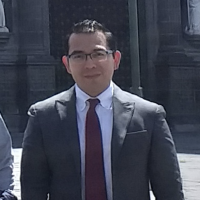


Jesus M. Munoz-Pacheco is a tenured professor in the Faculty of Electronics Sciences at Benemerita Universidad Autonoma de Puebla. He founded and currently leads the research group Fractional-order Systems and Nonlinear Circuits. He has published about 150 scientific works on chaotic systems and fractional-order calculus. He is ranked in the Top 2% global scientist list published by Stanford University-Elsevier in both the Single year list and the Career list from 2020 to 2025. Dr. Munoz-Pacheco is a senior member of the National System for Researchers by Conahcyt and the Government of Mexico. Dr. Munoz-Pacheco is also an Associate Editor for Frontiers in Physics, IJNM-Wiley, Frontiers in Applied Mathematics and Statistics, Chaos Theory and Applications, and so on.

Associate Prof. Dr. Hijaz Ahmad completed his MS in computational mathematics from the Department of Mathematics, COMSATS University Islamabad, Wah Campus. In 2022, he completed his PhD in Computational and Applied Mathematics from the Department of Basic Sciences and Islamiat, University of Engineering and Technology Peshawar, Pakistan and then he started his Post-doc from Lebanese American University, Beirut, Lebanon. His research work is focused on the development and advancement of numerical techniques for finding the numerical solution of mathematical models in the form of partial differential equations and fractional partial differential equations arising in finance, computational biology, and different disciplines of engineering. He has introduced modified variational iteration algorithm-I and modified variational iteration algorithm-II for the numerical solution of nonlinear partial differential equations and fractional iteration algorithm-I for finding the numerical solution of nonlinear non-integer order partial differential equations. The scope of his research is quite broad, covering numerical analysis, fractional calculus, mathematical biology and mathematical physics. Dr Ahmad is included in the World's Top 2% Scientists 2022, 2023 and 2024 (by Stanford University and Elsevier).

Dr. Orhan Ozgur Aybar is an Associate Professor at Piri Reis University (Istanbul, Türkiye), affiliated with Management Information Systems and Computational Science & Engineering, and I also serve as Director of the Institute of Graduate Education. His research focuses on dynamical systems, nonlinear differential equations, bifurcation and stability analysis, reaction-kinetics networks, and computational / symbolic–numeric modelling. He combines rigorous theory (e.g., Lyapunov methods, normal forms, multi-parameter analysis) with data-driven and high-precision computational approaches for problems motivated by biomedical, chemical, engineering, and complex-systems applications. He is active in international collaborations, including EU-funded projects (Marie S. Curie-MSCA; DSYREKI). He is also the author of the forthcoming Elsevier volume "Analytical and Computational Modeling of Complex Systems: A Systematic Approach to Understanding Real-World Complexity" (expected November 2026).



Aim & Scope
The journal aims to promote original research papers in the area of Chaos Theory and Applications (CHTA) to include practical innovations in Applied Sciences and Engineering. The journal aims to publish in as much detail as possible scientific advances in the field of chaos theory and applications with a focus on the practical and theoretical.
The journal publishes regular papers dealing with the following areas, but not limited to:
- Chaos theory and chaotic systems,
- Recent developments in chaos-based engineering applications,
- Chaos in finance and blockchain,
- Fractional-order chaotic systems,
- Design of analogue circuits of chaotic systems,
- Mem-elements-based systems,
- Chaos-based embedded system applications
- Deterministic and random vibrations,
- Mathematical modelling and chaos analysis in engineering,
- Complexity in physical, social and biological systems,
- Applications to biomedical, data security, control,
- Chaos and its dynamics in biological networks,
- Chaos and complexity in education,
- Applications in astrophysics, space, geophysics, theoretical and structural chemistry, biophysics, social systems, power grids, image and time series processing.
Author Guidelines
You can send your paper any format in the first version. If your paper is accepted, you must provide the items required for the publication of your article (Your Paper Your Way). The Paper Template (Latex files) can be downloaded from the following link,
Paper Template: chta_template
When submitting a paper, the author should check that he or she has the right to publish it and that it does not contain any defamatory material. The CHTA will assume that all co-authors have agreed to the paper's submission. The corresponding author should sign the journal copyright form on behalf of all co-authors and upload it to the Journal's Submission System. Copyright Form of the paper can be downloaded from the following link,
Copyrigth Form: Copyright Form
The journal publishes previously unpublished manuscripts that will have a high impact in the field of chaos theory and applications in applied sciences and engineering. It targets not only certain field specialists but the wider public also. Papers should be submitted in Microsoft Word (*.doc, *.docx) or pdf format. Copyright Form has to accompany each submission.
Abstract: It should not exceed 300 words.
Keywords: It should start with a bold “Keywords” title and should not exceed six keywords.
Introduction: For the introduction, authors should be mindful of the broad readership of the journal. The introduction should set the stage for the importance of the work to a generalist reader and draw the reader into the specific study. The scope and impact of the work should be clearly stated.
Co-Authorship: Place the author's name, affiliation and full address under the title. The affiliation and full addresses of each co-author must be specified in the case of multiple authorship of a submitted article. If more than one writer is present, please indicate clearly with an asterisk(*) who will handle the correspondence at all levels of refereeing and publishing, including post-publishing. Any alteration in the author names listed in the original manuscript, including additions, deletions, and/or changes in appearance order, requires proof of consent from all co-authors. When the paper is approved, it is forbidden to further switch co-authors.
* The journal only accepts the submission of manuscripts in English. The journal is free of charge (Template Support Fee: 100 USD - optional).
Ethical Principles and Publication Policy
- Author(s) must submit original studies to the journal. If they utilize or use other studies, they must make the in-text and end-text references accurately and completely.
- People who have not contributed to the study at the intellectual level should not be indicated as author.
- If the manuscripts submitted to be published are subject of conflicting interests or relations, these must be explained.
- During the review process of their manuscripts, author(s) may be asked to supply raw data. In such a case, author(s) should be ready to submit such data and information to the editorial and scientific boards.
- Author(s) should document that they have the participants' consent and the necessary permissions related with the sharing and research/analysis of the data that are used.
- Author(s) bears the responsibility to inform the editor of the journal or publisher if they happen to notice a mistake in their study which is in early release or publication process and to cooperate with the editors during the correction or withdrawal process.
- Authors cannot submit their studies to multiple journals simultaneously. Each submission can be made only after the previous one is completed. A study published in another journal cannot be submitted to Chaos Theory and Applications. Author responsibilities given in a study (e.g.: adding an author, reordering of author names) whose review process has begun cannot be changed.
Ethical Responsibilities of Editors
The editor and field editors of Chaos Theory and Applications should hold the following ethical responsibilities that are based on the guides "COPE Code of Conduct and Best Practice Guidelines for Journal Editors" and "COPE Best Practice Guidelines for Journal Editors" published as open Access by Committee on Publication Ethics (COPE).
- Making efforts to meet the demand for knowledge from readers and authors
- Ensuring the continuous development of the journal,
- Managing the procedures aimed to improve the quality of the studies published in the journal,
- Supporting freedom of expression,
- Ensuring academic integrity,
- Following the procedures without making concessions on intellectual property rights and ethical standards,
- Being transparent and clear in issues that require correction or explanation.
Editors have the following duties and responsibilities in their relations with authors:
- Editors must make positive or negative decisions about the studies' importance, originality, validity, clarity in wording and suitability with the journal's aims and objectives.
- Editors must accept the studies that are within the scope of publication into pre review process unless there are serious problems with the study.
- Editors must not ignore positive suggestions made by reviewers unless there are serious problems with the study.
- New editors, unless there are serious issues, must not change the previous editor's decisions about the studies.
- "Blind Review and Review Process" must be published and editors must prevent possible diversions in the defined processes.
- Authors should be provided with explanatory and informative feedback.
Relationships with Reviewers
Editors have the following duties and responsibilities in their relations with reviewers:
Editors must
- Choose reviewers according to the subject of the study.
- Provide the information and guidance reviewers may need during the review process.
- Observe whether there are conflicting interests between reviewers and authors.
- Keep the identities of reviewers confidential in blind review.
- Encourage the reviewers to review the manuscript in an unbiased, scientific and objective tone.
- Develop practices and policies that increase the performance of reviewers.
- Take necessary steps to update the reviewer pool dynamically.
- Prevent unkind and unscientific reviews.
- Make effort to ensure the reviewer pool has a wide range.
Relationships with the Editorial Board
Editors must make sure that the members of the editorial board follow the procedures in accordance with the publication policies and guidelines, and must inform the members about the publication policies and developments. Moreover, editors must
- Ensure that the members of the editorial board review the manuscripts in an unbiased and independent manner.
- Select the new members of the editorial board from those who can contribute to the journal and are qualified enough.
- Send manuscripts for review based on the subject of expertise of the editorial board members.
- Regularly communicate with the editorial board.Arrange regular meetings with the editorial board for the development of publication policies and the journal.
Relationships with the Journal's Owner and Publisher
The relationship between the editors and publisher is based on the principle of the independency of editors. All the decisions made by the editors are independent of the publisher and the owner of the journal as required by the agreement made between editors and publisher.
Editorial and Blind Review Processes
Editors are obliged to comply with the policies of "Blind Review and Review Process" stated in the journal's publication policies. Therefore, the editors ensure that each manuscript is reviewed in an unbiased, fair and timely manner.
Quality Assurance
Editors must make sure that articles in the journal are published in accordance with the publication policies of the journal and international standards.
Protection of Personal Information
Editors are supposed to protect the personal information related with the subjects or visuals in the studies being reviewed, and to reject the study if there is no documentation of the subjects' consent. Furthermore, editors are supposed to protect the personal information of the authors, reviewers and readers.
Encouraging Ethical Rules and Protection of Human and Animal Rights
Editors are supposed to protect human and animal rights in the studies being reviewed and must reject the experimental studies which do not have ethical and related committee’s approval about the population given in such studies.
Precautions against possible Abuse and Malpractice
Editors are supposed to take precautions against possible abuse and malpractice. They must conduct investigations meticulously and objectively in determining and evaluating complaints about such situations. They must also share the results of the investigation.
Ensuring Academic Integrity
Editors must make sure that the mistakes, inconsistencies or misdirections in studies are corrected quickly.
Protection of Intellectual Property Rights
Editors are responsible for protecting the intellectual property rights of all the articles published in the journal and the rights of the journal and author(s) in cases where these rights are violated. Also, editors must take the necessary precautions in order to prevent the content of all published articles from violating the intellectual property rights of other publications.
Constructiveness and Openness to Discussion
Editors must
- Pay attention to the convincing criticism about studies published in the journal and must have a constructive attitude towards such criticism.
- Grant the right of reply to the author(s) of the criticized study.
- Not ignore or exclude the study that include negative results.
Complaints
Editors must examine the complaints from authors, reviewers or readers and respond to them in an explanatory and enlightening manner.
Political and Economic Apprehensions
Neither the owner of the journal, publisher or any other political or economical factor can influence the independent decision taking of the editors.
Conflicting Interests
Editors, acknowledging that there may be conflicting interests between reviewers and other editors, guarantee that the publication process of the manuscripts will be completed in an independent and unbiased manner.
Ethical Responsibilities of Reviewers
The fact that all manuscripts are reviewed through "Blind Review" has a direct influence on the publication quality. This process ensures confidentiality by objective and independent review. The review process at CHTA is carried out on the principle of double blind review. Reviewers do not contact the authors directly, and the reviews and comments are conveyed through the journal management system. In this process, the reviewer views on the evaluation forms and full texts are assigned to the author(s) by the editor. Therefore, the reviewers doing review work for CHTA are supposed to bear the following ethical responsibilities:
Reviewers must
- Agree to review only in their subject of expertise.
- Review in an unbiased and confidential manner.
- Inform the editor of the journal if they think that they encounter conflict of interests and decline to review the manuscript during the review process.
- Dispose the manuscripts they have reviewed in accordance with the principle of confidentiality after the review process. Reviewers can use the final versions of the manuscripts they have reviewed only after publication.
- Review the manuscript objectively and only in terms of its content and ensure that nationality, gender, religious and political beliefs, and economic apprehension do not influence the review.
- Review the manuscript in a constructive and kind tone, avoid making personal comments including hostility, slander and insult.
- Review the manuscript they have agreed to review on time and in accordance with the ethical rules stated above.
Ethical Responsibilities of Publisher
The Editors and the Editorial Board of CHTA are conscious of the fact that they must observe the ethical responsibilities below and act accordingly:
- Editors are responsible for all the processes that the manuscripts submitted to CHTA will go through. Within this framework, ignoring the economic or political interests, the decision-makers are the editors.
- The publisher undertakes to have an independent editorial decision made.
- The originality of the manuscript submitted is the responsibility of the publisher. Submission, plagiarism, and self-plagiarism must be avoided by writers. Manuscript submission in the CrossCheck server (http:/www.ithenticate.com/) will be checked for plagiarism. iThenticate is a system that tests the originality of the submitted material and helps detect plagiarism. Authors can also use iThenticate to display their own credentials prior to submission.
- The publisher protects the intellectual property rights of all the articles published in CHTA and holds the responsibility to keep a record of each unpublished article.
- The publisher bears all the responsibility to take the precautions against scientific abuse, fraud and plagiarism.
Unethical Behaviour
Should you encounter any unethical act or content in CHTA apart from the ethical responsibilities listed above, please notify the journal by e-mail at journalofchta@gmail.com.
Price Policy
Authors are not required to pay an "Article Submission Fee, Editorial Processing Charge or Article Processing Charge (APC)" as part of the submission process to contribute to review and publish costs.
Authors of all accepted manuscripts are obligated to edit the layout of their paper according to the journal's template. If the authors are unable to edit their submitted manuscript to journal template, CHTA support team may provide this service for the authors by charging a "Template Support Fee" of 100 USD (OPTIONAL).
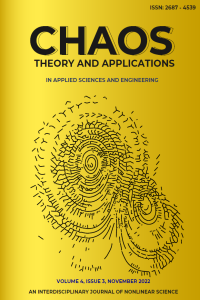
Chaos Theory and Applications in Applied Sciences and Engineering: An interdisciplinary journal of nonlinear science
The published articles in CHTA are licensed under a Creative Commons Attribution-NonCommercial 4.0 International License 