Volume: 3 Issue: 2 , 12/31/25

Year: 2025

Research Article

EFS aims to become a journal indexed first in TR Dizin, then in ESCI and SCOPUS in a short period of time by publishing high-quality scientific research. To this end, an initial application has been submitted to TR Dizin.
EFS aims to publish academic publications including original articles, reviews, case studies, policy implications etc. Special emphasis is given to research dealing with economics, finance and banking, and sustainability. Research articles applying new mathematical, statistical and econometric methods are welcomed.

EFS encourages contributions from academics, scholars, student researchers and especially early career researchers.

EFS is edited by an international editorial board and associate editors from within and outside Turkey. This provides access to prestigious referees and thus guarantees a high intellectual standard of published research. The editors are committed to being prompt and fair in all submissions.

There are no fees or charges associated with submitting or publishing with EFS.

The Journal of Economics, Finance and Sustainability (EFS) is an independent academic journal. The journal is published twice a year.

The Journal of Economics, Finance and Sustainability recognizes the importance of sustainability in the economic development of nations as well as in economics and finance. The main purpose of the journal is to provide an international platform for the publication of articles on economics, finance and sustainability. The articles in the journal consist of publications that include empirical and theoretical findings examining the economics, finance and sustainable economic development of developed and developing world nations. The journal also provides an opportunity for academics, researchers, managers and practitioners in the fields of economics, finance and sustainability to present their research findings.

The topics covered in the Journal of Economics, Finance and Sustainability include economic and financial development and policies, banking, Islamic finance, development and sustainability management, environmental and natural resource economics, green energy, financial technologies, public economics, labor economics, happiness economics, food economics, social capital, housing economics and population. However, the topics are not limited to these. EFS is published online as an open access journal, free to readers, to ensure optimal dissemination of interdisciplinary findings related to these topics to the academic and professional community. The open access nature of the journal is also expected to increase citations to articles published in EFS.

Journal of Economics, Finance and Sustainability is a double-blind peer-reviewed journal that accepts research and review articles in English.

You can follow the Author Guidelines.

Please prepare your article according to the Economics, Finance and Sustainability Journal article template. Submissions that do not follow the sample article template will not be considered.

* Please click to download the article template, copyright form and ethics committee form. Please upload the article to the system according to the template.

*Newly submitted articles must be anonymous.

*Authors can use British or American spelling for their articles; however, a consistent style must be used throughout the article.

*Language proofreading is mandatory before publication. This is the author's responsibility.

*Please register all author(s) when submitting your article to the Open Journal System. This is the author's responsibility. Please note that we cannot add any authors in progress or after the decision.

Writing Format

Articles submitted to the Journal of Economics, Finance and Sustainability should be written in Palatino Linotype style with 11 points, single line spacing, first line indentation 1 cm and 6 pt between paragraphs. References should be prepared according to APA 7 reference and showing the abstracts. Direct quotations are written in “ ”. If the direct quotation is longer than 40 words, it should be written as a separate paragraph without using “ ”, indented and in 8 points.

Word Limit: EFS is more flexible in terms of article length. Therefore, there is no word limit for any article type.

Body of Research Article

Abstract: The abstract of the article should give readers a general idea about the research, the abstract should be written in Palatino Linotype, 8 points, 150-250 words.

Introduction: It includes the purpose of the study, its importance, conceptual-theoretical framework and general information about the study.

Method: It provides information about the method and process followed in the study. This section should include the research design, research sample or group, data collection tools and process, and data analysis.

Findings: This is the main section where the collected data and findings are presented.

Results and Discussion: This is the section where the conclusion reached through the findings is presented, and references are made to similar studies and discussions in the literature on the same subject.

Declarations

All articles should include the following sections under the title 'Declaration': Acknowledgements, Conflict of Interest, Funding.

References: References should be prepared according to APA 7 reference and based on the sample article format.

The Ethical Statements of the Journal of Economics, Finance and Sustainability (EFS) are based on the Code of Conduct of the Committee on Publication Ethics (COPE), available at www.publicationethics.org. EFS follows the COPE Code of Conduct and Best Practice Guidelines and Core Practices for Journal Editors and aims to adhere to the Best Practice Principles. As a strong scientific community (publisher, editors, authors and reviewers), EFS is obliged to comply with these ethical principles.

PUBLISHER RESPONSIBILITIES

The Journal of Economics, Finance and Sustainability is an independent, non-profit, self-published academic journal. "The Journal of Economics, Finance and Sustainability" "EFS" is hereinafter referred to as the "Publisher".

The publisher must develop policies and design the journal's website in accordance with COPE's Principles of Transparency and Best Practice in Scientific Publishing.

The publisher agrees that all accepted manuscripts are published open access under the CC BY license, with no article submission, processing, and/or publication fees.

The publisher agrees to work with editors, editorial board members, and editorial assistants to periodically determine journal policies consistent with COPE, and will follow these policies.

The publisher guarantees editorial independence, while respecting the peer review process and refraining from involvement in editorial decisions.

The publisher guarantees timely publication of volumes and issues.

The publisher declares that it will remain neutral regarding jurisdictional claims and institutional affiliations in published maps.

The publisher maintains guidelines and policies for research ethics, consent, including confidentiality, and legal requirements for human and animal research.

The publisher enforces the rules of engagement between the publisher, editors, and third parties in any contract, protects intellectual property and copyright, respects confidentiality, and promotes editorial independence.

The publisher undertakes to ensure that no sponsor, even if they financially support the publisher, will be involved in decisions regarding the journal's editorial policies.

The publisher undertakes to comply with the journal's editorial policies, particularly in terms of transparency and integrity (e.g., research funding, conflicts of interest, and reporting standards).

The publisher undertakes to comply with the journal's editorial policies, particularly in terms of appeals and complaints.

The publisher undertakes to protect the integrity of scientific work.

The publisher undertakes to assist third parties (grantors, institutions, etc.) responsible for the investigation of suspected research and publication misconduct and, where possible, to facilitate the resolution of such cases.

The publisher undertakes to publish clarifications, corrections, and retractions in accordance with the decisions of the editorial board.

RESPONSIBILITIES OF EDITORS

The editors of the Journal of Economics, Finance, and Sustainability (EFS) are independent, and decisions regarding the editorial review process are not determined by any third-party agency or government policies.

EFS editors are responsible for the peer review process of articles and make the final decision on which articles will be published based on the comments of the reviewers and editorial board members.

EFS editors conduct editorial review of submitted articles based solely on their scientific merit, regardless of the author's gender, age, race, nationality, ethnicity, religion, political views, and institutional affiliation.

EFS editors are responsible for implementing and enforcing the journal's publication policies.

EFS editors form a committee of editorial board members to manage the process in cases of copyright infringement, plagiarism, slander, etc.

EFS editors, editorial board members, and editorial assistants cannot disclose any information about the submitted manuscript to anyone other than the relevant author and publisher.

The EFS editor-in-chief has full authority to publish the journal content in a timely manner regarding accepted manuscripts.

EFS editors are responsible for assigning manuscripts to referees with expertise in relevant research areas.

EFS editors ensure that all submitted manuscripts are peer-reviewed by at least two referees whose research is relevant to the submitted manuscript. If the decision is not final, EFS editors assign a third reviewer to reach a final decision.

EFS editors, editorial board members, and editorial assistants may not use unpublished material and information in submitted manuscripts for their own research purposes without the written permission of the authors.

EFS editors may not use privileged information or ideas obtained from the processing of articles for personal gain and are obliged to keep them confidential.

EFS editors refrain from editing manuscripts in which they have a conflict of interest arising from competition, collaboration or other relationships with any author, company or their affiliates; instead, they must ask another member of the editorial board to edit the manuscript.

EFS editors require all contributors to published manuscripts to disclose any relevant conflicting interests and to publish corrections if a conflict of interest arises after publication. If necessary, other appropriate action, such as a retraction or statement of concern, will be taken.

EFS editors protect the integrity of published articles by correcting and retracting when ethical concerns arise regarding a submitted or published article.

EFS editors are responsible for monitoring referee and editorial misconduct. When ethical complaints are made regarding submitted or published articles, EFS editors must take action in accordance with the journal's policies.

EFS editors will investigate any reported unethical publishing activity, even if it occurs years after publication. If there is a legitimate reason for the unethical violation, it will be published in the journal, with retraction or correction rules applied.

EFS editors follow the COPE Flowcharts when dealing with suspected cases of misconduct.

EFS editors, editorial board members, and editorial assistants may submit original manuscripts to EFS, but they should be aware that they will not be involved in peer review and editorial decision-making for their own manuscripts. In this case, the publisher selects a guest editor to independently conduct peer review and editorial decision-making for the manuscripts of EFS editors, editorial board members, and editorial assistants. The publisher makes clear to readers (for example, through a footnote or endnote in the article or on the journal website) how EFS staff will conduct the manuscripts. EFS follows the COPE Guidelines when it encounters disagreements.

REVIEWER RESPONSIBILITIES

Peer review is the process used to assess the quality of manuscripts before publication. Therefore, independent researchers whose research interests are relevant to the submitted article should evaluate the articles for validity, originality and importance to help the editors decide whether the article should be published in EFS.

EFS reviewers should accept that all articles are reviewed impartially based on their scientific content, regardless of the author's gender, age, sexual orientation, race, citizenship, ethnicity, religion, political views and institutional affiliation.

EFS reviewers are expected to inform the responsible editor if any conflict of interest arises in order to reject the review request for the assigned article.

EFS reviewers must acknowledge that they are constructive and objective in their reviews, and must avoid being hostile or inflammatory, and making defamatory or derogatory personal comments.

EFS reviewers must acknowledge that they have reviewed manuscripts in a timely manner that fall within their research expertise.

EFS reviewers may not use privileged information or ideas gained from reviewed manuscripts for their own personal advantage/disadvantage or to discredit others.

EFS reviewers must acknowledge that all information regarding manuscripts is kept confidential.

EFS reviewers must acknowledge that the detailed review report should be shared confidentially with EFS editors through the journal management system.

EFS reviewers can indicate the following four decisions for submitted articles:

Accept for Publication

Revisions Required (Accept with minor revisions: Revisions will be reviewed by editors)
Resubmit for Review (Major revisions: Will be reviewed for a second round)
Reject (Not recommended for publication)
Submit (Not in the journal's scope: Reject)

A third or fourth reviewer may be appointed at the discretion of the reviewers. In such a case, the same review process will be followed.

AUTHOR RESPONSIBILITIES

Anyone who meets the EFS criteria for authorship must be listed as an author. EFS expects all authors to take public responsibility for the content of articles submitted to EFS. All authors' contributions must be disclosed in the "Acknowledgements" section of the article. All authors must be contacted via email at the time of submission to ensure that they are aware of and approve the submission, content, and authorship of the article.

Authors must confirm that submitted manuscripts are not plagiarized, unpublished, original, and have not been submitted elsewhere.

Authors must confirm that they take full responsibility for plagiarism, copyright infringement, or other violations. Therefore, if their manuscripts contain copyrighted material belonging to third parties, copyrighted tables, figures, figures, or quotes or other works published elsewhere, they must obtain permission or approval and declare it clearly to the editorial board in a cover letter at the time of submission.

Authors must have obtained approval and ethical approval and must comply with ethical regulations if their research involves human and animal subjects, and must declare how they apply ethical principles in a footnote or in the methods section.

Authors must clearly declare any potential conflict of interest for each author.

Authors must present their completed/written manuscripts honestly, openly, and without falsification, fabrication, or inappropriate data manipulation. Authors must clearly present their research methods so that researchers can verify the results and not make false or deliberately misleading statements that lead to unethical behavior.

Authors may be asked to provide raw data for editorial review and, in any case, should be prepared to retain such data for a reasonable period after publication.

Authors should only submit manuscripts that are ethically and responsibly prepared and that comply with the journal's publication policies and scope.

Authors should acknowledge that sources such as data/support/funding were used in the development of the manuscript. These sources may be defined as Grant Makers, Foundations or institutions that provided ideas and expertise that substantially supported the research.

Authors should acknowledge that they must inform the EFS editors if they discover any errors or inaccuracies in their manuscript after it has been published.

Authors should submit their manuscripts to only one journal at a time. Authors should be aware that submitting the same manuscript to more than one journal at a time constitutes unethical publication behavior and is unacceptable.

Authorship and Contributions

The roles of all authors should be defined in the "Declaration" section of the manuscript and should be contacted at the time of submission to ensure that they are aware of and approve the submission, its content and authorship.

The order of authors should be based on their contributions to the article. Authorship should not be ranked according to academic position or other indicators of power. All contributing authors should be credited in the order of their contribution to the writing process.

Anyone who contributes to the production of an intellectual output is entitled to be listed as an author. “Ghost” authorship should not be permitted, and it is unacceptable to list as authors individuals who have not directly contributed to the research or its written output.

The status and institutional affiliation of all authors should be made visible in their research and output.

Authors have a fundamental obligation to acknowledge and cite all external sources, financial or in-kind, such as organizations or sponsors, who have contributed directly or indirectly to the research.

Authors should disclose the publication history of articles or books they submit for publication. An existing article or a book is significantly similar in content and format to a previously published article, this should be noted and the location of the previous publication should be indicated.


When the Journal of Economics, Finance and Sustainability (EFS) encounters disagreements among its authors, the EFS follows the guidance of the Committee on Publication Ethics (COPE)—click here and here to view.
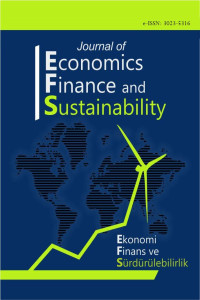

Journal of Economics Finance and Sustainability implements an open access publication policy under the CC BY- NC-ND license, without requiring any article submission, process and publishing fees.

Editör

Abdulmuttalip Pilatin
Assoc. Prof. Dr. Abdulmuttalip PİLATİN Recep Tayyip Erdoğan Üniversitesi

Abdulmuttalip PİLATİN, 1986 yılının Mart ayında Rize'de doğdu. İlköğretimi Trabzon Köprübaşı ilköğretim okulunda, Ortaokulu Rize Şevket Yardımcı İlköğretim Okulunda, lise eğitimini 2005 yılında Rize Lisesinde tamamladı. 2009 yılında Karadeniz Teknik Üniversitesi (KTÜ) İktisadi ve İdari Bilimler Fakültesi İşletme Bölümünde lisans eğitimini tamamladı.

2014 yılında Erasmus Bursu ile Polonya Lodz Üniversitesi Ekonomi Bölümünde bir dönem Yüksek Lisans eğitimi aldıktan sonra 2016 yılında "2008 Finansal Krizinin Öz Sermaye Kârlılıklarına Etkisi: BİST'te Bir Uygulama" konulu tezi ile Recep Tayyip Erdoğan Üniversitesi İşletme Yüksek Lisans Eğitimini tamamladı. 2017 yılında Gümüşhane Üniversitesi İşletme Finans Bölümünde başladığı doktorasını “Bankaların Kredi Kalitesi, Kredi Büyümesi ve Sosyal Sermaye İlişkisi: Türk Bankacılık Sektörü Örneği” konulu tezi ile 2021 yılında tamamlamıştır.

Halen Recep Tayyip Erdoğan Üniversitesi Finans ve Bankacılık Bölümünde Doç. Dr. olarak akademik çalışmalar ile idari görevlerine devam eden Pilatin kurucusu olduğu Journal of Economics, Finance and Sustainability (EFS) adlı uluslararası hakemli dergide editörlük yapmaktadır. Çok sayıda akademik yayına sahip olan Pilatin, ayrıca Recep Tayyip Erdoğan Üniversitesi Mezunlar Derneği Kurucu Başkanı ve FRize Fotoğraf Derneği Yönetim Kurulu üyesi olarak sivil toplum faaliyetlerine de devam etmektedir. Evli ve iki çocuk babasıdır.

Monetary-Banking, Capital Market, Green Economy, Ecology, Sustainability and Energy, Banking and Insurance, Finance and Investment, Behavioural Finance, Financial Markets and Institutions, Financial Risk Management

Editör Yardımcısı

.

Financial Economy, Finance and Investment, Environment and Climate Finance

Alan Editörleri

Ali Altıner
Assoc. Prof. Dr. Ali ALTINER RECEP TAYYİP ERDOĞAN ÜNİVERSİTESİ
Panel Data Analysis, Time-Series Analysis, Growth, Development Economics - Macro, Development Economics
Yeşim Şendur
Asst. Prof. Dr. Yeşim ŞENDUR İZMİR KATİP ÇELEBİ ÜNİVERSİTESİ
International Finance, Environment and Climate Finance, Financial Markets and Institutions
Önder Dilek
Assoc. Prof. Dr. Önder DİLEK MEHMET AKİF ERSOY ÜNİVERSİTESİ, BUCAK İŞLETME FAKÜLTESİ
Behavioural Economy, Financial Economy, Theory of Economy
Cemal Kakışım
Assoc. Prof. Dr. Cemal KAKIŞIM RECEP TAYYİP ERDOĞAN ÜNİVERSİTESİ
Political Science, International Politics, International Relations, European Studies
Tunahan Hacıimamoğlu
Assoc. Prof. Dr. Tunahan HACIİMAMOĞLU RECEP TAYYİP ERDOĞAN ÜNİVERSİTESİ

1988 yılında Ordu'da doğan Tunahan Hacıimamoğlu, 2005 yılında İstanbul Nevzat Ayaz Lisesi'nde lise eğitimini, 2012 yılında Kocaeli Üniversitesi İktisadi ve İdari Bilimler Fakültesi İktisat Bölümünde lisans eğitimini tamamlamıştır. 2016 yılında Recep Tayyip Erdoğan Üniversitesi İktisadi ve İdari Bilimler Fakültesi İktisat Bölümü İktisadi Gelişme ve Uluslararası İktisat Anabilim Dalı'nda araştırma görevlisi olarak göreve başlamıştır. 2016 yılında Kocaeli Üniversitesi Sosyal Bilimler Enstitüsü İktisat Anabilim Dalı İktisadi Gelişme ve Uluslararası İktisat Bilim Dalı'nda “Doğrudan Yabancı Yatırımların Kurumsal Belirleyicileri: OECD Örneği” konulu tezi ile yüksek lisans eğitimini tamamlamıştır. Doktora eğitimini Recep Tayyip Erdoğan Üniversitesi Sosyal Bilimler Enstitüsü İktisat Anabilim Dalı'n­da 2021 yılında “Yenilenebilir Enerji Tüketiminin Ekonomik İstikrara Etkisi: RECAI Ülkeleri Örneği” konulu tezi ile tamamlamıştır. Üniversitelerarası Kurul Başkanlığı (ÜAK) tarafından yayın ve çalışmalarının değerlendirilmesi sonucunda başarılı olan Tunahan HACIİMAMOĞLU, 20.07.2023 tarihinde Makro İktisat Bilim alanında Doçent ünvanı almaya hak kazanmıştır. Halen Recep Tayyip Erdoğan Üniversitesi İktisadi ve İdari Bilimler Fakültesi İktisat Bölümü İktisadi Gelişme ve Uluslararası İktisat Anabilim Dalı'nda Doçent Doktor olarak çalışmalarına devam etmektedir.

Evli ve bir çocuk babasıdır.

Panel Data Analysis, Time-Series Analysis, Growth, Development Economics - Macro
Default avatar
Assoc. Prof. Dr. Ummara RAZİ Sunway University Business School
Sustainable Development, Ecology, Sustainability and Energy, Environment and Climate Finance
Ahmet Şit
Assoc. Prof. Dr. Ahmet ŞİT Malatya Turgut Özal Üniversitesi

1984 yılında Hatay Dörtyol'da doğdu. 2008 yılında İnönü Üniversitesi İİBF İşletme bölümünden, 2012'de İnönü Üniversitesi SBE Muhasebe-Finansman Anabilim Dalında yüksek lisansını 2018'de İnönü Üniversitesi SBE Muhasebe-Finansman Anabilim Dalında doktora eğitimini tamamladı. 2022 yılında Finans alanında Doçent unvanını aldı. Ulusal ve uluslararası alanda birçok makale, bildiri, kitap/kitap bölümü vardır. 2011-2018 yılları arasında Kilis 7 Aralık Üniversitesi SBMYO Muhasebe ve Vergi ve Uygulamaları Bölümünde öğretim görevlisi olarak 2018-2021 arası aynı bölümde Dr. Öğr. Üyesi olarak çalıştı. 2021-2022 yılları arasında Malatya Turgut Özal Üniversitesi SBBF Uluslararası Ticaret ve Finansman bölümünde  Dr. Öğr. Üyesi olarak, 2022 yılından itibaren aynı bölümde Doçent olarak görev yapmaktadır. Dekan Yardımcılığı, Anabilim dalı başkanlığı, fakülte yönetim kurulu üyeliği, sürekli eğitim yönetim kurulu üyeliği gibi birçok birimde idari görev yaptı ve hala bazı görevlerine devam etmektedir. Evli ve 3 çocuk sahibidir.

Banking and Insurance, Finance and Investment, Finance, Financial Risk Management, Financial Statement Analysis
Default avatar
Asst. Prof. Dr. Jasman TUYON UNIVERSITI TEKNOLOGI MARA

Jasman Tuyon has acquired academic training in banking and finance (Diploma in Banking, BBA Hons. Finance, MBA, PhD in Behavioral Finance) and completed postdoctoral training at SolBridge International School of Business, South Korea, specializing in sustainable finance and entrepreneurial finance (from September 2022 to August 2024). He is a senior lecturer in finance at the Faculty of Business and Management, Universiti Teknologi MARA, Sabah Branch, Malaysia and a visiting professor at SolBridge International School of Business, South Korea (from September 2024 to August 2025). His teaching interests cover corporate finance, investment, entrepreneurial finance, and sustainable finance. Prior to his academic career, he also acquired working experience in the banking and finance industry in Malaysia. He has served as a business credit analyst in business banking, mutual funds' consultant for an investment firm and compliance officer for an investment management firm. He has been an associate member of the Asian Institute of Chartered Bankers since 2005. His research specializes in behavioral and sustainability theoretical perspectives in informing the financial practice and policy of corporate finance, investment, financial institutions, entrepreneurial finance and personal finance to impact positive change in emerging markets. In the research community service, he serves as an associate editor for four international journals and on an editorial board for six international journals. He actively supervises postgraduate research in the area of banking and finance. He is a NERPS Research Fellow (from January 2025 to December 2026).

Monetary-Banking, Capital Market, Sustainable Development, Environment and Climate Finance, Behavioural Finance, Financial Markets and Institutions, Household Finance and Financial Literacy
Rahman Aydın
Asst. Prof. Dr. Rahman AYDIN Erzurum Teknik Üniversitesi
Applied Macroeconometrics, Political Economy Theory, Macroeconomics, Growth, Inflation, Development Economics - Macro, International Finance, Macroeconomics (Other), Regional Economy, Regional Development and Globalisation in International Economics, Health Economy

Editörler Kurulu

Econometrics, Natural Resources Economy, International Economics, Ecology, Sustainability and Energy, Sustainability and Energy
Default avatar
Prof. Dr. Ali HEPŞEN İSTANBUL ÜNİVERSİTESİ, İŞLETME FAKÜLTESİ, İŞLETME BÖLÜMÜ, FİNANS ANABİLİM DALI
Financial Economy, Real Estate Financing
Ali Rıza Sandalcılar
Prof. Dr. Ali Rıza SANDALCILAR RECEP TAYYİP ERDOĞAN ÜNİVERSİTESİ
International Economic Foundation, Foreign Trade, Foreign Trade Policy, International Economics (Other), Economic Integration
Default avatar
Assoc. Prof. Dr. Uğur Korkut PATA HATAY MUSTAFA KEMAL UNIVERSITY
Growth, Sustainable Development, Ecology, Sustainability and Energy
Hasan Ayaydın
Prof. Dr. Hasan AYAYDIN GÜMÜŞHANE ÜNİVERSİTESİ, GÜMÜŞHANE İKTİSADİ VE İDARİ BİLİMLER FAKÜLTESİ
Banking and Insurance, Finance and Investment, Financial Markets and Institutions, Financial Risk Management
Default avatar
Assoc. Prof. Dr. Ummara RAZİ Sunway University Business School
Sustainable Development, Ecology, Sustainability and Energy, Environment and Climate Finance
Default avatar
Assoc. Prof. Dr. Hety BUDİYANTİ University Negeri Makassar
Capital Market, Behavioural Economy, Financial Economy
Mustafa Tevfik Kartal
Assoc. Prof. Dr. Mustafa Tevfik KARTAL LEFKE AVRUPA ÜNİVERSİTESİ
Banking Regulation and Supervision
Alaattin Kızıltan
Prof. Dr. Alaattin KIZILTAN Recep Tayyip Erdogan University
International Economics

Dil Editörleri

Default avatar
Instructor Ahmet MİDİLLİ RECEP TAYYİP ERDOĞAN ÜNİVERSİTESİ
Industrial Biotechnology, Animal Cell and Molecular Biology
Default avatar
Instructor Arzu DEMİRCİ RECEP TAYYIP ERDOGAN UNIVERSITY
British and Irish Language, Literature and Culture

Journal of Economics, Finance and Sustainability
Recep Tayyip Erdoğan University Alumni Association
RİZE / Türkiye