Volume: 2 Issue: 2 , 12/25/25

Year: 2025

Research Article

Research Article

2. Performance analysis of pervious concrete incorporating vermiculite as an additive material

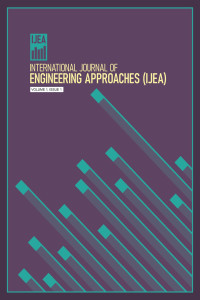
The International Journal of Engineering Approaches (IJEA) is dedicated to experimental and theoretical studies in the field of engineering and prioritises the publication of articles on popular topics in engineering. The journal aims to bring the most popular developments in science and technology to researchers, engineers and other interested audiences. IJEA is a peer-reviewed, open access journal that publishes original research articles as well as review articles in various fields of engineering.

The International Journal of Engineering Approaches (IJEA) contains the following areas and research topics related to a wide range of engineering disciplines:

Mechanical Engineering
Electrical and Electronics Engineering
Computer Engineering
Manufacturing Engineering
Metallurgical and Materials Engineering
Biomedical Engineering
Civil Engineering
Industrial Engineering
Agricultural Engineering
Environmental Engineering
Food Engineering
Mining Engineering
Physics Engineering
Chemical Engineering
Polymer Engineering
Nuclear Energy Engineering
Energy Systems Engineering
Textile Engineering
Earth Sciences
Automotive Engineering

International Journal of Engineering Approaches accepts original articles in Turkish and English. Research articles and review articles are accepted in terms of the submitted publication category.

Research Article: Academic papers detailing a new and original research study, describing the methodology, findings and conclusions.

Review Article: Articles that comprehensively review the existing scientific literature on a specific topic, summarise and evaluate current knowledge and technological developments, and compare and interpret the findings.

During the first submission to the journal, manuscript, cover page and Copyright transfer form must be uploaded. Author information should not be included in the manuscript. For the publications accepted after evaluation, it is requested to prepare the manuscript in accordance with the journal template. In the manuscript, Öz and Abstract sections should be at least 100 words and should not exceed 200 words. Öz and Abstract sections should not extend to the second page. The full text of the article should not exceed 7000 words for a research article and 10000 words for a review article.


References
References should be numbered with square brackets [] in the text and should be given in the bibliography in number order. All author names must be included in the references. References in the References section should be cited as in the examples below:

Article
[1]. Jahromi, B.H., Ajdari, A., Nayeb-Hashemi, H., and Vaziri, A. (2010) Autofrettage of layered and functionally graded metal–ceramic composite vessels, Composite structures, 92(8): 1813-1822.

Conference paper
[2]. Kıvak, T. and Şeker, U. (2016) Ti-6Al-4V alaşımının delinmesinde M42 HSS takımlara uygulanan kriyojenik işlemin delik kalitesi üzerindeki etkileri. 7th International Symposium On Machining, İstanbul, November.

Book
[3]. Shaw, M.C. and Cookson, J. (2005) Metal cutting principles, New York: Oxford university press.

Thesis
[4]. Akgün, M. (2021) Kesici takımlara uygulanan kriyojenik işlemin Inconel 625 nikel esaslı süper alaşımın işlenebilirliğine etkisinin deneysel nümerik ve istatistiksel araştırılması, Doktora Tezi, Karabük Üniversitesi Fen Bilimleri Enstirüsü, Karabük, 121.

Web page
[5]. Web Page: Sandvik Coromant Tool Guide, https://www.sandvik.coromant.com/tr-tr/products/pages/toolguide.aspx Last access date: 05.02.2020.


Additional Information
‘Conflict of Interest Statement’, “Acknowledgements or Funding Information”, “Author contribution” and “Data Availability Statement” before the References section parts are mandatory.

Examples:

Conflict of Interest Statement: The authors declare no conflicts of interest.

Funding Information: This study was not supported by any funding.

Author Contributions: The authors confirm their responsibilities for the design of the study, data collection, analysis and interpretation of the results, and preparation of the manuscript.

Data Availability Statement: The data generated and/or analyzed during this study are not publicly available but can be provided by the corresponding author upon reasonable request.

1. Publication Ethics and COPE Compliance
The International Journal of Engineering Approaches (IJEA) undertakes to conduct all publication processes in accordance with international ethical standards, based on the reliability, transparency and sustainability of scientific research. The journal bases its editorial policies and practices on the principles of the Committee on Publication Ethics (COPE), aiming to protect academic integrity, impartiality, and scientific integrity at the highest level.

This ethical policy is binding for authors, reviewers, and editors submitting articles to our journal and applies to all stages of the publication process.

2. Ethical Responsibilities of Editors
- Editors are primarily responsible for the academic quality of the journal and the sound functioning of the publication process.
- They evaluate all submitted articles solely on the basis of scientific integrity, originality, methodological soundness, and contribution to the field.
- They make decisions without any discrimination based on author, institution, gender, nationality, political views, or personal relationships.
- They ensure that the double-blind peer review process is conducted impartially and confidentially.
- When there is suspicion of an ethical violation, they fully implement COPE flowcharts; where necessary, they may extend the investigation to independent experts.
- Documents the entire decision-making process to ensure transparency and accountability.
- Monitors the scientific integrity of all published articles; publishes corrections, retractions, or editor's notes when necessary.
- Does not permit any institutional or personal interests to influence the evaluation of articles beyond academic quality.

3. Ethical Responsibilities of Reviewers
IJEA reviewers play a critical role in ensuring the integrity of the scientific process. While the review process is entirely voluntary, IJEA highly values the contribution of reviewers. What is expected of reviewers:
- To conduct the review in complete confidentiality, not to share the content of the article with others, and not to use it in personal work.
- Declining the assignment by informing the editor if the work is outside their area of expertise or if there is a conflict of interest.
- Preparing referee reports in an objective, scientific, evidence-based, and constructive manner.
- Clearly reporting any methodological weaknesses, unethical situations, data inconsistencies, and potential violations identified in the article.
- Complete the review process on time and inform the editor in case of delays.

4. Ethical Responsibilities of Authors
All authors submitting articles to IJEA are deemed to have accepted the following obligations:
- Originality and Scientific Contribution: The article must be original, unpublished elsewhere, and not under review.
- Accuracy of Data and Findings: Data must be accurate, reliable, and verifiable when necessary.
- Author Contribution Statement: All authors listed must have made a meaningful contribution to the work; ‘honorary authorship’ is not accepted.
- Citation: All information and data must be cited according to appropriate scientific citation rules.
- Ethics Committee Approval: Ethics committee approval is mandatory for studies involving human or animal experiments.
- Transparency of the Publication Process: Authors fulfil editorial requests regarding the article process in a timely and accurate manner.

5. Declaration of Conflict of Interest
- IJEA requires the clear disclosure of any potential conflicts of interest.
- Financial support, corporate relationships, consultancy activities, commercial connections or personal relationships that could influence the evaluation process must be declared.
- Editors and reviewers are also obliged to disclose potential conflicts of interest to the journal before accepting an assignment.

6. Funding, Support and Acknowledgements
- All funding sources, project numbers, institutional support or personal contributions used in the study must be clearly stated.
- Individuals who have contributed but do not meet the authorship criteria may be included in the acknowledgements section.

7. Open Data and Research Data Sharing
IJEA supports open science and data transparency. In this context, authors:
- Are encouraged to share their data sets, analysis codes, and materials used on an appropriate open access platform.
- Must anonymise data requiring confidentiality.
- If data sharing is not possible, applicable reasons must be explained in the article.

8. Publication Ethics Violations and Intervention Process
The following situations are considered serious ethical violations:
- Plagiarism (direct quotation or grossly careless citation)
- Fabrication, falsification, or manipulation of data
- Duplicate or redundant publication
- Adding ghost authors or misrepresenting author contributions
- Fake peer review
- Digital manipulation of submitted figures, tables, or graphs
- Copyright infringement
In the event of any suspected violation, the editorial board:
- Conducts a preliminary assessment,
- Requests clarification from the authors if necessary,
- Applies COPE procedures,
- Decides on correction, rejection, or retraction based on the findings.
- The entire process is conducted transparently and systematically.

9. Plagiarism and Similarity Criteria
- All articles submitted for publication in the IJEA journal are scanned using the intihal.net software provided by Dergipark and, where necessary, the iThenticate: Plagiarism Detection Software package before being submitted to the editor for approval.
- The similarity report result should be no more than 25%, excluding references.
- If the similarity ratio is higher, the article is rejected without being considered for evaluation.
- If allegations or suspicions of research misconduct such as plagiarism, citation manipulation, data fabrication, or falsification are detected, action is taken in accordance with COPE guidelines (for submitted manuscript and published article).
- All instances of plagiarism and ethical violations detected at any stage, including self-plagiarism, will result in the article being removed from the review process and rejected.

10. Artificial Intelligence (AI) Usage Policy
IJEA accepts that artificial intelligence tools can be used as auxiliary tools in scientific processes, but:
- AI models cannot be listed as authors.
- If used for purposes such as text generation, summarisation, or analysis suggestions, this must be clearly stated in the methods or acknowledgements section.
- Authors are fully responsible for the accuracy of content, data, or images generated by AI.
- The use of AI in the peer review and editorial processes is prohibited.
- The journal is not responsible for any errors or misdirection that may arise from AI.

11. Open Access Policy
IJEA publishes all articles under a full open access model. Articles are:
- Freely accessible,
- Readable without additional fees,
- Reusable under the CC BY-NC 4.0 licence.

12. Peer Review Process
- The process applied in the journal is entirely based on double-blind peer review.
- Each article is sent to at least two independent reviewers.
- Reviewer reports are evaluated comprehensively by the editor or field editors.
- The editor may appoint a third reviewer if there is a conflict between the reviewers' opinions.
- The peer review system is one of the fundamental elements for ensuring the sustainability of publication quality.

13. Ethics Committee Approval
For studies involving human participants, animal experiments, research containing personal data, and studies requiring institutional permission, approval from the relevant ethics committee is mandatory. The approval document must be clearly stated in the article, including:
- The full name of the committee,
- The approval number,
- The approval date.
For studies not requiring ethics committee approval, this situation must be explained with scientific justification.

14. Retraction, Correction, and Editor's Note Policy
IJEA applies the following practices when appropriate for ethical and scientific accuracy:
- Retraction: Applied when findings are unreliable, ethical violations are detected, or duplicate publications occur. Retraction procedures are conducted transparently in accordance with COPE guidelines.
- Correction / Erratum: Published to rectify minor errors made by the author or the journal.
- Editor's Note / Statement of Concern: Used when an ethical investigation is ongoing.
- Retracted articles are marked in the system for transparency and remain visible.

15. Copyright and Licensing
- Articles published in the IJEA journal are licensed under Creative Commons Attribution-NonCommercial 4.0 (CC BY-NC 4.0).
- Under this licence, third parties may share, reproduce, and adapt the article for non-commercial purposes; however, they must cite the source.
- Authors retain their copyright; however, they grant the journal the necessary permissions for publication.
- The journal clearly states the licence terms for each article.

16. Archiving Policy
- IJEA is securely archived via the Dergipark system to ensure the long-term accessibility of all published content.
- Each article is kept permanently accessible through the Dergipark infrastructure.
- This archiving policy aims to guarantee readers and researchers continuous and secure access to articles.

17. Disclaimer
The views expressed in the works published in IJEA belong to the authors; the journal, editors, and referees do not accept any legal or scientific responsibility.

18. Contact
For any ethical reports, objections, or information requests:

Email: ijea@amasya.edu.tr
Address: Amasya University, Faculty of Engineering, IJEA Editorial Office, 05000, Merkez/Amasya, Turkey

Baş Editör

Finite Element Analysis , Mechanical Engineering, CAD/CAM Systems, Manufacturing Processes and Technologies (Excl. Textiles), Additive Manufacturing

Editör/Yayın Kurulu

Default avatar
Prof. Dr. Levent UĞUR AMASYA ÜNİVERSİTESİ
Finite Element Analysis , Biomechanic, CAD/CAM Systems, Manufacturing Management
Decision Support and Group Support Systems, Machine Learning, Fuzzy Computation, Evolutionary Computation
Resource Technologies, CAD/CAM Systems, Manufacturing Processes and Technologies (Excl. Textiles)
Engineering, CAD/CAM Systems, Flexible Manufacturing Systems, Manufacturing Processes and Technologies (Excl. Textiles), Manufacturing Management, Additive Manufacturing, Machining, Optimization in Manufacturing
Default avatar
Prof. Dr. Aytaç YİLDİZ BURSA TEKNİK ÜNİVERSİTESİ
Multiple Criteria Decision Making, Industrial Engineering, Manufacturing Processes and Technologies (Excl. Textiles), Technology Management and Business Models, Manufacturing and Service Systems, Optimization in Manufacturing, New Product Development

Alan Editörleri

Electrochemistry, Energy Generation, Conversion and Storage (Excl. Chemical and Electrical), Composite and Hybrid Materials
Image Processing, Engineering, Bioelectronic, Electrical Engineering
Default avatar
Assoc. Prof. Dr. Halil BAYRAM AMASYA ÜNİVERSİTESİ MÜHENDİSLİK FAKÜLTESİ
Engineering, Fluid Mechanics and Thermal Engineering, Computational Methods in Fluid Flow, Heat and Mass Transfer (Incl. Computational Fluid Dynamics), Heat Transfer in Automotive, Vehicle Technique and Dynamics

15 Mayıs 1992 yılında Ankara Güdül ilçesinde doğdum. İlköğretim eğitimimi, 1998-2006
yılları arasında ,Hacı Mehmet Uçar İlköğretim Okulu'nda tamamladım. Lise eğitimimi,
2006-2007 yıllarında Etimesgut Anadolu Lisesi, 2007-2010 yıllarında Bahçelievler Anadolu
Lisesi'nde bitirdim. 2010 yılında Çukurova Üniversitesi Otomotiv Mühendisliği bölümünü
kazandım. 2013-2014 eğitimim yılında, Erasmus öğrenci değişim programıyla gittiğim, o
dönemki adıyla Çek Cumhuriyeti, Liberec şehrinde Technical University of Liberec'de bir
sene yaşadım. Lisans eğitimimi 2015 yılında tamamladıktan sonra, aynı bölümde yüksek
lisans eğitimime başladım. 2015 yılında mezun olduğum gün SANKO iş makinalarında
çalışmaya başladım. 2016 yılında Çukurova Üniversitesi Otomotiv Mühendisliği
bölümünde Araştırma Görevlisi olarak çalışmaya hak kazandıktan sonra SANKO'daki
işimden ayrıldım. 2018 yılında yüksek lisans eğitimimi tamamladım. Aynı yılda başladığım
doktora eğitimimi 2023 yılında tamamladım. Şu an halen Amasya Üniversitesi Makine
Mühendisliği Termodinamik anabilim dalında Doktor Öğretim Görevlisi olarak
çalışmaktayım.
Ulusal ve uluslararası yayınlarımın bulunduğu yayınlarımın listelendiği Google Scholar
profilim için:
https://scholar.google.com.tr/citations?user=YIOUrN0AAAAJ&hl=tr

Energy, Mechanical Engineering, Internal Combustion Engines, Automotive Combustion and Fuel Engineering
Funda Kutlu Onay
Asst. Prof. Dr. Funda KUTLU ONAY AMASYA ÜNİVERSİTESİ, TEKNOLOJİ FAKÜLTESİ
Information and Computing Sciences, Image Processing, Algorithms and Calculation Theory, Human-Computer Interaction, Machine Learning, Artificial Intelligence, Satisfiability and Optimisation, Computer Software, Engineering
Default avatar
Asst. Prof. Korhan ÖKTEN AMASYA ÜNİVERSİTESİ
Energy Generation, Conversion and Storage (Excl. Chemical and Electrical)
Information Security and Cryptology, Circuits and Systems, Numerical Design

Dil editörleri

Electrochemistry, Energy Generation, Conversion and Storage (Excl. Chemical and Electrical), Composite and Hybrid Materials

Yayın Danışma Kurulu

Plating Technology, Composite and Hybrid Materials, Nanomaterials
Arif Özkan
Prof. Dr. Arif ÖZKAN KOCAELİ ÜNİVERSİTESİ
Biomekanik, Makine Elemanları, Mukavemet, Sonlu Elemanlar, Biyomedikal
Engineering, Biomedical Diagnosis, Biomechanical Engineering, Mechanical Engineering

Sinop Üniversitesi Mühendislik ve Mimarlık Fakültesi Bilgisayar Mühendisliği bölümünde çalışmaktayım.

Information and Computing Sciences, Decision Support and Group Support Systems, Image Processing, Deep Learning, Big Data, Fuzzy Computation
İhsan Korkut
Prof. Dr. İhsan KORKUT GAZİ ÜNİVERSİTESİ, TEKNOLOJİ FAKÜLTESİ, İMALAT MÜHENDİSLİĞİ BÖLÜMÜ
Finite Element Analysis , Industrial Product Design, Engineering, Control Theoryand Applications, Fracture Mechanics, Powder and Particle Technology, Control Engineering, Mechatronics and Robotics, Mechatronics Engineering, Mechanical Engineering, Solid Mechanics, Resource Technologies, Numerical Methods in Mechanical Engineering, Machine Design and Machine Equipment, Machine Theory and Dynamics, Material Design and Behaviors, Numerical Modelling and Mechanical Characterisation, Composite and Hybrid Materials, Mechanical Vibrations and Noise, Vehicle Technique and Dynamics, CAD/CAM Systems, Manufacturing Processes and Technologies (Excl. Textiles)
Optimization Techniques in Mechanical Engineering, Tribology, Manufacturing Processes and Technologies (Excl. Textiles), Machining
CAD/CAM Systems
Fuzzy Computation, Electrical Engineering, Electrical Machines and Drives, Power Electronics, Control Theoryand Applications
Default avatar
Asst. Prof. Dr. Engin Ufuk ERGÜL AMASYA ÜNİVERSİTESİ
Image Processing, Artificial Intelligence, Evolutionary Computation, Electrical Engineering, Renewable Energy Resources , Communications Engineering
Alişan Ayvaz
Asst. Prof. Dr. Alişan AYVAZ AMASYA ÜNİVERSİTESİ
Electrical Energy Transmission, Networks and Systems, Power Plants, Wind Energy Systems, Renewable Energy Resources
Finite Element Analysis , Engineering, Fracture Mechanics, Mechanical Engineering, Solid Mechanics, Material Design and Behaviors, Composite and Hybrid Materials, Material Characterization, Polymers and Plastics, Automotive Engineering
Engineering
Default avatar
Prof. Dr. Ulvi ŞEKER GAZI UNIVERSITY, FACULTY OF TECHNOLOGY
Industrial Product Design, Mechanical Engineering, Composite and Hybrid Materials, CAD/CAM Systems, Manufacturing Processes and Technologies (Excl. Textiles)
Default avatar
Asst. Prof. Dr. Canan ORAL AMASYA ÜNİVERSİTESİ
Pattern Recognition, Neural Networks, Supervised Learning, Circuits and Systems
Default avatar
Prof. Dr. Özgen KORKMAZ AMASYA ÜNİVERSİTESİ
Computing Education, Human-Computer Interaction
Electrical Engineering
İbrahim Keles
Prof. Dr. İbrahim KELES Samsun Üniversitesi
Solid Mechanics, Numerical Methods in Mechanical Engineering, Machine Design and Machine Equipment
Default avatar
Assoc. Prof. Dr. Şaban ÖZTÜRK ANKARA HACI BAYRAM VELI UNIVERSITY
Image Processing, Algorithms and Calculation Theory, Machine Learning, Deep Learning, Machine Vision , Machine Learning Algorithms, Artificial Intelligence, Bioinformatics and Computational Biology, Engineering, Biomedical Engineering, Biomedical Imaging
Material Design and Behaviors, Manufacturing Processes and Technologies (Excl. Textiles)
Image Processing, Machine Learning Algorithms
Onuralp Uluer
Prof. Dr. Onuralp ULUER Gazi üniversitesi, teknoloji fakültesi, imalat mühendisliği bölümü
Non-Newtonian Fluid Flows (Incl. Rheology), Mechanical Engineering, Polymer Technologies, Polymers and Plastics
Unal Kurt
Prof. Dr. Unal KURT AMASYA UNİVERSİTESİ TEKNOLOJİ FAKÜLTESİ
Education, Electrical Engineering, Electrical Energy Generation (Incl. Renewables, Excl. Photovoltaics), Electrical Machines and Drives
Ali Keçebaş
Prof. Dr. Ali KEÇEBAŞ MUGLA SITKI KOCMAN UNIVERSITY
Solar Energy Systems, Geothermal Energy Systems, Thermal Power Systems, Installation Technologies
Harun Akkuş
Assoc. Prof. Dr. Harun AKKUŞ NİĞDE ÖMER HALİSDEMİR ÜNİVERSİTESİ, NİĞDE TEKNİK BİLİMLER MESLEK YÜKSEKOKULU
Mechanical Engineering, Optimization Techniques in Mechanical Engineering, Tribology, Manufacturing Management, Optimization in Manufacturing
Behzat Gökçen Demir
Dr. Behzat Gökçen DEMİR Maden ve Petrol İşleri Genel Müdürlüğü
Mining, Energy and Natural Resources Law, Industrial Raw Material, Geological Sciences and Engineering
Fuat Kartal
Prof. Dr. Fuat KARTAL Kastamonu University

Dr. Fuat Kartal, Kastamonu Üniversitesi Mühendislik ve Mimarlık Fakültesi, Makine Mühendisliği Bölümü'nde öğretim üyesi olarak görev yapmaktadır. Türkiye'nin Kastamonu ilinde konumlanan bu akademik birimde, özellikle Aşındırıcı Su Jeti İşleme, Basınçlı Kap Tasarımı ve Analizi, Mühendislik Tasarımlarının Optimizasyonu, Sonlu Elemanlar Analizi, Katmanlı İmalat Teknolojileri, İleri Üretim Yöntemleri, Ürün Geliştirme, Hızlı Prototipleme ve 3D Baskı Teknolojileri gibi disiplinlerde derin uzmanlığa sahiptir.

Dr. Kartal, 2006 yılında Kocaeli Üniversitesi'nden Makine Eğitimi alanında lisans diplomasını almış; 2009 yılında yine aynı üniversiteden yüksek lisans derecesini başarıyla tamamlamıştır. Akademik yolculuğunu 2015 yılında Karabük Üniversitesi'nde Makine Mühendisliği Doktora programını tamamlayarak taçlandırmış; 2020 yılında ise Türkiye Üniversitelerarası Kurul Başkanlığı'ndan (ÜAK) "Doçent" unvanını almaya hak kazanmıştır. Geleneksel değerlere önem veren bir mühendis olarak, 2023 yılında Karabük Üniversitesi'nden Makine Mühendisliği ikinci lisans diplomasını da alarak çok yönlü akademik formasyonunu güçlendirmiştir.

Lisansüstü araştırmalarında, yüksek lisans tezinde Kocaeli Üniversitesi'nde Prof. Dr. Yasin Kişioğlu danışmanlığında Oto LPG Tanklarının Deneysel Yorulma Analizi üzerine çalışmış; doktora tezinde ise Prof. Dr. Hasan Gökkaya rehberliğinde AISI 1050 Çeliğinin Aşındırıcı Su Jeti Tornalama İşleminde Malzeme Kaldırma Oranı ve Yüzey Pürüzlülüğüne Etki Eden Parametreleri derinlemesine incelemiştir.

2008 yılında Kastamonu Üniversitesi Meslek Yüksekokulu'nda Makine ve Metal Teknolojileri Bölümü'nde öğretim görevlisi olarak başlayan akademik kariyeri, 2015 yılında Makine Mühendisliği Bölümü'nde Dr. Öğretim Üyesi olarak devam etmiş; 2020 yılından itibaren Doçent kadrosunda sürmektedir. Bu süreçte hem eğitimde hem de araştırmada güçlü bir liderlik sergilemiştir.

Akademik ve teknolojik girişimcilik açısından da dikkate değer bir birikime sahip olan Dr. Kartal, sekiz adet patent ile bilim dünyasına özgün katkılar sunmuş; geliştirdiği projelerle çeşitli yarışmalarda üst sıralarda yer almış; ayrıca gösterdiği akademik başarılar neticesinde Akademik Teşvik Ödülü'ne layık görülmüştür.
Bu başarılar, onun yalnızca teorik bilgi üretmekle kalmayıp, bilgiyi teknolojiye ve ürüne dönüştürme konusundaki kararlılığını da güçlü bir şekilde ortaya koymaktadır.

Dr. Kartal, vizyoner yaklaşımı, derin mühendislik bilgisi ve inovatif düşünce yapısıyla, Kastamonu Üniversitesi akademik topluluğunun ve daha geniş mühendislik camiasının geleceğine ilham vermeye devam etmektedir.

Optimization Techniques in Mechanical Engineering, Additive Manufacturing
Default avatar
Assoc. Prof. Dr. Fikret POLAT DÜZCE ÜNİVERSİTESİ
Fluid Mechanics and Thermal Engineering, Computational Methods in Fluid Flow, Heat and Mass Transfer (Incl. Computational Fluid Dynamics), Energy Generation, Conversion and Storage (Excl. Chemical and Electrical), Heat Transfer in Automotive
Default avatar
Prof. Dr. Halil DEMİR KARABÜK ÜNİVERSİTESİ
Mechanical Engineering, Machining

32861

This work by Amasya University is licensed under CC BY-NC https://creativecommons.org/licenses/by-nc/4.0/