Research Article
Theoretical Article
Book Review
Aim & Scope
The Journal of Humanity and Society (JHS) (TR: İnsan & Toplum Dergisi) was founded in 2011. It is a quarterly, peer-reviewed academic journal publishing articles in both English and Turkish.
JHS was motivated by the aim to begin publishing articles and so help remedy two specific deficiencies perceived within the academic publishing world. Academic writers seemed to have begun confining themselves within their own discipline, thereby completely cutting themselves off from society as a whole. What is more, this confinement within academic fields meant that both inter-disciplinary communication and mutual benefit appeared to have decreased to a negligible level.
JHS decided to focus on publishing those original works relative to both society and individuals, hence the name “Humanity and Society” Although JHS remains open to all works pertaining to religion and the humanities, priority is given to those works seeking to transcend the “narrowistic” mindset so prevalent in today’s academic world. As such, JHS specifically looks for authors who proficiently make use of both their own area of expertise as well as the methods and hypotheses of other disciplines in their writings.
Although JHS makes academic articles its main focus, precedence is given specifically to research articles and policy making papers. Also, JHS’s mission means that articles must additionally build relations between different approaches from both intra- and interdisciplinary perspectives.
Author Guidelines
- The Journal of Human & Society (JHS) is a peer reviewed quarterly academic journal publishing articles in both English and Turkish.
- In order to gain acceptance, all articles submitted to JHS for evaluation must have never been previously published.
- Submissions are first reviewed by the editorial board. If an article satisfies the necessary conditions of style and content, reviewers will then proceed to evaluate its suitability for publication.
- All articles undergo evaluation by two anonymous reviewers. If necessary, the article may be sent to a third reviewer for further assessment. The publication of an article depends upon the approval of these reviewers. Authors must provide the necessary corrections demanded by reviewers.
- In general, any submitted work should provide the following formatting conditions.
- Articles must be between 5,000 and 8,000 words.
- They should be written in MS Word Processor in normal margins and Times New Roman, 10-pt, space 1.5 lines, aligned left.
- Tables, figures, pictures, and graphs should fit the journal page. If needed, they may be written in a smaller font size and their text may be single spaced.
- Tables and graphs should be numbered consecutively in accordance with their appearance in the text. Place footnotes to tables below the table body and indicate them with superscript lowercase letters. Avoid vertical rules. Be sparing in the use of tables and ensure that the data presented in tables does not duplicate results described elsewhere in the article.
- Author and article information should be filled in completely on the form in the system. The article should not contain any information about the author.
- The study must include the following sections:
- A Turkish title and abstract between 150 and 200 words including 5-8 keywords.
- An English title and abstract between 150 and 200 words including 5-8 keywords.
- The extended summary in English should be added for the articles in Turkish. This extended summary should be between 1,000-1.500 words, including the English title, sub-topics of the article, and all references. This section may be sent after the study has been accepted for publication.
- JHS uses APA Style 7th Edition in references. The writing rules and format specified by the Publication Manual of American Psychological Association [APA], published by American Psychological Association, are to be followed both in text citations and bibliography.
- Articles should be submitted using the online submission system to initiate the editing process. An automatic confirmation e-mail will be sent after submission. If you do not receive this e-mail, please contact us via e-mail with editor@insanvetoplum.org.
- Book/Ebook References
Jackson, L. M. (2019). The psychology of prejudice: From attitudes to social action (2nd ed.). American Psychological Association. https://doi.org/10.1037/0000168-000
Sapolsky, R. M. (2017). Behave: The biology of humans at our best and worst. Penguin Books.
Svendsen, S., & Løber, L. (2020). The big picture/Academic writing: The one-hour guide (3rd digital ed.). Hans Reitzel Forlag.
In-text Citation:
• (Jackson, 2019; Sapolsky, 2017; Svendsen & Løber, 2020)
• Jackson (2019), Sapolsky (2017), and Svendsen and Løber (2020) - Whole Edited Book
Hygum, E., & Pedersen, P. M. (Eds.). (2010). Early childhood education: Values and practices in Denmark. Hans Reitzels Forlag. https://earlychildhoodeducation.digi.hansreitzel.dk/
Kesharwani, P. (Ed.). (2020). Nanotechnology based approaches for tuberculosis treatment. Academic Press.
Torino, G. C., Rivera, D. P., Capodilupo, C. M., Nadal, K. L., & Sue, D. W. (Eds.). (2019). Microaggression theory: Influence and implications. John Wiley & Sons. https://doi.org/10.1002/9781119466642
In-text Citation:
• (Hygum & Pedersen, 2010; Kesharwani, 2020; Torino et al., 2019)
• Hygum and Pedersen (2010), Kesharwani (2020), and Torino et al. (2019) - Journal Article References
Jerrentrup, A., Mueller, T., Glowalla, U., Herder, M., Henrichs, N., Neubauer, A., & Schaefer, J. R. (2018). Teaching medicine with the help of “Dr. House.” PLoS ONE, 13(3), Article e0193972. https://doi.org/10.1371/journal.pone.0193972
In-text Citation:
• (Jerrentrup et al., 2018)
• Narrative citation: Jerrentrup et al. (2018) - Published/Unpublished Dissertation or Thesis References
Kabir, J. M. (2016). Factors influencing customer satisfaction at a fast food hamburger chain: The relationship between customer satisfaction and customer loyalty (Publication No. 10169573) [Doctoral dissertation, Wilmington University].
Miranda, C. (2019). Exploring the lived experiences of foster youth who obtained graduate level degrees: Self-efficacy, resilience, and the impact on identity development (Publication No. 27542827) [Doctoral dissertation, Pepperdine University]. PQDT Open. https://pqdtopen.proquest.com/doc/2309521814.html?FMT=AI
Harris, L. (2014). Instructional leadership perceptions and practices of elementary school leaders [Unpublished doctoral dissertation]. University of Virginia. - To review the APA 7 referencing guide in detail: https://apastyle.apa.org/style-grammar-guidelines/references/examples
- Articles should be submitted using the online submission system ( https://iys.ilke.org.tr/signup/ivt ) to initiate the editing process. An automatic confirmation e-mail will be sent after submission. If you do not receive this e-mail, please contact us via e-mail with editor@insanvetoplum.org.
- The journal does not demand any article processing or submission charges from authors.
Ethical Principles and Publication Policy
Submission Declaration
The submission of an article implies that the work has not been published previously (except in the form of an abstract or as part of a published lecture or academic thesis or as an electronic preprint), that it is not under consideration for publication elsewhere, that its publication is approved by all authors and tacitly or explicitly by the responsible authorities where the work was carried out, and that, if accepted, it will not be published elsewhere including electronically in the same form, in English or in any other language, without the written consent of the copyright-holder.
Disclosing Data
All data relating to the article must be made available in Supplementary files or deposited in external repositories and it must be submitted if it is requested.
Changes to Authorship
JHS accepts the add and drop or rearrangement of author names in an accepted manuscript before publication. Before the accepted manuscript is published, requests to add or remove an author, or to rearrange the author names, must be sent to the Journal Secretary by the corresponding author. This request must include:
The reason the name should be added or removed, or the author names rearranged and
Written confirmation (e-mail, fax, letter) from all authors that they agree with the addition, removal or rearrangement. In the case of addition or removal of authors, this includes confirmation from the author being added or removed.
Requests that are not sent by the corresponding author will be forwarded by the Journal Secretary to the corresponding author, who must follow the procedure as described above. Note that: (1) the Journal Secretary will inform the Journal Editors of any such requests and (2) the publication of the accepted manuscript in an issue will be suspended until authorship has been agreed. After the manuscript is published any requests to add, drop or rearrange author names will not be taken into consideration.
Copyright
Authors should add their papers a confirmation of copyright of the article submitted to JHS, a sample is shown below.
“The attached article(s), whose writer(s) and title(s) are clearly indicated below, has/have been sent for your consideration to be published in JHS. The article(s) has/have yet to be published anywhere else, nor has/have the article(s) been sent to another journal for consideration. In the case that any or all of the article be accepted for publication, we affirm that all publishing rights shall belong permanently to JHS for each accepted article.
As the writer(s) whose signature(s) appear below, I/we accept all the conditions found in the Author Guidelines section and affirm that the below article(s) has/have been written in accordance to the ethical rules stated therein. I/we furthermore affirm that all accompanying articles are original works, that all articles are accompanied with their original copyright forms, that the writer(s) transfere/s all editing rights to the Publications Board for the JHS, and that all copyrights, including registered copyrights, shall be transferred to the JHS upon acceptance.”
Price Policy
JHS does not charge any submission or publication fees from authors. Authors are only responsible for proofreading services of the articles as this service is obtained from an outside expert. However, it is also appropriate to provide proofreading services from experts preferred by the author.
Indexes



Journal Boards
Editor-in-Chief


In 2008, he completed his undergraduate degree in Political Science and International Relations at Marmara University and in 2011 he completed his master's degree in Political Science and International Relations at Yıldız Technical University with his thesis titled “Syrian Foreign Policy and National Interest: 1990- 2010” at Yıldız Technical University Political Science and International Relations program in 2011. In 2017, he completed his PhD in Istanbul University Political Science and International Relations program with a thesis titled “Muslim Brotherhood Organization in the Light of the Institutionalization Problem of the Islamic Movement”. Mercan conducts research on Middle East Politics in general. Mercan, who has written various academic articles in this field, has a book titled Syria: Regime and Foreign Policy and Transformation of the Muslim World in the 21st Century.
Editorial Board
Hakan Gülerce completed his master's degree at Istanbul University, Department of Social Structure-Social Change in 2012 with his thesis titled “The Role of Editing in the Development of Social Sciences and a Sociological Study on Academic Journal Editors”. He graduated from the Department of Sociology of the same university in 2017 with his doctoral thesis titled “The Reproduction of Christianity in the Encounter with Modernity”. In 2018, Gülerce started to work as an Assistant Professor in the Department of Sociology at Harran University and continued her postdoctoral studies in the fields of migration, social cohesion, youth studies, modernity and religion.
Gülerce received the title of associate professor in the fields of Sociology of Migration and Sociology of Religion in 2022. Gülerce, who is the director of Harran University Migration Policies Application and Research Center, has been and continues to be the coordinator of various projects on migration, forced migration, Syrians in Turkey and social cohesion in this center.
Gülerce, who served as the secretary general of the International Federation of Social Science Organizations between 2012-2019, assumed the presidency between 2019-2023. He is currently a board member of the same organization.
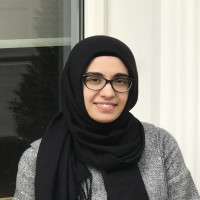
In 2014, he received his bachelor's degree in Political Science and Public Administration from Bilkent University and in 2017 he received his master's degree in Political Science and Public Administration from Middle East Technical University with his thesis titled “Religious Reasoning in Politics: A Discussion of Public Reason” (Religious Reasoning in Politics: A Discussion of Public Reason). He completed his PhD on an ontological reading of the transformation of Islamism in the field of political theory, “Muslimistan, Islamism and the Political: A Relational Analysis” from the Department of Sociology and Social Policy at the University of Leeds in 2022. In January 2023, Sakarya joined Ankara University Department of Political Science and Public Administration as an Assistant Professor and works in the field of political theory. His research in this field focuses on the gothic, religion, Muslim identity, Islamism and their intersections with political identity.
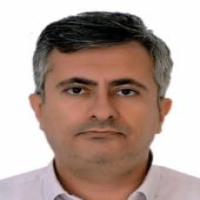
Murad Duzcu works in the field of war and peace studies with a focus on human security and post-conflict reconstruction, migration and adaptation. He received his PhD from Coventry University on “Youth in post-conflict settings: Preventing young people's participation in violence and their role in Turkey's southeast” at Coventry University. Since 2017, she has been working as a faculty member at Hatay Mustafa Kemal University. In the same institution, he also served as the head of the department, vice dean, and director of the research center. In addition to his publications in national and international refereed journals, he co-edited with Abdullah Aydın “The New Power Struggle in the Eastern Mediterranean: Energy, Security and Diplomacy” was published in 2020.
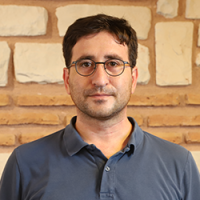
He graduated from Uludağ University, Faculty of Arts and Sciences, Department of Sociology in 2003. In 2004, he was appointed as a research assistant to Selçuk University Literature Sociology Department. He completed his master's degree in Selçuk University Institute of Social Sciences, Department of Sociology in 2005 and his doctorate in 2009. During his doctoral studies, he took courses on politics and communication at Maastricht International Communication Faculty (Hogeschool Zuyd). In 2013, he became an associate professor of sociology. Dictionary of Socialization, Social Construction of Politicity: Political Socialization and Freedom Fighter and Islamic Thinker: Aliya İzzetbegoviç (Compilation, with Faruk Karaarslan), Aliya İzzetbegoviç and July 15 from the Eyes of the Academy (Compilation, with Bengül Güngörmez), as well as articles, book reviews and book reviews in journals such as İnsan ve Toplum, Tezkire, Hece, Demokrasi Platformu, Muhafazakâr Düşünce, Sosyoloji Divanı. He worked as a faculty member at Marmara University Faculty of Communication (2014-2015). He is currently working as a faculty member at Konya Necmettin Erbakan University, Faculty of Social and Human Sciences, Department of Sociology. He continues his studies on social theory, Turkish modernization, political sociology, conservatism and sociology of childhood.
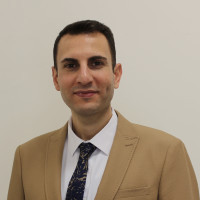
He graduated from Hacettepe University Sociology Department in 2009 and Anadolu University Public Administration Department in 2011. He received his master’s degree in Sociology and Social Policy with merit in 2013 from the University of Southampton in the United Kingdom, where he studied on a scholarship from the Ministry of National Education. He completed his PhD at Ankara Yıldırım Beyazıt University, Department of Sociology with his thesis titled “Urban Regeneration Examples in the World: A Comparative Case Study with Fuzzy Set Ideal Type Analysis”. He works in the fields of environmental sociology, climate change, urban sociology and sociology of disaster. He currently works as a lecturer in the Sociology Department of the Faculty of Letters at Bartın University.
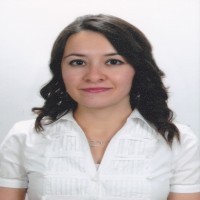
Ankara’da doğan Öztürk Aykaç, lisans derecesini Ortadoğu Teknik Üniversitesi Felsefe Bölümü’nden 2008 yılında almıştır. Yüksek lisansını Karamanoğlu Mehmetbey Üniversitesi’nde hazırlamış olduğu “Bir Beden Sosyolojisi Problemi Olarak Namus Kavramı ve Kadın Bedeni” (2012) konulu tezle tamamlamıştır. Doktora eğitimini Selçuk Üniversitesi Sosyoloji Bölümü’nde 2018 yılında tamamlayan Öztürk Aykaç, “Toplumsal Bir Tip Olarak Ankaralı” isimli doktora tezinin sahibidir. 2009 yılında Karamanoğlu Mehmetbey Üniversitesi Sosyoloji Bölümü’nde Araştırma Görevlisi olarak göreve başlamış olup 2019 yılından beri aynı bölümde Doktor Öğretim Üyesi olarak akademik çalışmalarını sürdürmektedir. 2025 yılında Sosyoloji alanında doçentliğini almıştır. Uzmanlık ve çalışma alanları arasında kent sosyolojisi, kültür sosyolojisi, beden sosyolojisi, medya ve iletişim çalışmaları, nitel araştırma metodolojisi vb. öne çıkmaktadır.
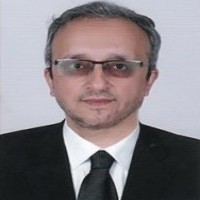
Assoc. Prof. Dr. Muharrem Hilmi Özev, a faculty member at the Department of Political Science and International Relations, Faculty of Economics, Istanbul University, works on conflict resolution, energy security, geopolitics and the Gulf Region. A graduate of Marmara University, Department of Political Science and International Relations (English), Özev completed his master's degree at Yıldız Technical University with a thesis titled “Averroes' Interpretation of Plato” and his PhD degree with a thesis titled “Oil Capital and International Relations: The Case of the Post-1971 Gulf States” at Yıldız Technical University. Özev, who teaches International Relations, Energy Security, Diplomacy and Conflict Resolution at Istanbul University, is the author of a bookS titled “Gulf States in the Triangle of Nationalism, Religion and Oil” AND "Unveiling Political Conflicts: A Comprehensive Analysis" in addition to his studies on various topics in this context. He has also made significant contributions to “The UN and Its Conflict Resolution Role”, which he co-edited with Aydın Erdoğan. He is proficient in English and Arabic and has translated numerous Arabic philosophical and political works into Turkish. Since 2007, Özev has served as coordinator and executive coordinator in many congresses and events related to the Middle East and Islamic countries and closely follows the developments in Turkey and the Gulf countries. He continues to develop projects and publications on conflict resolution, energy security and Gulf countries on national and international platforms.
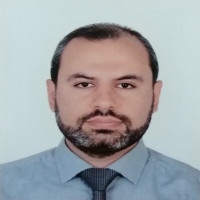
Ali Osman Karaoğlu graduated from Marmara University Faculty of Law in 2008. Between 2008 and 2012, he worked as a lawyer affiliated to the Istanbul Bar Association. In 2013, he received his LLM degree in International Law from SOAS, University of London. In 2019, she completed her doctorate (PhD) in Public Law at Istanbul Sehir University. She was a visiting researcher at IALS, University of London for her master's thesis research, at Max Planck Institute for Comparative Public Law and International Law for her doctoral thesis research, and at Georgetown University & Institute of International Law for her post-doctoral research. She is currently working as a faculty member at Yalova University Faculty of Law, Department of International Law.
He completed his undergraduate education at Istanbul University, Faculty of Political Sciences, Department of International Relations in 2003. He completed his master's degree at Boğaziçi University, Department of Atatürk's Principles and History of Turkish Revolution in 2005 and his PhD at Istanbul University, Institute of Social Sciences, Department of International Relations in 2012. He is currently a faculty member at Erciyes University, Faculty of Economics and Administrative Sciences, Department of Political Science and Public Administration. His research interests include Turkish political life, health policies, immigrant integration, migration and public policy.
He graduated from Cyprus International University, Department of International Relations (2008) and Ankara University, Department of Theology (2013). He received his master's degree from Karadeniz Technical University (2010) with a thesis on Hezbollah. He completed his PhD at the same university in 2016, defending his thesis on the survival strategies of the Jordanian regime. Currently working as an associate professor in the Department of International Relations at Recep Tayyip Erdoğan University, Bozkurt has conducted field studies in nearly twenty countries in the region, particularly in Palestine, Jordan, Lebanon, Syria, Iraq and Egypt. His most recent works include Global Ikhwan, which he edited and published by Ketebe Publications: The Muslim Brotherhood's Relationship with Regimes and Its Transnational Nature, and an article titled “Partnership and Rescue Party and the Transformation of Political Opposition in Jordan” published in Religions. His research focuses on Islamic movements and Middle Eastern politics. He speaks English and Arabic.
Assoc. Prof. Taha Egri is currentlyis the Head of the Department of Economics at Kırklareli University, Turkey. He completed his BA at Bogazici University, Turkey, and obtained his MA and PhD degrees at Istanbul University, Turkey. He was a visiting scholar at George Mason University, USA, between 2014 and 2016. His primary research areas are institutional economics and international political economy. He is currently focusing on MENA countries' economic policies, military-economic relations and Islamic economics. He is the editor of two peer-reviewed journals: the Journal of Humanity and Society and the Turkish Journal of Islamic Economics.
In 2014, he completed his undergraduate education at Boğaziçi University and his master's degree at Şehir University in 2017. He received his PhD degree from Boğaziçi University in 2024 with his thesis titled Human Security and Humanitarian Intervention. Since 2021, she has been working as a research assistant at Marmara University, Department of Political Science and International Relations. She works on international relations, security studies, human security, military interventions, qualitative comparative analysis (QCA).
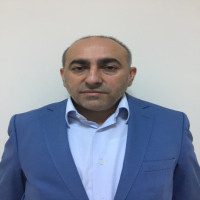
Murat ÇEMREK received his bachelor's degree in Political Science and Public Administration from METU, his master's and doctorate degrees in Political Science and Public Administration from Bilkent University, and his post-doctoral studies at Budapest College: Institute of Higher Specialized Studies (Hungary). He taught at Bilkent, Ataturk Alatoo (Kyrgyzstan), Selçuk, El Farabi (Kazakhstan) Universities and Police Academy at various levels from undergraduate to doctoral. He was the Founding Director of the Eurasian Research Institute of Ahmet Yesevi International University (Kazakhstan). Çemrek, who was the Head of Department at Selçuk University, is currently the Head of Department, Director of Erol Güngör Turkish Diaspora Research and Application Center and Coordinator of University Erasmus Program at Necmettin Erbakan University. Çemrek, who has written articles, reviews and book chapters in many national and international journals in Turkish and English, is on the board of editors, referees and scientific advisors of many academic journals.
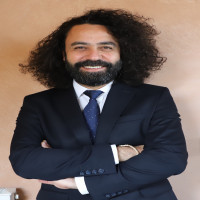
Assoc. Prof. Dr. Fatih Yaman received his undergraduate degrees from Ondokuz Mayıs University Theology Department, Anadolu University Sociology Department and Marmara University Journalism Department. After completing his master's and doctorate at Istanbul University Institute of Social Sciences, Yaman conducted research in his field as a “visiting researcher” in the departments of Political Science at the University of Utah in the USA (2006-2007), Catholic Theology at the University of Tübingen in Germany (2010) and Social Sciences and Cultural Studies at Justus Liebig Giessen University (2012). He is the author of Islam and Civil Society in Europe (2017) and Migration and Society (2019). He continues his studies on migration policies, civil society, social change, media, identity and radicalization as a faculty member at Istanbul Medeniyet University.
Born in 1987, İnce graduated from Karadeniz Technical University, Department of Social Studies Teaching in 2009. He completed his master's degree at the University of Manchester with his thesis titled “Creativity in the Turkish Education System in the Context of Industrial Revolution and Kemalism” (2012) and his PhD in Sociology at Leeds University with his thesis titled “National Education System in Turkey and the Kurdish Issue” (2016). He is currently a faculty member at Samsun University, Department of Sociology. He has published several articles in scientific journals on the sociology of education and sociology, including Turkey's Kurdish Question from an Educational Perspective (Lexington Books, 2017), Cemil Meriç: An Archeologist of Ideas (Bir, 2018), Sociology of Education (Bir, 2019), Imali of Educated Human (İnsan Yayınları, 2020), Tınısı of Existence (İnsan Yayınları, 2021), Beklemeye Övgü (İnsan Yayınları, 2022) and İnsanı Anlamak (İnsan Yayınları, 2024).
Secretariat