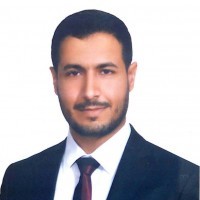
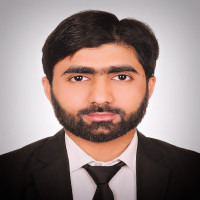
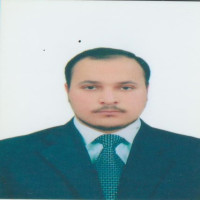
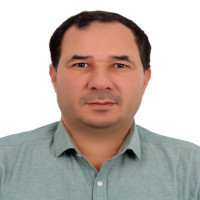
Dr. Muhammad Masharib Shah SYED
Specialization in the field of Hadīth with two M.Phils. and one Ph.D., experience of lectureship and organizer, five publications, six languages skill.
I have studied in madrasah having both educations, to wit modern and religious (Dars-e-Nizami) in Karachi. I have done B.S (Hons) in Islamic studies (كلية أصول الدين) from International Islamic University Islamabad. My research was on some of the selected chapters of the book Sunan Abi Dawood. I also have done my 1st M.Phil. again from International Islamic University Islamabad in the field of Hadīth and its sciences. My dissertation was on a comparative traditional study of the narrations regarding infallibility between Ahlussunnah and Imamiyya. My study in IIU Islamabad was in Arabic-English and my dissertations of aforementioned university are in Arabic language. My 2nd M.Phil. is again in Hadīth and its sciences form the University of Dokuz Eylül Izmir/Turkey. My 2nd thesis is in Turkish language which puts light on the different approaches to understand the Hadīth in some controversial issues between Deobandies and Barelwies, the two renowned schools of thought in sub-continent of Indo-Pak. My 4th thesis which is my doctorate as specialized in the field of Hadīth and its sciences is from the university of Izmir Katip Çelebi Turkey. My Ph.D. research covers the methodologies and source usage of Orientalists in their research of Hadīth.
The range of my teaching experience includes lectureship in the university of Dokuz Eylul Izmir, in the faculty of divinity, the department of Arabic linguistics and eloquence (2017-19). My lessons in this post included Hadīth (history, sciences, classical texts and literature) and Arabic (phonetics, grammar, listening, speaking, reading and writing skills) to all levels of B.S (Hons) program right from the class of preparty unto the last semester of B.S. which made 2413 official lesson hours in total. I also have been teaching Quran and Islamic studies to Muslim families and new converted Muslims there in America, Canada and UK for more than ten years Online via Online Islamic academies based in Pakistan. Moreover, I am currently working as an organizer, manager and teacher of Arabic and Hadīth in one of the religious institutions named Kestanepazarı Fidan Eğitim Kurumları Derneği at Izmir Turkey.
I know six languages viz. Sindhi, Urdu, Arabic, Turkish, English and Persian. This skill works like a key for me to open the gates of six different nations, their philosophies, cultural values and much more. I have proficiency certificate in Arabic and English and advanced level certificate in Turkish beside special national exam for foreign languages in Turkey named YDS in Arabic language having 93.75 score.
I was honored with 100% fully funded Turkish government scholarship for my 2nd M.Phil in Turkey and before that 50% tuition fee exemption throughout my B.S program at IIUI. I was rewarded with Erasmus scholarship (2020-21) to conduct my research in the university of Tübingen/Germany. However – unfortunately – because of COVID19, I was compelled not to go through that.
I have published three of my works in Arabic in peer reviewed journals, and two of them in non-peer reviewed journals. My first research paper is published in The Journal of the Faculty of Divinity University of Dokuz Eylül. This article clarifies some crucial terminologies regarding the concept of infallibility of the Prophets. My second article and third – which is a research note basically – is published in the Journal of Hadīth Studies/Turkey. My Second article proves that early, middle and last Shiite scholars have done content criticism in their Hadīth works. My research note is on the topic of some odd Hadīth terminologies and their practical examples from the Shiite Hadīth books. As far the non-peer reviewed journal is concerned, the article – which is basically in Urdu language – named ‘Nontechnical Orientalists of Early Centuries’’ is published in Ihyae Hades, Idara Siraj-e-Muneer Pakistan. My rest of the pending researches including translation cover the riddles regarding early orientalists, content criticism of Hadīth in Shiasim, The credibility and truthfulness of Imam Abu Yusuf and Imam Muhammad, The Knowledge of the Holy Prophet صلى الله تعالى عليه وآله وسلم of unseen in the perspective of Deobandies and Barelwies.
However, my new research agenda focuses on Orientalism, Occidentalism, modern world riddles, crisis of Muslim ummah and Reason-Nass (quoted transmitted sacred text) relation and its limits.
Thus, having a Ders-e-Nizami and modern education background, 2 M.Phils. one Ph.D., lectureship, management, six languages, five publications and other qualification, experiences, research works, awards, scholarships, skills, knowledge and character, I do consider myself the most reasonable candidate – if not the only – to groom the new generation and deliver truth, faith, knowledge, wisdom and justice to our coming progeny.
I will warmly welcome a call for interview since it will be my pleasure to combine my abilities with your worthy institution to re-breathe an Islamic sprit of wisdom into Muslim Ummah.
Yours faithfully
Dr. Muhammad Masharib Shah SYED
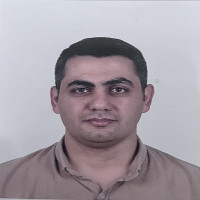
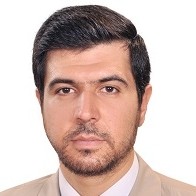
Feras Rihawi holds a PhD in Arabic Language and Literature. He is a lecturer at the Faculty of Islamic Sciences, Kahramanmaraş İstiklal University. His research interests include Sufi literature, admonition poetry, and classical Arabic literature.
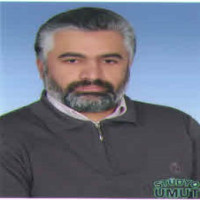
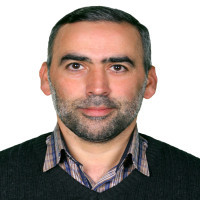
Abdullah Yekta was born in 1965 in the Kahta district of Adıyaman Province. He completed his secondary education at the Imam Hatip High School in his home province in 1985. He began his higher education at the Faculty of Theology at Selçuk University in Konya and graduated from the faculty in 1990. He worked as a teacher at the Ministry of National Education. He completed his master’s degree in Kalām (Islamic theology) at the Institute of Social Sciences at Selçuk University. In 2020, he completed his PhD at the Institute of Social Sciences at İnönü University in the field of the History of Islamic Sects (History of Theological Sects). He currently serves as a faculty member at the Faculty of Islamic Sciences at Kahramanmaraş İstiklal University.
Feras Rihawi holds a PhD in Arabic Language and Literature. He is a lecturer at the Faculty of Islamic Sciences, Kahramanmaraş İstiklal University. His research interests include Sufi literature, admonition poetry, and classical Arabic literature.
Dr. Muhammad Masharib Shah SYED
Specialization in the field of Hadīth with two M.Phils. and one Ph.D., experience of lectureship and organizer, five publications, six languages skill.
I have studied in madrasah having both educations, to wit modern and religious (Dars-e-Nizami) in Karachi. I have done B.S (Hons) in Islamic studies (كلية أصول الدين) from International Islamic University Islamabad. My research was on some of the selected chapters of the book Sunan Abi Dawood. I also have done my 1st M.Phil. again from International Islamic University Islamabad in the field of Hadīth and its sciences. My dissertation was on a comparative traditional study of the narrations regarding infallibility between Ahlussunnah and Imamiyya. My study in IIU Islamabad was in Arabic-English and my dissertations of aforementioned university are in Arabic language. My 2nd M.Phil. is again in Hadīth and its sciences form the University of Dokuz Eylül Izmir/Turkey. My 2nd thesis is in Turkish language which puts light on the different approaches to understand the Hadīth in some controversial issues between Deobandies and Barelwies, the two renowned schools of thought in sub-continent of Indo-Pak. My 4th thesis which is my doctorate as specialized in the field of Hadīth and its sciences is from the university of Izmir Katip Çelebi Turkey. My Ph.D. research covers the methodologies and source usage of Orientalists in their research of Hadīth.
The range of my teaching experience includes lectureship in the university of Dokuz Eylul Izmir, in the faculty of divinity, the department of Arabic linguistics and eloquence (2017-19). My lessons in this post included Hadīth (history, sciences, classical texts and literature) and Arabic (phonetics, grammar, listening, speaking, reading and writing skills) to all levels of B.S (Hons) program right from the class of preparty unto the last semester of B.S. which made 2413 official lesson hours in total. I also have been teaching Quran and Islamic studies to Muslim families and new converted Muslims there in America, Canada and UK for more than ten years Online via Online Islamic academies based in Pakistan. Moreover, I am currently working as an organizer, manager and teacher of Arabic and Hadīth in one of the religious institutions named Kestanepazarı Fidan Eğitim Kurumları Derneği at Izmir Turkey.
I know six languages viz. Sindhi, Urdu, Arabic, Turkish, English and Persian. This skill works like a key for me to open the gates of six different nations, their philosophies, cultural values and much more. I have proficiency certificate in Arabic and English and advanced level certificate in Turkish beside special national exam for foreign languages in Turkey named YDS in Arabic language having 93.75 score.
I was honored with 100% fully funded Turkish government scholarship for my 2nd M.Phil in Turkey and before that 50% tuition fee exemption throughout my B.S program at IIUI. I was rewarded with Erasmus scholarship (2020-21) to conduct my research in the university of Tübingen/Germany. However – unfortunately – because of COVID19, I was compelled not to go through that.
I have published three of my works in Arabic in peer reviewed journals, and two of them in non-peer reviewed journals. My first research paper is published in The Journal of the Faculty of Divinity University of Dokuz Eylül. This article clarifies some crucial terminologies regarding the concept of infallibility of the Prophets. My second article and third – which is a research note basically – is published in the Journal of Hadīth Studies/Turkey. My Second article proves that early, middle and last Shiite scholars have done content criticism in their Hadīth works. My research note is on the topic of some odd Hadīth terminologies and their practical examples from the Shiite Hadīth books. As far the non-peer reviewed journal is concerned, the article – which is basically in Urdu language – named ‘Nontechnical Orientalists of Early Centuries’’ is published in Ihyae Hades, Idara Siraj-e-Muneer Pakistan. My rest of the pending researches including translation cover the riddles regarding early orientalists, content criticism of Hadīth in Shiasim, The credibility and truthfulness of Imam Abu Yusuf and Imam Muhammad, The Knowledge of the Holy Prophet صلى الله تعالى عليه وآله وسلم of unseen in the perspective of Deobandies and Barelwies.
However, my new research agenda focuses on Orientalism, Occidentalism, modern world riddles, crisis of Muslim ummah and Reason-Nass (quoted transmitted sacred text) relation and its limits.
Thus, having a Ders-e-Nizami and modern education background, 2 M.Phils. one Ph.D., lectureship, management, six languages, five publications and other qualification, experiences, research works, awards, scholarships, skills, knowledge and character, I do consider myself the most reasonable candidate – if not the only – to groom the new generation and deliver truth, faith, knowledge, wisdom and justice to our coming progeny.
I will warmly welcome a call for interview since it will be my pleasure to combine my abilities with your worthy institution to re-breathe an Islamic sprit of wisdom into Muslim Ummah.
Yours faithfully
Dr. Muhammad Masharib Shah SYED
İtkan Akademik Araştırmalar Dergisi, genelde Dini Araştırmalar özelde İslami İlimler alanlarında çalışmalar yürüten bilim insanlarına ürettikleri bilimsel eserleri paylaşmaları için uygun ortam sunarak din bilimleri alanında ulusal olduğu kadar uluslararası düzeylerde bilim dünyasına katkı sağlamayı amaçlamaktadır. Dergi, araştırmalar alanına dair (Sosyal ve Beşerî Bilimler/Din) makale, kitap kritiği ve sempozyum değerlendirmesi gibi çalışmaları yayınlamayı ve kamuoyu ile paylaşmayı hedeflenmektedir.
İtkan Akademik Araştırmalar Dergisi, İslami İlimler, Musevilik İlimleri, Hristiyanlık, Mukayeseli Din Bilimleri, İlahiyat ve Etik alanları da dahil olmak üzere tüm gelenek ve dönemlerde dini düşünce tarihi ve felsefesinde bilimsel alanlarında özgün araştırmalara yer veren hakemli akademik bir dergidir.
İtkan Akademik Araştırmalar Dergisi’nde yayımlanması amaçlanan çalışmaların aşağıdaki koşulları karşılaması gerekmektedir:
İtkan Akademik Araştırmalar Dergisi tüm yayın süreci paydaşlarından Committee on Publication Ethics (COPE) tarafından yayımlanan rehber ve politikaları göz önünde bulundurarak aşağıda belirtilen etik kurallara ve sorumluluklara uymalarını beklemektedir;
Yazarların Etik Sorumlulukları
• Yazar(lar) özgün çalışmalarını göndermek ve diğer araştırmacıların çalışmalarından yararlandıkları takdirde kaynak olarak belirtmek durumundadır(lar).
• Her bir araştırmacının çalışmaya katkısına uygun olarak ismi yayına dâhil edilmelidir.
• Yazar(lar) YÖK Bilimsel Araştırma ve Yayın Etiği Yönergesinde belirtilen kurallara titizlikle riayet etmelidir.
• Yazar(lar) çıkar çatışması teşkil edebilecek durumları ve ilişkileri açıklamalıdır.
• Yazar(lar) çalışmalarını aynı anda birden fazla derginin başvuru sürecinde bulunduramaz. Her bir başvuru önceki başvurunun tamamlanmasını takiben başlatılabilir. Başka bir dergide yayınlanmış çalışma İtkan Akademik Araştırmalar Dergisi’ne gönderilemez.
Editör Kurulu İçin Etik Kurallar
• Editör Kurulu görevini yerine getirirken yazarlar arasında ayrım gözetmeksizin objektif bir şekilde hareket etmelidir. Dergiye gönderilen çalışmaları derginin amaç ve kapsamına göre değerlendirilmelidir.
• Editör Kurulu, dergiye gönderilen tüm yazılara ilişkin bilgileri gizli tutarak kişisel verilerin korunmasına özen göstermelidir.
• Editör Kurulu, bilimsel kaliteyi ve özgünlüğü ön planda tutmalıdır.
• Editör Kurulu, okuyucuların ve yazarların ihtiyaçları için çaba sarf ederek, gönderilen yazılar için yayın kararları almaktan sorumludur.
• Editör Kurulu, gerektiğinde düzeltmeler, açıklamalar, geri çekilmeler ve özürler yayımlamaya her zaman hazır olmalıdır.
• Editör Kurulu, etik ihlali niteliğinde bir şikâyet olması durumunda, derginin politika ve prosedürlerine bağlı kalarak gerekli prosedürleri uygulamalıdır.
Hakemler için Etik Kurallar
• Hakemler değerlendirme sürecini gizli olarak yürütmek durumundadırlar.
• Hakemler, makaleleri bilimsellik, özgünlük, çalışmanın önemi ve derginin alanına uygunluk gibi yalnızca objektif kriterlerle değerlendirmelidir.
• Hakemler, makalenin yayımlanmasının reddedilmesi için gerekli olan tüm bilgileri Editör Kurulu’nun dikkatine sunulmalıdır.
• Hakemler, atıf eksikliği, yayımlanmış yayın tespiti, yazar tarafından yapılan telif hakkı ihlali ve intihal durumlarının farkına varmaları durumunda konuyu dergi editörlüğüne iletmelidir.
Telif Hakları
İtkan Akademik Araştırmalar Dergisi © 2024 by Kahramanmaraş İstiklal Üniversitesi İslami İlimler Fakültesi is licensed under Creative Commons Attribution-NonCommercial 4.0 International
İtkan Akademik Araştırmalar Dergisi makale gönderim ve yayın sürecinin hiçbir basamağında yazarlardan herhangi bir ücret talep edilmez.
لا تفرض مجلة إتقان للدراسات الأكاديمية أية رسوم على المؤلفين في أي مرحلة من مراحل تقييم المقال ونشره.