Volume: 2 Issue: 3 , 12/29/25

Year: 2025

Research Article

Research Article

10. Tolstoy’un Hayatına Varoluşsal Bir Bakış
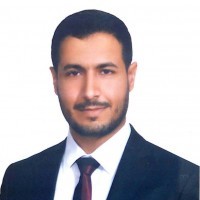
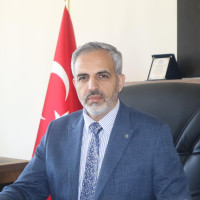
Bahattin Cemiloğlu
Assoc. Prof. Dr. Bahattin CEMİLOĞLU Kahramanmaraş İstiklal Üniversitesi, İslâmî İlimler Fakültesi
Political and Civilization History of Islam, Islamic Law
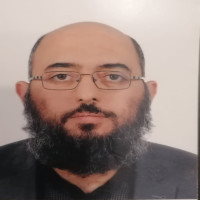
İbrahim Eldibo
Assoc. Prof. Dr. İbrahim ELDİBO It is not affiliated with an institution
Kalam
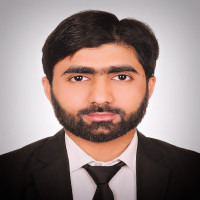
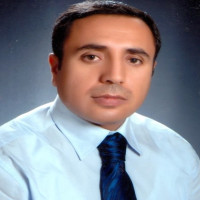
Abdullah Yekta
Asst. Prof. Dr. Abdullah YEKTA Kahramanmaraş İstiklal Üniversitesi

Abdullah Yekta was born in 1965 in the Kahta district of Adıyaman Province. He completed his secondary education at the Imam Hatip High School in his home province in 1985. He began his higher education at the Faculty of Theology at Selçuk University in Konya and graduated from the faculty in 1990. He worked as a teacher at the Ministry of National Education. He completed his master’s degree in Kalām (Islamic theology) at the Institute of Social Sciences at Selçuk University. In 2020, he completed his PhD at the Institute of Social Sciences at İnönü University in the field of the History of Islamic Sects (History of Theological Sects). He currently serves as a faculty member at the Faculty of Islamic Sciences at Kahramanmaraş İstiklal University.

Islamic Sects, Kalam
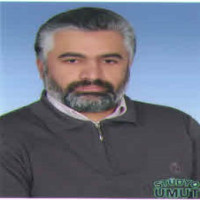
Ali Mustafa
Asst. Prof. Dr. Ali MUSTAFA Kahramanmaraş İstiklal Üniversitesi

Arapça

Hadith
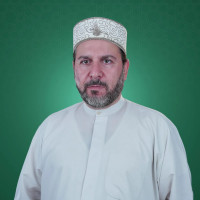
Muhammad Masharib Shah Syed
Asst. Prof. Dr. Muhammad Masharib Shah SYED Kaharamanmaraş İstiklal Üniversitesi İlahiyat Fakültesi Tasavvuf Anabilim dalı

Dr. Muhammad Masharib Shah SYED

Specialization in the field of Hadīth with two M.Phils. and one Ph.D., experience of lectureship and organizer, five publications, six languages skill.
I have studied in madrasah having both educations, to wit modern and religious (Dars-e-Nizami) in Karachi. I have done B.S (Hons) in Islamic studies (كلية أصول الدين) from International Islamic University Islamabad. My research was on some of the selected chapters of the book Sunan Abi Dawood. I also have done my 1st M.Phil. again from International Islamic University Islamabad in the field of Hadīth and its sciences. My dissertation was on a comparative traditional study of the narrations regarding infallibility between Ahlussunnah and Imamiyya. My study in IIU Islamabad was in Arabic-English and my dissertations of aforementioned university are in Arabic language. My 2nd M.Phil. is again in Hadīth and its sciences form the University of Dokuz Eylül Izmir/Turkey. My 2nd thesis is in Turkish language which puts light on the different approaches to understand the Hadīth in some controversial issues between Deobandies and Barelwies, the two renowned schools of thought in sub-continent of Indo-Pak. My 4th thesis which is my doctorate as specialized in the field of Hadīth and its sciences is from the university of Izmir Katip Çelebi Turkey. My Ph.D. research covers the methodologies and source usage of Orientalists in their research of Hadīth.
The range of my teaching experience includes lectureship in the university of Dokuz Eylul Izmir, in the faculty of divinity, the department of Arabic linguistics and eloquence (2017-19). My lessons in this post included Hadīth (history, sciences, classical texts and literature) and Arabic (phonetics, grammar, listening, speaking, reading and writing skills) to all levels of B.S (Hons) program right from the class of preparty unto the last semester of B.S. which made 2413 official lesson hours in total. I also have been teaching Quran and Islamic studies to Muslim families and new converted Muslims there in America, Canada and UK for more than ten years Online via Online Islamic academies based in Pakistan. Moreover, I am currently working as an organizer, manager and teacher of Arabic and Hadīth in one of the religious institutions named Kestanepazarı Fidan Eğitim Kurumları Derneği at Izmir Turkey.
I know six languages viz. Sindhi, Urdu, Arabic, Turkish, English and Persian. This skill works like a key for me to open the gates of six different nations, their philosophies, cultural values and much more. I have proficiency certificate in Arabic and English and advanced level certificate in Turkish beside special national exam for foreign languages in Turkey named YDS in Arabic language having 93.75 score.
I was honored with 100% fully funded Turkish government scholarship for my 2nd M.Phil in Turkey and before that 50% tuition fee exemption throughout my B.S program at IIUI. I was rewarded with Erasmus scholarship (2020-21) to conduct my research in the university of Tübingen/Germany. However – unfortunately – because of COVID19, I was compelled not to go through that.
I have published three of my works in Arabic in peer reviewed journals, and two of them in non-peer reviewed journals. My first research paper is published in The Journal of the Faculty of Divinity University of Dokuz Eylül. This article clarifies some crucial terminologies regarding the concept of infallibility of the Prophets. My second article and third – which is a research note basically – is published in the Journal of Hadīth Studies/Turkey. My Second article proves that early, middle and last Shiite scholars have done content criticism in their Hadīth works. My research note is on the topic of some odd Hadīth terminologies and their practical examples from the Shiite Hadīth books. As far the non-peer reviewed journal is concerned, the article – which is basically in Urdu language – named ‘Nontechnical Orientalists of Early Centuries’’ is published in Ihyae Hades, Idara Siraj-e-Muneer Pakistan. My rest of the pending researches including translation cover the riddles regarding early orientalists, content criticism of Hadīth in Shiasim, The credibility and truthfulness of Imam Abu Yusuf and Imam Muhammad, The Knowledge of the Holy Prophet صلى الله تعالى عليه وآله وسلم of unseen in the perspective of Deobandies and Barelwies.
However, my new research agenda focuses on Orientalism, Occidentalism, modern world riddles, crisis of Muslim ummah and Reason-Nass (quoted transmitted sacred text) relation and its limits.
Thus, having a Ders-e-Nizami and modern education background, 2 M.Phils. one Ph.D., lectureship, management, six languages, five publications and other qualification, experiences, research works, awards, scholarships, skills, knowledge and character, I do consider myself the most reasonable candidate – if not the only – to groom the new generation and deliver truth, faith, knowledge, wisdom and justice to our coming progeny.
I will warmly welcome a call for interview since it will be my pleasure to combine my abilities with your worthy institution to re-breathe an Islamic sprit of wisdom into Muslim Ummah.
Yours faithfully
Dr. Muhammad Masharib Shah SYED

Hadith
Muhammed Raşid Elömer
Asst. Prof. Dr. Muhammed Raşid ELÖMER Kahramanmaraş İstiklal Üniversitesi, İslâmî İlimler Fakültesi
Islamic Law
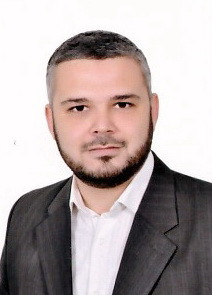
Feras Rihawi
Dr. Instructor Feras RİHAWİ İslami İlimler Fakültesi - Kahramanmaraş İstiklal Üniversitesi

Feras Rihawi holds a PhD in Arabic Language and Literature. He is a lecturer at the Faculty of Islamic Sciences, Kahramanmaraş İstiklal University. His research interests include Sufi literature, admonition poetry, and classical Arabic literature.

Arabic Language, Literature and Culture, Arabic Language and Rhetoric
Hülya Karabulut
Res. Assist. Hülya KARABULUT Kahramanmaraş İstiklal Üniversitesi İslami İlimler Fakültesi
Tafsir
Mehmet Demirbilek
Res. Assist. Mehmet DEMİRBİLEK Kahramanmaraş İstiklal Üniversitesi
Arabic Language, Literature and Culture, Arabic Language and Rhetoric

İtkan Journal of Academic Research aims to contribute to the world of scholarship both nationally and internationally by providing a suitable platform for scholars engaged in research primarily in the field of Religious Studies, and more specifically in Islamic Sciences, to share their academic works. The journal seeks to publish and disseminate studies related to the field—particularly within the scope of Social and Human Sciences/Religion—such as research articles, book reviews, and symposium evaluations.

İtkan Journal of Academic Research is a peer-reviewed academic journal that publishes original scholarly studies in the history and philosophy of religious thought across all traditions and historical periods. The journal encompasses fields such as Islamic Studies, Judaic Studies, Christianity, Comparative Religion, Theology, and Ethics.

Submission Guidelines for the İtkan Journal of Academic Research
Submissions intended for publication in İtkan Journal of Academic Research must meet the following criteria:
  • The journal publishes scholarly works related to the field of religious studies, particularly within the scope of Social Sciences and Humanities/Religion, including articles, book reviews, and symposium evaluations.
  • Only manuscripts written in Turkish, English, or Arabic will be accepted. Submissions in other languages may be considered for publication upon approval by the Editorial Board.
  • Submitted articles must align with the aim and scope of the journal.
  • Only original, unpublished manuscripts, which are not under consideration elsewhere and approved for submission by all listed authors, will be considered.
  • Submissions must comply with the journal’s writing and formatting guidelines.
  • The journal operates a double-blind peer review process.
  • A similarity check is required for all submitted articles. The maximum acceptable similarity index is 15% excluding references, or 25% including references.
  • Each manuscript must include a Turkish abstract and an English abstract (150–250 words each), along with at least 5 keywords in both languages.
  • Page layout: Use A4 size paper with margins set at 3 cm on all sides. The first line of each paragraph should be indented by 0.5 cm.
  • Font and formatting:
    • Main text: Gentium Plus, 10 pt, justified. Headings should be bold.
    • Line spacing: exactly 14 pt for the main text and 10 pt for footnotes.
    • Footnotes: Gentium Plus, 8 pt.
    • Paragraph spacing: Before: 0.3 nk, After: 0 nk.
    • Abstracts and bibliography: 10 pt.
    • Arabic text: Traditional Arabic, 14 pt; footnotes in Arabic: 12 pt.
  • The first page of the manuscript must include the author's name and institutional affiliation in accordance with the ISNAD Citation Style.
  • Manuscripts not using the ISNAD Citation Style will be returned to the author for correction.
  • Once a manuscript is submitted, no changes can be made to the author list (including addition, removal, or reordering of authors) without written consent from all listed authors.
  • Book reviews must include a 50–100 word abstract in both Turkish and English and must cite at least one work (which may be the book under review).
  • Headings must follow the decimal numbering system.
  • The bibliography must begin on a new page after the conclusion and follow the ISNAD Citation Style.
  • For studies requiring Ethics Committee Approval, such approval must be obtained and clearly stated (including the name of the committee, date, and approval number) on the first page of the article and in the methodology section. Please consult the journal's Ethical Principles and Publication Policy for further details.
  • The manuscript, including references, must not exceed 9,000 words.
  • A single author may not submit more than one manuscript per issue, and articles by the same author may not be published in two consecutive issues of the journal.

Ethical Principles and Responsibilities

İtkan Journal of Academic Research expects all stakeholders involved in the publication process to adhere to the ethical rules and responsibilities outlined below, in accordance with the guidelines and policies published by the Committee on Publication Ethics (COPE).

Authors’ Ethical Responsibilities
Authors must submit original works and properly cite any sources or works from which they have benefited.

The names of all individuals who have contributed significantly to the research should be appropriately included as authors.

Authors must strictly comply with the principles outlined in the Council of Higher Education (YÖK) Directive on Scientific Research and Publication Ethics.

Authors are obliged to disclose any potential conflicts of interest or relevant relationships.

Manuscripts cannot be submitted to more than one journal simultaneously. Each submission should begin only after the previous one has been concluded. Previously published work cannot be submitted to İtkan Journal of Academic Research.

Editorial Board’s Ethical Responsibilities
The Editorial Board must act objectively and impartially, without discrimination among authors, and evaluate submissions in accordance with the journal’s aims and scope.

The board is responsible for maintaining confidentiality and safeguarding personal data related to all submitted manuscripts.

The editorial team must prioritize scientific quality and originality.

The board is responsible for making publication decisions with consideration for both the needs of readers and authors.

The Editorial Board should be prepared to issue corrections, clarifications, retractions, or apologies when necessary.

In the event of an ethical violation, the board must follow the journal’s policies and procedures to resolve the issue appropriately.

Reviewers’ Ethical Responsibilities
Reviewers must maintain confidentiality throughout the review process.

Reviews must be conducted objectively based on criteria such as scientific merit, originality, the importance of the work, and relevance to the journal’s scope.

Reviewers should provide all necessary information to the Editorial Board to justify their recommendation for rejection, if applicable.

If reviewers detect citation omissions, prior publications, copyright infringement, or plagiarism, they must notify the editorial team.

Copyright

İtkan Journal of Academic Research © 2024 by the Faculty of Islamic Sciences, Kahramanmaraş Istiklal University is licensed under a Creative Commons Attribution-NonCommercial 4.0 International License.

İtkan Akademik Araştırmalar Dergisi makale gönderim ve yayın sürecinin hiçbir basamağında yazarlardan herhangi bir ücret talep edilmez.

لا تفرض مجلة إتقان للدراسات الأكاديمية أية رسوم على المؤلفين في أي مرحلة من مراحل تقييم المقال ونشره.

Kahramanmaraş İstiklal Üniversitesi İslami İlimler Fakültesi Adına Sahibi

Default avatar
Prof. Dr. Hulusi ARSLAN İNÖNÜ ÜNİVERSİTESİ
Kalam

Baş Editör

Bahattin Cemiloğlu
Assoc. Prof. Dr. Bahattin CEMİLOĞLU Kahramanmaraş İstiklal Üniversitesi, İslâmî İlimler Fakültesi
Political and Civilization History of Islam, Islamic Law

Baş Editör Yardımcısı

Muhammed Raşid Elömer
Asst. Prof. Dr. Muhammed Raşid ELÖMER Kahramanmaraş İstiklal Üniversitesi, İslâmî İlimler Fakültesi
Islamic Law

Temel İslam Bilimleri Alan Editörü

Abdullah Yekta
Asst. Prof. Dr. Abdullah YEKTA Kahramanmaraş İstiklal Üniversitesi
Islamic Sects, Kalam

Felsefe ve Din Bilimleri Alan Editörü

İslam Tarihi ve Sanatları Alan Editörü

Şemsettin Karcı
Asst. Prof. Dr. Şemsettin KARCI Kahramanmaraş İstiklal Üniversitesi
Tafsir

Yayın Kurulu

Bahattin Cemiloğlu
Assoc. Prof. Dr. Bahattin CEMİLOĞLU Kahramanmaraş İstiklal Üniversitesi, İslâmî İlimler Fakültesi
Political and Civilization History of Islam, Islamic Law
Muhammed Raşid Elömer
Asst. Prof. Dr. Muhammed Raşid ELÖMER Kahramanmaraş İstiklal Üniversitesi, İslâmî İlimler Fakültesi
Islamic Law
Şemsettin Karcı
Asst. Prof. Dr. Şemsettin KARCI Kahramanmaraş İstiklal Üniversitesi
Tafsir
Feras Rihawi
Dr. Instructor Feras RİHAWİ İslami İlimler Fakültesi - Kahramanmaraş İstiklal Üniversitesi
Arabic Language, Literature and Culture, Arabic Language and Rhetoric
Mehmet Demirbilek
Res. Assist. Mehmet DEMİRBİLEK Kahramanmaraş İstiklal Üniversitesi
Arabic Language, Literature and Culture, Arabic Language and Rhetoric
Mahmud Nefise
Asst. Prof. Dr. Mahmud NEFİSE GAZİANTEP ÜNİVERSİTESİ, İLAHİYAT FAKÜLTESİ, İLAHİYAT PR.
Islamic Philosophy
Hüseyin Ersönmez
Assoc. Prof. Dr. Hüseyin ERSÖNMEZ Kahramanmaraş İstiklal Üniversitesi İslami ilimler Fakültesi
Arabic Language, Literature and Culture, Arabic Language and Rhetoric
İrfan Kara
Asst. Prof. Dr. İrfan KARA Kahramanmaraş Sütçü İmam Üniversitesi İlahiyat Fakültesi
Tafsir
Arabic Language, Literature and Culture, Arabic Language and Rhetoric
Hülya Karabulut
Res. Assist. Hülya KARABULUT Kahramanmaraş İstiklal Üniversitesi İslami İlimler Fakültesi
Tafsir
Islamic Economy, Islamic Law
İsmail Erken
Asst. Prof. Dr. İsmail ERKEN CUMHURİYET ÜNİVERSİTESİ, İLAHİYAT FAKÜLTESİ
Arabic Language, Literature and Culture, Islamic Studies, Arabic Language and Rhetoric
Abdullah Yekta
Asst. Prof. Dr. Abdullah YEKTA Kahramanmaraş İstiklal Üniversitesi
Islamic Sects, Kalam

Danışma Kurulu

Bahattin Cemiloğlu
Assoc. Prof. Dr. Bahattin CEMİLOĞLU Kahramanmaraş İstiklal Üniversitesi, İslâmî İlimler Fakültesi
Political and Civilization History of Islam, Islamic Law
Sabri Türkmen
Prof. Dr. Sabri TÜRKMEN İnönü Üniversitesi İlahiyat Fakültesi
Arabic Language and Rhetoric
Atik Aydın
Prof. Dr. Atik AYDIN ANKARA SOSYAL BİLİMLER ÜNİVERSİTESİ, İSLAMİ İLİMLER FAKÜLTESİ, TEMEL İSLAM BİLİMLERİ BÖLÜMÜ
Arabic Language and Rhetoric
Belal Safeeddin
Prof. Dr. Belal SAFEEDDİN Faculty of Shariaa – Aleppo University
Islamic Law, Islamic Studies (Other)
Abdul Jawad Hamam
Prof. Dr. Abdul Jawad HAMAM university of tripoli
Religion, Society and Culture Studies, Hadith
Abdinafi Ahmed Abdullahi
Dr. Abdinafi Ahmed ABDULLAHİ maqasid center for research and studies
Islamic Law
Arabic Language, Literature and Culture, Islamic Philosophy, Kalam
Yusuf Batar
Prof. Dr. Yusuf BATAR İNÖNÜ ÜNİVERSİTESİ İLAHİYAT FAKÜLTESİ
Religious Education
Default avatar
Prof. Dr. Hulusi ARSLAN İNÖNÜ ÜNİVERSİTESİ
Kalam

Dil Editörleri

Muhammad Masharib Shah Syed
Asst. Prof. Dr. Muhammad Masharib Shah SYED Kaharamanmaraş İstiklal Üniversitesi İlahiyat Fakültesi Tasavvuf Anabilim dalı
Hadith
Feras Rihawi
Dr. Instructor Feras RİHAWİ İslami İlimler Fakültesi - Kahramanmaraş İstiklal Üniversitesi
Arabic Language, Literature and Culture, Arabic Language and Rhetoric
Mehmet Demirbilek
Res. Assist. Mehmet DEMİRBİLEK Kahramanmaraş İstiklal Üniversitesi
Arabic Language, Literature and Culture, Arabic Language and Rhetoric
Hülya Karabulut
Res. Assist. Hülya KARABULUT Kahramanmaraş İstiklal Üniversitesi İslami İlimler Fakültesi
Tafsir

Mizanpaj

Mehmet Demirbilek
Res. Assist. Mehmet DEMİRBİLEK Kahramanmaraş İstiklal Üniversitesi
Arabic Language, Literature and Culture, Arabic Language and Rhetoric