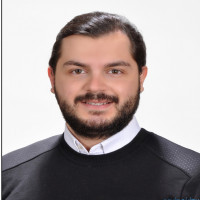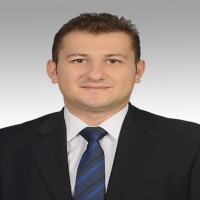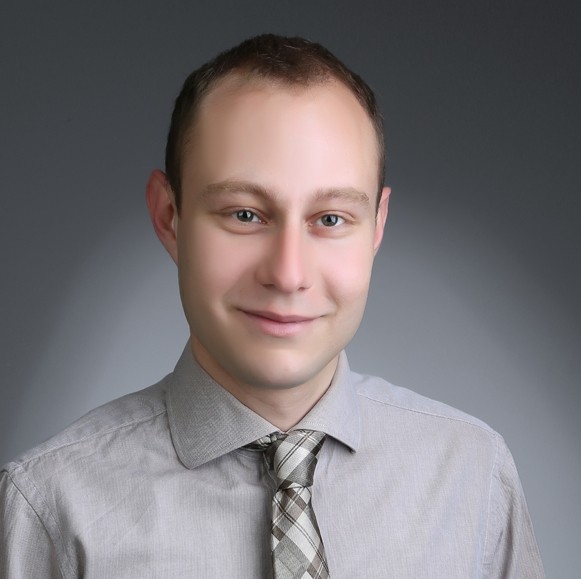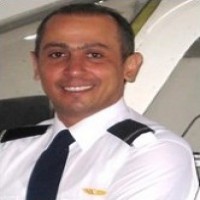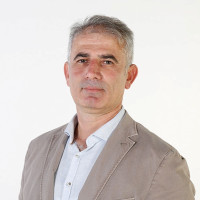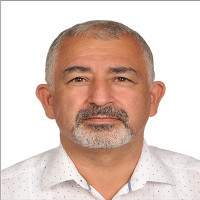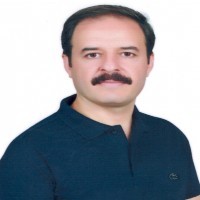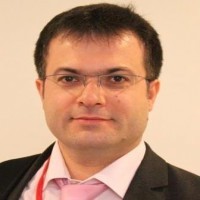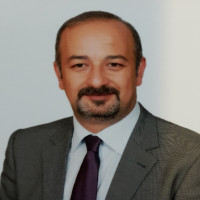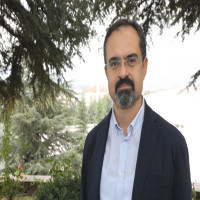

In 2020, he became an Associate Professor in Management and Strategy. Between 2019-2021, he worked at Maltepe University Aircraft Technology program. He continues to work as a faculty member at Süleyman Demirel University, School of Civil Aviation, Department of Aviation Management (2021-.). Dr. Eryılmaz, who continues his research on leadership, motivation, entrepreneurship, human factors in aviation, team resource management and statistical methods, is the editor-in-chief of Journal of Aviation Research (JAR), field editor of Journal of Aviation and deputy editor of Sosyal Mucit.
Assoc. Prof. Dr. Alper Dalkıran received his bachelor’s degree from the Faculty of Aeronautics and Astronautics at Eskisehir Technical University (Formerly known as Anadolu University) from the Avionics Department. He completed his MSc in Aviation Maintenance at the School of Science at Anadolu University in 2004. He earned his Ph.D. degree in 2017 in Environmental Sustainability on Airports from the School of Science at Anadolu University by developing a model of energy-based calculations of an aerodrome. He has studied aircraft engines, sustainability, airports, and exergy. He is still working in the School of Aviation at Suleyman Demirel University since 2019.
Yönetim ve Organizasyon
Havacılık Yönetimi
JAR adopts an open and free access principle and publishes original research articles spanning a wide range of topics with a focus on aviation research. JAR’s aim is to reach as many stakeholders as possible directly, to be a linking pin between academic research (both applied and theoretical) and the aviation industry, and to offer an online database for researchers. To that end, JAR welcomes applied and theoretical articles featuring quantitative, qualitative, or mixed-method studies. Authors could submit their manuscripts both in English and Turkish. JAR does not charge a fee for submission, processing or publication from authors.
A. Aeronautical Engineering and Technology (Science and Engineering)
Aerodynamics, Propulsion Systems, and Aircraft Design
Unmanned Aerial Vehicles (UAV) and Swarm Technologies
Artificial Intelligence and Autonomous Systems in Aviation
Avionics Systems and Communication Technologies
Next-Generation Materials Science and Composite Structures
Space Technologies and Satellite Systems
B. Aviation Management and Strategy (Social and Administrative Sciences)
Airline and Airport Management
Aviation Economics and Financial Strategies
Aviation Marketing and Customer Experience Management
Air Logistics and Supply Chain Management
Human Resources and Career Development in Aviation
Aviation Education and Simulation-Based Learning
C. Security, Safety, and Human Factors
Aviation Security and Cyber Security
Flight Safety and Risk Management
Crew Resource Management (CRM) and Human Performance
Aviation Psychology and Physiology
Accident Investigation and Prevention Techniques
D. Sustainability, Environment, and Law
Green Aviation and Carbon Footprint Management
Sustainable Aviation Fuels (SAF) and Electric Flight
International Aviation Law and Regulations
Airspace Management and Air Traffic Control (ATC)
Ethics and Corporate Social Responsibility in Aviation
The manuscript that will be sent to the journal should be referenced in the APA 7.0 spelling rules and citation style.
Researches to be sent to the Journal of Aviation Research should be arranged according to the JAR article template.
1. Manuscripts sent to the journal should not have been published elsewhere or their copyrights given to third parties. Duplicate submission is unethical. Do not submit manuscripts that have been accepted or are under active consideration for publication elsewhere. Symposium papers which have not been published in book form can be published if this state is noted in the footnotes. Papers included in the proceedings can only be published with notable improvements and with a note stating this in the footnotes.
2. Manuscripts which do not comply with the writing rules, publishing principles or scientific research methodology are not considered for publication by the journal board. Authors receive one copy of the journal issue in which their work appears. Author(s) will not be paid for their published articles. Unpublished manuscripts are not returned to the authors.
3. Manuscripts submitted to the journal are sent to at least two referees. If one of the referees gives negative report about the submitted manuscript, it is sent to a third referee.
4. All scientific and legal responsibility for published articles belong to the authors. In a given issue, only one article by the same author (s) is published.
5. Manuscripts submitted for publication in the journal can be written in Turkish, English. Those written in Turkish should comply with Turkish Language Association’s rules of spelling and punctuation.
6. At the beginning of the manuscript there must be an English and Turkish abstract with 150-200 words and 3-5 keywords. The abstract should cover the purpose, scope, originality and contribution of the study as well as the methodology, main points, evaluations and recommendations.
7. The headings should either be in decimal number or alphabetical order. The following points should also apply: Main and secondary headings, titles of tables and figures should be bold and initials capitalized; in formatting tables and figures the journal’s font settings and page layout should be followed; figures and tables should be given a title and be consecutively numbered and aligned to the left margin; titles for tables should appear above tables and titles for figures should appear below figures; each equation should be numbered consecutively with equation numbers in parentheses flush with the right margin.
8. Manuscripts should be submitted as a Word document.
Ethical Principles and Publishing Policy
Publication Ethics
Journal of Aviation Research (JAR) aims to produce, improve, and share knowledge objectively via scientific methods by examining the current improvements related to aerospace and aviation sector with a holistic and inclusive approach.
Scientific works are studies that are concluded as a result of scientific methods and which provide with the application of scientific methods and objectivity. In the process of production of these works, all the components of the publication process; namely, publisher, editor, author, reviewers, and readers must follow the ethical principles. In this scope, JAR must also follow the ethical principles of all components of the publication process in the light of the guides and policies published in the open access by the Committee on Publication Ethics, COPE (e.g. COPE “Code of Conduct and Best Practice Guidelines for Journal Editors”; ICMJE Recommendations, CSE White Paper on Publication Ethics, WAME resources, WMA policies, and ORI; WMA Helsinki Declaration).
In case manipulated, falsified and fabricated data is determined in the scientific studies which are sent and/or accepted by the journal, the institution(s) for which the author(s) works for will be informed and the study will be rejected. JAR has the right to ask for the documents related to the analysis results from the authors according to the feedback given by the editorial board and/or reviewers.
Journal of Aviation Research (JAR)'da , makalelerin yayınlanması, okunması ve indirilmesi ücretsizdir, hiçbir işlem için ücret talep edilmemektedir. Aynı şekilde, hakem değerlendirme sürecinde de ücret alınmamaktadır.
Gökhan Tanrıverdi is a researcher in the civil aviation management field. He took his master's degree and Phd. education at Anadolu University, Institute of Social Sciences, Department of Civil Aviation Management. His researches are mainly on strategic airline management. He uses qualitative methods, multi-criteria decision making techniques, bibliometrics and social network analysis in his studies.
Assoc. Prof. Dr. Alper Dalkıran received his bachelor’s degree from the Faculty of Aeronautics and Astronautics at Eskisehir Technical University (Formerly known as Anadolu University) from the Avionics Department. He completed his MSc in Aviation Maintenance at the School of Science at Anadolu University in 2004. He earned his Ph.D. degree in 2017 in Environmental Sustainability on Airports from the School of Science at Anadolu University by developing a model of energy-based calculations of an aerodrome. He has studied aircraft engines, sustainability, airports, and exergy. He is still working in the School of Aviation at Suleyman Demirel University since 2019.
Yönetim ve Organizasyon
Havacılık Yönetimi