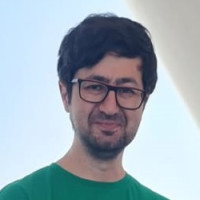
He completed his B.Sc. degree in the Physics Department in 2002 at Firat University, Elazig, Türkiye. He received an M.Sc. and Ph.D. in General Physics in 2005 and 2011 from Firat University. He has been a full professor at Firat University (Department of Physics) since 2020. His research interests include bioceramics (hydroxyapatite and beta-tricalcium phosphate), glass-ceramics, metal oxides, spinels, and X-ray diffraction (XRD) analysis. He has more than 100 papers published in international journals and 160 presentations at international conferences. His h-index is 29, and he has more than 2300 citations.
The Journal of Physical Chemistry and Functional Materials is an international, peer-reviewed journal that publishes cutting-edge research in a wide range of areas. These include analytical methods, astrochemistry, biochemistry, composite materials, computational methods, energy production, gas phase reactions, green chemistry, kinetics and dynamics, materials science, mathematical physics, medical physics, molecular structure, nanoscience, nanostructures, natural sciences, nuclear structure and modeling, optical materials, optoelectronic applications, optoelectronic materials, organic semiconductors, polymer science, quantum chemistry, spectroscopy, structural materials, surface and interface studies, surface chemistry, thermodynamics, and theoretical advances. The journal is published twice a year, in June and December.
The obtained and presented data must be unique and saturated to fill the existing gaps in the relevant area. Manuscripts should not be just descriptions of the synthesis of molecules or materials or minor extensions of previous work.
The author(s) should use the following template for preparing their draft: https://dergipark.org.tr/en/download/journal-file/24154
The policy for copyright shall be clearly filled during the submission procedure by the author(s): https://dergipark.org.tr/en/download/journal-file/24214
Author Full Name,*a Author Full Name b and Author Full Name c
· You can write your paper in Microsoft Office Word (12 pt).
· The page size should be A4 which is 210 mm wide and 297 mm long. The margins must be set as follows:
- the paper must be in single-column format and NOT more than 8 PAGES including references
- A Headings are the primary heading type e.g. Introduction, Synthetic procedures, Materials and Methods, Results and discussion.
The conclusions section should come in this section at the end
of the article, before the acknowledgments.
Page Numbers, Headers, and Footers
Page numbers, headers, and footers should be used.
Duties of Authors
Reporting standards
Authors of original research must provide a clear and accurate account of their work and results, accompanied by an objective discussion of the significance of the study. The manuscript should include sufficient detail and references to enable others to replicate the study. Editorials, such as opinions or perspectives, must be explicitly labeled as such, while review articles should strive to be comprehensive, accurate, and unbiased. Authors must avoid false or deliberately misleading statements, as these are unethical and unacceptable.
Data access and retention
Authors may be asked to submit the raw data from their study for editorial review and should be willing to make the data publicly available whenever possible. Separately, authors are expected to retain such data and make it available to other qualified researchers for at least five years after publication. This may be facilitated by institutional or subject-specific data repositories or other appropriate data centers, provided that participant confidentiality and legal rights to proprietary data are respected.
Peer review
Authors are expected to participate actively in the peer review process and to cooperate fully with the editors by promptly providing raw data, clarifications, verification of ethics approvals, patient consent, and copyright permissions when requested. If a decision is made that the manuscript requires revision, authors must address the reviewers' comments systematically and thoroughly, responding to them point by point. Revised manuscripts should be updated accordingly and resubmitted within the specified deadline.
Fundamental errors in published works
It is the author's responsibility to contact the journal's editors or publisher as soon as they uncover substantial errors or inaccuracies in their own published work and to work with them to either rectify the manuscript in the form of an erratum or retract the paper. If a third party informs the editors or publisher that a published work has a serious error or inaccuracy, the authors must promptly fix or retract the publication, or give evidence to the journal editors that the paper is correct. Please see https://dergipark.org.tr/en/pub/jphcfum/page/13150 for rules on retracting or revising publications.
Duties of Reviewers
Contribution to Editorial Decisions
Reviewers play a critical role in the editorial process by providing informed assessments that help editors make decisions regarding manuscript publication. Their feedback also supports authors in improving their work through constructive and professional critiques. Peer review is an essential component of scholarly communication and the advancement of scientific research.
Promptness
Reviewers who feel unqualified to assess the research in a submission or are unable to provide a timely review should promptly inform the editors and decline the invitation. This ensures that alternative reviewers can be engaged without unnecessary delays.
Confidentiality
Manuscripts submitted for peer review are confidential documents and must be treated accordingly. Reviewers must not share, discuss, or disclose any part of the manuscript to others without explicit permission from the Editor-in-Chief. This confidentiality requirement also applies to invited reviewers who decline the review request.
Standards of objectivity
Reviews must be conducted with objectivity and fairness. Feedback should be constructive, with observations and reasoning clearly explained to help authors improve their work. Personal criticism of authors is inappropriate and should be avoided.
Acknowledgement of sources
Reviewers should identify relevant published work not cited by the authors. Any observation, derivation, or argument in the manuscript that has been previously published should be properly referenced. In addition, reviewers must inform the editors of any significant similarities or overlaps between the manuscript under review and other work of which they are aware.
Disclosure and conflicts of interest
Invited reviewers who have conflicts of interest due to competitive, collaborative, or other relationships with any of the authors, companies, or institutions involved in the manuscript should inform the editors immediately and decline the invitation to review so that alternative reviewers can be assigned.
Unpublished material disclosed in a submitted manuscript may not be used by a reviewer for his/her own research without the explicit written permission of the authors. Confidential information or ideas obtained during the peer review process must remain confidential and must not be used for personal gain. These confidentiality obligations also apply to invited reviewers who decline to review.
Duties of Editors
Editorial independence
Editors evaluate submitted manuscripts solely based on their academic merit, including significance, originality, validity, and clarity, as well as their relevance to the scope of the journal. This evaluation is made without regard to the authors' race, gender, sexual orientation, ethnic origin, citizenship, religious beliefs, political views, or institutional affiliations. Editorial decisions are not influenced by government policy or the policy of any external organization. The Editor-in-Chief has full authority over the editorial content and publication schedule of the journal.
Confidentiality
Editors and editorial staff must not disclose any information about a submitted manuscript to anyone other than the corresponding author, reviewers, potential reviewers, other editorial advisors, and the publisher, as appropriate.
Disclosure and conflicts of interest
Editors and editorial board members may not use unpublished information disclosed in a submitted manuscript for their research without the explicit written consent of the authors. Privileged information or ideas obtained through the handling of a manuscript must remain confidential and must not be used for personal gain. Editors must recuse themselves from handling manuscripts in which they have a conflict of interest, whether competitive, collaborative, or personal, with any of the authors, companies, or institutions associated with the submission. In such cases, the manuscript should be reassigned to another qualified member of the editorial board.
Publication decisions
The Editors will ensure that all submissions considered for publication are peer-reviewed by at least two qualified experts in the relevant field. The Editor-in-Chief is responsible for deciding which manuscripts to publish, based on the validity of the work, its importance to researchers and readers, feedback from reviewers, and compliance with legal requirements regarding libel, copyright infringement, and plagiarism. The Editor-in-Chief may consult with other editors or reviewers to make informed decisions about publication.
Involvement and cooperation in investigations
When ethical issues about a submitted manuscript or published publication are highlighted, editors will take appropriate action. Even if it is discovered years after publication, every reported act of unethical publishing behavior will be investigated. If an ethical concern is discovered, the journal will publish a correction, retraction, statement of concern, or another relevant remark.
Duties of the Publisher
Article submission/process management is free.
Born in 1974 in Elazığ, Turkey. Bachelor's degree in 1996, master's in 1998, and doctoral in 2002 from the Physics Department of the Faculty of Science at Fırat University-Turkey. An associate professor in 2006 and a professor in 2012 at the same University. Specialises in theoretical reaction dynamics, computational chemistry, quantum chemistry, and astrochemistry. His research focuses on chemical reactions, reaction dynamics, reactive and inelastic scattering, rate constants, electronic structure calculations, ab initio methods, and Functional materials. Authored over 160 articles, 298 presentations, and 24 project studies.
According to WoS, the H-index equals 20 with 1709 citations, and according to Google Scholars, H=23, and the index I10=53 with 1708 citations. He has also supervised 24 master's and doctoral theses. Still in academic work at Fırat University, Turkey.
Research stays at home and abroad
Throughout his academic career, He has served as a visiting researcher and faculty member at various international institutions, including:
1. 27 May- 27 November 2024 (180 days) Nicolaus Copernicus University, Toruń (Poland). Program: NAWA project with Dr. Piotr Żuchowski. Title: Perturbation Theory: A Potential Game Changer in the Study of Reactive Collisions in Complex Systems: A Case Study of Metal-Carbohydride lnteractions.
2. 30 June- 27 September 2023 (90 days). Dept. Fisica Atomica, Molecular y de Agregados Instituto de Fisica Fundamental (Madrid)/SPAIN Visiting. Program: TUBITAK-Fellowship with Dr. Octavio Roncero
3. 3-20 November 2022 (16 days). Dept. Fisica Atomica, Molecular y de Agregados Instituto de Fisica Fundamental (Madrid) /SPAIN. Program: CSIC-Madrid/Spain with Dr. Octavio Roncero
4. 1 July-1 September 2022 (120 days). Nicolaus Copernicus University, Toruń (Poland). Program: Support of Torun University project with Dr. Piotr Żuchowski
5. 3 February-3 August 2020 (180 days) Nicolaus Copernicus University, Toruń (Poland). Program: NAWA project with Dr. Piotr Żuchowski. Title: Quantum Reactive Scattering of Small Molecular Ions from Cold Environment to Chemistry of Interstellar Medium
6. 3-21 December 2018 (19 days). Dept. Fisica Atomica, Molecular y de Agregados Instituto de Fisica Fundamental (Madrid)/SPAIN. Visiting Program: CSICMadrid/Spain with Dr. Octavio Roncero
7. 21 October-09 November 2018 (20 days) Nicolaus Copernicus University, Toruń (Poland). Program: Cost-Molim project with Dr. Piotr Żuchowski
8. 11-24 September 2016 (13 days) Université du Havre - Department of Physics (France). Program: LOMC - UMR 6294, CNRS-Université du Havre with Dr. François LIQUE.
9. 18 June-18 September 2016 (90 days). University of Maryland, Department of Chemistry, Maryland, USA. Program: Scientific Collaboration with Prof. Millard Alexander.
10. September 2015 (15 days) Dept. Fisica Atomica, Molecular y de Agregados Instituto de Fisica Fundamental (C.S.I.C.). Program: I-link0775 "Quantum simulation of state-to-state rate constants for the formation of hydrides in reactive collisions and their radiative transfer constants for chemical pumping models in astrophysical media'', An international project. coord. by Dr. Octavio RONCERO VILLA, 2014-2016. Support from CSIC, Madrid, Spain.
11. June-July 2015 (60 days). Dept. Fisica Atomica, Molecular y de Agregados Instituto de Fisica Fundamental (C.S.I.C.). Program: I-link0775 "Quantum simulation of state-to-state rate constants for the formation of hydrides in reactive collisions and their radiative transfer constants for chemical pumping models in astrophysical media'', An international project. coord. by Dr. Octavio RONCERO VILLA, 2014-2016. Support from CSIC, Madrid, Spain.
12. June 2014 (60 days) Dept. Fisica Atomica, Molecular y de Agregados Instituto de Fisica Fundamental (C.S.I.C.). Program: I-link0775 "Quantum simulation of state-to-state rate constants for the formation of hydrides in reactive collisions and their radiative transfer constants for chemical pumping models in astrophysical media'', An international project. coord. by Dr. Octavio RONCERO VILLA, 2014-2016. Support from CSIC, Madrid, Spain.
13. July 2012 (90 days) Dept. Fisica Atomica, Molecular y de Agregados Instituto de Fisica Fundamental (C.S.I.C.). Program: Collaboration with Prof. Octavio Roncero under the support of TUBITAK, Turkey.
14. April 2012 (90 days) Complutense University, Department of Chemistry, Madrid, Spain. Program: Distinguished visitors or foreign researchers to continue collaboration with University Complutense in Madrid, Spain, financed by a grant from Grupo-Santander Seccion de Movilidad with Dr. Luis BANARES
15. November 2010 (90 days) University of Maryland, Department of Chemistry, Maryland, USA. Program: Scientific Collaboration with Prof. Millard Alexander
Lectures and presentations
He has actively participated in numerous academic conferences, workshops, and seminars, delivering lectures and presentations to disseminate his research findings and contribute to the scientific community. His presentations have focused on topics such as quantum chemistry, reaction dynamics, and astrochemistry, reflecting the breadth and depth of his expertise. He has been invited as a keynote speaker at several international conferences, including events held by institutions such as Universidad Complutense de Madrid, the University of Maryland, and Université du Havre. These opportunities have allowed him to share insights into advanced computational methods, ab initio calculations, and the theoretical understanding of reaction mechanisms.
Prizes and awards
He is honored to have received recognition throughout his academic career for his contributions to science and academia. In 2006, He was promoted to Associate Professor, and in 2012, he achieved the rank of Full Professor at Fırat University, reflecting his dedication to research, teaching, and academic service. He has also been fortunate to receive various research grants and fellowships that have enabled him to collaborate with esteemed institutions worldwide. Notably, the Spanish Ministry of Education and Science awarded him a postdoctoral fellowship, which allowed him to conduct research at Universidad Complutense de Madrid from 2005 to 2007.
Furthermore, he received a prestigious research grant from the University of Maryland, where he had the opportunity to work with leading experts in his field, further enriching his research experience. Additionally, he secured funding from TÜBİTAK for his project "Theoretical Astrochemistry: Calculation of Reaction Dynamics and Kinetics Using Quantum Mechanical Methods" under the EVRENA program (TBAG-112T827) from 2013 to 2016. Other significant achievements he has consistently demonstrated a commitment to advancing science and academia through a range of significant achievements. His ability to secure funding and lead 24 national and international research projects has resulted in impactful contributions to reaction dynamics and astrochemistry fields.
He has also played a key role in promoting international collaboration, working with prestigious institutions across Europe and the United States, which has enriched his research and fostered cross-border scientific innovation. Other key information impacting the evaluation of the academic and research career he has built his academic and research career on a foundation of interdisciplinary expertise, with a focus on quantum chemistry, theoretical reaction dynamics, computational chemistry, and astrochemistry. His work has involved collaborations with leading international institutions, such as Universidad Complutense de Madrid, University of Maryland, Université du Havre, and Nicolaus Copernicus University, enabling him to contribute to global scientific progress. With over 160 peer-reviewed publications and 298 conference papers, his research has significantly advanced knowledge in reaction dynamics and electronic structure calculations, garnering recognition and wide citation in the scientific community.
Prof Dr Azeez Abdullah Barzinjy: was born in Erbil-Iraq. He received his BSc. (Physics) and
his 1st M.Sc. (Superconducting transmission line) from the University of Salahaddin-Erbil in
1998 and 2004, respectively. He did another M.Sc. (Theoretical Physics) in 2009 at Old
Dominion University in USA. He completed his PhD (Materials Science) at the Materials
Science centre, University of Leicester/UK in 2014. He is currently full Professor at Soran
University in Iraq. He participated in many international and local conferences as a keynote
speaker and he published more than 130 highly impact scientific articles. He has more than
2700 citations and his h-index is 28. His current research interests include Green Synthesis of
Nanoparticles, metal electroplating from novel ionic liquids and investigating their properties,
solar selective coating, surface plasmon resonance and nanotechnology. He is currently
supervising several master and PhD students in different universities. Recently Stanford
University listed his name among 2% of the world scientists in the Materials Science Field in
2023 and 2024 respectively. He organized several International Nanotechnology Workshop
(INW) from 2017-2022 in Erbil, Iraq.
He is member of:
1- American Physical Society since 2008.
2- American Chemical Society since 2011.
3- Royal Society of Chemistry since 2011.
4- Leicester ionic liquids group since 2011.
5- International Nanotechnology association since 2019.
6- International Association for Engineering & Technology since 2020.
Margarita Goldberg is a senior researcher at the A. A. Baikov Institute of Metallurgy and Materials Science of the Russian Academy of Sciences, Russia. She graduated from the University of Science and Technology MISIS, obtaining her PhD in Silicate and refractory non-metallic materials technology from the A.A. Baikov Institute of Metallurgy and Materials Science of the Russian Academy of Sciences in 2013. Margarita has received several awards and prizes, including: The First National 'Kolba' Prize for Female Scientists (2023); the Moscow Government Award (2021); the Russian Academy of Science Medal for Young Scientists (2018); the Grant of the President of the Russian Federation (2018); the Scholarship of the President of the Russian Federation (2012), and more. Her current research interests include biomaterials based on calcium phosphates, magnesium phosphates, zirconia, alumina, and inorganic bone cements, as well as bioimaging and 3D printing using digital light processing.
English
Dr Ruby Srivastava, a theoretical physicist is a Principal Investigator at the Centre for Cellular and Molecular Biology, Hyderabad, India. In addition to authoring a number of solo (articles, reviews and 15 book chapters), she has served as the solo editor of a number of books, with two solo authored books. Her expertise includes computational studies on material sciences, Bioinformatics in multiomics, Artificial Intelligence applications in drugs and diseases especially cancers. Right now she is working on the immunoinformatics approaches in mRNA vaccines.
https://scholar.google.co.in/citations?user=w_qBiLsAAAAJ&hl=en
orcid id:0000-0002-2367-0176
Dr. Unsal received a Ph.D. degree in Electrical and Electronics Engineering in 2018. She is currently working as an Assistant Professor at Sivas Cumhuriyet University, where she leads both the Renewable Energy Research Center (CUYEM) and Sustainability Office. Her current research interests include Communication in Power Networks, Renewables, Distributed Generation Integrations, Micro Grids, Electric Vehicle Integrations, and also Cybersecurity in Smart Grids.
Nanoscience and Nanotechnology Graduate Program, King Mongkut’s University of Technology Thonburi, Bangkok 10140 Thailand
Theoretical and Computational Science Center (TaCS), Faculty of Science, King Mongkut’s University of Technology Thonburi, Bangkok 10140 Thailand
n.thongprong@gmail.com
Expertise
– Organic and perovskite solar cell device simulations using drift-diffusion model
– Current-voltage curve analysis for organic and perovskite solar cells
– Atomistic calculations using density functional theory (DFT)
- Physics-informed neural networks (PINNs)
Dipl. Eng. Physics 1999, University of Zagreb, Croatia
PhD 2004, University of Durham, UK
2004-2007, postdoctoral research at University of Nottingham and University of Cambridge
2007-2011, Ramon Jenkins Senior Research Fellowship, Sidney Sussex College, Cambridge, UK
2012-2021, researcher at Rudjer Boskovic Institute, Zagreb, Croatia
2021- , dozent at University of Zagreb, Croatia
Omar Bentouila is a lecturer at Université Kasdi Merbah Ouargla in Algeria, specializing in materials science and physics. His research focuses on glass science, rare earth-doped materials, optoelectronics, solid-state physics, and modeling and simulation. Notable publications include studies on the thermal stability and spectroscopic properties of Ho³⁺/Yb³⁺ co-doped fluorophosphate glasses and the application of machine learning algorithms to predict effective atomic numbers in glass systems. Bentouila has collaborated with researchers such as Aiadi Kamal Eddine and Rehouma Ferhat. He earned his doctorate from Université Kasdi Merbah Ouargla in 2016, with a dissertation on rare earth-doped glasses for laser and optical amplification applications.
Born in 1974 in Elazığ, Turkey. Bachelor's degree in 1996, master's in 1998, and doctoral in 2002 from the Physics Department of the Faculty of Science at Fırat University-Turkey. An associate professor in 2006 and a professor in 2012 at the same University. Specialises in theoretical reaction dynamics, computational chemistry, quantum chemistry, and astrochemistry. His research focuses on chemical reactions, reaction dynamics, reactive and inelastic scattering, rate constants, electronic structure calculations, ab initio methods, and Functional materials. Authored over 160 articles, 298 presentations, and 24 project studies.
According to WoS, the H-index equals 20 with 1709 citations, and according to Google Scholars, H=23, and the index I10=53 with 1708 citations. He has also supervised 24 master's and doctoral theses. Still in academic work at Fırat University, Turkey.
Research stays at home and abroad
Throughout his academic career, He has served as a visiting researcher and faculty member at various international institutions, including:
1. 27 May- 27 November 2024 (180 days) Nicolaus Copernicus University, Toruń (Poland). Program: NAWA project with Dr. Piotr Żuchowski. Title: Perturbation Theory: A Potential Game Changer in the Study of Reactive Collisions in Complex Systems: A Case Study of Metal-Carbohydride lnteractions.
2. 30 June- 27 September 2023 (90 days). Dept. Fisica Atomica, Molecular y de Agregados Instituto de Fisica Fundamental (Madrid)/SPAIN Visiting. Program: TUBITAK-Fellowship with Dr. Octavio Roncero
3. 3-20 November 2022 (16 days). Dept. Fisica Atomica, Molecular y de Agregados Instituto de Fisica Fundamental (Madrid) /SPAIN. Program: CSIC-Madrid/Spain with Dr. Octavio Roncero
4. 1 July-1 September 2022 (120 days). Nicolaus Copernicus University, Toruń (Poland). Program: Support of Torun University project with Dr. Piotr Żuchowski
5. 3 February-3 August 2020 (180 days) Nicolaus Copernicus University, Toruń (Poland). Program: NAWA project with Dr. Piotr Żuchowski. Title: Quantum Reactive Scattering of Small Molecular Ions from Cold Environment to Chemistry of Interstellar Medium
6. 3-21 December 2018 (19 days). Dept. Fisica Atomica, Molecular y de Agregados Instituto de Fisica Fundamental (Madrid)/SPAIN. Visiting Program: CSICMadrid/Spain with Dr. Octavio Roncero
7. 21 October-09 November 2018 (20 days) Nicolaus Copernicus University, Toruń (Poland). Program: Cost-Molim project with Dr. Piotr Żuchowski
8. 11-24 September 2016 (13 days) Université du Havre - Department of Physics (France). Program: LOMC - UMR 6294, CNRS-Université du Havre with Dr. François LIQUE.
9. 18 June-18 September 2016 (90 days). University of Maryland, Department of Chemistry, Maryland, USA. Program: Scientific Collaboration with Prof. Millard Alexander.
10. September 2015 (15 days) Dept. Fisica Atomica, Molecular y de Agregados Instituto de Fisica Fundamental (C.S.I.C.). Program: I-link0775 "Quantum simulation of state-to-state rate constants for the formation of hydrides in reactive collisions and their radiative transfer constants for chemical pumping models in astrophysical media'', An international project. coord. by Dr. Octavio RONCERO VILLA, 2014-2016. Support from CSIC, Madrid, Spain.
11. June-July 2015 (60 days). Dept. Fisica Atomica, Molecular y de Agregados Instituto de Fisica Fundamental (C.S.I.C.). Program: I-link0775 "Quantum simulation of state-to-state rate constants for the formation of hydrides in reactive collisions and their radiative transfer constants for chemical pumping models in astrophysical media'', An international project. coord. by Dr. Octavio RONCERO VILLA, 2014-2016. Support from CSIC, Madrid, Spain.
12. June 2014 (60 days) Dept. Fisica Atomica, Molecular y de Agregados Instituto de Fisica Fundamental (C.S.I.C.). Program: I-link0775 "Quantum simulation of state-to-state rate constants for the formation of hydrides in reactive collisions and their radiative transfer constants for chemical pumping models in astrophysical media'', An international project. coord. by Dr. Octavio RONCERO VILLA, 2014-2016. Support from CSIC, Madrid, Spain.
13. July 2012 (90 days) Dept. Fisica Atomica, Molecular y de Agregados Instituto de Fisica Fundamental (C.S.I.C.). Program: Collaboration with Prof. Octavio Roncero under the support of TUBITAK, Turkey.
14. April 2012 (90 days) Complutense University, Department of Chemistry, Madrid, Spain. Program: Distinguished visitors or foreign researchers to continue collaboration with University Complutense in Madrid, Spain, financed by a grant from Grupo-Santander Seccion de Movilidad with Dr. Luis BANARES
15. November 2010 (90 days) University of Maryland, Department of Chemistry, Maryland, USA. Program: Scientific Collaboration with Prof. Millard Alexander
Lectures and presentations
He has actively participated in numerous academic conferences, workshops, and seminars, delivering lectures and presentations to disseminate his research findings and contribute to the scientific community. His presentations have focused on topics such as quantum chemistry, reaction dynamics, and astrochemistry, reflecting the breadth and depth of his expertise. He has been invited as a keynote speaker at several international conferences, including events held by institutions such as Universidad Complutense de Madrid, the University of Maryland, and Université du Havre. These opportunities have allowed him to share insights into advanced computational methods, ab initio calculations, and the theoretical understanding of reaction mechanisms.
Prizes and awards
He is honored to have received recognition throughout his academic career for his contributions to science and academia. In 2006, He was promoted to Associate Professor, and in 2012, he achieved the rank of Full Professor at Fırat University, reflecting his dedication to research, teaching, and academic service. He has also been fortunate to receive various research grants and fellowships that have enabled him to collaborate with esteemed institutions worldwide. Notably, the Spanish Ministry of Education and Science awarded him a postdoctoral fellowship, which allowed him to conduct research at Universidad Complutense de Madrid from 2005 to 2007.
Furthermore, he received a prestigious research grant from the University of Maryland, where he had the opportunity to work with leading experts in his field, further enriching his research experience. Additionally, he secured funding from TÜBİTAK for his project "Theoretical Astrochemistry: Calculation of Reaction Dynamics and Kinetics Using Quantum Mechanical Methods" under the EVRENA program (TBAG-112T827) from 2013 to 2016. Other significant achievements he has consistently demonstrated a commitment to advancing science and academia through a range of significant achievements. His ability to secure funding and lead 24 national and international research projects has resulted in impactful contributions to reaction dynamics and astrochemistry fields.
He has also played a key role in promoting international collaboration, working with prestigious institutions across Europe and the United States, which has enriched his research and fostered cross-border scientific innovation. Other key information impacting the evaluation of the academic and research career he has built his academic and research career on a foundation of interdisciplinary expertise, with a focus on quantum chemistry, theoretical reaction dynamics, computational chemistry, and astrochemistry. His work has involved collaborations with leading international institutions, such as Universidad Complutense de Madrid, University of Maryland, Université du Havre, and Nicolaus Copernicus University, enabling him to contribute to global scientific progress. With over 160 peer-reviewed publications and 298 conference papers, his research has significantly advanced knowledge in reaction dynamics and electronic structure calculations, garnering recognition and wide citation in the scientific community.
Nilay Erdem Ayyıldız şu anda Türkiye, Fırat Üniversitesi Eğitim Fakültesi Yabancı Diller Eğitimi Bölümü'nde doçent olarak çalışmaktadır. Fırat Üniversitesi'nden yüksek lisans, Atılım Üniversitesi'nden doktora derecesi almıştır. British Children's Adventure Novels in the Web of Colonialism (2018) ve The Exercise of Biopower through Race and Class in the Harry Potter Series (2020) kitaplarının yazarıdır ve ilgi alanları Viktorya ve çocuk edebiyatı ile postkolonyal ve cinsiyet çalışmalarıdır.
© 2018 Journal of Physical Chemistry and Functional Materials (JPCFM). All rights reserved.
For inquiries, submissions, and editorial support, please get in touch with nbulut@firat.edu.tr or visit our website at https://dergipark.org.tr/en/pub/jphcfum.
Stay connected with JPCFM for the latest research updates on physical chemistry and functional materials. Follow us on Social Media.
Published by DergiPark. Proudly supporting the advancement of science and innovation.https://dergipark.org.tr/en/pub/jphcfum