The aim of the Malatya Turgut Özal University Journal of Business and Management Sciences is to contribute to the advancement of scientific knowledge by publishing original theoretical and applied research in the field of business and management sciences, fostering interdisciplinary interaction, and enriching both national and international academic literature with high-quality scholarly work.
The journal supports scientific studies conducted in accounting, finance, auditing, management and organization, marketing, operations management, human resources, entrepreneurship, strategic management, and related subfields.
In addition, the journal prioritizes research that examines the impact of contemporary economic, technological, and social transformations on business and management sciences, thereby contributing to the development of academic debate.
The journal adopts publication practices grounded in scientific ethics, an impartial peer-review process, and internationally recognized academic quality standards.
The Malatya Turgut Özal University Journal of Business and Management Sciences covers theoretical, empirical, and applied studies in the field of business and management sciences. The journal publishes original research articles based on quantitative, qualitative, and mixed methods, as well as review papers, conceptual analyses, and literature reviews.
The main areas covered by the journal include:
• Accounting and Auditing
• Finance and Financial Management
• Management and Organization
• Strategic Management
• Marketing
• Operations and Production Management
• Human Resource Management
• Entrepreneurship and Innovation
• Management Information Systems
• Sustainability, Corporate Governance, and ESG studies
• Digital transformation, artificial intelligence, and data analytics in business applications
The journal encourages interdisciplinary approaches and welcomes studies positioned at the intersection of business sciences with economics, public administration, law, sociology, and engineering.
Scientific originality, methodological rigor, and adherence to academic ethical principles constitute the fundamental publication criteria of the j
The spelling rules to be observed in the articles submitted to Malatya Turgut Özal University Journal of Business and Management Sciences are as follows. We kindly request you to pay attention to these rules.
SPELLING RULES
I.STYLE
1. All page margins (top, bottom, right, and left) should be 3 cm.
2. Whole text (except Öz and Abstract) should be typed in Times New Roman 11-point and single-spaced. It should also be justified, and before and after spacing should be set to 6 pt.
3. The text should be as concise as to the extent permitted by the topic and research method. All headings, including the introduction, main text, and conclusion (except for the references), should be typed in boldface and numbered. The first-level headings should be capitalized. In other heading types, just the first letter of each word should be capitalized. Titles in Turkish and English should be centered, and all different headings should be left-aligned.
4. For a double-blind peer-review process to be operated properly, the author(s) should not give information directly or indirectly to manifest themselves in the main text. The manuscript file should not include any identifying information about the author(s); that is, it should be anonymized.
5. The title page should be created, including the title, name(s) of the author(s), affiliation(s), ORCID(s), and mailing address(es). The title page file should be submitted separately from the manuscript file.
II.CONTENT
HEADINGS
The paper should have both a Turkish and an English title. Titles should be typed in 11points boldface capital letters and be centered. The title in Turkish should be placed above Öz, and the English one should be placed above Abstract.
ABSTRACT (10 pt)
Both “Öz” and “Abstract” should be typed in 10 points italic face, Times New Roman, single line spacing. That part should give a brief account of the method and findings of the paper. “Öz” should be followed by “Anahtar Kelimeler” and “JEL Codes”. “Anahtar Kelimeler” should be placed just below “Öz”, and “JEL Kodları” should be placed one line below “Anahtar Kelimeler”. Similarly, “Abstract” should be followed by “Keywords” and “JEL Codes”. “Anahtar Kelimeler”, “JEL Kodları”, “Keywords”, and “JEL Codes” should be typed in 11 points Times New Roman and separated by a comma (,).
INTRODUCTION (11 pt)
The Introduction title should be typed in 10 points boldface capital letters left-aligned and numbered (1. INTRODUCTION). In the introduction section, general information about the study’s aim, methodology, and findings should be given.
MAIN TEXT (11 pt)
In the main text of the study, a theoretical framework for the research study, literature review, the method used, and the findings should be given.
IN-TEXT CITATION
The author-date citation system should be used to cite references in the text, and each reference cited in the text must be presented in the references section. An in-text citation consists of the author’s name, the publication year, and the quoted page number(s).
Examples of in-text citations:
• (Demirci, 2019: 254)
• (Akdoğan ve Sevilengül, 2007: 58)
• (Saban ve diğerleri, 2017: 25-26)
• (Karan, 2003: 54; Karacabey, 2001: 27)
In cases of existing multiple sources of the same author published in the same year in the references, a letter must be added after the year, such as a, b, c… to distinguish between them in the text. (Güvemli, 1995a: 37)
If the author is already mentioned in the quoted text, there is no need to add a parenthetical citation again. To cite website references, include only the website’s domain name in the text (www.kgk.gov.tr). The full URL should be in the references section.
Footnotes Below the Text: Footnotes should not be used for citation. If it is included in the text, the supplementary information that might disrupt the text’s integrity should be used as footnotes and should not be longer than the text. Footnotes should be numbered in superscript throughout the text. The footnote number must be placed immediately after the word to which the footnote refers. Furthermore, if the footnote refers to a paragraph, the footnote number must be placed immediately after the final punctuation mark. Footnote text should be placed at the bottom of the page and typed in single-line spacing, in 9 points.
III. TABLES AND FIGURES (10 pt)
All tables and figures must be labeled with numbered captions that identify and describe them in accordance with their order of appearance. Table captions must be placed above the tables. Table captions should be typed in boldface and centered, the first letters should be capitalized.
Example: Table 1. Technology Trends and Accounting Trends
Figure captions must be placed below the figures. Figure captions should be typed in boldface and centered, the first letters should be capitalized.
Example: Figure 1. Sustainability Dimensions
If a table or figure is used from another source, the original source should be typed underneath the table or figure in 10 points.
IV.CONCLUSION
In this section, the study results should be included, suggestions should be made, and information should be given about future studies.
V. REFERENCES
The heading of the References should not be numbered. Only the cited sources in the text must be included in References. According to the first author’s last name, references must be listed in alphabetical order. Only the initials of the authors’ names should be typed. After the first line of each entry in the Reference section, all lines should be indented 1 cm from the left margin.
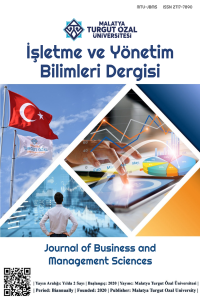
The Malatya Turgut Özal University Journal of Business and Management Sciences is committed to the principles of academic integrity, transparency, and impartiality in its publication processes. The journal adopts internationally recognized ethical standards in scholarly publishing.
1. Publication Ethics
The journal follows international ethical guidelines (COPE principles).
Plagiarism, data fabrication, falsification, and salami slicing are strictly prohibited.
All submissions are screened using plagiarism detection software.
Ethical approval documentation is required where applicable.
Authors must declare any potential conflicts of interest.
2. Peer Review Process
The journal employs a double-blind peer review system.
Reviewers and authors remain anonymous to each other.
Manuscripts are evaluated based on originality, scientific contribution, methodological rigor, and relevance to the field.
The editor may request additional reviewer reports when necessary.
3. Author Responsibilities
Submitted manuscripts must be original and not under consideration elsewhere.
All listed authors must have made substantial scholarly contributions.
Sources, data, and citations must be properly acknowledged.
4. Editor and Reviewer Responsibilities
Editors act impartially and ensure confidentiality throughout the review process.
Reviewers provide objective, constructive, and timely evaluations.
Individuals with conflicts of interest are excluded from the evaluation process.
5. Open Access Policy
The journal supports the free dissemination of scientific knowledge and adopts an open-access publication model. All published articles are freely accessible.
6. Copyright and Licensing
Authors retain copyright while granting the journal the right to publish their work under the journal’s open-access policy. Licensing terms are specified according to journal regulations.
Article processes are carried out free of charge.
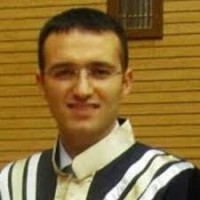
İlkut Elif Kandil Göker, 2005 yılında Gazi Üniversitesi İşletme Bölümü’nden mezun olmuş, aynı yıl Harran Üniversitesi’nde araştırma görevlisi olarak göreve başlamış ve yüksek lisansını burada tamamlamıştır. 2009 yılında Kırıkkale Üniversitesi’ne atanarak doktorasını 2014’te tamamlamış, 2020’de finans alanında doçent unvanı almıştır. 2024 yılından itibaren Ankara Üniversitesi Uygulamalı Bilimler Fakültesi Gayrimenkul Geliştirme ve Yönetimi Bölümü’nde öğretim üyesi olarak görev yapmaktadır. Araştırma alanları işletme finansmanı, finansal piyasalar, şirket ve marka değerleme konularını kapsamaktadır.
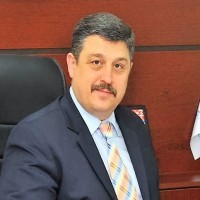
Prof. Dr. Fevzi Serkan Özdemir,
Ankara Üniversitesi Siyasal Bilgiler Fakültesi İşletme Bölümü’nde Muhasebe ve Finansman Anabilim Dalı’nda profesör olarak görev yapmaktadır. Doktorasını Ankara Üniversitesi'nde tamamlayan Prof. Özdemir, çalışmasında Tekdüzen Muhasebe Sistemi ve Uluslararası Finansal Raporlama Standartları çerçevesinde üretilen finansal tablo bilgilerinin, finansal bilgilerin niteliksel özelliklerinden biri olan bilginin ihtiyaca uygunluğu açısından finansal başarısızlık tahminleri yoluyla değerlendirilmesini ele almıştır. Bu çalışması, 2011 yılında İktisadi Araştırmalar Vakfı tarafından düzenlenen tez değerlendirme yarışmasında En İyi İkinci Doktora Tezi ödülüne layık görülmüştür.
Doktora sürecinde ve sonrasında New York Üniversitesi'nde misafir araştırmacı olarak bulunan Prof. Özdemir, muhasebe bilgi sistemi, finansal raporlama ve analiz, muhasebe kuramı ve eğitimi, uluslararası muhasebe ve kurumsal sürdürülebilirlik konularında çalışmalarını sürdürmektedir.
Prof. Özdemir'in birçok ulusal ve uluslararası dergide yayımlanmış makalesi ve çeşitli bilimsel toplantılarda sunulmuş bildirileri bulunmaktadır. Aynı zamanda birçok üniversitede finansal raporlama, sürdürülebilirlik ve finansal performans konularında yüksek lisans ve doktora tezlerine danışmanlık yapmıştır. Muhasebe ve finansman alanında çeşitli kitaplarda yazarlık ve editörlük yapmış olan Prof. Özdemir, aynı zamanda çeşitli akademik dergilerde hakemlik ve yayın kurulu üyeliği görevlerini de üstlenmiştir. Ayrıca, Muhasebede Arama Konferansları ile Uluslararası Sigortacılık, Bankacılık ve Finans Sempozyumlarının koordinatörlüğünü yürütmektedir.
2008 yılından bu yana Muhasebe ve Vergi Uygulamaları Dergisi'nde sırasıyla Yayın Kurulu Sekreterliği, Editör Yardımcılığı ve Editörlük görevlerinde bulunmuş olup, halen Baş Editörlük görevini sürdürmektedir.
Prof. Özdemir ayrıca Serbest Muhasebeci Mali Müşavir (SMMM) ve Bağımsız Denetçi yetki belgelerine sahip olup, Güvence Hizmetleri Derneği'nin genel başkan yardımcısı olarak görev yapmaktadır.
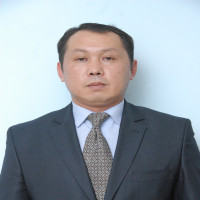
Azamat Maksüdünov (Ph.D.) is an educator with over a decade of experience in the field of business academia. He is a Fulbright Visiting Scholar at Florida Atlantic University for the academic year 2023-2024. Currently, he is a full-time associate professor at Kyrgyz - Turkish Manas University, Department of Management, Faculty of Economics and Management. Dr. Maksüdünov has authored or co-authored 44 articles, 40 conference papers, 10 book chapters, and 4 books. He received the Best Paper Award at the 26th World Business Congress organized by the International Management Development Association (IMDA) in May 2016, as well as a Certificate of Honor from the Ministry of Education and Science of Kyrgyzstan in December 2021.
Professional Experience:
August 2024 – Present
Head of Entrepreneurship, Trade and Tourism Business Department (https://ptt.hneu.edu.ua/salun-marina-mikolayivna/)
Simon Kuznets Kharkiv National University of Economics (9a, Nauky ave, Kharkiv, 61166, Ukraine, https://www.hneu.edu.ua/)
January 2021 – August 2024
Head of Entrepreneurship and Trade Department (https://ptt.hneu.edu.ua/salun-marina-mikola%d1%97vna/)
Simon Kuznets Kharkiv National University of Economics (9a, Nauky ave, Kharkiv, 61166, Ukraine, https://www.hneu.edu.ua/)
September 2017 – December 2020
Professor of Economics and Management Department
Simon Kuznets Kharkiv National University of Economics
January 2000 – August 2017
Associate Professor of Business and Entrepreneurship Department
Simon Kuznets Kharkiv National University of Economics
January 1995 – November 1998
Monetary Economist
Kharkiv Tractor Engine Factory PLC (19 Kirghizska Street, Kharkiv, Ukraine)
Projects:
AUF project "Formation à Entreprenariat social à l'Université" (2020-2021).
IGA № 004DTI/2019 «Preference of colors of project team members´ in the didactic context of education in higher education in EU countries» organized by DTI University Dubnica nad Váhom, Slovak Republic and Institute of Technology and Business in České Budějovice, Czech Republic (2019 – 2020).
Erasmus + KA2 project "Structuring Cooperation in the Field of Doctoral Research, Transferable Skills Training and Academic Writing in Ukrainian Regions" (2017 – 2019).
Erasmus + KA1 project "Mobility for learners and staff – Higher Education Student and Staff Mobility" organized by ISMA University, Latvia (2016 – 2024).
Erasmus + KA1 project "Mobility for learners and staff – Higher Education Student and Staff Mobility" organized by IP Beja, Portugal (2023 – 2024).
Professor in the field of Mathematics Education at Polytechnic of Guarda (IPG);
Post-Doc in Problem-solving Skills at Kindergarten (Institute of Education, Faculty of Education, Sakarya University, Turkey);
PhD in Science and Technology - specialization in Didactical Mathematics (UTAD University, Vila-Real);
Master's degree in Mathematics Education ( UBI University - Covilhã);
Degree in Mathematics Education (Faculty of Education, Coimbra University);
Coordinator of Center for Studies in Education and Innovation (CI&DEI - Guarda Section - https://www.ipv.pt/cidei/coord.htm) from December 2018;
Dean of HEI - School of Education, Communication and Sport, Polytechnic of Guarda, from 12/01/2015 until 14/01/2019;
Member of the Executive Commission of CEI - (Centro de Estudos Ibéricos - http://www.cei.pt/cei/estrutura.htm) from 12/01/2015 until 14/01/2019;
Member of the board of UDI (Research Unit for Inland Development - http://www.ipg.pt/udi/) from 02/2012 until 12/2014;
Develops research in mathematics education, ICT, multicultural education, pre-school and primary school education, and inclusion and innovation.
Has several scientific publications and designed activities with different HEI from Spain, Italy, Greece, Turkey, Sweden, Ireland, Denmark, Lithuania, Latvia, Romania, Czech Republic, Hungary, Belgium, Germany, Albania, Uzbekistan, Chile, Brazil, Colombia, Mexico, Costa Rica, Peru among others
He is an evaluator for ERASMUS+ Portuguese Agency and European COST projects.