Editor-In-Chief
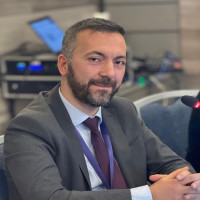
Editor


Science Education Editor
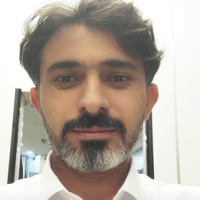
Technology Education Editor

Dr. Orhan Curaoglu is a seasoned educator and researcher specializing in instructional technology, e-learning, and technology-enhanced mathematics and STEM education. He holds faculty positions at both Bolu Abant Izzet Baysal University and the University of North Texas. His professional experience includes university-level instruction and secondary mathematics education. He has participated in numerous national and international initiatives focused on information and communication technology (ICT), pedagogical sciences, and STEM education, and has conducted and published scholarly research on educational technologies.
Mathematics Education Editor
English Language Editor
Editorial Board
Steven Sexton is a primary school teacher now working at the University of Otago. He completed his PhD in teacher cognition in 2007 which investigated how those who are entering their initial teacher education programme see themselves as the teacher and how this role-identity was formed by their prior experiences in the classroom. His current research interest area is in how to support teachers and student teachers being able to incorporate culturally responsive and sustaining teaching practices in their classroom. In addition, his other research areas are in teacher cognition, heteronormativity in the classroom, and science education.


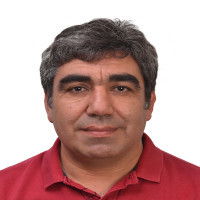




Kemal Yurumezoglu is an professor in the Department of Special Education (Gifted Education) at Dokuz Eylul University, Turkey. He received his master’s degree in physics education in 2000 from the University of Paris Diderot (Paris 7), France, and his PhD in science education in 2005 from the University of Strasbourg, France. His research interests are in conceptual physics, gifted education, STEAM education and inquiry-based physics activities.

(Prof. Dr.) Amasya University
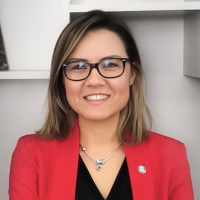

Maria-Antònia Guardiola is an educational leader and researcher specializing in educational leadership, AI in education and system-level digital transformation. Her work focuses on how schools and education systems adopt emerging technologies responsibly - strengthening decision-making, implementation conditions and professional learning so that innovation improves teaching and learning in measurable ways. She contributes expertise in AI literacy, evaluation of educational technologies and governance frameworks that support transparency, accountability and equity. She participates in European collaboration as a Programme Committee member of the AI and Education Squad at the European Digital Education Hub (European Commission) and publishes on educational leadership and responsible AI adoption in education. In her editorial work, she supports rigorous, practice-relevant scholarship at the intersection of educational innovation, leadership and technology-enabled learning.
The content in this journal is licensed under a Creative Commons Attribution-NonCommercial 4.0 International License