Publication Ethics
The publication processes of the International Journal of Management Academy are based on the impartial production, development and sharing of information using scientific methods.
Peer-reviewed articles are studies that ensure the application of the scientific method and impartiality. All components of the publication process in the realization of scientific production; The publisher, editors, authors, reviewers and readers are required to abide by the ethical principles. In this context, the publication ethics and open access policy of the International Journal of Management Academy, in line with the guidelines and policies published by the Committee on Publication Ethics (COPE) in open access (For example, the “Committee on Publication Ethics (COPE) Code of Conduct and Best Practice Guidelines for Journal Editors; “Code of Conduct and Best Practice Guidelines for Journal Editors” and “COPE Best Practice Guidelines for Journal Editors”) require all components of the publication process to comply with ethical principles.
If situations such as the manipulation, distortion and use of fabricated data used in the articles are detected, this situation will be reported to the institution where the article author works, and the article will be rejected. Our journal has the right to request the output files of the analysis results from the authors according to the feedback given by the editor and/or the referees.
Creative Commons
A Creative Commons license is a type of public copyright license that allows free distribution of a copyrighted work or work. When an author wants to give the right to share or make changes to the work he has created, he uses the CC license.
All works published in International Journal of Management Academy are licensed under a Creative Commons Attribution 4.0 International License. This license allows other authors to use your work in their own work for non-commercial purposes and attribution to your work.
Open access is an approach that reinforces interdisciplinary development and encourages collaboration between different disciplines. For this reason, International Journal of Management Academy contributes to its field by providing more access to articles and a more transparent review process. It is aimed that all stakeholders (author, editor, referee, publisher and reader) who present a scientific study contribute to the correct progress of science. Compliance with scientific ethical principles is important in scientific studies prepared in accordance with this goal.
International Journal of Management Academy it is a peer-reviewed journal.
Articles submitted to International Journal of Management Academy are evaluated by double-blind peer-review process and published electronically with free access. Below are the ethical responsibilities, roles, and duties of the authors, journal editor, reviewers, and publisher. The ethical principles and rules below have been prepared in accordance with the guidelines of the Committee on Publication Ethics (Committe on Publication Ethics - COPE (https://publicationethics.org/).
Publisher's Ethical Responsibilities
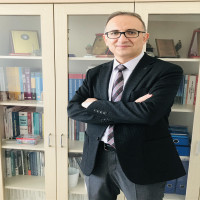
International Journal of Management Academy is published by Mehmet MECEK. Mehmet Mecek is a real person. The publisher's ethical responsibilities are as follows;
• The publisher accepts that the decision maker and the refereeing process are the responsibility of the editor in the process of publishing an article in the International Journal of Management Academy.
• The publisher provides open, electronic and free access to the journal on the journal's web page.
Ethical Responsibilities of Authors
The articles sent to the International Journal of Management Academy of the fields that overlap there should be original studies on the subjects in the fields of study.
Ethical responsibilities of the author(s) applying for an article to the International Journal of Management Academy;
• The author(s) submit an article that they have published elsewhere or sent for publication, or more than one article at the same time in the International Journal of Management Academy'. what not to send.
• The author(s) must submit an original article to the International Journal of Management Academy.
• The author(s) should refer to the sources they used during the writing of the article, in accordance with the ethical principles.
• The names of people who do not contribute to the article should not be written as authors, and it should not be suggested to change the author order, remove an author, or add an author for an article applied for publication.
• Persons who have a conflict-of-interest regarding the article applied for publication should be reported to the editors.
• If information or raw data are requested from the author(s) during the evaluation process, they should submit the expected information to the Editors.
• The author(s) should document that they have obtained the right to use the data they use in their articles, the permissions for the research-analysis or the consent of the participants on whom they have researched.
• The author(s) should contact the editor to inform, correct or retract when they notice an error in an article that is in the evaluation and early view stage or published in electronic media.
• The author(s) has obtained ethics committee approval for research that requires data collection through quantitative or qualitative methods such as experiments, surveys, scales, interviews, observations, and focus group studies that require an ethics committee decision; Ethics committee name, decision date and number should be stated on the first and last page of the article and in the method section, and the document showing the ethics committee decision should be uploaded to the system with the application of the article. In addition, the article should include information about obtaining the informed consent/consent form in the case reports.
• The author(s) should present in the article evidence of their observance of ethical principles during the data collection process (such as obtaining their permission to use other people's documents such as scales, questionnaires, photographs). It should be stated in the articles that research and publication ethics and copyright regulations for intellectual and artistic works are complied with. If the research was carried out on human and animal subjects, international papers, guidelines, etc. should be reported appropriately.
• Ethics committee approval is not required from the author(s) for review articles. However, in articles that do not require an ethics committee decision, it should be stated on the first-last page of the article and in the method section that an ethics committee decision is not required.
• All sources used in articles (authors, online pages, personal interviews, etc.) should be cited accurately and appropriately.
• It should be stated that the articles sent to the journal were not sent to another journal and the Copyright Transfer Form (https://dergipark.org.tr/en/pub/mana/page/11241) should be filled.
• Persons who do not contribute intellectually to the article should not be specified as authors.
• Conflicts of interest regarding the submitted article should be stated and the reason should be explained.
• Authors may be required to submit raw data regarding their work to the editorial board while in the peer review process, in which case the authors are expected to share their raw data with the editorial board. Authors are obliged to keep the data of a published article for 5 years.
• When authors detect an error in their work, they should inform the editor and the editorial board and cooperate for the correction or withdrawal process.
Ethical Responsibilities of Reviewers
All articles submitted to International Journal of Management Academy are evaluated by double-blind peer-review process. Double-blind refereeing means keeping the authors confidential from the referees and the referees from the authors in order to ensure an impartial, objective and independent evaluation process. Articles are sent to the referees from the journal management system for evaluation. The reviewers evaluated the article a are required to fill in the form. The ethical responsibilities and roles of the referees of International Journal of Management Academy are as follows;
• Reviewers are only required to referee articles related to their field of expertise.
• Reviewersare expected to agree to referee articles that do not have conflicts of interest. When reviewers realize any conflict of interest, they should inform the editor and refuse to referee the relevant article.
• Reviewers should evaluate the articles impartially and objectively.
• Reviewers are required to fill in the Referee Evaluation Form for the articles they evaluate, and they are expected not to mention their names in the forms in order not to harm the double-blind refereeing process. In this form, the referees are required to state their decision on whether the article they are evaluating is publishable or not, and the reasons for their decision.
• The style used by the referees in their suggestions should be polite, respectful and scientific. Referees should avoid offensive, disrespectful and subjective personal comments. When it is determined that the referees make such non-scientific comments, they can be contacted by the editor or the editorial board to review and correct their comments.
• Reviewers are required to complete their evaluations within the time given to them and are expected to comply with the ethical responsibilities set forth herein.
• Reviewers should make the evaluation with impartiality and confidentiality. Pursuant to this principle, they should destroy the articles they have reviewed after the evaluation process and use them only after they are published. Nationality, gender, religious belief, political belief and commercial concerns should not impair the impartiality of the assessment.
• Reviewers should evaluate the article for which they accepted the evaluation within the time limit.
Ethical Responsibilities of Editors and Field Editors
Editor's Publication Ethics Committee (Commit tenth publication ethics – COPE - https://publicationethics.org/) issued by the "Ethical Conduct for COPE Journal Editor and Best Practices Guide" (Code of Conduct and Best Practice Guidelines for Journal Editors – COPE - https://publicationethics.org/files/Code_of_conduct_for_journal_editors_Mar11.pdf) and “COPE Best Practice Guidelines for Journal Editors - https://publicationethics.org/files/u2/Best_Practice.pdf) and must comply with the ethical responsibilities listed below.
The editor is responsible for all articles published in the journal. The ethical duties and responsibilities of the editor are as follows;
• Editors strive to meet the information needs of referees, authors, researchers, practitioners and readers, to provide feedback when necessary, and to act according to the principles of clarity in matters that require correction and explanation during the publication process.
• Editors, when deciding whether to publish the articles, pay attention to the originality of the articles and to contribute to the scientific literature, readers, researchers and practitioners.
• Editors take into consideration the original value of the articles, their contribution to the field, the validity and reliability of the research method, the clarity of the narrative, and the purpose and scope of the journal when making a positive or negative decision about the articles.
• Editors take the submitted articles to the preliminary evaluation stage as long as they do not have significant problems, consider positive referee suggestions, and do not change the decisions made by the previous editor(s) unless there are serious problems.
• Editors apply the policies of blind refereeing and evaluation process, which are among the publication policies of the journal, keep the identity information of the referees confidential, and ensure that each article is evaluated impartially and on time.
• Editors send the articles by taking into consideration the field of expertise of the editors and referees, and support the impartial and independent evaluations.
• Editors consider whether there is a conflict of interest between the editors, the referees and the author(s) for the unbiased evaluation of the article.
• Editors seek to have a wide range of referees and to be constantly updated.
• Editors prevent academic etiquette and unscientific reviews.
• Editors ensure that the journal publication processes are operated in accordance with publication policies and guidelines, inform those in charge of the developments in publication policies, and prepare a training program when necessary.
• Editors communicate effectively with everyone involved in the publication process and organize meetings at regular intervals.
• Editors ensure the protection of personal data in the evaluated articles; they protect the individual data of authors, referees and readers.
• Editors; They pay attention to the protection of human and animal rights in their articles, they care about documenting the explicit consent of the participants of the article, they reject the article when they do not have the approval of the ethics committee for the participants of the article, and permission for experimental research.
• Editors; take action against misconduct. When there are complaints about misconduct, he makes an objective investigation and shares the relevant findings.
• Editors ensure that errors, inconsistencies or misdirections in articles are corrected.
• Editors protect the intellectual property rights of the published articles and defend the rights of the journal and the author(s) in case of violation. In addition, they take the necessary measures to ensure that the content of the published articles does not violate the intellectual property rights of other publications; They perform the authenticity-similarity check.
• Editors take into account the consistent criticisms of the articles published in the Journal, and give the right to reply to the author(s) of the criticized articles.
• Editors also take into account studies with negative results.
• Editors examine the complaints submitted to the Journal and make the necessary explanations.
Plagiarism and Unethical Behaviors
All articles submitted to the International Journal of Management Academy are scanned with the Turnitin (https://www.turnitin.com/) software program before printing. Articles with a similarity rate of 25% or less are accepted for publication. Articles exceeding this rate are examined in detail and sent back to the authors for revision or correction if deemed necessary, or if detected, they are rejected for publication due to plagiarism or unethical behavior.
Listed below are some unethical behaviors;
• Mentioning those who did not contribute intellectually to the study as authors.
• Not specifying the people who contributed intellectually to the study as authors.
• Not specifying if the article was produced from the author's master's/doctoral thesis or a project.
• Slicing, that is, publishing more than one article from a single study.
• Not reporting conflicts of interest regarding submitted articles.
• Deciphering the double-blind refereeing process.
• In the publications made as a result of the research carried out with support, the people, institutions or organizations that support them and their contributions are not stated.
• Using the thesis or studies that have not yet been presented or defended and accepted as a source without the permission of the owner.
• Failure to comply with ethical rules in research on humans and animals.
• Misuse of resources, places, facilities and devices provided or allocated for scientific research.
• Making false or misleading statements regarding scientific research and publications in academic appointments and promotions.
• Plagiarism: To present the original ideas, methods, data or works of others as one's own work, in whole or in part, without attribution in accordance with scientific rules,
• Fraud: Using non-existent or falsified data in scientific research,
• Distorting: To falsify research records or data obtained, to present devices or materials that are not used in the research as if they were used, to falsify or shape the research results in line with the interests of the people and institutions that receive support,
• Republishing: Presenting duplicate publications as separate publications for academic appointments and promotions,
• Slicing: To present these publications as separate publications in academic appointments and promotions by dissecting the results of a research in a way that violates the integrity of the research and publishing it in more than one issue,
• Unfair Authorship: Including people who do not have active contributions among the authors or not including those who do, changing the order of authors unjustifiably and inappropriately, removing the names of those who contributed actively from the work in subsequent editions, having their name included among the authors by using their influence, although they do not have active contributions.
Notifying the Editor of the Situation Not Complying with the Ethical Principles
In case of an unethical situation regarding an article in the evaluation process, early view or published in International Journal of Management Academy, which does not comply with the ethical principles regarding the editors, referees, authors, send a message to meceklife@gmail.com must be reported.
Contact: meceklife@gmail.com
Website: https://dergipark.org.tr/en/pub/mana