Volume: 12 Issue: 2 , 12/30/24

Year: 2024

Research Article

Ahmet İlyas
Prof. Dr. Ahmet İLYAS HARRAN UNIVERSITY
1983 Şanlıurfa doğumluyum.Harran Üniversitesi Türkiye Cumhuriyeti Siyasi Tarih ABD çalışmaktayım. Osmanlıdan Cumhuriyete Fikir Akımları, Aşiret-Siyaset ilişkisi üzerine çalışmalar yapmaktayım
History of The Republic of Turkiye, Political History
Ahmet Altungök
Prof. Dr. Ahmet ALTUNGÖK BİLECİK ŞEYH EDEBALİ ÜNİVERSİTESİ
Medieval Age Archeology, Medieval History, Political and Civilization History of Islam, Medieval Asian History, Roman History
Default avatar
Assoc. Prof. Dr. Ahmet İhsan DÜNDAR ULUDAĞ ÜNİVERSİTESİ, İLAHİYAT FAKÜLTESİ, İLAHİYAT PR.
Arabic Language, Literature and Culture, Lexicography and Semantics, Arabic Language and Rhetoric
Aslı Kaya Karakütük
Dr. Instructor Aslı KAYA KARAKÜTÜK ESKİŞEHİR TEKNİK ÜNİVERSİTESİ
Fuzzy Computation, Classification Algorithms, Neural Networks, Machine Learning Algorithms, Extreme Learning Machines, Statistical Theory
Default avatar
Assoc. Prof. Dr. B. Ece ŞAHİN Bursa Uludağ Üniversitesi
Architectural Design
Beral Alacı
Assoc. Prof. Dr. Beral ALACI İZMİR DEMOKRASİ ÜNİVERSİTESİ
History of The Republic of Turkiye
Default avatar
Asst. Prof. Dr. Bilge Nur ÖZTÜRK ALANYA ALAADDİN KEYKUBAT ÜNİVERSİTESİ
Marketing Communications, Digital Marketing, Consumer Behaviour, Integrated Marketing Communication, Product and Brand Management, Intercultural Communication, Advertisement
History of Sports, Late Modern Press History, History of The Republic of Turkiye, Women's Studies
Elife Akiş
Assoc. Prof. Dr. Elife AKİŞ İSTANBUL ÜNİVERSİTESİ, İKTİSAT FAKÜLTESİ

Doç. Dr. Elife AKİŞ

1999 yılında İstanbul Üniversitesi, İktisat Fakültesi, İktisat Bölümü’nden mezun oldu. 2000 yılında İstanbul Üniversitesi’nde İktisat Fakültesi, İktisat Bölümü, İktisat Politikası Anabilim Dalı’nda Araştırma Görevlisi olarak çalışmaya başladı. İstanbul Üniversitesi İktisat Politikası Yüksek Lisans Programı’ndan 2002 yılında mezun oldu. İstanbul Üniversitesi İktisat Ana Bilim Dalı’nda “Küreselleşme Sürecinde Türkiye’nin Uluslararası Rekabet Gücü: Türk Beyaz Eşya Sanayii İçin Bir Uygulama” konulu tez çalışması ile 2008 yılında doktorasını tamamladı. 2021 yılı Mart ayında Makro İktisat doçentlik bilim alanından Doçentlik ünvanını aldı. Halen İstanbul Üniversitesi İktisat Fakültesi İktisat Bölümü’nde öğretim üyesi olarak çalışmalarına devam etmektedir.

Employment, Circular Economy, Informal Economy, Migration Economics, Development Economics - Macro, Development Economics, Cyclical Fluctuations, Growth, Inflation
Fatma İnce Sancaklı
Assoc. Prof. Dr. Fatma İNCE SANCAKLI İNÖNÜ ÜNİVERSİTESİ
History of Seljuk, History of The Byzantine
Default avatar
Assoc. Prof. Dr. Fırat YILDIZ VAN YÜZÜNCÜ YIL ÜNİVERSİTESİ
British and Irish Language, Literature and Culture
Hacı Hayrettin Tıraş
Assoc. Prof. Dr. Hacı Hayrettin TIRAŞ KAHRAMANMARAŞ SÜTÇÜ İMAM ÜNİVERSİTESİ, İKTİSADİ VE İDARİ BİLİMLER FAKÜLTESİ Web
Growth, Development Economics
General Turkish History (Other)
Default avatar
Prof. Dr. Mehmet PINAR VAN YÜZÜNCÜ YIL ÜNİVERSİTESİ
Ataturk's Principles History of Revolution, Intellectual History of Politics, History of The Republic of Turkiye
Mehmet Kılıçarslan
Assoc. Prof. Mehmet KILIÇARSLAN YALOVA ÜNİVERSİTESİ, İSLAMİ İLİMLER FAKÜLTESİ
1976’da Elazığ’da doğdu. İlk, orta ve lise öğrenimini Elazığ’da tamamladı. 2002 yılında Fırat Üniversitesi İlahiyat Fakültesinden mezun oldu. 2006 yılları arasında Cumhuriyet Üniversitesi Sosyal Bilimler Enstitüsünde “Edebî Açıdan Kur’an’daki Dua Ayetleri” başlıklı tezle yüksek lisansını, 2016 yılında yine Cumhuriyet Üniversitesi Sosyal Bilimler Enstitüsünde “Zâdu’l-Mesîr Bağlamında İbnu’l-Cevzî’nin Tefsir Metodu” başlıklı tezle doktorasını tamamladı. 2000-2018 yılları arasında farklı kamu kurumlarında hizmet etti. 2018 yılında Nevşehir Hacı Bektaş Veli Üniversitesi İlahiyat Fakültesinde Yrd. Doç. Dr. Olarak göreve başladı. Halen aynı kurumda öğretim üyeliği yapan yazar, evli ve üç çocuk babasıdır. İngilizce ve Arapça bilen yazarın Arapça’dan Türkçe’ye tercümeleri bulunmaktadır.
Religion, Society and Culture Studies, Linguistics
Mehmet Şirin Çınar
Prof. Dr. Mehmet Şirin ÇINAR VAN YÜZÜNCÜ YIL ÜNİVERSİTESİ

1970 Van doğumlu. İlk ve orta öğretimini Van ve Ankara'da tamamladıktan sonra 1988-92 yıllarında Atatürk Üniversitesi
Edebiyat Fakültesi Doğu Dilleri Bölümü Arap Dili ve Edebiyatı'nı başarıyla tamamladı. 1994 yılında YYÜ İlahiyat
Fakültesine Araştırma Görevlisi olarak atandı. 1995 yılında Yüzüncü Yıl Üniversitesi Sosyal Bilimler Enstitüsünde Yüksek
Lisansını tamamladı. 2001 yılında "Nahivciler ile Mantıkçılar Arasındaki Tartışmalar" adlı teziyle Marmara Üniversitesi
Sosyal Bilimler Enstitüsünde Doktorasını verdi. 2008 yılında doçent 2013 yılında ise Profesör oldu. Halen aynı kurumda
öğretim üyesi olarak çalışıyor

Linguistic Structures (Incl. Phonology, Morphology and Syntax)
Nasrullah Uzman
Prof. Dr. Nasrullah UZMAN ANKARA HACI BAYRAM VELİ ÜNİVERSİTESİ, EDEBİYAT FAKÜLTESİ, TARİH BÖLÜMÜ Web
Ataturk's Principles History of Revolution, Political History, History of The Republic of Turkiye, International Migration, Turkish Foreign Policy, Migration Sociology, Turkish Political Life, Late Modern Renewal History
Default avatar
Assoc. Prof. Dr. Neslihan KILIÇ DİCLE ÜNİVERSİTESİ, İLETİŞİM FAKÜLTESİ, GAZETECİLİK BÖLÜMÜ
Late Modern Press History, New Media, Journalism, Social Media Studies, Development of Media and Communication Education and Programs, Media Literacy, Internet Publishing, Journalism Studies, Communication Technology and Digital Media Studies
Osman Oruç
Assoc. Prof. Dr. Osman ORUÇ BAYBURT ÜNİVERSİTESİ
10 Nisan 1977 tarihinde Bayburt'ta doğdu. Bayburt Lisesini bitirdi. 2002'de İÜ Edebiyat Fakültesi Türk Dili ve Edebiyatı Bölümünden mezun oldu. Aynı üniversitede Prof. Dr. Mustafa Özkan'ın danışmanlığında "Oğuz Atay'ın Romanlarında İronik Dil" adlı teziyle yüksek lisansını 2006 yılında, 2015 yılında da "Türk Romanında Bireyin Değişimi, Dönüşümü ve Kendini Keşfetme Biçimi Olarak Yolculuk" adlı teziyle doktorasını tamamladı. 2002-2015 yılları arasında İÜ Yabancı Diller Bölümü ve Dil Merkezinde Türkçe okutmanı olarak görev yaptı. Halen Bayburt Üniversitesi İnsan ve Toplum Bilimleri Fakültesi, Türk Dili ve Edebiyatı bölümünde görev yapmaktadır.
Modern Turkish Literature in Turkiye Field, Language Studies
Building Construction Management and Project Planning, Building Information Modelling and Management, Sustainable Architecture, Project and Production Management
Vural Öntürk
Dr. Vural ÖNTÜRK VAN YÜZÜNCÜ YIL ÜNİVERSİTESİ
History of Muslim Turkish Countries and Societies
Yunus Emre Birol
Assoc. Prof. Yunus Emre BİROL SİVAS CUMHURİYET ÜNİVERSİTESİ Web
Monetary-Banking, Applied Macroeconometrics, European Union Economy, Monetary Policy, Macroeconomics
Yusuf Karataş
Dr. Yusuf KARATAŞ ESKİŞEHİR OSMANGAZİ ÜNİVERSİTESİ
Language Studies, Linguistics
Default avatar
Prof. Dr. İlker AYDIN ORDU ÜNİVERSİTESİ
Turkish Education, Linguistics (Other)

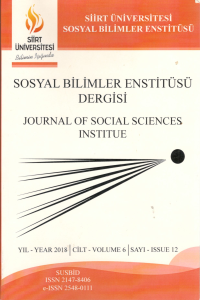
- Siirt University Social Sciences Institute Journal (SUSBİD) is a scientifically focused international peer-reviewed academic journal published twice a year (in June and December).
- Articles in Turkish and English are published in the Journal of Siirt University Social Sciences Institute.
- In addition to articles in the field of social sciences, multidisciplinary articles are also published in the electronically published journal. In this regard, the aim of Siirt University Social Sciences Institute Journal is to approach the field of social sciences from a broad perspective, contribute to field studies and create diversity.
- Within the Siirt University Social Sciences Institute Journal; Academic studies, compilations and book introductions on the disciplines of Literature, Geography, History, Philosophy, Sociology, Psychology, Archaeology, Art History, Theology, Communication, Journalism, Law, Public Relations, Educational Sciences, Economics, Business Administration and Economics are included.
- Our journal publishes articles on the field of social sciences and the branches of science within this field. However, the publication of a special issue covering a specific subject is decided by the absolute majority of the Editorial Board. Manuscripts submitted to the journal must not have been published or submitted for publication elsewhere.
- Papers presented at scientific meetings may be evaluated by the Editorial Board if they have not been previously published in the proceedings booklet or another journal. For whatever reason, articles published in the proceedings booklet or any other publication will not be published. Editorial Board members and the editorial team are not obliged to investigate whether the submitted articles have been previously published in another publication. The ethical responsibility of the situation in question belongs to the author or authors.

Within the Journal of Siirt University Institute of Social Sciences; Academic studies, compilations and book reviews on the fields of Literature, Geography, History, Philosophy, Sociology, Psychology, Archeology, Art History, Theology, Communication, Journalism, Law, Public Relations, Educational Sciences, Economics, Business Administration and Economics are included. In our journal, articles on the field of social sciences and the branches of science in this field are published. However, the publication of a special issue covering a specific subject is decided by the absolute majority of the Editorial Board. Manuscripts submitted to the journal must not have been published elsewhere or sent for publication. If the articles are accepted for publication, SUSBID owns all publishing rights. In case of quoting from the published articles, it is obligatory to indicate the source. The right to republish the entire published article depends on the permission of the journal. Studies that have previously been presented in national or international congresses or symposiums and whose abstracts have been published can be sent by stating these qualities.

Click here for the spelling guide.

The ethical duties and responsibilities listed below have been prepared based on the recommendations and guidelines published by the Committee on Publication Ethics (COPE). In addition, the Journal of Siirt University Social Sciences Institute has adopted the International Ethical Publishing Principles published by the Directory of Open Access Journals (DOAJ), Open Access Scholarly Publishers Association (OASPA) and World Association of Medical Editors (WAME).
Ethical Responsibilities of the Publisher
- The publisher does not seek any financial profit by publishing the magazine.
- The publisher undertakes that the editors make independent decisions regarding the articles sent to the journal.
- The publisher has the responsibility to take precautions against all kinds of scientific misconduct, citation fraud and plagiarism regarding the editors.
- Issues such as freedom of thought and property rights of the articles submitted to our journal are respected. Publishers protect the intellectual property and copyright of every article published in the journal. Journal management defends the rights of the journal and authors in case of possible violations.
Ethical Duties and Responsibilities of Editors
- The editor must ensure that the articles published in the journal comply with the publication policy of the journal and the purpose and scope of the journal.
- The editor should pay attention to the protection of personal data in the articles sent to the journal and should not publish this personal data without the explicit consent of the individuals. The editor must ensure that all information regarding the manuscript submitted to the journal is kept confidential until publication.
- The editor should carefully consider criticisms about the articles published in the journal and display a constructive attitude in this regard.
- The editor must keep correspondence, files and other records regarding the articles sent to the journal in electronic form or in print.
- The editor must do the necessary work to raise the quality standards of the journal and publication.
- The editor must defend academic diversity of ideas and freedom of scientific thought. At the same time, the journal must continue its operation by observing intellectual property rights and ethical standards.

- The editor must evaluate the articles submitted to the journal in terms of scientific content, regardless of the authors' ethnicity, gender, nationality, religious beliefs or political philosophies.
- In accordance with the publication policy, the editor must prioritize the principle of transparency in all publication processes (on issues that require correction, change and clarification in publication for any reason).
- The editor must ensure that human and animal rights are protected in the articles sent to the journal. The editor should reject the article in question if there is no ethics committee approval for the subjects used in the article or legal permissions for experimental research.
- The editor must ensure that double-blind peer review processes are carried out properly.
- Only the editor and the editorial board have full authority in appointing referees regarding the articles, and the editor and the editorial board are responsible for the final decision regarding the publication of the articles.
- The editor must be in communication with the field editors and the editorial board.
- The editor must ensure that the editorial board consists of active members who contribute to the journal and are compatible with the journal's field.
- The editor must ensure that the editorial board is objective and unbiased in its evaluations.
- The editor should shape the publication policy of the journal by taking into account the opinions and suggestions of the editorial board.

- The editor must ensure that authors have access to the current version of the journal's publishing and writing policies and article template.
- The editor should take the articles to the preliminary evaluation stage unless there is a serious problem with the articles sent to the journal.
- The editor must provide accurate, descriptive and informative notification and feedback to authors regarding all stages of their manuscripts.
- The editor should not ignore positive referee suggestions. In case of rejection of positive referee suggestions, the reason for rejection may be scientific, ethical, legal, etc. should be evaluated within the framework of norms.
- The editor must immediately convey the correction suggestions requested by the referees to the author.
- The editor must appoint referees suitable for the field and content of the study for the articles sent to the journal.
- The editor must send the necessary forms and files to the referees regarding the evaluation of the articles within the required time.
- The editor must immediately forward the corrections made by the author to the manuscript files to the referees.
- The editor must keep the identities of the referees confidential during the publication evaluation process.
- The editor must prevent comments that do not comply with scientific ethics and are offensive before they reach the author.
- The editor should always update the journal's referee pool and create a wide range.
- The editor should make an effort to send manuscripts to different referees.
- The editor should direct the articles submitted to the journal to referees who do not have conflict of interest or unity of interest.
- The editor should encourage the referees to evaluate the manuscripts in a neutral, scientific and objective language.
- Editor; It is obliged to take into account the feedback from readers, researchers and practitioners and to give healthy feedback to readers, researchers and feedback providers.

Ethical Responsibilities of Authors
While we accept that different disciplines and publication styles have different norms, we look for certain conditions in the articles submitted to our journal. These:
* Rigor, honesty and excellence in research practice,
* Care and respect for all participants and subjects in the research,
* Transparency and open communication,
* Research method,
* Subject integrity,
* Scientific originality,
* Mastery in the use of terminology related to the field of science,
* To see old and new studies on the subject,
* Suitability and sufficiency in the resources used,
* Ability to make evaluations and reach conclusions,
* Contributing to the field,
* Language mastery/understandability and fluency,
In addition, the author/s accept the following:
- Author(s) must upload the articles they send to the journal to the system in accordance with the journal's publication and writing rules and article template.

- The author(s) declare that the article submitted to the journal for publication has not been previously published anywhere, in any language, has not been sent to another journal for publication, or has not been evaluated for publication; If all or part of the article has been published, it must declare and undertake to the journal editor that all necessary permissions have been obtained for it to be published in our journal.

- Author(s) should not send more than one article to our journal to be published in the same issue.
- Author(s) should not add the names of people who did not contribute to the article as authors.
- Author(s) must ensure the originality of the articles they send to the journal.
- The author(s) must assume full responsibility for all copyrighted materials (tables, figures, contributing quotations, etc.) in our journal.
- Writers); Other authors, contributors or sources must be cited appropriately and relevant sources must be cited.
- The author(s) must declare any financial relationship or conflict of interest or competing interest areas that need to be known about the study submitted to our journal and that may potentially affect the findings or scientific outcome of the study; All financial contributions, sponsorships or project supports made to the study must be stated in writing.
- The author(s) must state these qualifications if the articles sent to the journal are studies that have been presented at national or international congresses or symposiums and whose abstracts have been published.
- When the author(s) detect a significant scientific error or impropriety in their article published in our journal, they must immediately contact the editor to withdraw the article or correct the error in the article.

- The author(s) must ensure that the studies submitted to our journal comply with scientific research and publication ethics. In this regard, the rules specified in the YÖK Scientific Research and Publication Ethics Directive must be strictly followed.
- The author(s) must provide the additional documents requested by the journal editorship regarding the ethical status of the article within the time limit while the pre-flight, evaluation and editing process of an article is ongoing.
- Author(s) should not change their responsibilities regarding a publication whose evaluation process has started. (add/remove authors, change order)
- Author(s) must respect fundamental human rights and animal rights in the articles they submit to the journal for publication. In this context, ethics committee approval must be obtained for the subjects to be used in the articles.
- In co-authored articles, if other authors cannot be reached, the responsible author is deemed to have accepted all responsibility.
- Siirt University Social Sciences Institute Journal has the right to make corrections to the submitted articles, to publish or not to publish the articles.
- The legal, scientific and ethical responsibility of the articles published in the journal belongs to the author(s). The Editorial Board and the editorial team do not accept any legal liability that may arise.
- In accordance with the ULAKBİM TR Index rules, the ORCID numbers of all authors in the articles must be added to the final version of the article.
The journal management, editor and editorial board assume that authors who submit articles for publication to our journal agree to comply with the above-mentioned conditions.

Ethical Responsibilities of Referees
- Referees must act with impartiality and confidentiality in accordance with the double-blind arbitration evaluation process. They cannot share the information and evaluation results they have obtained with third parties, including the author.
- Studies sent to referees for evaluation must be kept confidential. Studies should not be shown to others and their contents should not be discussed. The confidentiality rule also covers persons who refuse to serve as arbitrators.
- A referee who receives an invitation to make a peer review must inform the editor within 15 days whether he/she can serve as a referee for the relevant study. The referee must complete the evaluation process within 15 days, and the authors must complete the changes notified to the corresponding author within 15 days.
- If the referees detect uncited publications, copyright infringement and plagiarism by the author, they should report the issue to the journal editor.
- Referees must evaluate the work in an impartial, scientific and objective language. Referees should avoid insults and personal comments and make evaluations in accordance with minimum rules of courtesy. Referees must evaluate the relevant article by taking scientific criteria into consideration.
- Referees should avoid evaluations that are not scientific or may have legal consequences.
- Referees should accept studies related to their field of expertise and reject studies outside their field of expertise.
If referees notice a conflict of interest or community of interest regarding the study they are evaluating, they must refuse to serve as a referee and report this to the journal editorship.

Compliance with YÖK Scientific Research and Publication Ethics Directive
The heading "Actions Contrary to Scientific Research and Publication Ethics" in Article 4 of the Second Section of the YÖK Scientific Research and Publication Ethics Directive is as shown below. Authors should seriously avoid the following details:
a) Plagiarism: Presenting the original ideas, methods, data or works of others as one's own work, in whole or in part, without citing them in accordance with scientific rules,
b) Fraud: Using data that does not actually exist or has been falsified in scientific research,
c) Distortion: Falsifying research records or data obtained, presenting devices or materials that were not used in the research as if they were used, falsifying or shaping the research results in line with the interests of the individuals and organizations receiving support,
d) Re-publication: Presenting duplicate publications as separate publications in academic appointments and promotions,
d) Slicing: Dividing the results of a research into pieces in a way that violates the integrity of the research and publishing them in more than one issue, and presenting these publications as separate publications in academic appointments and promotions,
e) Unfair authorship: Including people who do not have an active contribution among the authors or not including people who do, changing the author order in an unjustified and inappropriate way, removing the names of those who have an active contribution from the work in subsequent editions, using their influence to include their names among the authors even though they do not have an active contribution,
Other types of ethical violations include:

a) Not mentioning the supporting persons, institutions or organizations and their contributions in the publications made as a result of research carried out with support,
b) Using theses or studies that have not yet been presented or defended and accepted as a source without the permission of the owner,
c) Not complying with ethical rules in research conducted on humans and animals, and not respecting patient rights in their publications,
c) Acting contrary to the relevant legislation in biomedical research and other clinical research on humans,
d) Sharing the information contained in a work that he is assigned to review with others before it is published without the express permission of the owner of the work,
e) Using the resources, spaces, facilities and devices provided or allocated for scientific research for purposes other than their intended purpose,
f) Making unfounded, unfounded and intentional allegations of ethical violations,
g) To publish the data obtained in surveys and attitude research conducted within the scope of a scientific study without obtaining the explicit consent of the participants or, if the research will be carried out in an institution, without obtaining the permission of the institution,
h) Harming animal health and ecological balance in research and experiments,
i) Not obtaining written permissions from authorized units before starting research and experiments.
i) Conducting research and experiments contrary to the provisions of the legislation or international agreements to which Turkey is a party regarding relevant research and experiments.
j) Failure to comply with the obligation of researchers and authorities to inform and warn those concerned about possible harmful practices regarding the scientific research carried out,
k) Not using data and information obtained from other persons and institutions in scientific studies to the extent and in the manner permitted, not respecting the confidentiality of this information and not ensuring its protection,

l) Making false or misleading statements regarding scientific research and publications in academic appointments and promotions,
Situations that cannot be considered contrary to scientific research and publication ethics are stated in Article 5 as follows; “Using anonymous information, basic knowledge of scientific fields, and propositions such as mathematical theorems and proofs in studies cannot be considered an ethical violation, provided that the original style and expression of someone else is not used exactly.”
Duplicate Publication
Redundant publication or "self-plagiarism" occurs when a work or significant portions of a work are published more than once by the author or authors of the work. This may be in the same or a different language. Republication / Duplication / Multiple Publication / Scientific Misleading is a crime. According to TÜBİTAK Publication Ethics Committee, duplication is sending or publishing the same research results to more than one journal. If an article has been previously evaluated and published, publications other than this are considered duplication. In this context, we, as the editorial team and the editorial board, clearly state that we are against duplication.
We welcome our readers to raise concerns about duplicate or redundant publications by contacting the relevant editor or emailing sosbilder@siirt.edu.tr.

Research on Humans or Animals
Research involving humans or animals must be approved by the relevant ethics committee(s). Articles must comply with international ethical and legal standards. Additionally, authors are required to respect the privacy rights of their human participants and obtain any necessary permission to publish before submitting articles to our journal.
Notifying the Editor of a Situation That Does Not Comply with Ethical Principles
In case of behavior that does not comply with ethical principles regarding editors, referees, or authors, or if an unethical situation is encountered regarding an article in the evaluation process, in early view, or in a published article, it must be reported via e-mail to sosbilder@siirt.edu.tr.

No fee is charged from the author or his/her institution under any name.
No fee is requested from the authors for the articles sent to our journal. No fee is charged from the author or his/her institution under any name. Article publication and article processing in the journal are not subject to a fee. No processing fees or submission fees are charged for articles submitted to our journal or accepted for publication. Siirt University Social Sciences Institute Journal does not accept sponsorships and advertisements in accordance with its publication policies. All expenses of the journal are covered by the Directorate of the Institute of Social Sciences.

Editor in Chief

Ahmet Saylık
Assoc. Prof. Dr. Ahmet SAYLIK SİİRT ÜNİVERSİTESİ
Education Management, Philosophy of Education

EDITORS

Contemporary Military History, History of The Republic of Turkiye, Political History (Other)

Secretariat

Default avatar
Res. Assist. Yüksel GÜRSOY SİİRT ÜNİVERSİTESİ, FEN-EDEBİYAT FAKÜLTESİ, COĞRAFYA BÖLÜMÜ
Rural and Regional Geography, Population Geography, Countries Geography
Elif Kaşık
Res. Assist. Elif KAŞIK SİİRT ÜNİVERSİTESİ
Labor Sociology, Industrial Sociology

AREA EDITORS

Mustafa GÜNAY is Associate  Professor in philosophy in Department of Philosophical Sciences, Çukurova University, Adana, Turkey since 1995.
His research areas are particularly human and cultural philosophy, historical philosophy, and philosophical developments during republic period of Turkey.
He has various publications in various journals such as; journal of Felsefe Tartışmaları, Doğu Batı, Kaygı, Cumhuriyet Kitap, Varlık, Mesele and he has presentations in various philosophy symposiums.
Mustafa Günay is the winner of “Macit Gökberk Philoshopy Award” (1998) (Macit Gökberk Philisophy Award) in Turkey.
He has been the editor of ÖZNE- Journal of Philosophy since 2004.

Philosophy, Philosophy of Education, Philosophy of Human Being, Philosophy of Culture , Philosophy in Turkiye
Default avatar
Assoc. Prof. Dr. Halit YABALAK Van Yüzüncü Yıl Üniversitesi
Fine Arts Education, Creative Arts and Writing, Fine Arts, Plastic Arts, Painting
Default avatar
Assoc. Prof. Dr. Enser YILMAZ SİİRT ÜNİVERSİTESİ, FEN-EDEBİYAT FAKÜLTESİ
Ecocriticism, Modernist/Postmodernist Literature, Literary Studies (Other), Modern Turkish Literature in Turkiye Field
Sport and Exercise Psychology, Exercise and Sports Psychology
Default avatar
Asst. Prof. Dr. Serkan SABANCI SİİRT ÜNİVERSİTESİ
Ecology, Ecological Applications, Ecological Impacts of Climate Change and Ecological Adaptation, Human Impacts of Climate Change and Human Adaptation, Climate Change Impacts and Adaptation (Other), Environmental Economy, Türkiye Physical Geography, Ecology, Sustainability and Energy, Geographical Information Systems (GIS) in Planning, Atmospheric Sciences, Meteorology, Physical Geography and Environmental Geology, Remote Sensing , Climatology
Ahmet Usanmaz
Asst. Prof. Dr. Ahmet USANMAZ AGRI IBRAHIM CECEN UNIVERSITY
Social Work (Other), Welfare Studies, Sociology, Educational Sociology, Youth Sociology , Migration Sociology, Sociology of Child
Cognition, Psychology of Ageing, Experimental Psychology
Default avatar
Dr. Simge DİNÇARSLAN ANKARA HACI BAYRAM VELİ ÜNİVERSİTESİ, EDEBİYAT FAKÜLTESİ
Physical Anthropology and Paleoanthropology, Archaeology, Archaeological Science
Default avatar
Assoc. Prof. Mehmet TAN SİİRT ÜNİVERSİTESİ
Sociology, Urban Sociology and Community Studies, Sociology of Culture
Mahir Özhan
Assoc. Prof. Mahir ÖZHAN SİİRT ÜNİVERSİTESİ
Public Administration, Urban Policy, Political Science, Constitutional and Political Theories, Political Sociology, Participation and Governance
Hasan Yeniçırak
Assoc. Prof. Dr. Hasan YENİÇIRAK KIRKLARELİ ÜNİVERSİTESİ
Political Sociology, Social Movement, Social Theory, Sociology of Aging
Yunus Baydaş
Asst. Prof. Dr. Yunus BAYDAŞ SİİRT ÜNİVERSİTESİ, İKTİSADİ VE İDARİ BİLİMLER FAKÜLTESİ, İŞLETME BÖLÜMÜ
Finance and Investment
Default avatar
Assoc. Prof. Dr. Said OLGUN SİİRT ÜNİVERSİTESİ
Late Modern Balkan History, Late Modern Ottoman History
Default avatar
Prof. Dr. Nilgün Çolpan ERKAN Yıldız Teknik Üniversitesi, Mimarlık Fakültesi, Şehir ve Bölge Planlama Bölümü Web
Urban Planning and Health, Urban Design, Architecture and Environmental Psychology
Sedat Akay
Assoc. Prof. Dr. Sedat AKAY SİİRT ÜNİVERSİTESİ, İLAHİYAT FAKÜLTESİ
Arabic Language and Rhetoric
Default avatar
Assoc. Prof. Dr. Mehmet Galip ZORBA AKDENİZ ÜNİVERSİTESİ Web

Receiving his BA in English Language and Literature in 2009, Mehmet Galip Zorba completed his PhD at Gazi University’s English Language and Teaching program in 2019 with his dissertation on raising intercultural awareness through teaching English. He is employed at Akdeniz University’s Faculty of Letters, Department of English Language and Literature. His research interest mainly focuses on investigating ways to integrate literary texts into teaching for quality education.

British and Irish Language, Literature and Culture
Emine Ebru Bozçelik
Asst. Prof. Dr. Emine Ebru BOZÇELİK Antalya Belek Üniversitesi
Family and Household Studies, Counselling, Wellbeing and Community Services, Social Work (Other), Disabled Groups, Social Welfare Policies, Household Finance and Financial Literacy
Akıl Fikret Tosun
Assoc. Prof. Dr. Akıl Fikret TOSUN Van Yüzüncü Yıl Üniversitesi Güzel Sanatlar Fakültesi Sinema-Tv
Filmmaking and Directing, Cinema-Tv Production and Management
Erkan Afşar
Assoc. Prof. Dr. Erkan AFŞAR VAN YÜZÜNCÜ YIL ÜNİVERSİTESİ
Turkish Political Life, Middle East Studies, Turkish Foreign Policy, History of The Republic of Turkiye, Political History
Environmental Sociology, Migration Sociology, Rural Sociology

Lisans: Van Yüzüncü Yıl Üniversitesi Sanat Tarih: 2002

Yüksek Lisans: Van Yüzüncü Yıl Üniversitesi Sosyal Bilimler Enstitüsü Sanat Tarihi: 2010

Doktora: Van Yüzüncü Yıl Üniversitesi Sosyal Bilimler Enstitüsü Sanat Tarihi: 2016

Doçentlik: İslam Tarihi ve Sanatları: Türk İslam Sanatları: 2021

Islamic Arts, Art History, Archaeology
Erhan Çapraz
Assoc. Prof. Erhan ÇAPRAZ BOLU ABANT İZZET BAYSAL ÜNİVERSİTESİ
Turkish Folklore, Alawism Bektashism Studies, Turkish Folklore Outside Türkiye, Turkish Folklore in the Türkiye Field
Sibel Önal
Asst. Prof. Dr. Sibel ÖNAL Ankara Üniversitesi

2008 yılında Ankara Üniversitesi Dil ve Tarih-Coğrafya Fakültesi Antropoloji Bölümü'nden mezun olan Dr. Öğr. Üyesi Sibel Önal, 2017 yılında Ankara Üniversitesi Sosyal Bilimler Enstitüsü Fizik Antropoloji programında doktorasını tamamladı. 2014 yılından beri mezun olduğu bölümde çalışmaktadır. Ergonomi, kent ergonomisi, beden algısı ve ekoloji üzerine dersler vererek çalışmalarını sürdürmektedir. 

Anthropometry, Ecological Anthropology, Ergonomi, Physics Anthropology
Arzdar Kiraci
Prof. Dr. Arzdar KİRACİ SİİRT ÜNİVERSİTESİ
Econometric and Statistical Methods, Mathematical Economics, Game Theory, Microeconomics (Other)
Özkan Apaydın
Assoc. Prof. Özkan APAYDIN Bilim ve Sanat Merkezi (BİLSEM) Web
Music education
Education, Education Policy, Religious Music, Music Education
Tourism, Gastronomy

FOREIGN LANGUAGE EDITOR

Default avatar
A A It is not affiliated with an institution
Quantum Computation

EDITORIAL BOARD

Bülent Özkan
Prof. Dr. Bülent ÖZKAN It is not affiliated with an institution Web

1977 yılında Manisa’nın Salihli ilçesinde doğdu. 2000 yılında Çukurova Üniversitesi Türk Dili ve Edebiyatı Bölümü’nden mezun oldu. 2003’te bilim uzmanı, 2007’de aynı üniversitenin Sosyal Bilimler Enstitüsü Yeni Türk Dili Anabilim Dalı’ndan Doktor unvanı aldı. Lisansüstü eğitimi devam ederken 7 yıl Millî Eğitim Bakanlığı’na bağlı ilköğretim okullarında Türkçe Öğretmeni olarak görev yaptı. 2014 yılında Türkçe Eğitimi alanında Doçent, 2020 yılında ise aynı alanda Prof. Dr. unvanını aldı.

Mersin Üniversitesi Türkçe Öğretimi Uygulama ve Araştırma Merkezi’nin (TUAM) kurucu müdürlüğünü yaptı. Aynı üniversitenin Eğitim Bilimleri Enstitüsü Yabancı Dil olarak Türkçenin Öğretimi Yüksek Lisan Programı’nı kurdu.

TABİTAK – SOBAG’ın desteklediği 4 adet 1001, 1 adet 1002, 1 adet 1003 projesinde yürütücü; 2 adet 1001 projesinde danışman ve TÜBİTAK – EEEAG’nin desteklediği 1 adet 1005 projesinde ise yine yürütücü olarak görev aldı. TÜBİTAK – BİDEB’in 2224-A Yurt Dışı Bilimsel Etkinliklere Katılımı Destekleme Programı, 2229 ve 2237 Bilimsel Eğitim Etkinliklerini Destekleme Programları ile 2219 Yurt Dışı Doktora Sonrası Araştırma Burs Programı destekleriyle eğitimler düzenledi, koordinatör ve katılımcı olarak çok sayıda bilimsel çalışmalar yürüttü.

Çalışma konuları arasında sözlükbilimi, derlem dilbilimi ve Türkçenin öğretimi yer almaktadır.

Hâlen Mersin Üniversitesi Eğitim Fakültesi Türkçe Eğitimi Bölümü’nde akademik çalışmalarını yürütmektedir. (http://ozkanbulent.com)

Linguistics, Turkish Education
Default avatar
Prof. Dr. Bülent GÜNSOY Anadolu Üniversitesi
Macroeconomic Theory, Growth, Inflation, Employment, Development Economics, Disaster Economy
Cahit Epçaçan
Prof. Dr. Cahit EPÇAÇAN İSTANBUL MEDENİYET ÜNİVERSİTESİ Web

Prof. Dr. Cahit Epçaçan completed his undergraduate studies in Turkish Language and Literature at İnönü University (1996), his master's degree in Turkish Language and Literature Teaching (1999) and his doctorate in Turkish and Social Sciences Education (2010) at Atatürk University. He was appointed as a professor at Siirt University, Faculty of Education, Department of Turkish and Social Sciences Education in 2019. Prof. Epçaçan currently works for Istanbul Medeniyet University, Faculty of Educational Sciences, Department of Turkish and Social Sciences Education. Prof. Epçaçan has many articles published in national and international journals. Prof. Dr. Epçaçan's research area includes Turkish language education.

Turkish and Social Sciences Education, Turkish Education
Selami Sezgin
Selami SEZGİN ANADOLU UNIVERSITY Web
Development Economics - Macro, Policy of Treasury, Development Economics, Public Economy, Defence Studies, Public Finance
Education, Scale Development, Education Management, Supervision in Education, Education Planning, Inspection and Planning
Default avatar
A A It is not affiliated with an institution
Quantum Computation
Default avatar
Prof. Dr. Mustafa ÖNCÜ MERSİN ÜNİVERSİTESİ
Arabic Language and Rhetoric
Fadıl Aygan
Prof. Dr. Fadıl AYGAN SİİRT ÜNİVERSİTESİ İLAHİYAT FAKÜLTESİ Web
Islamic Philosophy, Kalam
Default avatar
Prof. Dr. Bekir KOÇLAR Van Yüzüncü Yıl Üniversitesi
History of The Republic of Turkiye, Ataturk's Principles History of Revolution
Default avatar
Prof. Dr. Abdullah ÇELİK HARRAN ÜNİVERSİTESİ
Public Administration
Default avatar
Assoc. Prof. Dr. Ilirjana KACELİ Shkodra University "Luigj Gurakuqi" Web
History of The Republic of Turkiye, Ataturk's Principles History of Revolution
Fabio L. Grassi
Prof. Dr. Fabio L. GRASSİ Sapienza Università di Roma Web

  ASSOCIATE PROFESSOR FABIO L. GRASSI

ESSENTIAL CURRICULUM AND PUBLICATIONS

Born in Rome in 1963.
Summer scholarships to study in Turkey for the years 1985 and 1988. Degree in Arts, 1986. Scholarship for PhD from 1990 to 1993.
PhD, 1994 (thesis on “Italy and the Turkish Question 1919-1923: public opinion and foreign policy”). Winner of post-doctoral scholarship, 1997.
From 2005 to 2008 courses of Contemporary Turkish History for the master program in Mediterranean Civilizations and Societies, “Gabriele D’Annunzio” University of Chieti-Pescara, Italy.
From 2005 to 2009 Senior lecturer in the Department of Didactic of Foreign Languages (Faculty of Sciences of Education) of Yıldız Technical University - Istanbul;
In 2010 and 2011 Senior lecturer in the Department of Humanities and Social Studies (Faculty of Arts and Sciences).
Since December 2011 Assistant Professor in History of Eastern Europe in Sapienza University - Roma. Courses of History of Eurasia, History of Cooperation and Development, Turkish Language and Contemporary History (in English).
Enabled, in the call 2012, by the competent national commissions to be ASSOCIATE PROFESSOR in FOUR academic fields: Modern History, Contemporary History, Near East Cultures and History of International Relations;
Enabled, in the call 2016, by the competent national commissions to be ASSOCIATE PROFESSOR and FULL PROFESSOR in History of International Relations and to be ASSOCIATE PROFESSOR in Contemporary History.
From February 2013 to August 2015 Director of the BAU Center of Eurasian Studies in Sapienza University.
Since January 2015 Official Representative of the Rector of Sapienza University in the Executive Board of EURAS (Union of Eurasian Universities), later counselor for EURAS affairs.
In September 2015 visiting professor by al-Farabi University of Almaty (course on “European History and Culture from the Middle Age to the present days”).
Since December 2016 Counselor for the Iranian and Turkic countries in the governance of Sapienza University.
Junior Research Fellow of the Sapienza Superior School of Advanced Studies for the academic years 2020-2023.
Since June 2020 Editor in Chief of the new double-blind peer reviewed "EURAS Journal of Social Sciences".
Professorship honoris causa in Political Sciences from the International University of Struga (Macedonia).
Fully in service as ASSOCIATE PROFESSOR in History of Eastern Europe since 3 September 2019.
Some ninety publications in Italian - among them three great monographs, all translated in Turkish, one also in English - and more than ten publications in English or Turkish; participation to and/or organization of many conferences; many lectures (in Italian, English, Turkish and French); member of the commission charged by the Turkish State school authorities to draw up a curriculum in the Italian language for Turkish high schools; interpreter and translator; supervisor/editor of the translation in Turkish of 3 Italian books (2 novels and 1 history book), published in 2007; member of an editorial board; referee of various Turkish reviews; member of several scientific associations; participation to group researches funded by the Ministry of High Education or by Sapienza University.
Since 1 May 2023 ASSOCIATE PROFESSOR in History of International Relations.

KNOWLEDGE OF LANGUAGES:

Italian – Mother tongue;
English – Very Good (experience of teaching in this language)
Turkish – Very Good (experience of teaching in this language);
Azerbaijani Turkish – Good;
French – Good;
Romanian – Fair; Spanish - Fair

WORKS:

a) Monographs:

1. L’Italia e la Questione Turca 1919-1923. Opinione pubblica e politica estera, [Italy and the Turkish Question 1919-1923. Public Opinion and Foreign Policy], Torino Zamorani, 1996, pp. 270;
- İtalya ve Türk Sorunu 1919-1923. Kamuoyu ve dış politika, İstanbul, Yapi Kredı Yayınları, 2003, 2010 (Turkish translation);

2. Atatürk. Il Fondatore della Turchia Moderna [Atatürk. The Founder of Modern Turkey], Roma, Salerno, 2008, new edition 2020, pp. 444;
- Atatürk, İstanbul, Turkuvaz Kitap, 2009 (Turkish translation; reprint İstanbul, Doğan Kitap, 2018);

3. Noterelle sulla Lingua Turca [Short Notes about Turkish language], Vigevano, Micron, 2008, pp. 60;

4. Turchia e Balcani. Materiali per lo Studio degli Anni Recenti [Turkey and Balkans. Materials for the Study of the Recent Years], Cluj-Napoca, Napoca Star, 2012, p. 174;

5. Una Nuova Patria. L’Esodo dei Circassi verso l’Impero Ottomano [A new Homeland. The exodus of the Circassians towards the Ottoman Empire], Istanbul, ISIS, 2014, pp. 281;
- Yeni bir Vatan. Çerkeslerin Osmanlı İmparatorluğuna zorunlu Göçü (1864), İstanbul, Tarihçi Kitabevi, 2017 (shortened Turkish translation);
- A New Homeland. The massacre of the Circassians, their Exodus to the Ottoman Empire, their place in modern Turkey, Istanbul, Istanbul Aydın University Publications, 2018 (shortened English translation).

b) Editings:

1. Traduzione e Didattica. Contributi per l’Insegnamento dell’Italiano in Turchia [Translation and Didactic. Contributions for the teaching of Italian language in Turkey], pp. 34;

2. (together with Esra Danacıoğlu), Italia e Turchia tra Passato e Futuro. Un Impegno Comune, una Sfida Culturale [Italy and Turkey between Past and Future. A Common Aim, a Cultural Challenge], Roma, Edizioni Nuova Cultura, 2009, pp. 308;

3. (together with Roberto Sciarrone), I Bulgari e la Bulgaria in Europa [The Bulgars and Bulgary in Europe], Roma, Aracne, 2014, pp. 160;

4. Roma’ya Yürüşünün 100. Yılı. İtalya’da faşizmin iktidara gelişi [One hundred years after the March to Rome. The rise to power of fascism in Italy], monographic dossier, “Toplumsal Tarih” [Social History], n. 346, Ekim [October] 2022, pp. 44-60;

5. (together with Fulvio Bertuccelli and Mihaela Gavrila), Minorities and Diasporas in Turkey: public images and issues in education, Roma, Sapienza Università Editrice, 2023.

c) Proceedings of conferences and Contributions to books:

1. La Definizione dei Confini della Turchia, 1919-1974 [The Settlement of Turkey’s Borders, 1919-1974], in Marta Petricioli / Alberto Tonini (eds.), Identità e Appartenenza in Medio Oriente [Identity and Belonging in the Middle East], Firenze, Università degli Studi di Firenze, Dipartimento di Studi sullo Stato, 1998, pp. 67-75;

2. L’Italia di fronte al Crollo della Pace di Sèvres: una Presunta Grande Potenza alla Prova (settembre-ottobre 1922) [Italy Facing the Collapse of the Peace of Sèvres: a Supposed Great Power Put to the Test (September-October 1922)], in George Cipaianu / Vasile Vesa (eds.), La fin de la Première Guerre mondiale et la nouvelle architecture gèopolitique européenne, Cluj-Napoca, Presses Universitaires de Cluj, 2000, pp. 95-106;

3. Turchia: Perdere un Impero, Sopravvivere come Stato [Turkey: to Lose an Empire, to Survive as a State], in Marco Dogo (ed.), Schegge d’Impero, Pezzi d’Europa. Balcani e Turchia fra Continuità e Mutamento 1804-1923 [Splinters of Empire, Pieces of Europe. The Balkans and Turkey Between Continuity and Change 1804-1923], Gorizia, Libreria Editrice Goriziana, 2006, pp. 215-241;

4. Sèvres e Losanna: Condanne Esplicite, Condanne Silenziose [Sèvres and Lausanne: Open Condemnations, Silent Condemnations], in Monica Ruocco (ed.), Pace e Guerra nel Medio Oriente in Età Moderna e Contemporanea. Atti del Convegno SeSaMO – Lecce 2004, Galatina, Congedo, 2008, vol. I, pp. 195-205;

5. Garibaldi e Garibaldini a Costantinopoli e nell’Impero Ottomano: Conoscenze Attuali, Piste per Future Ricerche [Garibaldi and Garibaldians in Costantinople and Ottoman Empire: Today Knowledge, Paths for Future Researches], in Stefania Bonanni (ed.), Garibaldi: Cultura e Ideali. Atti del LXIII Congresso di Storia del Risorgimento (Cagliari, 11-15 ottobre 2006) [Garibaldi: Culture and Idealities. Proceedings of the LXIII Congress of History of Risorgimento (Cagliari, 11-15 October 2006)], Roma, Istituto Per la Storia del Risorgimento Italiano, 2008, pp. 419-440;

6. Da un Altro Stretto. L’Eco del terremoto di Messina a Istanbul [From Another Strait. The Echo of Messina Earthquake in Istanbul], in Giovanna Motta (ed.), La Città Ferita. Il Terremoto dello Stretto e la Comunità Internazionale [The Wounded City. The Strait Earthquake and the International Community], Milano, FrancoAngeli, 2008, pp. 150-158;

7. Insegnare Insieme Lingua e Contenuti Letterari [Teaching Together Language and Literatury Texts], in Fabio L. Grassi (ed.), Traduzione e Didattica. Contributi per l’Insegnamento dell’Italiano in Turchia, İstanbul, Yıldız Teknik Üniversitesi Yayınları, 2009, pp. 15-20;

8. Gli Ottomani e i Secoli delle Conquiste nelle Pagine degli Osservatori Occidentali [The Ottomans and the Centuries of the Conquests in the Pages of the Western Observers], in Esra Danacıoğlu / Fabio L. Grassi (eds.), Italia e Turchia tra Passato e Futuro. Un Impegno Comune, una Sfida Culturale, Roma, Edizioni Nuova Cultura, 2009, pp. 55-68;

9. Atatürk’ün Eserinin Yorunmlanmasına Yabancı Bilim Adamlarının Katkısı [The Contribution of the Foreign Men of Culture in the Intepretation of Atatürk], in Türkiye Barolar Birliği [Union of the Turkish Lawyers], Uluslararası Atatürk’ü Çağdaş Yorumlama ve Anma Programı – 1. XXI. Yüzyılda Atatürk’ü Düşünmek [International Program of Contemporary Interpretation and Remembrance of Atatürk 1 - Thinking Atatürk in 21th Century], Ankara, Türkiye Barolar Birliği Yayınları, 2010, pp. 24-29;

10. Trablusgarp’tan Kurtuluş Savaşı’na İtalyan Politikasında İzmir [Smyrna in Italian Policy from Tripoli to the War of Liberation], in Oktay Gökdemir (ed.), Kuva-yı Milliye’nin 90. Yılında İzmir ve Batı Anadolu. Uluslararası Sempozyum Bildirileri 6-8 Eylül 2009 [Proceedings of the Symposium on Smyrna and Western Anatolia in the 90th Anniversary of the National Forces, 6-8 September 2009], İzmir, İzmir Büyükşehir Belediyesi, 2010, vol. I, pp. 94-106;

11. La perdita della Romania nella Memoria Storica Turca [The Loss of Romania in the Turkish Historical Memory], in G. Mandrescu / G. Altarozzi (coordinators), Imagine Reflectata. Momente de Istorie Comparata. Lucrările Sesiunii Italo-Române, Cluj-Napoca - Alba Iulia, 8-9 Septembrie 2008 [The Reflected Image. Moments of Compared History. Proceedings of the Italo-Romanian Session, Cluj-Napoca - Alba Iulia, 8-9 September 2008], Cluj-Napoca, Accent, 2010, pp. 54-61;

12. L’Adriatico per l’Impero Ottomano: un Limes e una Tentazione [The Adriatic Sea for the Ottoman Empire: a Limes and a Temptation], in Stefano Trinchese / Francesco Caccamo (eds.), Rotte Adriatiche. Tra Italia, Balcani e Mediterraneo [Adriatic Routes. Among Italy, Balkans and Mediterranean], Milano, FrancoAngeli, 2011, pp. 32-41;

13. In Turchia, Avventura e Incanto nella Steppa [In Turkey. Adventure and Spell in the Steppes] (editorial title), in Giovanna Motta (ed.), “Raccontami una Storia…”. Fiabe, Leggende e Miti nella Memoria dei Popoli [“Tell me Something…” Tales, Legenda and Myths in the Memory of the Peoples], Milano, FrancoAngeli, 2011, pp. 202-208;

14. Annotazioni sulla Storiografia Italiana in Tema di Turchia Contemporanea [Notes on Italian Historiography relating Contemporary Turkey], in Giovanna Motta (ed.), Studi sull’Europa Orientale. Un bilancio storiografico. Una nuova generazione di storici (1970-2010) [Essays on Eastern Europe. A historiographical balance. A new generation of historians (1970-2010)], Firenze, Passigli, 2012, pp. 73-79;

15. Nazione, Emancipazione, Modernizzazione. Halide Edip Adıvar e Yakup Kadri Karaosmanoğlu di fronte alla Rivoluzione Kemalista [Nation, Emancipation, Modernization. Halide Edip Adıvar and Yakup Kadri Karaosmanoğlu face to Kemalist revolution], in Giovanna Motta (ed.), L’Idea di Nazione e l’Impero fra Storia e Letteratura [Tha Idea of Nation and Empire between Hitory and Literature], Roma, Edizioni Nuova Cultura, 2013, pp. 109-116;

16. Niçin Trablusgarp? İtalyan Çıkarması arkasındaki Siyaset ve Kültür [Why Tripoli? Politics e Culture behind Italian landing], in Mehmet Ersan / Nuri Karakaş (eds.), Osmanlı Devleti’nin Dağılma Sürecinde Trablusgarp ve Balkan Savaşları 16-18 Mayıs 2011 / İzmir. Bildiriler [Tripoli and the Balkan Wars in the process of dissolution of the Ottoman State. 16-18 May Smyrna. Relations], Ankara, Türk Tarih Kurumu, 2013, pp. 37-47;

17. Le Guerre Balcaniche per i Turchi: “Non riaprire quella ferita!” [The Balkan Wars for Turks: "Don't reopen that wound!"], in Giuseppe Motta (ed.), Le Guerre Balcaniche e la Fine del “Secolo Lungo”. Atti del convegno di Târgu Mureş [The Balkan Wars and the end of the "Long Century". Proceedings of the conference held in Târgu Mureş], Roma, Nuova Cultura, 2013, pp. 117-141.

18. L’Oriente Ottomano e la Politica Napoleonica [The Ottoman East and Napoleon’s policy], in Giovana Motta (a cura di), L’Imperatore dei Francesi e l’Europa Napoleonica [The Emperor of the French and Napoleon’s Europe], Roma, Edizioni Nuova Cultura, 2014, pp. 195-210;

19. L'irrisolto Fattore Turco [The Unsolved Turkish Factor], in Gabriele Jori (a cura di), Contributi alla Tavola Rotonda "Verso una Comunità Euro-Mediterranea. L'Università per l'Europa. Verso l'Unione Politica". Sessione EuroSapienza [Contributions to the Round Table “Towards an Euro-Mediterranean Community. The University for Europe. Towards political union. EuroSapienza session], Roma, 20 marzo 2014, Roma, Università "La Sapienza", 2014, pp. 43-49;

20. An Anti-Nationalistic Dream: Ottomanism, in Antonello Biagini / Giovanna Motta (eds.), Empires and Nations from the Eighteen to the Twentieth Century, Newcastle, Cambridge Scholars Publishing, 2014, vol. I, pp. 74-82;

21. Kurtuluştan Sonraki Haftalarda İzmir’e Dair İtalyan Görüş ve Projeleri [Italian opinions and projects on Smirne in the Weeks following the Liberation] in Murat Alper Parlak (ed.), Kurtuluş ve Kuruluşun Sembol Kenti İzmir [Smirne, Symbol city of the liberation and refoundation], Ankara, Atatürk Araştırma Merkezi, 2015, pp. 125-140;

22. The Turkish Intellectuals and the Great War, in Antonello Biagini / Giovanna Motta (eds.), The Great War. Analysis and Interpretation, Newcastle, Cambridge Scholars Publishing, 2015, vol. II, pp. 179-188;

23. Europe and the Greater Asia in the Past and Now, in Materials of International Scientific-Theoretical Conference on Actual Problems of World History, November 19-20th, 2015, Almaty, Al-Farabi Kazakh National University, 2015, pp. 38-39;

24. Il Cibo dei Popoli Turchi e La Tavola dei Sultani [Food of the Turkic peoples and the table of the sultans], in Giovanna Motta (ed.), I tempi e i Luoghi del Cibo [Times and places of food], Roma, Edizioni Nuova Cultura, 2016, pp. 213-224;

25. Jews and Hebraism in Republican Turkey, in Giuseppe Motta (ed.), Dall'Antigiudaismo all'Antisemitismo. Saggi sulla questione ebraica fra XIX e XX secolo [From anti-judaism to anti-semitism Essays on the Jewish questionin XIX-XX centuries], Roma, Edizioni Nuova Cultura, 2016, pp. 127-143;

26. Ernesto Buonaiuti: İman, Hürriyet, Yalnızlık [Ernesto Buonaiuti: faith, freedom, loneliness], in Fulya Bayraktar (ed.), Hikmetin İzinde. Kenan Gürsoy'a Armağan [On the path of wisdom. Tribute to Kenan Gürsoy], Ankara, Aktif Düşünce Yayıncılık, 2016, pp. 617-621;

27. La Situazione nel Medio Oriente [The situation in the Middle East], in Ufficio Storico dello Stato Maggiore della Difesa (ed.), L'Italia e la Grande Guerra. 1916. Evoluzione geopolitica, tattica e tecnica di un conflitto sempre più esteso [Italy and the Great War. 1916. Geopolitical, tactical and technical evolution of an increasingly spreading conflict], proceedings of the conference held in the Gendarmerie Academy, 6-7 December 2016, Roma, Stato Maggiore della Difesa, 2017, pp. 47-63;

28. The Burden of Memory. The emergence of the past in the art of Chalayan, in Giovanna Motta / Antonello Biagini (eds.), Fashion through History: Costumes, Symbols, Communications, Newcastle upon Tyne, Cambridge Scholards Publishing, vol. II, 2017, pp. 298-305;

29. Invisible Scapegoats: the Turkish dönmes, in Giuseppe Motta (ed.), Dynamics and Policies of Prejudice from the Eighteenth to the Twenty-first Century, Newcastle upon Tyne, Cambridge Scholards Publishing, 2018, pp. 123-133;

30. I Fronti Mediorientale e Anatolico-caucasico [The Middle East and Anatolia-Caucasus fronts], in Ufficio Storico dello Stato Maggiore della Difesa (ed.), Il 1917. L'anno della svolta. Congresso di studi storici internazionali. Roma 25 - 26 ottobre 2017 [1917. The turning point year. Conference of international historical studies. Rome, 25-26 October 2017], Stato Maggiore della Difesa - CASD - Centro Alti Studi per la Difesa, 2018, pp. 347-362;

31. Russia e Turchia. Un passato non solo di inimicizia [Russia and Turkey. A past not consisting only in feud], in Gabriele Natalizia (ed.), La Russia e l’Occidente. Dinamiche politiche a cento anni dalla Rivoluzione d’Ottobre [Russia and the West. Political dynamics one hundred years after the October revolution], Milano, Vita e Pensiero, 2018, pp. 59-65;

32. On Turkish Historiography, in Andrea Ciampani / Romano Ugolini (eds.), The Great War. A European commitment of Research and Reflection, Roma – Soveria Mannelli, Istituto Storico del Risorgimento Italiano – Rubbettino, 2019, e-book, pp. 151-167;

33. La Moda lungo la Via della Seta [Fashion along the Silk Road], in Giovanna Motta (ed.), La Forza della Moda. Potere, rappresentazione, comunicazione [The force of fashion. Power, representation, communication], Roma, Edizioni Nuova Cultura, 2019, pp. 279-288;

34. Intellettuali Turchi e Dimensione Mediterranea [Turkish Intellectuals and Mediterranean Dimension], in Alberto Aghemo / Rossella Pace (eds.), Mediterraneo. Tradizione, patrimonio, prospettive. Una proposta per l’innovazione e lo sviluppo [Mediterranean. Tradition, heritage, perspecives. A proposal for innovation and development], Roma, Fondazione Giacomo Matteotti, 2019, pp. 115-125;

35. L'Italia e i Rapporti Interalleati nella Questione Turca [Italy and Inter-Allied Relations in the Turkish Question], in Ufficio Storico dello Stato Maggiore della Difesa (ed.), Il 1919. Un’Italia vittoriosa e provata in una Europa in trasformazione [1919. A victorious and wounded in an Europe under transformation], Roma, Ministero della Difesa, Roma, pp. 349-361;

36. Costantinopoli, Mosca e Dintorni. Dalla peste storica alle epidemie più recenti [Costantinople, Moscow and surroundings. From the historical plague to the most recent epidemic], in Giovanna Motta (ed.), Pandemie [Pandemics], Roma, Fondazione Giacomo Matteotti, pp. 85-95;

37. The Cultural and Political Claims of the Caucasian Minorities in Turkey, in Carlo Frappi / Paolo Sorbello (eds.), Eurasiatica 15. Armenia, Caucaso e Asia Centrale. Ricerche 2020, Venezia, Edizioni Ca' Foscari, 2020, pp. 224-236;

38. Ottoman Demographic Engineering before and during WWI, in Aleksandar Rastović / Andrea Carteny / Biljana Vučetić, War, Peace and Nation Building (1853-1918), Belgrade, The Institute of History Belgrade and Sapienza University of Rome, 2020, pp. 225-237;

39. Dove si Combatte: Anatolia [Where people fight: Anatolia], in Alessandro Vagnini (ed.), Tra il Bosforo e l'Egeo. La marina italiana e la fine dell'Impero Ottomano 1919-1923 [Between Bosphorus and Aegean. The Italian navy and the end of the Ottoman Empire 1919-1923], Roma, Ufficio Storico della Marina Militare, 2021, pp. 84-196;

40. La questione degli Stretti nel quadro delle relazioni turco-sovietiche tra 1919 e 1923 [The Question of the Straits in the frame of the of the Turkish-Soviet relations between 1919-1923], in Gianluca Borzoni / Barbara Onnis / Christian Rossi (a cura di), Momenti di Storia Internazionale del Novecento. Diplomazia geopolitica, soft power, cooperazione [Pages of international history in the XXth century. Geopolitical diplomacy, soft power, cooperation], Milano, FrancoAngeli, 2021, pp. 39-55;

41. Galatasaray, non solo una squadra di calcio [Galatasaray, not only a football team], in Giovanna Motta (ed.), Raccontare il Cambiamento. Cultura politica, contesti economico-sociali, casi di studio nella moda [Telling the change. Political culture, economic-social contexts, case studies in the field of fashion], Soveria Mannelli, Rubbettino, 2022, pp. 115-122;

42. Lo scambio di comunità tra Grecia e Turchia e l’azione di Nansen per conto della SdN [The exchange of communities between Greece and Turkey and Nansen’s action on behalf of the League of Nations], in Alessandro Vagnini (ed.), L’Italia e la Società delle Nazioni (1919-1929). Dinamiche di un nuovo sistema internazionale [Italy and the League of Nations (1919-1929). Dynamics of a new international system], Roma, Edizioni Nuova Cultura, 2022, pp. 63-92;

43. Brevi Note sugli Archivi in Turchia, con particolare riferimento alle relazioni internazionali [Short notes on the archives in Turkey, with particular reference to internatioanl relations], in Giovanna Motta (ed.), Documenti d’Archivio e Altre Fonti. La ricerca, il metodo, la memoria del passato [Archival documents and other sources. Research, method, memory of the past], Roma, Edizioni Nuova Cultura, 2022, pp. 115-121 and 261-263 (notes);

44. Un Burbero Poliedrico: Arnoldo Foà [A multifaceted curmudgeon], in August Ammerlaan et alii (eds.), Un Letterato in Viaggio: liber amicorum per Raniero Speelman [A traveling man of culture: liber amicorumin honor of Raniero Spellman], Rotterdam, Ridderprint, 2023, pp. 258-265.


d) Essays and articles:

1. Sokollu Mehmed Pascià, il Gran Visir di Solimano [Sokollu Mehmed Pasha, the Grand Vizir of Soliman], “Islàm”, year VII, January-March 1988 (editorial title), pp. 25-33;

2. Tentativo Cinquecentesco di un Canale Volga - Don nel Quadro dei Rapporti tra la Russia e l’Impero Ottomano [An Attempt to Build a Volga-Don Canal in the Context of Relations between Russia and the Ottoman Empire], “Islàm”, year VIII, October-Dicember 1989 (editorial title), pp. 253-263;

3. La Strana Alleanza: Turchia Kemalista e Russia Sovietica 1919-1922 [The Strange Alliance: Kemalist Turkey and Soviet Russia 1919-1922], “Annali dell’Istituto Ugo La Malfa”, volume V, 1989 (summary of degree thesis), pp. 173-196;

4. Il Kemalismo: un’Esperienza fuori dagli Schemi [Kemalism: an Experience outside the Pattern], “Annali dell’Istituto Ugo La Malfa”, volume VI, 1990-91, pp. 203-283;

5. Da qui si Ricomincia: una Lettura di ‘‘Fuori dall’Occidente’’ di Alberto Asor Rosa [It Recommences from Here: a reading of “Outside the West” by Alberto Asor Rosa],”Annali dell’Istituto Ugo La Malfa”, volume VIII, 1993, pp. 365-384;

6. Verso la Quinta Sponda: la Gestione degli Affari Turchi da Parte Italiana durante la Prima Guerra Mondiale [Towards the Fifth Shore: the Italian running of Turkish affairs during the First World War], “Annali dell’Istituto Ugo La Malfa”, volume IX, 1994, pp. 233-246;

7. Le Battaglie Diplomatiche Relative alle Occupazioni Italiane in Turchia nel 1919 [The Diplomatic Conflicts Relating to the Italian Occupations in Turkey in 1919], “Annali dell’Istituto Ugo La Malfa”, volume X, 1995, pp. 277-304;

8. Il Ruolo dell’Italia nella Crisi Balcanica del 1912-13 [The Role of Italy in the Balkan Crisis of 1912-13], “Annali dell’Istituto Ugo La Malfa”, vol. XII, 1997, pp. 375-381;

9. Roma - Ankara, che Fare dopo il Grande Freddo? [Rome – Ankara, What is to Be Done After the Big Chill?], “liMes”, n. 1/1998, “L’Italia Mondiale nella Sfida tra le Nazioni” [Mondial Italy in the Challenge among the Nations], March 1998 (editorial title), pp. 191-200;

10. E se Fosse Haydn…, “Cenobio”, year L, April-June 2001, pp. 158-169;
- The Best Composer? Why not Haydn..., “Haydn Society of Great Britain”, 2002 (summary in English), pp. 15-25;
- En İyi Besteci mi? Niye Haydn Olmasin?, “Andante”, January-February 2005, year 2 n. 14 (a Turkish version, with supplementary inset on the oratorio “The Seasons”), pp. 2-6;

11. Unione Europea, Turchia e Questione Armena - European Union, Turkey and Armenian Question, “Storia Politica e Cooperazione Internazionale - International History Politics and Cooperation”, year I n. 2, September 2001, pp. 27-29 (with the pseudonym Mario Rossi);

12. Diplomazia Segreta Italo-Turca dopo la Prima Guerra Mondiale; Convergenze ed Equivoci (1919-1920) [Secret Diplomacy Between Italy and Turkey following the First World War; Convergences and Misunderstandings (1919-1920)], ‘‘Clio’’, year XXXIX, n. 1, January-March 2003, pp. 51-83;

13. I Profitti di un Fallimento: Politica e Affari Segreti dell’Italia in Turchia tra 1920 e 1923 [The Gains of a Failure: Politics and Secret Affairs of Italy in Turkey between 1920 and 1923], ‘‘Rassegna Storica del Risorgimento’’, year XC, fasc. I, January-March 2003, pp. 47-86;

14. La Turchia nella Politica Francese e Italiana tra le due Guerre [Turkey in the Policy of France and Italy Between the two World Wars], “Transylvanian Review”, vol. XV, N. 1, Spring 2006, pp. 129-140;

15. Sardinya Krallığı’nın Kırım Savaşına Katılması [The Participation of the Kingdom of Sardinia in the Crimean War], “Toplumsal Tarihi” [Social History], n. 151, Temmuz [July] 2006, pp. 80-86;

16. La Turchia e la Scelta Occidentale [Turkey and her pro West Choice], “Nike. La Rivista delle Scienze Politiche”, Numero Unico 2008, “La fine della Seconda Guerra Mondiale e il Conflitto Est-Ovest” (Monographic Issue 2008, “The End of WWII and the Clash East-West”), pp. 181-197;

17. Il Grande Condottiero è sempre in Sella! [The Great Warlord is always on his saddle!], “Limes”, n. 4/2010, “Il Ritorno del Sultano” [The Sultan is Coming back], September 2010 (editoral title), pp. 175-181;

18. Lo Sguardo Turco sul Caucaso dalla Fine dell’Unione Sovietica ad Oggi [The Turkish View on Caucasus from the End of Soviet Union to Present Times], “Eurostudium3W”, digital review of Roma Sapienza University, n. 28, July-September 2013 (actually issued in January 2014), http://www.eurostudium.uniroma1.it/rivista;

19. Gallipoli cento Anni dopo. La vicenda e il retaggio [Gallipoli one hundred years after. The event and the heritage], “Il Nodo di Gordio”, anno IV, n. 9, September 2015, pp. 76-85;

20. La Libertà in Turchia, ovvero Avventure e Disavventure di una bella Ragazza [Freedom in Turkey, or adventures and misadventures of a beautiful girl], “Il Nodo di Gordio”, year V, n. 12, September-December 2016, "Il Valzer delle Potenze. Danzando sul Titanic" [The Walz of the Powers. Dancing on Titanic], pp. 138-143;

21. Smirne dopo il Grande Incendio del 1922. Speranze italiane e concreti sviluppi [Smyrna after the 1922 Great Fire. Italian Hopes and Actual Developments], “Dimensioni e problemi della Ricerca Storica. Rivista del Dipartimento di Storia, Culture, Religioni di Sapienza Università di Roma”, n. 2.2016, printed in March 2017, pp. 255-272;

22. Contro la "malizia dei dotti". Radici e sviluppi dell'erdoğanismo [Against the "malice of the learned people". Roots and developments of Erdoğanism], "Passato e Presente" (A-rated scientific journal), n. 103, January-April 2018, pp. 5-16;

23. Islam ribelle nei Balcani ottomani: vita, morte ed eredità spirituale dello sceicco Bedreddin [Rebel Islam in the Ottoman balkans: life, death and spiritual heritage of the sheikh Bedreddin], "SMSR - Studi e Materiali di Storia delle Religioni" (A-rated scientific journal), n. 84/1 - 2018, pp. 350-366;

24. Erdoğan non perderà il potere a causa della crisi valutaria [Erdoğan will not lose his power due to the currency crisis] “Il Nodo di Gordio”, year VII n. 17, May-August 2018, "La Forza di Demetra. Il grande gioco dell'alimentare nel XXI secolo" [Demetra's force. The great game on food in XXI century], pp. 151-157;

25. (with Andrea Marcigliano) La Russia è vicina. Le prospettive delle relazioni italo-russe nell'ottica dell'attuale situazione geopolitica [Russia is near. The perspectives inItalo-Russian relations in the frame of the current geopolitical situation], “Il Nodo di Gordio”, year VIII n. 18, January-April 2019,"Dialoghi Mediterranei. Strategie per energie, infrastrutture ed agroalimentare", pp. 137-142;

26. Molti Nodi Nascosti nella Terra di Gordio [Many hidden knots in the land of Gordion], "Il Nodo di Gordio", year VIII n. 20, May-August 2019, "Olympia. L'eco delle Alpi", pp. 142-147;

27. Italy’s Intervention to WWI. The “Home Front” and the Psychological Heritage, in әл-Фараби Атындағы Қазақ Ұлттық Университеті Хабаршы Тарих Сериясы - Казахский Национальный Университет Имени aль-Фараби Вестник Серия Историческая, "al-Farabi Kazakh National University Journal of History, n. 2 (97), Алматы «Қазақ университеті», 2020, pp. 4-11;

28. Tra gli Altri: turchi balcanici, esuli, aleviti [Among the "others": Balkan Turks, exiles, alevis] (contribution to a monographic issue on the aboliton of the Caliphate), "Rivista Italiana di Storia Internazionale", n. 1/2021 (January-June), pp. 107-124;

29. La Diaspora Caucasica in Turchia, 1914-1923. Uno Stato nello Stato? [The Caucasian Diaspora in Turkey, 1914-1923. A state within the state?], “Nuova Rivista Storica” (A-rated scientific journal), year CV, fasc. III, September-December 2021, pp. 907-935;

30. Dal Silenzio alla Mobilitazione: la diaspora caucasica nella Turchia Repubblicana [From Silence to Mobilization: the Caucasian diaspora in republican Turkey], "Passato e Presente" (A-rated scientific journal), n. 114, September-December 2021, pp. 41-56;

31. Alcune Osservazioni su un Noto Libro di Marcello Flores [Some remarks on a well-known book by Marcello Flores], "Il Nodo di Gordio", anno IX n. 23, May-August 2020 (actually issued in November 2021), "Sol Invictus. The green challenge", pp. 133-142;

32. 21 Mayıs 1864. 157. yılında Çerkes sürgünü [21 May 1864. The exile of the Circassians in the 157th anniversary], “Yıldız Teknik Üniversitesi Balkan ve Karadeniz Araştırma Merkezi - Bülten”, sayı [n.] 5, Güz [Fall] 2021, pp. 98-113;

33. I Turchi della Tracia tra la Fine della Prima Guerra Mondiale e la Pace di Sèvres [The Turks of Thrace between the end of the First World War and the peace of Sèvres], “Ricerche di Storia Politica” (A-rated scientific journal), vol. 2/2022, pp. 131-152;

34. İtalya’da faşizmin iktidara gelişi [The rise to power of fascism in Italy], introduction to Fabio L. Grassi (ed.), Roma’ya Yürüşünün 100. Yılı. İtalya’da faşizmin iktidara gelişi [One hundred years after the March to Rome. The rise to power of fascism in Italy], dossier monografico, “Toplumsal Tarih” [Social History], n. 346, Ekim [October] 2022, pp. 44-45;

35. Colonialismo britannico in Terra Ottomana. Riflessioni e approfondimenti [British colonialim in Ottoman lands. Reflections and insights], “Nuova Rivista Storica” (A-rated scientific journal), year CVII, fasc. I, January-April 2023, pp. 297-319;

36. Mongolic and Turkic Peoples: What They Actually Were, What They Imagined, in “SMSR - Studi e Materiali di Storia delle Religioni” (A-rated scientific journal), n. 89/1 - 2023, theme section “Retelling Priester John. Objects. Routes, and Emotions”, pp. 169-177;

37. Ankara 1920: una grande assemblea musulmana [Ankara 1920: a grand muslim assembly], “Nuova Rivista Storica” (A-rated scientific journal), year CVIII, fasc. II, May-August 2024, pp. 495-512.

e) Reviews:

1. Feroz Ahmad, The Making of Modern Turkey, London-New York, Routledge, 1993, “Ricerche di Storia Politica”, n. 9, 1994, pp. 212-213;

2. Stefano Trinchese (ed.), Mare Nostrum. Percezione Ottomana e Mito Mediterraneo in Italia all’Alba del ‘900 [Mare Nostrum. Ottoman perception and Mediterranean myth in Italy at the Dawn of the 20th century], Milano, Guerini e Associati, 2005, “Nuova Storia Contemporanea”, year X, n. 2, March-April 2006, pp. 167-168;

3. Alessandro Pannuti, La Comunità Italiana di Istanbul nel XX secolo: Ambiente e Persone [The Italian Community in Istanbul in 20th Century: Environment and Individuals], Istanbul, Edizioni ISIS, 2006, “Rassegna Storica del Risorgimento”, year XCIII, fasc. IV, October-December 2006, pp. 607-608;

4. Vincenzo Greco, Greci e Turchi tra Convivenza e Scontro. Le Relazioni Greco-Turche e la Questione Cipriota [Greeks and Turks between Cohesistence and Clash. Greek-Turkish Relations and Cyprus Issue], Milano, FrancoAngeli, 2007, “Il Mestiere di Storico. Annale IX della SISSCO”, 2008, p. 329;

5. Erich J. Zürcher, Turkey. A Modern History, Italian translation, Roma, Donzelli, 2007, “Il mestiere di storico. Annale IX della SISSCO”, 2008, p. 537;

6. Giovanna Motta, “In Bona Salute de Animo e de Corpo”. Malati, Medici e Guaritori nel Divenire della Storia [“In Good Health of Soul and Body”. Sick Persons, Phisicians and Healers through History], Milano, FrancoAngeli, 2007, “Medicina Nei Secoli. Arte e Scienza. Giornale di Storia della Medicina – Journal of History of Medicine”, vol. XX n. 1, 2008, pp. 388-392.

7. Centre d’Histoire Diplomatique Ottomane / Center for Ottoman Diplomatic History, L’Empire Ottoman et l’Europe. II. Documents Diplomatiques sur l’Unification Italienne, réunis et publiés par Sinan Kuneralp, 2 tomes, Istanbul, Les Editions Isis, 2009, “Storia e Problemi Contemporanei”, n. 52, vol. XXII, September-December 2009.

8. On Sekizinci Yüzyıldan bir İtalyanca-Türkçe Sözlük [An Italian-Turkish Vocabulary of 18th Century], “Türk Dili Dergisi” [Review of Turkish Language], Year 23, n. 136, Ocak-Şubat [January-February] 2010, pp. 18-19;

9. Alberto Fabio Ambrosio, Pouvoir et secret dans l'Empire Ottoman. L'initiation dans la confrérie Bektaşîe, Paris, CNRS Editions, "SMSR - Studi e Materiali di Storia delle Religioni" (A-rated scientific journal), n. 83/2 - 2017, pp. 630-633.

10. Murat R. Şiviloğlu, The Emergence of Public Opinion. State and Society in the Late Ottoman Empire, Cambrige, Cambridge University Press, 2018, "Ricerche di Storia Politica" (A-rated scientific journal), vol. 3/2019, p. 405;

11. Giovanna Loccatelli, L'Oro della Turchia. Il bussiness dell'edilizia che ha stravolto l'aspetto del paese e il suo tessuto sociale [Turkey's gold. The estate business that has spoiled the likeness of the country and its social fabric], Torino, Rosenberg&Sellier, 2020, "Il Nodo di Gordio", anno VIII n. 21, September-December 2019 (actually April 2020), "Colonne d'Ercole. Voci dal Mediterraneo" [Hercules' columns. Voices from the Mediterranean], pp. 184-185;

12. Caner Yelbaşı, The Circassians of Turkey. War, violence and nationalism from the Ottomans to Atatürk, London, Tauris, 2019, "Ricerche di Storia Politica" (A-rated scientific journal), vol. 1/2021, pp. 110-111;

13. Richard E. Antaramian, Brokers of Faith, Brokers of Empire. Armenians and the politics of reform in the Ottoman Empire, Stanford, Stanford University Press, 2020, “Ricerche di Storia Politica” (A-rated scientific journal), vol. 2/2021, pp. 245-246;

14. Gert Brojka, Nascita della Turchia Moderna [Birth of Modern Turkey], Aprilia, Novalogos, 2020, “Ricerche di Storia Politica” (A-rated scientific journal), vol. 1/2022, pp. 90-91;

15. Eugenio Di Rienzo, D’Annunzio Diplomatico e l’Impresa di Fiume [D’Annunzio as a diplomat and the Fiume enterprise], Soveria Mannelli, Rubbettino, 2022, https://www.nuovarivistastorica.it/dannunzio-a-fiume-e-le-contraddizioni-delle-destre-il-libro-di-eugenio-di-rienzo/ (published on 8 December 2022);

16. Luis Miguel Selvelli, Antenati a Costantinopoli. Esuli italiani negli anni del riformismo ottomano 1828-1878 [Ancestors in Constantinople, Italian exiles in the years of the Ottoman reformism 1828-1878], Padova, Il Poligrafo, 2022, “EuroStudium3w”, online review of Università di Roma “La Sapienza” (now in https://rosa.uniroma1.it/), vol. 2 n. 59, July-December 2022 (actually issued in February 2023), pp. 116-120.

f) Translations from Turkish to Italian:

1. Mario Levi, Città Vietate [Forbidden Cities], in Necdet Adabağ (ed.), Racconti dell’Anatolia [Tales from Anatolia], Roma, Gremese, 2008, pp. 259-273;

2. Demet İlkbahar, L’Identità Nazionale e Religiosa in Albania nel Contesto Tardo Ottomano [The National and Religious Identity in Albania in the Late Ottoman Context], in Stefano Trinchese / Francesco Caccamo (ed.), Rotte Adriatiche. Tra Italia, Balcani e Mediterraneo, Milano, FrancoAngeli, 2011, pp. 71-81;

3. Alla Scoperta dell'Arcipelago Gülenista. Intervista al Giornalista turco Nedim Şener [To the discovery of the Gülenist archipelago. Intewrview with the Turkish journalist Nedim Şener], “Il Nodo di Gordio”, year V, n. 12, September-December 2016, "Il Valzer delle Potenze. Danzando sul Titanic" [The Walz of the Powers. Dancing on Titanic], pp. 149-152.

g) Other:

1. Atatürk: luci ed ombre dell’occidentalizzazione. Intervista con Fabio L. Grassi [Atatürk: lights and shadows of the Westernization. An interview with Fabio L. Grassi]. "L’Acropoli", Year XI, n. 5, 2010, pp. 497-504;

2. Türk-İtalyan İlişkilerinde az Bilinenler [Little known aspects of the Turkish-Italian relations], İstanbul, Tarihçi Kitabevi, 2014 (collection in Turkish translation of essays and articles of mine on this topic);

3. Prefazione [Preface] of Fabio L. Grassi / Roberto Sciarrone (eds.), I Bulgari e la Bulgaria in Europa [The Bulgars and Bulgary in Europe], Roma, Aracne, 2014, pp. 9-13;

4. Önsöz [Preface] of Murat Erdin, Dünya hâlâ Büyük, Yaşam hâlâ Kısa [World is still great, life is still short], İstanbul, Tarihçi Kitabevi, 2018, pp. 11-12;

5. Maria Pia Pedani (obituary), "Atti e Memorie della Società Dalmata di Storia Patria", n. 8, 3rd series (vol. XLI), 2019, pp. 203-205;

6. Prefazione [Preface] of Riccardo Mandelli, Dieci giorni in aprile. La Conferenza di Sanremo del 1920 e la spartizione del Medio Oriente [Ten days in April. The 1920 Sanremo conference and the partition of the Middle East], Sanremo, Lo Studiolo, 2020, pp. 7-8;

7. Prefazione [Preface] of Roberto Valli, L'Atomica. Come, dove, perché [The atomic bomb. How, where, why], Roma, Edizioni Culturali Internazionali, 2020, pp. 7-10;

8. Preface of Fulvio Bertuccelli / Mihaela Gavrila / Fabio L. Grassi (eds.), Minorities and Diasporas in Turkey: public images and issues in education, Roma, Sapienza Università Editrice, 2023.

Politics in International Relations, History of The Republic of Turkiye, Late Modern Balkan History, Late Modern Ottoman History, Ottoman history

ADVISORY BOARD

Yavuz Topkaya
Prof. Dr. Yavuz TOPKAYA Hatay Mustafa Kemal Üniversitesi Eğitim Fakültesi
Social Studies Education
Default avatar
Prof. Dr. İbrahim Ethem TAŞ It is not affiliated with an institution
Public Administration, Local Administrations , Rural Development
Elife Akiş
Assoc. Prof. Dr. Elife AKİŞ İSTANBUL ÜNİVERSİTESİ, İKTİSAT FAKÜLTESİ

Doç. Dr. Elife AKİŞ

1999 yılında İstanbul Üniversitesi, İktisat Fakültesi, İktisat Bölümü’nden mezun oldu. 2000 yılında İstanbul Üniversitesi’nde İktisat Fakültesi, İktisat Bölümü, İktisat Politikası Anabilim Dalı’nda Araştırma Görevlisi olarak çalışmaya başladı. İstanbul Üniversitesi İktisat Politikası Yüksek Lisans Programı’ndan 2002 yılında mezun oldu. İstanbul Üniversitesi İktisat Ana Bilim Dalı’nda “Küreselleşme Sürecinde Türkiye’nin Uluslararası Rekabet Gücü: Türk Beyaz Eşya Sanayii İçin Bir Uygulama” konulu tez çalışması ile 2008 yılında doktorasını tamamladı. 2021 yılı Mart ayında Makro İktisat doçentlik bilim alanından Doçentlik ünvanını aldı. Halen İstanbul Üniversitesi İktisat Fakültesi İktisat Bölümü’nde öğretim üyesi olarak çalışmalarına devam etmektedir.

Employment, Circular Economy, Informal Economy, Migration Economics, Development Economics - Macro, Development Economics, Cyclical Fluctuations, Growth, Inflation
Default avatar
Asst. Prof. Dr. Keisuke WAKİZAKA İstanbul Gelişim Üniversitesi Siyaset Bilimi ve Uluslararası İlişkiler Bölümü
Caucasian Language, Literature and Culture, Political Science, International Relations, Regional Studies
Default avatar
Assoc. Prof. Dr. Adnan ALKAN ANKARA HACI BAYRAM VELİ ÜNİVERSİTESİ
Human Geography, City in Human Geography, Rural and Regional Geography, Recreation, Leisure and Tourism Geography
Persian Language, Literature and Culture
Seyithan Can
Assoc. Prof. Dr. Seyithan CAN SİİRT ÜNİVERSİTESİ, İLAHİYAT FAKÜLTESİ Web
Kalam
Hüseyin Okur
Assoc. Prof. Dr. Hüseyin OKUR KOCAELİ ÜNİVERSİTESİ

Assoc. Prof. Dr. Hüseyin Okur Editor-in-Chief of Kocaeli Journal of Theology Kocaeli University Faculty of Theology, Department of Islamic Law huseyin.okur@kocaeli.edu.tr 0505 233 94 64

Islamic Law
Cemalettin Erdemci
Prof. Dr. Cemalettin ERDEMCİ Siirt Üniversitesi İlahiyat Fakültesi
Islamic Sects, Kalam
Default avatar
Prof. Dr. Özlem DEMİREL DÖNMEZ İNÖNÜ ÜNİVERSİTESİ
Dialectology, New Turkish Language (Turkish of Old Anatolia, Ottoman, Turkiye), Anatolian Languages
Hüseyin Yaşar
Prof. Dr. Hüseyin YAŞAR SİİRT ÜNİVERSİTESİ
Modern Turkish Literature in Turkiye Field
Default avatar
Prof. Dr. Oktay AHMED Üsküp Aziz Kiril ve Metodiy Üniversitesi Web
Speech Production, Dialectology, Linguistic Structures (Incl. Phonology, Morphology and Syntax), Turkish Language and Literature
Şerif Demir
Prof. Dr. Şerif DEMİR KASTAMONU ÜNİVERSİTESİ

.

Ataturk's Principles History of Revolution
Abdurrahman İlğan
Prof. Dr. Abdurrahman İLĞAN İZMİR DEMOKRASİ ÜNİVERSİTESİ
Eğitim, Eğitim Yönetimi, Eğitimde Liderlik Öğretmen Eğitimi ve Eğitimcilerin Mesleki Gelişimi.
Education, Education Management, Higher Education Management
Cavid Qasımov
Prof. Dr. Cavid QASIMOV VAN YÜZÜNCÜ YIL ÜNİVERSİTESİ
Late Modern Russian History