Review
Research Article
Aim & Scope
Tarsus University Faculty of Applied Sciences Journal, which started its publication life on 01 January 2021, aims to evaluate original research articles and book reviews prepared on subjects related to similar departments within the Faculty of Applied Sciences and Faculty of Economics and Administrative Sciences or similar departments of different faculties in accordance with scientific publishing principles and ethical rules and aims to deliver them to readers and researchers. Our journal is a peer-reviewed and scientific journal published twice a year (April and October).
Tarsus University Faculty of Applied Sciences Journal is a non-profit, interdisciplinary, scientific and refereed academic journal that publishes at national and international level by including original research in the fields of International Trade and Logistics, Finance and Banking, Business Administration, Economics, Customs Management, Health Management, Social Work, Public Administration, Finance, Management Information Systems, Econometrics, Human Resources Management, Financial Management, Labour Economics and Industrial Relations and similar fields. The publication language of the journal is Turkish and English. Tarsus University Journal of Faculty of Applied Sciences is published electronically twice a year in 6-month periods. The manuscripts are evaluated by at least two referees with blind refereeing. The submitted studies should not have been published before, should not have been submitted to more than one journal for publication at the same time, and should not be under evaluation for publication elsewhere as an oral or poster presentation. All responsibility for the works to be published in the journal belongs to the author or authors.
Author Guidelines
Tarsus University Faculty of Applied Sciences Journal article writing rules are presented as a template in the forms tab. Articles that do not comply with the spelling rules are returned to the authors. Documents to be uploaded to the system (These documents must be uploaded to the system in full);
For manuscripts for which the refereeing process has been initiated and revised as a result of the referees' opinions, the “Manuscript Revision Form”, in which the revisions made are expressed in detail, should also be uploaded to the system by the responsible author.
Articles that are organised in accordance with the spelling rules are subjected to the following evaluation process.
ARTICLE EVALUATION PROCESS
Prior Assessment
All manuscripts submitted to the journal are first subjected to preliminary evaluation by the Editor. Submissions that do not fall within the scope of the journal's subject, do not comply with the format of a scientific study in terms of content and form, or with a similarity rate of more than 20% are rejected without starting the refereeing process or some changes may be requested from the authors.
Peer Reviewer Evaluation
Tarsus University Faculty of Applied Sciences Journal uses blind refereeing system. Manuscripts that pass the preliminary evaluation stage are sent to at least two peer reviwer determined by the editor and/or field editors, taking into account their areas of expertise.
The task of the peer reviewer is to examine the manuscripts submitted to the journal in terms of method, content and originality, to decide whether they are suitable for publication or not, and to convey this to the journal editorial office with an evaluation report. The membership of the peer reviwer starts with the acceptance of the invitation to evaluate the manuscripts sent to them by the editorial office. The validity period of the invitation is ten days. Invitations not accepted within this period are deemed not accepted. In case the review invitation is not accepted by the appointed peer reviewer or the evaluation is not carried out, new referees are appointed by the field editors.
By accepting this task, the peer reviewer are deemed to have undertaken that they will not use the work to be evaluated for the benefit of themselves or their relatives, and that they will not share any information and documents related to the work with third parties.
Peer reviewers are given a maximum of fifteen days for the evaluation process. The evaluation results are determined as ‘publishable’, ‘publishable with corrections’, ‘should be reviewed by the referee again after the corrections are made’ or ‘unpublishable’ through the ‘Referee Evaluation Report’. Correction requests by the authors are completed within seven days at the latest. After reviewing the corrections made by the authors, the referees may accept the manuscript, request further corrections or reject it. If the final opinions of the referees conflict, a third referee evaluation is made by observing the above periods. Articles that receive a publishable report from the referees are re-evaluated by the Editorial Board and published in order according to the date of arrival.
Target Audience
The target audience of the journal consists of academics, researchers, professionals, students and related professional and academic institutions and organisations.
Open Access Policy
The entire content of the Tarsus University Faculty of Applied Sciences Journal is provided free of charge to the reader or the institution to which the reader belongs. Readers can read, download, copy, search and link to the full text of the journal without permission from the publisher or author, except for commercial purposes.
Plagiarism Policy
All manuscripts submitted to our journal are subjected to a similarity report with the iThenticate programme before being submitted for peer review. Works with a similarity rate of more than 20% are rejected.
Publication Ethics
- All responsibility of the studies sent to our journal within the rules specified by the journal belongs to the author / authors. The opinions and suggestions in the articles are the sole responsibility of the authors. The opinions in the articles cannot be attributed to the journal.
- The works submitted for publication must not have been previously published elsewhere or sent for publication. If such a situation (Duplication) is detected, it is announced on the journal's website that the work is removed from the journal system.
- All publication rights of the works approved for publication by the Editorial Board belong to the Journal of the Faculty of Applied Sciences, including publishing in full text in electronic media.
- Our journal does not charge any publication fee at any stage. In addition, authors are not paid royalties.
Ethical Principles and Publication Policy
The following ethical duties and responsibilities have been prepared in accordance with the principles, standards and policies of the Committee on Publication Ethics (COPE - Committee on Publication Ethics, https://publicationethics.org) and the International Committee of Medical Journal Editors (ICMJE - International Committee of Medical Journal Editors, http://www.icmje.org).
ETHICAL RESPONSIBILITIES OF AUTHORS
Articles submitted for publication must be prepared in accordance with the journal's spelling rules.
The author(s) must confirm that the submitted work is original. The author(s) should avoid acts contrary to scientific research and publication ethics (plagiarism, forgery, distortion, slicing, etc.).
In case the author(s) benefit from the works of others, they must correctly cite and/or quote the sources they use in accordance with ethical principles.
All authors involved in the study should have made significant contributions to the content, design, data collection, analysis and interpretation of the study, critically reviewed the study and approved the final version of the article to be published.
The author(s) must accept full responsibility for ensuring that questions concerning the accuracy or completeness of any part of the study are properly investigated.
The names of authors who have not contributed to the study should not be listed as authors. All other individuals who did not meet the criteria for authorship but contributed to the study to a lesser extent should be included in the acknowledgement section.
Authors should declare all material (such as grants, share ownership, consultancy, patent-licence agreements) or immaterial (such as memberships, information and opinions about the study, professional connections) situations that may constitute a conflict of interest that may affect the outcome or interpretation of their work submitted for publication.
All data in the article must be real and original. The author(s) may be asked for raw data about their article during the evaluation process, in such a case, the author(s) should be ready to provide the requested information to the editors.
In the event that the author(s) detects an error or inaccuracy in the manuscript during the evaluation process and in the manuscript in appearance or electronically published, the author(s) should notify the journal editor or publisher and cooperate with the editor to withdraw or correct the manuscript.
The author(s) should not submit to Tarsus University Journal of Faculty of Applied Sciences articles that they have published or submitted for publication elsewhere.
If the study is supported by any institution or derived from a thesis, this explanation should be included on the first page of the article file containing author information.
For the use of data such as scales, questionnaires, photographs, etc. belonging to other authors, permission should be obtained from the owners and this should be stated in the article.
The iThenticate similarity report for each article submitted should not exceed 20%.
ETHICAL RESPONSIBILITIES OF THE EDITOR
Responsibilities of Authors
The editor should make a positive or negative decision about the article based on the importance, originality, validity, clarity of expression and the aims and objectives of the journal.
Unless serious problems related to the study are identified, the editor should pre-evaluate the studies that are suitable for the scope of publication.
Unless serious problems are identified, the new editor should not change the decisions made by the previous editor.
The editor should publish the peer review process and explain the reasons for any deviation from this process.
The journal should have a mechanism for authors to appeal the editor's decisions.
The editor should publish a detailed ‘Author's Guide’ that covers every topic that authors can expect from them. These guidelines should be updated at regular intervals.
The editor should provide notification and feedback to the authors in an explanatory and informative manner.
Responsibilities of Peer Reviewers
The editor should ask the referees to evaluate the articles appropriate to their knowledge and expertise.
It is obliged to provide the information and guides that the reviewers will need during the evaluation phase.
Evaluate reviewers based on criteria such as timeliness and performance.
The editor is obliged to observe whether there is a conflict of interest between authors and referees.
The editor should communicate to the referees all the necessary information about the referee evaluation process and what is expected from the referees.
The editor should remove reviewers who make rude and unqualified comments or return late from the reviewer list.
The editor should ensure that the peer-review process is double-blinded and should not disclose authors to reviewers and reviewers to authors.
Ensure that the peer reviewer pool is continuously and dynamically updated.
They should endeavour to ensure that the peer reviewer pool consists of a broad spectrum.
OTHER ETHICAL RESPONSIBILITIES OF THE EDITOR
The editor is required to take into account the opinions and suggestions of the advisory board about the articles.
The relationship between the editor (editor-in-chief and section editors) and the publisher is based on the principle of editorial independence. According to the written agreement between the editors and the publisher, all decisions of the editors are independent from the publisher and the owner of the journal.
The editor is responsible for the publication of each article published in the journal in accordance with the journal's publication policies and international standards.
The editor is obliged to ensure the protection of personal data related to the subjects or images in the evaluated studies.
The editor is obliged to take precautions against possible misconduct and abuse of office.
The editor must ensure that errors, inconsistencies or misleading judgements in the studies are corrected quickly.
The editor is responsible for protecting the intellectual property rights of all published articles and defending the rights of the journal and the author(s) in case of possible violations.
Price Policy
Herhangi bir ücret talep edilmemektedir.
Indexes



Journal Boards
Sahibi

Editor-in-Chief
Assistant Editor-in-Chief

Alan Editörleri
Yabancı Dil Editörleri
Yayın Kurulu
1991 yılında Çukurova Üniversitesi İktisadi ve İdari Bilimler Fakültesi İşletme Bölümünden mezun oldu. 1995 yılında Çukurova Üniversitesi Sosyal Bilimler Enstitüsü İşletme ABD'da Yüksek Lisansını, 1999 yılında da doktorasını tamamladı. Çukurova Üniversitesi Kozan Meslek Yüksekokulu'nda ve Kahramanmaraş Sütçü İmam Üniversitesi İşletme Bölümü'nde görev yapmıştır. Tarsus Üniversitesi Uygulamalı Bilimler Fakültesi Gümrük İşletme Bölümünde görevine devam etmektedir.
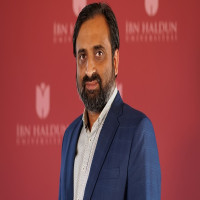
Dr. Asad Ul Islam Khan is currently working as an Assistant Professor and an ERASMUS coordinator in Economics Department at Ibn Haldun University, Istanbul Turkiye. The research interests of Dr. Khan are Applied and Theoretical Econometrics, Behavioral Finance and Financial Markets. Currently Dr. Khan is also working in Financial Econometrics and has published research papers on crypto currencies and financial markets. Dr. Khan secured funding for four projects, one from TUBITAK Turkiye Govt. and three from Ibn Haldun University BAP as Project Head and the principal researcher. Two projects have been successfully completed and two are ongoing. Six MA students have graduated under the supervision of Dr. Khan and three MA and five PhD students belonging to different nationalities are pursuing their dissertations under the supervision of Dr. Khan.


Junus Ganiev received his M.S. and PhD degree in Economics from the Kyrgyz - Turkish Manas University. He carried out his master’s thesis on inflation dynamics and doctoral thesis on corruption. He conducts research on monetary policy, international economic relations, economic growth and development. He has attended international conferences in many countries. He has journal articles, book chapters, books, conference papers. He is a full-time Associate Professor at Kyrgyz-Turkish Manas University, Department of Economics, Faculty of Economics and Management. ORCID: 0000-0001-8859-5464 (Djal, Campus of Chyngyz Aitmatov, Bishkek, 720038, Kyrgyzstan, +996772 331193, junus.ganiev@manas.edu.kg)
Danışma Kurulu
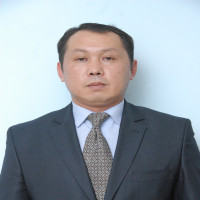
Azamat Maksüdünov (Ph.D.) is an educator with over a decade of experience in the field of business academia. He is a Fulbright Visiting Scholar at Florida Atlantic University for the academic year 2023-2024. Currently, he is a full-time associate professor at Kyrgyz - Turkish Manas University, Department of Management, Faculty of Economics and Management. Dr. Maksüdünov has authored or co-authored 44 articles, 40 conference papers, 10 book chapters, and 4 books. He received the Best Paper Award at the 26th World Business Congress organized by the International Management Development Association (IMDA) in May 2016, as well as a Certificate of Honor from the Ministry of Education and Science of Kyrgyzstan in December 2021.

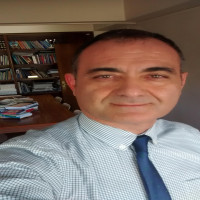
Professor Utkulu is a PhD graduate of Leicester University, Economics Department. He is now a Professor at the Economics Department, Dokuz Eylül University, İzmir. His research interests are international economics, debt issues, trade-related issues, and European economics. He has published widely in international economics, such as trade liberalization, trade and growth, debt and solvency, and European economic integration. He has recently contributed on the fields of environmental economics and circular economics.





 Web
Web
He received his PhD in Computational Statistics. He is a Associate professor in Statistics at the Università degli Studi del Sannio (Italy) and also a professor in Statistics and Statistics for Business. His research interests focus on Multivariate Statistical Methods with particular attention to
Correspondence Analysis applied to problem of the evaluation of the Customer Satisfaction. He serves on the program and organizing committees of conferences in the field of Multivariate Methods and Decision Theory. He is author of more than 90 conference and high impact factor journal papers as Journal of Multivariate Analysis, Journal of Applied Statistics and Communication in Statistics – Theory and Methods; Journal of Statistical Planning and Inference. He coordinates several international projects. Actually he’s local coordinator of a Tempus project.
*10+ years of dynamic academic experience
**Research-driven educator, fostering continuous growth
***Igniting student potential through innovative teaching
****Transformative coach, guiding students to life-changing breakthroughs
*****CPA-affiliated, bringing real-world insights to the classroom
******Sector consultant, bridging academia and industry

Maksym Zhyvko was born on January 23, 1988 in Ternopil. In 2005, he graduated from the Ternopil Specialized School of the I-III degrees No. 5 with advanced study of foreign languages. He received his higher education at the Ternopil National University of Economics (now the Western Ukrainian National University, Ternopil) majoring in "International Economics", qualification - specialist in foreign language knowledge (2005-2010).
Maksym Zhyvko has been working at this institution of higher education since 2011 as a research intern, acting senior laboratory assistant, teacher, senior teacher of the Department of International Economic Relations. Since September 2019 - Deputy Director of the Educational and Scientific Institute of International Relations named after Bohdan Havrylyshyn Education and Research Institute of International Relations.
In July-August 2013 at the University of Lodz (Lodz, Republic of Poland) and July-August 2014 at the University of National and World Economy (Sofia, Republic of Bulgaria) he was a participant in the framework program of the European Union named after Marie Curie IRSES-GA 2011-295050 "Functioning of local production systems in conditions of economic crisis" (comparative analysis and benchmarking of EU countries and their neighbors)".
In 2019, Maksym Zhyvko defended his candidate's thesis on the topic: "New economics in the development of the potential of European civilizational and integration processes." Since September 1, 2020, he works as a part-time associate professor of the Department of International Economic Relations.
Maksym Zhyvko is the author of more than 38 scientific publications on issues of the new economy, international economic relations, alternative sources of energy, civilizational integration processes, implementation of customs policy at the national and supranational levels.
Maksym Zhyvko participated in the implementation of 5 research projects.
Developed recommendations for central and local authorities on the development of the new economy in Ukraine. The results of M. A. Zhyvko scientific research were implemented in the work of the Ternopil Regional State Administration, Agromashinvest LLP, Rada Capital LLP, Ternopil City Council.

Dr. Jha an author, poet, teacher, and a critic with an inclination towards societal development is a Professor and the Principal, Smt. B. C. J. College of Education. With ten doctoral scholars, being awarded the doctorate degree, the guide and mentor to Ph.D. aspirants, has presented several papers at national and international seminars and has a list of publications including books, articles and research papers with national and international publishers of repute. Having multi-language understanding ability, interest in teacher training, psychology, research methodology, creativity and human values, he accredits himself to prepare, design and introduce several new subjects in the curriculum of several reputed universities and institutes of national repute. He has written about more than 200 poetries in English and Hindi. Associated with institutes of national repute, he has organised seminars and workshops and delivered talks and lectures at various seminars, workshops etc.
Sekreterya