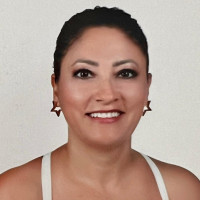
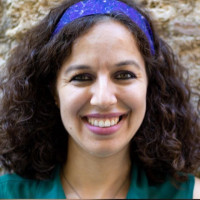
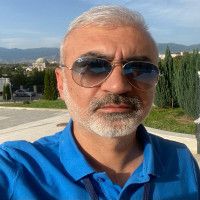
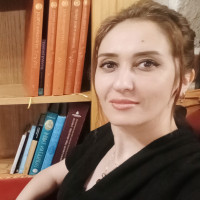
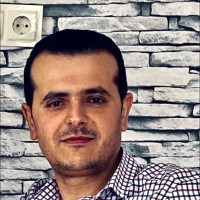
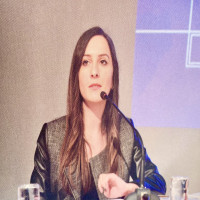
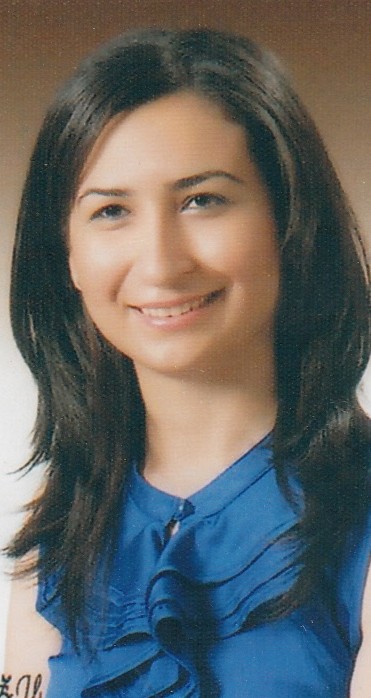
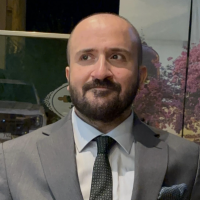
2002-2006 yıllarında Ankara Üniversitesi Dil ve Tarih Coğrafya Fakültesi Türk Dili ve Edebiyatı bölümünde lisans eğitimini tamamladı. 2006-2009 yılları arasında Mersin Üniversitesi Türk Dili ve Edebiyatı Ana Bilim Dalı’ndan “Silifke Halk Kültürü Araştırması” adlı yüksek lisans tezini tamamlayarak mezun oldu. 2007-2009 yılları arasında Mersin Üniversitesi’nde araştırma görevlisi olarak görev yaptı. 2015 yılında Çukurova Üniversitesi Türk Dili ve Edebiyatı Ana Bilim Dalı’nda “Mersin Konargöçerlerinin Halk Kültüründe İnanışlar ve Bunlara Bağlı Uygulamalar” adlı doktora tezi ile doktor unvanı aldı. 2009-2018 yılları arasında Mersin Üniversitesi’nde öğretim görevlisi olarak görev yaptı. 2018 yılından itibaren ise İnsan ve Toplum Bilimler Fakültesi Türk Dili ve Edebiyatı Bölümü, Türk Halk Edebiyatı Ana Bilim Dalı’nda öğretim üyesi olarak çalışmaktadır. Türk Halk Edebiyatı ve Türk Halkbilimi alanlarında kitap, kitap bölümü, makale, bildiri, ansiklopedi maddesi gibi çok sayıda akademik çalışması bulunmaktadır.
Hikmet Guliyev was elected as the Director of the Institute of Folklore of the Azerbaijan National Academy of Sciences (ANAS) in 2025.
In 2015, he successfully defended his PhD dissertation titled “The Wise Old Man Archetype in Azerbaijani Folklore.”
In 2018, he earned the title of Associate Professor in the field of folklore studies.
In 2024, he successfully defended his Doctor of Science dissertation in Philology titled “Internet Folklore: Theoretical-Methodological Context and Folkloric Meaning-Making.”
He is the author of six books and around 60 scholarly articles published both domestically and internationally, and he has participated in numerous national and international conferences. Four of his articles have been published in journals indexed in Web of Science and Scopus.
Web
AIM
Uluslararası Halkbilimi Araştırmaları Dergisi (Journal of International Folklore Studies), a scientific and refereed journal, publishes in the field of folklore. It also aims to announce to the scientific world the interdisciplinary scientific publications produced in the fields of literature, sociology, anthropology, ethnology, musicology, and fine arts, as long as they are related to folklore. The main goals of the journal are bringing out studies and researches carried out in Turkey to international platform, creating space for contemporary theoretical studies, observing the effects of cultural changes on daily life and supporting sustainable studies in this direction. To carry the studies within the scope of cultural sciences, especially the data and products of the Turkish world, to the international platform, opening up space for new, contemporary, solution-oriented theoretical approaches, observing the effects of the dynamics of change in culture and life on the traditional environment, and supporting sustainable studies for the future in this direction are among the main goals.
SCOPE
"Uluslararası Halkbilimi Araştırmaları Dergisi" (Journal of International Folklore Studies) publishes studies that contribute to cultural studies in fields such as folklore, sociology, anthropology, ethnology, media and communication, musicology, and handicrafts. Cultural science and management, culture and public health, culture and migration, culture and the online world, culture and media, culture and art, culture and tourism, and reviews and criticisms of scientific books prepared within the framework of culture from tradition to the future are also within the scope of the journal’s publication. The publication languages of the journal are Turkish and English.
“Uluslararası Halkbilimi Araştırmaları Dergisi” (Journal of International Folklore Studies) is an international peer-reviewed journal published twice a year (May - November). Articles published in the journal cannot be published elsewhere or presented as a statement without the permission of the journal editorial board. Articles published in our journal can not be used partially or completely anywhere without giving reference. The contents of the articles submitted to the journal must be original, not previously published anywhere or sent for publication. Authors in the article should have a consensus on the order of names.
“Uluslararası Halkbilimi Araştırmaları Dergisi” (Journal of International Folklore Studies) is an open access journal where users or institutions can use the content free of charge. Users do not need permission from the publisher or author when reading, uploading, copying, searching and linking the content of full texts. A copyright agreement is not required for the works submitted for publication in our journal, and no royalties are paid. No fee is charged from the authors for the studies in the journal. For the first step of the publication phase, articles should be sent through Dergipark. A confirmation message will be automatically sent to your e-mail address immediately after the application. For more information, you may contact the editor via uhadbilgi@gmail.com or suleymanfidan@gmail.com e-mail addresses.
• Articles must be submitted in MS Word 2007 or higher versions. Manuscripts submitted to the journal should not exceed 8500 words, including the abstract, footnotes and bibliography in Turkish and English. In case there is an annex, this limit can be increased by the decision of the editorial board.
• Page structure should be written in MS Word program in custom size, Times New Roman font, 12 font size, 1.15 line spacing. Page margins should be 2.5 cm. Page numbers should not be given. The text block should be justified, without carriage return and without leaving any line space between paragraphs, automatically leaving 0 font size before the paragraph and 6 font size after the paragraph. Footnotes in the article should be written in Times New Roman, single line spacing, 0 font size paragraph spacing, and 10 font size. Direct quotations exceeding 5 lines in the article should be written 1.5 cm from the right and left sides, with a single line spacing and in 10 font size.
• The article title should be compatible with the content, should best express the content, and should not exceed 12 words. The Turkish title should be bold, 14 point size, and should be written in capital letters, aligned to the left. The English title should be written immediately below the Turkish title in 12 point size, with the first letters of the words capitalized and the other letters lowercase, bold, and aligned to the left..
• The name of the author should be written under the English title in capital letters, the other letters in lowercase, and the surname of the author in all capitals. Title, institution name, ORCID information, and e-mail address should be stated under the author's name.
• At the beginning of the article, there should be an "Abstract" in Turkish and English, in the range of 150-250 words, which briefly and concisely expresses the subject. Articles written in Turkish and other than English should be accompanied by an abstract in English along with the abstract written in their own language. The abstract should be in 10 font size and single line spacing.
• The International Journal of Folklore Studies has decided to publish the articles sent with an Extended Summary starting from the May 2024 issue. The Extended Summary will increase the international readability and citation of the studies you have submitted to our journal. The Extended Summary should be included after the abstract and keywords, before the main text of the article begins. The Extended Summary should be written in English for Turkish articles. There is no extended summary for English articles. The extended summary should be between 500-700 words and should clearly state the purpose, problem, method, results and conclusions of the study.
• Studies presented in a symposium, congress, etc. but not published at the events can be published with the decision of the journal editorial board by specifying the name, place and date of the event.
• For studies supported by a research institution or fund, the name of the organization providing the support and the project number should be given in the footnote.
• Manuscripts should be prepared as introduction, development and conclusion sections. Sub-headings and second-degree titles should be arranged in 12 font size, bold, and the first letters of the words should be capitalized. Except for the "Introduction" and "Conclusion" headings, sub-headings can be numbered in accordance with the subject.
• An article should contain a summary, parts of the main text, a bibliography and (if any) appendices, respectively. The article should have an "Introduction" and a "Conclusion" section. The "Introduction" must cover the purpose, importance, period, scope, method and plan of the study. If the subject requires, a literature discussion can also be given in this section. The “result” should be suitable for the purpose and scope of the research, should be given in outline and concisely. Matters that are not mentioned in the text should not be included in the "Conclusion". In the conclusion part, citations should not be made from other sources. Main, intermediate and sub-headings can be used to provide a certain order.
• The manuscript must comply with the grammar rules. In the use of punctuation marks and writing of words and abbreviations in the article, the spelling rules on the official website of the Turkish Language Institution should be taken as a basis, a clear and simple way of expression should be followed, and unnecessary information that goes beyond the purpose and scope should not be included. Valid scientific methods should be followed in the preparation of the article, the subject, purpose, scope of the study, the reason for its preparation, etc. information should be given in sufficient quantity and in a certain order.
• Table, number and title of figures; Images should have numbers and descriptions. In addition, tables/figures should be prepared in accordance with black and white printing. If citation is required, it should be written under the table in in-text citation format.
• As of January 1, 2022, a similarity report is requested from the articles sent to our journal. The author must upload the report to be obtained from a suitable system (Turnitin, iThenticate, İntihal.net) during article submission. It should be noted that the highest similarity rate in the articles is 20%.
• In multi-author articles, each author's contribution to the article should be clearly stated on the last page of the article.
Examples of in-text citation and samples of references are given below.
A. In text citation
1.References are made in the text in two ways:
Kapferer (1992: 50), kimi zaman bir mitosun gerçeklik içine yerleştirilerek dolaşıma girdiğini ve farklı zamanlarda ortaya çıkan söylentilerin de şekilde yol aldığını belirtir.
or
“Bu açıdan baktığımızda besin, sosyal sınıfı, etnisiteyi ve diğer şeyleri işaretler; yiyecek etkileşimi, aileleri, ağları, arkadaşlık gruplarını, dinleri ve sanal olarak sosyal kurumsallaşmış grupları tanımlar” (Anderson, 2014: 125).
2. In reference to a publication with two authors, both authors’ surnames are given:
“Masallar, insanların dünyayı anlamlandırmaya başladığı çocukluk döneminde fantastik ve sihirli dünyasıyla onları kucaklayan, düş ile gerçeğin iç içe geçtiği anlatmalardır” (Özcan and Bahadur, 2020: 271).
3. To refer to studies with three or more authors, instead of using the surname of the first author followed by the surnames of other authors, “et al.” expression is used:
Günümüzde internet ve bilgisayarla birlikte dijital ortamda bireyin geleneksel kimliğini üretim şekilleri değişmiş ve modern birey bununla ilgili yeni yollar geliştirmeye başlamıştır (Aresta et al., 2015: 72).
or
Aresta ve diğerlerine göre (2015: 72) günümüzde internet ve bilgisayarla birlikte dijital ortamda bireyin geleneksel kimliğini üretim şekilleri değişmiş ve modern birey bununla ilgili yeni yollar geliştirmeye başlamıştır.
4. If citation will be made without seeing the first source, the abbreviation (quote) of the statement of the citing is used. Both sources are stated:
“Yaratıcı sınıf üyeleri, işçi sınıfı gibi bedenleriyle değil, zihinleriyle çalışır. Onların tercihleri kitlelerin yönelimlerinde doğrudan etki yaratır” (Florida, 2002: 35-37’den akt. Koçak, 2020: 26).
5. Block citations are written with 1.5 cm indentation, 10 font size (Times New Roman), and single line spacing.
6. Internet connections are shown in the text by numbers in order: (URL-1). The URL link and the date of access to the content should be given in the references.
7. Reference persons should be indicated in the text as (RP-1). Research Participant information in the “References”; “Name-Surname, Gender, Year of Birth or Age, Place of Birth (Place of Residence), Profession, Educational Status, Date of Interview” should be given in order. The names and surnames of the source persons can be written by coding if they do not have their consent.
8. If an author has more than one article belonging to the same year, a letter is written next to the year in the text and in the References: (Özdemir, 2012a: 43), (Özdemir, 2021b: 28).
B. Writing References / Bibliography
References should be written with 11 font size and 6 pts. paragraph spacing.
1. Books in Turkish:
GÜNGÖR, Erol (2010). Kültür Değişmesi ve Milliyetçilik. İstanbul: Ötüken Neşriyat.
2. Translated Books:
ONG, Walter J. (2018). Sözlü ve Yazılı Kültür-Sözün Teknolojileşmesi. (translated by Sema Postacıoğlu Banon). İstanbul: Metis Yayınları.
3. Book Chapters:
KÜÇÜKBASMACI, Gülten (2019). "Uryan Geldik Uryan Gideriz: Menakıpnamelere Göre Fakirlik", Fakirlik. (ed. Emine Gürsoy Naskali). İstanbul: Litera Kitap.
4.Articles:
FİDAN, Süleyman (2011). "Türk Kültüründe Askerî Giyim-Kuşam ve Asker Modası", Milli Folklor, C. 23, 92, pp. 95-105.
5.Two-aouthor Article:
SEZER, Abdulbasit and Hatice Kübra Uygur (2016). “Mungan'ın Dumrul ile Azrail Hikayesine Halkbilimsel Bakış”, NWSA. C. 1, S. 2, s. 73-78.
6. Article with Three or More Authors:
CENGİZ, Alim Koray et al. (2016). “It Is Not Just An Egg: Play, Influence and Power Among Arab Communıtıes in Samandağ Hatay”, ASOS Journal, C. 4, S. 29, s. 295-313.
7.Translated Article:
TREPAVLOV, Vadim V. (2018). “Yakut Destan Kahramanının Sosyal Statüsü”, (translated by. Ali Osman ABDURREZZAK), Gazi Türkiyat, S. 22, s. 247-261.
8.Proceedings:
UYGUR, Hatice Kübra (2016). “Necati Cumalı'nın Yenilmeyen Hikâyesinin Geleneksel Deve Güreşleri Açısından Değerlendirilmesi”, First International Selçuk-Efes Devecilik Kültürü ve Deve Güreşleri Symposium. İzmir, C.1, s. 410-432.
9.Dissertations:
KÜÇÜKBASMACI, Gülten (2009). “Sözlü kültür ortamından elektronik kültür ortamına geçiş sürecinde Kastamonu halk anlatıları”. Doktora Tezi. Ankara: Gazi Üniversitesi.
10. Internet:
URL-1: https://tez.yok.gov.tr/ (D.A.: 15.9.2018).
*D.T.: Date Accessed
11. Audio-visual Sources:
Ozanın Kopuzundan Âşığın Sazına (1990). Televizyon Programı, 14 Bölüm. Yönetmen: Sadık Yalsızuçanlar, TRT Arşiv No: 06 BA 2684.
GÖNLÜM, Özay (2004). Arşiv Kayıtları 1-2. İstanbul: Kalan Müzik.
SINAV, Osman (yön.) (2009). Sakarya-Fırat. Televizyon Dizisi. Sinegraf Yapım.
12. Oral Sources / Research Participants / Informants:
RP-1: Ahmet Ay, Male, 75, Sivas, Farmer, Graduated Primary School, 02.020.2020.
RP-2: Female, 1975, Bursa, Housewife, High School, 05.01.2018.
C. Book Review Principles
Uluslararası Halkbilimi Araştırmaları Dergisi (UHAD) will include articles containing evaluations and comments on scientific books prepared in line with its publication policy.
UHAD manuscript writing rules should be applied in book reviews. Articles should be between 1500-3000 words. In the title of the book introduction text, it is obligatory to write the detailed information of the study, the total number of pages and the ISBN number based on the bibliography. In the first paragraph, information about the author's expertise and the content of the study should be given. After this paragraph, the study should be critically evaluated with its strengths and weaknesses. In the conclusion part, it is necessary to determine the place and importance of the study among other studies in the field.
A maximum of two introduction studies will be included in each issue of UHAD. The book introduction texts will be determined by the journal editors in accordance with the calendar of the journal, which is published twice a year. Necessary corrections regarding the book introduction text may be requested from the author by the editorial board. Book reviews are also sent to two referees. The final decision is made by the Editorial Board.
UHAD (International Journal of Folklore Studies) is an open access, peer-reviewed, scientific journal. UHAD does not charge any fees from authors, readers or institutions under any name. The average evaluation period for articles sent to UHAD is 45-90 (forty-five-ninety) days. Information about the double-blind peer-review process is provided in detail on the journal's homepage. Information about UHAD's publication policy and ethical principles is as follows:
Principles of Publication Ethics
Publication Ethics can be defined as a self-regulatory mechanism that insists on honesty on the part of authors, reviewers and publishers to establish higher standards of editorial processing. Ethical standards for publication exist to ensure high-quality scientific publications, public confidence in scientific findings, and respect for people's opinions.
• Honest researchers do not plagiarize.
• Does not cite sources incorrectly.
• They do not hide objections that they cannot refute.
• They do not distort opposing views.
• They do not destroy or hide data.
Peer-reviewed studies are studies that support and implement the scientific method. At this point, it is of great importance that all parties involved in the publication process (authors, readers and researchers, publisher, referees and editors) comply with ethical principles. UHAD adheres to national and international standards on research and publication ethics. It complies with the Press Law, the Law on Intellectual and Artistic Works and the Directive on Scientific Research and Publication Ethics for Higher Education Institutions. UHAD has adopted the International Ethical Publishing Principles published by the Committee on Publication Ethics (COPE), Directory of Open Access Journals (DOAJ) and Open Access Scholarly Publishers Association (OASPA).
Rebroadcast
Republication is the publication of the same article or substantially similar articles in more than one journal. The editor sends such article back without reviewing it. After this, the editor may impose an embargo for a certain period of time on the author who attempts to re-publish, may announce this situation to the public in the journal in which the author has previously published (perhaps as a simultaneous announcement with the editor of the journal that published the previous article), or may apply all of these measures together.
Simultaneous submission of the same study to more than one journal
Authors cannot submit the same article to more than one journal at the same time. If the editor learns of possible simultaneous submission, he reserves the right to consult with the other editor(s) receiving the manuscript. In addition, the editor may return the article without reviewing it or reject it without taking the reviews into account, or may make this decision by discussing it with other relevant editor(s) and may decide not to accept article applications from authors for a certain period of time. They can also write to the authors' employers or implement all of these measures together.
Control to Prevent Plagiarism
It is presenting the ideas, methods, data, applications, writings, figures or works of others as one's own work, in whole or in part, without attributing them to their owners in accordance with scientific rules.
UHAD scans all submitted articles to prevent plagiarism. The works submitted for review are checked for plagiarism using intihal.net software. The similarity rate is expected to be less than 20%. The main criterion in the similarity rate is that the author complies with the rules of citation and quotation. Even though the similarity rate appears to be 1%, if citation and quotation are not made properly, plagiarism may still occur.
Plagiarism, duplication, false authorship/denied authorship, research/data fabrication, article slicing, publication by slicing, copyright infringement and hiding conflict of interest are considered unethical behavior. All articles that do not comply with accepted ethical standards are removed from publication. This includes articles containing possible irregularities or improprieties detected after publication.
Forgery
Producing data that is not based on research, editing or changing the presented or published work based on unreal data, reporting or publishing them, and presenting a research that has not been done as if it has been done.
Falsifying research records and obtained data, presenting methods, devices and materials that were not used in the research as if they were used, not taking into consideration data that are not suitable for the research hypothesis, tampering with data and/or results to fit the relevant theory or assumptions, producing research results in line with the interests of the people and organizations receiving support. To distort or shape.
Protection of Participants' Personal Data
UHAD requires that all research involving personal or sensitive data or material relating to human participants that is not legally available to the public be subject to formal ethical review.
Handling Allegations of Research Misconduct
The introduction follows COPE's Ethical Toolkit for a Successful Editorial. Introduction editors; will take action to prevent the publication of articles in which plagiarism, citation manipulation, data falsification, data fabrication and other research misconduct occur. Under no circumstances will the editors of the UHAD knowingly allow such abuse to occur. If editors of the journal become aware of any allegations of research misconduct relating to an article published in their journal, they will follow COPE's guidelines regarding the allegations.
Ethical Violation Notifications
Readers can notify us by sending an e-mail to uhadbilgi@gmail.com when they notice a significant error or inaccuracy in an article published in UHAD or if they have any complaints about editorial content (plagiarism, duplicate articles, etc.). We welcome applications as they will provide opportunities for us to develop, and we respond quickly and constructively.
Correction, Retraction, Expression of Concern
Editors may consider publishing corrections if minor errors are identified in the published article that do not affect the findings, interpretations, or conclusions. Editors should consider retracting the manuscript in the case of major errors/violations that invalidate the findings and conclusions. If there is a possibility of misuse of research or publication by the authors; If there is evidence that the findings are unreliable and the authors' institutions have not investigated the incident, or if the potential investigation appears unfair or inconclusive, editors should consider publishing an expression of concern. COPE guidelines regarding corrections, retractions or expressions of concern are taken into account.
Publication of Studies Based on Surveys and Interviews
UHAD adopts the principles of the Committee on Publication Ethics (COPE) "Code of Conduct and Best Practice Guidelines for Journal Editors" and "Code of Conduct for Journal Publishers" in order to create ethical assurance in scientific periodical publishing. In this context, the following points must be observed in studies submitted to the journal:
1) For research conducted in all branches of science that require ethics committee permission (ethics committee approval must be obtained, this approval must be stated and documented in the article.
2) In research requiring ethics committee permission, information about the permission (committee name, date and issue number) can be found in the method section, as well as on one of the first/last pages of the article; In case reports, information about signing the informed consent/consent form should be included in the article.
Special Issue Publishing Policy
A special issue may be published in our journal once a year upon the request of the Editorial Board. Articles submitted for inclusion in the special issue are first subjected to editorial preliminary review. It is then examined for compliance with the journal's spelling rules and similarity scanning is performed to prevent plagiarism. After these stages, it is taken into the peer evaluation process in which the double-blind model is used.
Editorial Confidentiality Obligation
The editors of UHAD treat all submitted manuscripts as confidential documents; This means that they will not disclose information about a manuscript to anyone without the authors' permission. During the article review process, the following people can access the articles: Editors, Referees, Editorial Board Members. The only time details about a manuscript may be passed on to a third party without the authors' permission is if the editor suspects serious research misconduct.
Allegations and Suspicions of Scientific Misconduct
If the editor suspects or alleges an ethical violation, they are obliged to take action. This role covers both published and unpublished articles. The editor should not simply reject articles that raise concerns about possible abuses. He is ethically obligated to pursue alleged cases. The editor should follow COPE flowcharts where appropriate. Editors should first seek a response from those suspected of misconduct. If they are not satisfied with the response, they should ask the relevant employers or institution to investigate. The Editor must use all reasonable endeavors to ensure that an appropriate investigation is conducted into the alleged misconduct; If this does not happen, the editor must make all reasonable attempts to insist on a solution to the problem. This is a demanding but important task.
The introduction follows COPE's Ethical Toolkit for a Successful Editorial. Introduction editors; will take action to prevent the publication of articles in which plagiarism, citation manipulation, data falsification, data fabrication and other research misconduct occur. In no case will Mukaddime or its editors knowingly allow such abuse to occur. If editors of the journal become aware of any allegations of research misconduct relating to an article published in their journal, they will follow COPE's guidelines regarding the allegations.
When reviewers suspect misconduct in research or publication, they should report the situation to the Editor. The editor is responsible for carrying out the necessary actions in accordance with COPE recommendations.
Mukaddime undertakes to apply COPE flowcharts when faced with allegations of misconduct in the following or similar matters.
• What to do when rebroadcast is suspected
• What to do when plagiarism is suspected
• What to do when fabricated data is suspected
• What to do when requesting a change of authorship?
• What to do when an undisclosed conflict of interest is suspected
• What to do when unfair or gift authorship is suspected
• What to do when an ethical problem is suspected in an article
• Suspicion of ethical violations via e-mail, etc. What to do when notified directly by:
• What to do when a suspected ethical violation is announced via social media
Complaint Procedure
This procedure applies to complaints regarding content, procedures or policies that are the responsibility of UHAD or our editorial staff. Complaints can provide an opportunity and incentive for improvement and we aim to respond quickly, courteously and constructively.
The complaint must relate to content, procedures or policies that are the responsibility of UHAD or our editorial team. Complaints should be emailed directly to uhadbilgi@gmail.com and will be treated confidentially. The editor responds to complaints immediately. The editor follows the procedure outlined in the COPE flowchart regarding complaints.
Complaints are reviewed by the relevant member of the editorial team and if they cannot be resolved, the following processes are followed:
• If this initial response is deemed inadequate, the complainant may request that their complaint be referred to a more senior member of the journal.
• If the complainant is dissatisfied, complaints can be forwarded to the editor-in-chief.
• A full response will be given within two weeks if possible.
COPE publishes a code of practice for editors of scientific journals. This will facilitate the resolution of disputes with editors, journals and publishers, but can only be submitted after the journal's own complaints procedures have been exhausted.
Objection Process
We welcome serious objections to evaluations made by editors and reviewers. If you think we rejected your article because we misunderstood its scientific content, please send an objection message to our editorial team at uhadbilgi@gmail.com. Do not try to submit a revised version of your article at this stage. If, after reading your objection letter, we find that your objection is justified, we may invite you to submit a revised version of your article. Thus, your work will be re-sent to the external referee process. Please include as much detail as possible in the appeal letter. Finally, we can only consider one objection per article, so please take the time and effort to write the letter in detail to clearly outline your objection – you have one chance, so make good use of it. We have found that prolonged deliberation on rejected manuscripts is often unsatisfactory for both authors and editors, so we do not process multiple objections for the same work.
Conflicts of Interest
A conflict of interest occurs when professional judgment regarding a primary interest may be influenced by a secondary interest (such as financial gain or personal rivalry). We believe that we need to know the competing interests of authors to make the best decision about how to handle a paper, and that readers need to know about them if we publish the paper.
Any financial or other interest that may cause conflict in one's work, significantly impair objectivity, or provide an unfair advantage in favor of any person or organization. All sources of financial support received during the conduct of the research and preparation of the article and the role of the sponsors in the study should be disclosed. If there is no funding source, this should also be stated. Examples of potential conflicts of interest that should be disclosed include consultancies, salaries, grants. Potential conflicts of interest should be disclosed at the earliest possible stage.
UHAD has an established process for handling submissions from editors, staff or editorial board members to ensure unbiased review. Such submissions are primarily directed to other journals. If this is not possible, the post owner's position in the journal will be suspended. These submissions are reviewed in a double-blind process.
The editor should not be involved in decisions regarding articles written by himself or his family members. Additionally, such work must be subject to all the journal's usual procedures. The editor must follow COPE guidelines regarding disclosure of potential conflicts of interest by authors and reviewers.
Principles of Research Ethics
UHAD observes the highest standards in research ethics and adopts the international principles of research ethics defined below. It is the responsibility of the authors to ensure that the articles comply with ethical rules.
• The principles of integrity, quality and transparency must be ensured in the design of the research, review of the design and conduct of the research.
• The research team and participants, the purpose of the research, its methods and potential anticipated uses; They should be fully informed about the requirements and, if any, risks of participating in the study.
• Confidentiality of information provided by research participants and confidentiality of respondents must be ensured. Research should be designed to protect the autonomy and dignity of participants.
• Research participants must take part in the research voluntarily and must not be under any pressure.
• Harm to participants should be avoided. The research should be planned in a way that does not put participants at risk.
• Be clear about research independence; If there is a conflict of interest, it should be stated.
• In experimental studies conducted with human subjects, written informed consent must be obtained from participants who decide to participate in the research. The consent of the legal guardian of children and those under guardianship or with a certified mental illness must be obtained.
• If the study will be carried out in any institution or organization, approval must be obtained from this institution or organization.
• In studies involving a human element, it should be stated in the "method" section that "informed consent" was obtained from the participants and ethics committee approval was obtained from the institution where the study was conducted.
lEthics Committee Approval
Turkiye's ULAKBİM TR DİZİN Committee (https://trdizin.gov.tr/) has changed the inclusion criteria for journal evaluations to be index the journals. As a consequence, for all research studies conducted in all science branches including social sciences the Ethics Committee Approval is required. This Ethics Committee Approval should be indicated in the articles and they should be documented as well.
Change in Item 8 of TR DİZİN Evaluation Criteria applies to studies that the procedures of collecting data started in 2020 and require Ethics Committee Approval. Ethics Committee Approval information (the title of the ethics committee, date, and number) must be stated in the method section as well as on the first/last page of the articles. In this regard, the following studies to be sent to our journal to be reviewed for publication must follow research and publication ethics as well as they must include Ethics Committee Approval information: (1) all qualitative or quantitative studies which included data collection from participants by questionnaire, interview, focus group study, observation, and experiment; (2) all studies in which humans or animals (materials/data included) are used with experimental or any other scientific purposes; (3) clinical trials with humans; (4) trials with animals; (5) retrospective studies with respect to preservation of personal data. For case studies (1) information regarding informed consent form must be present; (2) permissions from other individuals' scales, questionnaires, and photos must be taken and indicated; and (3) it must be stated that there is no copyright infringement for intellectual properties. There is no requirement of Ethics Committee Approval for review articles.
UPLOADING / SENDING MANUSCRIPTS
Articles prepared in accordance with the above principles should be sent via DERGİPARK.
To submit an article via "DERGİPARK":
- You must be registered in the DERGİPARK system.
- On the page that opens, the "send an article" section should be opened and the relevant blanks should be filled.
- The article should be uploaded to the system as an MS Word file.
- When uploading an article, you must upload two mandatory files. One of them is "Article master file" and the other is "Copyright Form". This form must be filled in completely and uploaded to the system.
- For articles that require Ethics Committee Approval, the Ethics Committee Approval form must be uploaded using the "Upload Additional File" tab in the "Upload File" section during article submission.
Note: The deadlines for submissions to our journal are April 15 for the May issue; For the November issue, it is October 15.
SIMILARITY
Articles sent to our journal are checked with the intihal.net program. Articles with 20% or more plagiarism and articles with any plagiarism are reject.
INTERNAL PUBLICATION
For researchers working in other organs of our journal, except for the publisher, editor-in-chief and co-editors, only one publication is processed in each issue (10%). Blind editorship and blind refereeing processes are applied for these publications. As with other publications, all processes, author and referee information are kept confidential.
OPEN ACCESS POLICY
UHAD is licensed under a Creative Commons Attribution-NonCommercial 4.0 International License (CC BY-NC 4.0).
UHAD is an open access journal where users or institutions can use the content free of charge. Users do not need to obtain prior permission from the publisher or author when reading, uploading, copying, searching and linking the content of full texts.
This journal is an open access journal where users or institutions can use the content free of charge. Users do not need to obtain prior permission from the publisher or author when reading, uploading, copying, searching and linking the content of full texts. Meets the BOAI definition of open access.
The articles coming to our journal are checked with intihal.net program. In case of any plagiarism, the articles are rejected.
ETHICS COMMITTEE APPROVAL REQUIREMENT
ULAKBİM TR INDEX Committee, upon the change it made in the journal evaluation criteria for 2020, requests that Ethics Committee Approval be obtained for research conducted in all branches of science, including social sciences, and that this approval be stated and documented in the article.
Following this change included in Article 8 within the scope of TRDİZİN Evaluation Criteria, in studies requiring ethics committee approval whose process started in 2020, it is mandatory that the information regarding the permission in the Ethics Committee Approval (ethics committee name, date and issue number) be included in the method section of the article and also on the first/last page of the article. Accordingly, in all research conducted with qualitative or quantitative approaches that require data collection from participants using survey, interview, focus group study, observation, experiment, interview techniques to be sent to our journal for publication in the following process; (2) in research in which humans and animals (including material/data) are used for experimental or other scientific purposes; (3) in clinical research conducted on humans; (4) In animal studies and (5) in retrospective studies in accordance with the law on the protection of personal data, information regarding the ethics committee must be included in the relevant sections and research and publication ethics must be followed. In case reports to be sent other than research articles, (1) it must be stated that an informed consent form has been obtained; (2) permission must be obtained and stated for the use of scales, surveys and photographs belonging to others and (3) it must be stated that copyright regulations have been complied with for the intellectual and artistic works used.
"Uluslararası Halkbilimi Araştırmaları Dergisi" (UHAD) is an open access journal that users or institutions can use the content free of charge. Users do not need to obtain prior permission from the publisher or author when reading, uploading, copying, searching and linking the content of full texts.
Hatay Mustafa Kemal Üniversitesi Fen Edebiyat Fakültesi Antropoloji Bölümü Öğretim Üyesi
Abdullah Bayındır completed his undergraduate studies in 2009 at the Department of History, Faculty of Arts and Sciences, Gaziantep University. In 2010, he began his master’s studies at the Institute of Social Sciences, Department of General Turkish History, at the same university, and completed his degree with a thesis entitled “The Transcription and Evaluation of the Work ‘Piyade Sınıfına Mahsus Dâhiliyye ve Seferiyyeden Mevâdd-i Mücmeleyi Hâvî Ma‘lûmât ve Terbiye-i Askeriyye’.”
In 2013, Bayındır enrolled in the doctoral program in the Department of Medieval History at the Institute of Social Sciences, Gaziantep University, and earned his PhD in 2017 with his dissertation entitled “Succession Struggles in the Seljuk State.”
Since 2019, he has been serving as an Assistant Professor in the Department of History, Faculty of Arts and Sciences, at Kilis 7 Aralık University. His research interests include Seljuk history, Medieval Turkish-Islamic history, and the military organization of the Ottoman Empire.
Bayındır has published numerous academic articles. His books include:
Succession Struggles in the Seljuk State;
The Training of Infantry Soldiers in the Ottoman Empire;
Marksmanship Training in Ottoman Infantry Education.
He is also the Editor-in-Chief of the academic journal Asia Minor Studies, which is published in the field of social sciences. Dr. Abdullah Bayındır is currently continuing his academic work at Kilis 7 Aralık University.
Hatay Mustafa Kemal Üniversitesi Fen Edebiyat Fakültesi Antropoloji Bölümü Öğretim Üyesi
Hikmet Guliyev was elected as the Director of the Institute of Folklore of the Azerbaijan National Academy of Sciences (ANAS) in 2025.
In 2015, he successfully defended his PhD dissertation titled “The Wise Old Man Archetype in Azerbaijani Folklore.”
In 2018, he earned the title of Associate Professor in the field of folklore studies.
In 2024, he successfully defended his Doctor of Science dissertation in Philology titled “Internet Folklore: Theoretical-Methodological Context and Folkloric Meaning-Making.”
He is the author of six books and around 60 scholarly articles published both domestically and internationally, and he has participated in numerous national and international conferences. Four of his articles have been published in journals indexed in Web of Science and Scopus.
Prof.Dr. ALFRAGANUS UNIVERSITY (Uzbekistan)
Eğitim Hayatı:
1987 yılında Nizami adindaki Pedagojı Üniversitesi Özbek Dili ve Edebiyatı bölümünden mezun oldu.
1990-2016 yıllarında Nizami Taşkent Devlet Pedagoji Üniversitesi'nde öğretmen, doçent, bölüm başkanı olarak çalıştı.
2005 yılında Özbekistan Bilimler Akademisi, Özbek Dili ve Edebiyatı Üniversitesi doktorasını tamamladı.
2016-2023 yılında Alisher Navoi, Taşkent Devlet Özbek Dili ve Edebiyatı Üniversitesi, Özbek Dili Bölümü Doçenti.
2023 yılında Alfraganus Üniversitesi Özbek Dil bılımı Bölümünda professor olarak göreve başladı.
2015 appointed as an associate professor.
2023 appointed as a professor.
2019 yılında Özbekistan Cumhuriyeti Cumhurbaşkanı'nın fermanı uyarınca kendisine "Şöhret" madalyası verildi.
Abdullah Bayındır completed his undergraduate studies in 2009 at the Department of History, Faculty of Arts and Sciences, Gaziantep University. In 2010, he began his master’s studies at the Institute of Social Sciences, Department of General Turkish History, at the same university, and completed his degree with a thesis entitled “The Transcription and Evaluation of the Work ‘Piyade Sınıfına Mahsus Dâhiliyye ve Seferiyyeden Mevâdd-i Mücmeleyi Hâvî Ma‘lûmât ve Terbiye-i Askeriyye’.”
In 2013, Bayındır enrolled in the doctoral program in the Department of Medieval History at the Institute of Social Sciences, Gaziantep University, and earned his PhD in 2017 with his dissertation entitled “Succession Struggles in the Seljuk State.”
Since 2019, he has been serving as an Assistant Professor in the Department of History, Faculty of Arts and Sciences, at Kilis 7 Aralık University. His research interests include Seljuk history, Medieval Turkish-Islamic history, and the military organization of the Ottoman Empire.
Bayındır has published numerous academic articles. His books include:
Succession Struggles in the Seljuk State;
The Training of Infantry Soldiers in the Ottoman Empire;
Marksmanship Training in Ottoman Infantry Education.
He is also the Editor-in-Chief of the academic journal Asia Minor Studies, which is published in the field of social sciences. Dr. Abdullah Bayındır is currently continuing his academic work at Kilis 7 Aralık University.
Web
Vilnius’ta dünyaya gelir. Araştırmacı, Türkolog, Tercüman 1988 yılında Vilnius Üniversitesi’nden mezun olduktan sonra Vilnius Üniversitesi Filoloji Fakültesi Slav Bölümü Litvanya Tatarları Bilim Dalı’nda araştırma görevlisi olarak göreve başlamıştır. Litvaya Tatarlarının resmi temsilcisi olan ve 2012–2015 yılları arasında Litvanya’da “Milli Azınlık Kurulu”nun başkanlığını yürüten Vilnius Üniversitesi Filoloji bölümünde Türkoloji alanında çalışan Mişkiniene, 2001 yılında “Litvan Filoloji ve Yabancı Dil (Türkçe)” ve 2008 yılında “Asya araştırmaları ve Türkoloji” programlarının kurucusudur. “Eski Litvan Tatarlarının El Yazmaları (İnceleme–Metin–Tercüme)” adlı monografi ile beraber Litvanya Tatarları’nın Tarihi, Kültürü, Geleneği ve Dini üzerine birçok makale ve kitap yazmıştır. Orhan Pamuk ve Ayşe Kulin’nin romanlarını Litvancaya çevirerek Türk edebiyatının Litvanya’da tanınmasına katkı yapmaktadır.
Aleksandre Mgebrishvili, has a PhD in Philology, currently serves as a rector and professor at Gori State University. He is the author of 25 monographs and about 100 academic publications
mostly focusing on Georgian-Ossetian relations. His research focuses on conflict and peace studies related to Shida Kartli area, in particular to the genesis of the Georgian-Ossetain relations and
respectively the conflict itself. Email: aleqsandre.m@gmail.com ORCID: 0000-0002-4275-2417
Prof.Dr.Erdem Özdemir
1980 yılında Sakarya'da doğdu. 2003 yılında İ.T.Ü Türk Musıkisi Devlet Konservatuvarı Temel Bilimler bölümünden mezun oldu.2006 yılında Sakarya Üniversitesi Devlet Konservatuvarı'nda Araştırma Görevlisi oldu. 2008 Yılında SAÜ SBE'den Folklor ve Müzikoloji programından “Emirdağ Abdallarında Müzik” konulu tez ile Yüksek Lisan; 2013 yılında "Türkiye Örneğinde Aşıklarda Müzik" adlı çalışmasıyla doktora derecesi aldı. 2011 yılında İsveç Uppsala Üniversitesinde araştırmacı olarak görev yaptı. İsveç, Belçika, Fransa, İspanya, İngiltere, Çekya, Macaristan, Finlandiya, Almanya, Gürcistan, Slovenya, Katar ve Kırgızistan gibi ülkelerde bilimsel toplantılara katıldı, Türk müziğini tanıtıcı konserler verdi, sunumlar yaptı, uluslararası hakemli dergilerde makaleler yayınladı ve hakemlik yaptı. 2014 yılında Bursa Uludağ Üniversitesi Devlet Konservatuvarında Türk Müziği Ana Sanat Dalı kurucularından biri olarak göreve başladı. 2015 yılında TÜBİTAK desteğiyle Londra Üniversitesi SOAS'ta Uygur Müziği konusunda doktora sonrası çalışması gerçekleştirdi. Tüm müzik hayatı boyunca bağlama ve vokal olarak iki yüzü aşkın konser verdi. 2018 Yılında Türk Dünyası Müziklerinin Türkiye’de temsilini yaygınlaştırmak adına Ulu-Kök Türk Dünyası Müzikleri Topluluğunu kurdu. 2018 yılı Haziran ayında Doçent oldu. 2019 yılında B.U.Ü. Türk Devlet ve Akraba Toplulukları Uygulama ve Araştırma Merkezine (TÜDAM) müdür olarak atandı. 2021 yılında B.U.Ü. Sosyal Bilimler Enstitüsü bünyesinde, Türkiye’de ilk olarak açılan “Disiplinlerarası Türk Dünyası Müzikleri Ana Bilim Dalı”nın kurucu başkanı oldu. Aynı yıl Aşıklama adlı ikili albüm çalışmasını dijital platformlar üzerinden piyasaya sürdü. 2024 yılında Profesör oldu. 2024 yılında TRT Müzik kanalında yayınlanmak üzere 13 bölümlük “Türkülerle Turan” adlı müzik programını hazırlayıp sundu. Aynı yıl TRT Belgesel Kanalında yayınlanmak üzere Türk Macar Müzik ilişkilerini konu alan “Bağ” belgeselinin danışmanlık, Metin yazarlığı, sunuculuğu ve genel koordinatörlüğünü yürüttü. Halen görev yaptığı Bursa Uludağ Üniversitesi Devlet Konservatuvarı Türk Müziği Ana Sanat Dalında Lisans seviyesinde Bağlama ve Geleneksel Türk Müziği Tarihi; Yüksek Lisans seviyesinde "Orta Asya Türk Toplumlarında Geleneksel Müzikler", “Uygur, Özbek, Kazak, Kırgız, Türkmen Türklerinde müzik” ve "Türkiye'de Sosyo-Kültürel Yapılarda Müzik", Aşık, Alevi ve Bektaşi Müzikleri başlıklı dersleri vermektedir.
Başlıca çalışma alanlar:
Aşık Müziği, Alevi / Bektaşi Müzikleri, Balkan Bektaşiliği ve Müzik, Abdal Müziği, Türk Dünyası Müzikleri, Türkiye’de Farklı Sosyokültürel Yapılar ve Müzik, Macar Halk Müziği.
Başlıca Çalışmalar:
Makale:
Makedonya Kanatlar Köyü Örnekliğinde Bektaşiliğin ve Bektaşi Nefeslerinin Incelenmesi
Aşıklık Geleneği, Âşık Müziği ve Alevilik
Geçmişten Günümüze Uygur Türklerinde Geleneksel Müzikler
Bursa’da Aşıklık Geleneğinin ve Aşik Kahvehanelerinin Dünü ve Bugünü
Performans Teori Aşık Fasılları Ve Doğaçlama
Âşik Ve Ozan Kavramlarinin Günümüz Türkiye Sinde Müzikal Ve Edebi Yönden Tanimlanmasi
Kitap Bölümleri:
Türk Dünyasi Müzikleri Çaliştayi Kitabi ( Editör)
Türkiye’ye Göç Eden Uygur Türklerinin Müzik Pratikleri
Veysel'i Aşık Eden Sazidir
Bektaşi Nefeslerinin Türk Halk Ve Sanat Müzikleri Açisindan Incelenmesi
Müzik Çalışmaları:
Aşıklama Albümü (Dijital Platformlar)
Malazgirt Ovasında Mehter (Şiir: Niyazi Yıldırım Gençosmanoğlu Ezgi: Erdem Özdemir)
Derdinden Haller Perişan: (Hz. Hüseyin Ağıdı) : Şiir&Ezgi: Erdem Özdemir (Dijital Platformlar)
100 Yılın Türküsü / Bin Yıllarca Yaşa Cumhuriyetim: Şiir&Ezgi: Erdem Özdemir (Dijital Platformlar)
6.Şubat/ Yeter Olsun: Şiir&Ezgi: Erdem Özdemir (Dijital Platformlar)
Kerbela Gülü Hüseyin: Şiir&Ezgi: Erdem Özdemir (Dijital Platformlar)
PhD: Harvard University (Celtic Languages and Literature)
A.M.: Harvard University (Celtic Languages and Literature)
BA: Hunter College, City University of New York (Classical Studies)
Hatay Mustafa Kemal Üniversitesi Fen Edebiyat Fakültesi Antropoloji Bölümü Öğretim Üyesi
1975 yılında Osmaniye’de doğdu. 1999 yılında Muğla Sıtkı Koçman Üniversitesi, Çağdaş Türk Lehçeleri ve Edebiyatları Bölümü’nden lisans derecesini aldı ve aynı yıl Milli Eğitim Bakanlığı bünyesinde öğretmenliğe başladı. 2005 yılında Gaziantep Üniversitesi, Sosyal Bilimler Enstitüsü’den yüksek lisans; 2014 yılında Fırat Üniversitesi, Sosyal Bilimler Enstitüsü’nden de doktora derecelerini aldı. 2011 yılında Gaziantep Üniversitesi’ne öğretim görevlisi olarak atandı. 2014-2015 yılları arasında bir yıl süreyle Rusya Federasyonu, Nijniy Novgorod Devlet Dilbilim Üniversitesi, Türk Kültür Merkezi’nde ve 2016-2021 yılları arasında dört yıl süreyle Ukrayna, Kharhiv Milli Pedagoji Üniversitesi Türk Kültür Merkezi’nde Türkçe ve Türk Kültürü, Türk Edebiyatı konularında lisans ve yüksek lisans dersleri verdi. Tataristan ve Kırgızistan’da da çalışmalar gerçekleştiren Alibekiroğlu, halen, Gaziantep Üniversitesi, Fen-Edebiyat Fakültesi, Türk Dili ve Edebiyatı Bölümü'nde görev yapmaktadır.