Manuscripts submitted to the Usak University Journal of Educational Research should adhere to the journal's writing guidelines detailed below and the Manuscript Writing Template. Prior to review, all manuscripts receive preliminary evaluation for both their format and content. Manuscripts that do not comply with the article writing template are not considered for review.
Files for Article Writing Template:
Manuscript Writing Template for English Article DOWNLOAD
Author Declaration Form for English Article DOWNLOAD
General Rules
- The submitted work should not have been previously published or submitted to another journal for evaluation.
- The manuscript submitted to the journal should adhere to the journal's "Manuscript Writing Template" and include the "Author Declaration Form," "Plagiarism Report," and "Ethics Committee Approval Document" for studies requiring such approval.
- The plagiarism result report (similarity report) for the uploaded article should be below 20% excluding references. Any articles with a high similarity rate will be returned to the author after editorial review.
- The manuscript should be written in "Calibri (Body)" font, 10 pt, justified, single-spaced without spaces, with page margins of 2.5 cm and not exceeding 30 pages.
- The manuscript should contain a Turkish and an English title, as well as Turkish and English abstracts that are between 150-200 words. Additionally, it should provide a maximum of five keywords, the main text, author statements, references, and appendices, if applicable.
- The author is responsible for proofreading their manuscript's language. Manuscripts that do not meet language validity requirements will not be published until language validity is ensured.
- The manuscript should include information on the Ethics Committee Permission Statement, Conflict of Interest Statement, Researcher Contribution Statement, Support, and Acknowledgment Statement (if applicable) at the end.
- Use the APA 6 reference style for the bibliography, some examples of which are provided below. You can find further guidance on complying with journal writing rules at this link.
- Submissions should comply with the following journal writing rules:
Manuscript Writing Rules for Article Sections
Title of the Article
The article's title, in both Turkish and English, should be in 14-point bold font, left-justified with the first letter of each word capitalized, except conjunctions, on the first page of the article. The Turkish article title is not mandatory for authors whose native language is not Turkish.
Abstract and Keywords
The Turkish and English abstracts should clearly state the research objectives, methodology, findings, and major recommendations. Use Calibri body font size 9, single-spaced, and limit the abstract length to 150-200 words to fit on the first page of the article template. The Turkish article abstract is not mandatory for authors whose native language is not Turkish.
Keywords should contain a minimum of five words that reflect the study's integrity and should be written consistently under the "Keywords" headings. They should be in 9-point font, single-spaced, left-justified, and the first letter of each keyword should be capitalized.
Introduction (12 point, Left Justified, Bold font)
The article length should not exceed 30 pages, including appendices and a bibliography. The content of the article should be written in CALIBRI BODY font at 10 pt. The margins should be 2.5 cm, and the spacing between paragraphs should be 0 pt. before and 0 pt. after. Spacing before and after headings should be 6 pt. Line spacing in the text should be single paragraph spacing before and after 0 pt. The first paragraph after the title should be left justified, and the following paragraphs should be indented 1 cm on the first line. In the introduction section, the problem statement and justification of the research, the theoretical framework of the research and literature synthesis, the purpose of the research, and sub-problems should be included.
First Level Title
The first level title should be left justified, 12 pt. font size (6 pt. before and 6 pt. after), and the first letters of the words should be capitalized and bold.
Example: Introduction, Method, Results, Discussion, Conclusion and Recommendations, References
2nd Level Title
The second-level heading should be justified to the left side, bold, 10 pt, with 6 pt. spacing before and after. The first letter of every word should be capitalized, and the rest should be in lowercase letter.
Example: Purpose of the Research, Sub-Problems of the Research, Sampling, Data Collection Tools, Data Analysis, etc.
3rd level title
The third level subheading is left justified, italicized, 10 pt. font, 6 pt. spacing before and after, and the first word starts with a capital letter.
Example: Hypothesis
Method
Texts should be written in CALIBRI BODY font, and the spacing in subheadings should be 6 pt before and after. Line spacing in the text should be 0 pt before and after single paragraph spacing. The first paragraph after the title is left justified, and the following paragraphs are indented 1cm on the first line.
In the methodology section, the type and design of the research should be explained, and subheadings such as population and sample/study group, data collection tools, data collection and analysis, and experimental procedure/implementation process should be included.
In this section, it should be stated who the study group consists of and how it was selected, and if possible, demographic information about the participants should be presented in a table. Information about the characteristics, development, validity, and reliability of the data collection tool(s) used in the research should be given. The statistical techniques used in the analysis of the data, the purpose of their use, the significance levels used, and the stages of content analysis and thematic analysis should be detailed.
Information about the ethics committee's approval of the research (name of the committee, date, and number) should be stated on the last page of the article and should also be explained in the method section.
Findings
Findings should be written in CALIBRI BODY font and 10 pt. Spacing in subheadings should be 6 pt before and after. Line spacing in the text should be 0 pt before and after single paragraph spacing. The first paragraph after the title is left justified, and the following paragraphs are indented 1 cm on the first line. Tables and figures to be included in the Results section should be presented as follows:
Tables
The table should not exceed the page dimensions. The title and content of the table should be in Calibri body font, 10 pt, with the first word in upper case and the rest in lower case. The font can be reduced if needed. For the text within the table, it should be in 10-point size and should be set without spaces before and after the lines. Initial letters should be capitalized in table titles. Horizontal lines should be used in tables; abbreviations and footnote explanations should be given below the table.
Table 1.
Distribution of Participants' Education Level (Table title left justified, italicized and capitalized, 6 pt. spacing before and after)
| Education | n | % |
Anatolian High School | 79 | 86.8 |
Other high schoolsa
| 12 | 13.2 |
aOther high schools: Science High School, Imam Hatip High School, Vocational High School
When reporting results based on statistical techniques in the findings, abbreviations related to statistical test techniques should be italicized in the text and in the table (e.g., t, F, sd, r, p) and a period (such as 2.56; .05; .01) should be used instead of a comma when reporting decimal numerical results.
Example 1: Analysis of variance results showed that there was a significant difference in participants' perceptions in terms of frequency of use [F (1-3) = 5.43, p < .05].
Example 2: As a result of the independent samples t-test, no significant difference was found between the opinions of the participants in terms of gender [t (152) = .968, p > .05].
Figures
Figures should be centered on the page. The title and content of the figures should be in Calibri body font, 10 pt, the first word should start with a capital letter and the others should continue with lower case letters.
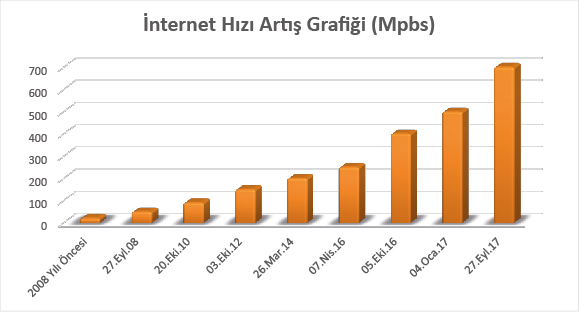
Figure 1. Title of the Image (Figure captions are centered, italicized and capitalized, 6 pt. spacing before and after)
Discussion, Conclusion and Recommendations
The findings and results obtained in the study should be discussed, interpreted and inferences should be made together with the results of national and international literature. This section can be given as "Discussion, Conclusion and Recommendations" or it can be given in two sections as "Discussion" and "Conclusion and Recommendations". Research recommendations should be based on the results and inferences obtained from the research and recommendations for future studies should be presented taking into account the limitations of the research.
Acknowledgements
At the end of the article text, information about the Disclosure, Ethics Committee Permission Statement, Informed Consent Statement, Conflict of Interest Statement, Researcher Contribution Statement, Support and Acknowledgment Statement (if any) regarding the publication should be given. If the scientific study was produced from a thesis or presented at a congress/symposium, this information should be stated here.
Example 1: This study is based on the master's/doctoral thesis of the first/second/third author.
Example 2: This study was presented as an abstract at the XXX Conference.
Ethics Committee Permission Statement
"Ethics Committee Permission" is required for all kinds of research conducted with qualitative or quantitative approaches that require data collection from participants using survey, interview, focus group study, observation, experiment, interview techniques. It should be specified in the study whether ethics committee permission and/or legal/private permission is required. In studies that require Ethics Committee permission, information about the permission (name of the committee, date and number) should be clearly stated. If Ethics Committee permission is not required, this should also be declared and a statement that the Ethical Principles of Scientific Research and Publication are complied with should be included. In case presentations and studies involving participants, a statement that the informed consent form has been signed should be included.
Example 1: The Ethics Committee Approval of this study was approved by the decision of XXXXX University XXXXXXXX Ethics Committee (Date: XX/XX/20XX, Number: XXXX/XX). Informed voluntary consent statements of the participants in this study were obtained.
Example 2: In this study, Ethics Committee Permission was not required due to XXXX, and the ethical principles of scientific research and publication were followed in the research process.
Conflict of Interest Statement
Authors should declare whether they have any conflict of interest with any institution, organization or person(s) within the scope of the research. If not, it should also be indicated.
Example 1. The authors declare that they have no conflict of interest.
Authors Contribution Statement
The contributions of the authors should be acknowledged.
Statement of Support and Acknowledgment
If there is any institution, organization or person(s) supporting the research, this support should be indicated.
Example 1. This research was supported by XXX institution with project number XXX.
Example 2. Thank you for XXXX's contribution to this research.
References
The bibliography references should be in alphabetical order on a separate page from the main text, without separating books, articles, etc. All references cited in the study text should be given in accordance with APA 6.0 writing style. Calibri body should be created using a 10-point font and aligned justified. Paragraph settings should be formatted as single line spacing and hanging indentation (1 cm). There should be 0.nk space before and after. For detailed information on the rules of citing references in the text and in the bibliography, see:
https://apastyle.apa.org/style-grammar-guidelines/references/examples In-text Citation:
In-text citations are made by giving the author's surname and year.
Example 1: In the research conducted by Baki (2020) ...
Example 2: According to Yıldırım and Şimşek (2016) ...
In references to studies with three or more authors in the text, the abbreviation "et al." is used after the surname of the first author.
Example 1: In reference to a study conducted by Birgin, Akar, and Uzun (2020), the citation should be presented as "Birgin et al. (2020)". The names of all authors should be included in the bibliography section.
If multiple works are cited either in parentheses in the text or at the end of a sentence, the references should be presented alphabetically.
Example 1: Many studies indicated that technology-supported instruction increased student achievement (Barkatsas et al., 2009; Baki et al., 2011; Chan & Leung, 2014; Li & Yang, 2015; Yılmaz, 2019).
If more than one work is cited in parentheses in the text or at the end of a sentence, the references should be given in alphabetical order.
Example 1: Many studies in the literature (Barkatsas et al., 2009; Baki et al., 2011; Chan & Leung, 2014; Li & Yang, 2015; Yılmaz, 2019) have found that technology-supported instruction increases student achievement.
In references to studies of institutions and organizations, the full name should be written first and the abbreviation should be used in subsequent references.
Example 1: The Turkish primary school mathematics curriculum was revised in 2018 (Ministry of National Education [MoNE], 2018). National exam results (MoNE, 2020) revealed that eighth grade students had low achievement in mathematics.
Example 2: Geometry contributes to ... (National Council of Teachers of Mathematics [NCTM], 2000).
Example 3: Computer-supported collaborative learning (CSCL) has become a prominent learning approach in recent years. CSCL povides ...
Citations in the Reference Section:
For Periodically Journal:
Grady, J. S., Her, M., Moreno, G., Perez, C., & Yelinek, J. (2019). Emotions in storybooks: A comparison of storybooks that represent ethnic and racial groups in the United States. Psychology of Popular Media Culture, 8(3), 207–217. https://doi.org/10.1037/ppm0000185
*The number, volume number and page range of the journal in which the article is published must be indicated. If available, the DOI reference of the article should be given.
For Book:Creswell, J. W. (2012).
Educational research: Planning, conducting, and evaluating quantitative and qualitative research (4th ed.). Pearson.
Creswell, J. W., & Poth, C. N. (2016). Qualitative inquiry and research design: Choosing among five approaches. Sage publications.
Jackson, L. M. (2019). The psychology of prejudice: From attitudes to social action (2nd ed.). American Psychological Association.
*Identify the author, year of publication, title and publisher of the book. Use the same format for both printed books and e-books. Enclose edition information in parentheses after the title, without italics. If the book contains a DOI, include the DOI after the publisher's name in the reference.
For Edited Book:
Aron, L., Botella, M., & Lubart, T. (2019). Culinary arts: Talent and their development. In R. F. Subotnik, P. Olszewski-Kubilius, & F. C. Worrell (Eds.), The psychology of high performance: Developing human potential into domain-specific talent (pp. 345-359). American Psychological Association. https://doi.org/10.1037/0000120-016
Goldsmith, L. T., & Seago, N. (2011). Using classroom artifacts to focus teachers’ noticing: Affordances and opportunities. In M. G. Sherin, V. R. Jacobs, & R. A. Philipp (Eds.), Mathematics teacher noticing: Seeing through teachers’ eyes (pp. 169-187). New York: Routledge.
*If the chapter has a DOI, include the chapter DOI after the publisher name in the reference. If a chapter without a DOI has a fixed URL to resolve for readers, include it in the reference.
For Unpublished Master’s Thesis;
For unpublished master's thesis and doctoral dissertations, the phrases (Unpublished master's thesis/Unpublished master's thesis) and (Unpublished doctoral dissertation/ Unpublished doctoral dissertation) should appear in parentheses after the title of the thesis and the name and location of the university where the thesis was conducted should be indicated.
Healey, D. (2005). Attention deficit/hyperactivity disorder and creativity: An investigation into their relationship. (Unpublished doctoral dissertation). University of Canterbury, New Zealand.
Topuz, F. (2017). The effect of using dynamic geometry software GeoGebra for teaching of "Circle and Disc" on the 7th grade students' achievement, attitudes towards geometry and retention level in learning. (Unpublished master's thesis). Usak University, Türkiye.
For paper presented at the Conference or Symposium:
For papers presented at conferences, symposiums, and congresses, it is necessary to provide the date, title of the paper presented, presentation type (abstract/poster), scientific meeting name, city, and country where it was held. If the abstracts contain a web link, they should be included.
Cacioppo, S. (2019, April 25–28). Evolutionary theory of social connections: Past, present, and future. Paper presented at the Ninety-ninth annual convention of the Western Psychological Association, Pasadena, CA, United States. Retrieved from https://westernpsych.org/wp-content/uploads/2019/04/WPA-Program-2019-Final-2.pdf
Birgin, O., & Demirören, K. (2017, September 14-16). Investigating the performance of seventh and eighth grade middle school students on algebraic expressions. Paper presented at the I. International Congress on Educational Research and Teacher Education, Usak University, Usak.
For Conference Proceedings Book:
Bedenel, A.-L., Jourdan, L., & Biernacki, C. (2019). Probability estimation by an adapted genetic algorithm in web insurance. In R. Battiti, M. Brunato, I. Kotsireas, & P. Pardalos (Eds.), Lecture notes in computer science: Vol. 11353. Learning and intelligent optimization (pp. 225–240). Springer. https://doi.org/10.1007/978-3-030-05348-2_21
For Institutional Reports and Documents
National Council of Teachers of Mathematics (NCTM) (2000). Principles and standards for school mathematics. Reston, VA: NCTM.
Ministry of National Education (MoNE). (2018). Turkish primary and secondary mathematics curriculum (1-8th grades). Ankara: Republic of the Turkish Ministry of National Education
For Internet Resources:
National Institute of Mental Health (2018, July 15). Anxiety disorders. U.S. Department of Health and Human Services, National Institutes of Health. https://www.nimh.nih.gov/health/topics/anxiety-disorders/index.shtml
Bologna, C. (2019, October 31). Why some people with anxiety love watching horror movies. HuffPost. https://www.huffpost.com/entry/anxiety-love-watching-horror-movies_l_5d277587e4b02a5a5d57b59e
Horovitz, B. (2021, October 19). Are you ready to move your aging parent into your home? AARP. https://www.aarp.org/caregiving/home-care/info-2021/caregiving-questions.html
*If the journal article does not have volume, issue and/or page numbers (for example, because it is from an online journal), remove the missing items from the reference (as in the Schulman example).
Extended Abstract (Only for articles written in Turkish)
It is not mandatory to submit a Turkish Extended Abstract for studies written in English. In studies written in Turkish, an extended English abstract of 750-1000 words should be submitted. The extended summary should start on a new page and be given under subheadings, including the "Introduction, Method, Findings, Discussion" sections.
 April 30, 2024
Page
1-11
April 30, 2024
Page
1-11